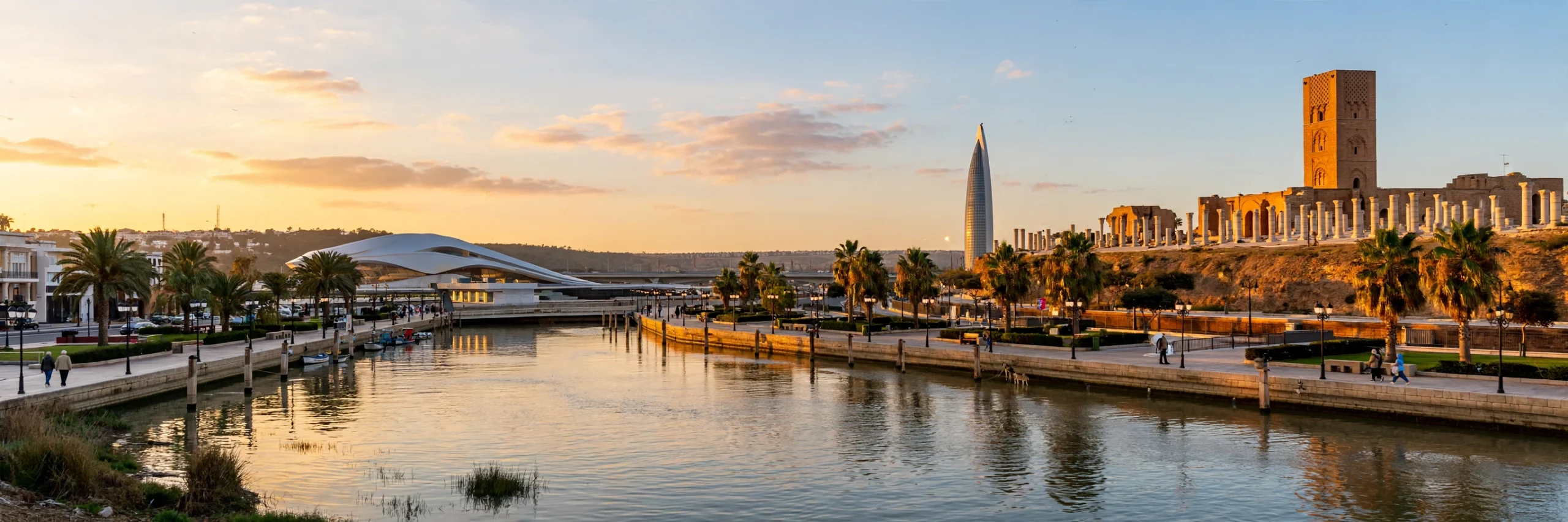
The best places to live in Morocco depend on your job, your budget and how much heat you can take. Ask ten foreigners where to live in Morocco and nine will say Marrakech. Ask ten Moroccans the same question and most will say Rabat — then look slightly surprised you even had to ask. That gap is exactly why this article exists.
I am Moroccan, and I have lived and worked in every city on this list. The Morocco you visit for a week is not the Morocco you live in for a year: a medina that thrills you for three days can exhaust you by month three, while a city with no postcard view can quietly give you the best daily life in the country. This is a comparison of where daily life actually works — rent, transport, weather, noise, internet, healthcare — not a list of the prettiest places.
Start with our Living in Morocco: The Complete Guide for Expats and Long-Stay Visitors for the big picture, and read Moving to Morocco: Visas, the Carte de Séjour and Residency, Step by Step before you sign any lease — your residency file is tied to the city where you live.
The Insider Correction: “Best Place to Live” Does Not Mean “Best Place to Visit”
Outsiders routinely rank Moroccan cities by how photogenic they are. That is the first mistake, and it leads people to sign a year-long lease in a riad in the Marrakech medina and then discover, in August, that they cannot park, cannot sleep, cannot get a plumber on a Friday, and cannot keep a flat cool at 45°C.
Here is the correction: Moroccans themselves judge a city by liveability, not by beauty. Green space, clean streets, a tram that runs on time, a hospital within twenty minutes, a café where you can sit without being hassled — that is the scoreboard. By that scoreboard, Rabat wins, and it is not close. The capital is the city most visitors skip, and the city most Moroccans would choose if they could.
How I Compared the Seven Cities
Every city below is scored on the same six things: rent, cost of daily life, transport, climate, work and internet infrastructure, and the honest downsides — every Moroccan city has them. Prices are ranges, not promises: rents move by neighbourhood and building age, and fast in popular districts. All figures were checked in November 2026 at roughly 10 MAD to 1 USD. For a full monthly budget breakdown, see our Cost of Living in Morocco in 2026: Real Monthly Budgets by City.
Best Places to Live in Morocco: The Seven Cities at a Glance
| City | 1-bed furnished rent (centre) | Vibe | Best for | Biggest downside |
|---|---|---|---|---|
| Rabat | 5,000–8,000 MAD ($500–$800) | Calm, green, organised | Families, remote workers, first-timers | Quiet nightlife; can feel sleepy |
| Casablanca | 6,000–10,000 MAD ($600–$1,000) | Big, fast, business-first | Careers, startups, big-city energy | Traffic, pollution, long commutes |
| Marrakech | 4,500–8,000 MAD ($450–$800) | Hot, lively, tourist-facing | Entrepreneurs, sun-seekers, social life | Brutal summers; tourist pricing |
| Fes | 3,000–5,500 MAD ($300–$550) | Old, deep, intellectual | Culture lovers, tight budgets, Arabic students | Fewer modern amenities; cold winters |
| Tangier | 4,500–7,500 MAD ($450–$750) | Cosmopolitan, windy, café culture | Europe-hoppers, creatives, sea lovers | Wind and rain in winter; sprawling |
| Agadir | 4,000–7,000 MAD ($400–$700) | Sunny, beachy, relaxed | Retirees, surfers, winter sun | Can feel resort-like; fewer jobs |
| Essaouira | 4,000–6,500 MAD ($400–$650) | Small, windy, easy-going | Artists, slow living, kite surfers | Small job market; the wind never stops |
1. Rabat — The Capital Everyone Skips (My Top Pick)
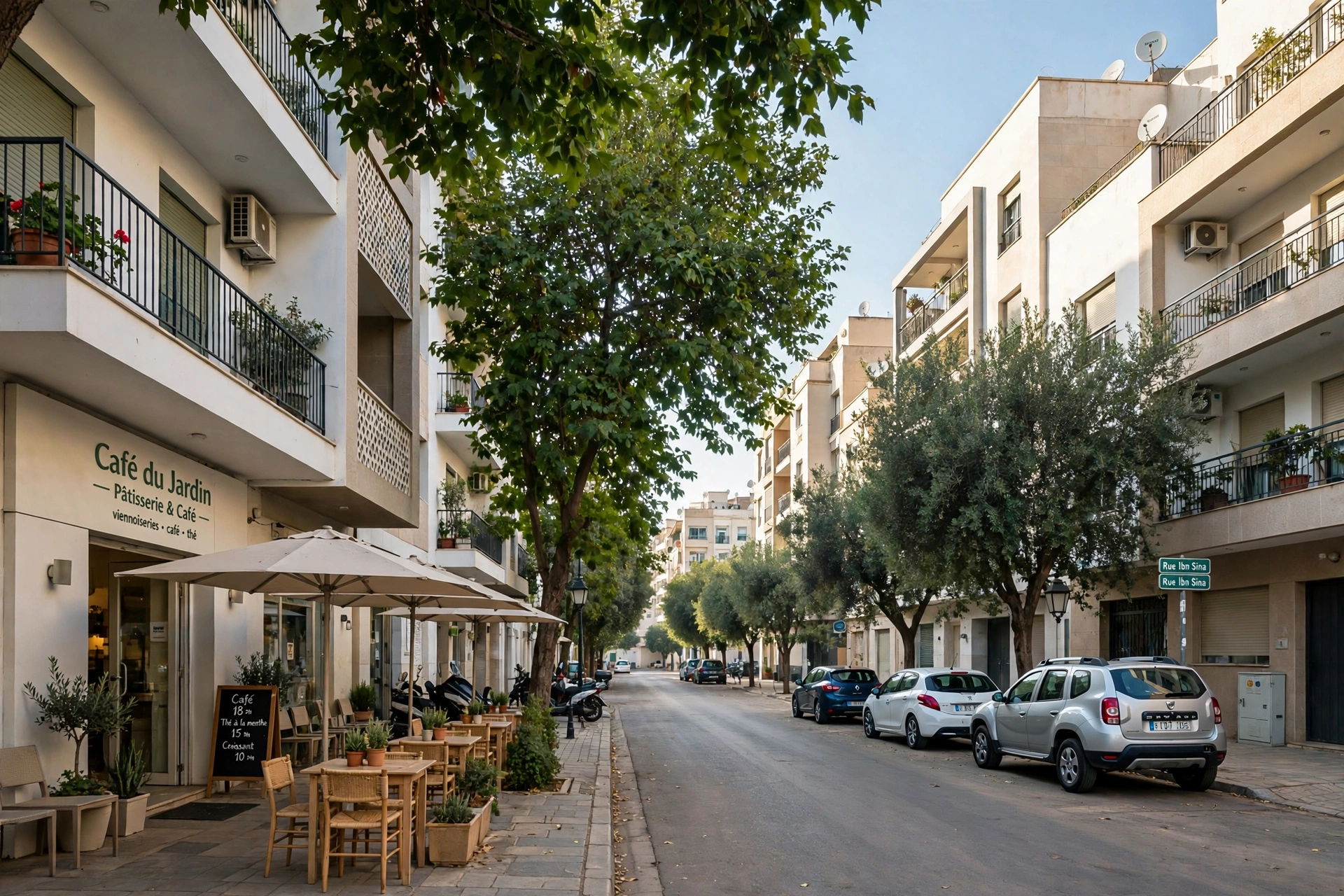
Rabat is where I would tell a friend to live, and it is where a surprising number of Moroccans who could live anywhere actually settle. It is the administrative capital, which sounds boring until you live there: the streets are clean, the gardens are real, the tram runs on time, and the Atlantic is a ten-minute walk from most of the centre. Agdal and Hay Riad are the neighbourhoods long-term residents actually choose — modern apartment buildings, tree-lined streets, cafés with fibre internet, and parking that works.
The corniche, the tram to the old medina, and the Al Boraq to Casablanca in under an hour cover most needs. Summers rarely pass 30°C, winters are cool and green, and the international schools, embassies, and best public hospitals in the country are all here.
The honest downside: Rabat is quiet. If you want nightlife or a new restaurant every week, you will find it thin — some newcomers call it sleepy; residents call it peaceful. Daily services are the second-most expensive in the country after Casablanca, though rents stay lower because demand is steadier.
2. Casablanca — For Careers, Not for Charm
Casablanca is Morocco’s economic engine and biggest city, home to roughly 3.7 million people. If you need a job in finance, tech, logistics, or international business, this is where the jobs are. Neighbourhoods like Maarif, Anfa, and Ain Diab offer modern flats, international restaurants, and the country’s deepest coworking scene.
But be honest about what you are buying. Casablanca is loud, congested, and grey for much of the winter, and a commute that looks like 20 minutes on a map can take an hour. Air quality is the worst of any city on this list, and the Atlantic here is for looking at, not swimming in. Rents in the good neighbourhoods are the highest in the country.
3. Marrakech — The City You Visit Brilliantly and Live In Carefully
Marrakech is the city the world knows: the light, the food, the Atlas on the horizon, and a social scene that never stops. For entrepreneurs and people whose work is tourism-adjacent, it makes sense. The Guéliz district — the modern city, not the medina — is where long-term residents live: wide avenues, supermarkets, gyms, and flats with actual insulation. Winter here is warm and bright while Europe freezes.
But Marrakech charges for it in summer. From June to September, daytime temperatures regularly pass 40°C and can touch 45°C, and air conditioning becomes a monthly bill of 500–1,000 MAD ($50–$100). The medina, magical for a weekend, is a hard place to live year-round: no cars, no parking, and a constant stream of visitors. Tourist pricing inflates the centre — a coffee that costs 10 MAD in a local café can cost 30 MAD two streets away.
4. Fes — The Deepest Culture at the Lowest Price
Fes is the cheapest city on this list and, for many Moroccans, the most culturally serious. Fes el-Bali is the largest car-free medieval medina in the world, and the city still runs on scholarship, craft, and tradition. A one-bedroom flat costs 3,000–5,500 MAD ($300–$550) — roughly half of Casablanca — and daily life is the cheapest in the country. If you are studying Arabic or living on a tight budget, Fes gives you the most Morocco per dirham.
The trade-offs are real. Fes is inland and continental: summers are hot, winters are genuinely cold, and some older flats have no heating at all — ask before you sign, because a January night can drop near freezing. Modern amenities are thinner than in Rabat or Casablanca: fewer restaurants, fewer coworking spaces, slower fibre in the old districts. Most expats settle in the ville nouvelle around the train station, which works but lacks the polish of Agdal or Guéliz.
5. Tangier — The Cosmopolitan Gateway
Tangier has always been different. An international zone until 1956, it still feels like a city facing two continents: the Strait of Gibraltar, the ferry to Spain in about an hour, cafés full of readers, and a mix of Moroccan, Spanish, and French influence you will not find elsewhere. The new corniche, the marina, and the high-speed train have made it feel like a city on the rise, and rents remain reasonable for a coastal city with this much going on.
Tangier suits the creative, the Europe-hopper, and anyone who wants sea air and café culture and does not mind a city still figuring itself out. The old medina and kasbah are genuinely liveable, and the seafood is excellent.
The downsides: the wind. Tangier is windy for much of the year, and winter brings real rain and grey days that surprise people who expected endless sun. The city sprawls, so a flat in the wrong area means long, expensive taxi rides, and the job market outside tourism and the port is still thin.
6. Agadir — Sunshine, Surf, and the Easiest Winter in Morocco
Agadir was rebuilt from scratch after the 1960 earthquake, which is why it looks nothing like the other cities here: wide boulevards, modern apartment blocks, and a long, clean beach. It is the sunniest city on this list — over 300 days of sunshine a year is the local claim, and it is not far off — and French retirees have quietly settled here for decades, because winter means 20°C and lunch outside.
For retirees, remote workers, and surfers (Taghazout, twenty minutes north, is the surf capital), Agadir is hard to beat on pure comfort. Rents are moderate, the cost of living is lower than Rabat or Casablanca, and the city is flat and walkable, with private clinics for most routine care.
The honest caveat: Agadir can feel like a resort that forgot to become a city. The cultural life is thinner than in Fes or Rabat, the job market is small, and the nightlife is quiet. Some residents love exactly that; others drive to Marrakech — about three hours — for a change of scene.
7. Essaouira — Slow Living on the Atlantic (My Wild Card)
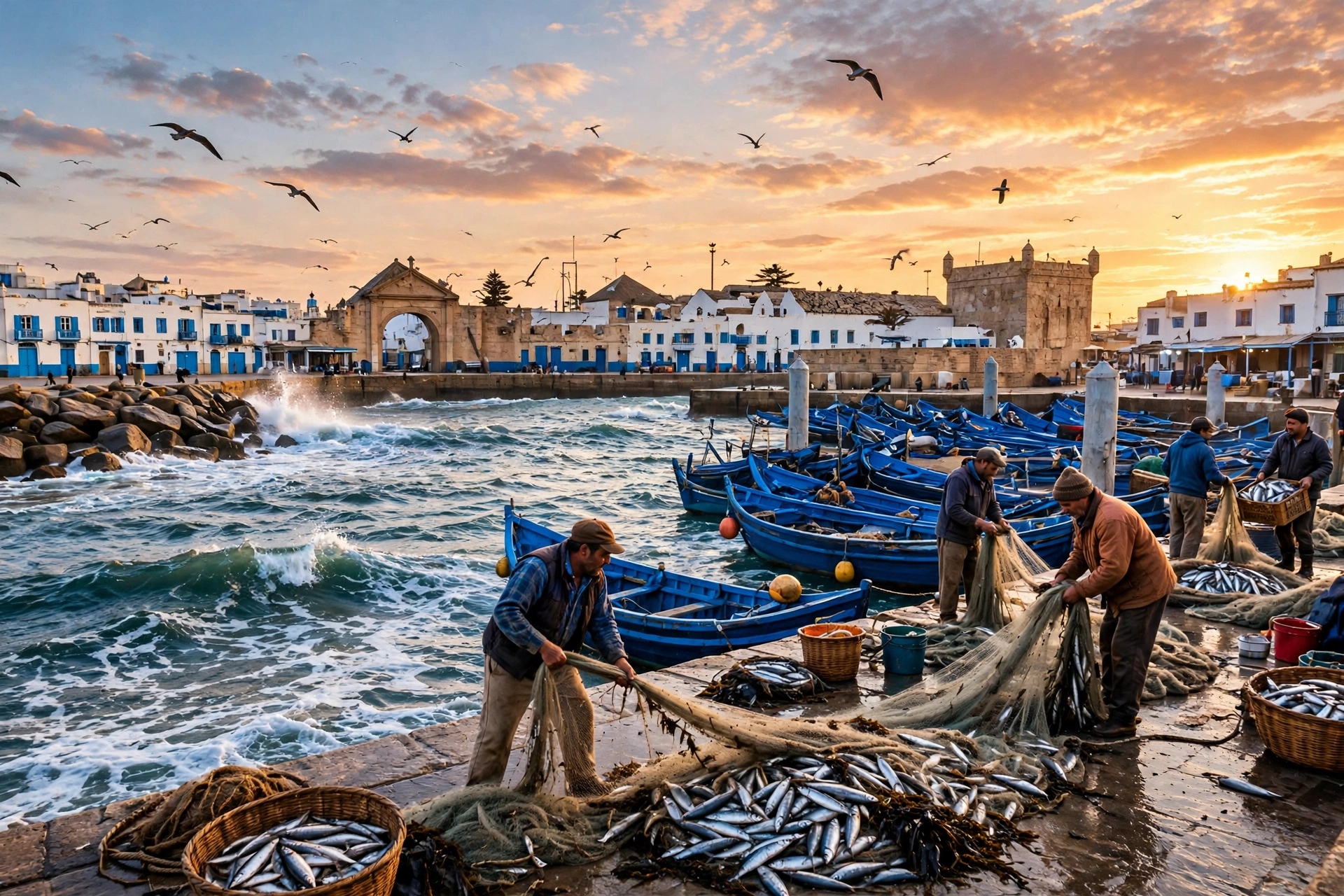
Essaouira is the smallest city on this list, and the one I most want to be honest about, because it is the easiest to romanticise and the hardest to live in year-round. The medina is the calmest in Morocco — nobody hassles you here, the seafood is the freshest in the country, and the white-and-blue streets genuinely do look like the photographs. Artists, musicians, and kite surfers have made it their base, and the Gnaoua festival every summer is one of the best weekends in the country.
But small has consequences. The job market is tiny. The wind — the famous alizé — blows hard for much of the year, wonderful for kitesurfing and less wonderful for a quiet evening on a terrace. Winters are damp and cool, the town can feel empty outside summer, and the best long-term flats go to people who already know the landlords.
How to Choose: Five Questions That Decide It
Forget the rankings for a moment. Answer these five questions honestly, and the right city usually picks itself.
- Do you need a local job, or do you bring your income with you? A local job means Casablanca or Rabat; remote income opens up all seven.
- How do you feel about heat? If summer above 40°C is a deal-breaker, cross off Marrakech and Fes, and look at Rabat, Agadir, or Essaouira.
- Do you want a city, or a town? Casablanca and Marrakech are cities; Essaouira is a town. The daily rhythm is completely different.
- Are you moving with children? Rabat wins on schools, safety, and green space. Agadir is a strong second.
- How long will you stay? For a winter, pick Agadir or Essaouira. For a year or more, pick the city whose boring Tuesdays you can enjoy — most of life is Tuesdays.
One practical note that applies everywhere: never sign a lease before you have spent at least a week in the neighbourhood. Moroccan rental listings are optimistic about noise, light, and water pressure, and the best flats move through neighbourhood brokers and word of mouth rather than websites. Our pillar guide Living in Morocco: The Complete Guide for Expats and Long-Stay Visitors covers contracts and traps, and our cost-of-living pillar will help you budget the move. If you have a question we have not answered, you can reach us through the contact page.
Frequently Asked Questions
What is the best place to live in Morocco for expats?
Rabat, for most people — calm, green, coastal, well organised, with the best public services and international schools in the country. Casablanca suits corporate jobs, Agadir suits retirees, Marrakech suits entrepreneurs. For a first-timer, it would be Rabat.
Is Morocco cheap to live in?
Compared with Western Europe or North America, yes — a comfortable single-person budget runs roughly 8,000–15,000 MAD ($800–$1,500) a month depending on the city, with rent as the biggest variable. Compared with the average Moroccan salary, it is not cheap at all. Fes and Agadir are the cheapest cities on this list; Casablanca is the most expensive.
Can foreigners buy or rent property in Morocco?
Renting is straightforward with a passport and, for longer leases, a residence card. Buying is also possible in most cases, though agricultural land and some rural property carry restrictions. Always use a notary (notaire) for a purchase, and never pay a large deposit in cash without a written contract.
Which Moroccan city has the best weather year-round?
Agadir, for sunshine and mild winters — it rarely gets very hot or very cold. Rabat is the best all-rounder: mild summers, green winters, sea breezes. Marrakech has the best winter and the worst summer; Fes has the most extreme seasons on this list.
Is it safe to live in Morocco as a foreigner?
Yes. Violent crime against foreigners is rare, and all seven cities are safe to walk in during the day. The realistic annoyances are petty theft in crowded places, unmetered taxis, and the occasional tourist-area scam. Normal precautions — lock your door, do not flash valuables, use metered taxis — cover almost everything.
Do I need to speak French or Arabic to live in Morocco?
You can get by in English in the tourist districts of Marrakech and Tangier, but daily life runs in French and Moroccan Arabic (Darija). Learning even basic French transforms the experience — landlords, plumbers, and administrators all work in French first. Darija is the language of warmth and friendship; even a few phrases change how people treat you.
The Bottom Line
The short version: Rabat for the best daily life, Casablanca for a career, Marrakech for energy if you can handle the heat, Fes for culture on a budget, Tangier for Europe next door, Agadir for sun and calm, Essaouira to slow down. Visit first, rent for a season before you commit, and choose the city whose ordinary days you enjoy — the postcard fades, and the Tuesdays are what you actually live.