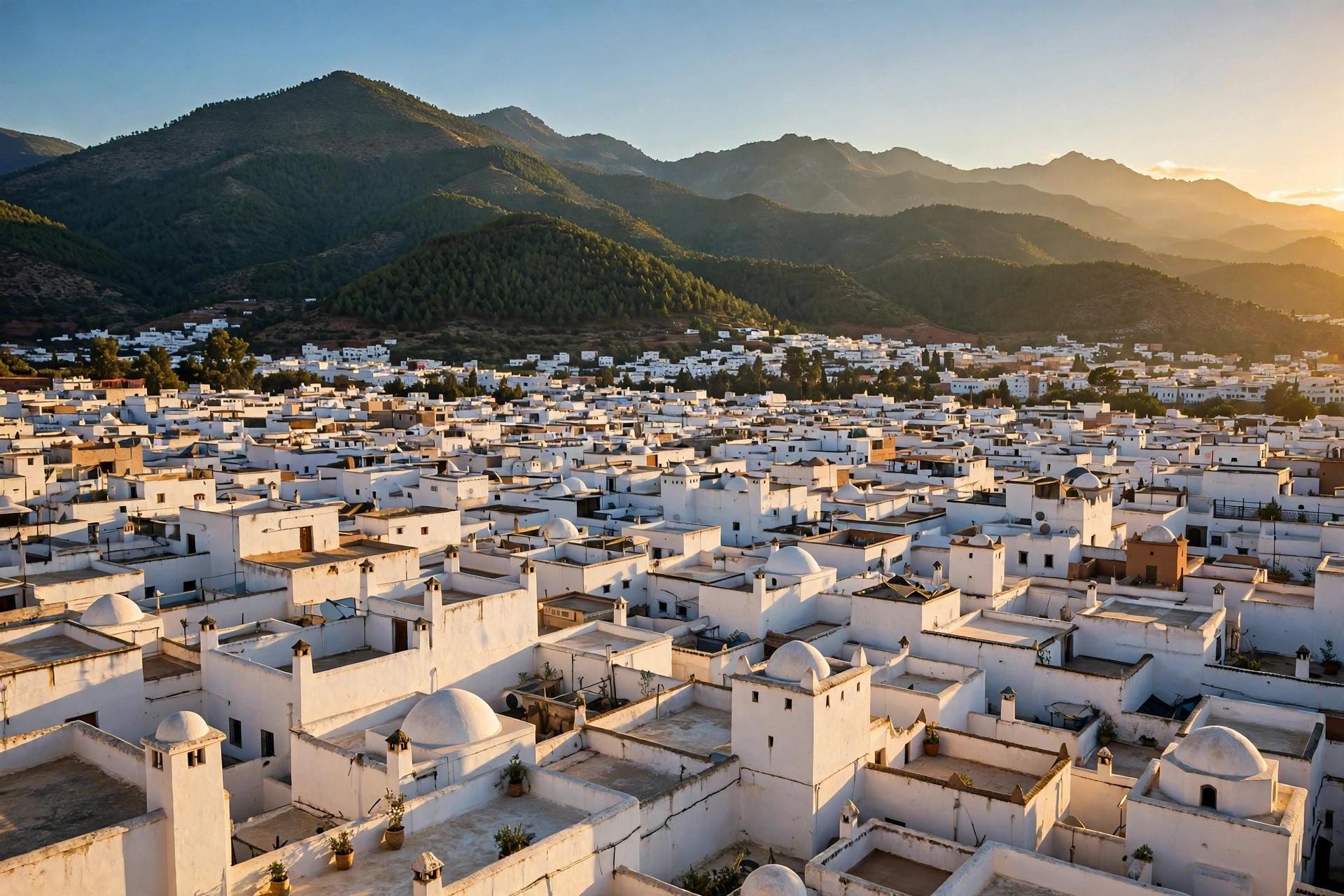
Most travellers race between Tangier and Chefchaouen without stopping — and miss one of Morocco’s most rewarding cities. This tetouan travel guide makes the case for slowing down in the White Dove, a city of whitewashed rooftops, Andalusian palaces and Spanish-era boulevards between the Rif and the Mediterranean. Tetouan’s medina has been a UNESCO World Heritage Site since 1997, yet the city sees a fraction of the visitors that crowd Fez or Marrakech. That is its charm: artisan lanes, superb seafood and a beach fifteen minutes away. Below is everything you need to plan it, with prices checked in November 2026.
Use this tetouan travel guide as a quick reference. Tetouan sits in the Martil Valley in Morocco’s far north, about 60 km east of Tangier and 10 km inland from the Mediterranean. About 422,757 people live in the municipality proper (2024 census), yet it still feels like a relaxed provincial town. It is known as the White Dove, La Paloma Blanca in Spanish, and as the Daughter of Granada. One or two days is ideal: one for the medina and the Spanish quarter, and a second for the beach or a day trip. Browse our other Morocco Travel guides to plan the rest of your trip.
Fact
Detail
Location
Martil Valley, northern Morocco, between the Rif and the Mediterranean
Population
About 422,757 in the municipality (2024 census)
Nickname
The White Dove (La Paloma Blanca)
UNESCO site
Medina of Tetouan, inscribed 1997
Nearest airport
Sania Ramel (TTU), about 5 km northeast of the centre
Nearest train station
Tangier Ville, about 60 km away — Tetouan has no station
Best months
April–June and September–October
Ideal stay
1–2 days, plus a beach or day-trip day
A Short History of the White Dove
Tetouan’s story starts long before the white houses. The ancient settlement of Tamuda, a few kilometres away on the Martil river, was a Phoenician trading post and later a Roman town, with roots reaching back to at least the 3rd century BCE. The modern city was rebuilt from the late 15th century by Muslim and Jewish refugees expelled from Granada, who brought their architecture, crafts and cuisine with them. Their leader, Sidi Ali al-Mandri, is remembered as the city’s founder, though the exact year of the rebuilding is unsettled — sources place it anywhere in the 1480s and 1490s.
Tetouan then grew rich as a port and a centre of fine crafts, above all its green-glazed tiles and embroidery. In 1860 Spain briefly occupied the city during the Spanish-Moroccan War. From 1913 to 1956 Tetouan served as the capital of the Spanish Protectorate in Morocco, which built the elegant Spanish quarter, El Ensanche, beside the medina. After independence in 1956 it grew into a regional capital, joining UNESCO’s Creative Cities Network for Crafts and Folk Art in 2017. This tetouan travel guide keeps the history brief: walk the two quarters side by side.
The UNESCO Medina: Tetouan’s Old Town
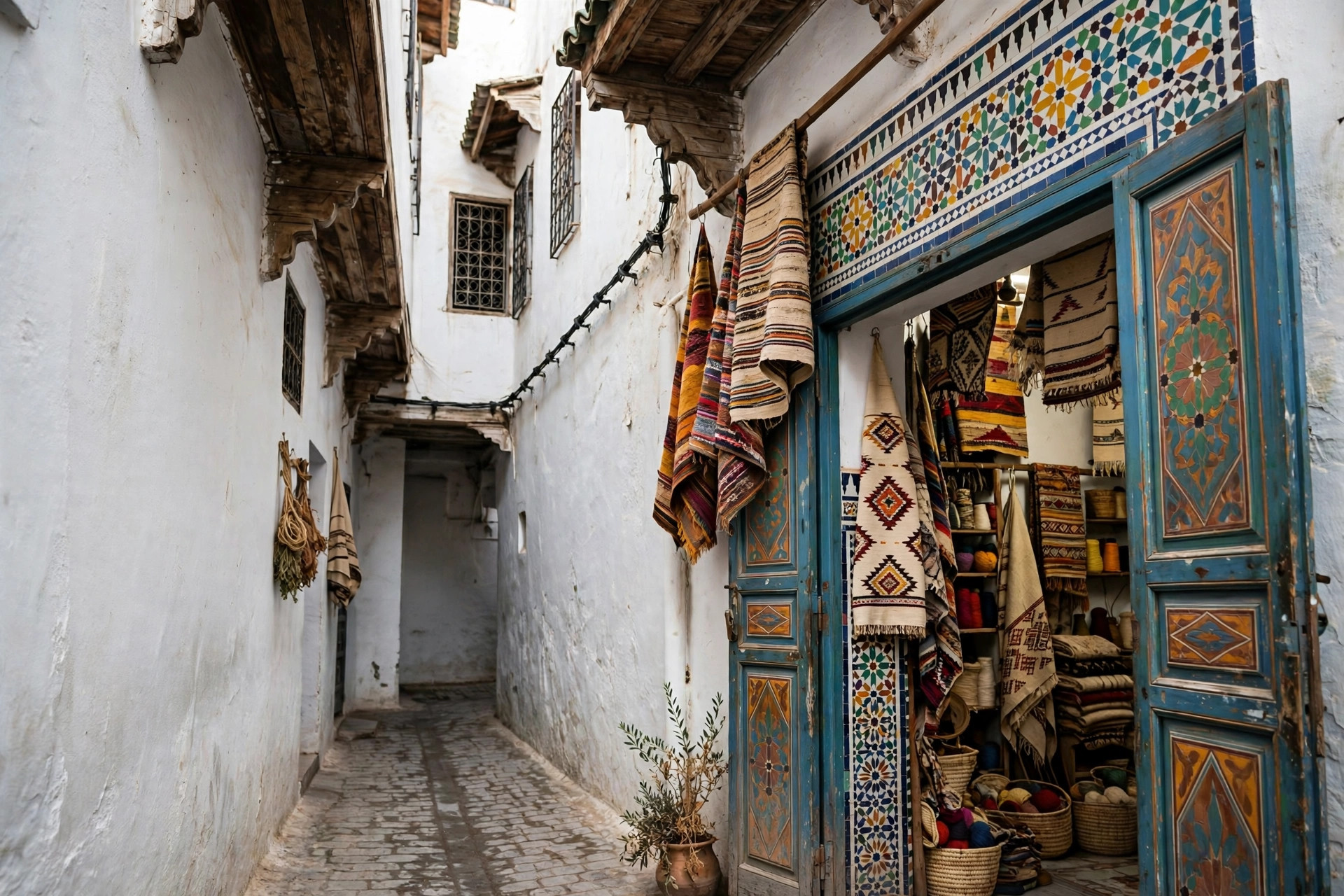
The medina is the reason most travellers come, and it deserves a slow morning. Inscribed by UNESCO in 1997, it is one of the smallest of Morocco’s great medinas — and, for this tetouan travel guide, one of the most rewarding to explore. A wall of roughly five kilometres encloses it, entered through seven gates: Bab El Okla is the most impressive, Bab Laouad the busiest. Inside, the streets are narrow, whitewashed and mostly flat — far easier to walk than the steep lanes of Fez.
Start at Bab El Okla and drift downhill through the artisan quarters: weavers at looms, jewellers, leather workers and the zellige tile workshops that still supply the city’s palaces. Look up as you walk: the white houses are mostly a single storey, with green-tiled roofs and wrought-iron balconies, and the Grand Mosque’s minaret rises above them.
Non-Muslims cannot enter mosques in Morocco, but the exteriors and the squares around them are part of the walk. Hire a local guide at Bab El Okla for an hour or two — this tetouan travel guide recommends it, because the lanes all look alike to a first-timer and a guide turns a maze into a narrative.
Place Hassan II, the Royal Palace and El Ensanche
Step out of the medina at its western edge and the city changes completely. Place Hassan II — once the Feddan, or Mechouar — is a palm-lined square where the Royal Palace stands behind its gates, flanked by the Hassan II Mosque. The palace is a working royal residence: admire it from the square, and do not photograph the gates or guards. At dusk the square fills with families and the light turns the white facades gold.
From the square, Avenue Mohammed V and Avenue Hassan II run through El Ensanche, the Spanish quarter built during the protectorate years: wide pavements, art deco facades, the circular Plaza Moulay el Mehdi, and cafés with terraces that feel more Madrid than Marrakech. El Ensanche also holds the city’s best conventional hotels, banks and pharmacies. Any tetouan travel guide that skips this quarter misses half the city.
Museums: Ethnographic, Archaeological and More
Tetouan’s museums are small, cheap and rewarding, and this tetouan travel guide suggests picking two rather than rushing all of them. The Ethnographic Museum, also called the Museum of Moroccan Art, sits inside the medina in a former fortress, with the city’s best collection: costumes, jewellery, musical instruments and embroidery that explain why Tetouan is called Morocco’s fine-arts capital. The Archaeological Museum, near the medina’s edge, displays finds from Tamuda and other Roman sites of the north.
Two smaller stops round out the picture. Dar El Oddi is a restored family house of old photographs and postcards of the city; entry is about 25 MAD (around $2.50) and you ring the bell to be let in. The Madrasa Loukach, a 19th-century Koranic school, costs about 10 MAD (around $1) and is worth a look for its carved courtyard. Most museums charge 10–30 MAD (about $1–$3), but hours shift without notice, so ask at your hotel first.
Getting to Tetouan: Airport, Buses and Taxis
Tetouan is a road-only city, and knowing that before you book saves real frustration. Its airport, Sania Ramel (TTU), sits about 5 km northeast of the centre on the road to Martil, but serves only a handful of routes, mostly to Spain and Belgium. A petit taxi to the centre takes 10–15 minutes and costs 30–60 MAD (about $3–$6), or 60–80 MAD (about $6–$8) at night. There is no airport bus or shuttle, so agree the fare before you get in.
There is no train station in Tetouan at all: the rail network runs along the Atlantic corridor, and the nearest station is Tangier Ville, about 60 km away. From Tangier, the practical choice in any tetouan travel guide is the bus: CTM and the local operator Nejme Chamal run the route in 1–1.5 hours for about 30–45 MAD (about $3–$4.50), CTM bookable online with reserved seats. A chartered grand taxi costs 300–450 MAD (about $30–$45) for the whole car and takes under an hour.
If you are combining cities, our Tangier travel guide explains the Tangier end of the journey, and our Chefchaouen guide covers the blue city 62 km to the south — about an hour by CTM bus, around 50 MAD (about $5). This tetouan travel guide recommends the morning bus from Tangier, which puts you in the medina by late morning with the whole day ahead.
Getting Around Tetouan
Tetouan is compact, and this tetouan travel guide recommends exploring it on foot. The medina is pedestrian, the Ensanche is flat and walkable, and the walk between the two takes about ten minutes. For longer hops, petit taxis are the city’s workhorse: a ride across town typically costs 10–20 MAD (about $1–$2), though you should agree the price first, as meters are rarely used with visitors.
Local buses run to Martil and M’diq for a few dirhams, and shared grand taxis gather near the bus station for the coast and for Chefchaouen. Renting a car is unnecessary inside the city — parking is tight and the medina is closed to traffic — but it helps for several day trips into the Rif, with Tangier rental often cheaper.
Where to Stay in Tetouan
Tetouan stays noticeably cheaper than Tangier or Marrakech for the same comfort level. There are three sensible bases. Inside the medina, restored riads give you the full White Dove experience: courtyard patios, rooftop breakfasts and green tiles overhead, from about 400–800 MAD (about $40–$80) a night. In El Ensanche, modern hotels offer bigger rooms, lifts and easier parking, from about 350 MAD (about $35). On the coast, Martil and Cabo Negro suit summer trips, with beach hotels and apartments from about 500 MAD (about $50). If you fall in love with the city, our guide to living in Tetouan covers longer stays and monthly costs — a useful next read after this tetouan travel guide.
Area
Best for
Typical price per night
Medina riad
Atmosphere, walking everywhere
400–800 MAD ($40–$80)
El Ensanche hotel
Comfort, parking, easy taxis
350–700 MAD ($35–$70)
Martil / Cabo Negro
Beach stays, summer trips
500–1,200 MAD ($50–$120)
Budget guesthouse
Simple rooms, low cost
200–350 MAD ($20–$35)
Book medina riads early in spring and autumn. Prices above were checked in November 2026; confirm the rate before booking, and check on arrival whether breakfast and the tourist tax are included.
Tetouan Travel Guide to Food: What to Eat
Tetouan’s kitchen is Andalusian at heart, with a Spanish accent and the Mediterranean on its doorstep — and this tetouan travel guide rates it among the best-value food scenes in northern Morocco. Start with the fish: the coast is ten kilometres away, so grilled sardines, fried calamari and the catch of the day appear on menus across the city, a seafood grill typically costing 60–120 MAD (about $6–$12). The old town serves the classics — pastilla, harira, lamb tagine and Friday couscous — while the Spanish quarter leans towards tapas, tortilla and coffee culture, a legacy of the protectorate years.
La Unión on Avenue Mohammed V and the fish specialists along Avenue Chakib Arsalan are the names that come up most. The cafés around Place Hassan II and Plaza Moulay el Mehdi are perfect for mint tea and people-watching, and the medina’s bakeries sell warm bread and sweets for a few dirhams. A café meal costs roughly 40–80 MAD (about $4–$8) and a restaurant dinner 80–150 MAD (about $8–$15) per person. Most kitchens close by 22:00, so eat on local time and you will eat well.
The Coast: Martil, Cabo Negro and M’diq
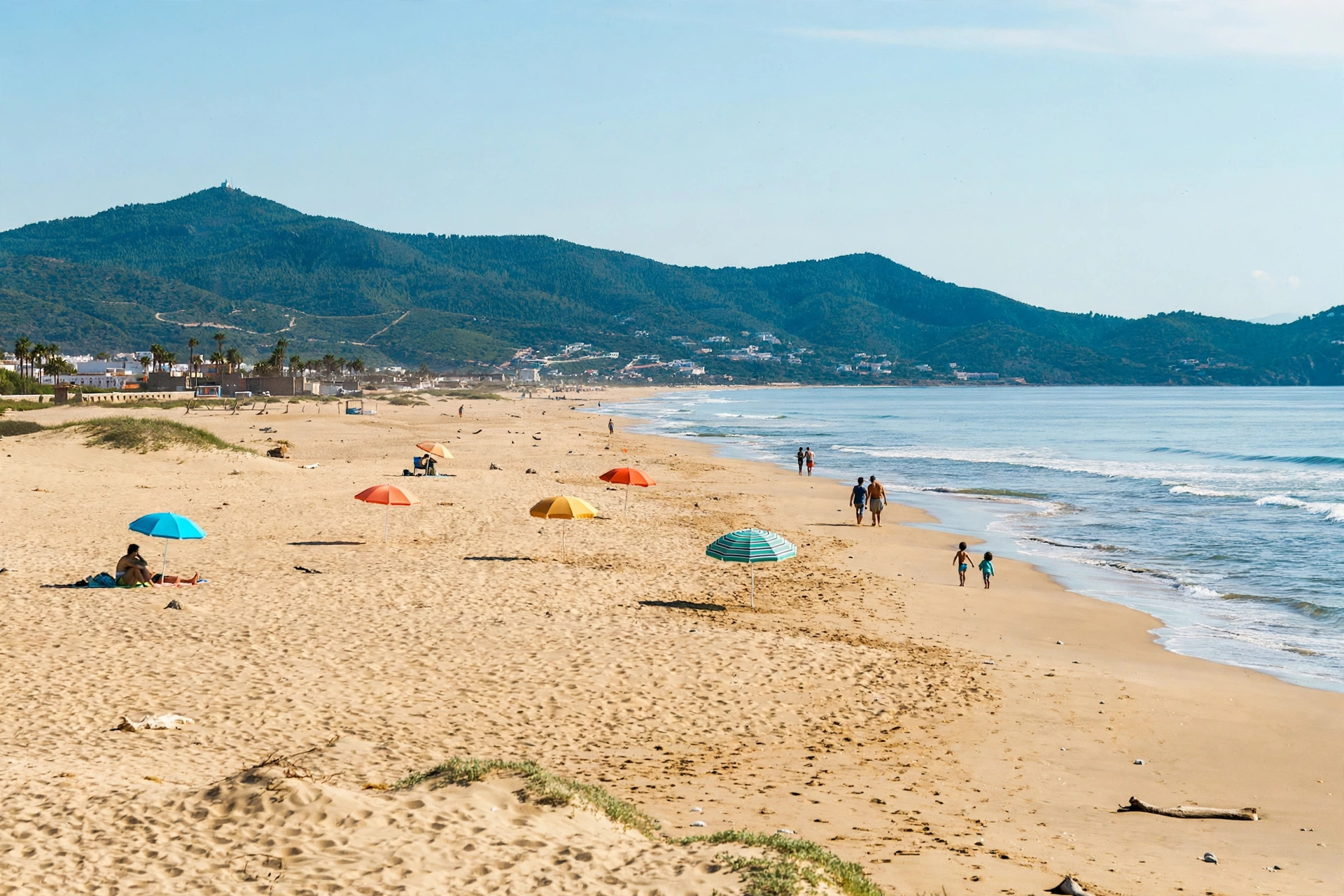
The Mediterranean is Tetouan’s second act, and it is closer than most visitors expect. Martil, the city’s beach town, lies about 10 km to the northeast — fifteen minutes by car or a cheap local bus — with a long sandy beach, a flat corniche and cafés that fill with families in summer. It is an everyday Moroccan seaside town rather than a resort, which is precisely its appeal. Just north sits Cabo Negro, a quieter stretch with a golf resort and smarter hotels, while M’diq offers a well-kept promenade and a pleasant end-of-day atmosphere.
Further north, Fnideq has a small port near the Ceuta border, and Marina Smir offers a marina and calm waters popular with yachtsmen. Tamouda Bay runs for fifteen kilometres of fine sand. In summer the water is warm and the beaches are busy; outside June to September they are almost empty, which makes a spring or autumn afternoon on the sand one of the quiet pleasures of this tetouan travel guide. If you only have one day, pair a medina morning with a Martil afternoon — the two halves of Tetouan fit a single day neatly. That pairing is the simplest advice in this tetouan travel guide.
A Tetouan Travel Guide to Day Trips
Tetouan makes an excellent base for the north, and a tetouan travel guide would be incomplete without the trips around it. Chefchaouen, the blue city of the Rif, is the classic choice: about 62 km and 1.5 hours by bus or grand taxi, a full day among blue lanes and mountain views. Read our Chefchaouen guide before you go, and consider a night there if you also want the Akchour waterfalls, about 30 km beyond Chefchaouen in the Talassemtane National Park — a river hike to waterfalls and the natural rock arch known as God’s Bridge.
Closer to home, Oued Laou is a quiet fishing town about 50 km down the coast, ideal for a slow seafood lunch, while the Rif foothills hide the Aïn Zarka waterfall, only about 10 km and twenty minutes from the centre. Combining Chefchaouen and Akchour by hire car in one day is possible but rushed — this tetouan travel guide suggests one destination per day, and a night in Chefchaouen if you want both.
Destination
Distance
Travel time
Best for
Chefchaouen
~62 km
~1.5 hours
Blue medina, Rif views
Akchour waterfalls
~90 km via Chefchaouen
~2.5 hours
Hiking, God’s Bridge
Tangier
~60 km
~1–1.5 hours
City, Strait of Gibraltar
Oued Laou
~50 km
~1 hour
Quiet beach town, seafood
Talassemtane National Park
~70 km
~2 hours
Forest trails, fir trees
Best Time to Visit Tetouan
Spring (April–June) and autumn (September–October) are the sweet spot: warm, clear days, highs of roughly 21–27°C (about 70–81°F), the Rif green after the winter rains. Summer is hot, highs around 30°C (about 86°F), but the sea breeze takes the edge off and the beaches are at their best — book ahead, because Martil and Cabo Negro fill up. Winter is mild and rainy, highs around 19°C (about 66°F), wettest from November to January, so pack a waterproof layer.
Two days is the ideal stay in this tetouan travel guide: one for the medina and El Ensanche, and one for the coast or a day trip. If you only have one day, arrive early from Tangier and see the medina in the morning, then cross to Place Hassan II at dusk.
Tetouan rewards the traveller who gives it time: a medina without the crowds, a Spanish quarter without the tour buses, and a beach ten minutes away. That is the promise of this tetouan travel guide — a northern city that still feels discovered rather than consumed. Come for a day, stay for two, and you will understand why the White Dove has kept its admirers. This tetouan travel guide ends where your trip should begin: at Bab El Okla, in the morning light.
Is Tetouan worth visiting?
Yes. Tetouan pairs a UNESCO-listed Andalusian medina with a Spanish colonial quarter and a Mediterranean beach ten minutes away, all without the crowds of Fez or Marrakech. This tetouan travel guide rates it among the best-value city breaks in northern Morocco.
How many days do you need in Tetouan?
One full day covers the medina, Place Hassan II and El Ensanche. Two days is ideal: add Martil beach or a day trip to Chefchaouen.
Is Tetouan safe for tourists?
Tetouan is generally safe and relaxed for visitors: keep valuables out of sight in busy souks, agree taxi fares in advance, and avoid photographing the Royal Palace, government buildings or uniformed guards. Solo travellers commonly feel comfortable here, especially in daylight.
How do I get from Tangier to Tetouan?
Take a CTM or Nejme Chamal bus from Tangier: 1–1.5 hours, about 30–45 MAD (about $3–$4.50). A chartered grand taxi costs 300–450 MAD (about $30–$45) for the whole car.
Can I visit Tetouan as a day trip from Tangier?
Yes, easily. Buses run frequently and the journey takes about an hour. Staying overnight is better, though — the city is at its best in the early morning and at dusk.
What is Tetouan known for?
Tetouan is known for its UNESCO-listed medina, rebuilt by Andalusian refugees from Granada; its Spanish quarter, El Ensanche; its green-glazed tiles, embroidery and fine-arts tradition; and its nickname, the White Dove. The 1860 battle fought here is also famous in Moroccan history.
Last checked: Prices checked November 2026 (1 USD ≈ 10 MAD) — check on arrival, as fares, ticket prices and hotel rates change.