Ask ten expat blogs about the cost of living in Morocco and you will get ten versions of the same answer — because almost all of them price the same life: a furnished flat in a fashionable Casablanca or Marrakech neighbourhood, shopping in French-style supermarkets, and eating in restaurants aimed at foreigners. That life exists, and it is genuinely pleasant. But it is the most expensive version of Morocco, and it is not the one most Moroccans — or most long-stay visitors who settle in — actually live.
I am Moroccan, and this guide is built the way my own family budgets: souk prices, real rents in real neighbourhoods, tram passes, clinic receipts. The single most important thing to understand before any number below is this: rent decides everything. Rent swallows 40–55% of a monthly budget in Morocco, and the same comfort that costs you a premium in Casablanca costs 30–40% less in Fes or Agadir. Food, by contrast, is cheap almost everywhere if you shop where locals shop. Choose your city first, your neighbourhood second, and the rest of the budget mostly falls into place.
All prices below are in Moroccan dirhams (MAD) with US dollar equivalents at an assumed rate of 1 USD = 10 MAD (the real rate moves a few percent either way; check it before a big decision). Prices were checked in November 2026 and are given as ranges, because in Morocco the honest answer is always a range — the souk price, the fixed price, and the “first price quoted to a foreigner” are three different numbers. You can cross-check these ranges against Numbeo’s cost of living data for Morocco before you plan your budget.
The short answer
A single person living comfortably in Morocco — a decent one-bedroom flat in a good neighbourhood, eating well, using public transport, going out a few times a week — needs roughly 8,000–15,000 MAD per month ($800–$1,500), depending almost entirely on the city. On a careful budget you can live well on 5,000–7,500 MAD in the cheaper cities. A premium lifestyle in Casablanca or Marrakech, with a modern flat, a car and regular dining out, runs 18,000–30,000 MAD and up.
| Lifestyle (single person) | Monthly budget (MAD) | Monthly budget (USD) | What it looks like |
|---|---|---|---|
| Budget | 5,000–7,500 | $500–$750 | Studio or small flat in Fes, Essaouira or a local Casablanca district; souk shopping; buses and walking |
| Comfortable | 8,000–15,000 | $800–$1,500 | Good one-bedroom in a central neighbourhood, mixed souk and supermarket shopping, cafés and restaurants weekly |
| Premium | 18,000–30,000+ | $1,800–$3,000+ | Modern flat in Gauthier, Agdal or Guéliz, car, private healthcare, dining out several times a week |
If you are still deciding whether Morocco fits your plans at all, read our Morocco travel guide for first-time visitors first — a two-week trip is the cheapest research you will ever do — and then come back here with a city in mind.
Cost of living by city: the real comparison
Morocco is not one rental market; it is seven or eight different ones. Casablanca is the economic capital and prices like it. Rabat, the administrative capital, is calmer and slightly cheaper. Marrakech adds a tourist premium that spikes in high season. Agadir and Essaouira offer the coastal life at mid-range prices, while Fes — a magnificent imperial city that most expats oddly skip — is where your dirham goes furthest. Tangier, transformed by its port and the high-speed train, now sits closer to Rabat than to Fes.
The table below is a comfortable single person’s monthly budget in each city, broken into the categories that matter. Totals include the listed categories plus a small margin for the odds and ends every month brings.
| City | 1-bed rent | Utilities | Groceries | Transport | Eating out | Total / month |
|---|---|---|---|---|---|---|
| Casablanca | 4,500–6,500 | 400–600 | 1,800–2,400 | 400–700 | 800–1,200 | 9,000–13,000 MAD ($900–$1,300) |
| Rabat | 4,000–6,000 | 350–550 | 1,800–2,300 | 350–600 | 700–1,100 | 8,500–12,000 MAD ($850–$1,200) |
| Marrakech | 3,500–5,500 | 400–650 | 1,700–2,200 | 300–500 | 700–1,100 | 8,000–11,500 MAD ($800–$1,150) |
| Tangier | 3,500–5,500 | 350–550 | 1,700–2,200 | 300–500 | 700–1,000 | 8,000–11,500 MAD ($800–$1,150) |
| Agadir | 3,000–4,500 | 300–500 | 1,600–2,100 | 300–450 | 600–900 | 7,000–10,000 MAD ($700–$1,000) |
| Essaouira | 2,500–4,000 | 300–450 | 1,600–2,100 | 200–350 | 600–900 | 6,500–9,500 MAD ($650–$950) |
| Fes | 2,000–3,500 | 300–450 | 1,500–2,000 | 250–400 | 500–800 | 5,500–8,500 MAD ($550–$850) |
Two patterns jump out. First, the rent column alone explains nearly the whole gap between Casablanca and Fes — groceries differ by barely 20% across the country, rent by more than 100%. Second, Marrakech utilities run high for a reason nobody warns you about: air conditioning. Summers there are fierce, and a flat cooled all afternoon can double its electricity bill from June to September.
Rent: the number that decides your budget
Long-term unfurnished rentals are the baseline for every figure above, and finding one works differently from what most newcomers expect. The good flats rarely reach international listing sites. They move through local agencies (expect a fee of one month’s rent), neighbourhood noticeboards, Facebook groups, and — honestly — word of mouth through the building’s concierge. Budget two to four weeks of hunting, in person, before signing anything.
Practical rules that will save you real money:
- Furnished costs 30–50% more than the same flat unfurnished. Furnished makes sense for a three-month test stay; for a year or more, buying basic furniture pays for itself within months.
- Expect to pay a deposit of one to two months’ rent, plus the first month in advance. Get a proper written lease (contrat de bail) — you will need it for your residence paperwork.
- Negotiate. The asking price on a long lease is a starting point, especially outside high season in Marrakech and Agadir. Offering to sign for twelve months is your strongest argument.
- Neighbourhood beats city. In Casablanca, Gauthier and Maârif command the premium; five tram stops away in a solid middle-class district, the same flat can be 1,500 MAD cheaper. In Rabat, Agdal is the expat default; Hassan and Océan are cheaper and arguably more characterful.
- Utilities are usually in your name with the local provider (Lydec in Casablanca, Redal in Rabat, the RADEEF/RADEES equivalents elsewhere). Electricity and water for a one-bedroom typically run 250–450 MAD a month before air conditioning or winter heating.
For the full picture of paperwork, neighbourhoods and how settling in actually works, our guide to living in Morocco walks through the whole process step by step.
Food and markets: where Morocco is genuinely cheap
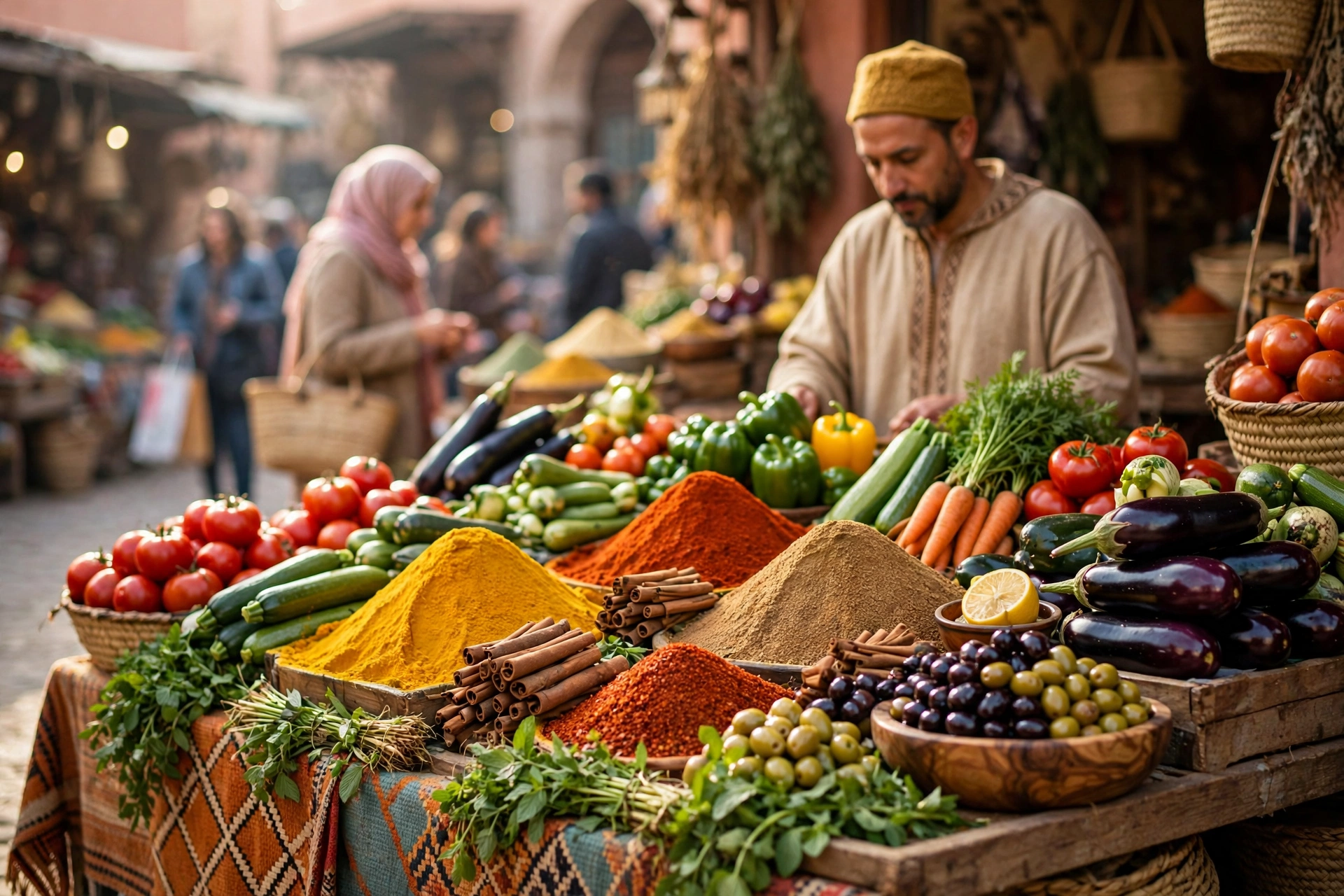
Food is the category where the gap between the “expat blog” budget and the local reality is widest. A weekly shop at a French-style supermarket for imported brands can cost 2,500 MAD a month. The same household, buying Moroccan produce at the souk and staples at the supermarket, eats better for 1,500–2,000 MAD. Morocco grows an extraordinary amount of its own food, and in-season local produce is priced for local wages.

Prices to anchor your expectations (checked November 2026):
- Round khobz bread: 1.20 MAD — bought daily, warm, from the neighbourhood bakery or the hanout on the corner
- Tomatoes, potatoes, onions, carrots in season: 4–8 MAD per kilo at the souk
- Chicken: 35–45 MAD per kilo; beef: 90–110 MAD per kilo; fresh sardines in a port city: 15–25 MAD per kilo
- Eggs: around 1.50 MAD each; local olive oil: 60–90 MAD per litre, and worth every dirham
- A mint tea or coffee in a local café: 12–20 MAD; a full lunch menu in a working-class restaurant: 35–60 MAD
- A mid-range restaurant dinner for one: 120–200 MAD; the same in a fashionable Casablanca address: 250 MAD and up
The rhythm that works: souk once or twice a week for vegetables, fruit, olives, spices and eggs; a supermarket run for dairy, pasta, cleaning products and anything imported you cannot live without; the hanout (corner shop) for everything in between — it will also, once it knows you, quietly run you a tab until the end of the month, as it does for half the neighbourhood.
Getting around: transport costs
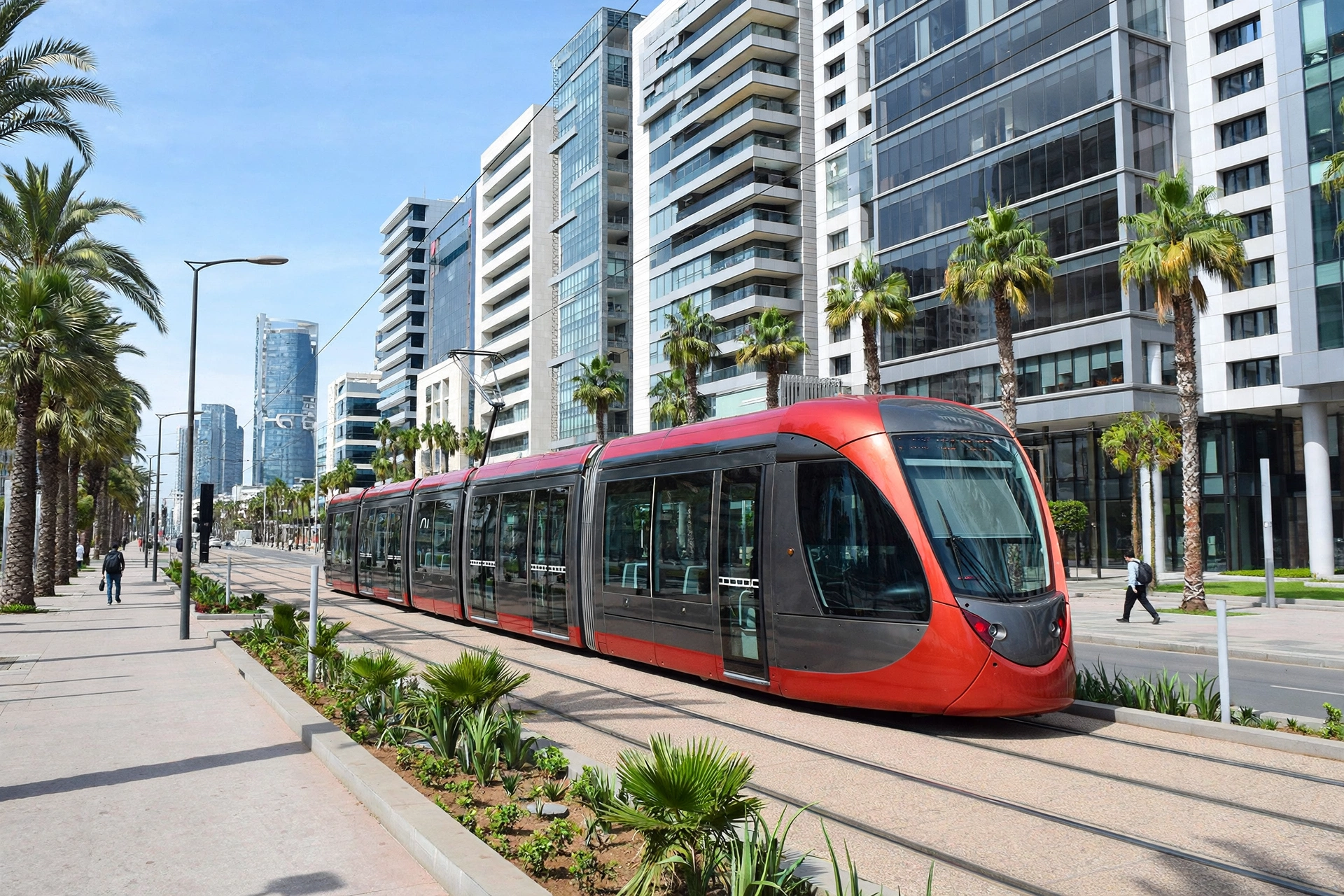
You do not need a car in any major Moroccan city, and skipping one is the second-biggest budget decision after rent. Casablanca and Rabat both have modern tramways — a monthly pass costs around 230 MAD — and every city runs on petit taxis: metered, plentiful, and cheap (most in-town rides are 10–25 MAD; always insist on the meter, the compteur). City buses cost 4–6 MAD a ride and have improved markedly in Casablanca and Agadir.
Between cities, the train network is excellent and inexpensive: the Al Boraq high-speed line links Tangier, Rabat and Casablanca, and a second-class ticket for a two-to-three-hour journey typically costs 100–200 MAD. Supratours and CTM coaches cover everywhere the rails do not, at similar prices. If you do bring or buy a car, budget honestly: fuel, insurance, maintenance and parking will add 2,000–3,500 MAD a month on top of everything else — which is why most residents, Moroccan and foreign alike, do not bother.
Healthcare: good private care, honest prices
Morocco’s public healthcare system is stretched, and most expats and middle-class Moroccans use the private sector — which is modern, French- and increasingly English-speaking, and priced far below European or American levels. A consultation with a private GP or specialist typically costs 300–500 MAD; a dental cleaning 300–400 MAD; common blood tests 200–600 MAD. Pharmacies are everywhere, knowledgeable, and many everyday medicines cost a fraction of their European price.
Private health insurance is the sensible line item most blogs forget to mention. Local policies for residents run roughly 3,000–8,000 MAD per year depending on age and coverage; international policies cost several times more. If you are employed in Morocco you will be enrolled in the national AMO scheme through your employer; if you are self-employed or retired, budget for a private policy from day one — it is still one of the cheapest safety nets you will ever buy relative to the care it unlocks.
Internet, SIM cards and staying connected
Connectivity is easy and cheap. Fibre internet (Maroc Telecom, Orange or inwi) costs 199–349 MAD a month depending on speed, and installation in cities is usually quick. A local SIM is sold at any telecom shop with your passport; prepaid data bundles of 10–20 GB cost 50–100 MAD, and coverage is strong in cities and along main roads. Many remote workers simply run on a generous mobile data plan plus café Wi-Fi as backup — total connectivity budget: 250–450 MAD a month, all in.
Leisure: the good life is not the expensive part
The things people move to Morocco for are mostly free or nearly so: Atlantic light, medina evenings, mountain weekends, café terraces. A café coffee is 12–20 MAD. A cinema ticket is 50–80 MAD. A mid-range gym membership runs 200–400 MAD a month; a hammam session in a good local hammam, 100–250 MAD. A weekend away — train, a mid-range riad or apartment, eating well — can be done beautifully for 1,500–2,500 MAD. A realistic leisure budget for a comfortable lifestyle is 800–1,500 MAD a month, and it buys more joy here than three times that figure buys in most European capitals.
Budgets for couples and families
Couples do not cost double — housing, utilities and internet barely change. A comfortable couple’s budget is roughly 1.5 times the single figures above: think 12,000–20,000 MAD a month ($1,200–$2,000) depending on city, in a one- or two-bedroom flat. Families should budget 16,000–25,000 MAD before schooling, in a two- or three-bedroom home (add 1,500–3,500 MAD over a one-bedroom rent in the same district).
Schooling is the one line that can break the whole model. Moroccan public schools are free but teach in Arabic and French; most expat families choose private bilingual or international schools, at roughly 2,500–6,000 MAD per month per child, with the French-mission and American schools in Casablanca and Rabat at the top of that range and beyond. If you are moving with children, price the school first and build the budget around it — the exact opposite order from a single person’s move. You can read more about who is behind these guides and how we research them on our about page.
What most cost-of-living blogs get wrong
After years of reading foreign write-ups about my own country, the same five errors come back again and again:
- They price one bubble. A furnished flat in Gauthier or Guéliz, imported groceries, and Western restaurants — then present the total as “the cost of living in Morocco”. It is the cost of living in about four postcodes.
- They shop only in supermarkets. Supermarket prices for imported brands tell you almost nothing; the souk is where Morocco actually buys food, and it is 30–50% cheaper for produce.
- They ignore seasonality. Short-term rents in Marrakech and Agadir swing hard between August and January. Annual leases smooth this out — another reason to sign long.
- They assume a car. Add a car to any budget and Morocco looks 25% more expensive. Most city residents simply do not own one.
- They convert at flattering rates or none. Numbers quoted only in dollars, from a trip two exchange-rate moves ago, age badly. That is why every figure here is in dirhams first, checked in November 2026.
Frequently asked questions
How much money do you need to live comfortably in Morocco?
For a single person, 8,000–15,000 MAD a month ($800–$1,500) covers a good flat, quality food, transport and regular leisure in most cities. Casablanca and premium districts sit at the top of that range; Fes, Agadir and Essaouira sit comfortably at the bottom.
Can you live in Morocco on $1,000 a month?
Yes — $1,000 is roughly 10,000 MAD, which is a genuinely comfortable budget in Agadir, Essaouira or Fes, and a workable one in Rabat or Marrakech outside the priciest districts. In central Casablanca it is doable but tight once rent is paid.
What is the cheapest city to live in in Morocco?
Of the major cities, Fes is the cheapest by a clear margin, mainly because of rent — a good one-bedroom costs 2,000–3,500 MAD. Smaller cities such as Meknes or Tetouan can be cheaper still, with fewer international amenities.
Is Morocco cheaper than Spain or Portugal?
For rent, local food, services and eating out, yes — typically 30–50% cheaper for a comparable lifestyle. Imported goods, electronics and cars, however, can cost as much as in Europe or more, which is why budgets built on local consumption stretch so much further.
How much is rent for a one-bedroom apartment in Morocco?
Long-term, unfurnished: 4,500–6,500 MAD in Casablanca, 4,000–6,000 in Rabat, 3,500–5,500 in Marrakech and Tangier, 3,000–4,500 in Agadir, and 2,000–3,500 in Fes. Furnished flats add 30–50%. Expect a deposit of one to two months.
Do I need private health insurance in Morocco?
Strongly recommended. Private care is good and inexpensive — a specialist visit is 300–500 MAD — and a local private policy runs roughly 3,000–8,000 MAD a year. Employees are covered by the national AMO scheme; everyone else should arrange their own cover.
Prices checked November 2026. Exchange rate assumed: 1 USD = 10 MAD. Rents and souk prices vary by neighbourhood and season — treat every figure here as a well-researched range, not a quote.
2 thoughts on “Cost of Living in Morocco in 2026: Real Monthly Budgets by City”