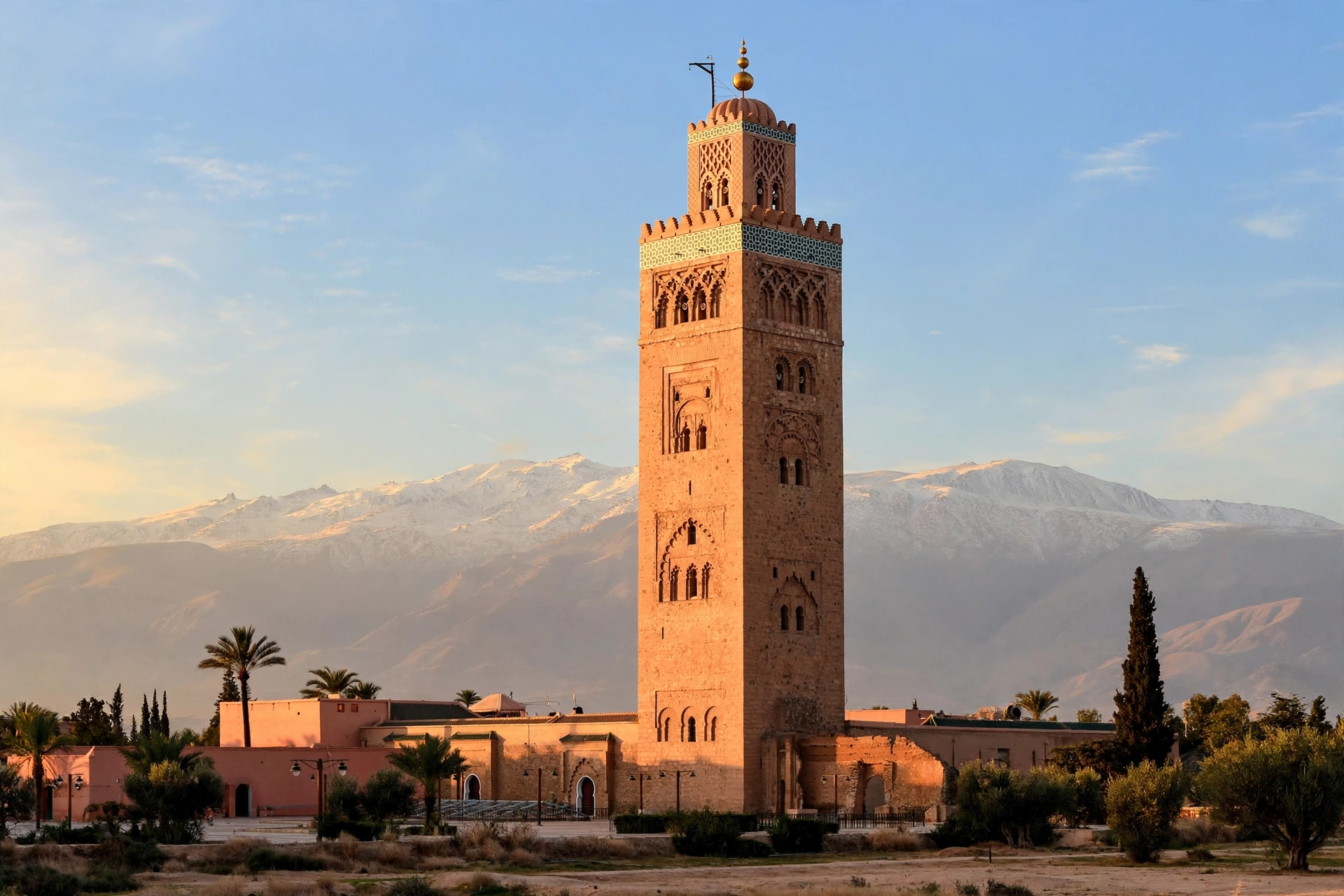
This Morocco itinerary 7 days route starts in Marrakech and ends in Fes. Morocco rewards travellers who move in one direction. This 7-day Morocco itinerary does exactly that: Marrakech, the High Atlas, the Sahara at Merzouga, and Fes — without driving the same road twice. No backtracking, and no pretending seven days can cover the whole country. What it can do is give you the three things most first-time visitors come for: a great imperial city, the desert, and a second imperial city that feels nothing like the first.
I am Moroccan, and I have driven this route more times than I can count — in summer heat, in winter rain, and once in a January snowstorm that closed the Tizi n’Tichka pass. Where the driving is long, I say so; where a stop is overrated, I say that too. For when to go, what to pack, and how the country works for a first visit, start with our Morocco travel guide for first-time visitors.
Morocco Itinerary 7 Days At a Glance: The Route in One Table
| Day | Route | Driving time | Sleep in |
|---|---|---|---|
| 1 | Arrive Marrakech | — | Marrakech |
| 2 | Marrakech → Ait Ben Haddou | ~4 hours | Ait Ben Haddou |
| 3 | Ait Ben Haddou → Merzouga | ~5.5 hours | Desert camp |
| 4 | Merzouga, Erg Chebbi | ~1 hour | Merzouga |
| 5 | Merzouga → Fes | ~7–7.5 hours | Fes |
| 6 | Fes el-Bali | — | Fes |
| 7 | Fes, depart | — | — |
Total driving is roughly 18 hours, and Day 5 is the price of a one-way route — still less than driving to the desert and back to Marrakech on the same road twice.
Prices checked: 18 November 2026. Ranges in Moroccan dirhams (MAD) with approximate US dollar equivalents; 1 USD ≈ 10 MAD.
Day 1: Marrakech — Land, Settle, and Let the Medina Come to You
Arrive, check in, and do nothing ambitious. The airport is about 20 minutes from the medina by taxi — 70–150 MAD ($7–15); agree the price before you get in. If your riad is inside the medina, the taxi drops you at the nearest gate and a porter with a handcart takes your bags the last stretch for 20–30 MAD ($2–3). Do not let anyone tell you the medina is closed or your riad has moved — the oldest trick in the city.
Walk the medina without a plan. Jemaa el-Fna fills up from late afternoon: orange-juice stalls, snake charmers to politely ignore, and storytellers drawing crowds you will not understand but will enjoy watching. Eat dinner at a rooftop over the square — 120–200 MAD ($12–20) per person with mint tea. The floodlit Koutoubia is the city’s compass; if you can see it, you can find your way back. Sleep in the medina or Gueliz.
Day 2: Marrakech → Ait Ben Haddou — Over the High Atlas
Leave by 8 a.m. The Tizi n’Tichka pass climbs to 2,260 metres, and the road is one of North Africa’s great drives: hairpins, Berber villages on red slopes, viewpoints where the whole valley opens up at once. The drive takes about 4 hours with stops — stop at least twice, in the morning light before the tour buses arrive.
UNESCO-listed Ait Ben Haddou is the fortified mud-brick ksar you have seen in films: Gladiator, Game of Thrones, Lawrence of Arabia. Walk up through the ksar in the late afternoon, when the light turns the place gold and the day-trippers have left. Entrance is free; the small museum is about 20 MAD ($2). Stay in the village or continue 30 minutes to Ouarzazate for more hotels. Dinner is a tagine and an early night — 80–150 MAD ($8–15). If you drive yourself, fill the tank in Marrakech: petrol stations get sparse over the pass.
Day 3: Ait Ben Haddou → Merzouga — Valleys, Gorges, and the Edge of the Sahara
The longest scenic day: about 5.5 hours of driving. The road follows the Valley of the Roses, then the Dades Valley with rock formations like a giant’s fingers, and finally the Todra Gorge — walls 300 metres high and, in places, only 10 metres apart.
Stop at the gorge for an hour and walk its narrowest part on foot; cars can pass, but walking is the point. Lunch in Tinghir or at the gorge — a Berber omelette and bread for 40–70 MAD ($4–7) — beats most restaurant meals on this route.
By mid-afternoon the palm groves thin and the first dunes appear. Reach Merzouga in time to ride camels to the desert camp as the sun drops — about an hour, or a 4×4 for the same price. Arrive before sunset: the Erg Chebbi dunes at golden hour are the reason you came.
Camps range from simple Berber tents with shared facilities (300–500 MAD / $30–50 per person, meals included) to luxury camps with proper beds and en-suite bathrooms (800–1,500 MAD / $80–150). Book ahead in spring and autumn.
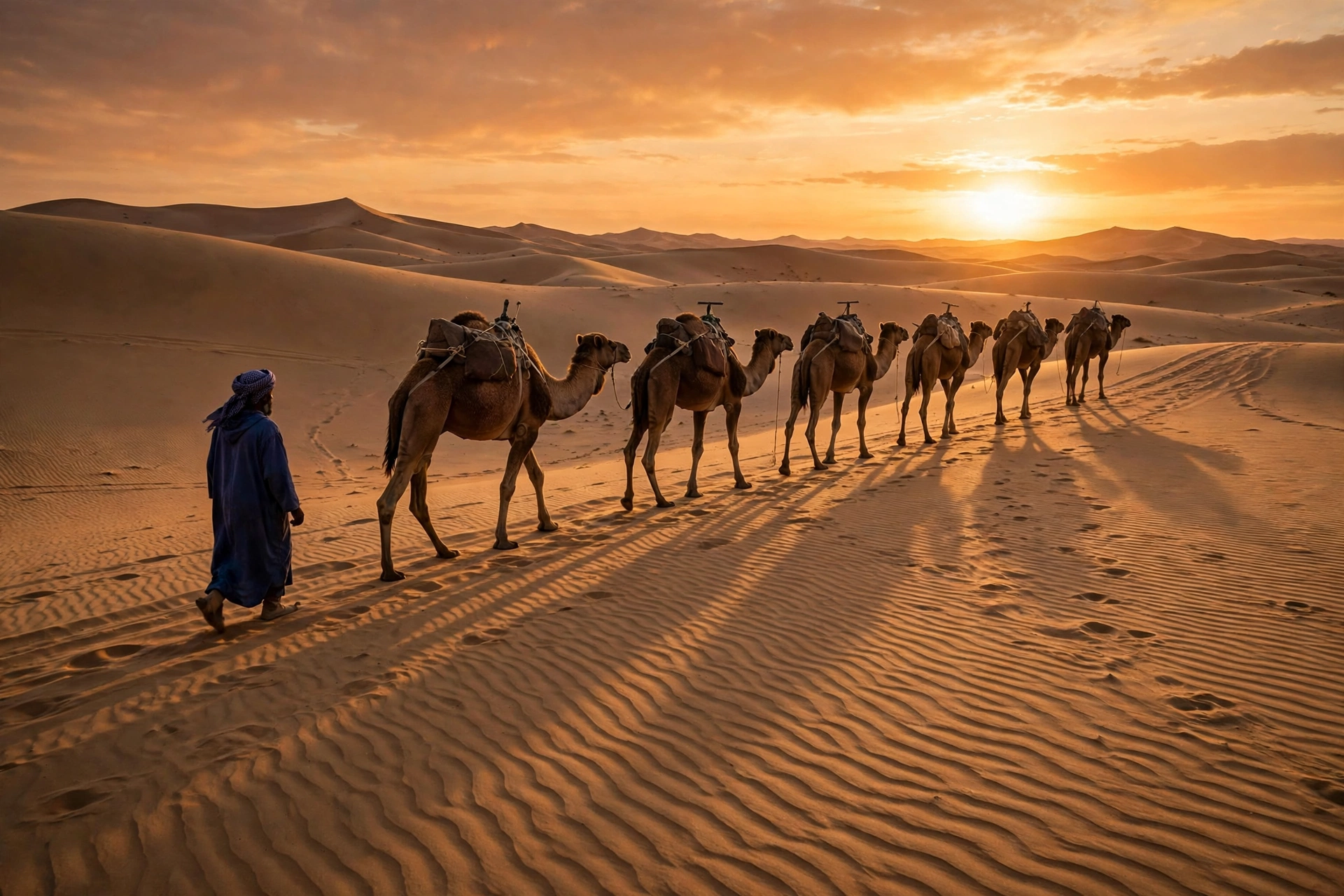
Day 4: Merzouga and the Erg Chebbi Dunes — A Full Day in the Desert
Do not leave the desert after one night. The classic mistake is treating Merzouga as a photo stop: in at sunset, out at sunrise, and drive on. You will have seen the dunes, but not felt the desert.
Wake early and climb the nearest big dune for sunrise, when the sand is cool and the light pink. Then take a 4×4 loop (around 400–600 MAD / $40–60 per vehicle, shared) to Khamlia village, where Gnawa musicians play music descended from West Africa, a nomad family for tea, and the seasonal lake of Dayet Srji, where flamingos stop in spring. December to February is the best desert season — mild days, cold nights.
Or do nothing: read, walk the dunes, wait for the stars. The night sky over Erg Chebbi, with no light pollution for a hundred kilometres, is one of the best in Morocco.
Day 5: Merzouga → Fes — The Long Day (Plan the Midelt Stop)
The day most itineraries lie about. Merzouga to Fes is a 7 to 7.5-hour drive — anyone who tells you five hours is selling you something. The road climbs from the desert through the Ziz Valley — green palms in a red canyon — then over the Middle Atlas to Midelt, and through cedar forests where Barbary macaques sit by the roadside.
Plan for it honestly. Leave by 8 a.m. and lunch in Midelt, the apple town at the halfway point — 60–100 MAD ($6–10) per person, a stretch of the legs, and fuel. If you have a driver, this is the day to be glad you hired one; if you drive yourself, swap drivers at Midelt. Arrive in Fes in the early evening and eat near your riad.
Hate long drives? Overnight in Midelt instead. It costs half a day in Fes, and for most people it is not worth it — but with small children, it is a legitimate choice. Pretending the drive is short is not.
Day 6: Fes — The Oldest Medina in Morocco, Done Slowly
Fes el-Bali is the largest car-free urban area in the world, a medieval medina of some 9,000 alleyways that has worked the same way for a thousand years. It is also the most disorienting city in Morocco. Hire a licensed local guide for your first morning — 300–500 MAD ($30–50) for a half day, via your riad. A good guide opens doors closed to strangers, from a tannery terrace to a family ceramics workshop.
Start at Bab Bou Jeloud, the blue gate that is the medina’s front door, and walk downhill along Talaa Kebira and Talaa Seghira. See the Chouara tanneries, where leather has been dyed the same way for centuries — your guide will hand you a sprig of mint against the smell. Visit the Medersa Bou Inania, a 14th-century school whose carved cedar and zellige tilework is among the finest in the country (20 MAD / $2). Lunch in a medina restaurant, not a tourist terrace: pastilla and salad for 60–100 MAD ($6–10).
In the afternoon, climb to the Borj Sud or the Merenid Tombs for the sunset view: rooftops and minarets, the green Kairaouine tiles in the middle. Marrakech shouts; Fes whispers. Give it the full day.
Day 7: Fes — Crafts, Viewpoints, and the Way Home
Spend your last morning on the Fes most visitors miss: the potters’ quarter outside Bab Ftouh, where blue pottery is made by hand; the royal palace gates, the grandest in Morocco (you cannot go inside — the gates are the sight); and the Mellah, the old Jewish quarter. If you have energy left, the Jnan Sbil gardens are a calm pause before home.
Then leave. Fes airport (FEZ) has flights to Europe; the train to Casablanca takes about four hours (from roughly 150 MAD / $15 second class). Or extend the trip: with a few extra days, Chefchaouen is a comfortable two-day addition from Fes — but as a day trip squeezed into this week, it does not work, as you will see below.
Getting Around: Driver, Rental Car, or Public Transport?
Three real options — the right one depends on your budget and your comfort with Moroccan roads.
Hire a private driver with a car. This is what most first-time visitors should do. A driver for the full loop costs roughly 4,500–7,000 MAD ($450–700) for the car, not per person — including fuel and the driver’s accommodation. You get local knowledge, no parking stress, and someone who knows which mountain roads to avoid after rain. Book through your riad or an agency, and agree the price in writing before you leave.
Rent a car and drive yourself. Expect 250–450 MAD ($25–45) per day for a small car from a reputable agency at Marrakech airport, plus 600–900 MAD ($60–90) of fuel for the roughly 1,200 km loop. Roads are generally good, but mountain driving is demanding and city driving in Fes and Marrakech is not for the nervous — take the full insurance.
Public transport. Buses serve all the towns on this route, but the timings do not fit a one-week itinerary, and no bus reaches a desert camp. For buses, trains, and taxis in detail, see our guide to the cost of living in Morocco.
How Much Does 7 Days in Morocco Cost?
Prices vary by season: spring and autumn cost the most. The biggest variable is accommodation, not food; a meal is cheap at every level, and a bed is where the money goes.
| Travel style | Per person, per day | 7-day total (per person) |
|---|---|---|
| Budget (hostels, guesthouses, buses) | 300–500 MAD ($30–50) | 2,100–3,500 MAD ($210–350) |
| Mid-range (riads, shared driver, desert camp) | 700–1,200 MAD ($70–120) | 4,900–8,400 MAD ($490–840) |
| Comfortable (boutique riads, driver, luxury camp) | 1,500–2,500 MAD ($150–250) | 10,500–17,500 MAD ($1,050–1,750) |
Totals exclude international flights. They include accommodation, food, transport, the desert camp, and entry fees — but not shopping, and you will shop: Fes ceramics and Marrakech rugs are genuinely good. Set a separate cash budget for that, and bargain with a smile: a first price in a souk is a starting point, and paying half is normal, not rude.
What to Skip: Chefchaouen Does Not Fit This Trip
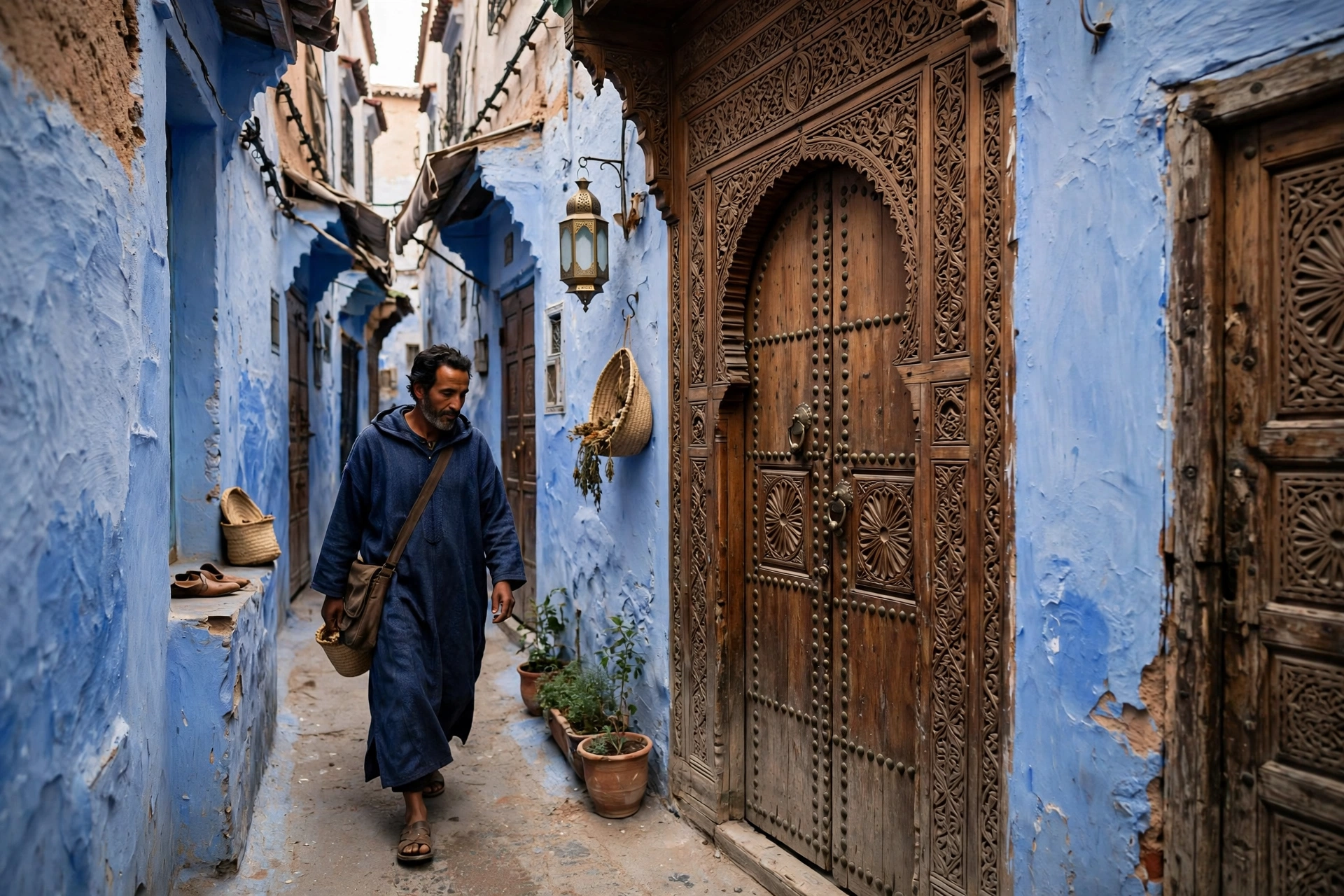
The insider truth most 7-day itineraries will not tell you: Chefchaouen, the blue town in the Rif Mountains, does not belong in a Marrakech–Sahara–Fes week. It is a five-hour drive from Fes, in the opposite direction from everything else on this route. Adding it means cutting a day from Fes or the desert, or two full days in a car for a town best enjoyed on its own trip. The photographs are real — the blue streets really are that blue — but the maths is not in your favour.
The same applies to Essaouira, west of Marrakech. Lovely, and only two and a half hours away — but this route heads east and north. With ten days, add Chefchaouen after Fes or Essaouira after Marrakech. With seven, do this route properly and come back for the north — or read our guide to the best time to visit Morocco and plan that second trip for spring, when the Rif is greenest.
Frequently Asked Questions
Is 7 days enough for Morocco?
Seven days is enough for the classic route — Marrakech, the Atlas, the Sahara, and Fes — done well. Not for the whole country. Travellers who add Chefchaouen, Essaouira, and Casablanca spend the trip in a car and remember the driving, not Morocco. Choose one route and do it properly.
When is the best time to do this itinerary?
March to May and September to November: warm days, cool nights, and a pleasant desert. June to August is very hot in the desert (over 45°C / 113°F at midday). December to February is cold in the mountains and desert at night, but quiet and cheap. For the full breakdown, see our guide to the best time to visit Morocco.
Is it safe to drive in Morocco?
Yes, with normal care. The main roads are good and the Marrakech–Fes route is well maintained. Drive in daylight, take the passes slowly, and be ready for anything — a donkey, a flock of sheep, a truck on a blind bend. If that sounds stressful, hire a driver.
Do I need cash, or do cards work?
Cards work in hotels, larger restaurants, and city supermarkets. Cash is essential in the medinas, in taxis, in the desert, and in the mountains. Carry 500–1,000 MAD ($50–100) in small notes, and withdraw more in Fes or Marrakech before heading into the Atlas or the desert. The dirham is a closed currency, so spend what you have left before you fly home.
A Last Word Before You Go
This itinerary respects the shape of the country: south to the mountains, east to the desert, north to Fes. Two great cities, a mountain pass, a desert, and a gorge — without driving the same road twice. Pack light, bring a warm layer for the desert night and the mountain morning, and leave room for a Fes ceramic bowl. You will buy one.
For visas, money, etiquette, and packing, see our Morocco travel guide for first-time visitors. Still deciding when to go? The best time to visit Morocco will help you pick your month. Learn more about who is behind this guide on our about page.
1 thought on “Morocco Itinerary: 7 Days — Marrakech, the Sahara and Fes Without Backtracking”