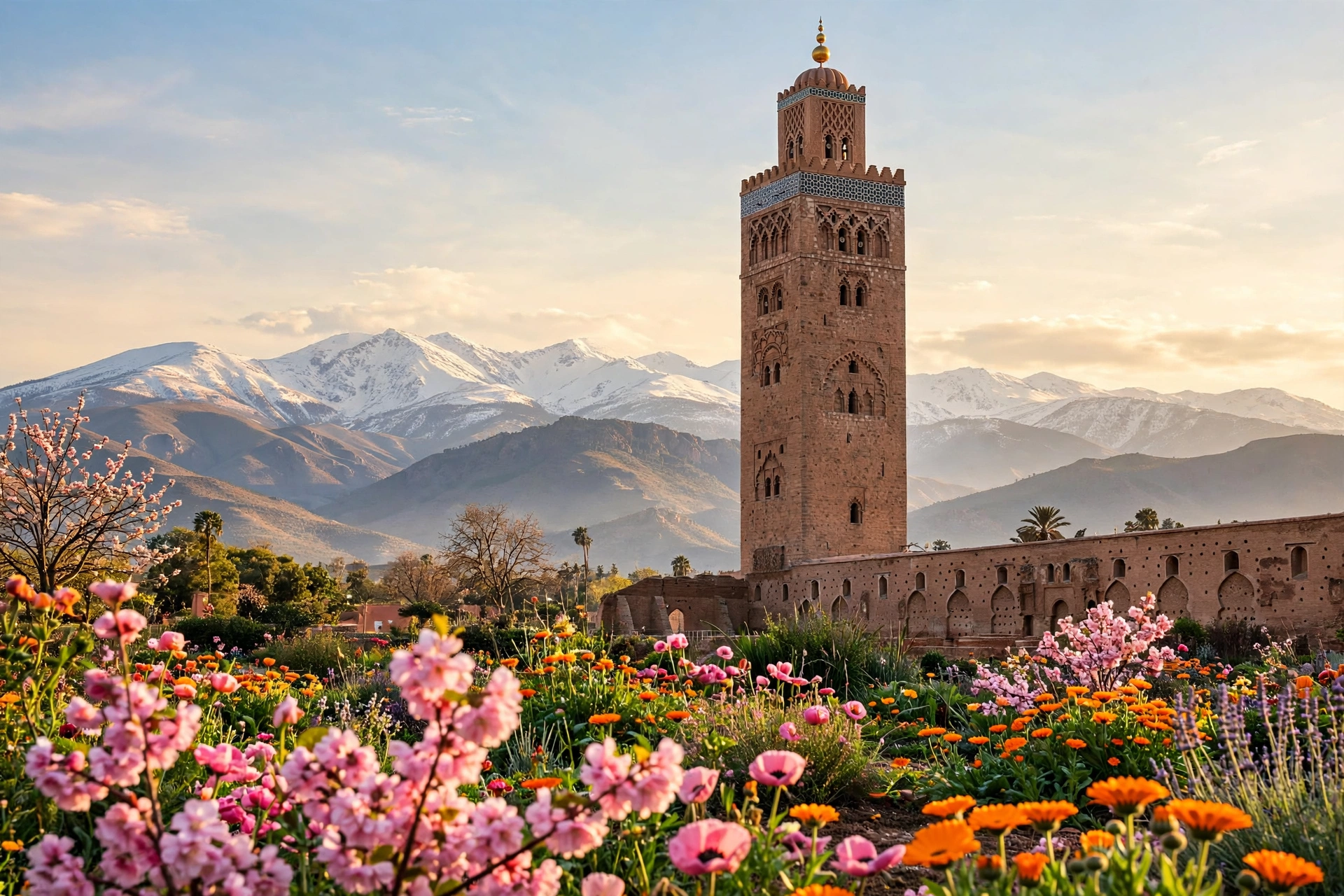
The best time to visit Morocco depends on where you go. Ask ten travel guides when to visit Morocco and nine will give you the same answer: spring or autumn. It is not wrong — just incomplete. Follow it blindly and you can end up sweating through a 40°C afternoon in Marrakech in July, or shivering in a desert camp in January.
I am Moroccan, and I have watched visitors make the same timing mistake for years: they treat Morocco as one climate. It is not. Within a day’s drive you can go from snow on the High Atlas to a warm Atlantic beach to a desert dune that freezes at night. The honest answer to “when is the best time to visit Morocco?” is always a second question: where in Morocco, and what do you want to do there? This guide answers it — month by month, region by region, with real average temperatures, crowd patterns and prices in dirhams, checked November 2026. If you are still planning the trip, start with our Morocco travel guide for first-time visitors.
The short answer: there are four Moroccos, not one
Here is the insider correction that shapes everything in this article: “best time” is regional, not national. July is genuinely unbearable in Marrakech — an average high of around 38°C, with many afternoons past 40°C — and in the same week it is perfect in Essaouira, where the Atlantic breeze holds the average high to about 22°C (some datasets record up to 26°C in sheltered, sunny spots). One answer for a country with four climates is not a simplification; it is misleading.
Morocco’s four climates work on four different calendars:
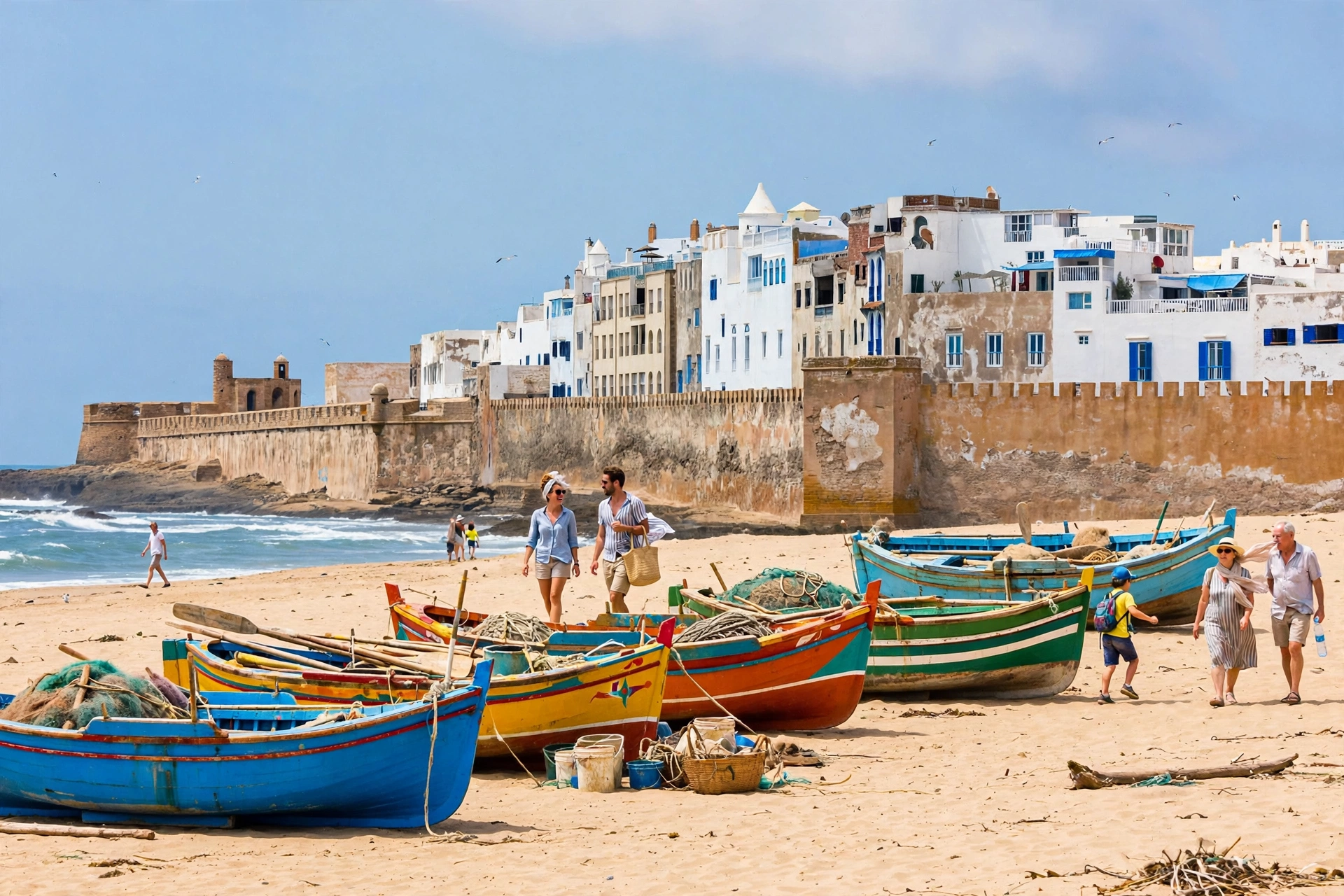
- The Atlantic coast (Essaouira, Agadir, Casablanca, Rabat, Tangier): mild all year. Average highs barely move, from about 18°C in January to about 23°C in September. Essaouira adds near-constant wind, which is why it feels cooler than the numbers suggest.
- The imperial cities and the interior (Marrakech, Fes, Meknes): a continental swing. Winters are cool and sometimes wet, springs and autumns are glorious, and summers are seriously hot — Marrakech averages 38°C in July, Fes around 35°C.
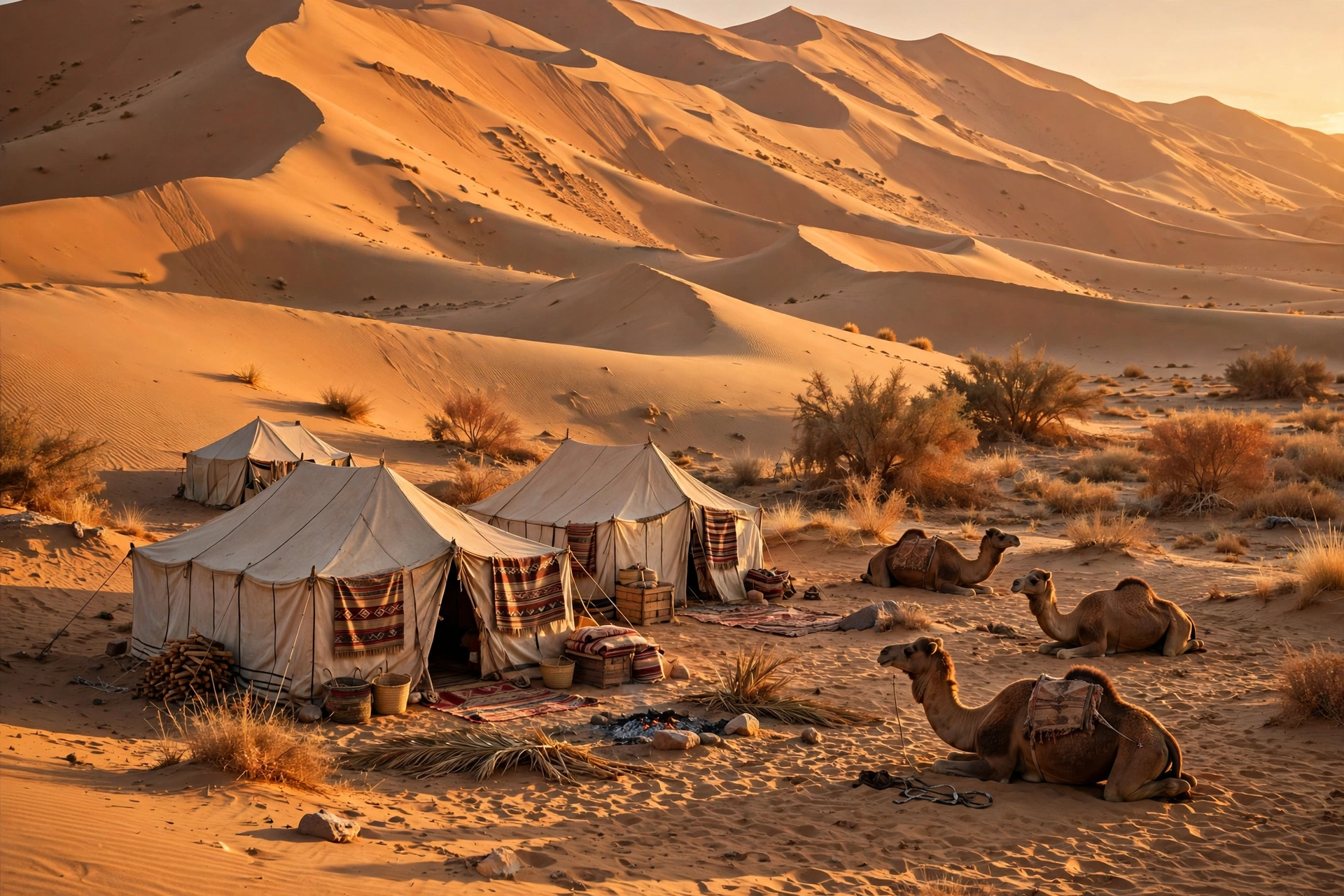
- The Sahara (Merzouga and Erg Chebbi, Zagora): true desert extremes. Summer days average 40–41°C and are best avoided; winter days are pleasantly warm, around 16–17°C, but nights can drop to near freezing.
- The Atlas Mountains: snow from December to March, best trekking in spring and autumn.
Morocco weather month by month: average daytime highs
The table shows average daytime highs in °C — long-term climate normals (mostly 1991–2020 station data), rounded to whole degrees. Use them as a planning baseline, not a forecast. Nights run much cooler, especially inland and in the desert: in January, Marrakech nights average around 6°C and Merzouga nights can approach 0°C.
| Month | Marrakech | Fes | Sahara (Merzouga / Erg Chebbi) | Atlantic coast (Essaouira) |
|---|---|---|---|---|
| January | 19°C | 16°C | 16°C | 18°C |
| February | 21°C | 17°C | 19°C | 19°C |
| March | 24°C | 20°C | 24°C | 19°C |
| April | 26°C | 22°C | 28°C | 20°C |
| May | 29°C | 27°C | 32°C | 21°C |
| June | 34°C | 31°C | 37°C | 21°C |
| July | 38°C | 35°C | 41°C | 22°C |
| August | 37°C | 35°C | 40°C | 22°C |
| September | 33°C | 30°C | 35°C | 23°C |
| October | 29°C | 26°C | 29°C | 22°C |
| November | 23°C | 20°C | ~23°C* | ~21°C* |
| December | 20°C | 17°C | 17°C | 19°C |
Sources: WMO 1991–2020 normals for Marrakech, Fes and Essaouira; Merzouga from the nearest desert stations. *November Sahara and coast figures are interpolated estimates. Essaouira’s summer highs are sometimes quoted at 23–26°C; the WMO station normal is about 22°C.
January and February: the quiet, sunny bargain
Winter in Morocco surprises first-timers, and this is the second insider correction worth making early: Morocco is not always hot. January in Fes averages 16°C by day and around 4°C at night, with roughly 60 mm of rain over six or seven wet days. Marrakech is kinder — 19°C by day, sunny more often than not — but Moroccan buildings are not built for cold. Riads have no central heating, stone floors stay cold, and a 6°C night in an unheated courtyard room feels colder than the thermometer says. Pack a warm layer and check whether your riad has heating.
What you get in return is the quietest Morocco of the year. The medinas are walkable, the desert camps are half empty, and prices are at their lowest outside the Christmas–New Year spike. This is the best time for the Sahara if you choose a heated camp: clear skies, warm days around 16–19°C, and dunes to yourself. It is also the best time for Agadir, the warmest and driest spot on the coast in winter, at around 21–22°C by day. The Atlas is snow-covered. Bring a waterproof jacket for the north, especially Fes and Chefchaouen.
March, April and May: the classic window — with one trap
Spring is the answer most guides give, and for the imperial cities and the desert it is genuinely the best season. March brings almond blossom and green valleys, April delivers 26°C in Marrakech and 28°C in the Sahara, and May is the last month the desert is comfortable before the heat arrives. The rose harvest around Kelaat M’Gouna usually falls in May, and the Fes Festival of World Sacred Music typically runs in late May or June.
The trap is Easter. European spring holidays — usually late March to mid-April — spike crowds and prices in Marrakech and Fes. Jemaa el-Fnaa becomes shoulder-to-shoulder by sunset, the best riads sell out six to eight weeks ahead, and rates jump to peak levels. Travel in late April or May instead and you get nearly the same weather with thinner crowds and softer prices. March and April are among the wettest months in Fes (around 55–60 mm), so a shower or two is normal. For a first trip, late April to mid-May is my honest pick for the classic route — Marrakech, the Atlas, the Sahara, Fes — before the heat arrives.
June, July and August: the coast is the answer
Summer is when the four-climates rule matters most. June is the tipping point: Marrakech jumps to 34°C, the Sahara to 37°C, and by July Marrakech averages 38°C and Merzouga 41°C, with afternoons regularly past 43°C. Sightseeing between noon and 5 p.m. becomes a test of endurance, and the good desert camps are effectively closed. Do not book a Sahara trip in July or August unless you genuinely understand what 41°C in the dunes means.
But summer is not a bad time to visit Morocco. It is a bad time to visit inland Morocco. The coast is superb: Essaouira at 22°C with its famous summer wind, Agadir warm and dry, Tangier breezy on the strait. This is the third insider correction, and it catches people who read “low season” too literally: summer is not cheap everywhere. July and August are peak season on the coast, because Moroccans living in Europe come home for the holidays and fill Agadir, Tangier and the northern beaches. If you must be inland in summer, plan like a local: start sightseeing at 7 a.m., rest through the hot afternoon, eat late, and choose a riad with a pool and air conditioning that actually works. The Gnaoua World Music Festival in Essaouira, usually in June, is the summer’s best event.
September, October and November: the second peak — and the sweet spot
Autumn is the other classic window, and in some ways it is better than spring. September is still hot inland (33°C in Marrakech, 35°C in the Sahara), but the heat breaks from mid-month, and by October the whole country is comfortable: 29°C in Marrakech, 26°C in Fes, 29°C in the desert, 22°C on the coast. October is my personal favourite month for a first trip — warm days, cool walking weather, and the desert season open again.
October is also the busiest month of the autumn, with the highest accommodation prices of the season. Premium riads in the Marrakech medina can charge around 50% more than in February, so book desert camps and Chefchaouen guesthouses six to eight weeks ahead. November is the quieter, cheaper sibling: 23°C in Marrakech, 20°C in Fes, fewer tourists, better prices — with shorter days, cooler desert nights, and the first real rain in the north as the trade-off. For budget-conscious travellers who still want good weather, November and February are the two most underrated months in the Moroccan calendar.
December: mild days, cold nights, festive prices
December is a month of contrasts. Days are mild and often sunny — around 20°C in Marrakech, 19°C in Essaouira, 22°C in Agadir — and the Sahara is at its most comfortable by day. But nights are cold everywhere inland: Marrakech averages around 7°C, Fes around 5°C, and the desert around 3°C or below before dawn. Nobody warns visitors how cold a riad gets at night. Bring a warm layer, ask for extra blankets, and choose a heated desert camp.
The other December reality is price. The last week of the year is the most expensive week in Marrakech: the same riad room that costs around 120–150 euros in June can ask 230 euros or more in late December. Outside that holiday week, December is good value — quiet medinas, clear Atlas views, snow on the peaks.
Crowds and prices by season
Hotel prices in Morocco swing hard with the seasons. The figures below are indicative ranges for a mid-range riad or hotel room per night, drawn from published seasonal rate guides and checked November 2026 — not quotes, since the same room varies with the property and how early you book. Peak spring and autumn cost roughly 30–50% more than the quiet months, and summer heat discounts inland rooms by as much as 40–60% at luxury properties. As a rough guide, 1,000 MAD ≈ $100 ≈ €92.
| Season | Months | Crowds | Mid-range riad / hotel (MAD/night) | Best for |
|---|---|---|---|---|
| Peak — spring | March–May | High; very high at Easter | 600–1,500 | Imperial cities, Sahara, Atlas valleys |
| Low — inland summer | June–August | Low inland; high on the coast | 300–600 inland; higher on the coast | Essaouira, Agadir, Tangier, the coast |
| Peak — autumn | September–November | High; October busiest | 600–1,500 | First trips, desert, cities, trekking |
| Low — winter | December–February | Low, except New Year week | 300–600 | Sahara, Agadir, quiet cities, budget trips |
| Holiday spike | Late Dec–early Jan; Easter | Very high | 800–2,000 | Festive atmosphere — if you book early |
Indicative ranges, checked November 2026. Flights follow a similar pattern: January and February fares from Europe commonly run 25–40% below peak-season prices.
Three money rules follow. Book premium riads and desert camps six to eight weeks ahead for March–May and September–October. If your dates are flexible, shifting a spring trip from Easter week to late April can save a meaningful amount for the same weather. And never judge a price by the season alone — a June riad in Marrakech is a bargain, a June apartment in Agadir is not.
Best time to visit Morocco by trip type
- First trip (Marrakech → Sahara → Fes): late April–May or October.
- Sahara desert (Merzouga / Erg Chebbi): October–April. Avoid June–August entirely; December–February is excellent by day with a heated camp.
- Beach and coast (Essaouira, Agadir, Tangier): June–September for the warmest sea; April–May and October for fewer people and lower prices.
- Atlas trekking (Toubkal and the valleys): April–June and September–October. Winter treks need snow gear and a guide.
- City breaks (Marrakech or Fes alone): March–May and October–November; January–February works too, cheaply, if you pack for cold nights.
- Budget trip: January–February or November — lowest rates and flights, quietest medinas, with rain in the north and cold nights as the trade-off.
- Festivals: the Fes sacred music festival (usually May–June), Gnaoua in Essaouira (usually June), the Rose Festival (usually May) and the Marrakech film festival (usually late November–December). Dates shift each year, so confirm them before booking.
Ramadan 2027: what changes, and why it is not a reason to stay away
Ramadan in 2027 is expected to begin on Monday 8 February 2027, confirmed by moon sighting, give or take a day — Morocco announces the start officially only after the sighting, so treat that date as expected, not guaranteed. It will run for about a month, into early March. Many visitors worry about travelling during Ramadan, and most of that worry is misplaced.
What actually changes: restaurants and cafés in the medinas often close or shorten hours during the day, banks and offices run on shifted hours, and the pace of everything slows in the afternoon. What does not change: hotels and riads still serve food, sights stay open with adjusted hours, and transport runs. The real festival is at night — after ftour, the breaking of the fast, cities wake up and the squares fill. Sightsee in the morning, eat in the evening like everyone else, and expect a different rhythm rather than a closed country.
Frequently asked questions
What is the best month to visit Morocco overall?
October, for most first-time visitors: warm days around 29°C in Marrakech, 26°C in Fes and 29°C in the Sahara, with the desert season fully open and the summer heat gone. Late April to mid-May is the close second. But “overall” hides the regional truth — for the coast, June to September is better; for the Sahara, October to April.
Is Morocco too hot in July and August?
Inland, yes, honestly. Marrakech averages 38°C and the Sahara 40–41°C, with many afternoons higher. But the coast is not hot at all — Essaouira averages about 22°C in July. Summer belongs on the Atlantic.
What is the cheapest month to visit Morocco?
January and February, outside the New Year week, are usually the cheapest: riad rates run roughly 20–30% below the spring peak, and flights from Europe commonly fall 25–40%. November is the other budget sweet spot, with the same trade-offs: cold nights and, in the north, some rain.
When is the best time to visit the Sahara Desert in Morocco?
October to April. Days are warm and clear, nights are cold — near freezing in December and January, so book a heated camp. Avoid June to August, when daytime highs average 40–41°C.
Is it good to visit Morocco in winter?
Yes, with the right expectations. Days are mild and sunny in Marrakech (around 19–20°C) and warm in Agadir (around 21–22°C), crowds are thin and prices are low. The catches are cold nights in unheated riads, rain in Fes and the north, and snow in the Atlas.
When should I avoid visiting Morocco?
There is no month to avoid entirely — only month-and-place combinations to avoid. Avoid the Sahara in July and August, avoid Marrakech at midday in July, and avoid arriving in Marrakech for New Year without a booking.
Still deciding? Read our Morocco travel guide for first-time visitors to build the route, browse the rest of the Morocco Travel section for city guides, and read our About page to see who writes this guide and why. All temperatures are long-term averages, prices are indicative ranges in MAD, and everything here was checked November 2026.
2 thoughts on “Best Time to Visit Morocco: Month-by-Month Weather, Crowds and Prices”