A Hillside That Rewrote Human History
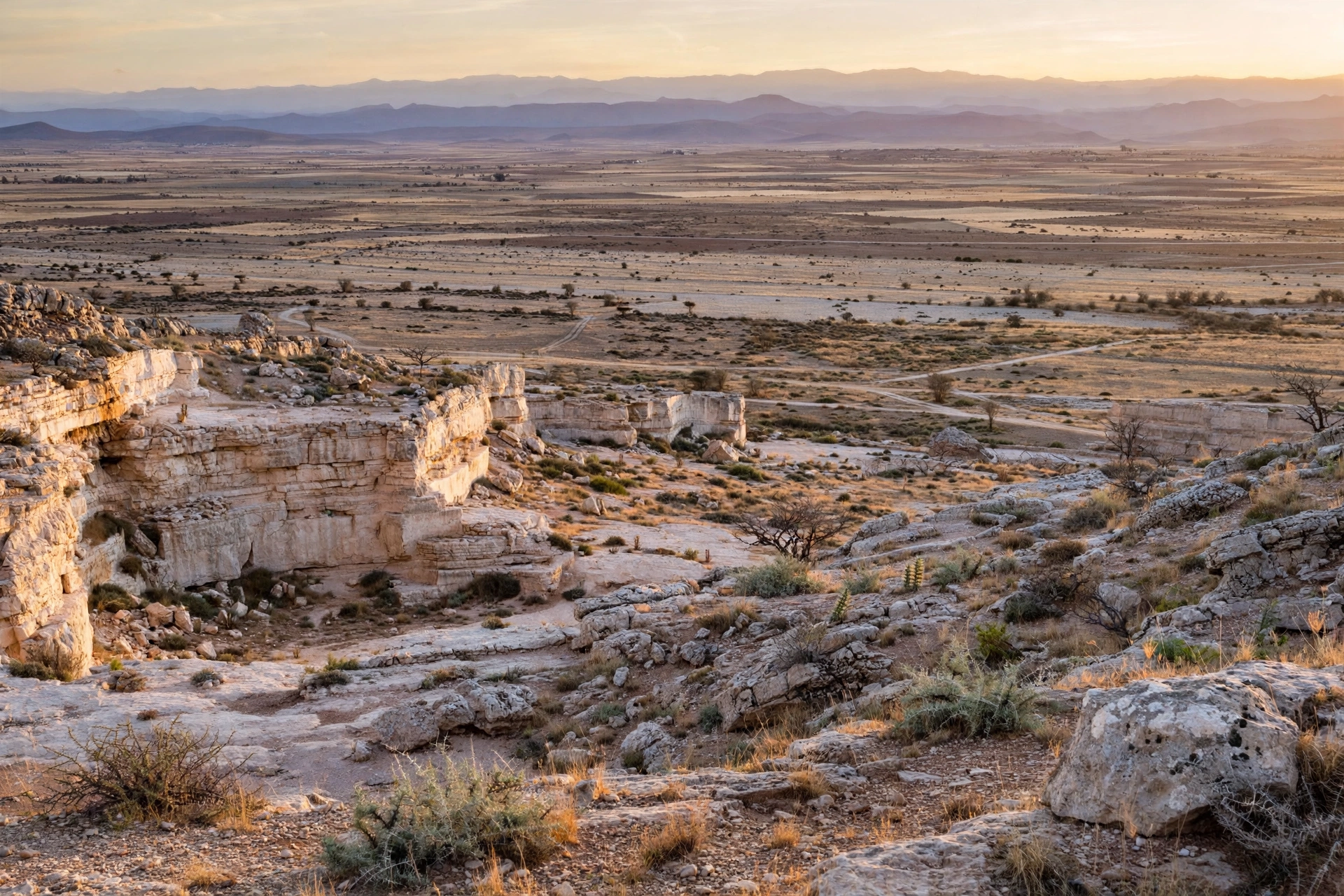
Most visitors come to Morocco for the medinas, the mountains, the desert, or the coast. Very few come for a low, rocky hill about 55 kilometres west of Marrakech, in the flat, dry country around the small town of Sidi Mokhtar. There is no ticket office there, no viewpoint, and no sign telling you that you are standing near one of the most important places in the story of our species. That is part of what makes Jebel Irhoud so striking. The landscape looks ordinary — pale limestone, sparse scrub, wide sky, and the Atlas foothills fading into the distance — yet the fossils found inside that hill changed the date and the map of where modern humans began.
Jebel Irhoud is where the oldest known fossils of Homo sapiens were found, roughly 300,000 years old. The discovery challenged the tidy story that early modern humans came from one small corner of East Africa and then spread outward, suggesting instead that early Homo sapiens were already present across much of Africa, much earlier than assumed. For Morocco, it placed the country at the very beginning of human history, long before the dynasties covered in our history of Morocco.
This article explains what was found, how it was dated, what it does and does not prove, and — honestly — what a traveller can and cannot do there today. If you are planning a trip, start with our Morocco travel guide for first-time visitors and check the best time to visit Morocco before building an itinerary around this site.
Where Jebel Irhoud Is — and What It Is Not
Jebel Irhoud, sometimes spelled Djebel Irhoud, is a limestone hill in the plain west of Marrakech, near Sidi Mokhtar in the Marrakech-Safi region. The name jebel simply means mountain or hill in Arabic, which can mislead first-time readers. This is not a dramatic peak. It is a modest outcrop in open, agricultural country, reached by local roads rather than a signed tourist route. The nearest large city is Marrakech, roughly an hour’s drive away depending on traffic and the exact route, and the nearest town of any size is Sidi Mokhtar itself.
Here is the insider correction that matters most: Jebel Irhoud is not a tourist attraction, and it never has been. Outsiders often imagine a fenced archaeological park with paths, information boards, and a small museum at the entrance. That is not what exists. Jebel Irhoud is an active archaeological site, a place of scientific work, not public display. You cannot simply drive up, pay an entry fee, and walk into the excavation. There is no published ticket price and no opening hours to look up, because there is no visitor operation to open. Anyone who sells you a “Jebel Irhoud tour” with a guaranteed visit inside the site is selling something that does not exist in that form.
For a traveller, the value is not in standing inside a trench, but in understanding what happened there and seeing the landscape that preserved the fossils — then connecting that story to museums in Marrakech, where the evidence is actually on public view.
The First Discovery in the 1960s
The story begins not with a planned expedition, but with work. In the 1960s, a miner — in some accounts, quarry workers digging for limestone — found human fossil fragments at Jebel Irhoud. The remains were not immediately recognised for what they were. The skull, in particular, looked unusual: it had a long, low braincase and a heavy brow, features that seemed more archaic than the modern human skulls scientists expected. For decades, the fossils were dated to around 40,000 years ago and treated as an interesting but relatively late example of early Homo sapiens, possibly a North African form that had retained older features.
That early interpretation was wrong by an order of magnitude. The Middle Stone Age tools found with the fossils hinted at something older, yet without reliable dating the site stayed on the margins of the story. The bones waited in museum collections while the science of dating caught up — and when it did, the result made headlines around the world.
The 2017 Re-Dating: About 300,000 Years Old
In 2017, a team led by Jean-Jacques Hublin of the Max Planck Institute for Evolutionary Anthropology published new research that transformed Jebel Irhoud from a footnote into a landmark. Using improved dating methods on the fossil-bearing layers and on burnt flint tools found at the site, the team concluded that the fossils were roughly 300,000 years old — about 100,000 years older than the previous oldest widely accepted Homo sapiens fossils from Ethiopia, which dated to around 200,000 years ago. The team also found more fossil material during renewed excavations, including parts of at least five individuals, which strengthened the case that this was not a single stray bone but a real population living at the site.
The honest figure to carry in your head is a range, not a single year. The 2017 work placed the Jebel Irhoud fossils at approximately 280,000 to 350,000 years old, with about 300,000 years as the central estimate. That range reflects the uncertainty built into the dating methods themselves. Different samples, different layers, and different techniques give slightly different answers, and scientists argue openly about which layers belong together and how to interpret the results.
The exact dating is debated, not settled, and any article that gives you a single confident year without mentioning that debate is oversimplifying the science. What is not in serious doubt is the scale of the revision: even at the younger end of the range, the fossils are far older than the 40,000-year age once assigned to them.
The researchers dated burnt stone tools by thermoluminescence — measuring how long it has been since a stone was last heated in a fire — and combined that with dating of the sediments around the fossils. The tools and bones came from the same layers, so dating the tools helped date the people who made them.
What the Fossils Actually Show
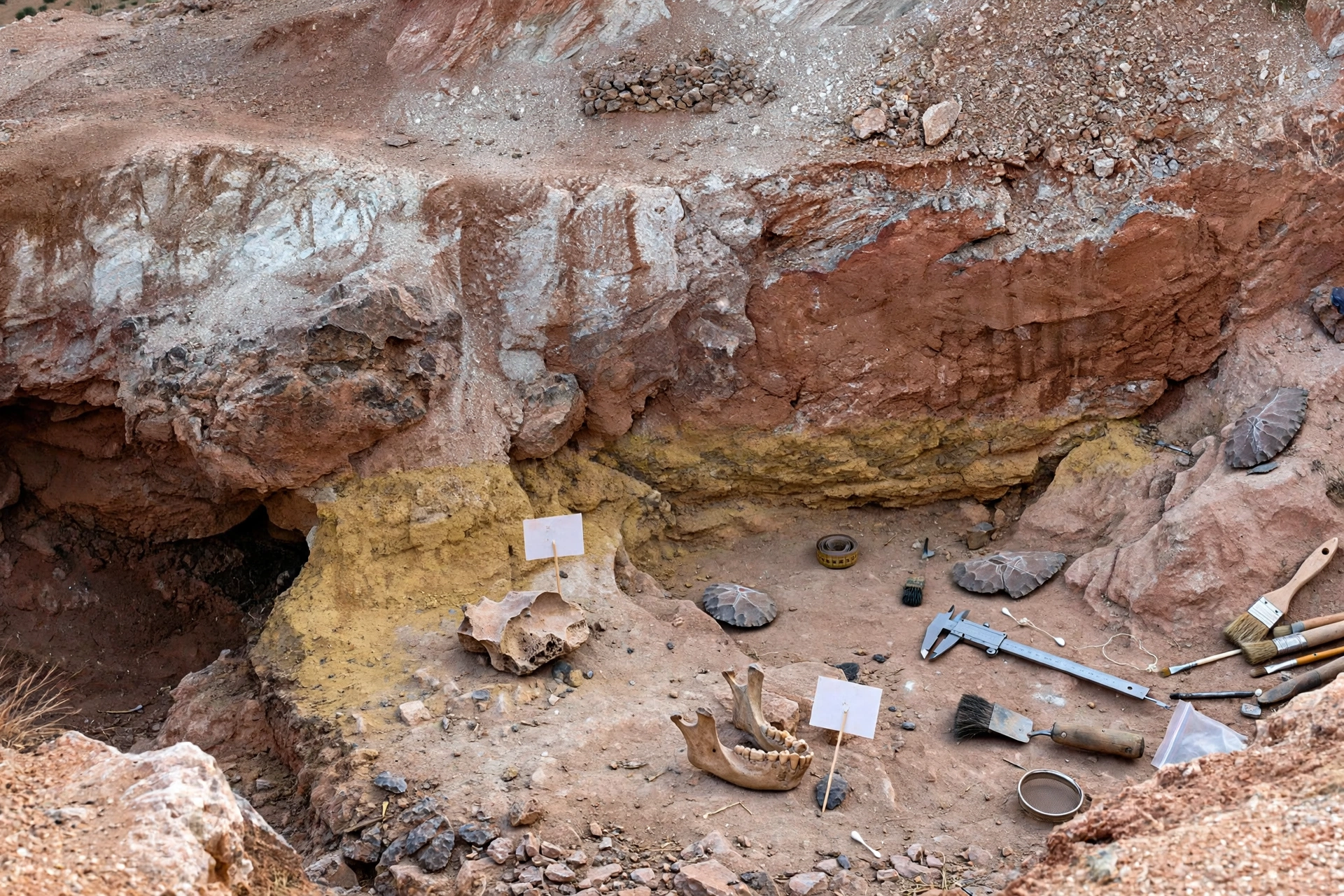
The fossils include a partial skull, a jawbone, teeth, and fragments from several individuals, including an adult and a child. The reconstructed skull shows why scientists call these people early Homo sapiens: the face is recognisably modern — relatively short and flat, with a small brow ridge — while the braincase is longer and lower than ours. The face modernised before the braincase caught up, a mosaic pattern expected from a population near the beginning of our species.
The stone tools found at the site tell a second story. They belong to the Middle Stone Age, a long period of African prehistory characterised by prepared-core tools, points, and scrapers made with care and skill. These were not crude choppers. They were the tools of people who knew their stone, planned their work, and used fire. The presence of burnt tools and ash suggests hearths and repeated occupation, not a single brief visit. People lived here, worked here, and returned here over time.
The environment was also different from the dry plain you see today. Around 300,000 years ago, North Africa was wetter and greener at intervals, with savannah-like landscapes that supported gazelle and other game. Climate shifts opened and closed corridors across the Sahara, allowing populations to move, meet, and mix — and that mixing is central to what Jebel Irhoud changed.
Why the Discovery Still Matters
Before 2017, the dominant picture was that Homo sapiens evolved in a single place, most likely East Africa, and then spread. Jebel Irhoud, on the far north-western edge of the continent, showed that early members of our species were already in North Africa at almost the same time as the earliest known fossils in the east. The simplest reading is that our species did not emerge in one valley and then expand. It emerged across a wide African landscape, in interconnected populations that shared genes, tools, and ideas over long distances. Morocco was not a late outpost of that story. It was part of the beginning.
Jebel Irhoud matters for three reasons. First, it pushed back the origin of Homo sapiens by roughly 100,000 years. Second, it widened the geography of our origins: East Africa remains crucial, but North Africa can no longer be treated as a side note. Third, it reminded us that absence of evidence is not evidence of absence. The fossils were in the ground in Morocco all along; they were simply dated wrong, and the right date changed everything.
There are limits: Jebel Irhoud gives no complete skeleton, no DNA sample, and no exact birthplace for our species — “first” is a slippery word when a species emerges gradually across a continent. Those questions need more fossils, more dates, and more sites.
Visiting the Region: An Honest Guide
If you want to engage with Jebel Irhoud as a traveller, reset your expectations first. Do not plan a day around entering the site; plan it around Marrakech, the landscape west of the city, and the museums where Morocco’s deep past is actually displayed.
Marrakech is the natural base, with the widest choice of places to stay, the best transport links, and the museums most likely to explain the prehistoric story. The road west toward Sidi Mokhtar crosses flat agricultural land — olive groves, fields, and small villages, with occasional views back toward the Atlas. It is working land, not a stage set, and the hill blends into it. If you drive this way with a local guide, ask about Sidi Mokhtar and the plain, not just the excavation: its farming, water, and distance from the city help explain why fossils survived here.
A grand taxi from Marrakech toward Sidi Mokhtar is a negotiable, shared or private hire, not a fixed-fare shuttle. As a rough ballpark, checked 18 November 2026, a private hire on a comparable run is roughly 200–400 MAD (about $20–$40) one-way, with shared places far cheaper, depending on negotiation, season, and waiting time. Agree the price in dirhams before you set off and confirm whether it is one-way or return. There is no official Jebel Irhoud shuttle or ticket to anchor a price to.
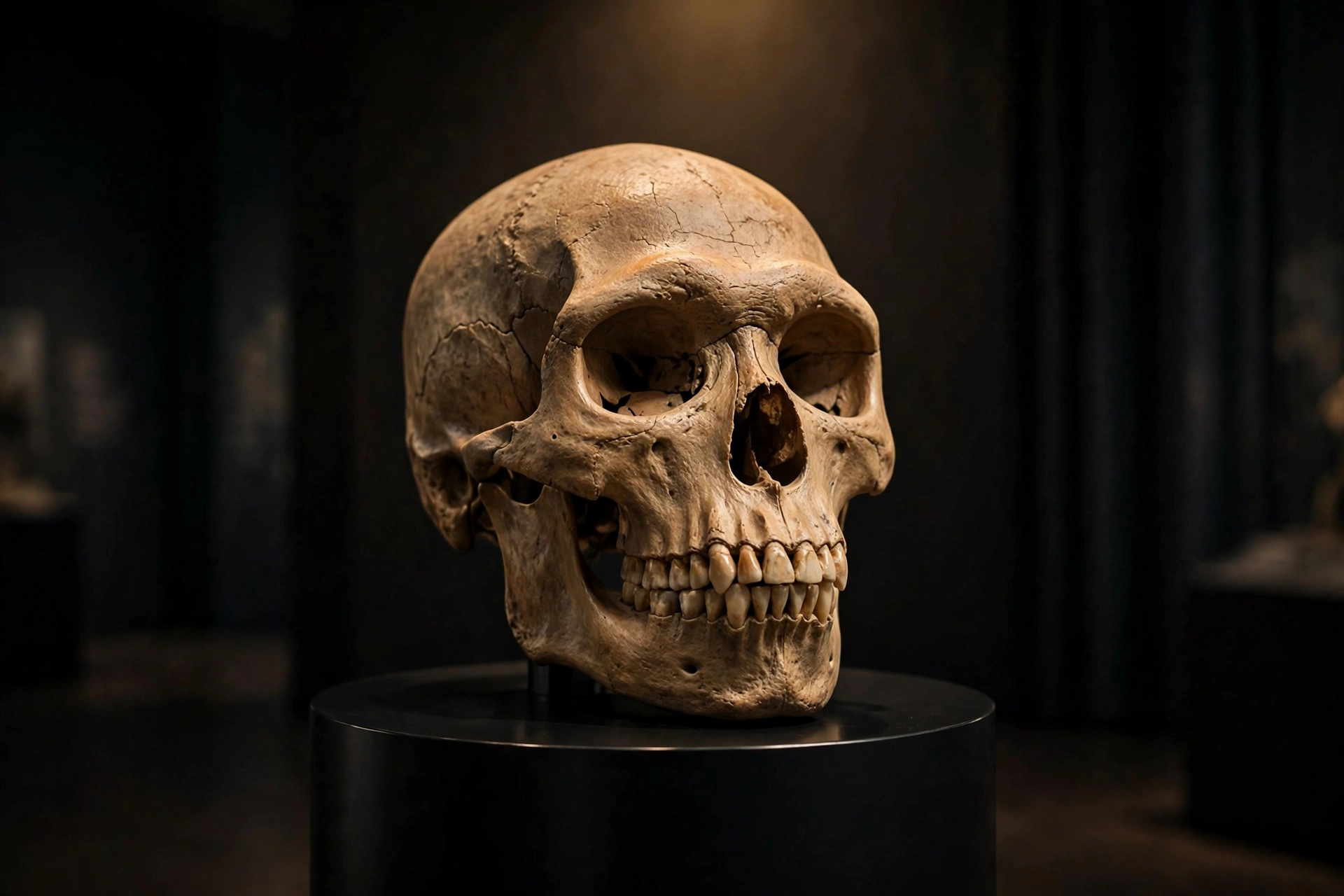
What you can reliably do is visit museums in Marrakech. Displays change over time, so check what is currently on show rather than assuming a Jebel Irhoud fossil is on display. Originals of this importance are rarely on permanent display; they are held for research and conservation, and what you see may be a cast, a reconstruction, or a temporary exhibition. A good reconstruction, seen alongside stone tools and a clear explanation of the dating, teaches more than a distant glimpse of a trench ever could.
Practical Facts at a Glance
| Fact | Detail |
|---|---|
| Location | Jebel Irhoud hill, near Sidi Mokhtar, about 55 km west of Marrakech |
| What was found | Fossils of at least five early Homo sapiens, plus Middle Stone Age tools |
| First discovery | 1960s, by a miner / quarry workers |
| Re-dated | 2017, by Jean-Jacques Hublin’s team, to roughly 300,000 years old |
| Age range | About 280,000–350,000 years; exact dating debated, not settled |
| Previous oldest fossils | About 200,000 years old, from Ethiopia |
| Visitor access | Active archaeological site; not open as a tourist attraction, no ticket or opening hours |
| Best public experience | Marrakech museums and the landscape around Sidi Mokhtar, with a local guide |
| Transport ballpark | Private grand taxi Marrakech–Sidi Mokhtar roughly 200–400 MAD (about $20–$40) one-way, approximate, checked 18 November 2026; agree price in advance |
What Not to Do
Do not try to enter the excavation area, climb fences, or collect stones, fossils, or artefacts from the site or anywhere nearby. Apart from the legal and ethical problems — removing material from an archaeological site is illegal and destroys the context scientists need to date and understand finds — it is also pointless. A fragment picked up without its layer, its position, and its associated tools tells science nothing, and it tells you nothing either. The same rule applies to any archaeological site in Morocco, from Volubilis to the prehistoric sites of the Atlas. Look, photograph the landscape from public roads where that is appropriate, and leave everything where it is.
Do not be misled by “oldest” into thinking Jebel Irhoud is the only place that matters. New finds regularly adjust the picture, and the date may itself be refined. This is the oldest known Homo sapiens fossil site, not the final word. For help planning the wider trip, our Morocco travel guide for first-time visitors covers bases and transport, and our guide to the best time to visit Morocco will help you choose a comfortable season for a drive across the plain.
Why This Story Belongs in Morocco’s History
Morocco’s history is usually told from the arrival of Islam onward, or from the Phoenician trading posts on the coast. Our history of Morocco starts earlier, because the country’s story does not begin with a dynasty. It begins with people living, hunting, making tools, and burying their dead on this land for hundreds of thousands of years.
Jebel Irhoud is the oldest chapter we have, and it reframes everything that follows. The Idrisids, the Almoravids, the Almohads, the Saadians, and the Alaouites — the kings and dynasties at the heart of the “Kings of Morocco” story — all belong to the last tiny fraction of that timeline. The hill near Sidi Mokhtar reminds us how long the land was inhabited before any of them.
The fossils are not Moroccan in the modern national sense — nations did not exist 300,000 years ago — but they were found in Morocco and belong to the heritage of the people who live there now. Respecting the site, supporting the museums that interpret it, and learning the story before you travel are small ways of honouring that.
Frequently Asked Questions
How old are the Jebel Irhoud fossils?
Roughly 300,000 years old, with a published range of about 280,000 to 350,000 years. The 2017 re-dating by Jean-Jacques Hublin’s team used the fossil-bearing layers and burnt stone tools to reach that estimate. The exact date is debated among specialists, so treat 300,000 years as a central estimate, not a precise birthday.
Where is Jebel Irhoud?
Near Sidi Mokhtar, about 55 kilometres west of Marrakech, in the Marrakech-Safi region. It is a low limestone hill in flat agricultural country, not a mountain peak and not a developed visitor site.
Can I visit Jebel Irhoud?
Not as a tourist attraction. It is an active archaeological site with no ticket office, opening hours, or public access to the excavation. The best public experience is the landscape around Sidi Mokhtar seen from public roads with a local guide, combined with museum visits in Marrakech where the story, reconstructions, and tools are explained.
Why did Jebel Irhoud change the story of human origins?
Before 2017, the oldest widely accepted Homo sapiens fossils were about 200,000 years old and from Ethiopia, which supported a story of a single East African origin. Jebel Irhoud showed early modern humans were already in North Africa about 100,000 years earlier, suggesting our species emerged across Africa in interconnected populations, not in one small place alone.
What should I see in Marrakech instead?
Visit the city’s museums and check in advance what prehistory or archaeology displays are currently on show, including casts or reconstructions related to Jebel Irhoud. Pair that with a guided drive west toward Sidi Mokhtar for the landscape context, and use our Morocco travel guide for first-time visitors to plan the rest of your stay.
A Quiet Hill, A Long Story
Jebel Irhoud will not impress you with scale. There is no grand ruin, no sweeping viewpoint, no moment of arrival. Its power is quieter: a low hill in a plain west of Marrakech, where a miner’s find in the 1960s and a team’s re-dating in 2017 pushed the beginning of our species back by about 100,000 years and across an entire continent. The fossils are roughly 300,000 years old, the dating is honestly debated within a range, and the site itself remains a place of work rather than a place of display. That honesty is part of the story. Morocco’s history does not start with a kingdom. It starts, as far as we currently know, on a hillside near Sidi Mokhtar, with people who made stone tools, lit fires, and looked — in the face, at least — remarkably like us.