https://www.oncf-voyages.ma/en/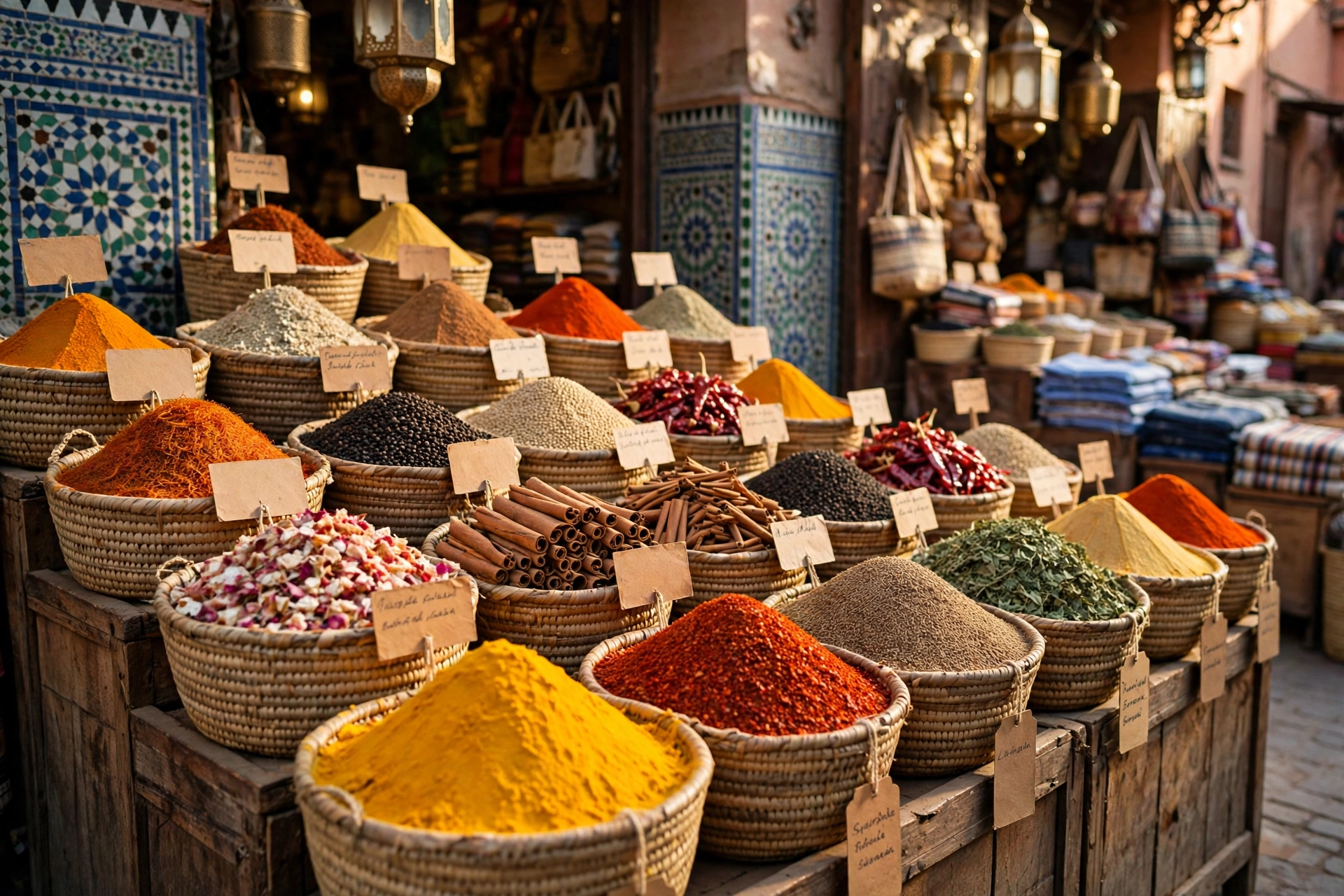
How much does a trip to Morocco cost? Morocco is one of the best-value destinations in the world — and also one of the easiest places to overspend without noticing. The same traveller can spend 400 dirhams a day or 2,000 dirhams a day and both will tell you they had a great trip. The difference is rarely the hotel. It is the small, repeated leaks: the taxi that “forgot” the meter, the helpful stranger who walks you to a shop and takes a cut, the restaurant with a laminated English menu.
I am Moroccan, and I have watched visitors pay three times the local price for the same mint tea, the same taxi ride, the same leather bag — sometimes on the same street, within the same hour. This guide gives you the real numbers for 2026, in dirhams (MAD) with US dollar equivalents at roughly 10 MAD to 1 USD. Prices are ranges, not promises: they vary by city, season and how you travel.
How Much Does a Trip to Morocco Cost Per Day?
For one person, excluding international flights, here is what a day in Morocco realistically costs in 2026.
| Travel style | Per person, per day (MAD) | Per person, per day (USD) | What it buys |
|---|---|---|---|
| Budget | 350–600 MAD | $35–$60 | Hostel dorm or basic guesthouse, street food, buses and metered petit taxis, free sights and one cheap entry |
| Mid-range | 700–1,200 MAD | $70–$120 | Comfortable riad or 3-star hotel, restaurant meals, trains and grand taxis, a guided visit or two |
| Comfort | 1,500–2,800 MAD | $150–$280 | Boutique riad or 4–5-star hotel, sit-down dinners, private driver or day trips, hammam and desert camp upgrades |
A couple sharing a room spends less per person than a solo traveller, because the room is split. Two people travelling mid-range should budget roughly 1,200–2,000 MAD ($120–$200) a day between them.
One correction before we go further: outsiders routinely assume Morocco is “cheap everywhere, all the time.” It is not. Marrakech in spring, the Sahara camps at New Year, and Essaouira during the Gnaoua festival are priced like any popular European destination. The cheap Morocco is in Fes in January, in Meknes on a Tuesday, in the small towns between the famous cities. Timing and place matter more than haggling skill.
What a Trip to Morocco Actually Costs, Line by Line
International flights
From London, Paris or Madrid, budget carriers regularly sell return tickets for 800–2,500 MAD ($80–$250) booked a few weeks ahead; from New York or Toronto, expect 6,000–12,000 MAD ($600–$1,200) return. The cheapest month is usually January or February; the most expensive is late December and the Easter holidays. Fly into Marrakech, Casablanca, Fes or Tangier — whichever is cheapest.
Accommodation
A hostel dorm costs 80–150 MAD ($8–$15) a night. A clean, well-located riad or guesthouse with breakfast runs 350–700 MAD ($35–$70) for a double room — the sweet spot for most visitors, and where Morocco beats Europe hardest: a riad courtyard with orange trees and a rooftop terrace for the price of a chain hotel room in a provincial French town. Mid-range hotels cost 700–1,500 MAD ($70–$150) a night for two people. Five-star hotels and luxury desert camps start around 2,000 MAD ($200); a luxury Erg Chebbi camp can reach 3,000–5,000 MAD ($300–$500) per person per night.
One warning: the riad photos lie a little. The courtyard you fall in love with online belongs to a room that costs twice the cheapest one in the same building. Check whether breakfast and the tourist tax (usually 20–40 MAD per person per night) are included.
Food and drink
A bowl of harira or bissara from a market stall costs 10–20 MAD ($1–$2). A filling lunch — tagine, bread, salad and mint tea — at a neighbourhood restaurant costs 40–80 MAD ($4–$8). A sit-down dinner with a starter, a main and a drink runs 120–250 MAD ($12–$25) per person, and 200–400 MAD ($20–$40) in the fanciest Marrakech restaurants.
Here is the insider rule this site was built on: eat where the menu is handwritten in Arabic and French only. A laminated menu in English, German and Japanese with photos of every dish is a tourist menu, and its prices are usually double the place two streets away. The handwritten menu means the owner cooks for regulars who know the prices. A coffee costs 8–15 MAD ($0.80–$1.50) at a local café and 25–40 MAD ($2.50–$4) on a famous square.
Budget roughly 150–300 MAD ($15–$30) a day per person for food if you mix street food with one restaurant meal, and 300–500 MAD ($30–$50) if every meal is sit-down. Alcohol is the exception: a beer costs 30–60 MAD ($3–$6) in a licensed bar, and wine by the glass is rarely under 60 MAD ($6).
Transport inside Morocco
Trains are the best-value way to move between the big cities. Casablanca to Marrakech (about 3 hours) costs roughly 90–160 MAD ($9–$16) in second class and 140–240 MAD ($14–$24) in first; Tangier to Casablanca on the Al Boraq high-speed train (about 2 hours 10 minutes) costs roughly 150–350 MAD ($15–$35). Buses (CTM and Supratours) cover the routes trains do not — Marrakech to Merzouga, Fes to Chefchaouen — for roughly 100–250 MAD ($10–$25) a trip.
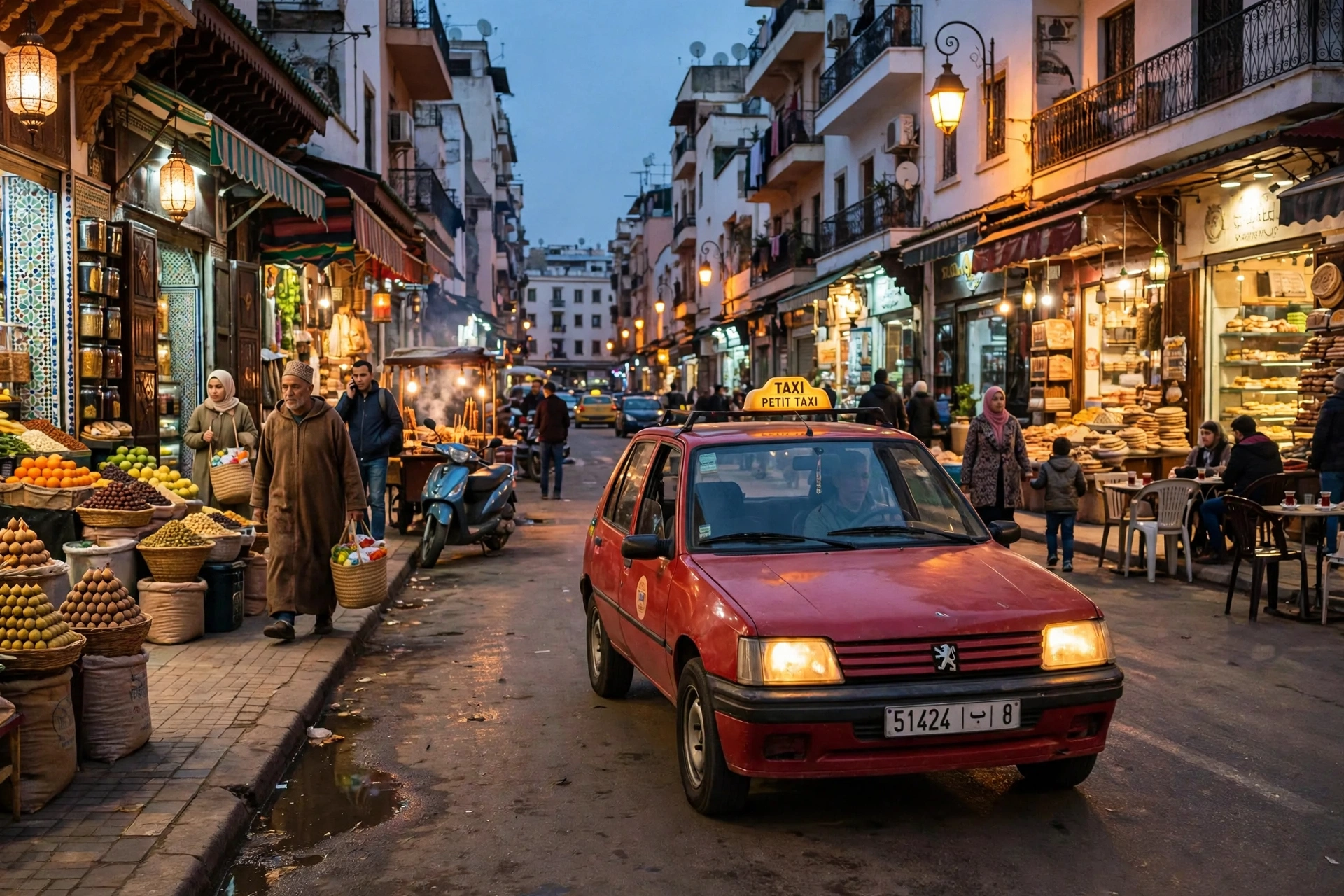
Inside a city, the petit taxi is your daily tool and your daily risk. A metered ride across town costs 10–30 MAD ($1–$3). An unmetered ride to a tourist costs 50–100 MAD ($5–$10) for the same distance. Always ask for the meter — “le compteur, s’il vous plaît” — before you get in, and if the driver refuses, close the door and take the next taxi. There is always a next taxi. Grand taxis between towns charge fixed per-seat prices, usually 20–80 MAD ($2–$8) per seat. Car rental costs roughly 250–500 MAD ($25–$50) a day for a small car, plus fuel at about 13–15 MAD ($1.30–$1.50) per litre.
Sights, activities and tours
Most historic sights charge 20–100 MAD ($2–$10) for foreign adults: the Bahia Palace and Saadian Tombs in Marrakech are around 70–100 MAD each, the Bou Inania Madrasa in Fes roughly 20–30 MAD, Volubilis around 70–100 MAD. The exceptions are the Jardin Majorelle (around 170 MAD, $17, for the garden alone — book online, it sells out) and the Hassan II Mosque tour in Casablanca (around 130–140 MAD, $13–$14).
A desert trip is where the price range is enormous. A 3-day shared Marrakech–Merzouga tour sells for roughly 800–1,500 MAD ($80–$150) per person — dorm-style camp, long drives, group pace. A private 3-day trip with a good camp runs 3,000–6,000 MAD ($300–$600) per person. Both visit the same dunes; the difference is the camp, the vehicle, the guide, and whether you spend ten hours a day in a minibus with strangers. Book through your riad or a company with real recent reviews, never from a tout on the square. A hammam costs 50–150 MAD ($5–$15) at a neighbourhood hammam and 200–500 MAD ($20–$50) at a spa hammam; a cooking class runs 300–600 MAD ($30–$60).
SIM cards, cash and the small stuff
A local SIM with a generous data bundle costs 20–50 MAD ($2–$5) for the SIM plus a 50–100 MAD ($5–$10) top-up — buy it at an official Maroc Telecom, Orange or Inwi shop in town, not at the airport kiosk. ATMs are everywhere in cities; withdraw 1,000–2,000 MAD at a time. The dirham is a closed currency: you cannot buy it before arrival, and you should spend what is left before you leave. Budget 20–50 MAD ($2–$5) a day for tips — rounding up taxis, a 10% tip for a waiter, the occasional 5–10 MAD to a parking attendant.
The Biggest Budget Leak Is Not Your Hotel
The single biggest budget leak on a Morocco trip is not accommodation. It is unmetered taxis and “guide” commissions in the medinas.
It works like this. A friendly man near the square offers to show you the tannery, or the “real” souk, or a Berber pharmacy. At the shop, you pay 300 MAD for argan oil or a leather bag that costs 100 MAD two streets away. He collects his commission — often 30–50% — on the way out. You have not been robbed; you have paid a hidden middleman.
The counter-moves are simple: use the meter, every time — no meter, no ride. Do not accept a guide you did not hire; a licensed guide wears a badge and is hired through your hotel or the tourist office. Walk into a shop alone, because if someone led you there, the price already includes them. Eat where the menu is handwritten in Arabic and French only — this one rule, repeated daily, probably saves a mid-range traveller 100–200 MAD ($10–$20) a day.
Agree the price before the service: taxi, camel, henna — the price is negotiated before, never after. Haggling is expected for unpriced souk goods, usually landing around 50–70% of the first asking price, but food, pharmacies and anything with a printed price are not haggled.
A Sample 7-Day Trip: What It Costs in Practice
Here is a realistic mid-range week for two people sharing a room: Marrakech, the Atlas, the Sahara, and Fes — trains, a shared desert tour, one restaurant dinner a day, and a normal amount of sightseeing.
| Item (two people, 7 days) | Cost (MAD) | Cost (USD) |
|---|---|---|
| Accommodation: 6 nights, mid-range riads/hotels | 4,200–7,200 | $420–$720 |
| Food and drink: 7 days | 2,100–4,200 | $210–$420 |
| Intercity transport (trains + bus) | 600–1,200 | $60–$120 |
| City transport (petit taxis by the meter) | 300–600 | $30–$60 |
| Desert tour (3 days, shared, per person × 2) | 1,600–3,000 | $160–$300 |
| Sights, entries and activities | 800–1,600 | $80–$160 |
| SIM, tips and small extras | 300–600 | $30–$60 |
| Total for two people, 7 days | 9,900–18,400 | $990–$1,840 |
| Total per person, 7 days | 4,950–9,200 | $495–$920 |
So a mid-range week costs roughly $500–$900 per person on the ground, before international flights. A budget week lands around $300–$500 per person; a comfortable week with a private driver and a luxury camp lands around $1,200–$2,000 per person. If your number is far outside these bands, something is wrong — usually an unmetered taxi habit, a hotel booked through a reseller at double the direct price, or a desert tour bought from a tout.
Money Practicalities: Cash, Cards and the Dirham
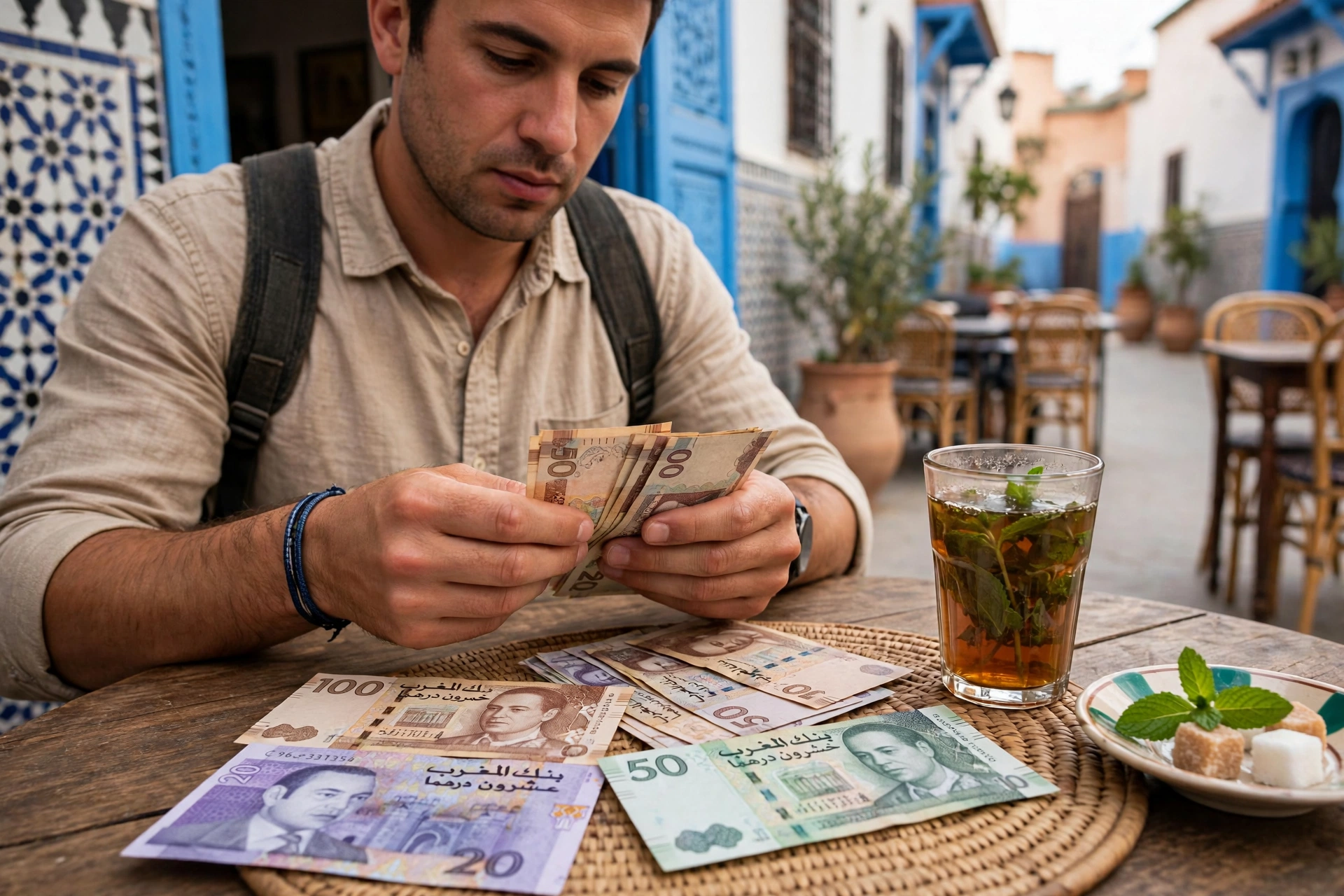
Morocco runs on cash more than visitors expect. Cards work in hotels, larger restaurants and supermarkets, but the medina — the souks, the street food, the small guesthouses, the taxi — is cash. Carry 500–1,000 MAD ($50–$100) in small notes at all times, and break large notes at a supermarket or café rather than at a market stall, where change for a 200-dirham note is a genuine problem. Exchange money at a bank or a licensed bureau in town, never at the airport desk, and never with a man on the street offering a “better rate” — that rate is a scam, every time.
How to Spend Less Without Enjoying It Less
Travel in the shoulder seasons: March–May and September–November give the best weather and the lowest hotel prices. Stay in Fes, Meknes or Rabat instead of Marrakech for part of the trip — the same standard of riad costs 30–40% less outside Marrakech. Book the riad direct, through its own site. Take the train in first class — only 50–90 MAD ($5–$9) more than second, with a guaranteed seat and air conditioning. Eat one big meal a day, not three: a late, generous lunch and a light evening of street food and tea costs half what three restaurant meals cost.
Frequently Asked Questions
Is Morocco expensive for tourists?
No — Morocco is one of the cheapest quality destinations within a short flight of Europe, but it is not uniformly cheap. A mid-range traveller spends roughly $70–$120 (700–1,200 MAD) a day per person. Marrakech and the Sahara camps are the expensive exceptions. The most common reason visitors overspend is unmetered taxis and commission-based “guides.”
How much money should I bring to Morocco for a week?
For a mid-range week, budget $500–$900 (5,000–9,000 MAD) per person on the ground, plus international flights. Bring a card and withdraw dirhams from ATMs as you go; keep 500–1,000 MAD in small notes on you at all times, because the medina runs on cash. The dirham is a closed currency you cannot buy before arrival.
Is $100 a day enough in Morocco?
Yes, comfortably, for a mid-range trip. One hundred dollars is about 1,000 MAD, which covers a good riad room share, three meals, metered taxis and a paid sight with room to spare. A budget traveller can manage on $35–$60 a day.
Do I need cash in Morocco, or can I use cards everywhere?
You need cash. Cards work in hotels, larger restaurants and supermarkets, but souks, street food stalls, petit taxis, small guesthouses and most desert camps are cash-only. ATMs are widespread in cities; withdraw in town, not at the airport.
Are taxis in Morocco expensive?
Metered petit taxis are very cheap — 10–30 MAD ($1–$3) across most cities. Unmetered taxis are expensive, because the driver names a tourist price of 50–100 MAD for the same ride. Always insist on the meter before getting in. Grand taxis between towns charge fixed per-seat prices, usually 20–80 MAD ($2–$8).
What is the biggest waste of money in Morocco?
Paying a middleman you did not hire: the unmetered taxi, the “guide” who walks you to a shop and takes a 30–50% commission, and the desert tour bought from a tout on the square instead of through your riad or a reviewed company.
The Bottom Line
So, how much does a trip to Morocco cost? A week in Morocco costs roughly $500–$900 per person at a comfortable mid-range level, $300–$500 on a budget, and $1,200–$2,000 if you want private drivers and luxury camps — all before international flights. The country rewards the traveller who uses the meter, eats where the menu is handwritten, and books the desert through a real company.
Plan the route first, then the budget: read our Morocco Travel Guide for First-Time Visitors to fix your itinerary, check the best time to visit Morocco to pick your month, and if the numbers here make you think about staying longer, our cost of living in Morocco guide — and our living in Morocco guide — show what a longer stay costs and how it works. Morocco is generous to the prepared traveller. Come prepared.
Prices checked: 18 November 2026. Prices are ranges gathered from current local rates and vary by city and season; transport fares and entry fees can change — re-check the big items (desert tours, Majorelle, intercity trains) when you book.
1 thought on “How Much Does a Trip to Morocco Cost? Real Prices for 2026”