
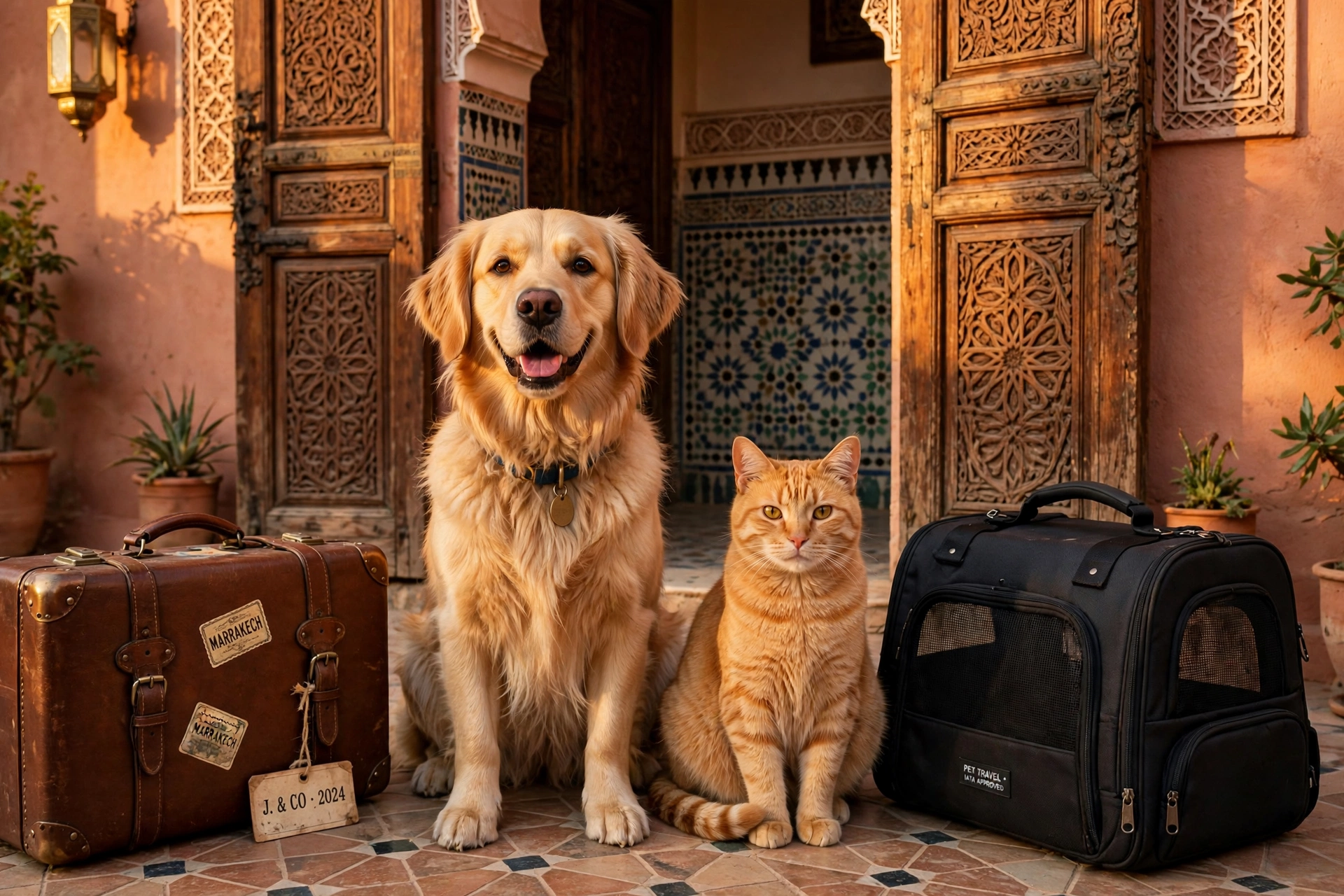
Morocco is one of the more straightforward moves an expat can make with an animal, and moving to morocco with pets is simpler than most people expect — provided the paperwork is done in the right order. There is no quarantine for dogs and cats arriving with the correct documents from the EU, the UK or the United States. The rules are short: a microchip, a rabies vaccination, and a veterinary health certificate. Get those three right and your dog or cat walks out of the airport with you.
Before the detail, one honest note: some rules below are confirmed by Morocco's veterinary authority, ONSSA, and by the airlines themselves, while other figures — especially airline fees and vet prices — change often and are labelled indicative or approximate. Where a fact matters most, this guide says so, and moving to morocco with pets is one of those cases where a call to your airline and your vet, a week before you fly, is worth more than any article.
New to the country? Our Moving to Morocco: visas and carte de séjour guide covers the human side of the move, and our cost of living in Morocco guide puts the pet costs below in context.
In this guide
- Pet Entry Rules: Microchip, Rabies and Health Certificate
- No Quarantine — If the Paperwork Is Right
- Flying with Your Pet: Cabin, Hold or Cargo
- Arriving in Morocco: The Airport Process
- Finding a Pet-Friendly Home in Morocco
- Vets in Morocco: Where to Go and What It Costs
- Pet Food and Supplies
- Daily Life with a Pet in Morocco
- Breeds and Animals That Face Restrictions
- If Your Paperwork Is Incomplete
- Pet Move FAQ
What moving to morocco with pets Requires at the Border
Morocco's pet import rules are set by ONSSA, the national office for food safety, and apply to dogs and cats arriving by air, sea or land. The order matters: each step must happen after the one before it, and a document issued out of sequence can be rejected. That sequence is the backbone of moving to morocco with pets, so start at least two months before your flight — the rabies wait alone is three weeks.
Microchip First
Your pet needs an ISO 11784/11785 microchip, the 15-digit standard that border officers read with a standard scanner. It must be implanted before the rabies vaccination, because the vaccination only counts if it can be tied to the chip number. If your pet already has a chip, ask your vet to scan it and confirm it still reads — a faded chip is the most common reason a file fails at the border.
Fitting a chip after arrival does not fix a vaccination given before it, and moving to morocco with pets starts at this step, not at the airport.
Rabies Vaccination and the 21-Day Wait
After the chip, your pet needs a rabies vaccination, recorded in its vaccination book or pet passport with the vaccine name, batch number and date. For a first vaccination, you must wait 21 days after the jab before travelling. Boosters given before expiry do not need a new wait.
Check the expiry date and boost early if it falls close to your travel date. Keep the original record, not a photocopy, with a legible vet stamp and signature. Plan the move around the vaccination calendar, not the flight calendar — moving to morocco with pets on a tight schedule fails most often at this step.
The Veterinary Health Certificate
The third document is a veterinary health certificate, issued by your vet shortly before travel — usually within 10 days of departure — stating that the animal is healthy, free of contagious disease, and fit to travel. In many countries it must also be endorsed by the official government vet service, so ask your vet early whether endorsement is needed and how long it takes.
For pets from the EU, the EU pet passport serves as the main document; the pet passport background on Wikipedia explains how the system works. Carry the originals in your hand luggage, never in checked bags, and keep phone photos of every page. A missing certificate is the easiest problem in moving to morocco with pets to prevent, and the most annoying to fix at the airport.
What ONSSA Checks at the Border
At the border, ONSSA officers check the chip number against the documents, verify the rabies vaccination date and the 21-day wait, and inspect the animal's general health. They may also ask for the health certificate and, for some origins, an import permit arranged in advance — confirm this with ONSSA or your airline first, because requirements vary by origin.
No Quarantine — If the Paperwork Is Right
There is no quarantine for dogs and cats arriving in Morocco with a valid microchip, a valid rabies vaccination and a proper health certificate. That is the rule as published by the Moroccan authorities and confirmed by airlines on the route, and the main reason moving to morocco with pets is far less stressful than moving an animal to a country that still quarantines. Your pet goes home with you from the airport on the day you land.
The "if" is doing real work, though. Quarantine is replaced by refusal: an animal whose documents do not add up can be refused entry and sent back on the next flight at your expense, or held while the paperwork is fixed. That is why moving to morocco with pets rewards preparation more than money.
Flying with Your Pet: Cabin, Hold or Cargo
How your pet travels depends on its size: small dogs and cats fly in the cabin under the seat, larger animals travel in the hold in a ventilated crate, and very large animals — or animals travelling without you — go as manifest cargo. Book the pet with your ticket, because airlines limit the number of animals per flight — moving to morocco with pets by air starts with that booking note, not with the airport.
Royal Air Maroc
Royal Air Maroc is the airline most pet owners use, and its rules are clear. Dogs, cats and birds can travel in the cabin if the animal and carrier together weigh no more than 8 kg, in a solid, ventilated container no larger than 55 x 40 x 20 cm. Declare the pet when booking, at least 48 hours ahead; only one pet per passenger is allowed. Cabin pets are not accepted on flights to the UK or the UAE, and guide dogs travel free.
In the hold, Royal Air Maroc accepts animals up to 70 kg including the crate, in a robust, watertight, ventilated container. Indicative cabin fees in November 2026 are around 290 MAD (about $29) on domestic routes and roughly 640 to 1,150 MAD (about $64 to $115) on international routes — the fees for moving to morocco with pets are repriced by route, so confirm the exact fee when you book. The airline's official pet transport rules are published on the Royal Air Maroc pet transport rules page: check it before you pay anything.
Other Airlines Flying to Morocco
Most European carriers follow the same pattern: cabin for animals up to 8 kg including the carrier, hold for larger ones, and a declaration at booking. Air France and Iberia accept cabin pets to Morocco on their usual terms. Two exceptions matter: British Airways carries no pets in the cabin — animals fly in the hold through its cargo service, priced per booking.
EasyJet does not accept pets on its Morocco routes either, except registered assistance dogs. On any airline, flights to or from the UK are hold or cargo only, because UK rules do not allow pets in the cabin on arrival. If your dog is large, compare hold fees carefully: they vary far more between airlines than cabin fees, and moving to morocco with pets in the hold can cost anywhere from a few hundred to a few thousand dirhams depending on the route and the weight.
| Airline / route | Cabin | Hold / cargo | Indicative fee (Nov 2026) |
|---|---|---|---|
| Royal Air Maroc, domestic | Dogs, cats, birds up to 8 kg incl. carrier | Up to 70 kg incl. crate | From 290 MAD (about $29) |
| Royal Air Maroc, Europe–Morocco | Same, 8 kg limit | Up to 70 kg incl. crate | About 640–1,150 MAD (about $64–$115) |
| Air France / KLM via Paris or Amsterdam | Up to 8 kg incl. carrier | Up to 75 kg depending on route | About 800–2,000 MAD (about $80–$200) |
| Iberia via Madrid | Up to 8 kg incl. carrier | Up to 45 kg on most routes | About 700–1,500 MAD (about $70–$150) |
| British Airways to Morocco | Not accepted in cabin | Hold only, via IAG Cargo | Quoted per booking, roughly 2,000–4,000 MAD (about $200–$400) |
| easyJet to Morocco | Not accepted (assistance dogs only) | Not accepted | Not applicable |
| Ferry from Spain (Tarifa or Algeciras) | Pets stay in vehicle or onboard kennel | Not applicable | About 100–300 MAD (about $10–$30) per pet |
Arriving in Morocco: The Airport Process
Most pets arrive at Casablanca Mohammed V airport, and the process is straightforward if the file is complete — the arrival is the calmest part of moving to morocco with pets. After landing, you will be directed to the ONSSA veterinary desk, or a customs officer will call one. Present the passport or vaccination book, the health certificate and your own passport. The officer scans the chip, checks the dates, and stamps the file. Allow an extra 30 to 60 minutes, and do not book a tight onward connection.
Feed your pet lightly before the flight and give water on arrival. Bring a lead, a small bag of food and a portable water bowl in your hand luggage. The last step of moving to morocco with pets ends at that small desk — and if anything looks wrong, stay calm: officers deal with pet arrivals daily, and a missing stamp is usually fixable with a call to your vet.
Finding a Pet-Friendly Home in Morocco
Finding a home that accepts pets is the hardest practical part of the move, harder than the flight or the paperwork. Many landlords are relaxed about cats, but dogs — especially large ones — narrow the choice, and riads in the old medinas often refuse animals because of shared courtyards and thin walls. Modern apartments in Casablanca, Rabat, Marrakech and Tangier are the easiest places to rent with a pet.
Ask about pets before you pay anything, and get the answer in writing in the contract. Some landlords charge a pet deposit of 1,000 to 3,000 MAD (about $100 to $300), refundable if there is no damage. Searching the modern districts first is the simplest way to keep moving to morocco with pets from turning into a long housing hunt.
Our rent prices in Morocco guide gives current ranges by city, our carte de séjour renewal guide covers the residency paperwork once you have an address, and the working in Morocco guide weighs the main cities for jobs and lifestyle. Browse the full Living in Morocco section for the rest of our expat guides.
Vets in Morocco: Where to Go and What It Costs
Morocco's big cities have good veterinary care. Casablanca has the most clinics, including modern practices with X-ray and surgery, and Rabat, Marrakech and Tangier each have well-regarded vets used to treating expats' animals. Outside the big cities, coverage thins out, so plan your pet's care around trips to the nearest city.
Register with a vet in your first week, before anything goes wrong — once you have a clinic's number saved, moving to morocco with pets feels far less stressful.
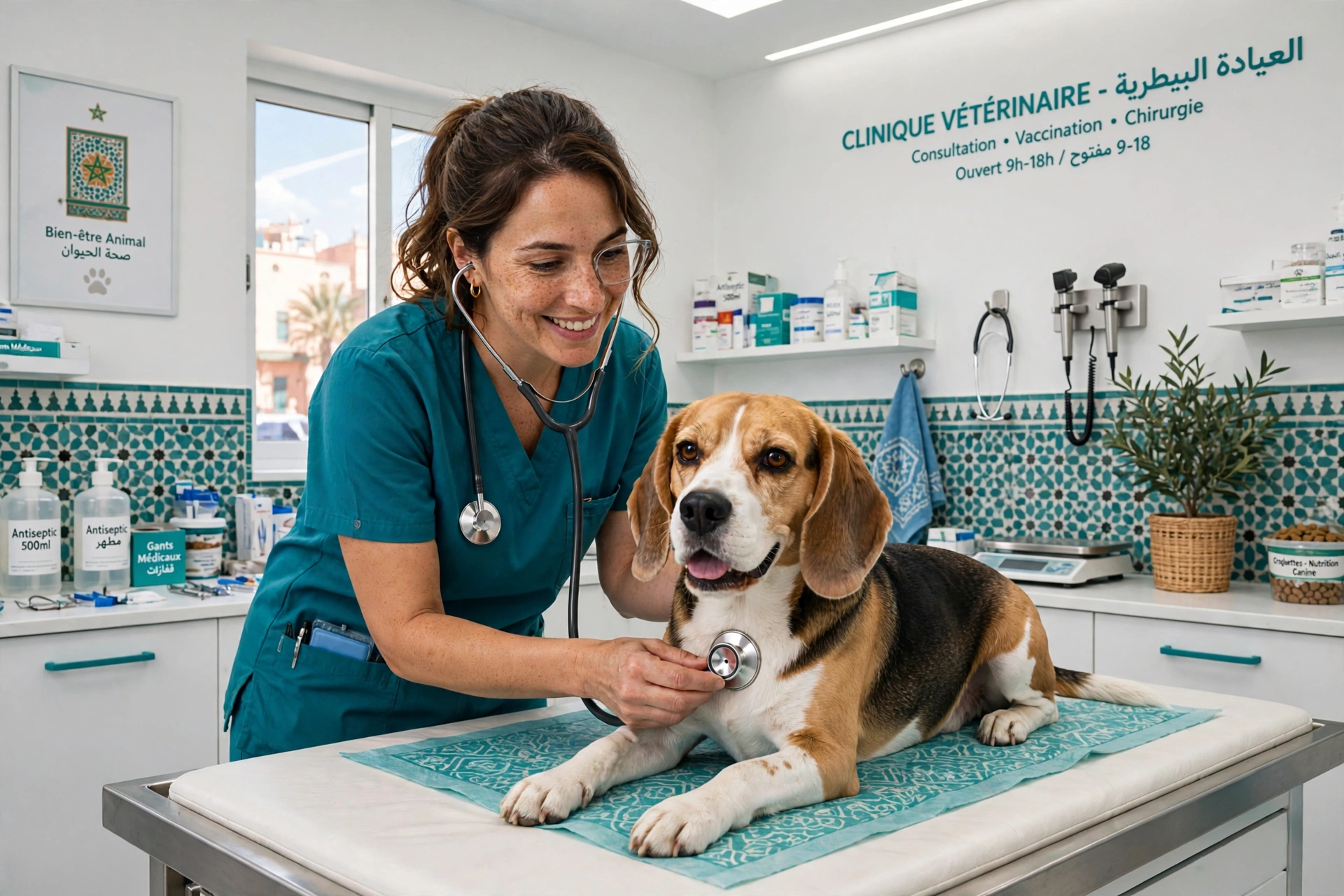
Vet prices are low by European or North American standards: a consultation costs roughly 150 to 300 MAD (about $15 to $30), a rabies vaccination 150 to 250 MAD (about $15 to $25), and a microchip 200 to 350 MAD (about $20 to $35), all checked November 2026. Clinics stock the usual vaccines, flea and tick treatments, and prescription diets, and most can issue the health certificate you need for onward travel. Ask your vet to keep the vaccination book up to date — it is the document that makes every future border crossing easy, and the one that matters most when moving to morocco with pets.
| Service | Typical price (Nov 2026) | Notes |
|---|---|---|
| Consultation | 150–300 MAD (about $15–$30) | First visit often includes a basic check |
| Rabies vaccination | 150–250 MAD (about $15–$25) | Annual booster |
| Combined vaccination (dog) | 200–350 MAD (about $20–$35) | Distemper, parvovirus and others |
| Microchip implant | 200–350 MAD (about $20–$35) | ISO 11784/11785 chip |
| Health certificate for travel | 200–400 MAD (about $20–$40) | Plus any official endorsement fee |
| Sterilisation, cat | 600–1,200 MAD (about $60–$120) | Clinics in big cities |
| Sterilisation, dog | 1,000–2,500 MAD (about $100–$250) | Depends on size and sex |
| Flea and tick treatment | 100–250 MAD (about $10–$25) | Per dose, monthly in summer |
Pet insurance is still rare in Morocco, so for owners moving to morocco with pets, paying as you go is the norm — keep a reserve of 2,000 to 3,000 MAD (about $200 to $300) for an unexpected vet visit, and ask your clinic for an emergency number before you need it.
Pet Food and Supplies
Feeding a pet in Morocco is easy in the cities and workable everywhere else. The big supermarkets — Marjane and Carrefour — stock imported brands alongside cheaper local ones, and a 10 to 15 kg bag of mid-range dry dog food costs roughly 300 to 600 MAD (about $30 to $60), checked November 2026.
Imported premium brands run higher, sometimes double the local equivalent, so if your pet eats a prescription diet, bring a month's supply and ask your vet where to order it. Outside the big cities, choice narrows to a few brands, so stock up when you visit a city. For cats, litter costs roughly 40 to 80 MAD (about $4 to $8) a bag. Sort out the food supply before you run out — the brand you need may be a special order, and moving to morocco with pets is easier when the food question is settled in week one.
Daily Life with a Pet in Morocco
Daily life with a pet in Morocco is good, with a few adjustments. Dogs are walked on a lead in cities, mostly early in the morning and again in the evening, because the midday sun is fierce. In summer, Marrakech and the interior regularly pass 40°C, and pavements can burn paws — walk before 9 a.m. and after 6 p.m., carry water, and watch for panting. Keep a new cat indoors for the first week so it learns where home is.
Morocco also has a large stray population, especially outside the big cities, so keep your dog leashed, keep vaccinations current, and do not let your animal approach strays — moving to morocco with pets means accepting this background risk and managing it with a lead and an up-to-date vaccination book.
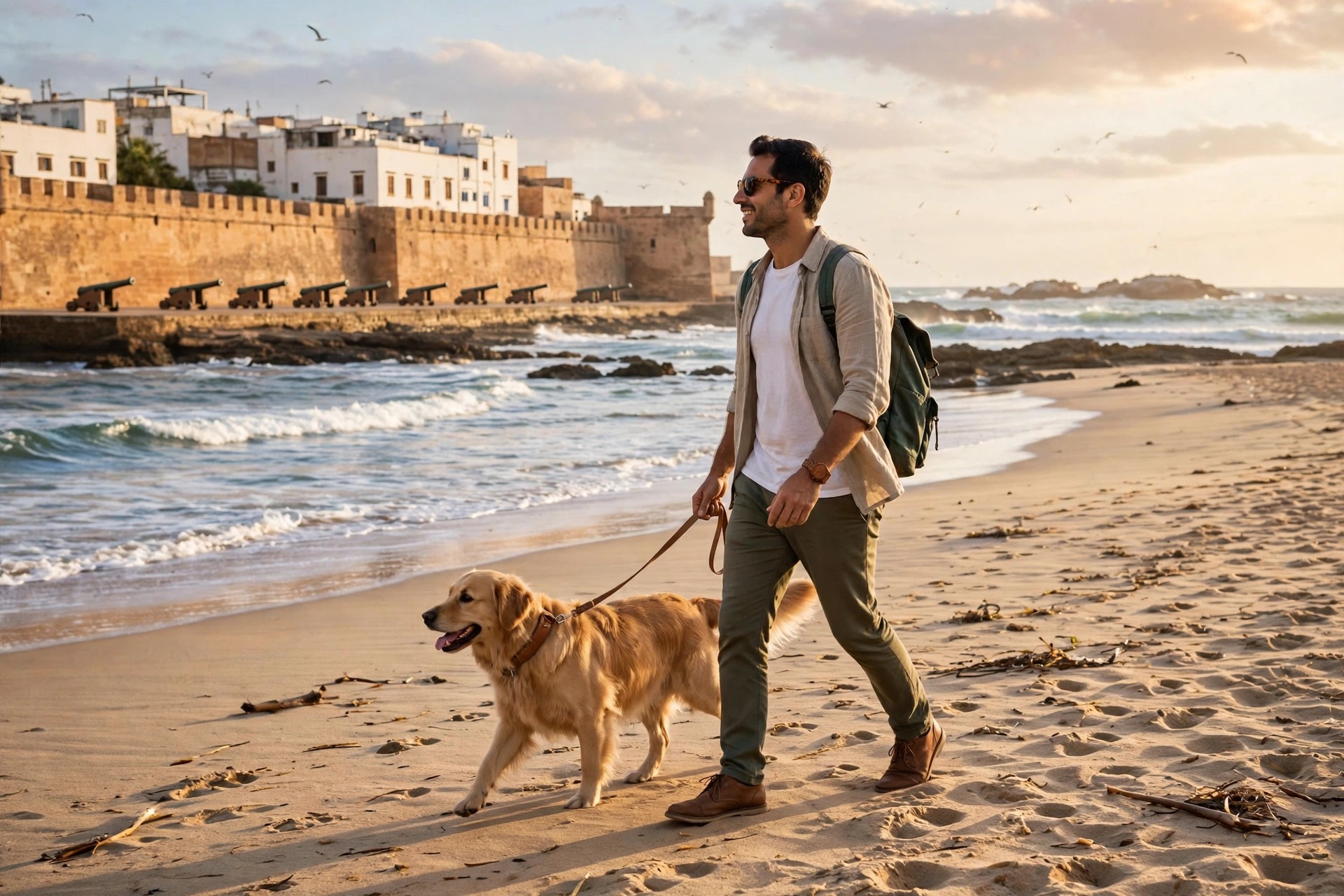
Beaches are a highlight, with a caveat. Off-season, dogs are welcome on most beaches, and the long Atlantic sands around Essaouira and Taghazout are perfect for them. In high summer, busy town beaches often restrict dogs during the day, so go early or find a quieter stretch. During Ramadan, daily life slows and vet clinics keep shorter hours, so book appointments in advance, and be discreet about feeding a dog in public during fasting hours.
Breeds and Animals That Face Restrictions
Morocco publishes no official list of banned dog breeds for import — ONSSA's requirements focus on health documents, not breed — but that does not mean every animal can fly. Airlines apply their own bans, and these are what usually stop a move. Royal Air Maroc refuses snub-nosed breeds in the cabin and the hold, including bulldogs of all types, pugs, boxers, Pekingese, Shih Tzus, chow chows, Shar-Peis, mastiffs, Cane Corsos and pit bulls, and among cats, Persians, Himalayans, Exotic Shorthairs, British Shorthairs, Burmese and Scottish Folds.
The reason is safety: flat-faced animals struggle to breathe in the hold, especially in heat. If you own one of these breeds, check with the airline first and expect to be refused — moving to morocco with pets of a snub-nosed breed may mean travelling by ferry from Spain instead. Exotic animals are different: wild animals, reptiles and most rodents must travel as cargo, and some species need a CITES permit on top of the veterinary documents.
If Your Paperwork Is Incomplete
If you discover a gap in the paperwork before you fly, fix it before you travel — that is the whole answer. A rabies vaccination given after the microchip was implanted is invalid if the chip date is later than the jab, and a health certificate issued more than 10 days before departure may be rejected. Check the dates in order: chip, vaccination, 21-day wait, certificate.
If the gap is found at the Moroccan border, the officer may hold the animal while you contact your vet, or refuse entry and put the pet on the next flight home at your expense. That is why moving to morocco with pets should never be attempted on a hope and a photocopy. When in doubt, pay your vet for a full file review a month before departure — it costs less than a night in a Casablanca hotel.
Pet Move FAQ
Do dogs and cats need quarantine when entering Morocco?
No. Dogs and cats arriving with a valid microchip, a valid rabies vaccination and a proper health certificate are not quarantined in Morocco. The check at the border is a document inspection by ONSSA, and a compliant pet goes home with you the same day. Quarantine is effectively replaced by refusal: if the documents do not add up, the animal can be refused entry or held while the paperwork is fixed.
Can my dog fly in the cabin to Morocco?
Yes, if the dog and its carrier together weigh no more than 8 kg and the carrier fits the airline's size limit — 55 x 40 x 20 cm on Royal Air Maroc. You must declare the pet when booking, at least 48 hours ahead. Larger dogs travel in the hold in a ventilated crate, and moving to morocco with pets in the cabin is not possible on flights to or from the UK, where pets must travel in the hold or as cargo.
What documents does my pet need to enter Morocco?
Three things: an ISO 11784/11785 microchip implanted before the rabies vaccination, a rabies vaccination with the 21-day waiting period completed after a first jab, and a veterinary health certificate issued shortly before travel, usually within 10 days. From the EU, the EU pet passport carries the chip and vaccination record. Keep originals in your hand luggage and phone photos as backup, and confirm with ONSSA or your airline whether an import permit is also needed from your country of origin. If you may ever return to the EU with your pet, get a rabies antibody titre test done before you leave Europe — the EU requires it for re-entry, though Morocco does not require it for arrival.
How much does it cost to move a pet to Morocco?
For a small pet in the cabin on Royal Air Maroc, budget roughly 290 MAD (about $29) on domestic routes and 640 to 1,150 MAD (about $64 to $115) from Europe, plus the vet costs at home for the chip, vaccination and certificate. A larger dog in the hold costs more, often 2,000 to 4,000 MAD (about $200 to $400) on a European route. Allowing for documents and fees, a realistic total is 2,000 to 6,000 MAD (about $200 to $600) for a straightforward move, before your own ticket.
Can I rent an apartment in Morocco with a dog?
Yes, but it narrows your choice. Cats are accepted almost everywhere; large dogs are harder, especially in medina riads. Modern apartment buildings in Casablanca, Rabat, Marrakech and Tangier are the easiest option, and you should confirm the pet in writing in the contract. Expect a pet deposit of 1,000 to 3,000 MAD (about $100 to $300) in some buildings.
Are there vets in Morocco who speak English or French?
Yes. French is the working language of most clinics, and many vets in Casablanca and Rabat speak English as well. The big cities have modern clinics with surgery and X-ray, and prices are low by European standards — a consultation costs roughly 150 to 300 MAD (about $15 to $30). Register with a vet in your first week, before you need one urgently.
Conclusion
Moving a pet to Morocco is one of the more forgiving parts of relocating here, and moving to morocco with pets is a realistic plan for most owners, not a bureaucratic ordeal. The rules are short — chip, rabies jab, health certificate — there is no quarantine for compliant animals, the flights are manageable, and the vets in the big cities are good and affordable. Do the paperwork in the right order, book the pet with your ticket, and confirm the details with your airline and vet a week before you fly. Then the move becomes what it should be: a dog on a beach in Essaouira, or a cat asleep in a sunny riad courtyard.
Last checked: November 2026