
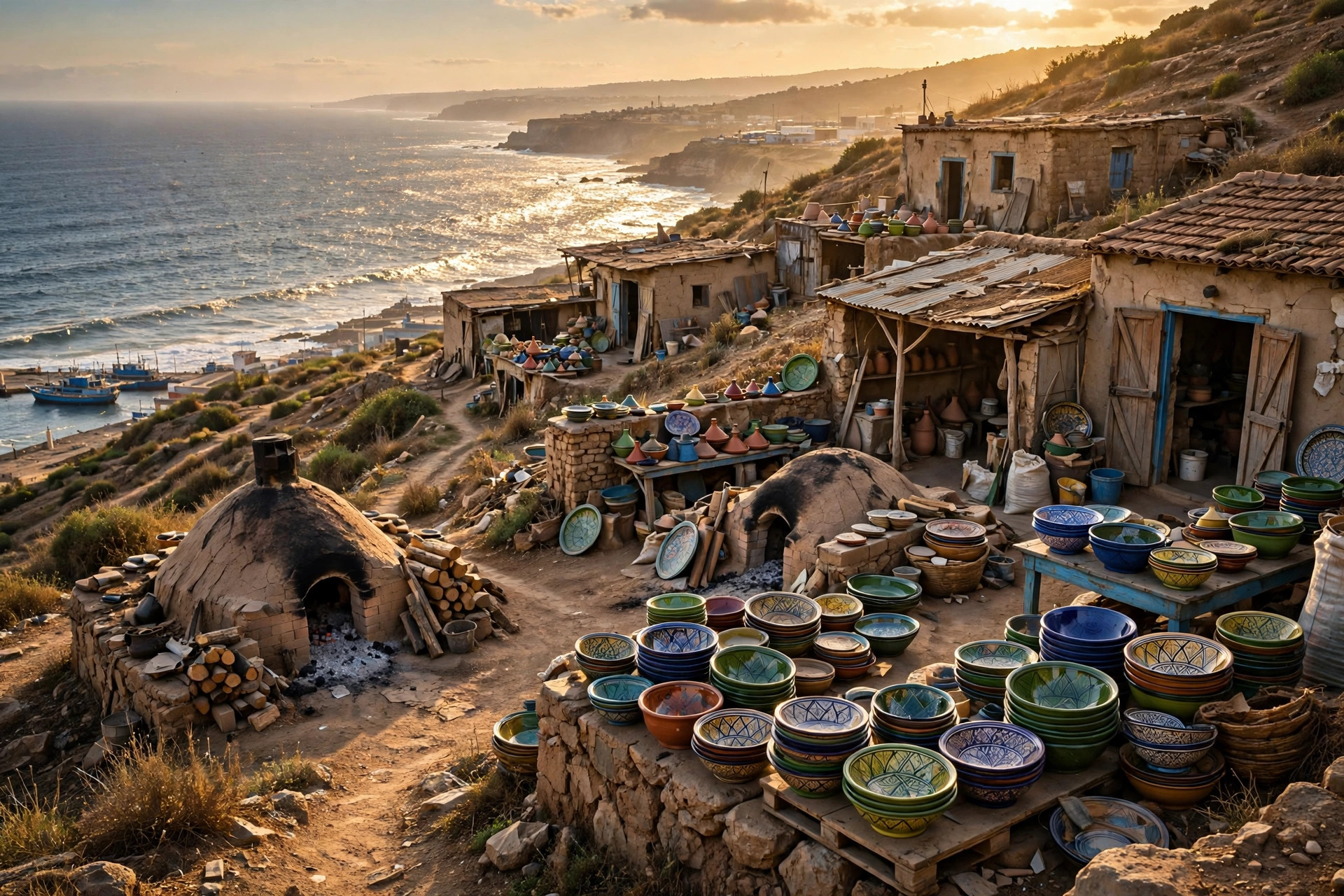
Living in Safi is Morocco at its most working and most honest: a city of 323,888 people (2024 census) on the Atlantic coast, where the sardine boats come in at dawn and the pottery kilns smoke above the old town. It is not a resort town and it does not try to be one. For expats who want a real Moroccan city with low rents, sea air and a craft tradition you can touch, living in Safi is one of the most underrated choices on the coast.
This guide covers the neighbourhoods, rents and routines that make a move to Safi work in practice. It sits in our Living in Morocco section, alongside our Morocco travel guide for first-time visitors.
Safi sits about 240 kilometres south-west of Casablanca and 130 kilometres north-west of Marrakech, midway between El Jadida and Essaouira. It is an old port with a Portuguese past, a pottery capital since 1919, and one of the great sardine harbours of the world — a city where the smell of the sea and the sound of the kilns come with a cost of living that leaves room to breathe.
In this guide
- Why Expats Choose Living in Safi
- Safi at a Glance
- Best Neighbourhoods for Living in Safi
- Rents and Housing: What You Pay in 2026
- Monthly Cost of Living in Safi
- Weather: Mild Winters and Foggy Atlantic Summers
- Getting Around: Trains, Buses and the Port Road
- Working in Safi: Pottery, Fishing, Phosphate and Remote Work
- Daily Life: Markets, Food and the Pottery Quarter
- Healthcare in Safi
- Schools for Expat Families
- The Downsides of Living in Safi
- Moving to Safi: Your First Steps
- Frequently Asked Questions
- Conclusion: Is Safi Right for You?
Why Expats Choose Living in Safi
The first reason expats choose living in Safi is the craft. Safi has been Morocco's pottery capital since 1919, when the potter Boujemaa Lamali founded its pottery school, and before the pandemic there were about 2,000 registered artisans working in 212 workshops. The potters' quarter, the Colline des Potiers, is a working hillside of kilns, clay and painted bowls — not a museum. For people who like living where things are made, living in Safi puts a living craft on your doorstep.
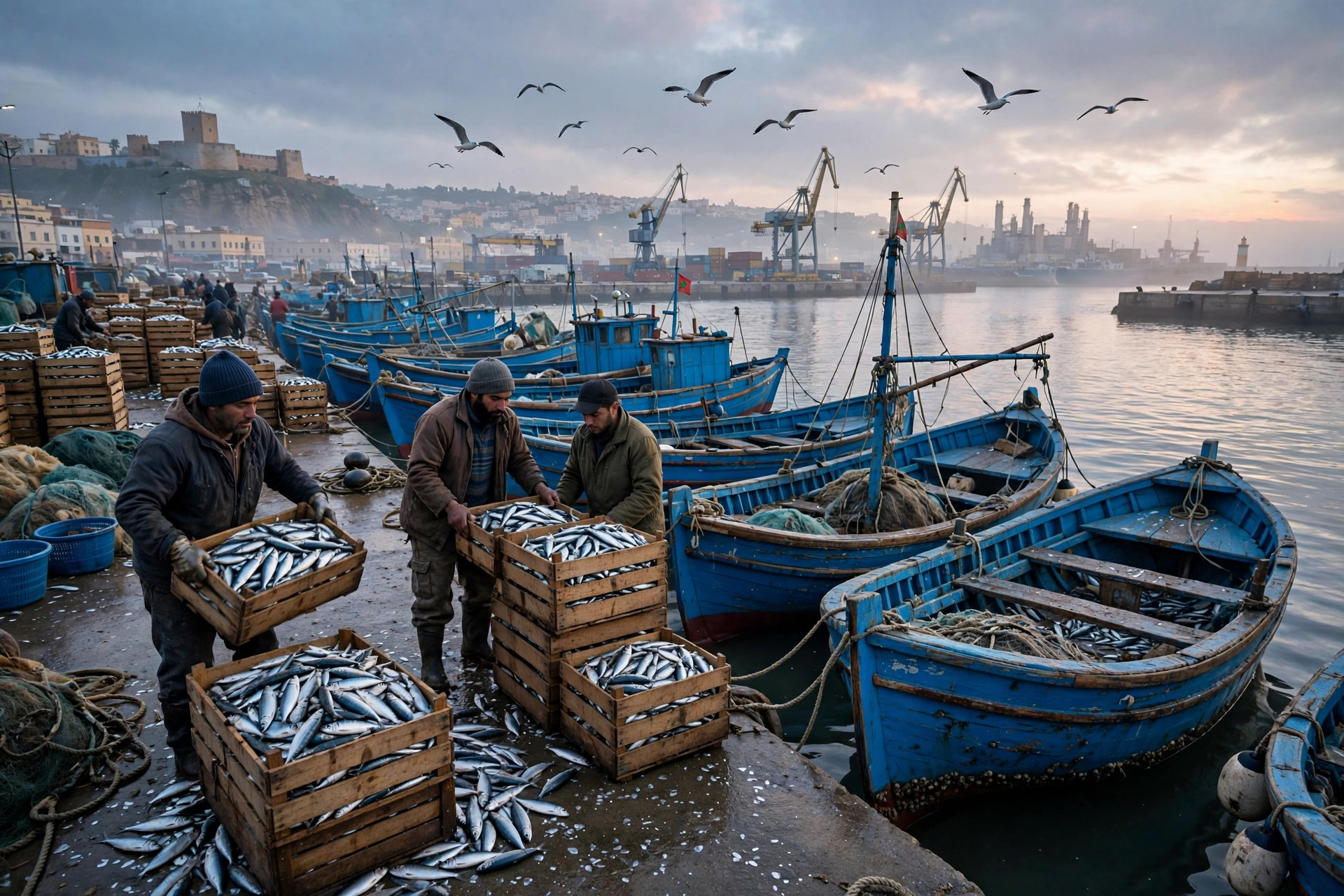
The second reason is the sea. Safi is one of Morocco's great fishing ports, and Morocco is the world's top exporter of canned sardines, with Safi, Agadir and Laayoune producing the bulk of it. The port at dawn — blue wooden boats, gulls, crates of sardines — is the city's daily theatre, and the fish on your plate was probably caught that morning.
The third reason is the price. A comfortable one-bedroom flat in the centre costs roughly half what the same flat costs in Casablanca and far less than a comparable place in Marrakech or Rabat. For retirees on a fixed pension and remote workers earning in euros or dollars, living in Safi stretches every dirham further than almost anywhere else on the coast.
Safi at a Glance
| Fact | Detail |
|---|---|
| Population | 323,888 (2024 census, urban commune) |
| Region | Marrakech-Safi, Atlantic coast |
| Distance to Casablanca | About 240 km, 4 hours by road or train |
| Distance to Marrakech | About 130 km, 2 to 3 hours by road |
| Distance to Essaouira | About 130 km south along the coast |
| Airport | None in Safi; Essaouira (ESU) and Marrakech (RAK) about 2 hours away |
| Climate | Hot semi-arid, Atlantic-mild: summers to 28°C, winter days near 18°C |
| Best for | Remote workers, retirees, artists, slow travellers, surf lovers |
| Watch out for | Industrial port, small expat community, limited nightlife |
Best Neighbourhoods for Living in Safi
The Ville Nouvelle, the French-built centre around Place de l'Independance and Avenue Hassan II, is the first choice for newcomers who want Safi life at its most convenient. The streets here are wide and lined with cafes, banks and pharmacies, and the apartment blocks are modern, with lifts and parking.
The old medina suits expats who want history on their doorstep. The 16th-century Portuguese sea castle, the Qasr el-Bahr, stands at the water's edge, and the Kechla fortress watches over the old town from its hill. Rents here are lower than in the centre, but the houses are older, the lanes narrow, and parking scarce.
The corniche and seafront suit expats who came for the Atlantic. Flats along the corniche catch the sea breeze and the sunset, and the promenade is where the city walks in the evening. Prices here sit between the medina and the centre, and the best flats face the ocean.
South of town, Sidi Bouzid beach draws expats who want space and surf. The beach and its cafes sit a few kilometres from the centre, and the newer houses here are larger and cheaper than in town — but you need a car or a taxi for the daily shop. The northern districts towards the Casablanca road suit families who want larger, newer flats on quiet streets.
Rents and Housing: What You Pay in 2026
Rents are the strongest argument for living in Safi. A one-bedroom flat in the centre typically costs 1,800 to 3,000 MAD a month (about $180 to $300), and outside the centre the same flat drops to 1,200 to 2,000 MAD (about $120 to $200). Furnished flats cost roughly 20 to 40 percent more.
| Home type | Monthly rent (MAD) | Monthly rent (USD) |
|---|---|---|
| Studio, city centre | 1,400–2,200 | $140–$220 |
| One-bedroom, city centre | 1,800–3,000 | $180–$300 |
| One-bedroom, outside centre | 1,200–2,000 | $120–$200 |
| Two-bedroom, city centre | 2,500–4,500 | $250–$450 |
| Three-bedroom, city centre | 3,200–5,500 | $320–$550 |
| Three-bedroom, outside centre | 2,200–3,800 | $220–$380 |
| Villa with garden | 4,500–8,000 | $450–$800 |
| Small house, medina | 1,500–3,000 | $150–$300 |
Finding a flat works best on the ground. Estate agents in the Ville Nouvelle list most of the decent stock, and the Facebook groups for rentals are active, but the best flats still change hands by word of mouth. Plan a week in a hotel, view at least five places, and check water pressure before you commit. A written contract matters: you need it for your residence file, so get one even for a short let.
Monthly Cost of Living in Safi
A single person living in Safi can live well on 6,000 to 7,500 MAD a month (about $600 to $750), rent included — a one-bedroom flat, groceries, utilities, transport and a social life of cafes and restaurants. A couple sharing a two-bedroom flat should budget 9,000 to 11,000 MAD (about $900 to $1,100), and a family of three around 13,000 to 15,500 MAD (about $1,300 to $1,550).
| Expense | Single person (MAD) | Couple (MAD) |
|---|---|---|
| Rent, one/two-bedroom flat | 2,200 | 3,200 |
| Utilities, electricity and water | 350 | 500 |
| Groceries and markets | 1,400 | 2,400 |
| Internet and mobile | 300 | 400 |
| Local transport | 250 | 400 |
| Eating out and cafes | 550 | 850 |
| Health insurance | 500 | 900 |
| Leisure and weekend trips | 450 | 750 |
| Clothing and household | 250 | 450 |
| Total | 6,250 | 9,850 |
Groceries are where the savings really show. The central market sells vegetables, fruit, bread and meat well below supermarket prices, and the fish market by the port is cheaper still — a kilo of sardines often costs less than a coffee. A coffee costs 7 to 10 MAD (about $0.70 to $1), a grilled sardine lunch runs 25 to 40 MAD (about $2.50 to $4), and dinner for two is usually 150 to 250 MAD (about $15 to $25).
Weather: Mild Winters and Foggy Atlantic Summers
Safi has a hot semi-arid climate softened by the Atlantic, and the first thing newcomers learn about living in Safi is how mild it is compared with inland Morocco. The cold Canary Current keeps summer in check: August averages a high of about 28°C (82°F) with lows near 20°C, while January averages a high of 18°C (64°F) and lows near 8°C (46°F). Rain is light — only about 241 millimetres a year, mostly in winter.
Summer brings Atlantic fog and humidity rather than heat. Mornings can be grey and misty, especially in July and August, before the sun breaks through, and the sea breeze keeps evenings cool enough for a light jacket. Winter days are mild and bright, but unheated stone houses feel cold after dark, so a good heater matters more than a coat. The best months are March to May and September to November: warm days, clear skies, and the Atlantic at its calmest.
Getting Around: Trains, Buses and the Port Road
Safi has a train station, but it is a slow one. The ONCF line connects Safi to the national network through Benguerir, and a direct train runs once a day to Casa-Voyageurs in Casablanca in about 4 hours and 18 minutes, with tickets from 120 to 250 MAD (about $12 to $25). Trains to Marrakech take three to four hours with a change at Benguerir.
| Route from Safi | Time | Typical fare |
|---|---|---|
| Casablanca (ONCF train, once daily) | About 4h 20m | 120–250 MAD (about $12–$25) |
| Casablanca (CTM bus) | About 4h | 110–160 MAD (about $11–$16) |
| Marrakech (CTM bus) | About 2h 30m–3h | 80–120 MAD (about $8–$12) |
| Essaouira (CTM bus) | About 2h 30m | 70–100 MAD (about $7–$10) |
| El Jadida (CTM bus) | About 2h | 60–90 MAD (about $6–$9) |
| Sidi Bouzid beach (petit taxi) | About 15 minutes | 15–25 MAD (about $1.50–$2.50) |
| Marrakech (private transfer) | About 2h | From about 900 MAD (about $90) |
For daily life in Safi, petit taxis are the default: a ride across town costs 7 to 10 MAD (about $0.70 to $1) on the meter, though drivers sometimes quote a flat price to foreigners. Grand taxis run fixed routes to the beach and nearby villages, and local buses cover the town for a few dirhams. There is no airport in Safi: Essaouira-Mogador (ESU) and Marrakech Menara (RAK) are each about two hours away by road. See our Morocco in 20 Days route for how the city fits into a longer journey along the coast.
Working in Safi: Pottery, Fishing, Phosphate and Remote Work
Local jobs for foreigners are limited, and living in Safi on a local salary is a hard proposition: the average local salary in the region is around 4,500 MAD a month (about $450). The port, the canneries and the phosphate plants employ thousands, and the pottery workshops hire skilled hands, but the work is local and the pay is local. A work permit needs a local employer to sponsor you, so do not count on a local salary until the paperwork is done.
Remote work is the realistic path, and living in Safi makes it easy on the budget. Fibre is available in the centre and most newer districts, from 200 to 400 MAD a month (about $20 to $40), with 4G as backup. There is no coworking scene, but several cafes on the corniche and in the Ville Nouvelle have fast wifi and welcome laptops for the price of a coffee.
Daily Life: Markets, Food and the Pottery Quarter
Daily life for anyone living in Safi revolves around the market, the port and the potters' hill. The central souk sells spices, olives, leather and woven rugs, while the fish market by the harbour sells the morning catch — sardines, sea bream, squid — at prices that embarrass the supermarkets. The food is Atlantic Moroccan: grilled sardines, fish tagines, harira and couscous on Fridays, with mint tea.
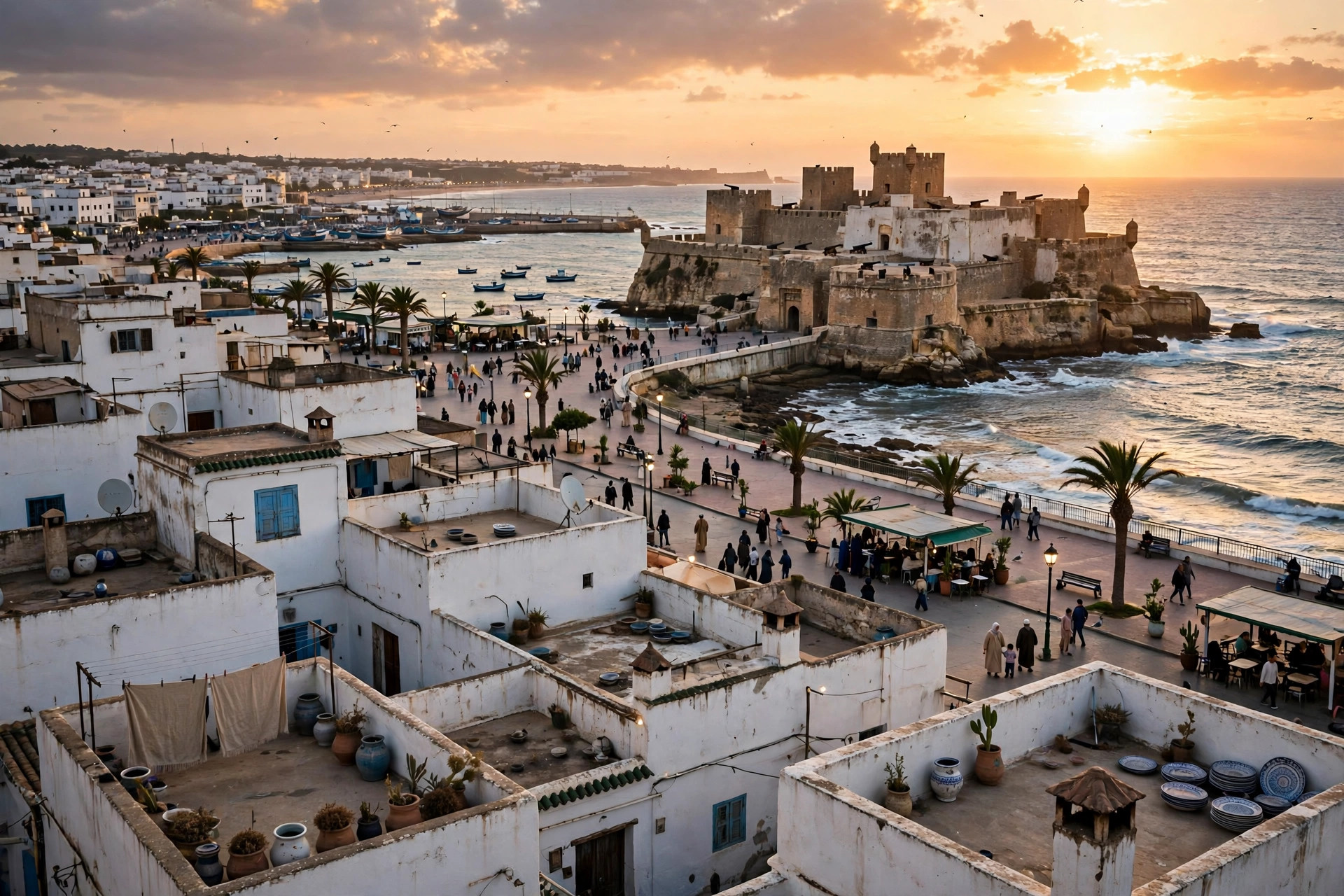
The pottery quarter is the other half of life here. The Colline des Potiers, the potters' hill above the old town, holds workshop after workshop where artisans throw, paint and fire the green and blue glazed bowls Safi is famous for. Visitors can watch a potter at the wheel and buy direct from the workshop. The Portuguese sea castle and the Kechla fortress are the weekend walks everyone takes at sunset, and Sidi Bouzid beach is the easy escape when the town feels small.
Healthcare in Safi
Healthcare in Safi is adequate for routine needs and limited for serious ones. The public hospital handles emergencies and basic care, and private clinics in the centre cover consultations and dentistry. A GP visit costs 150 to 300 MAD (about $15 to $30). Most long-term expats living in Safi keep private health insurance and plan on Casablanca or Marrakech for specialist care and major surgery.
Schools for Expat Families
Families considering living in Safi should research schooling early, because the city has fewer options than the big cities. French-language private schools serve the middle class, and public schools teach in Arabic and French. There is no international school in the city itself, so families wanting an English-language curriculum usually look to Casablanca or Marrakech, or choose homeschooling. The upside is cost: private fees run well below the big cities, and children grow up bilingual in French and Arabic.
The Downsides of Living in Safi
Honesty matters, and living in Safi is not for everyone. The expat community is small, so newcomers who need a ready-made social circle may feel isolated at first. Nightlife is limited to cafes and a few hotel bars, and the town goes quiet early. French is close to essential, and Darija and Arabic open far more doors than English, which is rarely spoken outside hotels and tour companies.
The other limits are practical. The port is industrial, so parts of the seafront smell of fish and phosphate, and the beach nearest the port is not the place to swim — head to Sidi Bouzid instead. The train runs only once a day to Casablanca, so most long journeys mean a bus, and specialist healthcare, imported goods and international schools all mean a trip to Casablanca or Marrakech. Summer mornings are foggy and humid. None of this is a deal-breaker for most people living in Safi, but it is the trade for the low rents and the calm. If you want a bigger expat scene and a prettier beach town, Living in El Jadida or Living in Tetouan may fit better.
Moving to Safi: Your First Steps
First, sort your visa. Most nationalities enter visa-free for up to 90 days, and longer stays need a residence permit, the carte de sejour, applied for at the local police station with a rental contract and proof of income. Second, open a bank account: you need your passport and proof of address, and a local account makes rent and bills far simpler. Third, book a short-term stay near the Ville Nouvelle for your first week and view flats in person. A short scouting trip is the best way to test living in Safi before you commit.
Fourth, arrange health insurance before you arrive, and bring any regular medication with a prescription, since brand names differ. Fifth, start learning Darija: a few dozen phrases change everything, and a little French earns real warmth in a city where English is rare. If you are moving with a pet, check our pet care prices in Morocco guide before you travel. If you later decide to buy rather than rent, read our Buying Property in Morocco guide first.
Frequently Asked Questions
Is Safi good for expats?
Yes, for the right expat. Living in Safi suits remote workers, retirees, artists and families who want low costs, sea air and a calm pace — less so people who need a big expat scene, an international school or a fast-paced city life.
How much does it cost to live in Safi?
A single person living in Safi needs around 6,000 to 7,500 MAD a month (about $600 to $750), rent included. A couple should budget 9,000 to 11,000 MAD (about $900 to $1,100), and a family of three around 13,000 to 15,500 MAD (about $1,300 to $1,550).
What is the best neighbourhood in Safi for expats?
The Ville Nouvelle suits newcomers who want a modern flat near banks and cafes. The medina suits people who want history and lower rents, the corniche suits sea lovers, and Sidi Bouzid suits families who want space and the beach.
Can I work remotely from Safi?
Yes. Fibre internet is available in the centre and newer districts from 200 to 400 MAD a month, 4G is a reliable backup, and the time zone suits European clients. There is no coworking scene, but corniche and Ville Nouvelle cafes welcome laptops.
How do I get from Safi to Casablanca?
The ONCF train runs once daily and takes about 4 hours and 18 minutes, with tickets from 120 to 250 MAD (about $12 to $25). The CTM bus is usually faster, about 4 hours, for 110 to 160 MAD (about $11 to $16). Driving takes about 3 hours on the 240-kilometre road.
Is Safi safe for foreigners?
Yes. Safi is one of the calmer Moroccan cities, with low street crime and a welcoming local population. Watch your bag in the souks, agree taxi fares before you ride, and respect local customs during Ramadan. The industrial port and the foggy coastal roads deserve more caution than crime does.
Conclusion: Is Safi Right for You?
Safi is the most honest expat choice on the Moroccan coast and the least obvious one. It is the city for people who come to live between the kilns and the sea — to watch the sardine boats at dawn and the potters at the wheel in the afternoon — rather than people who come to climb a career ladder. Rents are low, the climate mild, and the history extraordinary.
If that trade sounds right, come and stay near the Ville Nouvelle, walk the lanes of the medina to the Portuguese sea castle, and drink mint tea above the pottery quarter at sunset. Safi does not shout for attention; it earns you slowly. That is the quiet reward of living in Safi.
Last checked: November 2026. Prices are ranges from 2026 listings and guides; confirm them before signing a lease.