If you are thinking about buying a car in Morocco, the first thing to know is that the process is perfectly doable — and the second is that it works nothing like buying a car back home. I have watched newcomers overpay for a tired hatchback, or buy a car they legally cannot register, because nobody explained the rules in plain English first.
This guide to buying a car in Morocco covers real 2026 prices in dirhams, where to buy, the paperwork step by step, what a car costs to run, and the traps that catch foreigners again and again. Prices checked November 2026. Throughout, 1 USD is roughly 10 MAD.
In this guide:
- Buying a Car in Morocco: New vs Used — What the Market Really Looks Like
- Where to Buy: Dealerships, Souks and Online Listings
- The Paperwork, Step by Step
- What It Really Costs to Run a Car in Morocco
- Driving Realities and Pitfalls for Foreigners
- Frequently Asked Questions
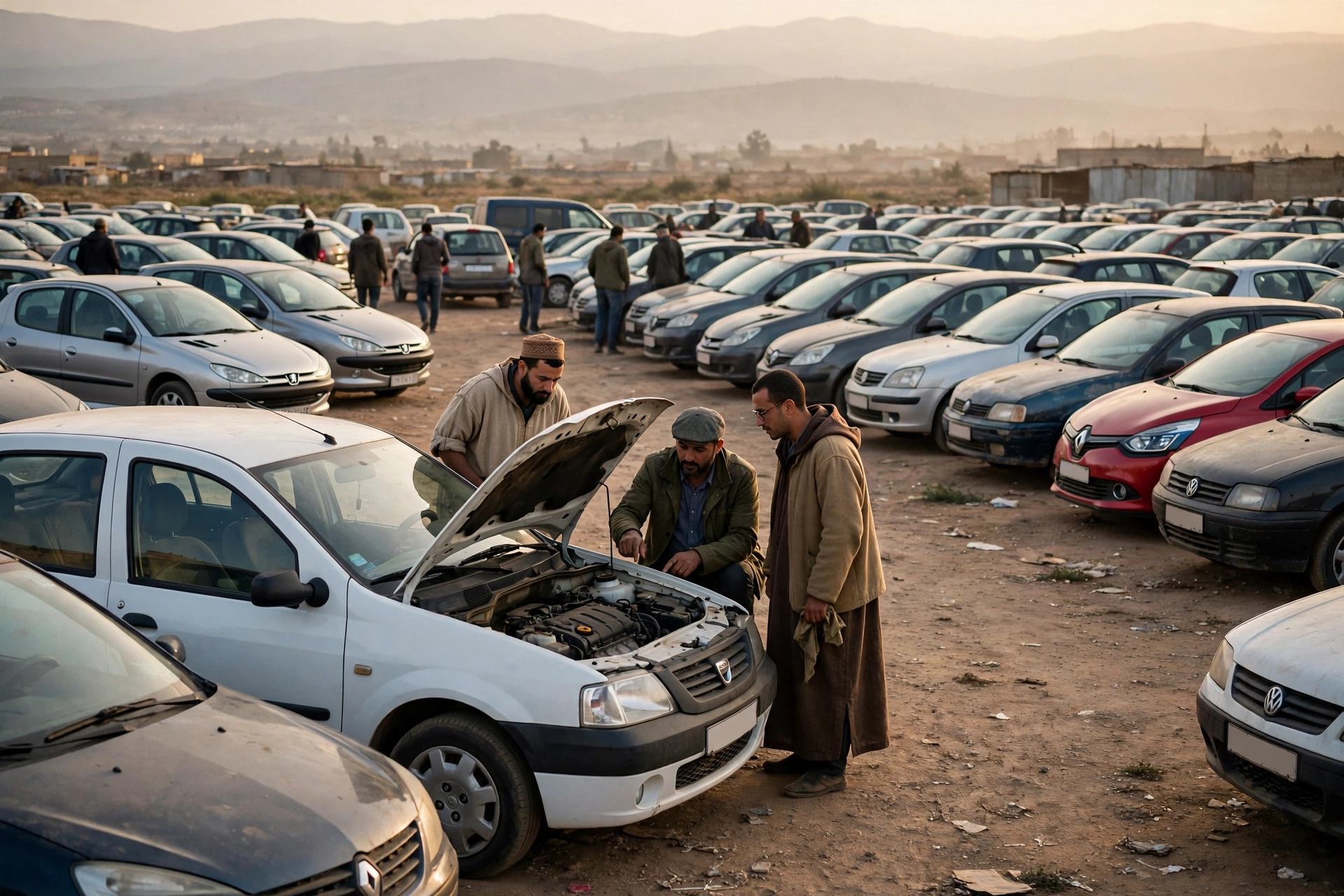
Buying a Car in Morocco: New vs Used — What the Market Really Looks Like
Morocco builds cars — Renault and Stellantis both have big plants here — yet new cars are not cheap. Import duties and taxes push showroom prices well above what the same model costs in Europe. That is why the used market is where most residents end up buying a car in Morocco.
A new Dacia Sandero, the default sensible choice, typically costs around 140,000 to 170,000 MAD (about $14,000 to $17,000), a new Renault Clio roughly 170,000 to 210,000 MAD, and a new Peugeot 208 about 180,000 to 230,000 MAD.
The used market tells a different story. A five-year-old Dacia Logan in decent shape typically sells for 60,000 to 90,000 MAD, and a ten-year-old compact for roughly 35,000 to 60,000 MAD. A five-year-old Toyota Corolla holds its value at around 130,000 to 180,000 MAD, and an eight-year-old Volkswagen Golf fetches about 90,000 to 140,000 MAD.
Here is the insider correction outsiders routinely get wrong when buying a car in Morocco: the price written on the windscreen is not the price. In a Moroccan used-car lot, the displayed figure is an opening bid, and a 10 to 20 percent reduction after firm, polite negotiation is completely normal. Foreigners who pay the sticker price are the ones dealers remember fondly.
There is a second trap. Odometer tampering is common in the Moroccan used market, so treat any suspiciously low reading as a story, not a fact. Judge the car by its tyres, pedals and seats, not by one number on the dashboard.
Diesel dominates the used market for a reason: fuel is cheaper per litre and the cars are economical. But think carefully before buying an old diesel. Cities are tightening rules on older, polluting cars, and a cheap diesel that fails its inspection twice is no bargain at all.
| Car | Typical price (MAD) | Typical price (USD) |
|---|---|---|
| New Dacia Sandero | 140,000 – 170,000 | $14,000 – $17,000 |
| New Renault Clio | 170,000 – 210,000 | $17,000 – $21,000 |
| New Peugeot 208 | 180,000 – 230,000 | $18,000 – $23,000 |
| New Hyundai i10 | 120,000 – 150,000 | $12,000 – $15,000 |
| Used Dacia Logan (5 years old) | 60,000 – 90,000 | $6,000 – $9,000 |
| Used compact (10 years old) | 35,000 – 60,000 | $3,500 – $6,000 |
| Used Toyota Corolla (5 years old) | 130,000 – 180,000 | $13,000 – $18,000 |
| Used Volkswagen Golf (8 years old) | 90,000 – 140,000 | $9,000 – $14,000 |
Prices checked November 2026. Figures are typical ranges for buying a car in Morocco, not fixed prices, and vary by city, condition and negotiation.
Where to Buy: Dealerships, Souks and Online Listings
There are three ways of buying a car in Morocco, and each suits a different kind of buyer. New-car dealerships are the safest and the most expensive. The big brands have showrooms in Casablanca, Rabat, Marrakech, Tangier and Agadir. You get a warranty, financing and clean paperwork — and you pay for all of it.
Used-car souks and lots are the heart of the Moroccan market. The famous lots around Casablanca, and smaller ones in every city, hold hundreds of cars in one place. This is where the bargains are — and where the risks are. Never buy at a souk alone on your first visit if you can bring a Moroccan friend or a trusted mechanic.
Online listings are the third option for buying a car in Morocco. Sites such as Avito and Moteur.ma list thousands of cars, and they are the best way to research prices before you shop. Treat them as a catalogue, not a shop: photos may be old and descriptions optimistic. Always inspect the car in person before paying anything.
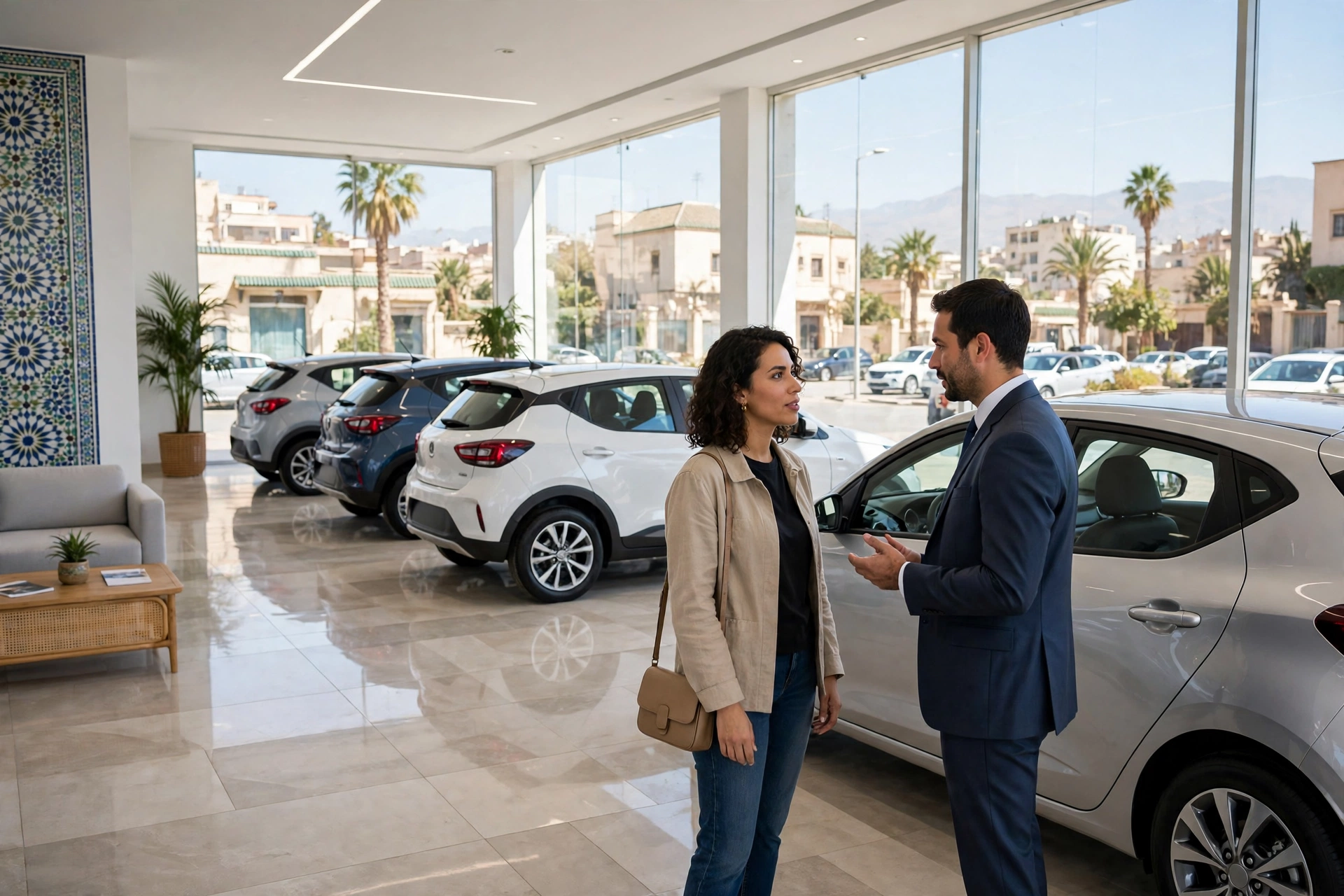
The scams follow familiar patterns. The most common is a car sold by someone who is not the registered owner, with only a photocopy of the carte grise. If the seller cannot show you the original registration document in their own name, walk away. The car is not theirs to sell, and you will not be able to register it.
Another classic is the car with unpaid fines or a loan still attached. Ask to see the car’s full history and check for outstanding traffic fines or liens before you sign anything. A seller who rushes you or refuses an independent inspection is telling you everything you need to know.
Pay by bank transfer where possible when buying a car in Morocco, not cash, so there is a record. If you must pay cash, do it at the bank or at the prefecture, never in a car park. And whatever you do, get a written sales contract signed by both parties, even if the seller says it is unnecessary. It is always necessary.
The Paperwork, Step by Step
The paperwork is where buying a car in Morocco either goes smoothly or falls apart. Here it is, in order. Details and fees can change, so confirm them at your local Service des Mines or prefecture before you start.
Step 1: Agree the sale and sign a contract. Buyer and seller sign a contract of sale stating the price, the date, and the car’s details. Both parties should keep a signed copy. Make sure the seller’s name matches the name on the carte grise exactly.
Step 2: The contrôle technique. If the car is more than five years old, it needs a valid technical inspection certificate, which can transfer with the car if still valid. If it has expired, the car must pass a new inspection before the sale completes. The inspection typically costs around 300 to 400 MAD.
Step 3: The mutation — transferring the carte grise. This is the crucial step. The buyer must apply to transfer the registration document (carte grise) into their own name, typically within 30 days of the sale. You will need the old carte grise, the contract of sale, your passport and residence permit, proof of address, and the inspection certificate. Fees vary with the car’s fiscal horsepower, typically from a few hundred to a couple of thousand dirhams. Do not drive for months on the previous owner’s carte grise; fines and legal trouble follow.
Step 4: Insurance. Third-party insurance is compulsory in Morocco, and buying a car in Morocco without arranging it first leaves you unable to register. Basic cover typically costs around 2,000 to 3,500 MAD a year for a small car, while comprehensive cover runs roughly 4,000 to 8,000 MAD depending on the car and your profile. Shop around: premiums vary widely between insurers.
Step 5: The vignette. The annual road tax, known as the vignette, is paid every January. The amount depends on fiscal horsepower and fuel type. For a small petrol car it is typically a few hundred dirhams; for a large diesel SUV it can run into several thousand. If you buy late in the year, check whether the current year’s vignette has been paid.
Residents and tourists face different rules. A resident with a Moroccan residence permit can complete buying a car in Morocco in their own name with the documents above. A short-stay visitor generally cannot register a car without a residence permit. If you are visiting for a few months, renting is almost always the better option — see our guide to driving in Morocco and rental cars before you decide.
The system works, but it works at its own pace. Allow a full day for the paperwork when buying a car in Morocco, bring photocopies of everything, and keep every receipt.
What It Really Costs to Run a Car in Morocco
The purchase price is only the beginning. Running a car in Morocco is generally cheaper than in Europe, but the costs add up. Fuel is the biggest regular expense. Diesel typically costs around 11 to 12 MAD per litre and petrol around 13 to 14 MAD, though prices move with the market.
Insurance and the vignette are the fixed annual costs, and anyone buying a car in Morocco should budget for them from day one. Expect roughly 2,000 to 3,500 MAD a year for third-party insurance on a small car, plus the vignette, which ranges from a few hundred dirhams for a small car to several thousand for a big diesel. Maintenance is affordable: a basic oil change at an independent garage typically costs 400 to 800 MAD. Parts for Dacia and Renault are cheap and everywhere; parts for a rare import can take weeks and cost far more.
Parking is cheap outside the big cities, but in central Casablanca or Rabat expect to pay for guarded parking, typically 5 to 10 MAD for a few hours.
| Running cost | Typical amount (MAD) | Typical amount (USD) |
|---|---|---|
| Diesel, per litre | 11 – 12 | $1.10 – $1.20 |
| Petrol, per litre | 13 – 14 | $1.30 – $1.40 |
| Third-party insurance, per year | 2,000 – 3,500 | $200 – $350 |
| Comprehensive insurance, per year | 4,000 – 8,000 | $400 – $800 |
| Vignette (annual road tax), small car | 350 – 700 | $35 – $70 |
| Contrôle technique (inspection) | 300 – 400 | $30 – $40 |
| Oil change, independent garage | 400 – 800 | $40 – $80 |
| Motorway tolls, Casablanca–Marrakech | ~100 | ~$10 |
Prices checked November 2026. Fuel prices move with the market; insurance and tax depend on the car and your profile.
All in, a small car driven moderately costs roughly 1,500 to 2,500 MAD a month to run, excluding loan payments. That is one reason so many long-term residents go through with buying a car in Morocco rather than renting — but only if they buy the right car at the right price, as this guide on the cost of living in Morocco explains in the wider context of monthly budgets.
Driving Realities and Pitfalls for Foreigners
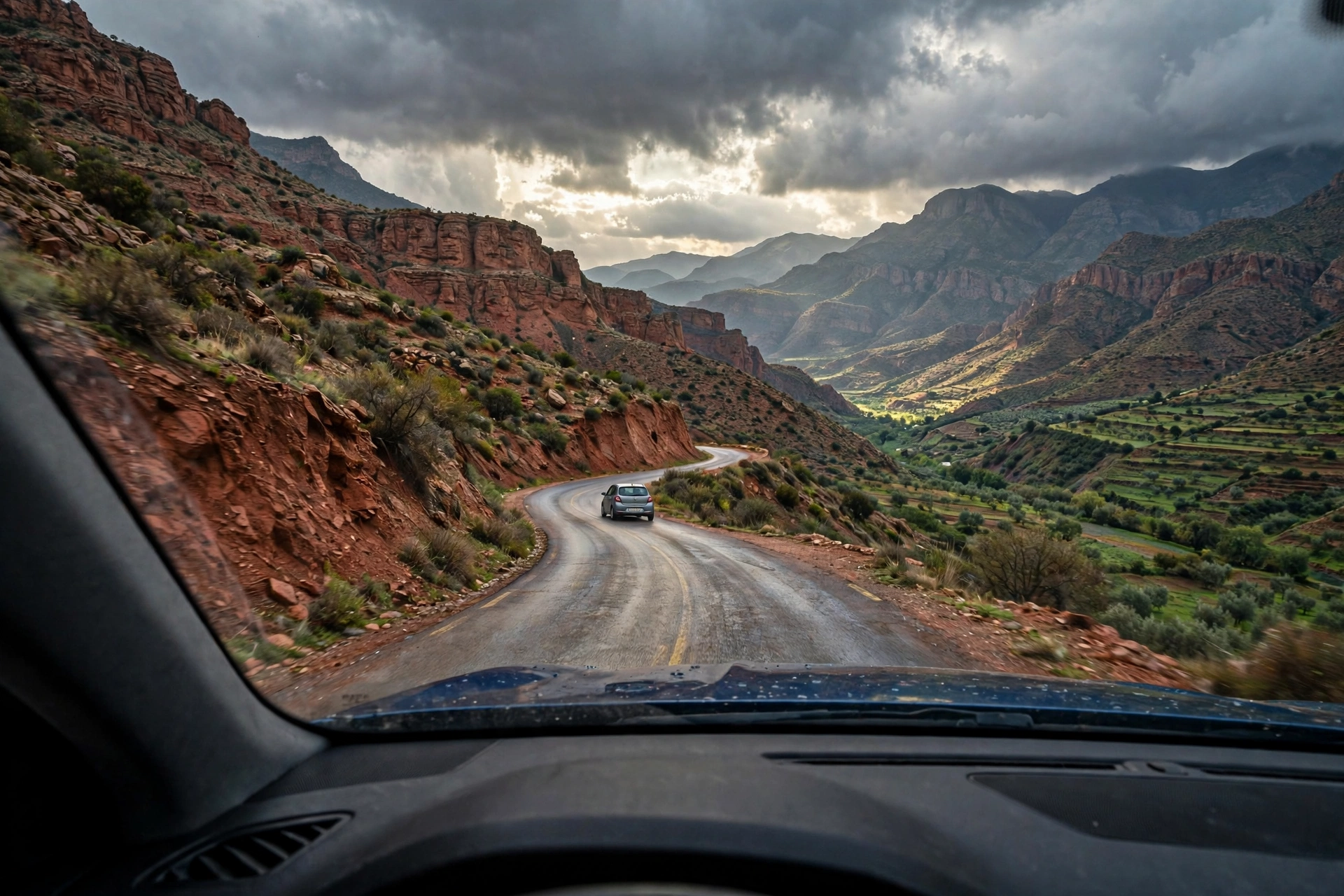
Buying a car in Morocco changes how you experience the country, mostly for the better. But there are realities to know before you buy. First, the driving itself. Moroccan roads range from excellent motorways to mountain passes with no guardrails. Drive defensively, expect the unexpected, and never assume the car ahead will signal.
Second, the police. Traffic police are common on intercity roads, and speed limits are enforced with radar. Fines are usually modest and paid on the spot, but keep your licence, carte grise and insurance in the car at all times. A missing document turns a small fine into a long afternoon.
Third, the temporary import rule, which catches more foreigners than any other. If you drive your own foreign-plated car into Morocco, it enters under temporary admission, generally limited to six months within a twelve-month period. This is known as the 6-month rule. When the period ends, the car must leave Morocco. Overstaying can mean heavy fines and the car being held at the border. Do not assume the rule will be waived because you own property; confirm your situation with customs before you travel.
Fourth, selling on. A car you bought and registered in Morocco can be sold to another buyer through the same mutation process described above. A temporarily imported foreign car, however, cannot be sold inside Morocco at all. It must leave the country or be formally imported, which means paying full import duties — often so expensive it is not worth doing. Remember: buying a car in Morocco and importing one are two different legal worlds.
Finally, think about where the car will live. Secure parking matters in the cities, and a car left on the street in Casablanca will collect scratches. And when you eventually leave Morocco, allow weeks, not days, to sell the car: the mutation process and finding a buyer both take time, and a rushed sale is where you lose money.
For a wider sense of day-to-day costs once you are settled, including transport and the small expenses that add up, our guide to tipping in Morocco is a useful companion read. And for the broader transport picture, see the overview of transport in Morocco.
Frequently Asked Questions
Can a foreigner buy a car in Morocco without a residence permit?
Generally no. Registering a car in your name normally requires a Moroccan residence permit, so buying a car in Morocco is only possible once your residency is in place. Short-stay visitors should rent instead.
Is buying a car in Morocco cheaper than in Europe?
New cars are usually more expensive than in Europe because of taxes and duties. Used cars can be cheaper, but only if you negotiate well and inspect carefully. The real saving is in running costs, not the purchase price.
How long does the carte grise transfer take?
The mutation is usually completed within a few days to a couple of weeks, depending on the prefecture and whether your documents are complete.
Should I buy diesel or petrol in Morocco?
Diesel is cheaper per litre and dominates the used market, which makes resale easier. But older diesels face stricter inspections and city rules, so a well-kept petrol car can be the safer buy for city driving.
Can I drive my own car from Europe to Morocco and keep it there?
Only temporarily. Foreign-plated cars enter under temporary admission, generally limited to six months in twelve, so buying a car in Morocco is a different matter from bringing your own. After that the car must leave, or be formally imported with full duties paid.
What should I check before paying for a used car?
Check that the seller’s name matches the carte grise, that the contrôle technique is valid, that there are no unpaid fines or loans on the car, and have an independent mechanic inspect it. Never pay a deposit before seeing the original documents.
Buying a car in Morocco rewards patience and punishes haste. Take your time, negotiate firmly, inspect carefully, and get the paperwork right the first time. Do that, and a car here opens up the country in a way no bus or train ever will. For most long-term residents, buying a car in Morocco is the single purchase that changes daily life the most.