
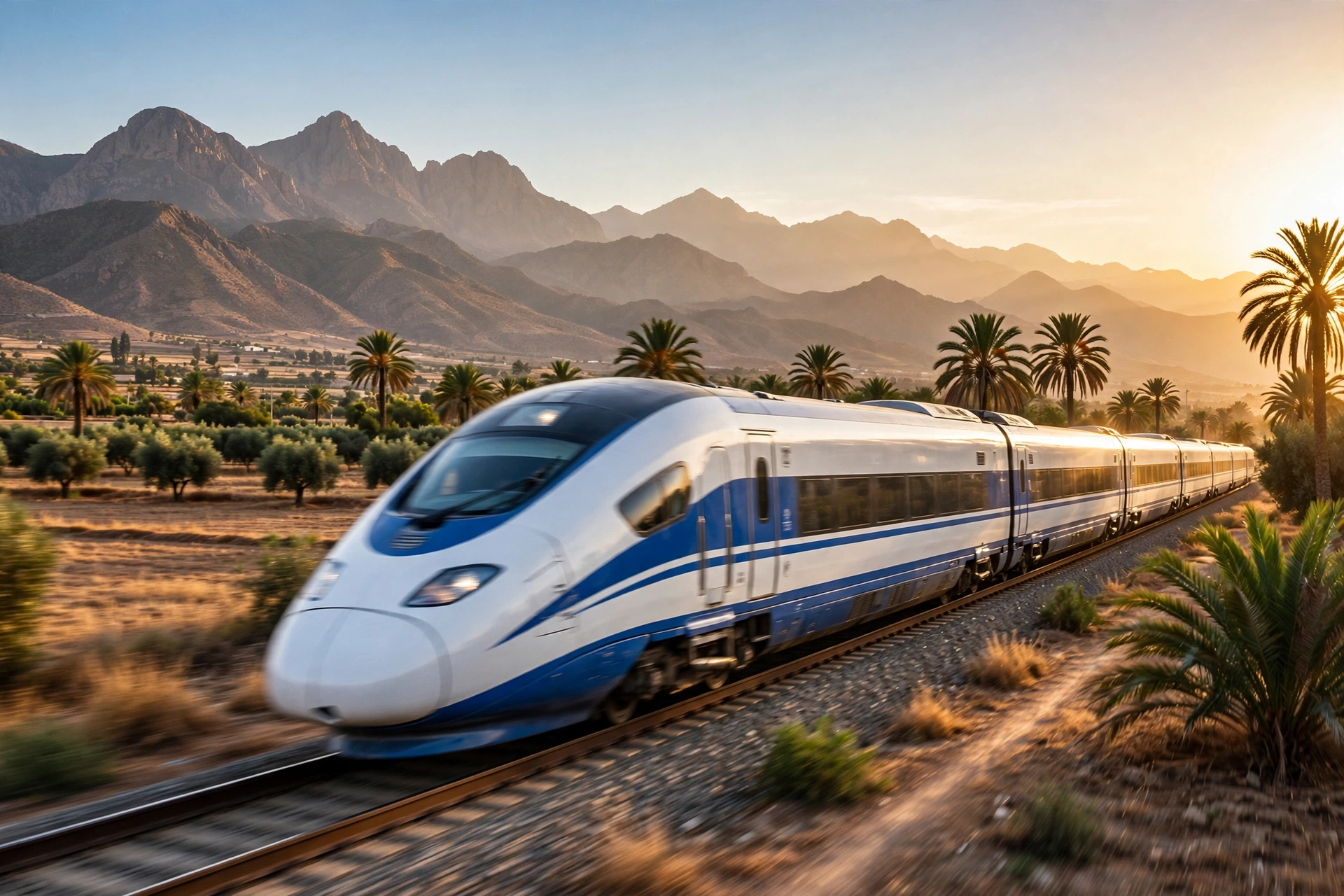
Morocco train ticket prices are refreshingly simple compared with the rail fares of Europe or North America. A second-class seat between two major cities usually costs less than a restaurant meal, and even the high-speed Al Boraq from Tangier to Casablanca runs from around 149 MAD (about $15) booked early. Trains are comfortable, punctual and air-conditioned — the easiest way to travel between Morocco’s imperial cities.
This guide explains how ONCF sets its fares, first versus second class, the discounts for young travellers, students and seniors, and how to buy online, in the app or at the station. All Morocco train ticket prices below are in Moroccan dirhams (MAD) with a US dollar equivalent at roughly 10 MAD to $1, and prices were checked in November 2026.
If you are planning a full trip, pair this guide with our Morocco 10-day itinerary to see where the train fits, and compare with our guides to Morocco taxi prices and Morocco restaurant prices to build a realistic daily budget. For the wider picture, browse the Costs & Practical Life section.
In this guide
- How ONCF Pricing Works
- Morocco Train Ticket Prices on Al Boraq: Tangier to Casablanca
- Standard Line Fares: Casablanca, Marrakech, Fez and Rabat
- First Class vs Second Class: Is the Upgrade Worth It?
- Morocco Train Ticket Prices: Advance Purchase and Online Discounts
- Youth, Student and Senior Discount Cards
- How to Buy ONCF Tickets: Website, App, Station and On Board
- Refunds, Changes and Missed Trains
- Luggage, Night Trains and Onboard Rules
- Money-Saving Tips for Train Travel in Morocco
- Morocco Train Ticket Prices FAQ
How ONCF Pricing Works
Morocco’s trains are run by ONCF, the Office National des Chemins de Fer. It operates two kinds of service: the Al Boraq high-speed line between Tangier and Casablanca, and the conventional network linking Casablanca, Rabat, Fez, Marrakech, Meknes, Oujda and the Atlantic coast — and Morocco train ticket prices work differently on the two networks.
On conventional lines, fares are fixed by distance and class: a second-class ticket from Casablanca to Marrakech costs the same bought a month ahead or ten minutes before departure. There is no dynamic pricing, which makes budgeting simple. First class costs roughly 50 to 60 percent more than second class.
On the Al Boraq high-speed line, Morocco train ticket prices work more like airline pricing: tickets are cheaper when booked early and rise as the train fills up. The gap is large — the same Tangier to Casablanca seat can cost 149 MAD booked weeks ahead or more than double that on the day. If you know your dates, book Al Boraq early.
Children under four travel free on an adult’s lap. Children aged four to twelve pay half fare on conventional lines and reduced fares on Al Boraq. Groups of ten or more can ask at the station for a group rate.
Morocco Train Ticket Prices on Al Boraq: Tangier to Casablanca
Al Boraq is the flagship of Moroccan rail. It runs from Tangier Ville to Casablanca Voyageurs in about 2 hours 10 minutes, stopping at Kenitra and Rabat Agdal, at up to 320 km/h. It is the fastest way between the north and the economic capital, and the route where morocco train ticket prices vary the most.
Second-class Morocco train ticket prices from Tangier to Casablanca start at about 149 MAD (about $15) booked well in advance, rising to around 224 MAD (about $22) at the standard full fare. First class starts at about 243 MAD (about $24) in advance, reaching around 364 MAD (about $36) at full fare. Shorter hops are cheaper: Tangier to Kenitra from about 99 MAD (about $10) in second class, Rabat to Casablanca from about 49 MAD (about $5) in advance.
Pricing is tiered: ONCF sells a limited number of seats at the lowest price on each departure, then moves to higher bands as they sell out. Friday afternoon and Sunday evening trains lose the cheapest band first, sometimes weeks ahead, while midweek mornings are the easiest place to find the lowest fares.
Seats on Al Boraq are reserved for a specific train, date and seat, so you cannot take a later departure on the same ticket. That is the trade-off for the lowest Morocco train ticket prices: flexibility costs more. If your plans might change, consider the flexible fare or the conventional line.
| Route (Al Boraq) | 2nd class, advance | 2nd class, full fare | 1st class, advance | Journey time |
|---|---|---|---|---|
| Tangier – Casablanca | ~149 MAD (~$15) | ~224 MAD (~$22) | ~243 MAD (~$24) | ~2h 10m |
| Tangier – Rabat Agdal | ~129 MAD (~$13) | ~194 MAD (~$19) | ~209 MAD (~$21) | ~1h 20m |
| Tangier – Kenitra | ~99 MAD (~$10) | ~149 MAD (~$15) | ~159 MAD (~$16) | ~50m |
| Kenitra – Casablanca | ~79 MAD (~$8) | ~119 MAD (~$12) | ~129 MAD (~$13) | ~1h 20m |
| Rabat Agdal – Casablanca | ~49 MAD (~$5) | ~74 MAD (~$7) | ~79 MAD (~$8) | ~50m |
Prices checked: November 2026. Fares are estimates based on ONCF’s published price bands; exact fares vary by departure and availability.
Standard Line Fares: Casablanca, Marrakech, Fez and Rabat
On conventional lines, morocco train ticket prices are fixed, so you can plan with confidence. The busiest corridor is the Atlantic line from Casablanca through Rabat to Kenitra, with trains every 30 minutes at peak times. From Casablanca, Marrakech is about three hours south and Fez about four hours north-east via Meknes.
Second-class Morocco train ticket prices from Casablanca to Marrakech run about 90 to 110 MAD (about $9 to $11), with first class around 150 to 180 MAD (about $15 to $18). Casablanca to Fez is about 110 to 130 MAD (about $11 to $13) in second class, and Rabat to Fez about 80 to 100 MAD (about $8 to $10). The short hop between Casablanca and Rabat is one of the cheapest useful journeys in the country, about 35 to 50 MAD (about $3.50 to $5).
Fez to Marrakech is the longest common journey on the conventional network, around seven hours with a change at Casablanca, at about 190 to 220 MAD (about $19 to $22) in second class. Fez to Meknes is a 40-minute hop at roughly 30 to 50 MAD (about $3 to $5). Oujda, in the far east, is a long overnight-style journey from Casablanca of about ten hours, at roughly 200 to 250 MAD (about $20 to $25) in second class.
Trains on the conventional network are comfortable and reliable, with air conditioning and a buffet car or trolley service.
| Route (conventional line) | 2nd class | 1st class | Journey time |
|---|---|---|---|
| Casablanca – Marrakech | ~90–110 MAD (~$9–$11) | ~150–180 MAD (~$15–$18) | ~3h |
| Casablanca – Rabat | ~35–50 MAD (~$3.50–$5) | ~60–80 MAD (~$6–$8) | ~1h |
| Casablanca – Fez | ~110–130 MAD (~$11–$13) | ~180–210 MAD (~$18–$21) | ~4h |
| Rabat – Fez | ~80–100 MAD (~$8–$10) | ~130–160 MAD (~$13–$16) | ~3h |
| Fez – Meknes | ~30–50 MAD (~$3–$5) | ~50–70 MAD (~$5–$7) | ~40m |
| Casablanca – Oujda | ~200–250 MAD (~$20–$25) | ~320–400 MAD (~$32–$40) | ~10h |
| Marrakech – Fez (via Casablanca) | ~190–220 MAD (~$19–$22) | ~300–350 MAD (~$30–$35) | ~7h |
Prices checked: November 2026. Fares are estimates; ONCF confirms the exact fare at the point of sale.
First Class vs Second Class: Is the Upgrade Worth It?
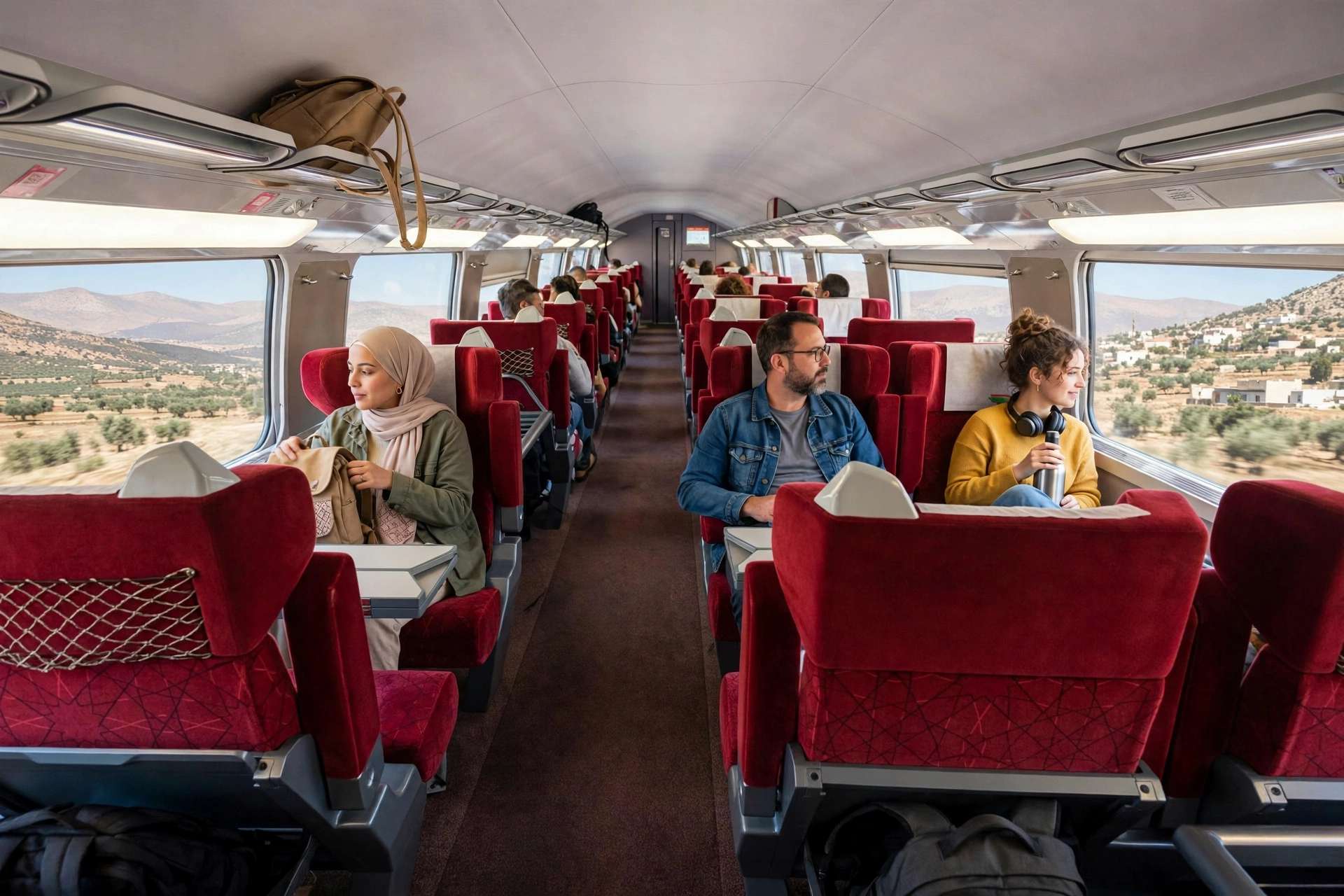
The class difference on Moroccan trains is real but modest. First class gives you wider, more comfortable seats in a quieter carriage with fewer passengers, often with a power socket. On Al Boraq, first-class seats are arranged two-plus-one across the carriage rather than two-plus-two, so there is noticeably more elbow room.
Second class is not a hardship: seats are upholstered and reasonably spacious, and trains run often enough that you are rarely standing for long. For journeys under two hours, second class is perfectly comfortable, and the saving on Morocco train ticket prices is meaningful on a long trip.
The upgrade is worth it on the longest routes: on a four-hour Casablanca to Fez journey or a seven-hour Fez to Marrakech trip, the extra space and quieter carriage make a real difference for a premium of only about 60 to 90 MAD (about $6 to $9). On Al Boraq the premium is larger.
First-class seats can sell out on Friday afternoons and Sunday evenings, when Moroccans travel home for the weekend, so book a few days ahead if you want first class. Second class rarely sells out on conventional lines, since those trains are not seat-reserved.
Morocco Train Ticket Prices: Advance Purchase and Online Discounts
On conventional lines, buying early saves nothing, because Morocco train ticket prices are fixed — the only reason to buy ahead is peace of mind on busy weekend trains. On Al Boraq, buying early is where the real savings are, and the discount can be a third or more off the full fare.
ONCF sells tickets online at oncf.ma, through the ONCF mobile app, and at stations. The website and app sometimes offer web-only promotional fares on Al Boraq that are not available at the counter — usually the lowest price band, released a few weeks before departure. Check the official site first.
There is no general early-bird discount on conventional lines, but ONCF runs occasional promotions, especially in the low season from November to February, excluding Christmas and New Year. These are announced on the ONCF website.
The most reliable way to save is simple: book Al Boraq as soon as your dates are fixed, and do not worry about advance booking on conventional lines. Same-day bookers routinely pay 50 percent more than those who booked two weeks earlier — about 150 MAD (about $15) per person on a Tangier to Casablanca return.
Youth, Student and Senior Discount Cards
ONCF offers discount cards that pay for themselves quickly if you travel more than a couple of times. The best known is the Carte Jeune, a youth card for travellers aged 12 to 26, costing about 149 MAD (about $15) for a year and giving 30 percent off conventional lines and reduced fares on Al Boraq. Two or three long journeys recover the cost.
Students enrolled in Moroccan institutions can ask about student rates, and international students should carry their student card: staff sometimes apply the youth discount on presentation of a valid student ID, though this is discretionary, not a guaranteed right for visitors. The safest approach is to buy the Carte Jeune itself if you are under 27 and travelling for more than a week.
Seniors aged 60 and over can buy the Carte Hikma, about 149 MAD (about $15) a year, offering 30 percent off conventional lines and reductions on Al Boraq. It is available to residents and visitors alike on presentation of ID, is issued at major stations, and is valid from the day of purchase.
There is also a family option: children aged four to twelve travel at half fare on conventional lines and at reduced child fares on Al Boraq when booked in advance. A family of four travelling from Casablanca to Marrakech can therefore pay little more than two adult fares — cheaper than a grand taxi for the same journey.
How to Buy ONCF Tickets: Website, App, Station and On Board
Buying a ticket in Morocco is straightforward, and you have four options. The ONCF website, oncf.ma, is the most complete: it shows timetables, prices and availability, and lets you pay by card for an e-ticket. The site is in French and Arabic, with some English.
The ONCF mobile app, ONCF Trafic, is convenient for checking live departure times and delays, and it also sells tickets — the easiest way to buy while you are already travelling.
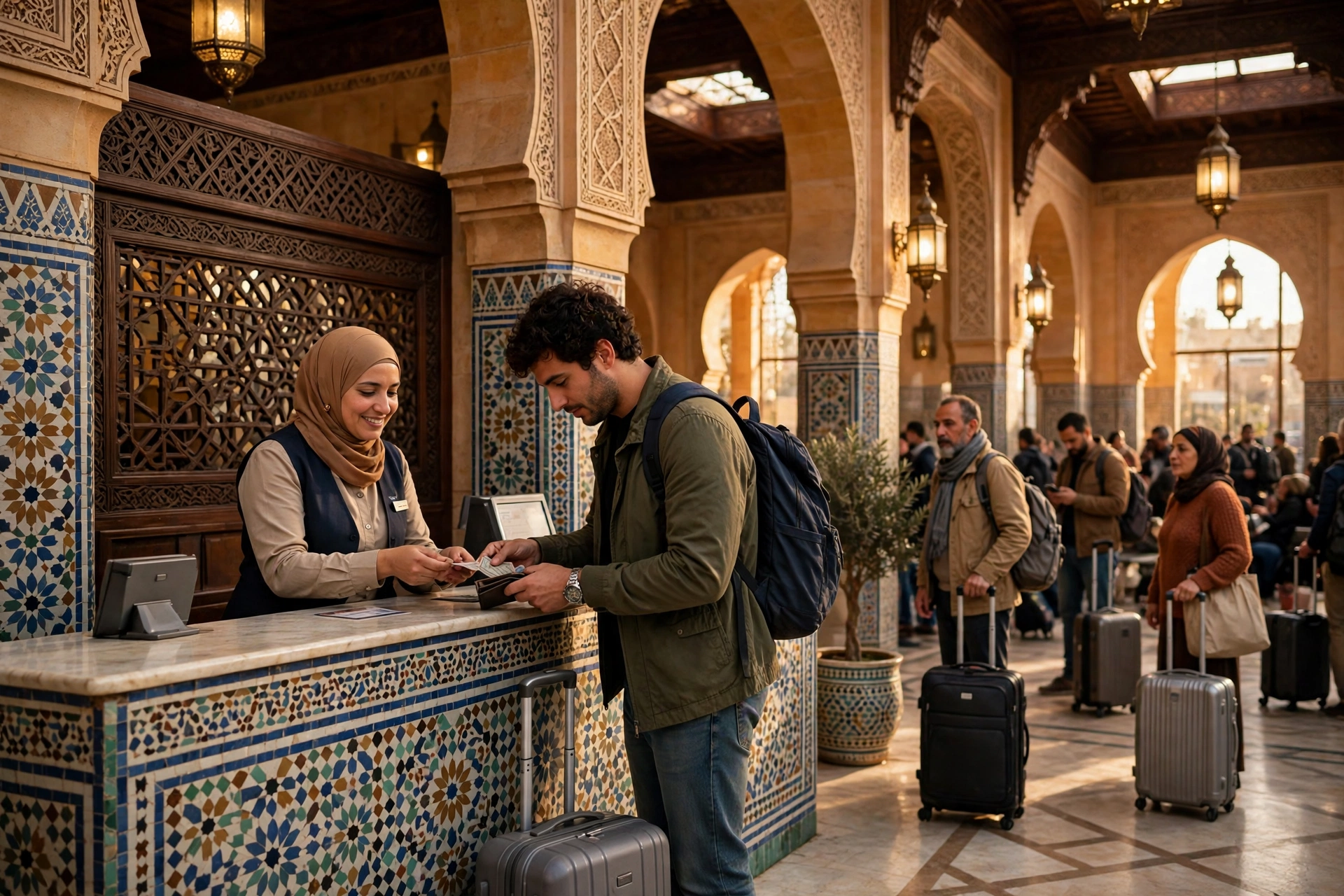
At the station, counters accept cash in dirhams and cards, and staff at major stations usually speak some English. Ticket machines are available at Casablanca Voyageurs, Rabat Agdal, Tangier Ville and Marrakech. Queues are longest on Friday afternoons and Sunday evenings, so arrive 30 minutes early then.
Buying on board is possible on conventional lines but costs extra, and the conductor may not be able to sell you one if the train is full. On Al Boraq, on-board purchase is not an option in practice, because seats are reserved and the train can sell out — never board Al Boraq without a ticket. For more background on the operator, see the ONCF article on Wikipedia.
Refunds, Changes and Missed Trains
Refund rules for Morocco train ticket prices depend on the type of ticket. On conventional lines, an unused ticket can usually be refunded at the station before departure, minus a fee of around 10 percent. After departure, refunds are generally not available, though staff have discretion in cases of genuine disruption.
Al Boraq tickets are stricter, because they are tied to a specific departure. The cheapest advance fares are usually non-refundable and non-changeable — the price of the discount. Flexible fares can be changed to another departure the same day, subject to availability, and refunded with a fee if cancelled before departure. Always read the fare conditions before you pay.
If you miss your train, go to the ticket counter. On conventional lines, staff will usually let you take the next train on the same route at no extra charge, since those tickets are not tied to a departure. On Al Boraq, a missed train normally means buying a new ticket, unless you hold a flexible fare.
If ONCF cancels or heavily delays a train, you are entitled to a refund or rebooking. Keep your ticket and receipts, and ask at the station information desk. Compensation rules exist but are modest; the practical remedy is usually a seat on the next departure.
Luggage, Night Trains and Onboard Rules
ONCF has no strict luggage weight limit, and there are no baggage fees for what you can carry yourself. Each passenger can bring bags that fit in the overhead racks or at the ends of the carriage. Large suitcases go in the racks at the carriage ends; keep valuables with you.
Morocco has no true sleeper trains with cabins. The longest overnight-style journeys, such as Casablanca to Oujda or Tangier to Marrakech, run on comfortable seated trains; first class is the better choice, since the seats recline further and the carriage is quieter. Bring a neck pillow and a light blanket for overnight winter travel.
Smoking is not allowed on any ONCF train. Food and drink are sold in the buffet car on longer trains, but the selection is limited, so bring water and a snack for journeys over two hours. Free Wi-Fi is available at major stations and on some Al Boraq services, but it is patchy — download maps and entertainment before you board.
Keep your ticket until you leave the station: checks happen on board and at the exits of larger stations, and a fine applies if you cannot show one. Children travelling free must be accompanied by an adult with a ticket.
Money-Saving Tips for Train Travel in Morocco
The biggest single saving is booking Al Boraq early. A second useful habit is to travel midweek: Friday afternoon and Sunday evening trains carry the highest fares on Al Boraq and the longest queues, while a Tuesday morning departure is often the cheapest and quietest.
Consider the conventional line as an alternative where both exist. Tangier to Casablanca on Al Boraq takes 2 hours 10 minutes, but Morocco train ticket prices on the conventional route via Kenitra are far lower, even though it takes much longer. If time is not pressing, saving 100 MAD or more per person is real money on a family trip.
If you will ride the train three or more times, buy a discount card. The Carte Jeune or Carte Hikma costs about 149 MAD and gives 30 percent off conventional fares, paying for itself on a single long return journey. Buy the card on your first day in Morocco.
Finally, the train is already the cheap option. Even at full fare, morocco train ticket prices undercut a private transfer or a rental car on every major route, and the train drops you in the city centre rather than at an airport on the outskirts. Pair the train with a city taxi on arrival, using our Morocco taxi prices guide, and you have the cheapest practical way to travel between Moroccan cities.
Morocco Train Ticket Prices FAQ
How much is a train ticket in Morocco?
Morocco train ticket prices are low by international standards. Second class on conventional lines costs roughly 35 to 130 MAD (about $3.50 to $13) for most city-to-city journeys, while Al Boraq high-speed fares from Tangier to Casablanca run from about 149 MAD (about $15) in advance to around 224 MAD (about $22) at full fare. Prices checked: November 2026.
Is the Al Boraq high-speed train worth it?
Yes, if your time matters. Tangier to Casablanca takes about 2 hours 10 minutes on Al Boraq, against five or more hours on the conventional line. Book at least two weeks ahead to get the lowest fares, and travel midweek for the best availability.
Do I need to book Moroccan trains in advance?
For Al Boraq, yes: seats are reserved and cheap fares sell out. For conventional lines, no: fares are fixed and tickets can be bought at the station on the day. The exception is Friday afternoons and Sunday evenings, when queues are long and first class can sell out.
Can tourists buy ONCF tickets online?
Yes. Tickets can be bought on the ONCF website, oncf.ma, and in the ONCF Trafic app, using an international bank card. You receive an e-ticket to show on your phone. If the website rejects your card, buy at the station instead; counters accept cash and cards.
Are there discounts for children on Moroccan trains?
Children under four travel free. Children aged four to twelve pay half fare on conventional lines and reduced fares on Al Boraq. Young travellers aged 12 to 26 and seniors aged 60 and over can also buy annual discount cards that give about 30 percent off conventional fares.
Is first class worth it on Moroccan trains?
On short journeys under two hours, second class is fine and the saving is worth keeping. On long journeys of four hours or more, first class is worth the premium of about 60 to 90 MAD (about $6 to $9) for the extra space and quieter carriage. On Al Boraq, first class means wider seats in a two-plus-one layout.
Conclusion
Morocco train ticket prices make the train the best-value way to travel between the country’s great cities. Second class on a conventional line costs the price of a lunch, and even the flagship Al Boraq is affordable when booked a couple of weeks ahead. The rules are simple: fixed fares on conventional lines, book early on Al Boraq, and buy a discount card if you will ride three or more times.
Plan your route, book the high-speed legs early, and let the train do the work. You will arrive in the centre of Marrakech, Fez, Rabat or Tangier rested, on time, and with money left over for the food, the riads and the medinas. For the rest of your budget, see our Morocco restaurant prices guide and the Costs & Practical Life section.
Last checked: November 2026
1 thought on “Morocco Train Ticket Prices: ONCF Fares and Discounts in 2026”