Moving to Morocco is easy. Staying in shape here takes a little more planning. The good news is that Morocco gyms for expats are better than most newcomers expect: every major city has modern gyms with proper equipment, group classes and personal trainers, and membership costs a fraction of London, Paris or New York prices. The catch is that the market works differently here.
This guide covers everything about Morocco gyms for expats: real membership prices in six cities, what the gyms are actually like inside, how women-only hours work, the difference between chains and small neighbourhood gyms, and how to choose a place you will actually use. Prices are in Moroccan dirhams (MAD) with a US dollar equivalent at roughly 10 MAD to $1, and all prices were checked in November 2026.
If you are still planning the move, start with our Living in Morocco expat guide and our guide to healthcare in Morocco for expats.
In this guide
- What Morocco Gyms for Expats Are Really Like
- Morocco Gyms for Expats: Membership Prices by City
- Chains vs Neighbourhood Gyms
- What You Get for Your Money: Facilities and Equipment
- Women-Only Hours and Gym Etiquette for Women
- Classes, Personal Training and Coaching
- How to Pick a Gym in Casablanca, Rabat and Marrakech
- Gyms in Tangier, Agadir and Fes
- The Insider Correction: What Outsiders Get Wrong
- Training Outside the Gym: Running, Surf and Hiking
- Practical Tips: Contracts, Payments and Gym Etiquette
- Morocco Gyms for Expats FAQ
What Morocco Gyms for Expats Are Really Like
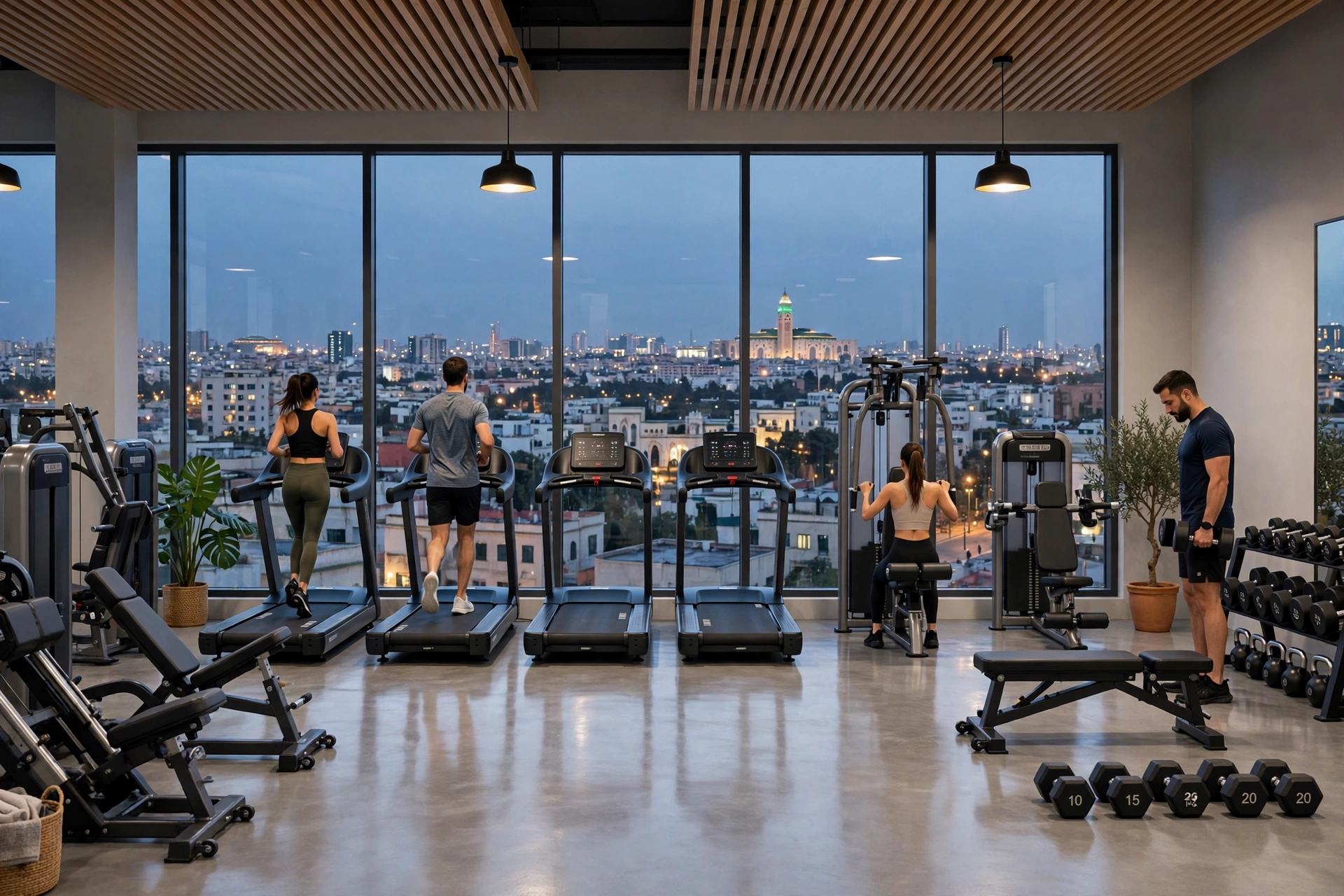
Walk into a gym in Casablanca or Rabat and the first surprise is how familiar it feels. The music is loud, the mirrors are everywhere, and the equipment is the same brands you would find in Europe. Air conditioning works and the floors are clean. The best clubs here would not look out of place in any European capital.
Moroccan gyms are social places: people greet each other, chat between sets and ask the trainer for advice without embarrassment. The weights area fills up in the early evening, mostly with young men, while mornings are quieter and popular with older members and women. Equipment varies more than the buildings do: chains buy new machines, while a neighbourhood gym may run older ones that are still usable. Dumbbells usually go up to 40 or 50 kilos, and cardio machines are plentiful. Always ask for a free trial session before you pay, because Morocco gyms for expats reward a visit in person.
Morocco Gyms for Expats: Membership Prices by City
Prices are the best news in this guide. A neighbourhood gym typically charges 200 to 400 MAD (about $20 to $40) a month, while a big chain in a good area of Casablanca or Rabat costs 400 to 900 MAD (about $40 to $90). Annual memberships cut the monthly rate by up to a third. Day passes cost 50 to 100 MAD (about $5 to $10), and a week pass 150 to 250 MAD (about $15 to $25).
| Gym type and city | Monthly price | Annual price (per month) | Day pass |
|---|---|---|---|
| Neighbourhood gym, Fes or Tangier | 200–300 MAD (about $20–$30) | 150–250 MAD (about $15–$25) | 40–60 MAD (about $4–$6) |
| Neighbourhood gym, Casablanca or Rabat | 250–400 MAD (about $25–$40) | 200–300 MAD (about $20–$30) | 50–80 MAD (about $5–$8) |
| Mid-range chain, Agadir or Marrakech | 350–550 MAD (about $35–$55) | 280–450 MAD (about $28–$45) | 60–100 MAD (about $6–$10) |
| Premium chain, Casablanca or Rabat | 600–900 MAD (about $60–$90) | 450–700 MAD (about $45–$70) | 80–120 MAD (about $8–$12) |
| Hotel gym (non-guest access), Marrakech | 500–800 MAD (about $50–$80) | Rarely offered | 100–200 MAD (about $10–$20) |
Casablanca and Rabat are the most expensive cities. Fes and Tangier are noticeably cheaper for the same kind of gym, and Marrakech sits in the middle, with tourist-area gyms charging more than residential ones. For Morocco gyms for expats, the cheapest deal is an annual membership in a smaller city; the most expensive is a premium chain in central Casablanca on a monthly plan. Watch for extras: some gyms charge a joining fee of 100 to 300 MAD (about $10 to $30), and a few charge separately for classes, the pool or the sauna. Ask what is included, and whether you can freeze your membership while you travel.
Chains vs Neighbourhood Gyms
The big decision is not which gym has the newest treadmill. It is whether you want a chain or a neighbourhood gym, because the two feel very different. The large chains, led by Moroccan operator City Club and joined by French brands such as Fitness Park, run big bright clubs with dozens of machines, a full class timetable, a pool in some locations, and staff who speak French and often English. They sell monthly and annual contracts and take card payments. If you want predictability, a chain is the safe choice.
A neighbourhood gym, the salle de sport on the corner, is smaller, cheaper and far more personal. The owner probably trains there himself, the regulars all know each other, and payment is often cash, month to month, with no contract at all. Equipment is older but usually well maintained, and classes are few or none. For many expats this is the better deal: you pay half the price and train among locals. For Morocco gyms for expats, there is a middle option too: mid-range independents in Agdal, Maârif or Guéliz, at around 350 to 500 MAD (about $35 to $50) a month. Visit at the hour you plan to train: a gym that feels spacious at 11:00 can be packed at 19:00.
What You Get for Your Money: Facilities and Equipment
A standard Moroccan gym gives you a cardio zone, a weights zone and a stretching area. The cardio zone usually has treadmills, exercise bikes and ellipticals. The weights zone has dumbbells, benches, cable machines and plate-loaded equipment, and the better gyms add a squat rack, a Smith machine and a leg press.
Classes and studios
Most chains run a daily timetable of group classes: spinning, body pump, Zumba, aerobics, yoga and Pilates, usually included in the membership. Neighbourhood gyms may offer one or two classes a week, or none at all. If classes matter to you, check the timetable and the times before joining.
Pools, saunas and hammams
The premium chains sometimes include a swimming pool, a sauna and a traditional hammam, a steam room and a big part of Moroccan bathing culture. Smaller gyms skip these facilities, which is one reason they cost half as much.
Women-Only Hours and Gym Etiquette for Women
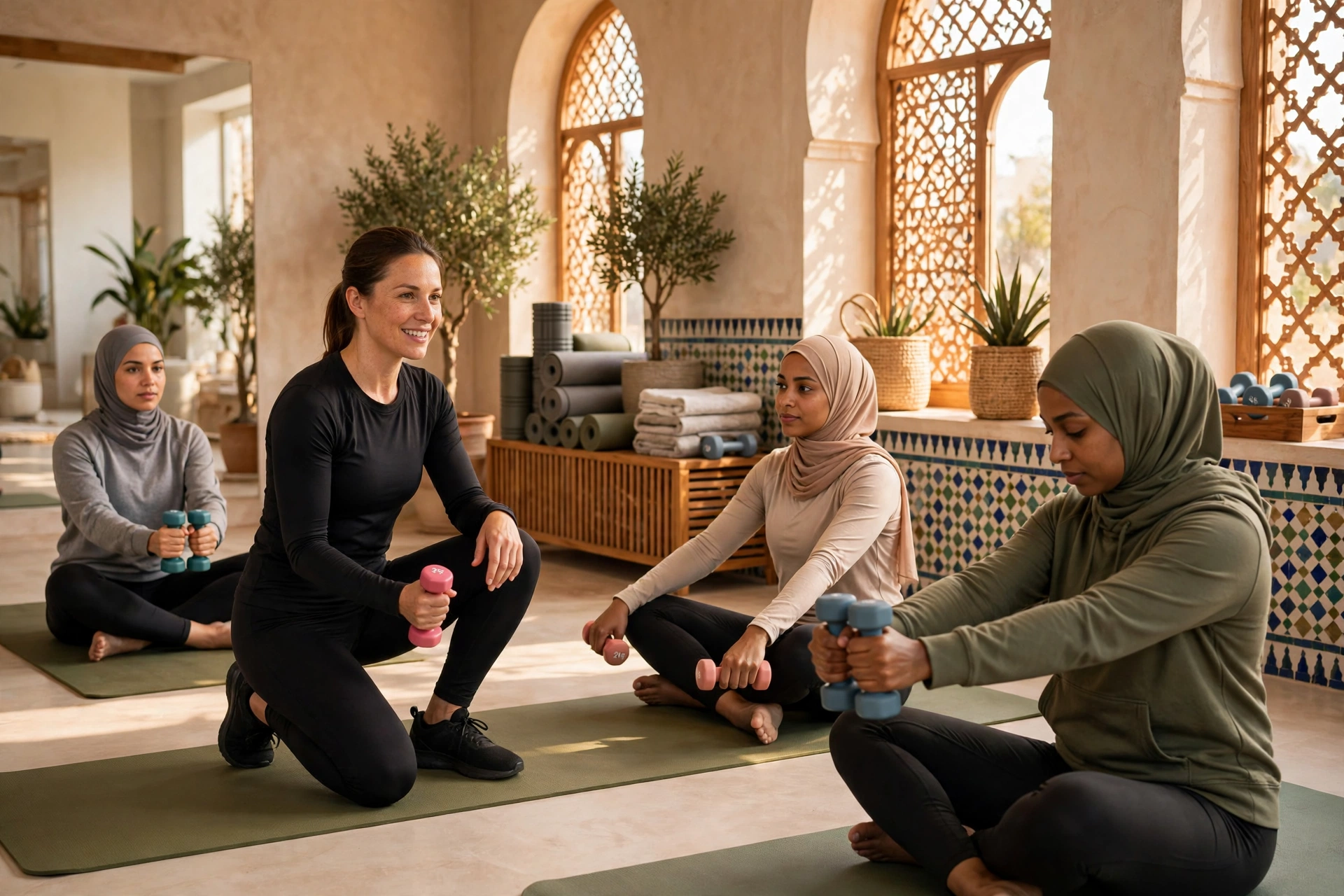
Women train in Moroccan gyms every day, and the system for it is better organised than most newcomers expect. Many gyms set aside women-only hours, usually in the morning or on specific afternoons, when the whole gym or a separate floor is for women only. Some cities also have ladies-only gyms, run entirely by women. If you prefer to train without men around, Morocco gyms for expats make that easy, and you do not need to pay a premium for it.
Check the schedule before you join: women-only hours vary from gym to gym and change with the seasons. A gym that offers ladies’ hours from 10:00 to 13:00 might switch them to the afternoon in summer. Visit in person and ask to see the women’s area. Dress is straightforward: modest athletic wear is the norm, and many Moroccan women train in a sports hijab. Bring your own towel, water bottle and padlock. The unwritten rule of Morocco gyms for expats is the same as anywhere: dress for training and respect the room.
Classes, Personal Training and Coaching
Group classes are where Moroccan gyms shine. A chain timetable typically offers spinning, body pump, Zumba, step aerobics, yoga and Pilates every day, with energetic instructors used to mixed groups of Moroccans and foreigners. Classes are taught in French and Darija, with the instructor demonstrating every move, so you can follow along with basic French. For class lovers, Morocco gyms for expats are good value, because the classes are usually included in the membership rather than sold as expensive extras.
Personal training is also good value by European standards. A session with a qualified coach costs 100 to 250 MAD (about $10 to $25), depending on the city and the coach, and a package of ten usually brings the price down further. Many coaches work freelance across two or three gyms, so ask members for a recommendation. A good coach will write you a programme, check your form, and train you in English if you ask. Ask about certification, be honest about injuries, and insist on a trial session. Morocco gyms for expats are full of good coaches, but the best ones come by recommendation.
How to Pick a Gym in Casablanca, Rabat and Marrakech
Location matters more than the brand name, because traffic decides whether you actually go. In Casablanca, the biggest choice is in Maârif, Ain Diab and the city centre, where the premium chains cluster, but the traffic at 18:00 is brutal. Pick a gym within ten minutes of home or work, and test the journey at the hour you plan to train. The corniche is the city’s best free gym: runners fill the seafront promenade every morning.
Rabat is calmer. The best gyms are in Agdal and Hay Riad, the modern districts where many expats and diplomats live, and most places are a ten-minute drive apart. Chains here are well run and rarely overcrowded. Morocco gyms for expats in Rabat have a quieter, more international feel, and the staff are used to foreigners who speak little French.
Morocco gyms for expats in Marrakech need a different calculation, because of the heat. From June to September, daytime temperatures pass 40 degrees, so air conditioning is not a luxury but a necessity: check that it actually works before you join, and check that the gym opens early enough for a 07:00 session. The best gyms are in Guéliz and Hivernage, outside the medina, and the tourist-area gyms near Jemaa el-Fna charge more for less.
Gyms in Tangier, Agadir and Fes
Tangier’s gym scene has grown fast with the city itself. Morocco gyms for expats will find the best clubs in the new town around Boulevard Pasteur and the marina, with modern equipment and English-speaking trainers, thanks to the international crowd that comes through the port. Prices are lower than Casablanca, and evenings are busy, so visit in the morning.
Agadir is the beach city, and its fitness culture shows it. The gyms around the tourist zone are solid mid-range clubs, but the real character of the city is outdoors: surfers in Taghazout just up the coast, runners on the beach promenade, and five-a-side football pitches that fill up every evening. Morocco gyms for expats in Agadir work best as a base, with outdoor training as the bonus. If you surf or want to learn, budget for lessons on top of the gym.
Fes is the most traditional of the six cities, and its gyms reflect that. The Ville Nouvelle has the best clubs, with modern equipment and prices around 200 to 350 MAD (about $20 to $35) a month. The medina has almost no gyms at all, but the old city was never built for fitness clubs, and its lanes are a workout on their own. If you live in Fes, join a gym in the Ville Nouvelle and treat the medina’s steep lanes as your daily cardio. For the bigger picture, see Morocco on Wikipedia and the official Visit Morocco site.
The Insider Correction: What Outsiders Get Wrong
Here is the correction most newcomers need. Outsiders routinely assume that Morocco has no real gym culture, that the only option is a small hotel gym with two treadmills and a broken bike. That is completely wrong. Morocco has a serious fitness culture: bodybuilding is popular, young Moroccans train hard, and every city has gyms busy from morning to night. The mistake comes from looking in the wrong places: the best gyms are in the modern districts where Moroccans actually live, and they do not advertise in English because they do not need to.
The second mistake is about money. Many expats pay the first price they are quoted, because that is normal at home. In Morocco, the posted price is a starting point, especially for an annual membership, so ask for a discount, ask about six months upfront, and ask whether the joining fee can be waived. The third mistake is about Ramadan: newcomers assume the gyms close for the holy month, but they do not. Hours shift instead, many gyms reopen after iftar, and the sessions after 21:00 become the busiest of the day. Morocco gyms for expats follow the same rhythm, so check the Ramadan timetable in advance.
Training Outside the Gym: Running, Surf and Hiking
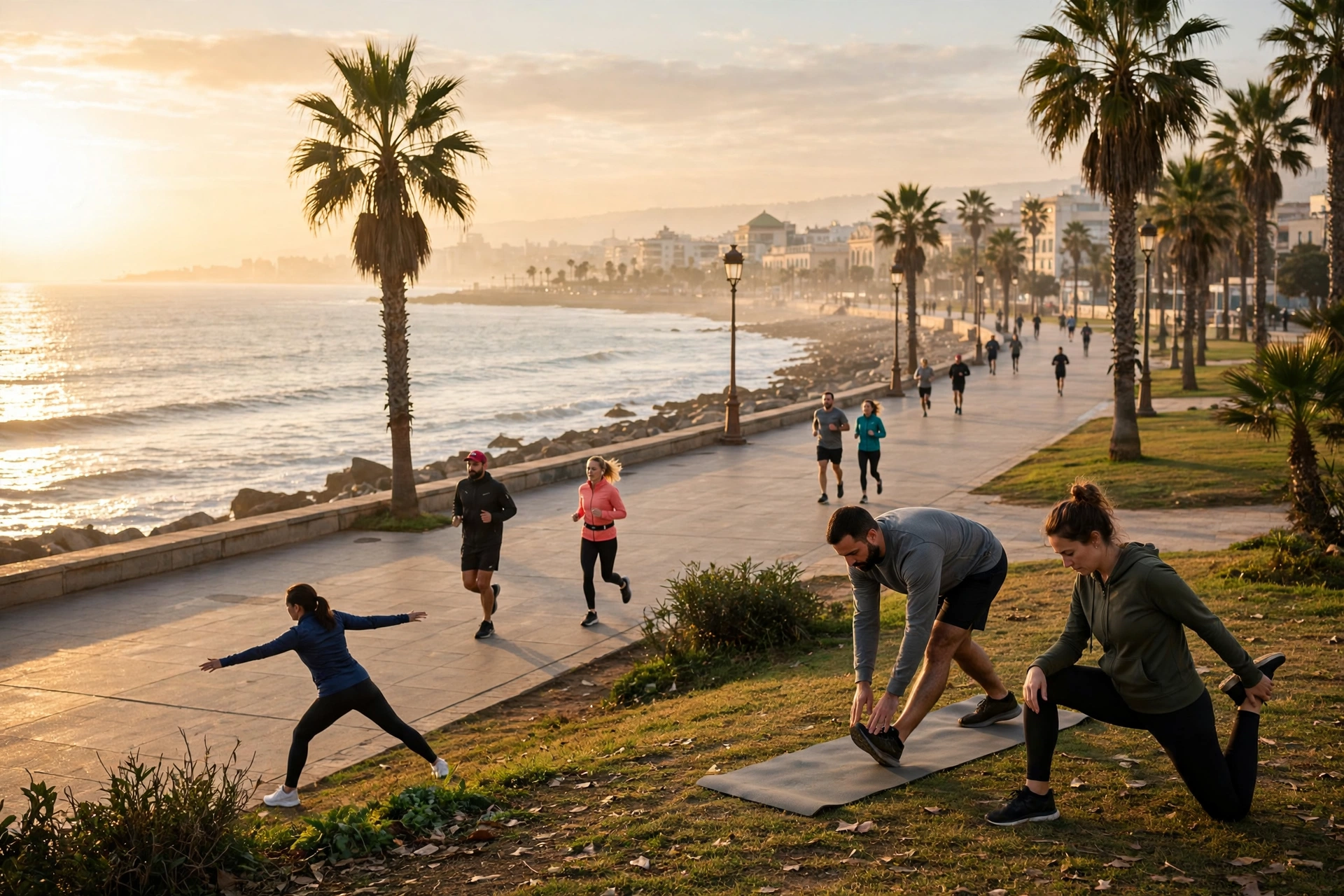
A gym membership is only half the story. Morocco is one of the best countries in the region for outdoor training, and it costs nothing. The corniches of Casablanca and Tangier fill with runners at sunrise, Rabat has parks and the Bouregreg riverfront, and Agadir has a long beach promenade. Running is safe there in the early morning, when the air is cool and the streets belong to walkers, runners and cyclists. In summer, train before 08:00 or after 19:00, because the midday sun is genuinely dangerous.
Beyond running, the options grow with the landscape. Surfing at Taghazout near Agadir is world-class, and beginner lessons cost 200 to 300 MAD (about $20 to $30) with board hire. The Atlas Mountains offer hiking from an hour outside Marrakech, and the trails around Imlil and Toubkal are serious mountain walking, so go with a guide. Five-a-side football is everywhere, with pitches to rent by the hour. Morocco gyms for expats are the indoor base, but the outdoors is where training here becomes something you will actually look forward to. One warning: the sun is strong even in winter, so carry water on every run.
Practical Tips: Contracts, Payments and Gym Etiquette
Before you sign anything, read the contract, and remember it will usually be in French, sometimes with an Arabic version. Ask the key points in plain language: contract length, what happens if you leave Morocco early, freezing the membership, and the cancellation fee. Month-to-month memberships are the safest choice for your first three months, even if they cost more, because they let you change gyms without a fight. Terms are flexible in practice, but only if you agree them before you pay.
| Item | Typical cost | Notes |
|---|---|---|
| Joining fee | 100–300 MAD (about $10–$30) | Often waived if you negotiate |
| Padlock and towel | 50–100 MAD (about $5–$10) | Bring your own to save money |
| Personal training session | 100–250 MAD (about $10–$25) | Cheaper in a package of ten |
| Group class (pay-as-you-go) | 50–80 MAD (about $5–$8) | Usually included in chain memberships |
| Protein shake or juice at the gym | 25–40 MAD (about $2.50–$4) | Cheaper in a shop outside |
| Hammam or sauna session | 50–100 MAD (about $5–$10) | Often included in premium memberships |
| First-week total (mid-range gym) | 600–900 MAD (about $60–$90) | Membership plus joining fee and extras |
Payment is simple but old-fashioned in smaller gyms. Chains take cards and bank transfers, while neighbourhood gyms usually want cash, paid monthly at reception, and a receipt if you ask for one. Keep your receipts as proof of payment. Etiquette is mostly common sense: wipe down machines, re-rack your weights, and do not film other people without asking. Greet the staff when you arrive, and learn a few words of Darija with our guide to learning Moroccan Arabic / Darija. For reliable data for booking classes, see our guide to Morocco internet for expats. Morocco gyms for expats reward politeness, so train hard, be courteous, and you will fit in quickly.
Morocco Gyms for Expats FAQ
How much is a gym membership in Morocco?
For Morocco gyms for expats, a neighbourhood gym costs 200 to 400 MAD (about $20 to $40) a month, a mid-range chain costs 350 to 550 MAD (about $35 to $55), and a premium chain in Casablanca or Rabat costs 600 to 900 MAD (about $60 to $90). Annual memberships cut the monthly rate by up to a third. Prices checked: November 2026.
Are there women-only gyms in Morocco?
Yes. Many gyms offer women-only hours, usually in the morning or on specific afternoons, and some cities have ladies-only gyms run entirely by women. Check the schedule before joining, because the hours vary from gym to gym and change with the seasons.
Can I join a gym in Morocco for just one month?
Yes, most gyms offer monthly memberships, and neighbourhood gyms often work month to month with no contract at all. Chains may push annual plans, but they will usually sell a monthly membership if you ask. A month-to-month plan is the best choice for your first few months while you settle in.
Do Moroccan gyms run classes in English?
Classes are usually taught in French and Darija, with the instructor demonstrating every move, so you can follow along without understanding every word. Some coaches in Casablanca and Rabat speak good English, and you can ask for an English-speaking personal trainer when you join.
What should I wear to the gym in Morocco?
Modest athletic wear is the norm: leggings with a longer top, or a t-shirt and tracksuit bottoms. Many Moroccan women train in a sports hijab. Very short shorts or crop tops are uncommon in mixed hours, and dressing like everyone else will help you feel comfortable.
Are gyms open during Ramadan?
Yes, gyms stay open during Ramadan, but hours shift. Many close in the afternoon and reopen after iftar, and evening sessions after 21:00 become the busiest of the day. Check the Ramadan timetable in advance, and ask your coach to adjust your programme if you are fasting.
Conclusion
Morocco gyms for expats offer something rare: a modern fitness scene at a fraction of European prices, with warm people, good coaches and a culture that takes training seriously. Pick a gym close to home, visit at the hour you plan to train, negotiate the price, and settle in for a month before committing to a year. Add the corniche runs, the Atlas hikes and the occasional hammam, and fitness becomes one of the best parts of living here.
Start with a trial session this week, and build your routine around the city you live in, not the gym with the best photos online. For the rest of your life in Morocco, see our Living in Morocco expat guide and browse the Living in Morocco section.
Last checked: November 2026
1 thought on “Morocco Gyms and Fitness for Expats: Prices, Etiquette and Where to Train in 2026”