
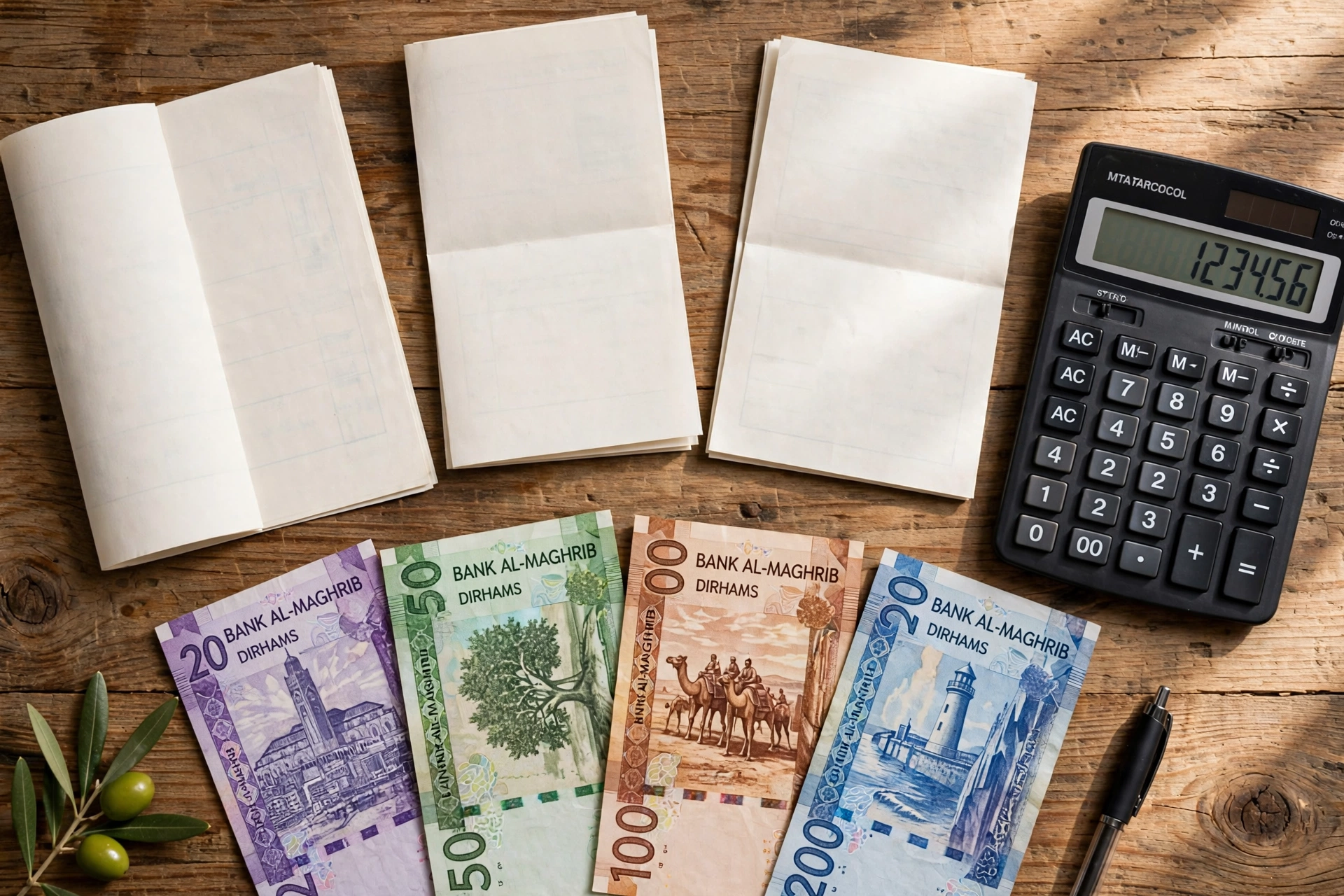
Moving to Morocco is the easy part. Understanding what you owe the tax office is where most newcomers get stuck: the rules mix French-style income tax bands, a residency test based on days in the country, and a web of treaties that can change the answer completely. This morocco tax guide expats starts with the basics and builds to a full worked example, so you can see exactly how much tax you would pay on a typical expat salary.
The good news is that Morocco's system is simpler than it looks once you know the three questions that matter: are you a tax resident, what kind of income do you earn, and does your home country have a treaty with Morocco? Answer those three and the rest is paperwork, as this morocco tax guide expats shows in turn.
In this guide
- Morocco Tax Guide Expats: Who Is a Tax Resident?
- Moroccan Income Tax Brackets in 2026
- Salary vs Professional Income: How Tax Is Collected
- Social Charges: What CNSS Takes From Your Pay
- Double Taxation Treaties: How to Avoid Paying Twice
- Getting a Tax ID and Filing Online
- Tax on Rental Income and Property in Morocco
- Tax on Foreign Pensions and Overseas Income
- Morocco Tax Guide Expats: A Worked Example on 240,000 MAD a Year
- Penalties for Late Filing and How to Avoid Them
- Frequently Asked Questions
- Conclusion: Your First Moroccan Tax Year
Morocco Tax Guide Expats: Who Is a Tax Resident?
Tax residency is the first question in any morocco tax guide expats: it decides whether Morocco taxes your worldwide income or only income earned inside the country. Residents pay on everything they earn, wherever it comes from; non-residents pay only on Moroccan-source income, such as a local salary or rent from a Moroccan flat.
The main test is the 183-day rule: spend 183 days or more in Morocco during a calendar year and you are a tax resident for that year. The days need not be consecutive, and short trips abroad do not reset the count.
The 183-Day Rule in Practice
Counting days sounds simple, but border stamps are what counts, so keep your passport stamps and flight records. A day counts if you are physically present in Morocco at any point during it, including arrival and departure days, and weekends and holidays all count towards the total.
The Centre of Interests Test
Even if you spend fewer than 183 days in Morocco, you can still be treated as resident under the rules this morocco tax guide expats explains, if your centre of economic interests is here: your main home, your family, your business, or the bulk of your assets. If you rent in Casablanca, your children attend school in Rabat, and your company is registered in Marrakech, the tax office will treat you as resident even if you travel often — the test that catches remote workers who assume frequent travel keeps them non-resident.
If you are still unsure where you stand, ask a local tax adviser before your first filing deadline, and read our wider Living in Morocco expat guide alongside this morocco tax guide expats.
Moroccan Income Tax Brackets in 2026
Morocco taxes personal income on a progressive scale, so only the slice inside each band is taxed at that band's rate. The bands below are at the heart of this morocco tax guide expats, in force for 2024 to 2026 and checked in November 2026. Rates are set by the annual Finance Law, so confirm them before you file.
| Annual taxable income (MAD) | Tax rate | Band top in USD (approx.) |
|---|---|---|
| 0 – 40,000 | 0% | $4,000 |
| 40,001 – 60,000 | 10% | $6,000 |
| 60,001 – 80,000 | 20% | $8,000 |
| 80,001 – 100,000 | 30% | $10,000 |
| 100,001 – 180,000 | 34% | $18,000 |
| Above 180,000 | 37% | — |
The first 40,000 MAD of annual income is tax-free, roughly $4,000 at the November 2026 rate of about 10 MAD to the US dollar. That matters most for part-time workers and retirees on modest pensions, whose bill it can cut to almost nothing — though the zero rate applies to everyone's first slice.
A common mistake is to apply the top rate to your whole salary: earn 240,000 MAD a year and you still pay nothing on the first 40,000 MAD, 10% on the next 20,000, and so on, which is why the worked example later in this morocco tax guide expats comes out lower than newcomers fear.
Salary vs Professional Income: How Tax Is Collected
How your tax is collected depends on how you earn your money. Employees have tax withheld from their salary every month by their employer, which sends the money to the tax office; the employee's main job at year end is to check the figures and file a return if one is due.
Self-employed expats and freelancers are treated differently: professional income is declared by the taxpayer through quarterly or annual filings, with no employer to withhold tax in advance. You must set money aside yourself, because the full year's tax falls due when you file. Many freelancers keep a separate account and move roughly a third of each payment into it, so the bill never comes as a shock.
The distinction also affects deductions: employees get a standard deduction for professional expenses, while the self-employed can deduct real business costs such as office rent, equipment, and travel. If you are weighing a salaried job against freelancing, our guide to working in Morocco as a foreigner explains the job market, and this morocco tax guide expats explains what each route costs in tax.
Which Category Is Your Income?
Most expats fall into one of three categories: salary income from employment, professional income from self-employment or a liberal profession, and other income such as rent, pensions, or investments. Each category has its own filing rules and deductions, so identifying yours is the first step of any return in this morocco tax guide expats. Income in more than one category is declared separately and combined by the tax office.
Social Charges: What CNSS Takes From Your Pay
Income tax is only half the story for employees: social charges paid to the CNSS, the Caisse Nationale de Sécurité Sociale, fund pensions, health cover, and family benefits, with employees contributing a share of gross salary and employers a larger share on top.
As a rough guide, employee social contributions are around 4 to 5% of gross salary, with the employer's share considerably higher. The exact split depends on your salary and contract, because some contributions are capped and others are not. This split is not fully confirmed for every contract type, so check your own payslip and confirm the figures with your employer or the CNSS before relying on them. CNSS registration is compulsory for employees, handled by your employer.
CNSS cover is also the gateway to Morocco's public health system. For the full picture of clinics, insurance, and what CNSS does and does not cover, read our guide to healthcare in Morocco for expats next to this morocco tax guide expats.

Double Taxation Treaties: How to Avoid Paying Twice
The fear that stops many expats from moving is paying full tax in two countries on the same income. Morocco's double taxation treaties exist to prevent exactly that, and this morocco tax guide expats explains how they work. Morocco has treaties with more than 50 countries, including the United Kingdom, the United States, France, Canada, and Germany.
A treaty usually works in one of two ways: either the income is taxed in only one country, or it is taxed in both but the tax paid in one is credited against the bill in the other. Which method applies depends on the income type and the specific treaty, so the answer for a British pension differs from the answer for American freelance income.
| Home country | Treaty with Morocco? | Usual relief method | What to check |
|---|---|---|---|
| United Kingdom | Yes | Tax credit | UK foreign tax credit claim |
| United States | Yes | Tax credit | IRS foreign tax credit, Form 1116 |
| France | Yes | Tax credit | French crédit d'impôt |
| Canada | Yes | Tax credit | CRA foreign tax credit |
| Germany | Yes | Exemption or credit | Depends on income type |
Treaties do not remove the need to file: you normally still file in both countries and claim the relief. Keep proof of the tax you paid in Morocco, such as your assessment and payment receipts, because your home country's tax office will ask for it. For background, the overview of taxation in Morocco on Wikipedia is a useful starting point, and this morocco tax guide expats covers the practical steps below.
Getting a Tax ID and Filing Online
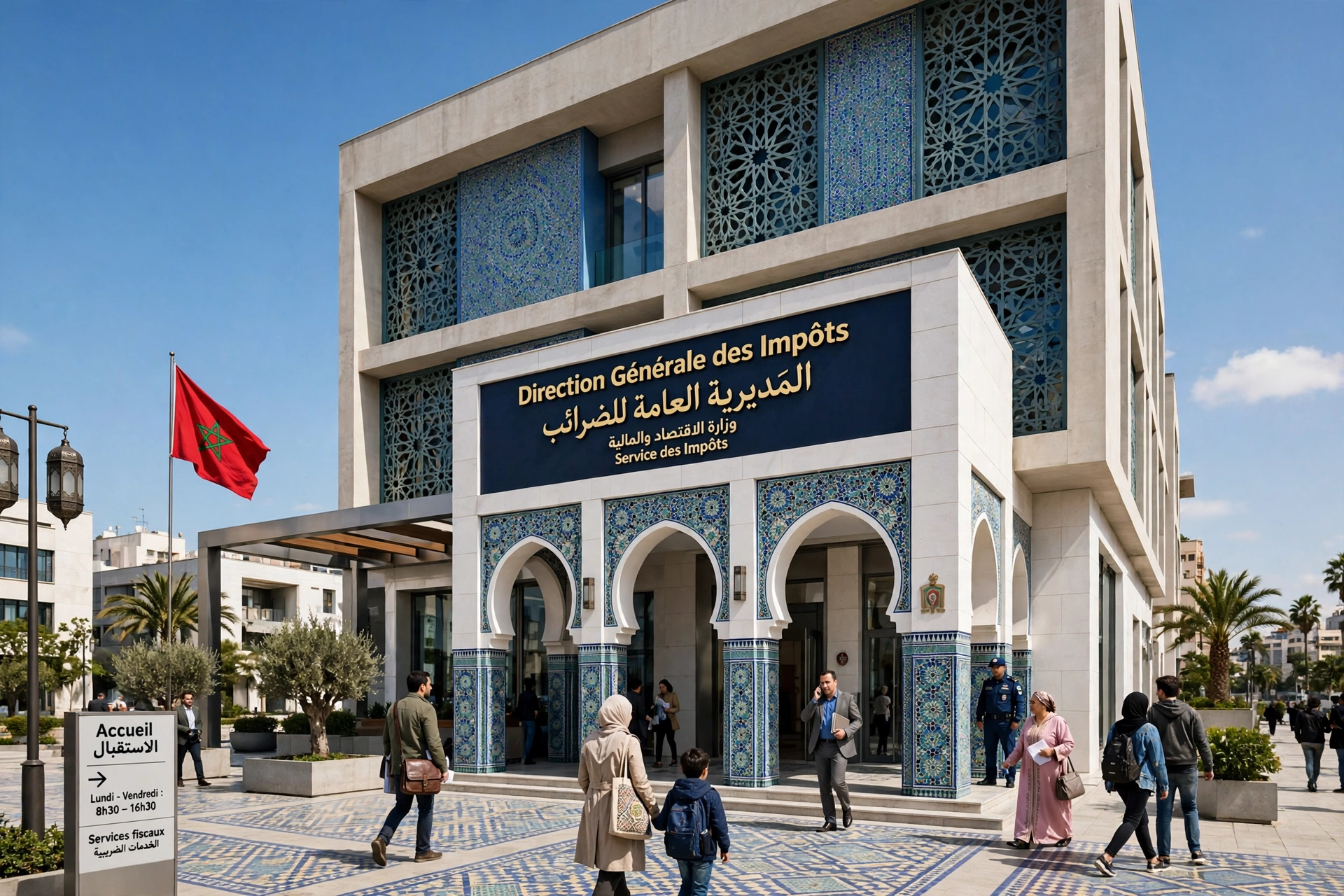
Before you can file anything, you need a tax identification number, known as the identifiant fiscal. You get it from your local office of the Direction Générale des Impôts by presenting your passport, residence permit, and proof of address such as a rental contract or utility bill. The number is free, and you will use it on every return.
Filing is done online through the tax authority's portal, where you can register, submit your return, and pay by bank transfer or card. The annual return is generally due in the first few months of the year after the tax year, and employees whose tax is fully withheld may have a simpler obligation than the self-employed. Deadlines move, so confirm the current year's date on the portal.
- Register for your identifiant fiscal at your local tax office with your passport, residence permit, and proof of address.
- Create your account on the online tax portal and link it to your tax number.
- Gather your income documents: payslips, freelance invoices, bank statements, and rental contracts.
- Complete the return, check the figures twice, and submit it before the deadline.
- Pay any balance due and keep the payment receipt with your records.
Keep every document for several years after filing: the tax office can ask questions long after you submitted a return, and a tidy file of payslips, contracts, and receipts turns a stressful enquiry into a short one. It is the single best habit in this whole morocco tax guide expats, and it costs nothing.
Tax on Rental Income and Property in Morocco
Rent from a flat you own in Morocco is taxable income. It benefits from a flat allowance for expenses, commonly 40% of gross rent, and the remaining 60% is taxed at the progressive rates. The exact allowance and the treatment of short-term holiday lets are not fully confirmed and have changed in recent Finance Laws, so confirm the current rules with a tax adviser before you sign a lease or set your rent. Non-residents renting out a Moroccan home are taxed the same way, but only on that Moroccan-source income.
Property taxes are separate from income tax: owners pay an annual tax on residential property and on undeveloped land, based on the rental value the tax office assigns. These bills are modest for most flats but can be significant for large villas, so ask for recent bills before you buy. Our guide to renting an apartment in Morocco covers deposits, contracts, and prices, and pairs well with this morocco tax guide expats if you are deciding whether to rent or buy.
Tax on Foreign Pensions and Overseas Income
Retirees are a large share of Morocco's expat community, and their tax position depends on where the pension comes from and what the treaty says. As a resident, your foreign pension is generally taxable in Morocco, but the treaty may give the other country the sole right to tax it, or let you credit the foreign tax against your Moroccan bill. Government service pensions are often taxed only in the paying country; private pensions are more often taxable in Morocco, a distinction this morocco tax guide expats flags because it surprises many retirees.
Two retirees with the same pension can therefore owe very different amounts, depending on nationality and pension type. That is why generic advice about expat tax is dangerous, and why our guide to retiring in Morocco looks at the lifestyle side while this morocco tax guide expats looks at the money. Bring your pension statements and treaty to a local adviser before your first return.
Overseas investment income, such as dividends and interest from abroad, is also taxable in Morocco for residents, usually after a credit for tax already paid overseas. Keep your foreign bank statements and dividend vouchers, because the tax office will want to see them.
Morocco Tax Guide Expats: A Worked Example on 240,000 MAD a Year
A worked example shows what the rates really mean. Take an expat employee earning 240,000 MAD a year, about $24,000 at the November 2026 rate of roughly 10 MAD to the dollar — a realistic salary for a mid-level professional in Casablanca or Rabat. Here is the calculation, band by band, in this morocco tax guide expats.
| Income slice (MAD) | Rate | Tax on slice (MAD) |
|---|---|---|
| 0 – 40,000 | 0% | 0 |
| 40,001 – 60,000 | 10% | 2,000 |
| 60,001 – 80,000 | 20% | 4,000 |
| 80,001 – 100,000 | 30% | 6,000 |
| 100,001 – 180,000 | 34% | 27,200 |
| 180,001 – 240,000 | 37% | 22,200 |
| Total tax | — | 61,400 |
Total income tax is 61,400 MAD a year, about $6,140 — an effective rate of roughly 25.6%, and the figure to budget for, not the 37% top rate. After tax, the expat keeps 178,600 MAD a year, about 14,883 MAD a month before social charges, and CNSS contributions of roughly 4 to 5% would take another 800 to 1,000 MAD a month.
Compare that with everyday costs before judging whether the salary is enough: our cost of living guide for Morocco puts real numbers on rent, food, transport, and healthcare, so you can see whether 14,883 MAD a month after tax covers the life you want. This worked example is the heart of this morocco tax guide expats, turning abstract bands into a budget you can plan around.
Penalties for Late Filing and How to Avoid Them
Morocco's penalties for late filing are designed to hurt just enough to make you file on time: a late return typically attracts a surcharge of 10% of the tax due, plus late-payment interest that accrues month by month until you pay. The exact surcharge and interest rates are not fully confirmed and can change with the Finance Law, so treat the 10% figure as an indication, not a guarantee. A return that is months late can therefore cost far more than the original bill.
The fix is simple: file early, pay on time, and keep proof of both. Set a reminder for the deadline as soon as the tax year ends, and do not wait for a reminder letter, because none may come. If you miss a deadline, file as soon as you can, because interest usually stops growing once the return is in. Check the Bank Al-Maghrib website for the official exchange rate when converting foreign income, since currency movements change what it is worth in dirhams.
Frequently Asked Questions
Do expats pay tax in Morocco?
Yes. Residents pay Moroccan income tax on worldwide income; non-residents pay only on Moroccan-source income. The 183-day rule is the usual test, but the centre of interests test can also make you resident, as this morocco tax guide expats explains above.
How much income tax will I pay on 240,000 MAD a year?
On a salary of 240,000 MAD a year, income tax is 61,400 MAD, about $6,140 — an effective rate of roughly 25.6%. The top rate of 37% applies only to the slice above 180,000 MAD, not to your whole salary. Social charges are separate and add roughly 4 to 5% for employees.
Does Morocco have a double taxation treaty with my country?
Morocco has treaties with more than 50 countries, including the United Kingdom, the United States, France, Canada, and Germany. Most work by tax credit, so Moroccan tax reduces what you owe at home — but check your country's treaty, since treatment varies by income type.
How do I get a Moroccan tax ID?
Apply for your identifiant fiscal at your local tax office with your passport, residence permit, and proof of address. The number is free, and you need it before registering on the online tax portal. This morocco tax guide expats covers the full process above.
Are foreign pensions taxed in Morocco?
Often yes, if you are a resident, but the treaty with the paying country may change the answer. Government service pensions are frequently taxed only in the paying country, while private pensions are more often taxable in Morocco — bring your pension documents to a local adviser before your first return.
What happens if I file my Moroccan tax return late?
A late return typically attracts a surcharge of around 10% of the tax due plus monthly interest, although the exact rates are not fully confirmed and can change. File as soon as you realise you are late, because interest usually stops growing once the return is submitted.
Conclusion: Your First Moroccan Tax Year
Your first Moroccan tax year is mostly about three things: confirming your residency, getting your identifiant fiscal, and filing before the deadline. Do those three and the system is manageable, even if the forms are in French and the portal takes patience. This morocco tax guide expats has given you the rates, the residency tests, the treaty picture, and a worked example.
Keep your documents, check the Finance Law each year, and ask a local adviser about anything treaty-related before you file. Morocco rewards expats who file on time and keep good records, and the bill is usually lower than newcomers expect. If this morocco tax guide expats helped you plan, share it with the next expat who asks how tax works here.
Last checked: November 2026. Tax rates and thresholds are set by the annual Finance Law; confirm the current figures before filing. Exchange rate used: about 10 MAD to 1 USD, November 2026.
1 thought on “Morocco Tax Guide for Expats: Income Tax, Residency and Double Taxation in 2026”