
This tiznit travel guide is for travellers who want the Morocco beyond the postcards: a quiet walled town in the Anti-Atlas foothills, famous for silver, wrapped in pink ramparts, and still largely undiscovered. Tiznit sits about 90 kilometres south of Agadir on the road to the Sahara, and most travellers pass it by.
Tiznit is not a resort and it does not try to be one: no big hotels, no tour buses, no crowds — just a slow medina, silversmiths hammering at their benches, a wild Atlantic beach a short drive away, and some of the friendliest shopkeepers in the Souss. This tiznit travel guide covers the ramparts, the silver souk, where to sleep and eat, how to get here, and what a trip costs in 2026.
All prices are in Moroccan dirhams (MAD), checked in November 2026, with dollar equivalents at roughly 10 MAD to $1. They are planning ranges, not promises — confirm prices on arrival.
In this guide
- Tiznit at a Glance
- Why Tiznit Is Worth the Detour
- A Short History of Tiznit
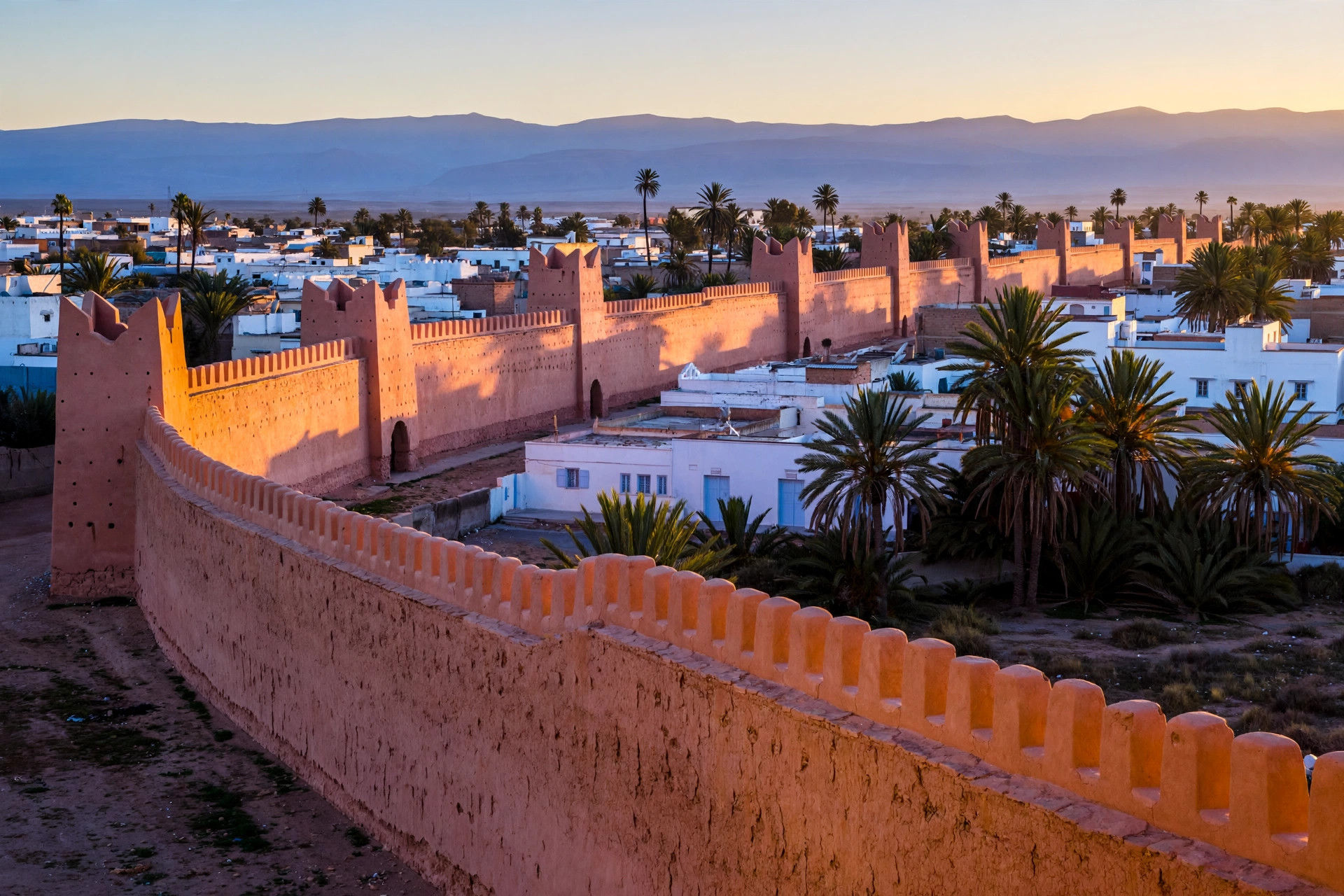
- The Ramparts and the Old Town
- The Silver City: Jewellery and the Souks
- Things to Do in Tiznit
- The Beaches: Aglou and the Wild Coast
- Where to Stay in Tiznit
- Where to Eat in Tiznit
- Getting to Tiznit
- Tiznit Travel Guide: Practical Tips
- When to Visit Tiznit
- Day Trips from Tiznit
- Frequently Asked Questions
- Conclusion
Tiznit at a Glance
| Fact | Detail |
|---|---|
| Location | Souss-Massa region, Anti-Atlas foothills, about 90 km south of Agadir |
| Population | Around 75,000 |
| Elevation | About 250 metres |
| Founded | 1881, by Sultan Moulay Hassan I |
| Famous for | Pink ramparts, Amazigh silver jewellery, Aglou beach |
| Language | Tachelhit (Amazigh), Moroccan Arabic, some French |
| Nearest beach | Aglou, about 15 km west |
| Best months | October to May |
| Budget | 300–600 MAD ($30–$60) a day, mid-range |
Why Tiznit Is Worth the Detour
Most travellers heading south hurry on to Mirleft, Sidi Ifni or the desert. Tiznit rewards those who stop: a complete circuit of 19th-century ramparts, silversmiths working by hand as they have for generations, and lunch in a square where nothing is staged.
The town is compact and walkable: the medina fits inside its pink walls, the souks are learned in an afternoon, and the pace is slow — shopkeepers have time to talk, and mint tea is poured without hurry. If you like Fez but want it smaller and calmer, this tiznit travel guide says: come here.
Tiznit also makes a practical base, and this tiznit travel guide uses it that way: Aglou beach is fifteen minutes away, Tafraoute two hours north-east, and the road south leads to Guelmim and the edge of the Sahara. Use it as a quiet overnight stop, or as a base for three unhurried days.
A Short History of Tiznit
Tiznit is young by Moroccan standards. Until the 1880s there was only a small settlement here around a spring; in 1881 Sultan Moulay Hassan I founded a garrison town to bring the Souss under the Makhzen and guard the caravan routes to the Sahara. The pink pisé ramparts went up in the early 1880s, enclosing a grid of streets, a great mosque, a mechouar parade ground and a mellah, the old Jewish quarter.
The town grew as a market and garrison, its silversmiths famous across the Souss: fibulae, bracelets, necklaces and curved koummya daggers traded as far as the Draa Valley and the Sahara. The craft survived the Protectorate era, when Tiznit sat near the Spanish enclave of Ifni, and it survives today — the living craft this tiznit travel guide came to see.
Some dates are not fully settled: local histories disagree on the year some gates and quarters were added, and the story of the sacred spring is told differently by different families. This tiznit travel guide sticks to what the records agree on: a planned town of 1881, built by a sultan, that became the silver capital of the Souss.
The Ramparts and the Old Town
The ramparts are the first thing you see and the best walk in town: about six kilometres of pink rammed earth, punctured by gates such as Bab Aglou, facing the coast road, and Bab el Maader, facing the plain. They are best at sunset, when the pisé turns rose clay and the light rakes across the towers.
Inside, the medina is a calm grid rather than a maze. The Great Mosque stands near the centre, and the Mechouar — the old parade ground — opens beside it as a broad square where boys play football in the evening. The old mellah, south of the mosque, keeps its quiet lanes and low doorways.
Walk the walls at the start of your visit, as this tiznit travel guide recommends. The circuit takes about two hours on foot and gives you the shape of the town: the medina inside, the newer quarters outside, the palm groves to the west and the Anti-Atlas ridges to the east. Go in the late afternoon, bring water and wear a hat — there is almost no shade on the ramparts.
The Silver City: Jewellery and the Souks
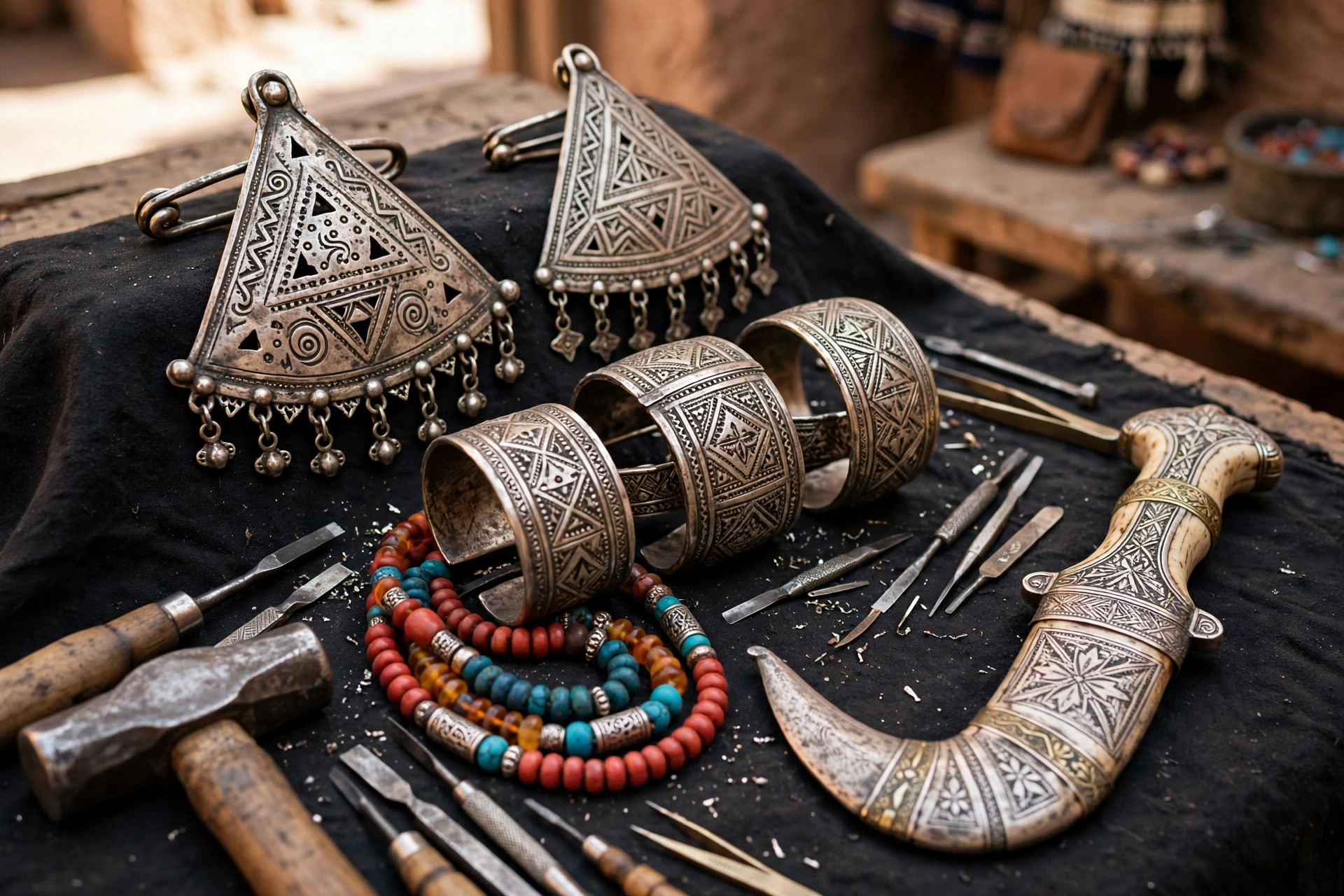
Silver is the reason most travellers have heard of Tiznit, and the silver souk is the reason to come. Tiznit's Amazigh silversmiths work in small workshops around the souk, hammering, engraving and setting stones by hand. The classic pieces are fibulae — the paired brooches that fasten a cloak — heavy bracelets, necklaces of silver beads, and koummya daggers with curved blades and decorated hilts.
Much of the old silver was made from melted coins, including the Maria Theresa thalers that once circulated across the Sahara, and you can still find coin silver in the older shops. Newer work is usually sterling-grade, stamped and sold by weight plus workmanship. Expect roughly 500–2,000 MAD ($50–$200) for a good fibula or bracelet, and more for large antique pieces.
Buy slowly. Compare three or four shops, ask whether a piece is old or new, and expect to bargain — a first price is an opening, not a verdict. Aim for a third off and walk away smiling if the seller will not meet you. The workshops welcome respectful visitors who ask questions, and buying a small piece from the bench where it was made is the best souvenir this tiznit travel guide can suggest.
Things to Do in Tiznit
Tiznit is a town for walking, looking and talking, not for ticking off sights. Start in the morning at the silver souk, when the workshops are busiest and the light is good — the first stop in this tiznit travel guide. Then walk the ramparts, or at least the stretch from Bab Aglou to Bab el Maader, and come back through the medina to the Mechouar.
Near the Great Mosque is the sacred spring of Ain Aqdim, whose water local tradition holds blessed: treat it as a place of devotion, not a photo stop.
The municipal market, south of the medina, is at its best in the morning: argan oil and amlou, saffron from Taliouine, dates from the Draa, and woven blankets. Thursday is the weekly souk day, when farmers from the villages arrive with livestock and gossip.
The Beaches: Aglou and the Wild Coast
Aglou beach, about 15 kilometres west of Tiznit, is the town's seaside: a long, wild Atlantic beach of pale sand, backed by dunes and a small fishing village, with a handful of cafes and simple guesthouses. The surf is steady rather than spectacular, good for beginners, and the sunsets are among the best on this coast.
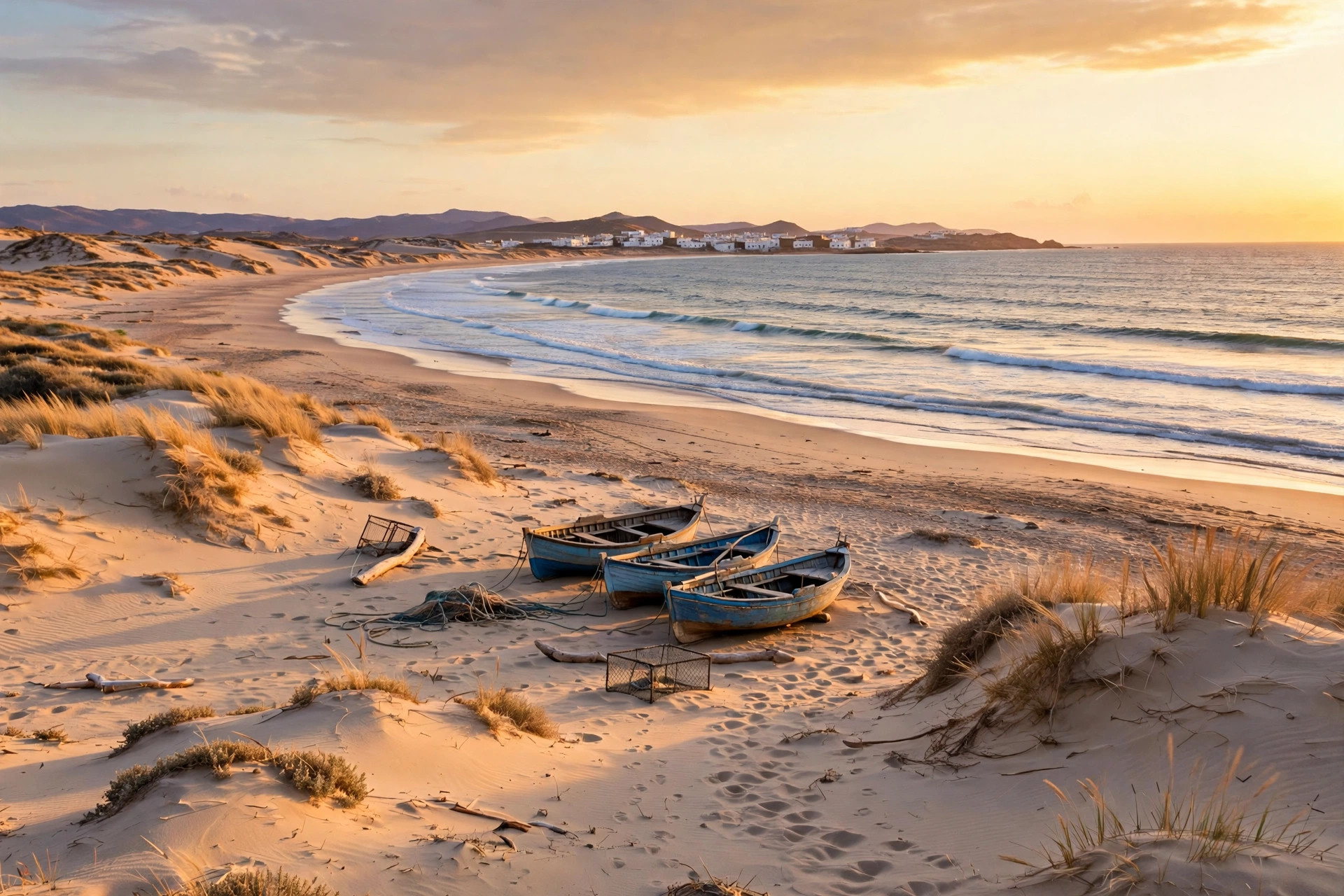
Swimming needs care: the Atlantic here has strong currents and no lifeguards, so swim close to shore and stay out when the waves are big — the safety note this tiznit travel guide repeats for every wild beach. The beach is at its best in the late afternoon, when the fishing boats come in and the cafes grill the catch.
A little further south, the coast road runs to Mirleft and then to Sidi Ifni, with cliffs, coves and fishing villages all the way. If you have a car, the stretch from Aglou to Mirleft alone is worth an afternoon — this tiznit travel guide rates it one of the great coastal drives in Morocco. Our Sidi Ifni travel guide covers the Art Deco town at the end of that road.
Where to Stay in Tiznit
Tiznit has no big hotels, and that is a blessing: small, cheap and personal is the rule. The best options are the small hotels around the medina and the guesthouses near Aglou beach, plus a couple of simple auberges on the road south, all of which this tiznit travel guide checked for price.
| Type | What you get | Price per night |
|---|---|---|
| Budget hotel in town | Clean room, fan, shared or private bath | 150–300 MAD ($15–$30) |
| Mid-range hotel or riad | Private bath, breakfast, often a terrace | 300–600 MAD ($30–$60) |
| Guesthouse at Aglou | Simple rooms near the beach, fish dinners | 250–500 MAD ($25–$50) |
| Apartment or family stay | Kitchen, good for a week or more | 2,500–4,000 MAD ($250–$400) a month |
Book ahead in spring and autumn, when the town fills with visitors heading to Tafraoute or the coast. In summer, rooms are easy to find but the heat is fierce, and many travellers prefer Aglou, where the ocean breeze helps.
Where to Eat in Tiznit
Food in Tiznit is Souss food: simple, generous and built on argan oil. Start the day with bread, amlou — ground almonds, argan oil and honey — and mint tea. Lunch is usually tajine or couscous; Friday is couscous day, and the small restaurants near the souk serve it until it runs out.
The fish at Aglou is the best eating on the coast here: grilled sardines, sea bass and the catch of the day, with bread, salad and mint tea, for roughly 60–120 MAD ($6–$12). In town, a tajine costs about 40–70 MAD ($4–$7) and a full lunch with drinks rarely passes 100 MAD ($10).
Look for the small restaurants around the Mechouar and the market streets rather than the main road. Order what the locals are eating, ask the price before you sit down, and carry small notes — many small places do not take cards. Alcohol is not served; tea and fresh juice are the drinks here, and this tiznit travel guide suggests the avocado juice.
Getting to Tiznit
Tiznit sits on the N1 highway, the main road south from Agadir to Guelmim and the Sahara, so getting here is easy. There is no train — the nearest stations are in Marrakech, a long drive north — so the bus and the grand taxi do the work.
| Route | Mode | Time | Price |
|---|---|---|---|
| Agadir to Tiznit | CTM or Supratours bus | About 2 hours | 60–90 MAD ($6–$9) |
| Agadir to Tiznit | Grand taxi (shared) | About 1.5 hours | 80–120 MAD ($8–$12) |
| Marrakech to Tiznit | CTM bus via Agadir | About 5–6 hours | 150–220 MAD ($15–$22) |
| Tiznit to Guelmim | Bus or grand taxi | About 1 hour | 40–70 MAD ($4–$7) |
| Tiznit to Aglou | Grand taxi or local bus | About 20 minutes | 10–20 MAD ($1–$2) |
Buses leave from Agadir's main station through the morning and afternoon; buy your ticket at the station, not from touts outside. Grand taxis gather at the taxi rank near the medina and leave when full — six passengers, so arrive early for a front seat. If you drive, the N1 is a good road, and the drive takes about ninety minutes. Whichever way you come, this tiznit travel guide recommends the morning bus: you arrive in time for lunch in the medina. Our Agadir travel guide covers the city you will most likely start from.
Tiznit Travel Guide: Practical Tips
Money first: bring cash. Tiznit has ATMs on the main streets, but they sometimes run dry at weekends, and the souk, the small restaurants and the grand taxis are cash-only. A daily budget of 300–600 MAD ($30–$60) covers a mid-range room, meals and a taxi or two — carry a mix of small notes for the market, as this tiznit travel guide recommends.
Language is part of the pleasure. Most people speak Tachelhit, the Amazigh language of the Souss, and Moroccan Arabic; French is widely understood in shops and hotels, and English less so. A few words of Tachelhit — tanemmirt, thank you — open doors that French cannot.
Safety is straightforward: Tiznit is one of the calmest towns in Morocco. Watch your bag in the market, agree taxi prices before you get in, and dress modestly around the mosque and the spring. Women travelling alone report the town as relaxed, though the usual care after dark applies. The nearest hospital with full services is in Agadir, about two hours away, so carry any medicine you need.
When to Visit Tiznit
October to May is the season. Autumn and spring bring warm days around 25°C, cool evenings and clear light on the ramparts; winter is mild, near 20°C in the day, with occasional rain. Summer is hot — afternoons regularly pass 40°C — and the town empties at midday. If you must come in summer, stay at Aglou and do the town in the late afternoon.
The best months are March and October, when the light is kind, the coast is quiet and the almond trees of the Anti-Atlas are in blossom or turning — the window this tiznit travel guide would pick. Ramadan changes the rhythm of the town — restaurants close during the day and open late — so check the dates before you book.
Day Trips from Tiznit
Tiznit sits at a crossroads, and the day trips in this tiznit travel guide are some of the best in the south. Mirleft, about 40 kilometres west, is a slow surf village with a string of coves and a famously relaxed pace. Sidi Ifni, about 70 kilometres south-west, is the Spanish Art Deco town on the cliffs — our Sidi Ifni travel guide covers it in full.
North-east, the road climbs into the Anti-Atlas to Tafraoute, about two hours away, a pink-granite valley of almond groves and painted rocks. South, Guelmim holds a Saturday camel market, one of the great spectacles of the Moroccan south, though smaller than it once was. For the deeper story of the silver in the souk, our history of Moroccan jewellery explains how the craft grew across the Souss and the Atlas.
Frequently Asked Questions
Is Tiznit worth visiting?
Yes, if you like quiet towns, craft and coast. Tiznit is not a resort and has no single famous sight — its pleasure is the whole: the pink ramparts, the silver workshops, the souk and the beach at Aglou. This tiznit travel guide recommends one or two nights as a stop on the road south.
How many days do you need in Tiznit?
One full day covers the medina, the ramparts and the silver souk; two days adds Aglou beach and a slow morning in the market. Three days makes sense if you are using Tiznit as a base for Mirleft or Tafraoute, which is how this tiznit travel guide would use it.
Is Tiznit safe for tourists?
Yes. Tiznit is a calm, conservative town with very little crime against visitors, and this tiznit travel guide found it relaxed at every hour. Watch your bag in the market, agree taxi fares in advance, and dress modestly near the mosque.
What is Tiznit famous for?
Silver. Tiznit is the silver capital of the Souss, famous for Amazigh silver jewellery — fibulae, bracelets and koummya daggers — made by hand in the souk workshops. Its pink 19th-century ramparts are the other landmark.
Can you swim at Aglou beach?
Yes, with care. Aglou is a wild Atlantic beach with strong currents and no lifeguards: swim close to shore, stay out when the surf is big, and ask the fishermen about conditions first.
How do you get from Agadir to Tiznit?
By bus or grand taxi on the N1 highway, about two hours. CTM and Supratours buses cost roughly 60–90 MAD ($6–$9); a shared grand taxi costs roughly 80–120 MAD ($8–$12) and takes about ninety minutes.
Conclusion
Tiznit is the Morocco most travellers drive past: a pink-walled town in the foothills, built by a sultan in 1881, that became the silver capital of the Souss and then quietly stayed itself. Come for the ramparts at sunset and the silver in the souk, stay for the slow mornings and the fish at Aglou, and leave with a fibula made on the bench where you watched it being hammered. This tiznit travel guide ends where it began: the detour is the point.
1 thought on “Tiznit Travel Guide: Morocco’s Silver City in the Anti-Atlas”