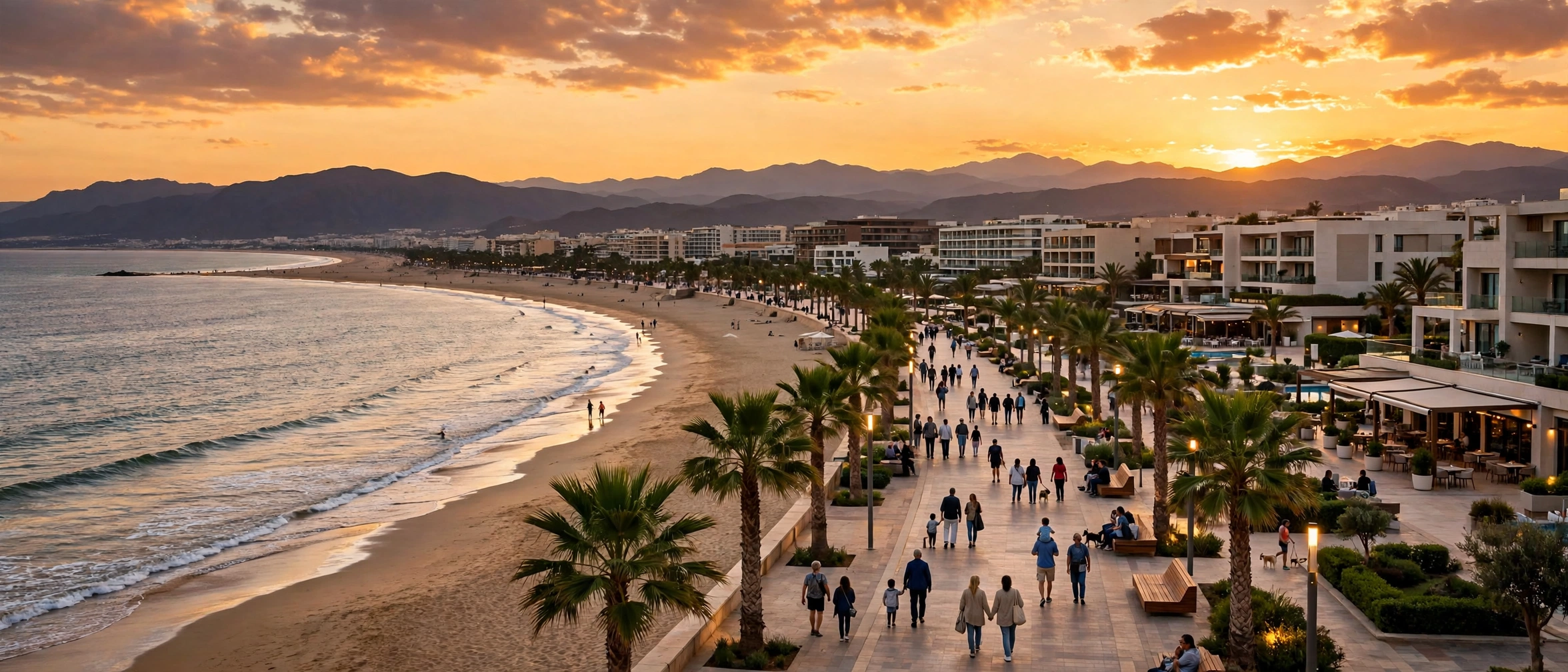
Agadir is Morocco’s great seaside escape: a wide, golden bay, a palm-lined promenade and a relaxed resort atmosphere far from the medinas of Marrakech and Fes. This agadir travel guide covers everything you need to plan a beach holiday here, from the best stretches of sand and the rebuilt Kasbah to the souks, surf towns and day trips within easy reach.
The city is often described as enjoying around 300 days of sunshine a year, and the climate is the main draw. Winters are mild and summers are warm without the fierce inland heat. Agadir is one of the most modern cities in Morocco, rebuilt almost from scratch after a devastating earthquake in 1960 destroyed the old town. That history explains the wide boulevards and modern hotels, and why the hilltop Kasbah carries such weight for locals, as this agadir travel guide will show.
In this guide:
- Why Visit Agadir?
- Best Things to Do in Agadir
- Beaches, Surf and Water Sports
- Where to Stay in Agadir
- Eating in Agadir: Food and Markets
- Day Trips From Agadir
- Practical Guide: Costs, Transport and Tips
- Frequently Asked Questions
Why Visit Agadir? This Agadir Travel Guide Starts With the Beach
Agadir’s greatest asset is its beach. The bay curves for roughly ten kilometres in a gentle crescent of sand, sheltered enough that the water stays calmer than on much of the Atlantic coast. Families swim here, joggers use the promenade at dawn, and camel rides amble along the sand at sunset. It is the kind of beach that rewards doing very little.
Beyond the sand, this agadir travel guide recommends Agadir as a first stop in Morocco. The city is orderly and easy to navigate, the tourist infrastructure is well developed, and English is widely understood in hotels and restaurants. If you are planning a wider trip, this agadir travel guide pairs naturally with our Morocco travel guide for first-time visitors, which covers visas, money, transport and etiquette.
As this agadir travel guide explains, Agadir also suits travellers who want Morocco without the intensity. There is no labyrinthine old medina to get lost in and no constant haggling unless you seek it out at the souk. What you get instead is space, light and sea air, plus a good base for exploring the Souss region, from the Anti-Atlas mountains to the surf villages of the coast.
The Best Things to Do in Agadir
Start with the Kasbah, known as Agadir Oufella. The original fortress was destroyed in the 1960 earthquake, and for decades the hilltop stood as a ruined memorial above the bay. A major restoration rebuilt the walls and reopened the site, and a cable car, the téléphérique, has carried visitors up the hill since 2022. The views from the top are the best in the city, and the Kasbah is the highlight of this agadir travel guide for many visitors. Go late in the afternoon, when the light turns golden and the crowds thin out.
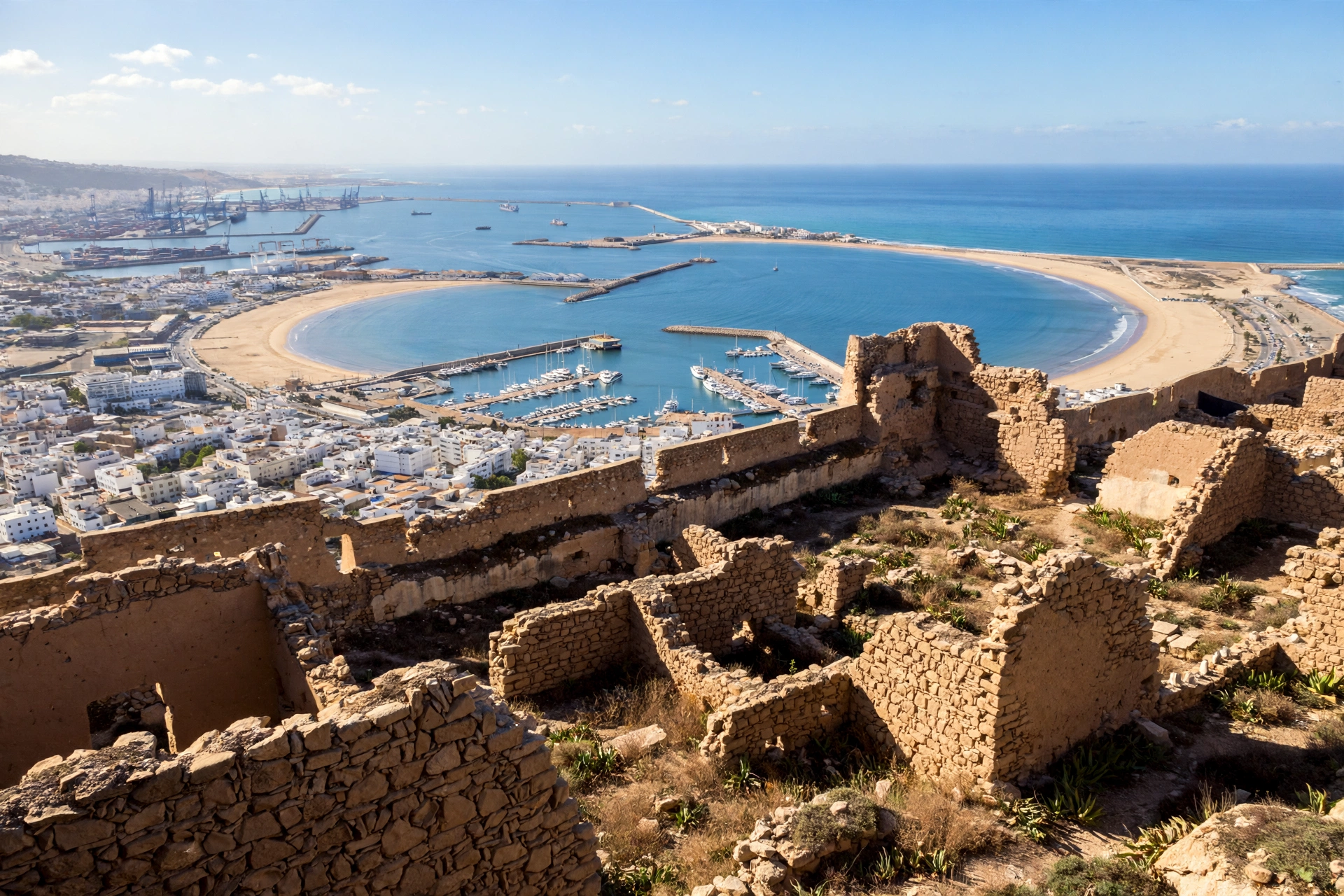
The marina is Agadir’s polished social heart. Stroll past the yachts and sit at a café terrace for lunch. It costs more than the city centre, but it is the most pleasant place in this agadir travel guide for an evening walk. Just south of the marina, the fishing port is a working contrast: trawlers unloading sardines and fishermen mending nets. Agadir is one of the world’s great sardine ports, and the port at dawn is a memorable sight.
For culture, visit the Musée du Patrimoine Amazigh, a small museum of Berber heritage from the Souss region, with jewellery, carpets and everyday objects. Golfers have three well-regarded courses to choose from, including Golf du Soleil and Golf de l’Océan, set among palms and eucalyptus trees.
No agadir travel guide is complete without Souk El Had, one of the largest markets in Morocco, with thousands of stalls selling saffron, argan oil, pottery, leather and fresh produce. It is a working market rather than a tourist show, so prices are fairer than in the imperial cities. It is closed on Mondays, so plan around that.
Agadir Beaches, Surf and Water Sports
The main beach is the obvious star of any agadir travel guide, but the coastline around the city offers much more than one strip of sand. The central beach is long, clean and well serviced, with sunbeds and umbrellas for hire and lifeguards in season. It is ideal for swimming and sunbathing, and the sunsets here are spectacular.
Head north for the surf. Taghazout, about 20 kilometres up the coast, is a former fishing village turned surf hub, with yoga studios and seafood cafés. Anchor Point is the famous reef break for experienced surfers, while gentler breaks nearby suit beginners. Many visitors stay in Taghazout itself, but it also works as a half-day trip, and, as this agadir travel guide notes, surf schools in both towns offer lessons and board rental.
South of the city, the coast grows wilder. The beaches near the Souss river mouth are quieter, popular with kitesurfers when the wind picks up. If you are comparing coastal cities, this agadir travel guide suggests reading our Essaouira travel guide too; it covers Morocco’s other great Atlantic town, a windier and more bohemian alternative to Agadir’s resort calm.
On the water, you can try jet skiing and paddleboarding from the main beach, or book a boat trip from the marina. Camel rides along the sand are a classic Agadir photo opportunity; agree the price and duration before you mount up, and expect roughly 100 to 200 MAD (about $10 to $20) for a short ride. The calmest water is usually in the morning.
Where to Stay in Agadir
Most visitors following this agadir travel guide stay in the tourist zone along the beachfront, where large resort hotels line the corniche, or in the city centre, where smaller hotels and apartments offer better value. The beachfront is the most convenient choice for a beach holiday: you step out of your hotel and onto the sand. Expect to pay roughly 1,200 to 3,000 MAD (about $120 to $300) per night for a good beachfront resort room.
The city centre, a favourite base in this agadir travel guide, suits travellers who prefer to eat out and explore on foot. Mid-range hotels and aparthotels here cost roughly 500 to 1,200 MAD (about $50 to $120) per night, and you are close to the souk and the bus stops for day trips. Budget travellers can find simple hotels and hostels for roughly 250 to 500 MAD (about $25 to $50) per night, and self-catering apartments suit families or longer stays.
For a quieter stay, consider Taghazout to the north or the residential Founty district at the southern end of the bay. Whichever area you choose, book early for the peak winter-sun season from December to February, when European visitors arrive in large numbers. For help timing your trip, see our guide to the best time to visit Morocco.
Eating in Agadir: Food, Markets and Restaurants
Agadir is one of the best places in Morocco to eat fish. The daily catch comes straight off the boats, and the restaurants of the marina and the beachfront serve grilled sardines, sea bass, prawns and calamari at fair prices. A seafood dinner in a mid-range restaurant costs roughly 150 to 300 MAD (about $15 to $30) per person. For the freshest and cheapest fish, follow the locals, as this agadir travel guide recommends, to the small grill restaurants near the port.
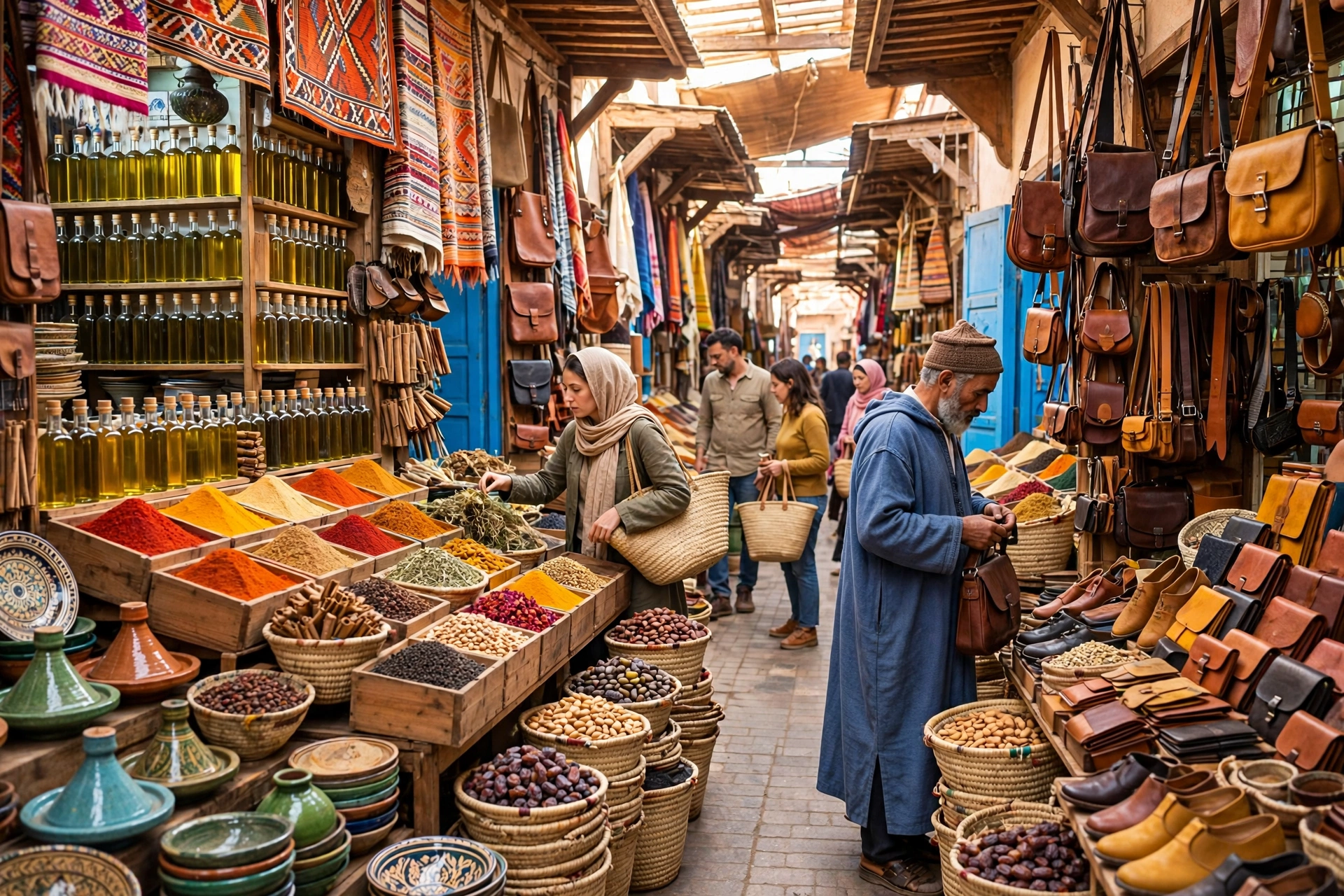
Beyond seafood, Agadir serves the full Moroccan repertoire: tagines, couscous on Fridays, pastilla and harira soup. The Souss region is also the home of argan oil, which you will see everywhere. Buy culinary argan oil from a reputable shop or cooperative rather than from a street tout. Our Marrakech travel guide has more on Moroccan food culture if you are continuing inland.
Everyday eating in Agadir is cheap, and this agadir travel guide prices a filling lunch at a local restaurant at roughly 50 to 100 MAD (about $5 to $10), a coffee at 10 to 20 MAD (about $1 to $2), and a pot of mint tea at 8 to 15 MAD. International restaurants and marina cafés cost more, but the range suits any budget. Vegetarians will find plenty of options, from vegetable tagines to salads and the excellent local bread.
Shopping for food is a pleasure in itself. Souk El Had is the place for spices, saffron, dates, olives and argan products, while city-centre supermarkets stock everything else. Haggle politely, but remember prices are already reasonable; a smile and a fair counter-offer go further than hard bargaining. Keep small notes handy, as small stalls often cannot change large bills.
Day Trips From Agadir
Paradise Valley is the most popular day trip in this agadir travel guide, and it deserves the hype. About 35 kilometres northeast of the city, this palm-filled gorge in the Atlas foothills holds natural rock pools of clear green water. The walk from the road takes around 30 to 45 minutes along a rocky path, so wear proper shoes. Organised tours cost roughly 250 to 400 MAD (about $25 to $40) per person including transport.
Taghazout makes an easy half-day trip if you are not staying there: surf in the morning, lunch on grilled fish, and a slow wander through the village’s colourful lanes. Tamraght and Aourir, south of Taghazout, hold surf camps and guesthouses along the coast road. This agadir travel guide suggests at least half a day there.
South of the city, this agadir travel guide heads to Souss-Massa National Park, a protected coastal reserve famous for its birdlife, including the endangered northern bald ibis. Guided birdwatching trips run from Agadir. Further south, Tiznit is known for silver jewellery and a pink-walled medina, while Sidi Ifni offers a taste of the wilder southern coast. Both work as long day trips, though Sidi Ifni is best enjoyed overnight.
For a bigger adventure, Marrakech is about three hours away by motorway bus, and the contrast is striking: Agadir’s calm Atlantic light against Marrakech’s red walls. If you are combining both cities, our Marrakech travel guide will help you plan the inland half of the trip.
Agadir Practical Guide: Costs, Transport and Tips
Getting to Agadir is straightforward, and this agadir travel guide starts with the airport. Al Massira Airport sits about 25 kilometres southeast of the city, with direct flights from many European cities. A taxi from the airport to the beachfront costs roughly 150 to 250 MAD (about $15 to $25), so agree the fare before you set off.
One thing this agadir travel guide stresses before you plan onward travel: Agadir has no train station. Trains do not reach the city, so the main overland link is by bus to Marrakech, a journey of about three hours, from where trains continue north to Casablanca, Rabat and Fes. The national operator ONCF runs the rail network, and its website is the place to check train times for the Marrakech leg. CTM and Supratours buses are comfortable and reliable.
Inside the city, the orange petit taxis are cheap and plentiful, with fares of roughly 20 to 40 MAD (about $2 to $4) within the centre. Always insist on the meter or agree a price first. Local buses cost only 4 to 5 MAD and cover the main routes, including the coast road to Taghazout. The beachfront and city centre are walkable, and the corniche is a pleasure to stroll.
Agadir is generally considered one of the safest cities in Morocco for tourists, but normal precautions apply: keep valuables out of sight, avoid poorly lit streets late at night, and use official taxis. The best months for sunshine are from March to November, while December to February brings mild temperatures and the biggest crowds. The ocean is cool year-round, usually between 18 and 22 degrees Celsius. Learn more about who we are on our about page.
| Item | Price (MAD) | Approx. USD |
|---|---|---|
| Budget hotel | 250–500 MAD | $25–$50 |
| Mid-range hotel | 500–1,200 MAD | $50–$120 |
| Beachfront resort | 1,200–3,000 MAD | $120–$300 |
| Local lunch | 50–100 MAD | $5–$10 |
| Seafood dinner | 150–300 MAD | $15–$30 |
| Coffee / mint tea | 10–20 MAD / 8–15 MAD | $1–$2 |
| Petit taxi ride | 20–40 MAD | $2–$4 |
| Local bus ride | 4–5 MAD | Under $1 |
| Airport taxi | 150–250 MAD | $15–$25 |
| Kasbah cable car, return | 80–130 MAD | $8–$13 |
| Surf lesson (group) | 250–400 MAD | $25–$40 |
| Camel ride | 100–200 MAD | $10–$20 |
| Paradise Valley tour | 250–400 MAD | $25–$40 |
Prices checked November 2026. Exchange rate used: approximately 10 MAD = 1 USD. Prices vary by season.
Agadir Travel Guide: Frequently Asked Questions
What is the best time to visit Agadir?
The best time to visit Agadir is March to November, when the weather is warm and sunny. Winter, from December to February, is mild and popular with European visitors escaping the cold, but it is also the busiest season.
How many days do you need in Agadir?
Three to four days is enough for the beach, the Kasbah, the souk and one day trip such as Paradise Valley or Taghazout. A full week lets you slow down, take surf lessons and explore the Souss region.
Is Agadir safe for tourists?
Yes, Agadir is generally considered one of the safest cities in Morocco. Use normal precautions: keep valuables out of sight and use official taxis.
What happened to Agadir in 1960?
A devastating earthquake in 1960 destroyed much of the old city, including the original Kasbah, and killed thousands of people. Agadir was rebuilt as a modern city, which is why it looks so different from Morocco’s older medina towns. You can read more on Wikipedia’s Agadir page.
Does Agadir have a train station?
No, Agadir has no train station and no direct rail link. The usual route is by bus to Marrakech, about three hours away, where you can connect to trains for Casablanca, Rabat and Fes.
Agadir or Essaouira: which is better?
Choose Agadir for a calm resort beach, reliable sunshine and modern comforts. Choose Essaouira for a historic medina and a bohemian atmosphere. Many travellers enjoy both, since the two cities are about four hours apart.
Agadir is not the Morocco of postcards and palace courtyards; it is the Morocco of long beaches and unhurried days. Come for the sun, stay for the seafood and the surf, and let this agadir travel guide show you the gentler side of Morocco. That is what this agadir travel guide is about: a city rebuilt from tragedy into one of the warmest welcomes on the Atlantic coast. Plan your trip with our Morocco travel guide for first-time visitors and let the bay do the rest.