
This safi travel guide is for travellers who want the real Morocco, not a polished resort version of it. Safi — Asfi to locals — is a working Atlantic port between Casablanca and Essaouira. It smells of fish, clay dust and salt air. It is Morocco's pottery capital and one of its great sardine ports, a city of around 350,000 people where kilns smoke above the medina and the fishing fleet comes in at dawn.
Come for the pottery, the Portuguese stone, and a lived-in medina. Safi rewards a day or two of slow walking, and it makes a natural stop on any Atlantic coast drive. This safi travel guide gives you the honest version: what is worth your time, what costs what, and what to skip.
In this guide
- Why Visit Safi?
- Safi at a Glance
- Getting to Safi
- Getting Around Safi
- Top Sights in Safi
- Safi Pottery: Workshops and Buying
- Where to Eat in Safi
- Where to Stay in Safi
- Day Trips from Safi
- Practical Tips for Visiting Safi
- Best Time to Visit Safi
- A Sample 1-Day Itinerary for Safi
- How Much Does Safi Cost?
- FAQs: Your Safi Travel Guide Questions Answered
- Final Thoughts
Why Visit Safi?
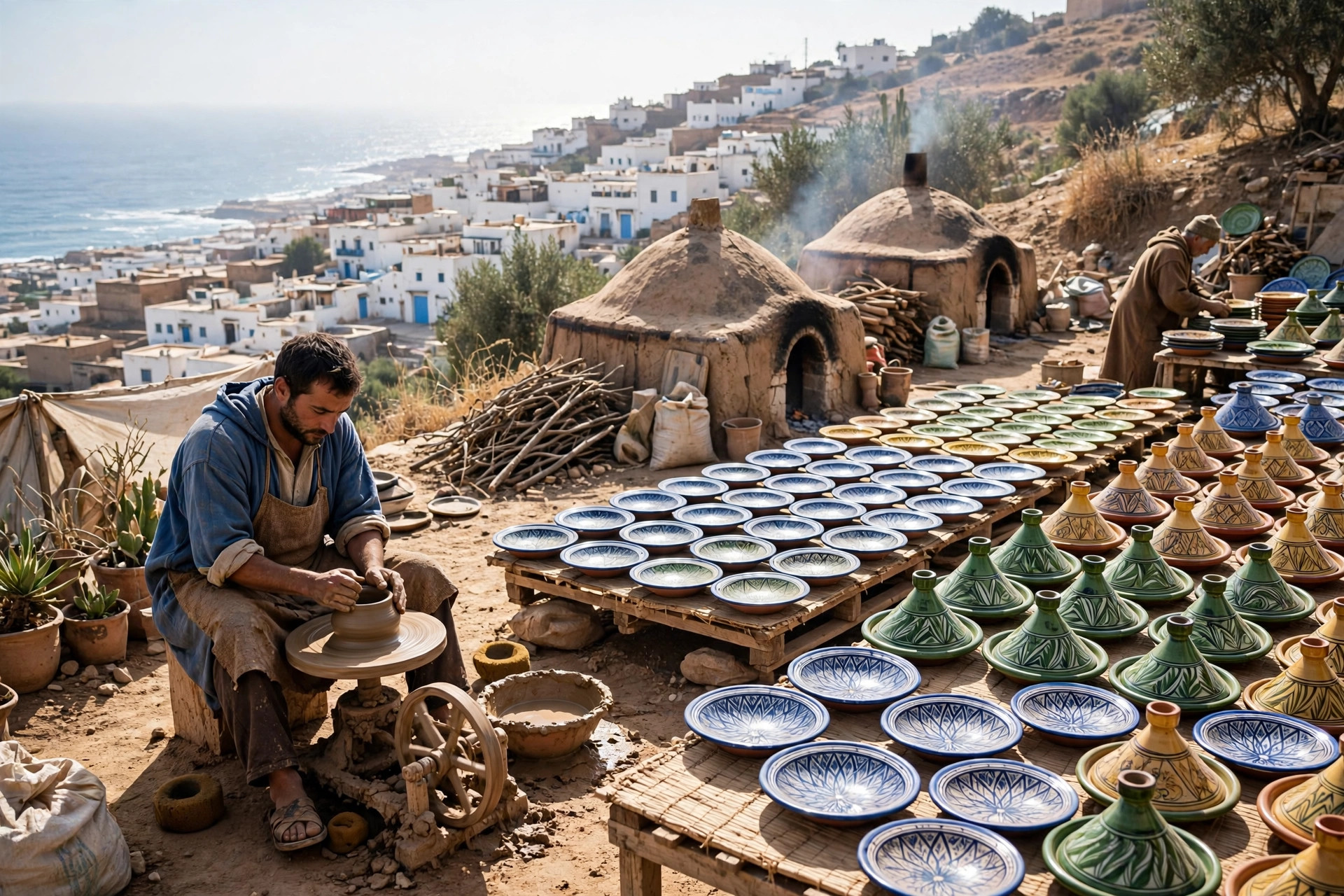
Safi is worth visiting for one reason above all: it is still making things. On the Colline des Potiers above the medina, dozens of workshops throw, paint, glaze and fire pottery in the open air. You can watch a plate take shape on a wheel and buy directly from the person who made it. Nowhere else in Morocco gives you that access so easily or so cheaply.
The history is real, too. The Portuguese held Safi from 1488 to 1541 — a trading post first, then a fortified stronghold from 1508 — and left a sea castle, a hilltop fortress and the roofless shell of a cathedral that was never finished. The medina between them is compact and busy. Safi also gives you space and quiet, with thin tourist infrastructure and an industrial edge that is part of the view. Safi's exact founding date is unsettled, and claims of a Phoenician presence here remain unproven — the documented story begins with the medieval port and the Portuguese period.
Safi at a Glance
| Fact | Detail |
|---|---|
| Location | Atlantic coast, ~240 km south of Casablanca, ~130 km north of Essaouira |
| Population | Roughly 350,000 (2024 census: about 346,000) |
| Local name | Asfi (from an Amazigh word often explained as "to overflow", a nod to the tides) |
| Known for | Pottery and ceramics, sardines and fishing, Portuguese-era fortresses |
| Best for | Half a day to 2 days; pottery, photography, a coast stop |
| Language | Arabic and French; limited English outside hotels |
| Currency | Moroccan dirham (MAD); about 10 MAD ≈ $1 (checked November 2026) |
Getting to Safi
By train
Safi's station, Gare de Safi, sits on a branch line joining the main line at Benguerir. This is the slow way in. ONCF runs at least one direct train a day from Casablanca to Safi, taking around 4 hours 20 minutes; other journeys change at Benguerir and take 4–5 hours. Fares run about 120–250 MAD ($12–25). From Marrakech, allow 3–4 hours via Benguerir; the Benguerir–Safi leg takes about 2 hours and costs around 55–110 MAD ($5.50–11). Services are infrequent, so check the ONCF website before you travel — and do not build a tight onward connection on a Safi train.
By bus
For most travellers, the bus is the practical choice: CTM runs Casablanca–Safi in about 3 hours 45 minutes, fares around 160–240 MAD ($16–24). There are regular departures from Marrakech (about 2.5 hours) and Essaouira (about 2 hours).
By car
Driving is the best way to see this coast. From Casablanca: motorway south past El Jadida, then the coastal road — about 240 km, roughly 3 hours. From Marrakech: about 160 km, 2.5 hours via Benguerir. From Essaouira: about 130 km, 2 hours. Fuel costs roughly 13–15 MAD ($1.30–1.50) per litre — confirm on arrival.
Getting Around Safi
Everything worth seeing sits in or just above the medina, so walk: this safi travel guide recommends it as your main transport. The medina, the sea castle, the port and the potters' hill are all within about 1.5 km of each other. The climb to the Kechla and the potters' hill is steep and dusty, so wear shoes with grip.
Top Sights in Safi
The Kechla Fortress and the National Ceramics Museum
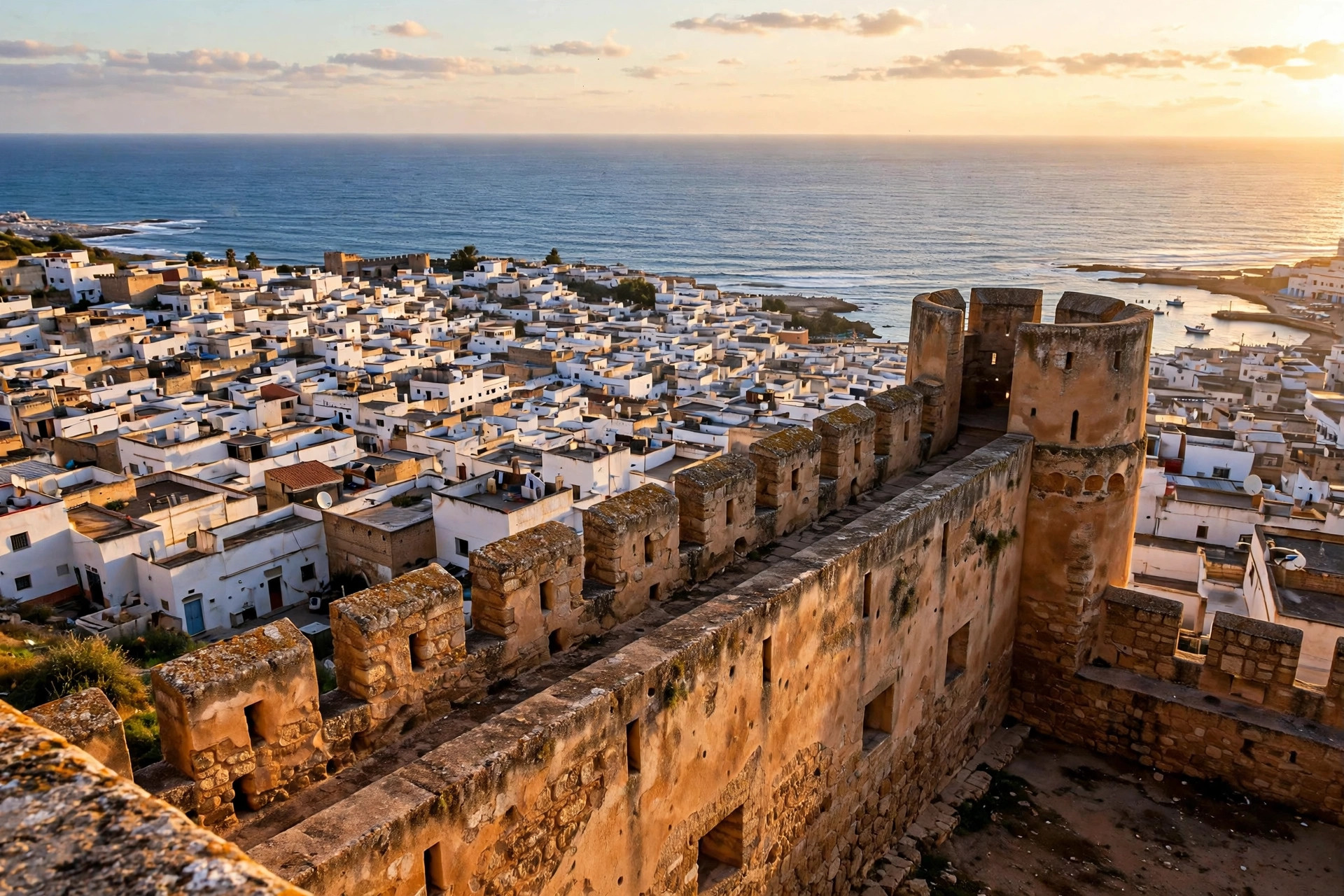
Start uphill, at the Kechla. Built by the Portuguese about 1508–1514 as the land castle, its walls still carry the carved coat of arms of King Manuel I. Later a prison until 1990, it now houses the National Museum of Ceramics, gathering Safi's finest cobalt, green and ochre glazed work. The rooftop terrace is the highlight, with views over the medina, the harbour and the Atlantic. Entry is around 20 MAD ($2); hours are roughly 9:00–16:30, closed one day a week — check locally.
Dar el-Bahar: the Sea Castle
Below the medina, right on the shore, stands the compact square sea castle the Portuguese built in the early 1500s to guard the harbour — Ksar el-Bahr, or Dar el-Bahar, the House of the Sea. Smaller than the Kechla, it has rounded towers, an artillery platform and old cannons pointing out to sea. Walk here at sunset. There is little interpretation on site, so bring this safi travel guide with you.
The Medina and the Portuguese Cathedral Ruins
Safi's medina is compact and genuinely lived in. Its main artery, Rue du Souq, runs from Bab Lamaasa to Bab Chaaba, lined with ceramics, textile, spice and gold shops. Wander and let the lanes lead you. Inside the medina stand the roofless remains of the Portuguese cathedral, begun in 1519 and never completed; only a vaulted chapel and part of the choir survived 1541.
The Potters' Hill (Colline des Potiers)
This is the reason most people come, and the heart of this safi travel guide. On the slope beside the Bab Chaaba gate, dozens of workshops turn, glaze and fire pottery more or less in the open air. You will see clay thrown on foot-powered wheels, painters applying geometric patterns freehand, and pieces drying beside domed wood-fired kilns. Stand back, ask before photographing anyone closely, and treat a small purchase as thanks for their time.
The Sardine Port and Fish Market
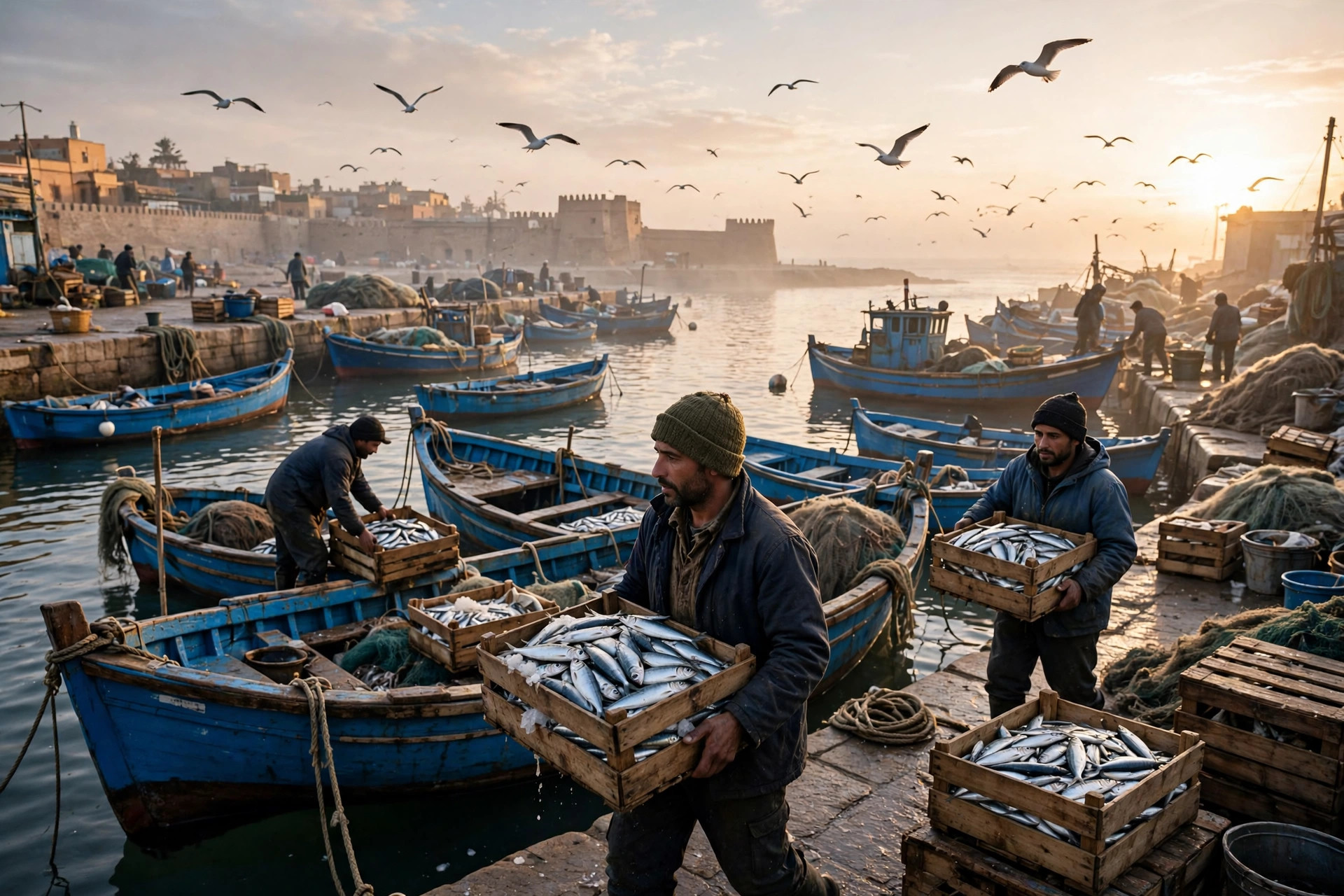
Safi is Morocco's leading sardine port, and the working harbour is the city's engine. Go at dawn, when the blue sardine boats unload and crates of fish move along the quay. It smells strongly of fish — that is the point. The fish market sells the morning catch; some stalls grill your fish on the spot for a few dirhams.
Beaches: Lalla Fatna and Sidi Bouzid
Safi's coast is dramatic rather than gentle: reddish cliffs, big Atlantic swell and long empty sand. Lalla Fatna beach, about 15 km north, is a well-known surf break sheltered by clay cliffs. About 4 km north, the whitewashed marabout of Sidi Bouzid sits on a cliff at roughly 120 m, with a terrace over the city and port. Come for sunset, and bring a jacket: the Atlantic wind is constant.
Safi Pottery: Workshops and Buying
Safi pottery is recognisable at a glance: deep cobalt blue, greens and ochre, often with metallic glazes. The craft became a serious local industry in the early twentieth century. Buy on the hill, not in a hotel shop: workshops sell directly, far cheaper than in Marrakech.
Checked November 2026: a small plate runs 30–80 MAD ($3–8), a medium plate or bowl 80–200 MAD ($8–20), a tagine 100–250 MAD ($10–25), a large vase 300–800 MAD ($30–80). These are starting prices before bargaining — confirm on arrival. Bargain gently, starting at roughly half the asking price. Check the piece before paying: hold it to the light, look for cracks, and make sure decoration sits under the glaze. That is the honest advice any safi travel guide should give you.
Where to Eat in Safi
Eat sardines: Safi is one of the world's great sardine ports, and the fish is impossibly fresh — grilled over charcoal with bread, cumin and salt, 15–30 MAD ($1.50–3) at a grill near the port. It is one of the best-value meals in Morocco, and the first thing this safi travel guide tells any visitor to try. The medina's fish souk offers the full experience: choose your fish, pay by weight, and have it grilled on the spot. Beyond sardines, try grilled sea bass, calamari, and fish tajines served in local ceramics. A full seafood lunch runs 60–120 MAD ($6–12) per person; mint tea and orange juice cost 8–15 MAD ($0.80–1.50).
Where to Stay in Safi
Safi has no luxury riad scene — just clean, modest hotels and a few guesthouses, mostly in the new town near the medina. Budget rooms run 200–350 MAD ($20–35) a night, mid-range 400–700 MAD ($40–70), sea-view hotels 700–1,200 MAD ($70–120). Prices are approximate, checked November 2026. One night is enough for most; two lets you slow down and eat sardines twice — the verdict of this safi travel guide.
Day Trips from Safi
Oualidia, about 60 km south
An hour south, Oualidia is a calm lagoon town famous for oysters, birdlife and gentle swimming — the beach Safi does not have. Pottery in the morning, lagoon oysters in the afternoon. For the next stop south, see our Essaouira travel guide.
Jebel Irhoud, about 50 km southeast
Fossils found at Jebel Irhoud, dated to roughly 300,000 years ago, are among the oldest known remains of early Homo sapiens. The site is an active dig, not a tourist attraction — check locally before any visit.
El Jadida, about 100 km north
El Jadida's Portuguese fortified city is a UNESCO site, famous for its underground cistern — a good stop en route to Casablanca. See our Morocco travel guide and Casablanca travel guide.
Practical Tips for Visiting Safi
Dress modestly in the medina and near mosques: shoulders and knees covered. French goes further than English; a few words of Darija — shukran, shhal? — go a long way. Cash is king: carry small notes, as many stalls do not take cards. The phosphate complex south of town can smell on some days, depending on the wind. Tap water is not recommended; bottled water costs 5–7 MAD ($0.50–0.70). Ask before photographing people at work — a good safi travel guide tells you this plainly, because this safi travel guide is meant to save you a frustrating day.
Best Time to Visit Safi
Spring (March–May) and autumn (September–November) are the sweet spot in this safi travel guide: daytime temperatures around 20–26°C, the Atlantic wind manageable, and the pottery workshops in full production. Summer is warm, 26–32°C, but the medina is dusty. Winter is mild, 15–20°C, with big swells — atmospheric and cheapest for hotels. Surfers: autumn brings the best swells at Lalla Fatna, which is why this safi travel guide rates autumn first for surfers.
A Sample 1-Day Itinerary for Safi
8:00 — Dawn at the port. Watch the boats unload, then breakfast in the medina (20–30 MAD, $2–3). 9:30 — The Kechla and the ceramics museum. Climb to the fortress and museum. 11:00 — The potters' hill. Watch the wheels and kilns, and buy your pieces. 13:00 — Lunch at the port. Grilled sardines (40–70 MAD, $4–7). 14:30 — Dar el-Bahar and the medina. Walk the sea castle, then wander Rue du Souq. 17:00 — Sidi Bouzid. Take a taxi to the viewpoint for sunset. 19:30 — Dinner. A fish tajine, then an early night — or the road to Oualidia. This is the one-day plan this safi travel guide recommends most.
How Much Does Safi Cost?
Prices in dirhams (MAD), about 10 MAD ≈ $1. Checked November 2026; confirm on arrival. This safi travel guide lists only the numbers that matter.
| Item | Typical price |
|---|---|
| Budget hotel (double room, 1 night) | 200–350 MAD ($20–35) |
| Mid-range hotel (double room, 1 night) | 400–700 MAD ($40–70) |
| Grilled sardines at a port grill | 15–30 MAD ($1.50–3) |
| Seafood lunch per person | 60–120 MAD ($6–12) |
| Small hand-painted plate | 30–80 MAD ($3–8) |
| Bus Casablanca–Safi (CTM) | 160–240 MAD ($16–24) |
| Daily budget (modest traveller) | 350–600 MAD ($35–60) |
FAQs: Your Safi Travel Guide Questions Answered
Is Safi worth visiting?
Yes — for the right traveller. This safi travel guide recommends it for authentic Morocco: a working medina, the pottery capital in full production, and Portuguese fortresses without crowds. For luxury hotels and nightlife, go to Essaouira instead.
How many days do you need in Safi?
One full day covers the medina, fortresses, potters' hill and port. Two days adds a beach afternoon and a day trip to Oualidia.
Is Safi safe for tourists?
Generally safe, and calmer than Morocco's big tourist cities.
Can you visit Safi as a day trip from Marrakech?
Yes, but it is a long day: 2.5 hours each way, leaving 5–6 hours in the city. Focus on the potters' hill, the Kechla and the port — this safi travel guide's three picks for one day.
What should you buy in Safi?
Pottery: hand-painted plates, bowls, tagines and tiles from the workshops on the potters' hill. Check for cracks and bargain gently.
When is the best time to visit Safi?
Spring and autumn (March–May, September–November): 20–26°C, workshops busy — the same answer this safi travel guide gives above.
Final Thoughts
Safi does not try to impress you, and that is its charm. It is a working port where potters still fire clay in domed kilns, fishermen still unload sardines at dawn, and five-hundred-year-old Portuguese stone still stands guard over the Atlantic. Come with modest expectations, buy a plate from the person who threw it, eat sardines at a port grill, and watch the sun set from Sidi Bouzid. This safi travel guide has given you the practical details; the city will supply the rest. Take the coast road when you leave — south to Oualidia and Essaouira, or north to El Jadida and Casablanca — because, as this safi travel guide keeps saying, Safi makes the most sense as part of Morocco's Atlantic story.