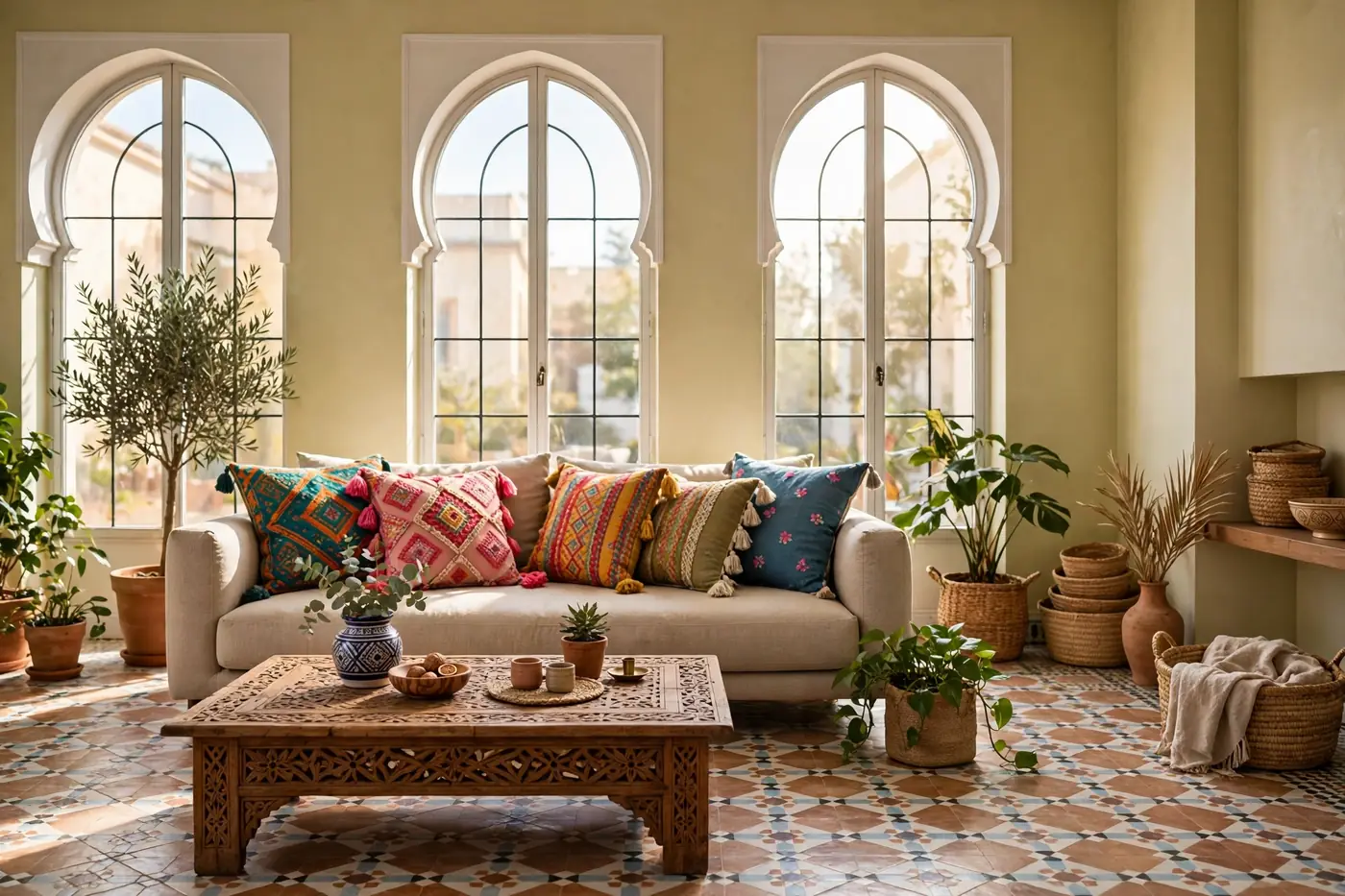
Renting an apartment in Morocco as an expat is nothing like renting in Paris, London or New York — and the first thing most newcomers learn is that the flat they want probably is not on any website. If you are renting apartment morocco expat style, meaning you arrive from abroad with a foreign salary and a foreign idea of how a rental market works, the rules you know will mislead you at almost every step. The best flats move by word of mouth, the deposit is not what you think, and “unfurnished” can mean a flat with no fridge, no cooker and sometimes no light fittings at all.
I am Moroccan, and I have watched friends, colleagues and foreign neighbours make the same expensive mistakes for years: paying a year’s rent in advance for a flat they had not properly inspected, signing a contract that was never registered, or discovering in August that their “furnished” flat had no air conditioning. This guide is the honest version, written from the inside, with real prices checked in November 2026.
The good news is that renting in Morocco is genuinely affordable by European or North American standards, and once you understand the system — the semsar, the avance, the bail — it is straightforward. A comfortable one-bedroom flat in a good neighbourhood costs roughly 4,000–8,000 MAD ($400–$800) a month in most cities, and half that again in the cheaper ones. Read this guide before you hand over any money, and you will rent well.
- How Renting Works in Morocco: The Short Version
- Renting Apartment Morocco Expat: What the Listing Sites Don’t Show You
- Prices: What Rent Actually Costs in 2026
- Furnished vs Unfurnished: The Empty-Kitchen Surprise
- Deposits, Avance and Agency Fees: What You Pay Before the Keys
- The Contract (Bail): What It Must Contain
- Neighbourhoods: Where to Live in Each City
- Traps to Avoid: The Checklist Every Newcomer Needs
- Frequently Asked Questions
- Conclusion
How Renting Works in Morocco: The Short Version
Morocco has no single national rental platform that everyone uses, no standardised tenancy agreement in English, and no deposit protection scheme. Renting is a personal, negotiated business between you, the landlord and usually a middleman. That sounds chaotic, but it has a logic, and once you know the three people in the room — the owner (le propriétaire), the semsar (the neighbourhood broker) and you — the process makes sense.
Most rentals are for one year, renewable, and most landlords prefer a tenant who will stay. Rent is usually paid monthly, in cash or by bank transfer, and the month is normally paid in advance. Unlike in much of Europe, there is no legal cap on rents in the private market, so the price is whatever the two sides agree — which is why knowing the real range for a neighbourhood matters more here than anywhere else.
Your rental contract, the bail or contrat de location, matters far beyond the flat itself. You will need a registered copy for your residence permit, the carte de séjour, so never treat the contract as a formality. Our guide to Moving to Morocco: Visas, the Carte de Séjour and Residency explains exactly which documents the prefecture asks for, and the rental contract sits at the top of that list. If you are still choosing a city, read our Best Places to Live in Morocco first — rent is the single biggest difference between Moroccan cities, and it decides your whole budget.
One more thing to settle early: the language of the deal. Contracts are written in French or Arabic, and negotiations happen in French, Darija or a mix of both. If your French is weak, bring a trusted bilingual friend to viewings and to the signing. Google Translate is not a legal adviser, and a clause you did not understand is still a clause you signed.
Renting Apartment Morocco Expat: What the Listing Sites Don’t Show You
Here is the insider correction that changes everything about renting apartment morocco expat searches: the best flats in Morocco almost never reach the listing sites. Websites like Avito and Mubawab exist and are worth checking, but they carry the flats that could not be rented by word of mouth — the overpriced ones, the awkward ones, the ones with a problem the photos hide. The good flat in a good building is usually gone before it is ever advertised.
The real market runs through the semsar. A semsar is a neighbourhood broker, usually a man with a small office or a chair in a café, who knows every building on his streets: who is moving out, whose son is studying abroad, which landlord is reasonable and which one raises the rent every year. Semsars are not estate agents in the Western sense. They have no website, no listings board and no licence on the wall. They have memory, relationships and a phone full of numbers.
To find one, walk the neighbourhood you like and ask. Ask in cafés, in the hanout (the corner shop), at the pharmacy. “Je cherche un appartement à louer ici — vous connaissez un semsar ?” will get you further in an afternoon than a week of scrolling. A good semsar will show you three or four flats in a day and will tell you honestly which landlord is difficult. His fee is normally one month’s rent, paid by the tenant, and it is negotiable — offer half a month first, especially if you are taking a flat quickly.
Facebook groups are the second channel, and they are genuinely useful for foreigners: search for “Location appartement Casablanca”, “Appartement à louer Rabat” or the equivalent for your city, and join the groups with thousands of members. You will find flats posted by owners directly, which means no agency fee, and you will see the real asking prices. But be careful: Facebook is also where the scams live. Never send money before you have stood inside the flat, met the owner, and seen the title deed (titre foncier) or at least a recent utility bill in the owner’s name.
The third channel is simply being there. In Morocco, a “À louer” sign in a window, a word from a neighbour, a conversation in a café — these still rent more flats than the internet does. If you can, spend your first two weeks in a short-term rental or a riad and search on foot. The flat you find that way will usually be cheaper and better than anything you booked from abroad.
Prices: What Rent Actually Costs in 2026
Rent in Morocco is decided by three things: city, neighbourhood and whether the flat is furnished. A one-bedroom in central Casablanca can cost three times what the same flat costs in Fes, and a furnished flat in Guéliz, Marrakech, can cost double its unfurnished twin in the same street. The table below gives honest ranges for a decent flat in a good-but-not-luxury neighbourhood, checked November 2026 at roughly 10 MAD to $1. Prices are monthly rent, excluding utilities unless stated.
| City | Studio | 1-bedroom | 2-bedroom | 3-bedroom |
|---|---|---|---|---|
| Casablanca (Maârif, Gauthier, Bourgogne) | 4,500–7,000 MAD ($450–$700) | 6,000–10,000 MAD ($600–$1,000) | 8,000–14,000 MAD ($800–$1,400) | 12,000–20,000 MAD ($1,200–$2,000) |
| Rabat (Agdal, Hay Riad, Centre-ville) | 4,000–6,500 MAD ($400–$650) | 5,500–9,000 MAD ($550–$900) | 7,500–12,000 MAD ($750–$1,200) | 10,000–16,000 MAD ($1,000–$1,600) |
| Marrakech (Guéliz, Hivernage, Targa) | 3,500–6,000 MAD ($350–$600) | 5,000–8,000 MAD ($500–$800) | 6,500–11,000 MAD ($650–$1,100) | 9,000–15,000 MAD ($900–$1,500) |
| Tangier (Centre-ville, Malabata, California) | 3,000–5,500 MAD ($300–$550) | 4,500–7,500 MAD ($450–$750) | 6,000–10,000 MAD ($600–$1,000) | 8,000–13,000 MAD ($800–$1,300) |
| Agadir (Hay Essalam, Cité Founty, centre) | 3,000–5,000 MAD ($300–$500) | 4,000–7,000 MAD ($400–$700) | 5,500–9,000 MAD ($550–$900) | 7,500–12,000 MAD ($750–$1,200) |
| Fes (Ville nouvelle, centre) | 2,500–4,500 MAD ($250–$450) | 3,500–6,000 MAD ($350–$600) | 4,500–8,000 MAD ($450–$800) | 6,000–10,000 MAD ($600–$1,000) |
A few things the table does not show. Furnished flats add roughly 30–50% to the unfurnished price, and a flat with a sea view, a pool or a doorman (gardien) in a modern residence can add another 20–30%. Long-stay discounts are real: a landlord who knows you will stay a year or two will often accept 10–15% less than the asking price, especially outside the summer season. And the medina is a different market entirely: a restored riad or dar in the old city can cost anything from 5,000 MAD to 30,000 MAD depending on size and condition, and damp, noise and access make it a lifestyle choice rather than a bargain.
Utilities are usually extra. Budget 300–800 MAD ($30–$80) a month for electricity and water in a one-bedroom, more in summer if you run air conditioning all day. In many buildings the gardien and cleaning of common areas cost 100–300 MAD ($10–$30) a month, sometimes included in the rent and sometimes charged separately — ask before you sign, not after. For the full monthly picture, including food, transport and healthcare, see our Cost of Living in Morocco in 2026 guide, which builds a complete budget around these rents.
Negotiation is expected, and it is not rude. Offer 10–20% below the asking price, politely and with a reason: you will stay a year, you will pay on time, you will look after the flat. Landlords in Morocco value a quiet, reliable tenant more than a slightly higher rent from someone who might leave in three months. But do not negotiate so hard that you poison the relationship — you will need this landlord’s signature on your residence paperwork, and you will need him to answer the phone when the water heater breaks.
Furnished vs Unfurnished: The Empty-Kitchen Surprise
This is the surprise that catches almost every newcomer, so read it twice: in Morocco, an unfurnished flat (vide) often means no kitchen appliances at all. No fridge, no cooker, no washing machine — and in the cheapest flats, no light fittings, no curtains and sometimes not even a sink tap you would want to use. The flat is a shell. You buy everything, and you take it with you when you leave.
A furnished flat (meublé) solves that, but it creates a different problem: the furniture is the landlord’s, it is usually old, and you will be charged for any damage. Inspect every item before you sign and photograph it. Open the fridge, run the washing machine, sit on every chair, test every socket. If the inventory (état des lieux) lists “one sofa, good condition” and the sofa is falling apart, write that down. The inventory is your only defence when you move out and the landlord looks for a reason to keep your deposit.
Which should you choose? If you are staying three to six months, take furnished — buying a fridge for a short stay is false economy. If you are staying a year or more, unfurnished is usually cheaper over the whole stay, and you get to live with furniture you actually chose. Many long-stay expats take an unfurnished flat and buy second-hand appliances from Avito or from departing foreigners: a decent fridge costs 1,500–3,000 MAD ($150–$300) second-hand, a washing machine 1,000–2,500 MAD ($100–$250), a gas cooker 800–2,000 MAD ($80–$200). Budget 5,000–10,000 MAD ($500–$1,000) to equip a one-bedroom from empty.
One more warning about furnished flats: check the air conditioning. Marrakech in July and August is brutally hot, and a flat advertised as furnished with “climatisation” may have one old unit in the living room and nothing in the bedroom. Test it on a hot afternoon, not at 10 a.m. in November. And check the water pressure and the hot water: turn on the shower, run the kitchen tap at the same time, and ask the neighbours whether the building has water cuts in summer. These five minutes of testing save months of regret.
Deposits, Avance and Agency Fees: What You Pay Before the Keys
Before you get the keys, you will be asked for money — often a lot of it, all at once. Understanding the three payments in advance is what separates a smooth move from an expensive shock. For anyone renting apartment morocco expat newcomers, this is the part of the process where most money is lost, so take it slowly and get everything in writing.
The deposit (caution) is usually one to two months’ rent, sometimes three for a furnished flat or a landlord who has been burned before. There is no deposit protection scheme in Morocco, so your deposit sits in the landlord’s bank account, and getting it back depends entirely on the landlord’s goodwill and the inventory you signed at the start. This is why the état des lieux matters so much: photograph everything, note every scratch, and keep a copy signed by both sides.
The avance is different: it is advance rent, usually one to three months paid up front, on top of the deposit. A landlord asking for three months’ avance plus two months’ deposit is asking for five months’ rent before you move in — 25,000–50,000 MAD ($2,500–$5,000) on a 5,000–10,000 MAD flat. That is common, but it is negotiable, and it should make you careful. Pay by bank transfer, never in cash without a signed receipt, and never pay anything before you have the signed contract in your hand. A landlord who wants the money before the paperwork is a landlord to walk away from.
The agency fee (commission) is normally one month’s rent if a semsar or agency found the flat, and it is paid by the tenant in most cases. Negotiate it: half a month is a fair result, and if the semsar found you the flat in a day, say so. If you found the flat yourself through Facebook or a sign in a window, there is no fee at all. Get a receipt for the fee, and confirm in writing whether it covers anything else — it should not.
Add it up before you commit. On a 6,000 MAD ($600) flat, a typical first payment is 6,000 MAD deposit plus 12,000 MAD avance (two months) plus 6,000 MAD agency fee — 24,000 MAD ($2,400) before you have slept a single night there. Keep a cash reserve of at least one more month’s rent after that for appliances, the gardien, and the small disasters of the first week. If a landlord demands a full year in advance, be very cautious: it happens, but it should come with a registered contract, a steep discount, and a landlord you have verified thoroughly.

The Contract (Bail): What It Must Contain
The bail, or contrat de location, is the document that makes your stay legal. Without a registered contract, you cannot get a carte de séjour, you cannot prove your address to a bank, and you have almost no protection if the landlord changes the locks or doubles the rent. Never rent without one, and never accept “we don’t need a contract, we trust each other” — trust is lovely, but the prefecture does not accept it as a document.
A proper contract should be in French or Arabic, signed by both parties, and registered (enregistré) at the tax office — the registration costs a small fee and is normally the landlord’s job, but confirm who pays it. It should state the full names and identity numbers of both sides, the exact address of the flat, the monthly rent in dirhams, the date rent is due, the deposit amount, the duration of the lease and the notice period for ending it, and who pays for what: utilities, building charges, the gardien, and repairs.
Repairs deserve a clause of their own. The usual Moroccan practice is that the tenant pays for small, everyday repairs and the landlord pays for structural problems and broken appliances that belong to the flat. Get that in writing, with examples, because “small repair” is exactly the phrase landlords and tenants argue about. If the water heater dies in January, you want the contract to say whose problem it is before it happens, not after.
Read the notice and renewal clauses carefully. A one-year contract that renews automatically is common, but some contracts require you to give notice three months before the end or lose your deposit. Some landlords insert a clause allowing them to raise the rent every year by a fixed percentage — 5% is common, 10% is aggressive, and anything above that should be negotiated down or removed. If the contract is in Arabic and you cannot read it, have it translated before you sign, not after.
Keep your copy safe, and keep the registration receipt with it. You will need both for your residency file, and you will need them again if anything goes wrong. Photograph every page and store the photos somewhere other than your phone. For the full residency picture, our Living in Morocco: The Complete Guide for Expats explains how the contract fits into the wider move, and the Digital Nomad Guide to Morocco covers the same ground for remote workers who rent for a few months at a time.
Neighbourhoods: Where to Live in Each City
Morocco is not one rental market, it is six or seven of them, and the right neighbourhood matters more than the right flat. A beautiful flat in the wrong district will make you miserable; a modest flat in the right one will make you happy. Here is the honest map, city by city, for anyone renting apartment morocco expat life in 2026.
Casablanca is the biggest, busiest and most expensive market. Maârif and Gauthier are the expat favourites: cafés, restaurants, gyms, and flats in modern buildings — and the highest rents in the country. Bourgogne and Anfa are quieter and greener, popular with families. If your budget is tighter, look at Ain Diab for the seafront, or the newer districts around Casa Finance City. Avoid the very cheapest listings in the old centre unless you have seen the building: some are fine, some are not, and the photos will not tell you which.
Rabat is the calm, green capital, and the easiest city for a first stay. Agdal is the classic expat district — wide streets, cafés, embassies nearby — and Hay Riad is newer, quieter and popular with families and diplomats. The centre-ville (around Avenue Mohammed V) is cheaper and livelier but noisier. Rabat’s rents are 10–20% below Casablanca for the same quality, and the city is walkable, which matters more than you think.
Marrakech splits in two: the medina and Guéliz. The medina is magical and maddening in equal measure — beautiful riads, but damp in winter, noisy, and hard to reach by car. Guéliz and Hivernage are the practical choice: modern flats, air conditioning, cafés and supermarkets, and the rents in the table above. Targa and the Palmeraie are quieter and greener, good if you have a car. Summer heat is the real test: visit a flat in the afternoon and check the air conditioning before you fall in love with the terrace.
Tangier is the rising city: fast, international, and still cheaper than Casablanca. The centre-ville around the boulevard is lively and convenient; Malabata and the California district are newer and quieter, with sea views and modern residences. Tangier’s ferry to Spain makes it popular with people who want Europe an hour away, and rents have been climbing — lock in a longer contract if you find a good price.
Agadir is the relaxed, sunny choice, rebuilt after the 1960 earthquake, so its flats are mostly modern. Hay Essalam and Cité Founty are the expat favourites, close to the beach and the cafés, and the city is flat and easy to cycle. Agadir is also one of the best-value cities on this list: a good one-bedroom near the beach costs what a studio costs in Casablanca. Fes is the cheapest of the big cities and the most traditional: the ville nouvelle has solid, affordable flats, while the medina — the largest car-free urban area in the world — is a world of its own, best rented only after you have lived in the city for a while and understand what you are choosing.
Traps to Avoid: The Checklist Every Newcomer Needs
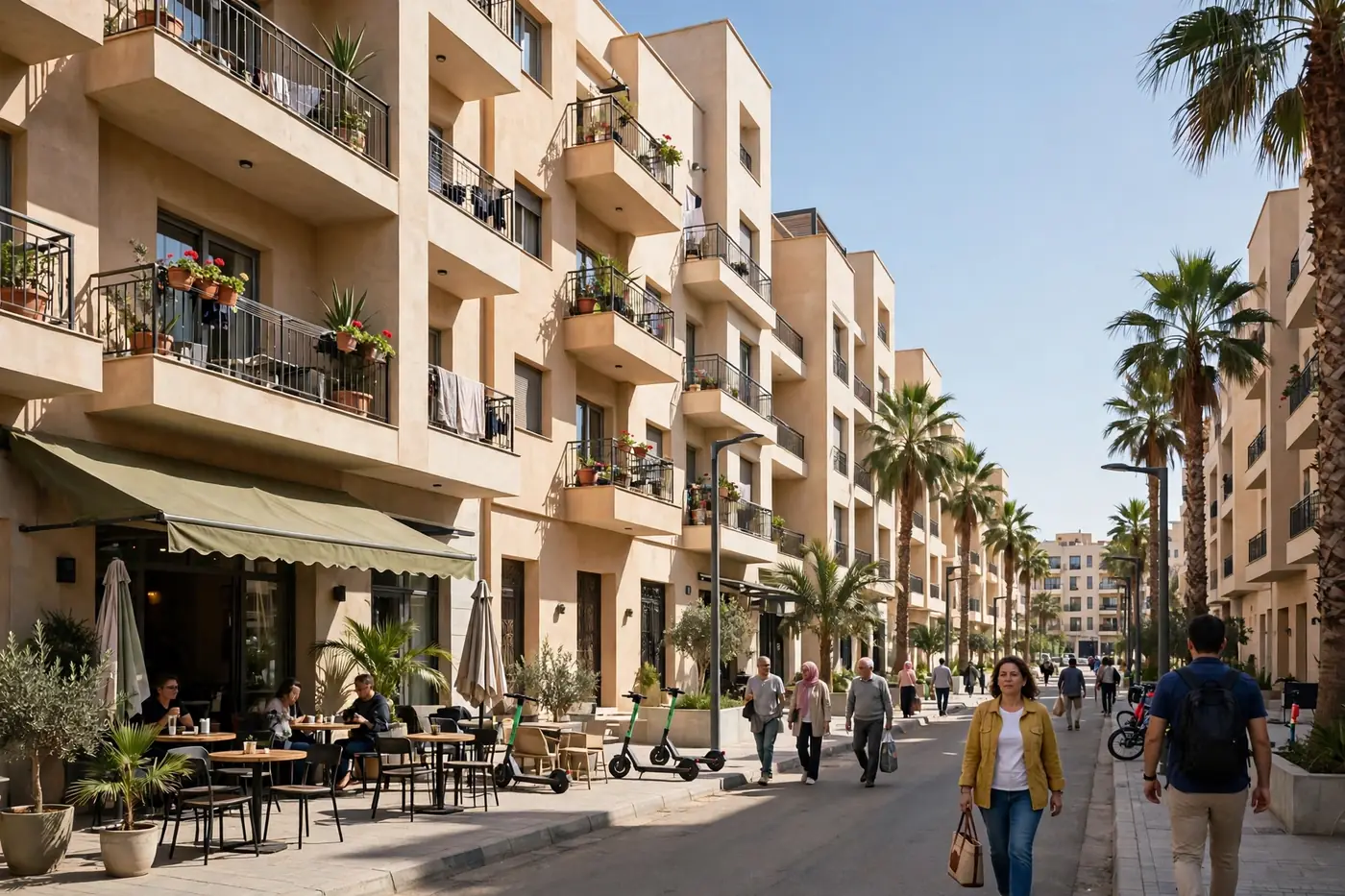
Most rental problems in Morocco are not scams in the criminal sense; they are misunderstandings, rushed decisions and missing paperwork. This checklist covers the traps that catch newcomers most often, and it is worth reading twice before you hand over any money.
First, never pay before you have seen the flat in person, met the owner, and seen proof that they own it. A title deed, a recent tax bill or a utility bill in the owner’s name is the minimum. If the person showing you the flat cannot prove they own it or represent the owner, walk away.
Second, never rent a flat you have only seen in photographs. Photos in Morocco are generous: they hide the damp patch, the noisy bar downstairs, the building site next door and the staircase with no light. Visit at two different times of day, and visit on a weekday evening when the neighbours are home.
Third, inspect the water, the electricity and the noise. Turn on every tap, flush the toilet, run the shower, switch on every light and socket, and listen. Is there a café with loud music below? A mosque with a loudspeaker next door? A school with a playground? None of these are deal-breakers on their own, but they are things you should know before you sign, not discover on your first night.
Fourth, check the building itself: the entrance, the lift, the stairs, the roof. A beautiful flat in a crumbling building is a bad deal, and the gardien — if there is one — will tell you more about the building in five minutes than the landlord will in an hour. Ask him.
Fifth, get everything in writing and keep every receipt. The deposit, the avance, the agency fee, the inventory, the contract, the registration — paper is your protection. If a landlord says “no need for a receipt, we trust each other”, insist politely and, if he refuses, find another flat.
Sixth, beware the too-good-to-be-true listing: a luxury flat in Gauthier at half the market price, posted by someone who is “abroad” and asks for a deposit by transfer before a viewing, is a scam. It is always a scam. Report it and move on.
Finally, remember that your leverage is highest before you pay. Once the money is handed over, your power to negotiate repairs, a lower avance or a better contract drops to almost nothing. Use the time before the signing: negotiate the rent, negotiate the avance, negotiate the notice period, and get the repairs done before you move in, not after. A landlord who fixes the broken window before you sign is a landlord who will fix the broken water heater in January.
Frequently Asked Questions
How much does renting an apartment in Morocco cost for an expat?
For anyone renting apartment morocco expat budgets, a decent one-bedroom in a good neighbourhood costs 3,500–10,000 MAD ($350–$1,000) a month depending on the city, with Casablanca and Rabat at the top and Fes and Agadir at the bottom. A studio starts around 2,500–4,500 MAD ($250–$450) in the cheaper cities. Furnished flats add 30–50%. Budget another 300–800 MAD ($30–$80) a month for electricity and water, plus 100–300 MAD ($10–$30) for building charges. Prices checked November 2026.
Do I need a contract to rent in Morocco?
Yes — always. A written, signed and registered contract (bail) is essential, not optional. You need it for your carte de séjour, for opening a bank account, and for any legal protection if something goes wrong. Never rent on a handshake, and never pay a deposit before the contract is signed. If a landlord refuses a contract, find another flat.
How many months’ rent do I pay up front?
Expect one to two months’ deposit plus one to three months’ avance (advance rent), plus one month’s agency fee if a semsar or agency found the flat. On a 6,000 MAD flat, that is typically 18,000–30,000 MAD ($1,800–$3,000) before you move in. All of it is negotiable, so ask — especially the avance. Always pay by bank transfer and keep every receipt.
Is it better to rent furnished or unfurnished?
For stays under six months, furnished is simpler. For a year or more, unfurnished is usually cheaper overall, but remember that unfurnished in Morocco often means no fridge, no cooker and no washing machine. Budget 5,000–10,000 MAD ($500–$1,000) to equip a one-bedroom from empty, and buy second-hand appliances from departing foreigners or Avito.
How do I find a good flat if the best ones are not listed online?
Walk the neighbourhood and find a semsar, join the Facebook groups for your city, and ask everyone you meet. The best flats move by word of mouth through neighbourhood brokers and personal recommendations. Spend your first two weeks in a short-term rental and search on foot — the flat you find that way is usually cheaper and better than anything booked from abroad.
Can a landlord raise my rent or evict me suddenly?
The contract governs this, which is why you must read it. A good contract fixes the rent for the lease term and sets a notice period — usually one to three months — for ending the tenancy. Without a contract, you have very little protection. Never sign a contract that allows unlimited rent increases, and keep your copy and the registration receipt safe for your residency file.
Conclusion
Renting apartment morocco expat life is not hard once you understand the system, but it punishes anyone who rushes it. The rules are simple: search on foot as well as online, use a semsar, never pay before you have seen the flat and the contract, photograph everything, and keep every receipt. The flat you want is out there — probably not on a listing site, probably through a conversation in a café — and at Moroccan prices, it is worth the patience to find it properly. Take your time, negotiate politely, and rent the flat that fits your real life, not the one with the best photographs.