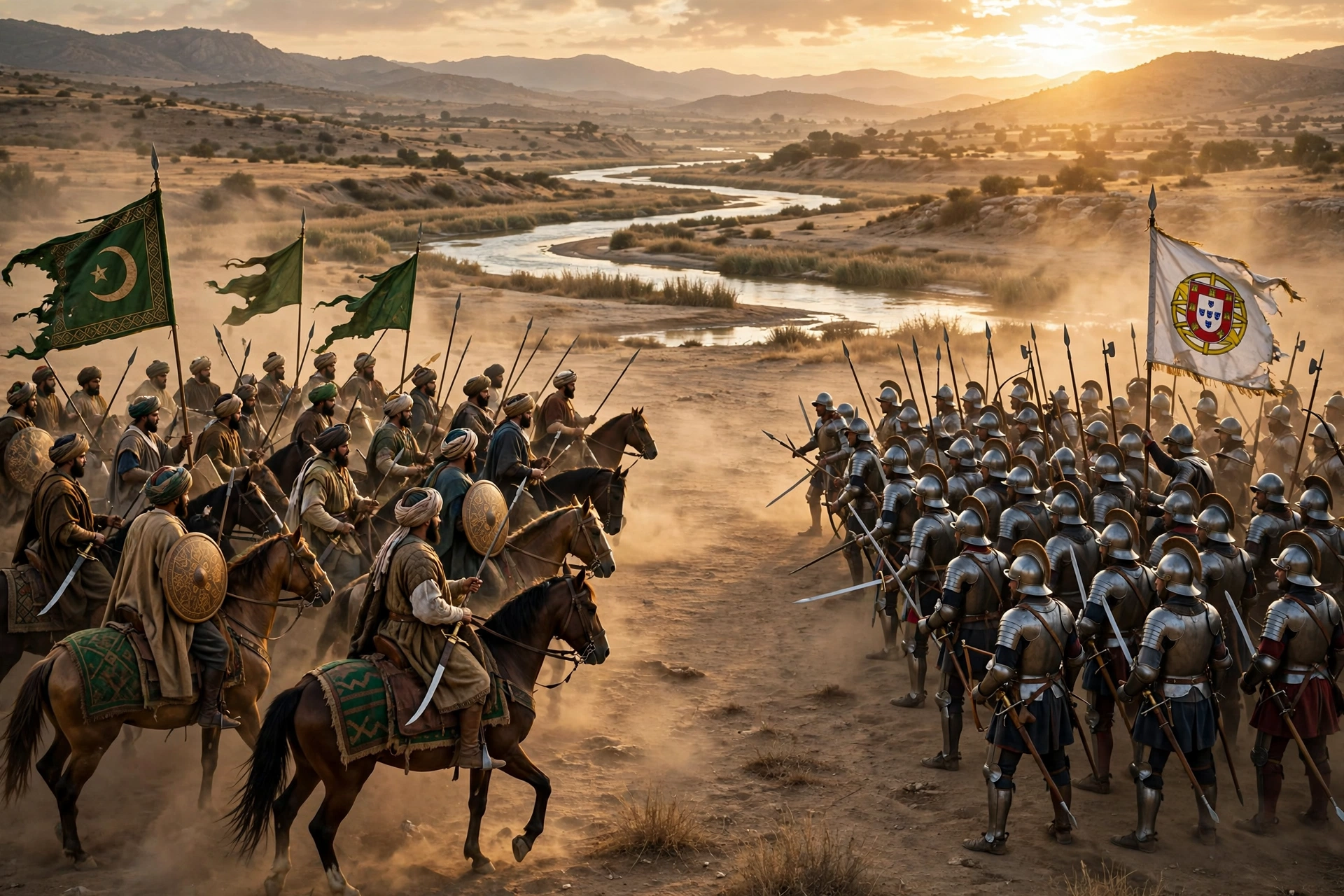
On 4 August 1578, on a hot plain beside the Loukkos river in northern Morocco, three kings died in a single afternoon. The battle of the three kings Morocco remembers — the Battle of Alcácer Quibir, or Wadi al-Makhazin — was one of the most extraordinary days in Moroccan history. A sultan defending his throne, a deposed sultan fighting to get it back, and a young Portuguese king chasing glory met on the same field. None walked off it alive.
If you grew up in Morocco, you know this story from school, from cafés, from family. Outside Morocco, it is strangely little known — which is a shame, because the battle of the three kings Morocco fought that day changed the map of Europe as much as it changed Morocco. Within two years, Portugal lost its independence; Morocco kept its own.
Table of Contents
- Why the Battle of the Three Kings Morocco Still Matters
- Morocco Before 1578: A Throne in Dispute
- The Three Kings
- The Road to Alcácer Quibir
- 4 August 1578: The Day Itself
- How Morocco Won the Battle of the Three Kings
- What the Battle of the Three Kings Morocco Changed
- Visiting the Battlefield Today
- Frequently Asked Questions
- Conclusion
Why the Battle of the Three Kings Morocco Still Matters
The battle of the three kings Morocco won in 1578 matters for a simple reason: it is the day Morocco proved it could not be taken. Portugal was then a great maritime power, its empire stretching from Brazil to India. Spain watched closely, and the Ottoman Empire pressed from the east. Morocco sat between them all — and survived.
For Moroccans, it ended a succession crisis and opened twenty-five years of stability and wealth under Ahmad al-Mansur, “the Golden One”. For Europe, the consequences were even more dramatic: Sebastian died childless, the Portuguese nobility and army were destroyed, and within two years Portugal fell under Spanish rule until 1640. Our history of Morocco puts the battle of the three kings Morocco fought in the longer story.
Morocco Before 1578: A Throne in Dispute
To understand the battle of the three kings Morocco fought, you have to understand the quarrel behind it. Morocco in the 1570s was ruled by the Saadians, a family from the south that had united the country and pushed back Portuguese coastal forts — but they fought bitterly among themselves over who should rule, as our guide to the kings of Morocco and their dynasties shows.
Muhammad al-Shaykh was murdered in 1557, and his son Abdallah al-Ghalib won the fight for the throne that followed. When Abdallah died in 1574, his son Muhammad al-Mutawakkil succeeded him — but Abdallah’s brothers believed the throne should pass to the eldest capable male of the family, not the dead sultan’s son.
The strongest brother was Abd al-Malik. He had fled Morocco, served abroad, and won Ottoman support. In 1576, with Ottoman backing, he marched on Fez, defeated his nephew, and took the throne. The deposed sultan fled to Lisbon and begged King Sebastian to help him win it back.
That plea is the hinge of the story. Muhammad al-Mutawakkil offered Sebastian Portuguese help to retake Morocco in exchange for territory and spoils. Sebastian, young, devout, and hungry for a great deed, accepted — and decided to lead the invasion himself.
The Three Kings
The battle of the three kings Morocco remembers gets its name honestly: three kings were on the field, and all three died. Here they are.
| King | Who he was | Why he was on the field |
|---|---|---|
| Abd al-Malik | Saadian sultan; uncle of his rival | Defending the throne won in 1576 |
| Muhammad al-Mutawakkil | Deposed sultan | Retaking his throne with Portuguese help |
| Sebastian I | King of Portugal, aged 24, childless | Leading the invasion, seeking glory and territory |
Abd al-Malik was the most experienced: he had fought abroad and understood European politics — but he was also seriously ill by the summer of 1578, which matters to the story. Sebastian was the youngest and least experienced, a king who had never fought a major battle and who overruled his commanders’ advice.
The two armies were very different. The Moroccan force was built around fast cavalry, musketeers, and artillery the Saadians had developed for decades. The Portuguese force was a grand expeditionary army of nobles, Spanish volunteers, and German and Italian mercenaries, with a large baggage train — impressive on paper, but slow, thirsty, and far from home in the August heat.
The Road to Alcácer Quibir
Sebastian landed at Asilah in June 1578 with Muhammad al-Mutawakkil at his side, and marched inland toward Alcácer Quibir — Ksar el-Kebir, the “great castle” — on the Loukkos river, planning to defeat Abd al-Malik and march on Fez: the march that led to the battle of the three kings Morocco.
The army moved slowly in the summer heat, short of water and harassed by Moroccan horsemen who never stood and fought but never went away either. Abd al-Malik, meanwhile, gathered his forces and chose his ground. He had one great advantage: he was fighting at home, on land he knew, with short supply lines.
Here is a point Moroccans often make, because outsiders routinely get it wrong: the battle of the three kings Morocco fought was not a crusade. It was not a holy war between Christianity and Islam, as later storytellers liked to paint it. At its heart it was a Moroccan dynastic succession war — uncle against nephew — in which one side had hired foreign help. Sebastian himself used the language of crusade, but the Moroccan side was divided against itself, and the Ottomans backed one Muslim claimant against another. The religious framing came later, from writers who wanted a simpler story.
4 August 1578: The Day Itself
The date is one thing nobody disputes: 4 August 1578. The armies met near the Loukkos, close to Ksar el-Kebir, with the river behind the Portuguese line of retreat — a detail they would come to regret. The Battle of Alcácer Quibir on Wikipedia gives a good overview of the day and its sources.
| Time (approx.) | What happened |
|---|---|
| Morning | The Portuguese crossed the Loukkos, backs to the river. |
| Mid-morning | Portuguese artillery opened fire; Moroccan cavalry circled the flanks. |
| Midday | Sebastian ordered a general advance — and the Moroccan wings closed around the Portuguese centre. |
| Early afternoon | Surrounded, retreat cut off, baggage camp overrun — the army collapsed into a rout. |
| Afternoon | All three kings were dead; the Moroccan army held the field. |
The heart of the battle of the three kings Morocco won was the encirclement: Moroccan cavalry swung around both Portuguese flanks while the centre advanced into the trap. Once the wings closed, the Portuguese had nowhere to go — the river behind them, horsemen on every side, heat and thirst doing the rest. Men drowned trying to cross the Loukkos; others were cut down on the plain.
And then the strangest fact of the day: all three kings died. Sebastian was killed in the fighting — the precise circumstances are still disputed. Muhammad al-Mutawakkil drowned in the Loukkos while fleeing, according to the most widely accepted accounts, though some sources differ. Abd al-Malik, the victor, died during the battle itself, most likely from the illness that had weakened him, though exactly when and how is also debated. His death was hidden from the army until the battle was won, and his brother Ahmad — the future Ahmad al-Mansur — was proclaimed sultan on the field itself.
How Morocco Won the Battle of the Three Kings
The victory in the battle of the three kings Morocco fought was not luck — four things decided it.
Home ground and timing
Abd al-Malik chose when and where to fight. The Portuguese marched inland in high summer, far from their ships and supplies, while the Moroccans fought close to home, on ground they knew. His advisers had warned Sebastian against marching inland in August. He overruled them.
Cavalry against a slow army
The Moroccan army was built for this war: fast cavalry that could strike, withdraw, and strike again. The Portuguese army was heavy, slow, and tied to its baggage train. Once the wings closed, they had no answer. Speed beat weight.
Firearms on both sides — but used differently
Both armies had muskets and cannon, and the Saadians had invested in gunpowder weapons for years. But the Moroccans used theirs as part of a mobile battle plan, while the Portuguese guns were tied to a slow formation. The technology was similar; the tactics were not.
Leadership — and a hidden death
Abd al-Malik’s plan held even as he was dying. His commanders kept his death secret until the battle was decided, and the army fought on believing its sultan was still alive — a plan that survived its own commander.
One more honest note: the exact troop numbers are not settled — sources vary widely, so we repeat no single figure as fact. The Moroccan army was the larger force, and the Portuguese army was destroyed almost entirely: thousands killed, thousands more taken prisoner.
What the Battle of the Three Kings Morocco Changed
The consequences of the battle of the three kings Morocco fought were immediate and enormous, on both shores of the Strait of Gibraltar.
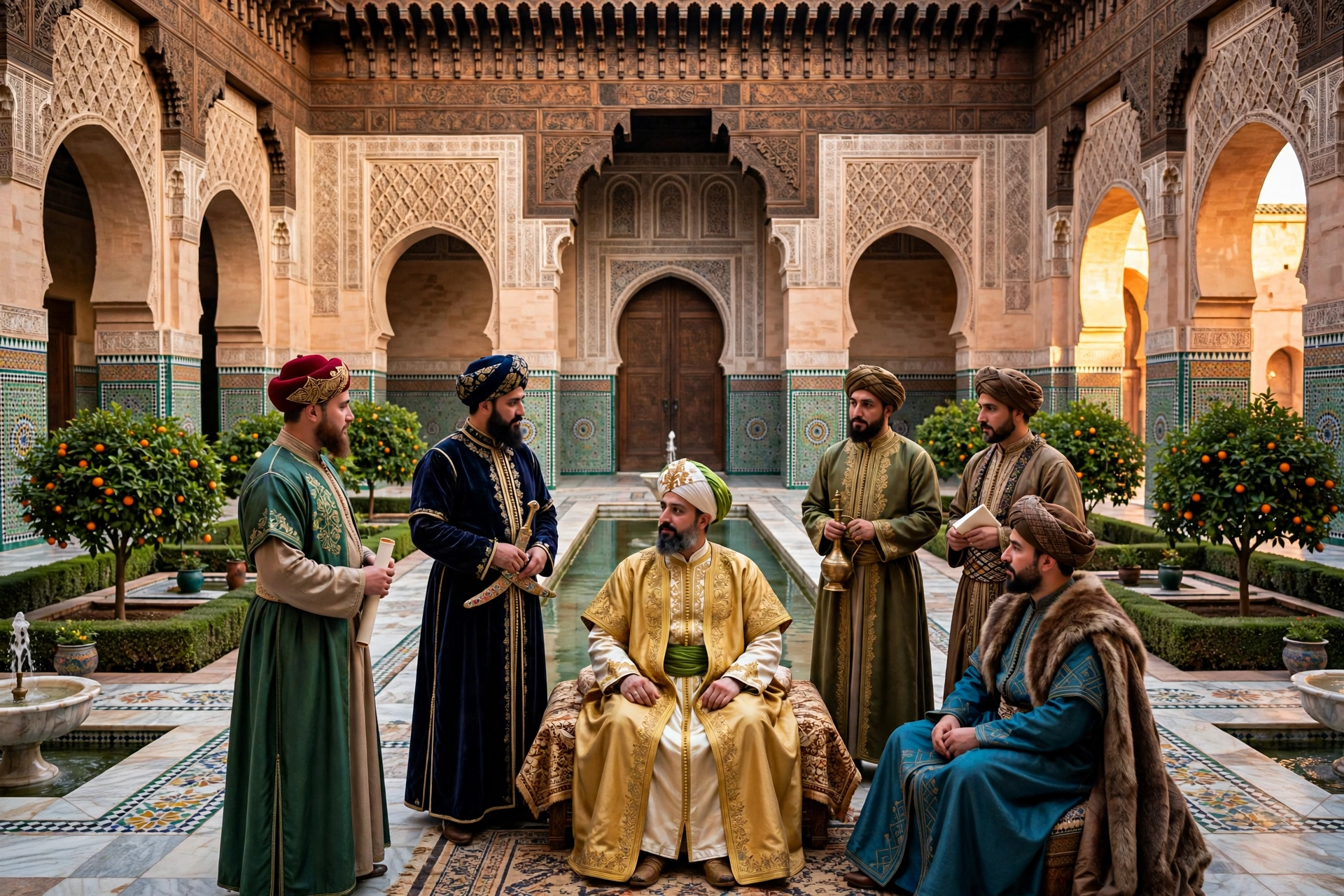
In Morocco, the victory in the battle of the three kings Morocco fought settled the succession. Ahmad, Abd al-Malik’s brother, became Sultan Ahmad al-Mansur — “the Victorious”, later “the Golden One”. His reign, 1578 to 1603, was the golden age of the Saadians: he rebuilt Marrakech, built the El Badi Palace, expanded sugar, and brought back Songhai gold. Ransoms for Portuguese prisoners helped pay for it all.
In Portugal, the consequences were catastrophic. Sebastian died childless, and the flower of the Portuguese nobility died with him. His great-uncle, the elderly Cardinal Henry, took the throne and died two years later. In 1580, Philip II of Spain claimed the Portuguese crown, and Portugal entered sixty years of Spanish rule — the Iberian Union — until 1640. That is the second thing outsiders often get wrong: they treat this as a Moroccan victory with no wider meaning. In fact, it decided the fate of two kingdoms, not one. Britannica’s account of the Battle of the Three Kings summarises the same verdict.
There was a third consequence. Morocco’s victory showed Europe that the country could not be conquered cheaply or quickly: the age of Portuguese coastal forts was over, and no European power would try a full-scale invasion again for centuries. The battle bought Morocco time to build and trade on its own terms — visible today in the imperial cities of Morocco.
Visiting the Battlefield Today
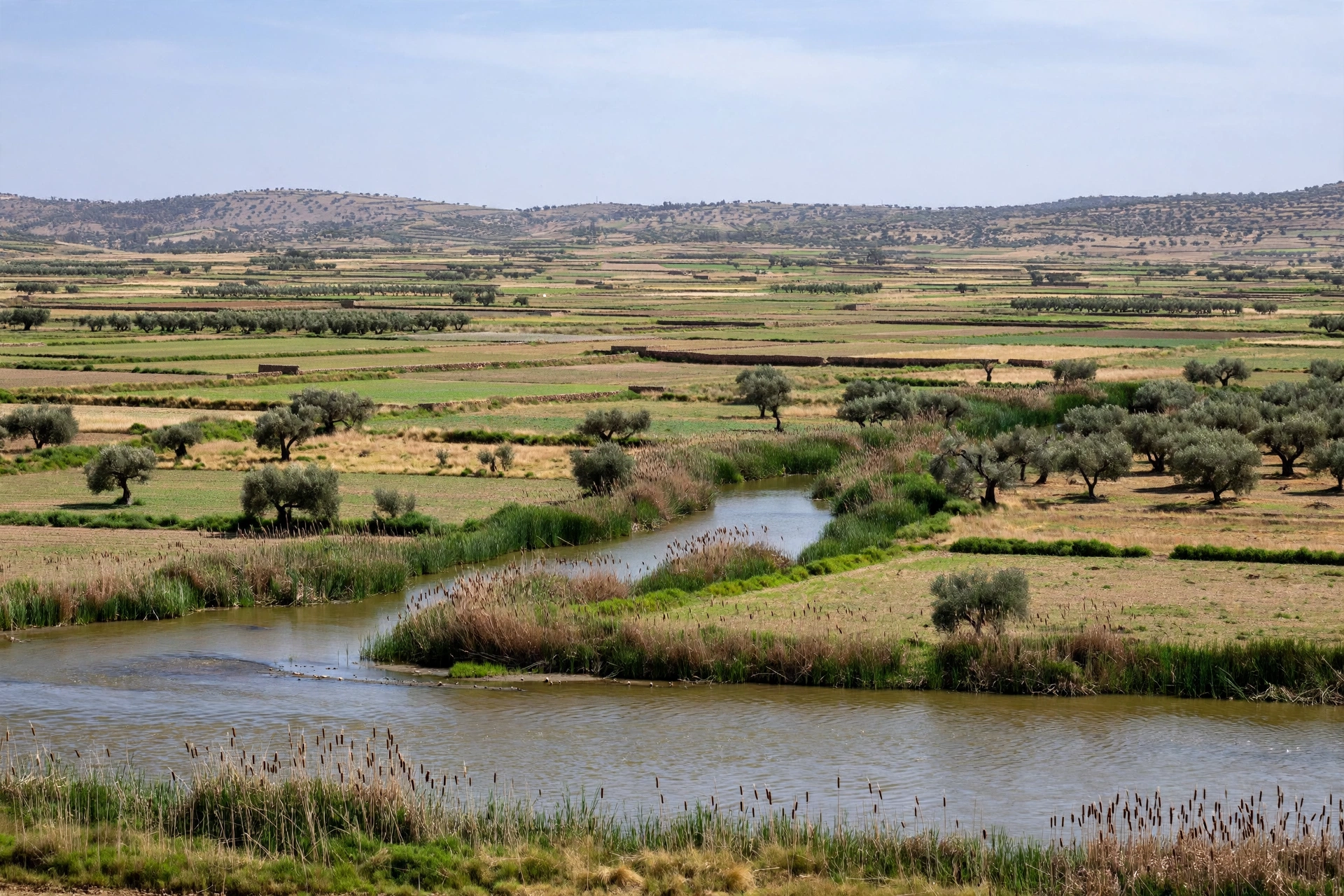
The battlefield is not a polished tourist attraction, and that is part of its appeal. Ksar el-Kebir is a working town in northern Morocco, about an hour inland from Larache, on the road toward Fez. The plain beside the Loukkos is farmland today — wheat, olives, and market gardens where two armies once stood. There is no monument and no visitor centre, so come with the story already in your head.
Stand on the plain in the late afternoon, when the light is low and the heat breaks, and look at the river. The Loukkos is not wide — and that is the point: in 1578 it was enough to trap an army that had put it at its back. Then drive into Ksar el-Kebir, a friendly, unhurried town where you can eat well and cheaply and where the battle of the three kings Morocco fought is still part of local memory. Combine it with Larache or Fez.
Visit in spring or autumn, when the plain is green and the heat is bearable — August, the anniversary month, is brutally hot, which is itself a lesson in what the Portuguese marched through. There is no entrance fee, because there is no site as such; a local guide can show you the ground where the battle of the three kings Morocco was fought and tell the story as it is told locally. Allow half a day, and bring water.
Frequently Asked Questions
When was the Battle of the Three Kings?
The battle of the three kings Morocco fought took place on 4 August 1578, near Ksar el-Kebir on the Loukkos river in northern Morocco. The date is well established.
Who were the three kings who died?
Abd al-Malik, Muhammad al-Mutawakkil, and Sebastian I of Portugal. All three died on the same day; the precise circumstances of each death are still debated.
Why is it called the Battle of the Three Kings?
Because three kings died in one battle — a fact so unusual that it gave the battle of the three kings Morocco its name. It is also called the Battle of Alcácer Quibir and the Battle of Wadi al-Makhazin.
How did Morocco win the Battle of the Three Kings?
The battle of the three kings Morocco won through home ground, timing, and tactics: Abd al-Malik chose the ground, let the Portuguese march inland in the August heat, and his cavalry enveloped them and cut off their retreat to the Loukkos.
What happened to Portugal after the battle?
The battle of the three kings Morocco left Sebastian dead and childless, and destroyed the Portuguese army and nobility. Cardinal Henry succeeded him and died in 1580; Philip II of Spain then took the throne, and Portugal lost its independence for sixty years.
Can you visit the battlefield of the Three Kings?
Yes — the field where the battle of the three kings Morocco was fought is the plain beside the Loukkos near Ksar el-Kebir, about an hour from Larache. There is no formal visitor site, so go with a local guide and visit in spring or autumn rather than high summer.
Conclusion
Nearly four and a half centuries later, the battle of the three kings Morocco fought on 4 August 1578 still shapes how Moroccans see their country. It was not a crusade, and it was not a miracle: a well-planned battle, fought on home ground by an army that knew what it was doing, against a foreign invasion invited in by a prince who wanted his throne back. The price was extraordinary — three kings dead in one afternoon.
But the result was a country that kept its independence, a dynasty that entered its golden age, and a neighbour across the strait that lost its own within two years. The battle of the three kings Morocco remembers was the day Morocco refused to be taken.
To go further, read our history of Morocco and the kings of Morocco and their dynasties to see where the Saadians fit.
Checked November 2026. Troop numbers, the precise circumstances of each king’s death, and exact battlefield location details remain debated among historians and are presented here as unsettled.