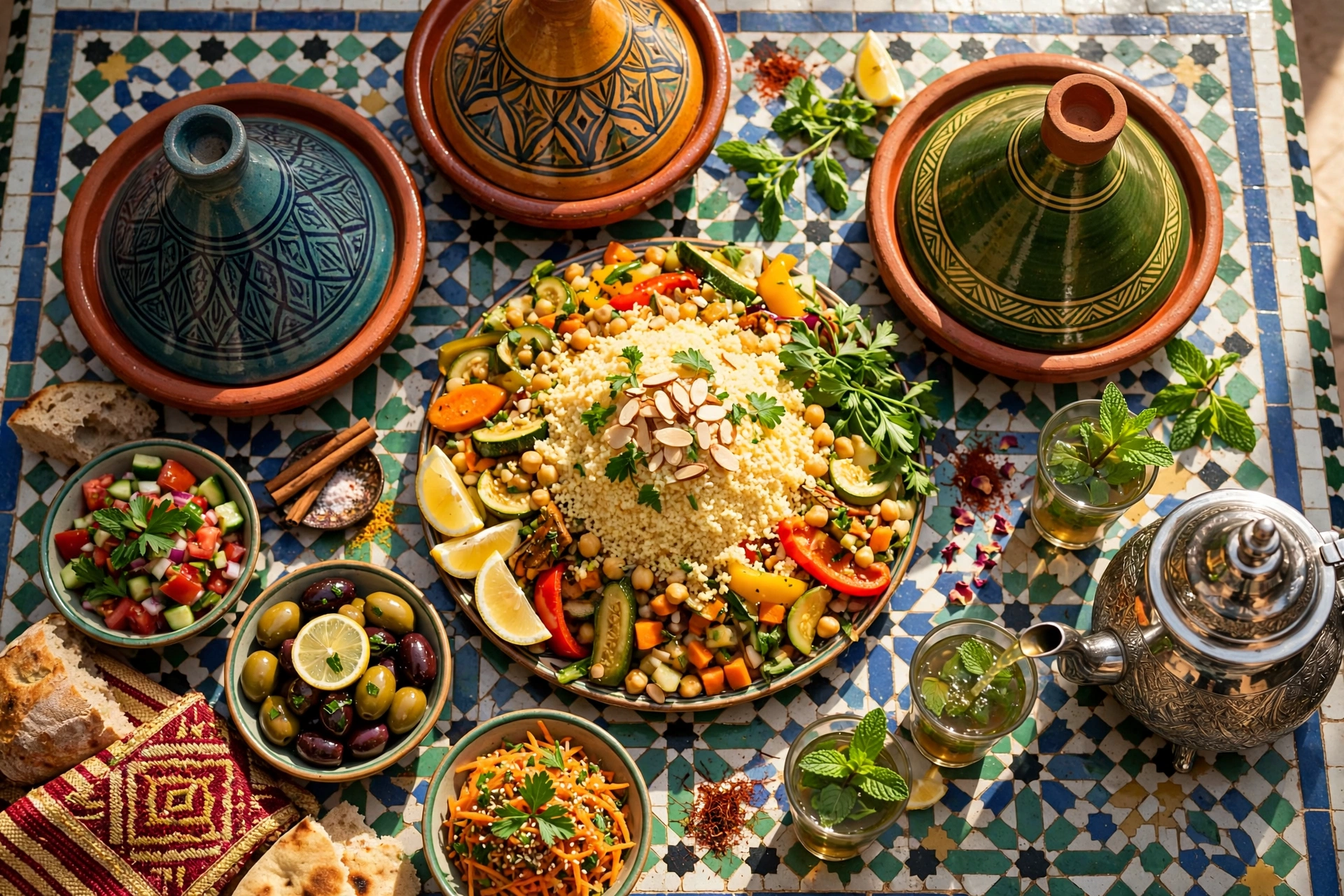
This Moroccan food guide is written by a Moroccan, for people who want to eat the way Moroccans actually eat — not the way hotel menus think tourists want to eat. Moroccan cuisine is one of the great cuisines of the world: UNESCO inscribed it on the Representative List of the Intangible Cultural Heritage of Humanity in 2024. Yet most visitors taste only a narrow slice of it — a chicken tagine, a Tuesday couscous, and mint tea poured for the photograph.
The real food is cheaper and more everyday: a 10–20 MAD bowl of soup at a market stall, and Friday lunch at home. Here is the honest correction at the heart of this Moroccan food guide: couscous is Friday lunch, not a daily restaurant staple. The queue worth joining is for harira or bissara, not a tasting menu. And two of the most interesting dishes in the country — rfissa and tangia — almost never appear on tourist menus, because they belong to family kitchens and to Marrakech men cooking for each other. Prices below are in dirhams (MAD) with dollar equivalents, checked November 2026 at roughly 10 MAD to $1.
- How to Eat Like a Local in Morocco
- Tagines: The Heart of Moroccan Cooking
- Couscous: Friday Lunch, Done Properly
- Soups and Street Food: Where the Real Queue Is
- Breads, Pastries and Savoury Snacks
- Special-Occasion Dishes: Pastilla, Rfissa, Tangia and Mechoui
- Salads, Sweets and Mint Tea
- What a Day of Eating in Morocco Costs
- Frequently Asked Questions
- Conclusion
How to Eat Like a Local in Morocco
Follow the crowd, not the guidebook. A restaurant full of Moroccan families at 1 p.m. beats any ranking, and a place with a handwritten menu in Arabic and French only cooks for people who come back tomorrow. If a waiter is standing in the street inviting you in, keep walking.
Lunch is the main meal, roughly noon to 3 p.m.; dinner is later and lighter, often after 8 p.m. Breakfast is simple — bread, olive oil, cheese, honey and mint tea — usually 15–30 MAD ($1.50–$3). Morocco runs on cash for food, so carry small notes and coins: small restaurants, stalls and bakeries often do not take cards. Read our Morocco money and dirham guide before you arrive, since the dirham is a closed currency. Tipping is modest — round up, or leave 5–10 MAD locally and 10–15% at a smarter restaurant.
Bread is not a side dish you order: it arrives with the meal and doubles as your cutlery, so scooping tagine sauce with torn bread is how the dish is meant to be eaten.
Tagines: The Heart of Moroccan Cooking
A tagine is both the dish and the pot: a shallow base with a tall conical lid that traps steam and braises everything inside slowly.
1. Chicken tagine with preserved lemon and olives
Chicken, preserved lemon, green olives, ginger and saffron, cooked until the sauce turns thick and glossy. Locally 45–70 MAD ($4.50–$7); tourist restaurants, 90–140 MAD ($9–$14).
2. Lamb tagine with prunes and almonds
Slow-cooked lamb with caramelised prunes, toasted almonds and sesame seeds — sweet and savoury at once. A good local price is 60–90 MAD ($6–$9).
3. Kefta tagine with egg
Spiced minced-beef meatballs in tomato sauce, with eggs cracked on top so the yolks stay runny. Moroccans order it when they want something fast and filling: usually 40–60 MAD ($4–$6), bread included.
4. Fish tagine with chermoula
On the coast — Essaouira, Agadir, El Jadida, Tangier — the tagine goes to sea: fish marinated in chermoula (garlic, coriander, parsley, cumin, paprika and lemon), cooked with tomatoes and peppers. Order it near a fishing harbour for 50–90 MAD ($5–$9).
5. Vegetable tagine
Carrots, courgettes, potatoes, chickpeas and pumpkin, cooked slowly with ginger and turmeric. Not a consolation dish for vegetarians — a proper dish in its own right, typically 30–50 MAD ($3–$5).
Couscous: Friday Lunch, Done Properly
Couscous is Friday lunch, not a daily staple: families gather for a big steaming platter, eaten together from a shared dish. Plan yours for a Friday, when it is made fresh.
6. Friday couscous with seven vegetables
Fine semolina steamed until light and fluffy, topped with seven vegetables and lamb, chicken or beef. In a local restaurant on a Friday, expect 40–70 MAD ($4–$7).
7. Couscous tfaya
The sweet version most visitors never hear about: couscous topped with tfaya — caramelised onions with raisins, chickpeas and cinnamon — and served with chicken or lamb. It appears at weddings and in good traditional restaurants, for around 60–90 MAD ($6–$9).
8. Seffa
Seffa is couscous’s elegant cousin: fine steamed vermicelli, served sweet with cinnamon, sugar, almonds and raisins, usually with chicken hidden underneath. A festive dish for weddings and Eid: 50–80 MAD ($5–$8) when it is on a menu.
Soups and Street Food: Where the Real Queue Is
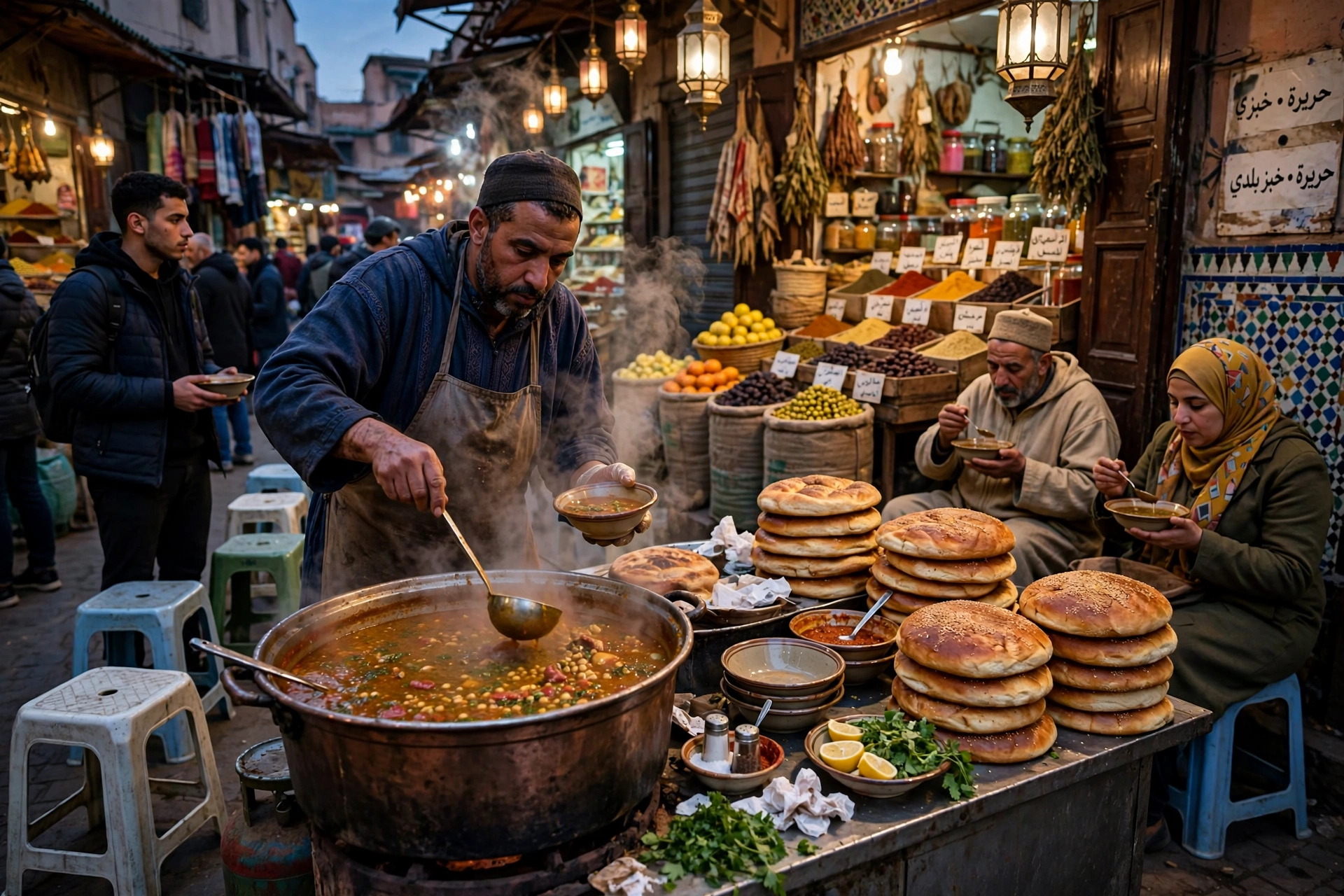
The dish Moroccans actually queue for is a 10–20 MAD bowl of soup at a stall with plastic stools.
9. Harira
Harira is Morocco’s soup: tomatoes, lentils, chickpeas and herbs, thickened with a flour-and-water mixture called tedouira until rich and velvety. It breaks the fast during Ramadan, and is sold all year round: 10–15 MAD ($1–$1.50) a bowl, the best value meal in Morocco.
10. Bissara
Bissara is a thick soup of dried fava beans, blended smooth and served with a swirl of olive oil, cumin and a little chilli. It is the breakfast of the north and the working lunch of the whole country. Look for it in Fes and the markets of the Rif: 8–15 MAD (under $1.50) with bread.
11. Grilled sardines and the sardine sandwich
Morocco has the richest sardine waters in the world, and in Essaouira and Agadir the sardines go from boat to grill in hours. A plate of grilled sardines costs 20–30 MAD ($2–$3) at the port; in the cities, the sardine sandwich — fried fillets in bread with harissa and salad — is the classic cheap lunch, 10–15 MAD ($1–$1.50).
12. Maaqouda
Maaqouda are crisp potato cakes, seasoned with cumin and garlic, fried until golden and sold from carts and tiny shops. They are eaten on their own as a snack, or tucked into bread as a sandwich for 5–10 MAD (under $1).
13. Brochettes and merguez
Grilled skewers of lamb or beef, cooked over charcoal and served with bread, salad and cumin salt, are the smell of every Moroccan market after dark. A skewer costs 10–15 MAD; three with bread make a full dinner for 30–45 MAD ($3–$4.50). Merguez — spicy lamb sausages — are the bolder alternative; eat where the smoke is thickest.
14. Snail soup (babbouche)
Yes, snails — and yes, you should try them. Babbouche is a spiced broth of snails, flavoured with more than a dozen herbs and spices, sold from steaming carts in the evening, most famously in Jemaa el-Fna in Marrakech. A small bowl costs 10–15 MAD ($1–$1.50). The broth is the point as much as the snails — drink it.
Breads, Pastries and Savoury Snacks
Bread is sacred in Morocco. No Moroccan food guide is complete without it, because bread is not a side dish here — it is the table itself.
15. Khobz
Khobz is the round, crusty everyday loaf, baked in wood-fired communal ovens and sold still warm for 1–3 MAD (a few cents). Families send their dough to the neighbourhood oven in the morning and collect the loaves later. Buy one, tear it open, and eat it with olives from the market.
16. Msemen
Msemen is a square, flaky, layered flatbread, fried on a griddle and eaten for breakfast or an afternoon snack with honey, soft cheese or jam. It is made fresh to order in tiny shops. One piece costs 3–6 MAD (under $1); two with mint tea is the classic breakfast for under 15 MAD.
17. Batbout
Batbout is a small, soft, pocket bread, cooked on a griddle rather than baked, and split open to hold fillings — tuna, egg, cheese, kefta, or just salad. It is the Moroccan sandwich bread, sold at snack bars and market stalls for 5–12 MAD ($0.50–$1.20) filled.
18. Briouats
Briouats are crisp, triangular pastries of thin warqa pastry, filled with spiced meat, cheese, or seafood, and fried until golden. They appear at celebrations and in the trays of the medina’s pastry shops: 3–6 MAD each (under $1).
Special-Occasion Dishes: Pastilla, Rfissa, Tangia and Mechoui
These four are worth seeking out on purpose — they take hours to make, and Moroccans get nostalgic about them abroad.
19. Pastilla
Pastilla is Morocco’s most theatrical dish: crisp warqa pastry layered with shredded pigeon (or chicken), almonds, eggs and cinnamon, dusted with icing sugar on top. Sweet, savoury, crisp and soft at once, it is served at weddings and in the best traditional restaurants of Fes. A portion costs 60–100 MAD ($6–$10).
20. Rfissa
Rfissa is the dish that never makes the tourist menus, and that is exactly why it matters. Shredded msemen is soaked in a rich broth of chicken, lentils, fenugreek and ras el-hanout, and served in a large shared dish. Traditionally cooked for new mothers and family celebrations — the food of home kitchens, not restaurants. Find it in Fes or Meknes, or by family invitation, at 50–80 MAD ($5–$8).
21. Tangia
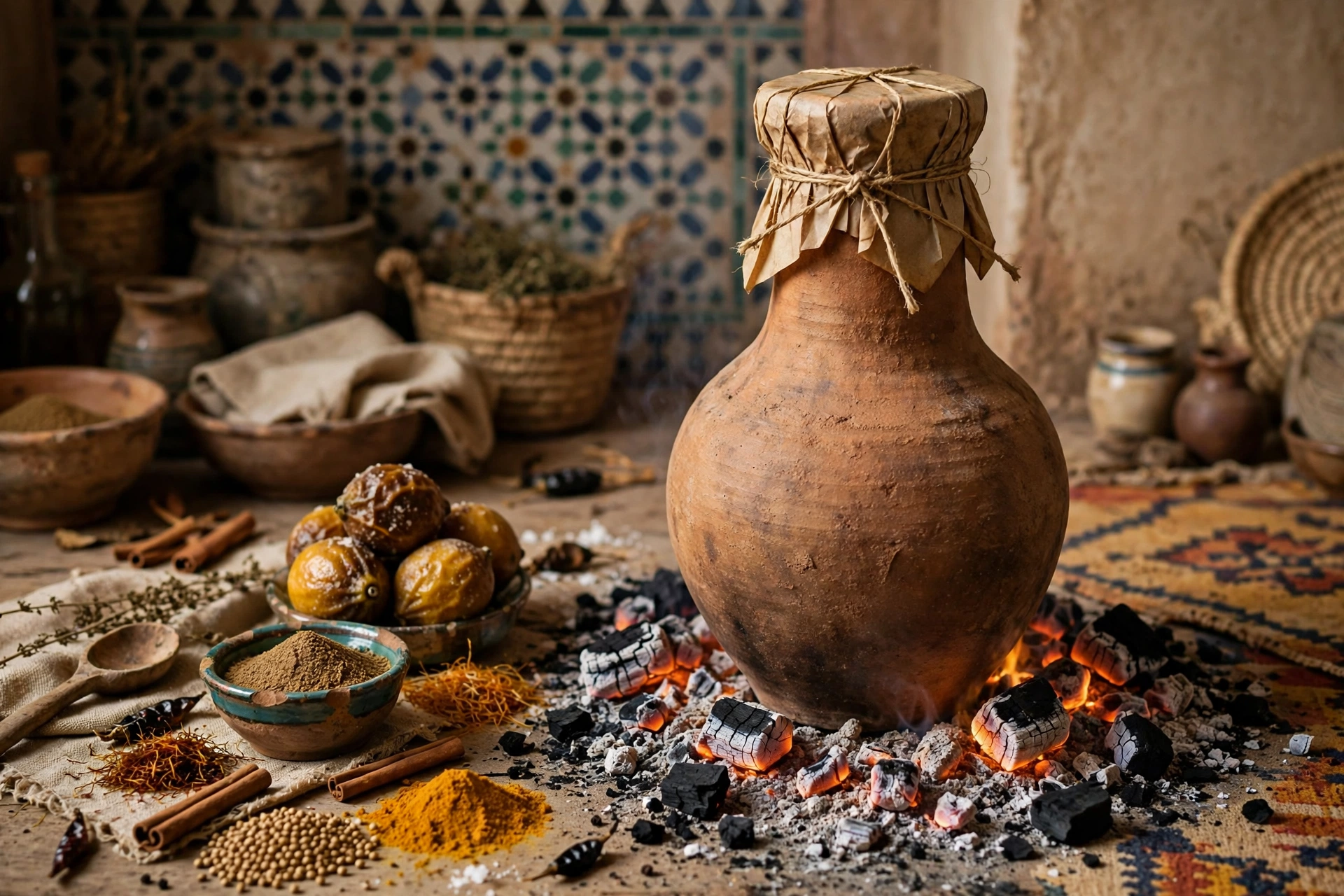
Tangia is Marrakech’s dish. Beef or lamb is sealed into a tall clay pot with preserved lemon, garlic, cumin and saffron, then buried in the ashes of the hammam (public bathhouse) oven, where it cooks for hours. Traditionally a bachelor’s dish, cooked by men for men, the best tangia is found in small restaurants near the medina’s hammams, for 60–100 MAD ($6–$10). Our Marrakech travel guide explains where the medina’s food streets are.
22. Mechoui
Mechoui is a whole lamb, slow-roasted in a clay oven until the meat falls off the bone, served with bread, cumin salt and salad. The best place to eat it is a mechoui restaurant — usually a plain room with a clay oven at the back and a queue at the door. Sold by weight, roughly 60–80 MAD ($6–$8) for a generous portion, best eaten with your hands.
Salads, Sweets and Mint Tea
A Moroccan meal ends the way it begins: with small plates, something sweet, and tea. This last group in our Moroccan food guide is the one visitors most often skip.
23. Zaalouk
Zaalouk is a cooked salad of aubergines and tomatoes, mashed with garlic, cumin and olive oil until smoky and soft. It arrives with the small plates at the start of a meal, and it tells you whether a restaurant cooks properly — if the zaalouk is good, everything after it will be good.
24. Chebakia
Chebakia are flower-shaped cookies of fried dough, soaked in honey and sesame seeds. They are the sweet of Ramadan, eaten with harira at sunset to break the fast, and they are sold all year in pastry shops for 30–60 MAD ($3–$6) for a small box. Buy them from a pastry shop in the medina, and eat them the same day. While you are there, look for kaab el ghazal — almond-filled “gazelle horns” — at similar prices.
25. Mint tea
Mint tea is not a drink in Morocco; it is a ceremony, a welcome, a pause and a negotiation all at once. Green tea, fresh mint and sugar — a lot of sugar — poured from a height to make a froth, served in small glasses, usually three rounds. A glass costs 5–10 MAD ($0.50–$1) at a café. Accept the tea when it is offered; it is how Morocco says hello.
What a Day of Eating in Morocco Costs — Moroccan Food Guide Budget
Food in Morocco is strikingly cheap by European or American standards, and the gap between local and tourist prices is the most useful thing this Moroccan food guide can show you. The table below compares a day of eating locally with a day of eating in tourist restaurants, with prices checked November 2026. For the full picture of what a trip costs overall, see our guide to how much a trip to Morocco costs, and for monthly budgets if you stay longer, our cost of living in Morocco guide.
| Meal | Eating where locals eat | Eating in tourist restaurants |
|---|---|---|
| Breakfast (msemen, tea, bread) | 15–25 MAD ($1.50–$2.50) | 40–80 MAD ($4–$8) |
| Lunch (harira or tagine + bread + tea) | 30–70 MAD ($3–$7) | 100–180 MAD ($10–$18) |
| Afternoon snack (briouats, juice) | 15–25 MAD ($1.50–$2.50) | 40–60 MAD ($4–$6) |
| Dinner (brochettes or tagine + tea) | 40–80 MAD ($4–$8) | 120–250 MAD ($12–$25) |
| Total per day | 100–200 MAD ($10–$20) | 300–570 MAD ($30–$57) |
The lesson is simple: the same ingredients, and often better cooking, for a third of the price.
Frequently Asked Questions
What is the most famous Moroccan dish?
Couscous is the most famous, and tagine is the most eaten by visitors. But the dish Moroccans themselves eat most often is simpler: harira or bissara soup, bread, and tea. Eat Friday couscous with a family to taste Morocco at its best — or harira at a market stall to taste daily life.
Is Moroccan food spicy?
Moroccan food is spiced, not spicy-hot. Cumin, ginger, saffron, cinnamon and paprika give it warmth and depth, but chilli heat is mild and served on the side as harissa, so you control it yourself.
How much should I budget for food per day in Morocco?
Budget 100–200 MAD ($10–$20) a day if you eat where locals eat, and 300–570 MAD ($30–$57) a day in tourist restaurants. A middle ground — local lunches and one nicer dinner — is around 200–300 MAD ($20–$30) a day.
Where do locals actually eat in Morocco?
Locals eat in small neighbourhood restaurants with handwritten menus, at market stalls with plastic stools, and at home — especially on Fridays, when couscous is a family meal. The signs of a good place are a crowd of Moroccans, no one inviting you in from the street, and a short menu.
Can vegetarians eat well in Morocco?
Yes, and better than most visitors expect. Vegetable tagine, bissara, harira (ask for the meat-free version), zaalouk and msemen are vegetarian, and many restaurants will make a vegetable couscous on request. Stocks and sauces sometimes contain meat, so ask — “bla lhem” (without meat) is the phrase to learn.
What should I drink with Moroccan food?
Mint tea, always — it is served with and after almost every meal. Fresh orange juice, pressed to order in the markets for 10–15 MAD ($1–$1.50), is the other classic. Tap water is best avoided; bottled water costs 5–10 MAD ($0.50–$1) and is sold everywhere.
Conclusion
This Moroccan food guide began with a correction, and it ends with one too: the best food in Morocco is not the most expensive food, and it is not the food with the best photographs. It is the Friday couscous from a shared platter, the bowl of harira at a plastic-stool stall, the tangia from the ashes of a Marrakech hammam, and the mint tea that arrives before you have ordered.
Eat where the queue is, learn a few words of Darija, carry cash, and accept the tea. If you do that, this Moroccan food guide will have done its job, and Morocco will taste the way it should: slow, generous, spiced, and shared.