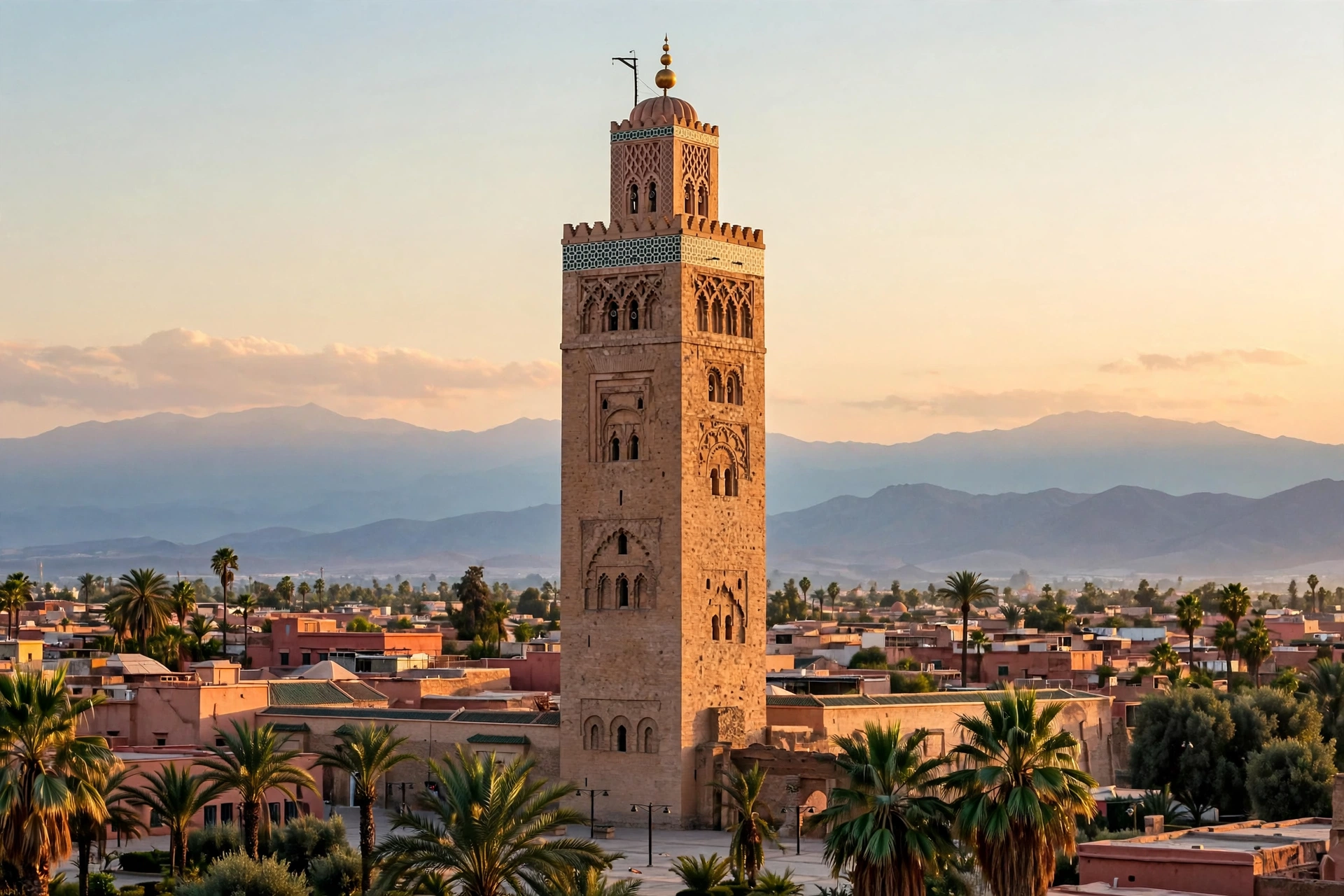
Morocco is not a country with one founding moment. It is a country built in layers, dynasty by dynasty, each one leaving a capital, a style of building, and a story that still shapes the place today. If you want to understand why Fes feels different from Marrakech, or why Meknes has gates big enough to swallow a caravan, you need to know the kings of morocco dynasties — the six great ruling houses that carried the country from a small Idrisid settlement in the eighth century to the modern kingdom of Mohammed VI.
This guide walks through those dynasties in order, honestly and without the fairy-tale gloss. Where historians disagree about a date, we say so. And at the end, we turn the history into a practical route, so you can stand in front of the buildings these kings actually left behind. For the full sweep of the country’s past, start with our history of Morocco overview, then come back here for the dynasties themselves.
Table of Contents
- The Kings of Morocco Dynasties at a Glance
- The Idrisids (788–974): A Kingdom Begins in Fes
- The Almoravids (c. 1040–1147): Desert Warriors Build Marrakech
- The Almohads (1147–1269): An Empire from the Atlas to Andalusia
- The Marinids (1244–1465): Fes Becomes a City of Learning
- The Saadians (1554–1659): Gold, Sugar and the Battle of the Three Kings
- The Alaouites (1666–Today): From Moulay Rashid to Mohammed VI
- How to Visit the Dynasties Today
- Why the Dynasties Still Matter
- Frequently Asked Questions
The Kings of Morocco Dynasties at a Glance
Before the detail, here is the whole story on one page.
| Dynasty | Dates | Capital | Signature legacy |
|---|---|---|---|
| Idrisids | 788–974 | Fes (and Walili/Volubilis) | Founded the first Moroccan state and the city of Fes |
| Almoravids | c. 1040–1147 | Marrakech | Founded Marrakech; an empire from the Sahara to Spain |
| Almohads | 1147–1269 | Marrakech, then Rabat | Koutoubia, the Giralda’s sister towers, a golden age of learning |
| Marinids | 1244–1465 | Fes | Fes el-Jdid, the great madrasas, and a flowering of crafts |
| Saadians | 1554–1659 | Marrakech | Sugar wealth, the El Badi Palace, victory at the Battle of the Three Kings |
| Alaouites | 1666–today | Meknes, then Fes, then Rabat | The current royal house; Meknes, modern Rabat, and today’s Morocco |
Two honest notes before we begin. The dates above are the standard ones, but several are disputed — the founding of Fes and Ibn Yasin’s death among them — and we flag those disputes in the text. And Morocco’s story did not start with the Idrisids: the Jebel Irhoud fossils prove people lived here for hundreds of thousands of years, and the Romans built Volubilis centuries before the first Idrisid king arrived.
The Idrisids (788–974): A Kingdom Begins in Fes
The story of the kings of morocco dynasties begins with a refugee. Idris I, a descendant of the Prophet Muhammad, fled Arabia after a failed revolt in 786 and found shelter among the Berber tribes of the Moroccan hills. In 788 he founded a state at Walili — the Roman city we now call Volubilis — and two years later he began a new city nearby: Fes.
That founding date is genuinely unsettled. Some sources credit Idris I with founding Fes around 789; others say the real foundation belongs to his son, Idris II, in 808, when the city was laid out as two settlements on opposite banks of the river that later grew together. What is certain is that under Idris II, Fes became a magnet: refugees from Muslim Spain and Tunisia arrived in waves, bringing crafts, scholarship, and trade.
The Idrisids never ruled a large empire, and after Idris II their kingdom fragmented between rival princes. But they did something no one before them had done: they gave Morocco a state with an Islamic identity, a capital, and a dynasty that claimed descent from the Prophet — a claim every later dynasty would measure itself against. When you walk the steep lanes of Fes el-Bali today, you are walking through a street plan the Idrisids started more than twelve centuries ago.
The Almoravids (c. 1040–1147): Desert Warriors Build Marrakech
If the Idrisids built a kingdom, the Almoravids built an empire — and they started it in the desert. The movement began among the Sanhaja Berbers of the Sahara, led by the preacher Abdallah ibn Yasin, who taught a strict, reforming Islam to nomad warriors. His death is one of the dates historians still argue about: he was killed fighting in 1058 or 1059, and the sources do not agree.
Under Yusuf ibn Tashfin, the Almoravids swept north, took Fes, crossed into Spain, and won the Battle of Sagrajas (Zallaqa) in 1086. Around 1070, Yusuf founded a new capital on the Haouz plain at the foot of the Atlas: Marrakech. The name means “Land of God” in Berber, and the city was built from scratch — red mud-brick walls, palm groves, and the Koutoubia’s predecessor mosque.
Marrakech under the Almoravids became a boomtown of trade. Gold from West Africa, salt from the Sahara, and Andalusi scholars and craftsmen all passed through its gates. The Almoravid Koubba, a small domed pavilion near the Ben Youssef Mosque, is the oldest surviving building in Marrakech. Our Marrakech travel guide shows you how to find it among the souks. This is the moment in the story where the kings of morocco dynasties stop being local rulers and become players on a stage that stretched from the Senegal River to the Ebro.
The Almohads (1147–1269): An Empire from the Atlas to Andalusia
The Almoravids fell to a movement that accused them of having gone soft, and the Almohads, who replaced them, were more ambitious still. Their founder, Ibn Tumart, preached in the High Atlas; his successor, Abd al-Mu’min, turned the preaching into conquest. He took Marrakech in 1147, then Fes, then crossed into Spain, and within a generation the Almohad empire ran from Tripoli to Castile.
The Almohads left Morocco’s most famous skyline. In Marrakech they raised the Koutoubia minaret, a 77-metre tower of rose stone that still sets the rhythm of the city. In Rabat they began the Hassan Tower, never finished; its stump still stands on the Bou Regreg. In Seville they built the Giralda, the Koutoubia’s sister tower. Three towers, one dynasty, one style.
But the Almohads were also patrons of minds. The philosopher Ibn Rushd (Averroes) and the physician Ibn Tufail worked in their courts, and Almohad Marrakech hosted debates that shaped European thought for centuries. Their fall came the way many empires fall: a crushing defeat at Las Navas de Tolosa in Spain in 1212, then revolts at home, then the Marinids pushing in from the north. At their height, though, the kings of morocco dynasties ruled the largest empire the western Mediterranean had seen since Rome.
The Marinids (1244–1465): Fes Becomes a City of Learning
The Marinids were Zenata Berbers from the north-east, and they made Fes their capital — or rather, they built a second Fes next to the first. Fes el-Jdid, the “New Fes”, rose beside the old city as a royal and administrative quarter, with the palace, the Jewish mellah, and broad streets that still feel different from the tangled lanes of Fes el-Bali.
What the Marinids are remembered for is not conquest but craftsmanship. They built the great madrasas of Fes — the Bou Inania, the Attarine, the Sahrij — schools that were also works of art, covered in carved cedar, green zellige tilework, and fine calligraphy. The Bou Inania, completed in the 1350s, is the one you should visit first: its courtyard, with a marble fountain and a minaret you can climb, is the closest thing Morocco has to a perfect room.
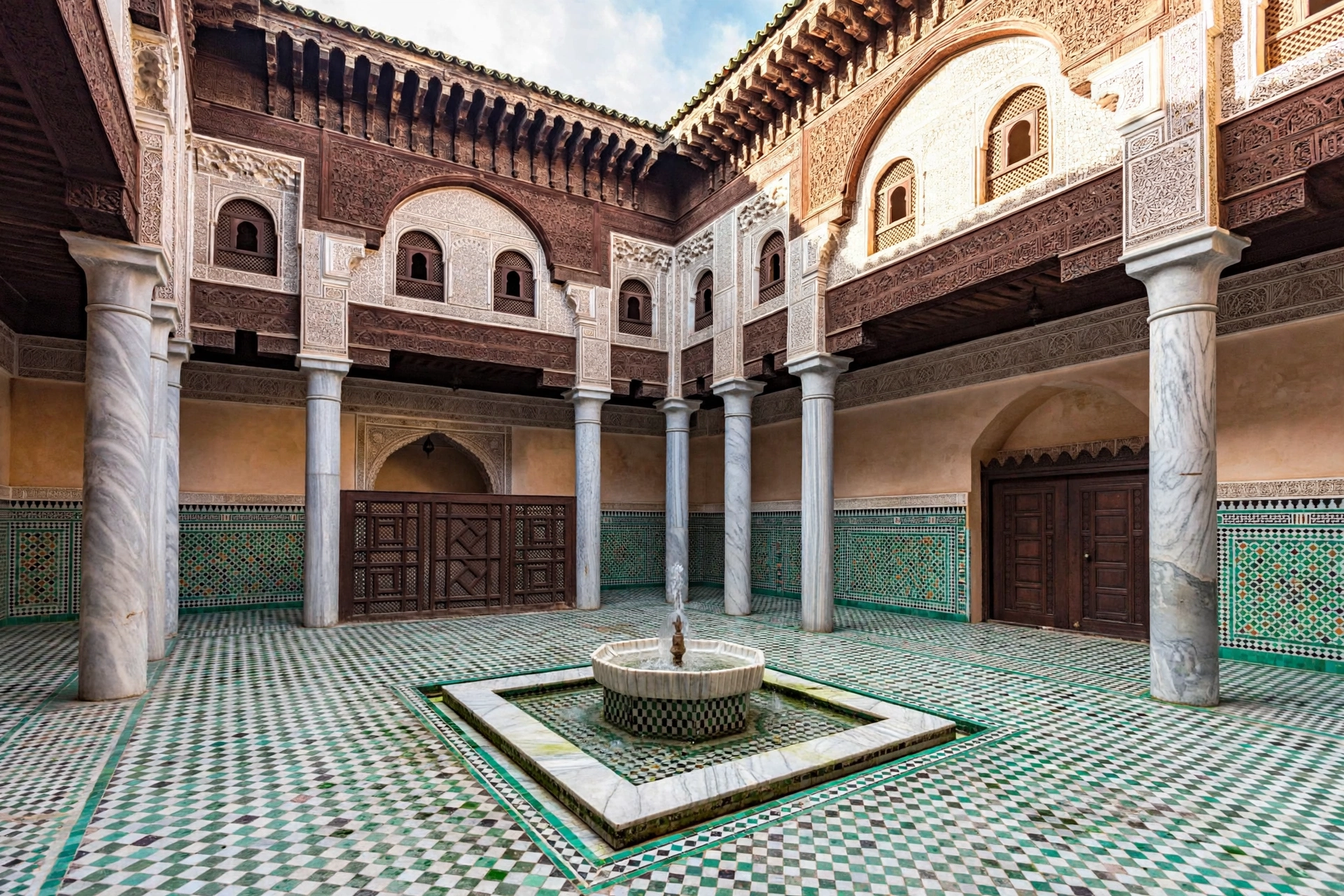
The Marinids also tried, repeatedly and unsuccessfully, to reconquer Spain, and they fought the Portuguese on the coast. Their last century was a slow decline: weak sultans, powerful viziers, and finally a dynasty that simply ran out of heirs. Yet their legacy is everywhere in Fes. The city’s tanneries, its brass workshops, its leather and its ceramics all trace their guilds and techniques to Marinid times. If the Idrisids founded Fes and the Almoravids founded Marrakech, the Marinids made Fes beautiful — and under their rule the kings of morocco dynasties became patrons of learning as much as of war.
The Saadians (1554–1659): Gold, Sugar and the Battle of the Three Kings
The Saadians came from the Draa Valley in the south, and they arrived in Moroccan history with a bang: in 1578, at the Battle of the Three Kings near Ksar el-Kebir, Sultan Ahmad al-Mansur defeated and killed the young Portuguese king Sebastian — and watched two rival claimants to his own throne die on the same battlefield. Portugal lost its king and its army, and Ahmad al-Mansur became known as al-Dhahabi, “the Golden One”.
The gold came from trade with the Sudan, and the sugar came from plantations around Marrakech. Al-Mansur spent both on the El Badi Palace, a palace so lavish — Italian marble, Sudanese gold, courtyards the size of squares — that visitors called it the wonder of the age. After al-Mansur’s death the dynasty tore itself apart in civil war. The palace was stripped by the next dynasty, and today El Badi is a magnificent ruin: vast courtyards, empty pools, storks nesting on the walls, and a view of the Koutoubia that makes the whole story feel very close.
The Saadian Tombs survived by being forgotten — walled up for two centuries and rediscovered in 1917. Their chamber of twelve columns, carved in Italian marble and covered in gold leaf, is one of the most beautiful rooms in Morocco. Under the Saadians, the kings of morocco dynasties reached a peak of wealth and confidence that Morocco would not see again for a century.
The Alaouites (1666–Today): From Moulay Rashid to Mohammed VI
The dynasty that rules Morocco today is the oldest of them all — and the one most visitors know least about. The Alaouites, also from the south, took power in 1666 under Moulay Rashid, and his brother and successor Moulay Ismail became the dynasty’s defining figure: a sultan who ruled for 55 years (1672–1727) and built Meknes into a Versailles of the south.
Meknes is Moulay Ismail’s autobiography in stone. Bab Mansour, the great gate on Place el-Hedim, is one of the finest gates in the Islamic world — green and white tiles, carved plaster, and doors so heavy they were moved by elephants, or so the guides say. Behind it lie the royal stables that could hold 12,000 horses, granaries the size of cathedrals, and the sultan’s mausoleum, a serene courtyard of tilework and quiet that is open to visitors. Meknes is the most underrated of the imperial cities, and our imperial cities guide explains why it deserves a full day, not a drive-by.
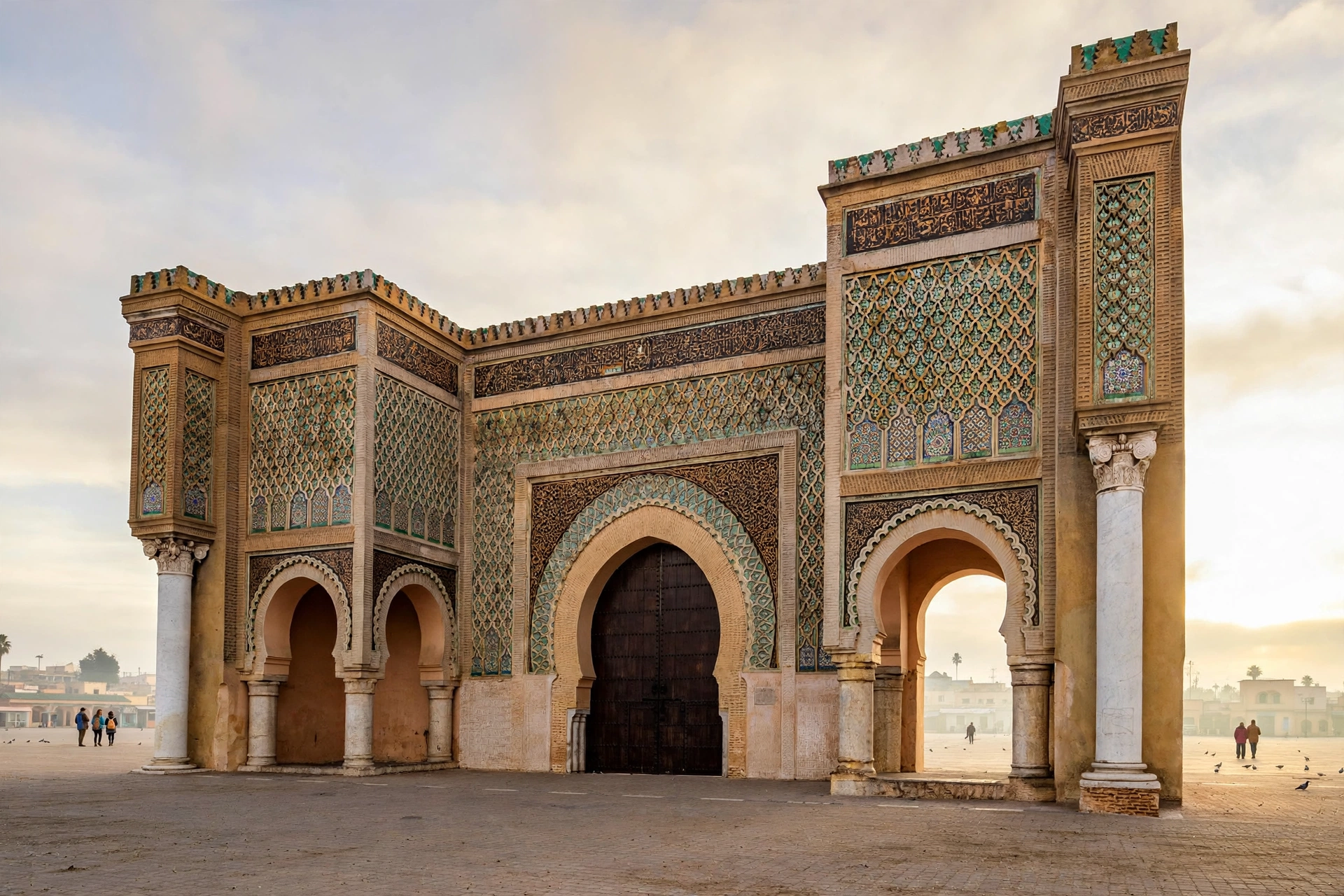
After Moulay Ismail, the dynasty survived a century of chaos, a French and Spanish protectorate (1912–1956), and the return of independence under Mohammed V, the king Moroccans still call the father of independence. His son Hassan II ruled for 38 years; his grandson, Mohammed VI, has ruled since 1999, moving the capital’s gravity firmly to Rabat and building the Tanger Med port and the high-speed Al Boraq train. The kings of morocco dynasties did not end with the history books — the current one is still writing its chapter, and the Mausoleum of Mohammed V in Rabat is the place to feel that continuity.
How to Visit the Dynasties Today
You do not need a history degree to follow this story — you need a train ticket and a week. Here is the route we recommend, in chronological order, so you can follow the kings of morocco dynasties and the buildings arrive in the same sequence as the story.
Start in Fes (Idrisids and Marinids, two days). Enter the Bou Inania Madrasa in the morning before the crowds, then spend an afternoon getting lost in Fes el-Bali. The medina of Fez is a UNESCO World Heritage site, and the listing explains why its 9,000 lanes are worth protecting (UNESCO, Medina of Fez). Budget around 300–500 MAD (about $30–50) a day in Fes — prices checked November 2026.
Then Meknes and Volubilis (Idrisids and Alaouites, one day). Take the train from Fes to Meknes (about 40 minutes, roughly 30–40 MAD), walk through Bab Mansour at sunset, and the next morning take a grand taxi to Volubilis (about 30 minutes) to see the Roman city where Idris I founded his state.
Then Rabat (Almohads and Alaouites, one day). The Hassan Tower and the Mausoleum of Mohammed V sit side by side: an unfinished Almohad dream next to the finished tomb of the modern dynasty. It is the best single place in Morocco to feel twelve centuries in one view.
Finish in Marrakech (Almoravids, Almohads, Saadians, three days). See the Koutoubia at dawn, find the Almoravid Koubba, walk the ruins of El Badi, and pay your respects at the Saadian Tombs. The full sweep of the kings of morocco dynasties is written into the streets of these four cities, and Marrakech is where the most chapters overlap. For the wider history, see the History of Morocco on Wikipedia.
If you want the story told aloud, our companion channel Kings of Morocco on YouTube tells the same dynasties episode by episode, in order, from the Idrisids onward — this article is its written companion, and the two are designed to be used together.
Why the Dynasties Still Matter
Morocco is one of the few countries in the world where the same royal house that ruled in the seventeenth century still rules today, and where you can have breakfast in a ninth-century medina. The kings of morocco dynasties are not a distant list of names: they are the reason Fes has its madrasas, Marrakech has its Koutoubia, Meknes has its gate, and Rabat has its tower. Walk the route, and the twelve centuries stop being history and start being a place you have actually been.
Frequently Asked Questions
Who were the first kings of Morocco?
The Idrisids, from 788. Idris I founded the first Moroccan state at Volubilis and began the city of Fes, although the exact founding date of Fes is disputed (789 or 808). His dynasty ruled, in various forms, until 974.
Which Moroccan dynasty built Marrakech?
The Almoravids, under Yusuf ibn Tashfin, founded Marrakech around 1070. The Almohads and Saadians later rebuilt and expanded it, giving the city the Koutoubia minaret and the El Badi Palace.
What is the current dynasty of Morocco?
The Alaouites, in power since 1666. The current king is Mohammed VI, who has reigned since 1999. The dynasty is one of the oldest continuously ruling royal houses in the world.
Which imperial city should I visit first?
Fes, if you love history and crafts, because the Idrisid medina and the Marinid madrasas are unmatched. Marrakech, if you want the grandest single set of dynastic monuments. Meknes, if you want the quietest — and the most impressive gate in Morocco.
Can I visit the Koutoubia, the Saadian Tombs and the Bou Inania Madrasa?
Yes, all three are open to visitors. The Koutoubia is a working mosque, so you admire the minaret and gardens from outside; the Saadian Tombs and the Bou Inania Madrasa are open to non-Muslim visitors for a small entry fee (around 10–70 MAD, checked November 2026).