
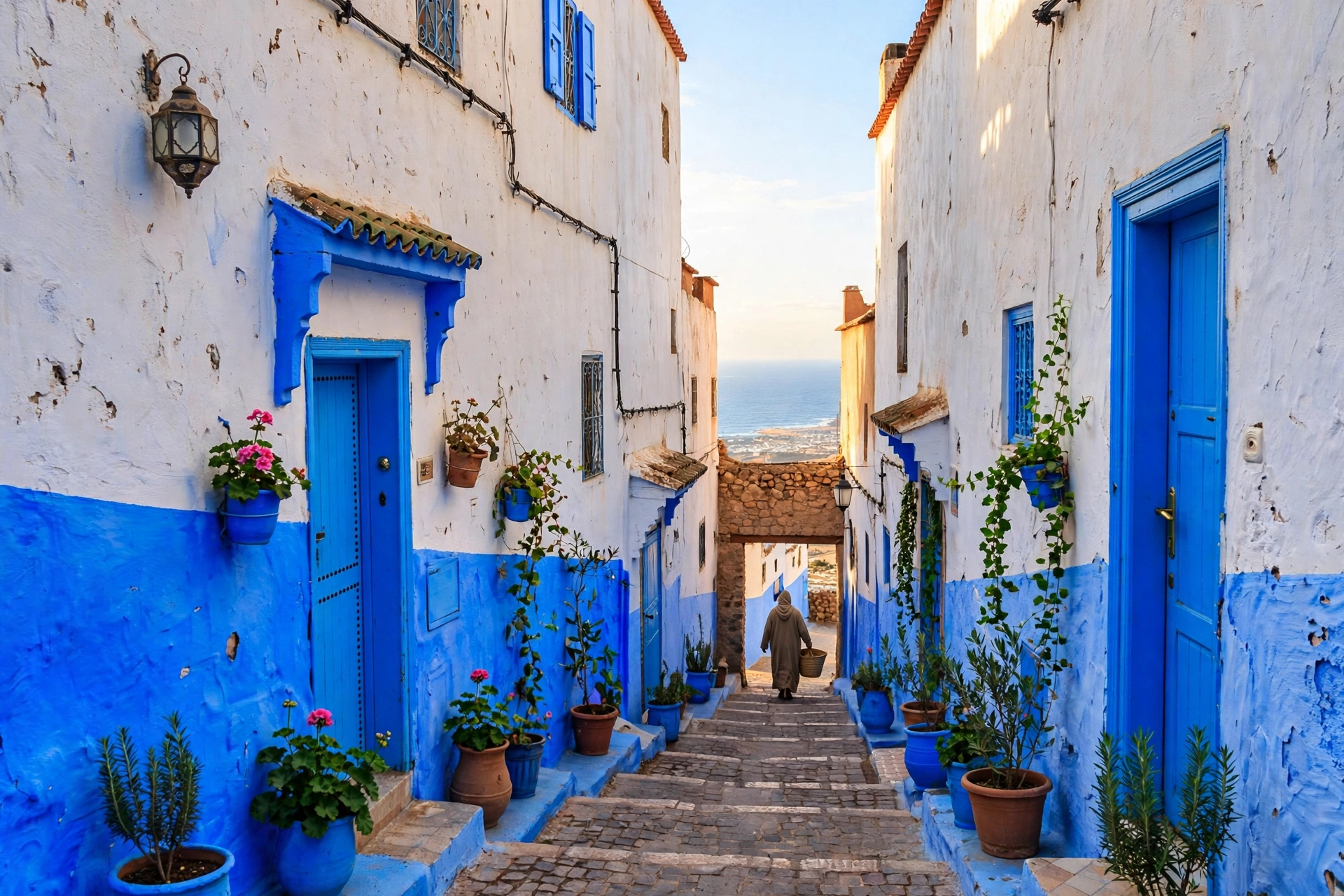
Rabat is the capital of Morocco, a white Atlantic city at the mouth of the Bou Regreg river, facing its older twin Salé across the water. It is the seat of the king and the government, a UNESCO World Heritage city since 2012, and — this surprises almost every first-time visitor — one of the most relaxed and walkable cities in the country. This rabat travel guide begins with an honest correction: Rabat is not the boring administrative stopover that travel forums describe.
This rabat travel guide is written by a Moroccan explaining his own country, so expect plain talk about the drawbacks as well as the charms. What it offers instead is space, calm and depth: layers of history from Roman Sala Colonia to the Almohad empire, the Merinid necropolis of Chellah, and a modern capital that keeps its green spaces, its museums and its seafront within easy reach.
Use this rabat travel guide to plan two or three unhurried days in the capital, whether you arrive on the Al Boraq high-speed train from Tangier or Casablanca, or you are passing through on a longer Moroccan journey. You will find practical prices in dirhams, honest advice about where to stay, and the small details that make the difference between seeing Rabat and actually enjoying it.
In this guide:
- Why Visit Rabat?
- Getting to Rabat and Getting Around
- The Kasbah of the Udayas and the Medina
- Hassan Tower, the Mausoleum and Chellah
- Beaches, Parks and Day Trips
- Where to Stay in Rabat
- Practical Costs and Tips
- Frequently Asked Questions
Why Visit Rabat? This Rabat Travel Guide Starts With an Honest Answer
The real reason to come here, as this rabat travel guide explains, is the feeling of the city. Rabat moves at a different speed from the rest of Morocco. The avenues are wide and lined with trees, the traffic is calmer than in Casablanca, and you can walk from the medina to the beach in half an hour without being stopped every few metres by someone offering you a tour.
In this rabat travel guide, Rabat is presented as it is: a capital that earns its UNESCO listing through the whole city, not a single monument. The World Heritage inscription covers the historic centre, the Kasbah, the medina, the Almohad walls and the modern planned city of the early twentieth century.
Rabat also suits a particular kind of traveller. Families with children do well here, and so do travellers who like museums, gardens and long seaside walks. If you are planning a wider Moroccan trip, pair this guide with our Morocco travel guide for first-time visitors, which covers visas, money, transport and etiquette across the country.
Getting to Rabat and Getting Around
The best rabat travel guide advice about transport is simple: you do not need a car here. Rabat is the easiest Moroccan city to navigate without one. Rabat Agdal station sits on the Al Boraq high-speed line, which runs from Tangier through Kenitra and Rabat to Casablanca, and it connects the capital to the north in about an hour and twenty minutes from Tangier. Check timetables and book tickets on the ONCF website, the national railway operator.
As any honest rabat travel guide should say, the train is also the best way to reach Rabat from the airport. There is no direct airport in the capital itself. Most visitors fly into Casablanca’s Mohammed V airport and take the train north, or into Tangier and ride the Al Boraq south. From Casablanca airport, allow roughly two hours to Rabat by train, changing at Casa Voyageurs or Casa Port.
The Tram: Rabat’s Best-Kept Secret
The Rabat–Salé tramway, opened in 2011, runs two lines through the city and across the Bou Regreg into Salé. It is clean, frequent and cheap, and it connects the train stations, the medina, the university districts and the beach. A single ticket costs 6 MAD (about $0.60), and you can buy rechargeable cards at the stations. Ride it at rush hour and you will see the real Rabat: students, office workers and families going about their day.
Taxis, Buses and Walking
Petits taxis, the small blue cars, handle short trips inside the city. Insist on the meter, which drivers are obliged to use, and expect 10 to 20 MAD (about $1 to $2) for most central rides. A good rabat travel guide also warns about the airport-style trap: some drivers at the train stations quote a flat price to newcomers, so agree the meter before you get in. Walking is the real pleasure here.
| Transport | Typical price (MAD) | Approx. USD |
|---|---|---|
| Tram single ticket | 6 MAD | about $0.60 |
| City bus | 5 MAD | about $0.50 |
| Petit taxi, central ride | 10–20 MAD | about $1–$2 |
| Train Rabat–Casablanca | 50–90 MAD | about $5–$9 |
| Al Boraq Tangier–Rabat Agdal | 180–280 MAD | about $18–$28 |
| Grand taxi Rabat–Salé | 5–8 MAD | about $0.50–$0.80 |
Prices checked November 2026. Fares vary by time of day and ticket type; the ONCF site has the current train prices.
The Kasbah of the Udayas and the Medina
This rabat travel guide puts the Kasbah of the Udayas first, because it is the soul of the city. The fortress stands on a cliff above the river mouth, where the Bou Regreg meets the Atlantic, and its walls have guarded the harbour since the twelfth century. The Kasbah’s blue-and-white lanes predate Chefchaouen’s fame as a blue city — Rabat was painting its walls this way long before the northern town became an Instagram destination, and locals will tell you so with quiet pride.
The Andalusian Gardens and the Kasbah Café
Inside the Kasbah, the Andalusian Gardens are a small walled paradise of orange trees, fountains and shaded paths, laid out in the early twentieth century. Next door, the Café Maure serves mint tea on a terrace overlooking the river and Salé, and it is the classic Rabat pause. A pot of tea costs around 15 MAD (about $1.50), and the view over the water at sunset is worth far more. The rabat travel guide verdict: come here on your first afternoon and sit down.
The Medina: Calmer and Cheaper Than Marrakech
Below the Kasbah, Rabat’s medina is a working neighbourhood rather than a tourist show. The main street, Souika, sells clothes, shoes and household goods to locals, and the side lanes hold carpenters, tailors and small food stalls. Prices here are noticeably lower than in Marrakech’s souks, and the haggling is gentler — vendors expect a negotiation, but they do not chase you down the street.
Hassan Tower, the Mausoleum and Chellah
No rabat travel guide is complete without the city’s great unfinished monument. Hassan Tower is the red sandstone minaret of a mosque begun in the late twelfth century under the Almohad sultan Yaqub al-Mansur, and never finished. The exact dates of the project are not fully settled — sources generally place the start in the 1190s — but the reason it stopped is clear enough: the sultan died, the empire turned elsewhere, and the great mosque was left as a ruin that became a symbol of the city.
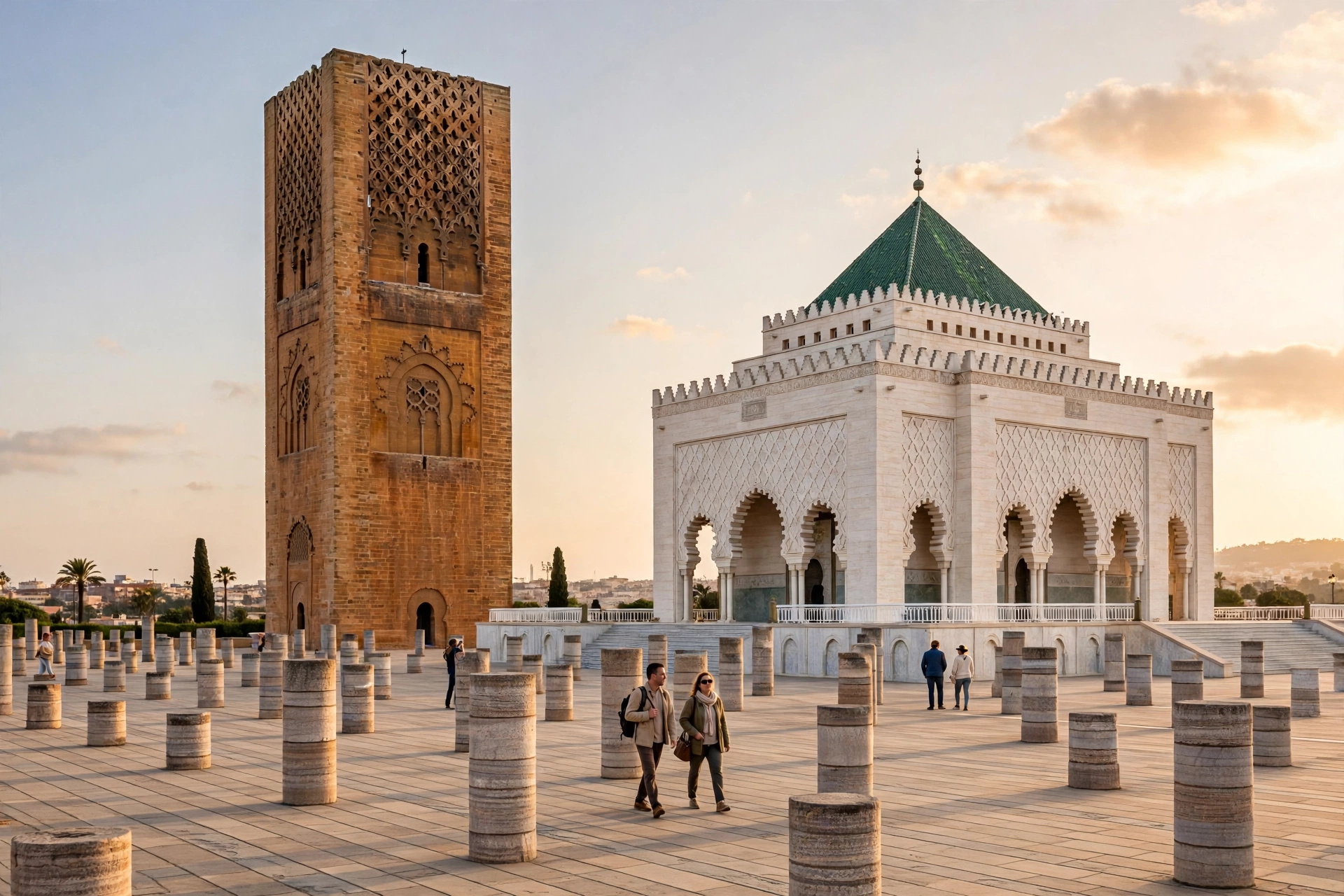
Beside the tower stands the Mausoleum of Mohammed V, a white marble building with a green tiled roof, built for the king who led Morocco to independence and completed in the early 1970s. Visitors are welcome and entry is free, but dress modestly, keep your voice low and ask before taking photographs. This rabat travel guide recommends visiting at golden hour, when the sandstone of the tower turns the colour of honey and the whole esplanade glows.
Chellah: Romans, Merinids and Storks
Chellah is Rabat’s most atmospheric site, and the one most visitors miss. A short taxi ride south of the centre, the walled necropolis sits on the site of Roman Sala Colonia, a port town that traded along the Atlantic coast in the first centuries of our era. Centuries later the Merinid sultans of the fourteenth century rebuilt it as a royal burial ground, adding a mosque, a madrasa and a great gate. The result is a layered ruin where Roman columns stand beside Merinid arches, and the whole place is overgrown with gardens.
The storks are the real residents of Chellah. Go in the late afternoon, when the light is soft and the gardens are quiet, and allow at least an hour. Entry costs around 70 MAD (about $7). If you enjoy Roman history, our Volubilis guide covers Morocco’s great Roman city inland, but Chellah is the wilder, greener cousin.
Beaches, Parks and Day Trips
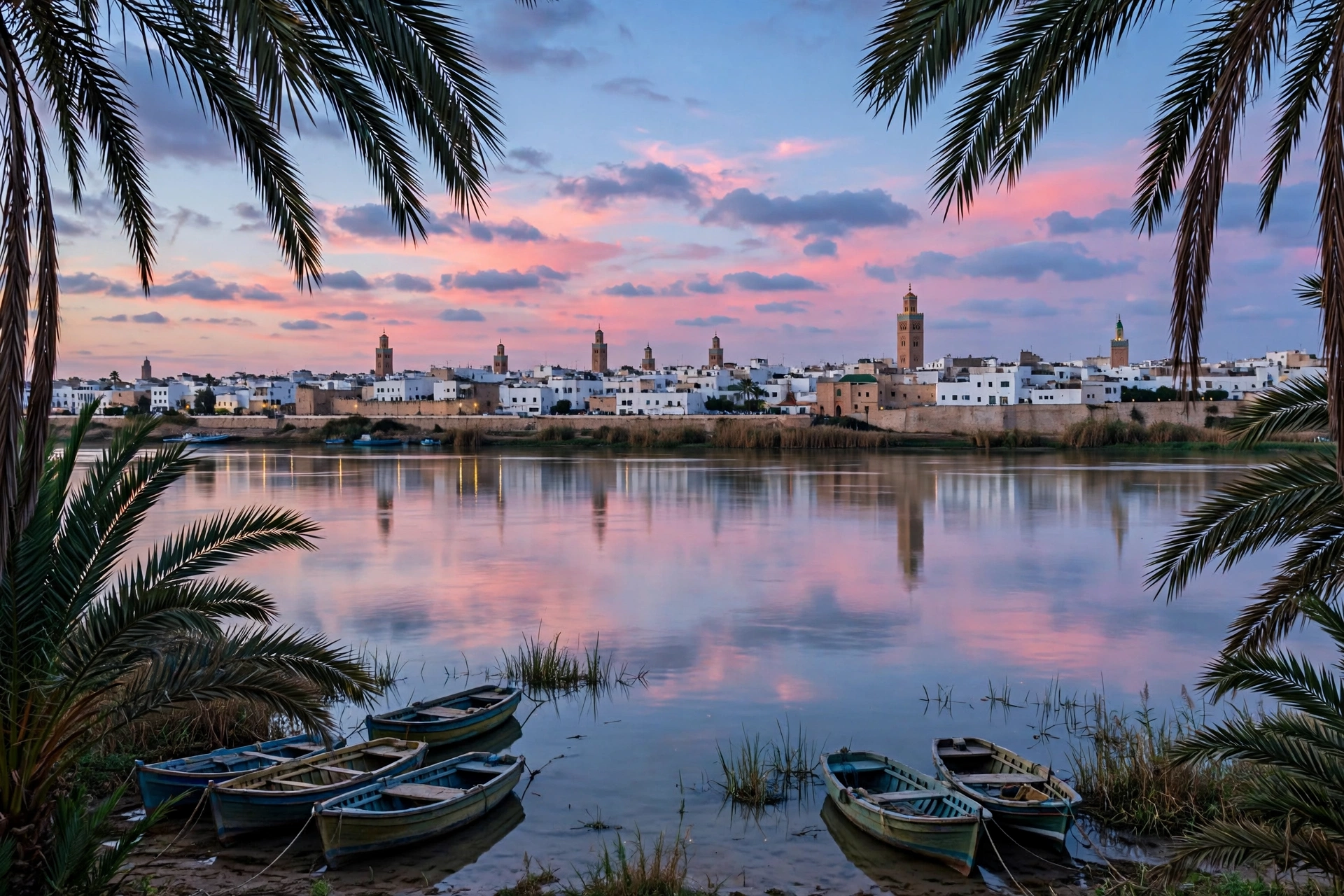
This rabat travel guide treats Salé as part of Rabat, not a separate trip. The two cities face each other across the Bou Regreg, and the tram crosses the river in minutes. Salé is older, rougher and cheaper than Rabat. Walk across the Hassan II bridge at sunset, or take the small ferry across the river, and you will see the capital from its best angle: the Kasbah on the cliff, the tower on the hill, and the whole skyline reflected in the water.
Rabat’s Beaches: Honest Expectations
Rabat has several beaches, and honesty matters here. The main city beach, Plage de Rabat, sits below the Kasbah and is popular with families and football players, but the water is cold and the Atlantic current is strong, so most people swim only in summer and stay close to shore. A rabat travel guide day trip to the beach works best as a walk, a swim in July or August, and a seafood lunch. For a dedicated beach holiday, compare with our Agadir travel guide, which covers Morocco’s warmest and widest Atlantic bay.
Where to Stay in Rabat
This rabat travel guide divides the city into three bases, and the right choice depends on your style. The medina and Kasbah area suits travellers who want atmosphere: small riads and guesthouses inside the old walls, a short walk from the river and the beach. Expect roughly 400 to 900 MAD (about $40 to $90) per night for a good riad room, and book early in spring and autumn.
For families, this rabat travel guide suggests Agdal, the modern district around the high-speed station. The hotels here are larger and more predictable, the restaurants are plentiful, and the tram runs straight to the centre. Mid-range hotels in Agdal cost roughly 600 to 1,500 MAD (about $60 to $150) per night, and the area suits business travellers and longer stays.
Whatever you choose, a rabat travel guide tip applies everywhere in the city: book ahead for the winter months, when European visitors arrive for the mild weather, and for the big conference seasons, when hotels fill up. If you are comparing coastal cities before you decide, our Essaouira travel guide covers the windier, more bohemian Atlantic alternative to the south.
Practical Costs and Tips
This rabat travel guide prices a comfortable day in the capital at roughly 400 to 700 MAD (about $40 to $70) per person, including a mid-range hotel share, meals, tram rides and one paid sight. Most of the great sights — the Kasbah, Hassan Tower, the Mausoleum and the medina — are free, which is one reason Rabat is such good value.
| Sight or cost | Price (MAD) | Approx. USD |
|---|---|---|
| Kasbah of the Udayas | Free | $0 |
| Hassan Tower and esplanade | Free | $0 |
| Mausoleum of Mohammed V | Free | $0 |
| Chellah necropolis | 70 MAD | about $7 |
| Andalusian Gardens | Free or a few MAD | about $0–$0.50 |
| Mohammed VI Museum of Modern Art | 40 MAD | about $4 |
| Mint tea in the Kasbah | 15 MAD | about $1.50 |
| Lunch in a local restaurant | 50–80 MAD | about $5–$8 |
Prices checked November 2026. Entry fees and menu prices change; ask at the gate or check the menu before you order.
Money, Language and Etiquette
Cash is still king in the medina, so carry small notes and coins. Cards work in hotels, larger restaurants and supermarkets, but the market stalls, the small cafés and the taxis are cash-only. This rabat travel guide’s honest advice on bargaining is simple: haggle in the souk, never in a restaurant or a shop with fixed prices, and keep it friendly.
Frequently Asked Questions
How many days do I need in Rabat?
Two full days cover the essentials — the Kasbah and medina on day one, Hassan Tower, the Mausoleum and Chellah on day two — and this rabat travel guide recommends adding a third day for Salé, the beach and the parks. Rabat rewards a slow pace, so do not try to squeeze it into a single afternoon.
Should I visit Rabat or Casablanca?
Visit both if you can, but choose Rabat if you want history, calm and the seaside. Casablanca is bigger, busier and more modern, and its Hassan II Mosque is extraordinary, but Rabat is the more pleasant city to walk around and the easier one to enjoy without a plan.
Is Rabat safe for tourists?
Yes — Rabat is widely regarded as one of the safest cities in Morocco. Violent crime against visitors is rare, the streets are well policed, and the medina is calmer than those of Marrakech or Fes. As this rabat travel guide notes, the normal precautions apply.
Can you swim at the beach in Rabat?
Yes, in summer, but with care. The Atlantic water is cold for much of the year, usually warming up enough to swim comfortably from June to September, and the currents can be strong. Swim only where lifeguards are present, stay inside the marked areas, and never swim when the red flag is up.
Is Rabat expensive compared to other Moroccan cities?
Rabat is mid-priced by Moroccan standards: more expensive than Fes or Meknes, cheaper than Marrakech’s tourist zones and Casablanca’s business hotels. As this rabat travel guide notes, the capital’s advantage is that its best sights are free, its transport is cheap, and its restaurants serve locals as well as visitors, which keeps prices honest.
When is the best time to visit Rabat?
Spring, from March to May, and autumn, from September to November, are the best seasons, with warm days, cool evenings and the gardens in flower. Summer is pleasant by the sea but crowded on the beaches, and winter is mild, with temperatures rarely below 10°C, though rain is possible.
Use this rabat travel guide as a starting point, not a script. Rabat is a city that rewards the traveller who slows down, and its best moments are rarely the ones in the photographs: a pot of tea above the river, the storks circling over Chellah, the tram rolling across the Bou Regreg at dusk, the blue lanes of the Kasbah empty in the early morning.