
Casablanca is Morocco’s economic capital, a city of around four million people where the country’s biggest companies, banks and ports do their business. It is louder, faster and more spread out than any other Moroccan city, and that scale is exactly why choosing the right district matters so much. This guide to the best neighbourhoods to live in Casablanca compares the areas expats actually choose, with honest rents in dirhams and practical advice for signing a lease.
There is no single right answer. A single remote worker, a family with two school-age children and a manager transferred to a Casablanca office will choose very differently, and the best neighbourhoods to live in Casablanca for one of them may be the worst for another. Expect plain talk about traffic, noise and summer humidity, alongside the real charms of each area, from palm-lined avenues to quiet family streets.
Use this guide alongside our Casablanca travel guide and our broader Living in Morocco guide. Rents below are indicative ranges from listings and local agencies in November 2026, not guarantees: the exact price always depends on the street, the building and your negotiating skills. The best neighbourhoods to live in Casablanca reward a slow start — rent short-term first, then commit once you know the streets.
In this guide:
- How to Choose Among the Best Neighbourhoods to Live in Casablanca
- Maârif: The Expat Default
- Anfa and Bourgogne: Quiet and Green
- Ain Diab and the Corniche: Sea Air
- Californie and Sidi Maârouf: New Builds
- Dar Bouazza: Coastal Escape
- The Old Medina and Habous
- Where Not to Live as a Newcomer
- Renting in Casablanca
- Frequently Asked Questions
How to Choose Among the Best Neighbourhoods to Live in Casablanca
Start with your daily life, not with a map. The best neighbourhoods to live in Casablanca for a remote worker who needs quiet and fast internet are not the same as those for a family that needs a school run and a garden. Before you shortlist anywhere, decide what you will not compromise on: a short commute, a quiet street, parking, or a budget ceiling.
Then test the city in person: spend a week in a short-term rental in your favourite area and walk its streets at noon and at midnight. The best neighbourhoods to live in Casablanca reveal their drawbacks only after dark, when a main road fills with traffic or a wedding hall starts up nearby. A daytime viewing says almost nothing about noise.
One insider correction is worth making early. Newcomers often assume the expensive glass towers along the Corniche are the best addresses in the city, and pay a premium for sea views they barely use. Many long-term residents live just as well in Maârif or Bourgogne for far less. And the idea that Casablanca is all concrete misses the green pockets of Anfa and the calm of the Habous. See Wikipedia’s Casablanca overview for the city’s history and scale.
Maârif: The Expat Default — and Why It Earns the Title
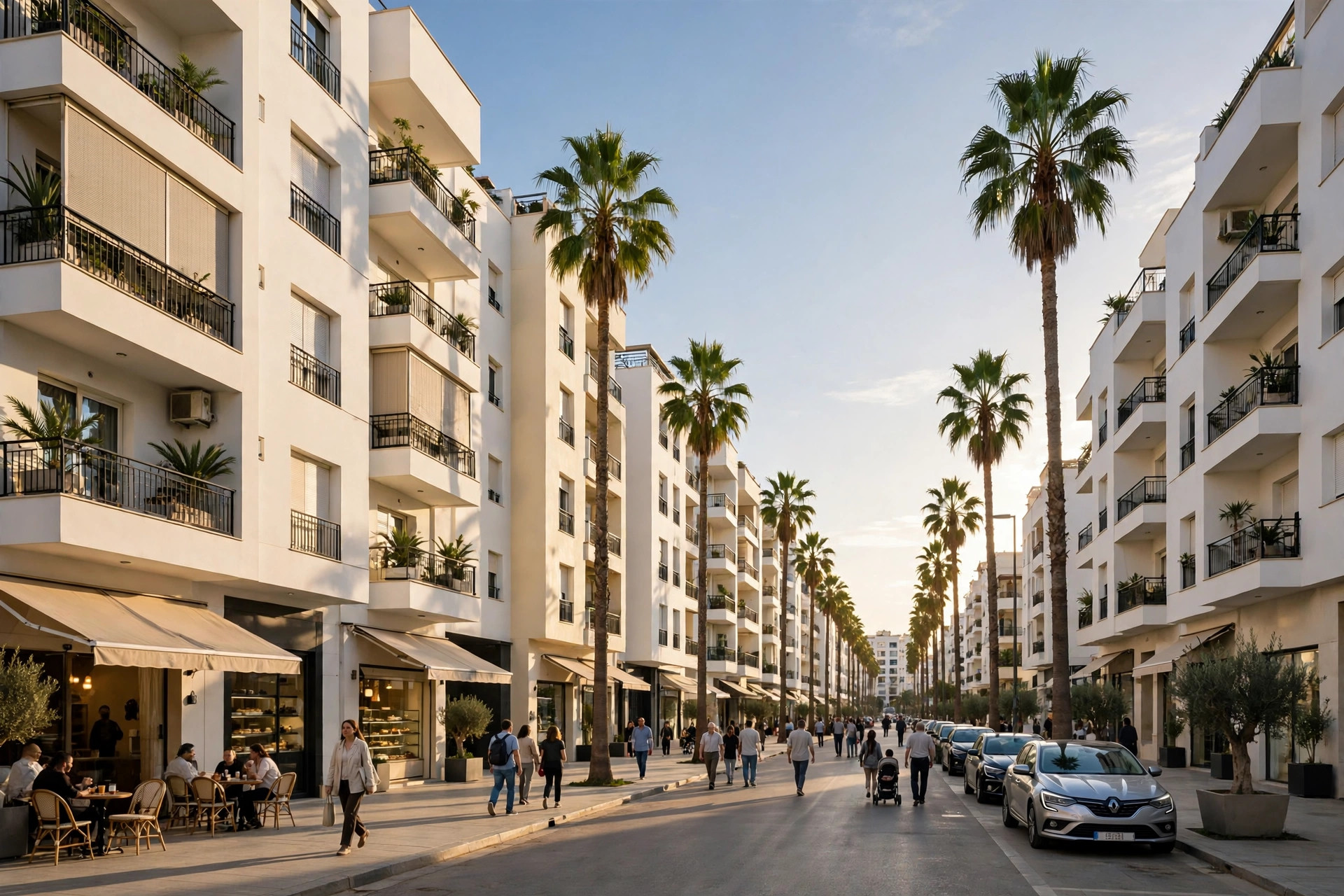
Maârif is the default first home for most expats in Casablanca, and it earns that status. Built around broad avenues, it is a dense, walkable district of mid-rise apartment buildings, cafes, restaurants and gyms. The best neighbourhoods to live in Casablanca almost always start with Maârif, because it is the easiest place to land: you can find a furnished flat quickly, walk to almost everything, and meet other newcomers without trying.
A one-bedroom apartment in Maârif costs 5,500 to 9,000 MAD (about $550 to $900) a month, and a two-bedroom 8,000 to 14,000 MAD (about $800 to $1,400). The main avenues stay busy late, so a flat on a busy road needs double glazing. Maârif suits singles, couples and remote workers best.
Anfa and Bourgogne: Quiet, Green and Residential
Anfa and Bourgogne sit just west of Maârif, and together they form the quiet, green, residential heart of the city. Anfa is the older, grander district, with wide streets, villas behind high walls and the city’s priciest addresses. Bourgogne is its friendlier neighbour: leafy streets, apartment buildings with gardens, and a calm, family feel. The best neighbourhoods to live in Casablanca for a balance of calm and convenience often come down to a choice between these two districts and Maârif.
Expect to pay 7,000 to 12,000 MAD (about $700 to $1,200) a month for a one- or two-bedroom apartment in Bourgogne, and 10,000 to 18,000 MAD (about $1,000 to $1,800) in Anfa, where villas start around 20,000 MAD. Several international schools are a short drive away — see our guide to schools in Morocco for expat families. The centre is a ten-minute drive away.
Ain Diab and the Corniche: Sea Air and High Rises
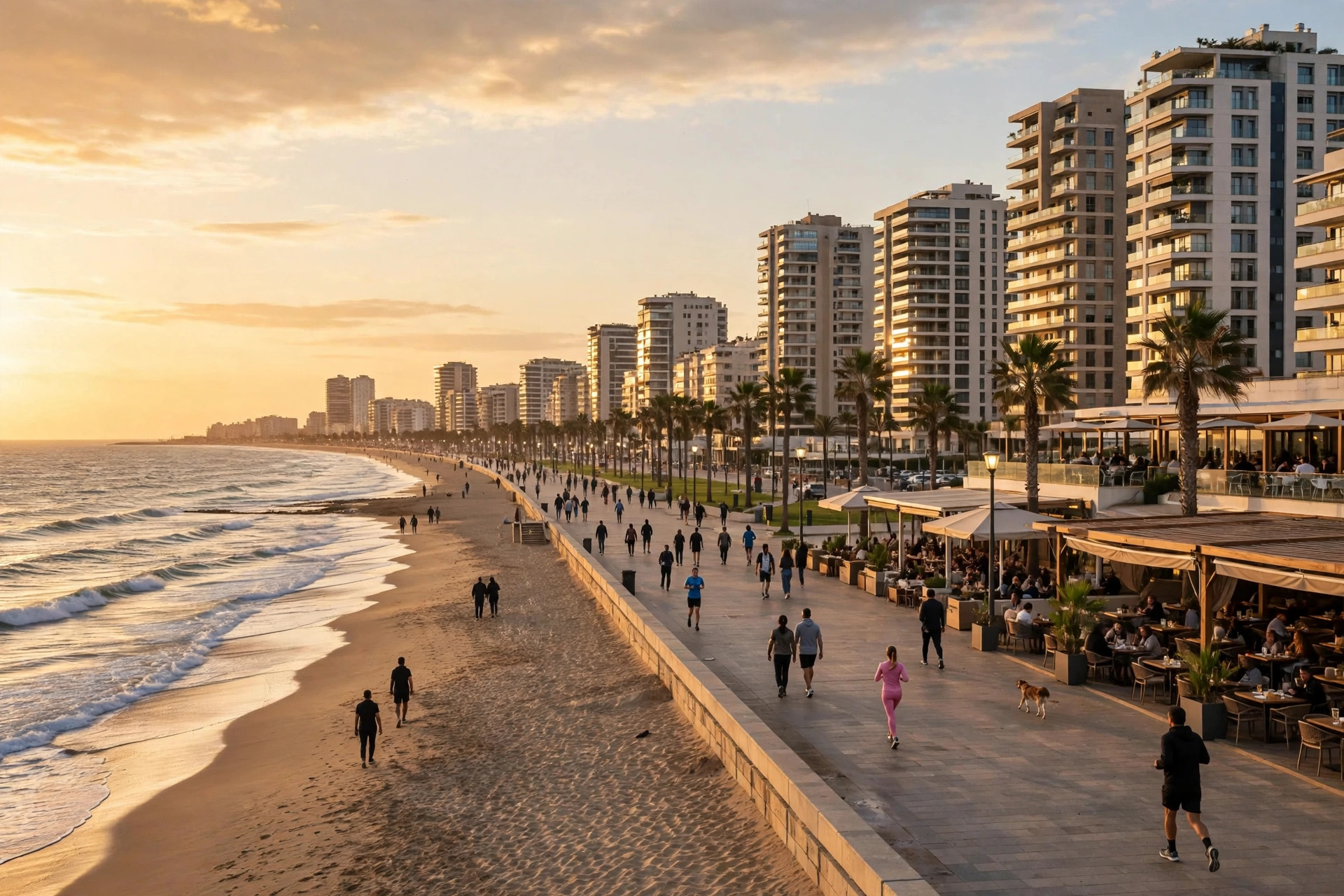
Ain Diab is Casablanca’s seaside playground: a long beach, a corniche promenade, beach clubs and restaurants, all facing the Atlantic. The Corniche towers offer sea views, modern flats and a resort feel, and for some expats that is the point. Among the best neighbourhoods to live in Casablanca for a sea view and a social life, Ain Diab has no rival — but it is a holiday address as much as a home, and that matters when you sign a year-long lease.
Rents here are the highest in the city outside Anfa: a one-bedroom flat in a Corniche tower costs 8,000 to 15,000 MAD (about $800 to $1,500) a month, and a two-bedroom 12,000 to 22,000 MAD (about $1,200 to $2,200). Winter brings a real Atlantic wind, the beach clubs are loud on summer weekends, and the drive into the centre can take 30 minutes at rush hour.
Californie and Sidi Maârouf: New Build Comfort on the Edge
Californie and Sidi Maârouf are Casablanca’s newer answers to the housing question: modern apartment complexes, wide roads, underground parking and, in Sidi Maârouf, the city’s biggest business park. They feel less like old Casablanca and more like a planned suburb, which is either their charm or their flaw. The best neighbourhoods to live in Casablanca for a modern flat with reliable infrastructure include Californie and Sidi Maârouf, especially if your office is in the business district.
A one-bedroom apartment in Californie costs 5,000 to 8,500 MAD (about $500 to $850) a month, and a two-bedroom 7,500 to 12,000 MAD (about $750 to $1,200); Sidi Maârouf is similar, with slightly lower prices. Both districts suit professionals working in the nearby offices and couples who want a car-friendly life. The trade-off is atmosphere: the streets are quieter and the cafes fewer.
Dar Bouazza: The Coastal Escape Just Outside the City
Dar Bouazza is not technically in Casablanca at all: a coastal town about 20 kilometres south-west of the city, it has become the escape valve for expats who want a house by the sea without the Corniche price tag. Villas with gardens and a slower rhythm of life draw families and remote workers who only need the city a few days a week. The best neighbourhoods to live in Casablanca are not all inside the city limits, and Dar Bouazza proves the point — provided your work allows the commute.
A three-bedroom villa with a garden in Dar Bouazza costs 10,000 to 18,000 MAD (about $1,000 to $1,800) a month, and smaller houses start around 7,000 MAD (about $700). The drive into central Casablanca takes 30 to 45 minutes, longer at rush hour, so it works best if you drive and can choose your hours. Check the water supply and road access in winter before you sign.
The Old Medina and Habous: Character, Contrast and Compromise
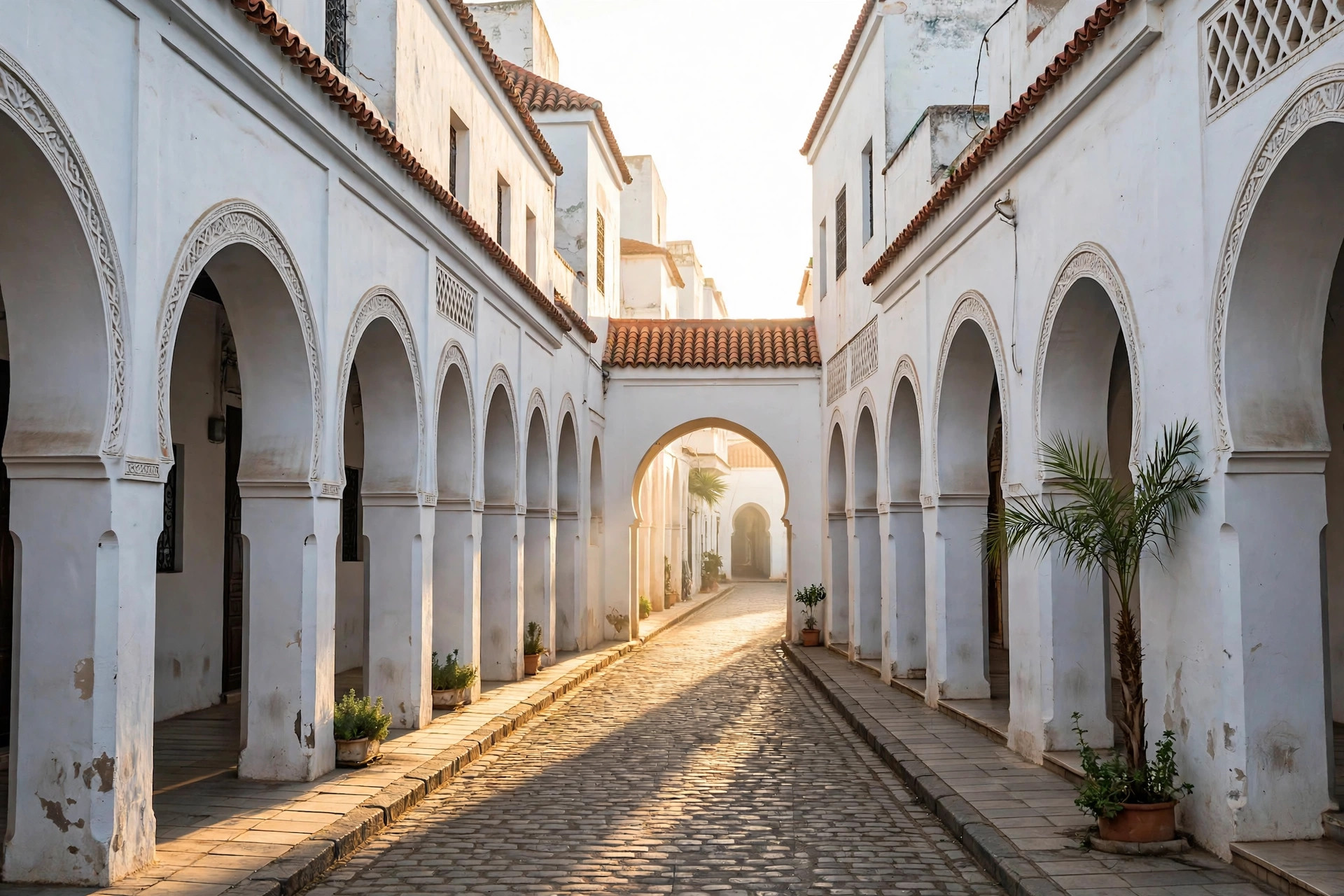
The old medina and the Habous quarter offer the opposite of the Corniche towers: whitewashed arcades, quiet lanes, traditional markets and some of the most beautiful streets in the city. The Habous, built in the 1920s, is a planned quarter of Moorish arches and craft shops. Among the best neighbourhoods to live in Casablanca for character and low rents, the Habous deserves a look — but the medina itself is a much harder place to live than to visit.
Small apartments in the Habous area cost 3,500 to 6,000 MAD (about $350 to $600) a month, and a restored house in the medina 5,000 to 10,000 MAD (about $500 to $1,000), depending on the street. The Habous suits singles and couples who want charm on a budget and do not mind walking everywhere. The old medina suits almost no newcomer: narrow lanes, no car access and damp in winter.
Where Not to Live as a Newcomer
Not every district in a city of four million people is a good first home, and the best neighbourhoods to live in Casablanca are defined as much by what they are not. Avoid signing a year-long lease in the far outer suburbs — Sidi Bernoussi, the industrial edges of Hay Mohammadi, or the new towns beyond the ring road — before you know the city. Rents look tempting, but the commutes are long, the services thin, and English is rare.
Be cautious around the station area and the port district at night, where the streets are busy with traffic rather than residents, and avoid ground-floor flats on main roads unless they have proper shutters and double glazing. Never pay a deposit before viewing a property in person, and be wary of listings whose photos look too good and whose price looks too low — the classic signs of a scam that targets newcomers.
Renting in Casablanca: Contracts, Costs and Where to Look
Whatever area you choose, the rental process is similar across the city. Most landlords ask for one or two months’ rent as a deposit, plus the first month in advance, and many prefer a one-year contract with one to three months’ notice. The best neighbourhoods to live in Casablanca will not protect you from a bad contract, so read every clause: who pays for repairs, whether the rent is fixed for the year, and what happens to your deposit at the end.
Furnished flats cost roughly 20 to 40 percent more than unfurnished ones, and the furniture varies enormously — check the mattress, the water heater and the air conditioning before you sign, not after. The best neighbourhoods to live in Casablanca all have both good and bad landlords, so the building and the owner matter as much as the district. Always visit in person, test the taps and the Wi-Fi, and meet the neighbours.
| Neighbourhood | 1-bed (MAD/month) | 2-bed (MAD/month) | Best for | Commute to centre |
|---|---|---|---|---|
| Maârif | 5,500–9,000 | 8,000–14,000 | Newcomers, remote workers | 10 min walk or taxi |
| Anfa | 10,000–18,000 | 15,000–25,000 | Families, senior managers | 10–15 min by car |
| Bourgogne | 7,000–12,000 | 10,000–16,000 | Families, quiet living | 10 min by car |
| Ain Diab / Corniche | 8,000–15,000 | 12,000–22,000 | Sea views, social life | 25–30 min by car |
| Californie | 5,000–8,500 | 7,500–12,000 | Professionals, modern flats | 20 min by tram or car |
| Sidi Maârouf | 4,500–8,000 | 7,000–11,000 | Business park workers | 25 min by tram |
| Dar Bouazza | 7,000–10,000* | 10,000–18,000* | Families, sea air, space | 30–45 min by car |
Indicative monthly rents, checked November 2026. Ranges depend on the street, the condition of the property and whether it is furnished; at roughly 10 MAD to the dollar, 5,000 MAD is about $500. *Dar Bouazza prices are for houses and villas, not apartments. See also our guide to the best neighbourhoods to live in Marrakech.
| Monthly cost | Single (MAD) | Couple (MAD) | Family of four (MAD) |
|---|---|---|---|
| Rent (1–2 bed flat) | 6,000–9,000 | 8,000–13,000 | 12,000–20,000 |
| Electricity and water | 250–500 | 350–700 | 600–1,200 |
| Internet (fibre) | 200–400 | 200–400 | 250–500 |
| Groceries | 2,000–3,000 | 3,000–4,500 | 5,000–7,500 |
| Transport (taxis and tram) | 400–800 | 600–1,200 | 1,000–2,000 |
| Typical total | 9,000–13,500 | 12,500–20,000 | 19,000–31,000 |
Typical monthly costs beyond the headline rent, checked November 2026. For a wider sense of rents across the country, see our guide to rent prices in Morocco by city, and for cost-of-living data see Numbeo’s Casablanca page.
Frequently Asked Questions
What are the best neighbourhoods to live in Casablanca for families?
For families, the best neighbourhoods to live in Casablanca are usually Bourgogne, Anfa and Dar Bouazza, with Californie as a modern alternative. Bourgogne and Anfa offer quiet streets and proximity to international schools, while Dar Bouazza adds space and sea air for families who can manage the commute.
Is Casablanca safe for expats to live in?
Yes, Casablanca is generally safe, and violent crime against residents is rare. Safety varies more by street than by district, and the well-known residential areas are safe largely because their streets are busy and well lit. Choose a street with people around and use the normal precautions you would use in any big city.
How much should I budget for rent in Casablanca?
As a rough guide, budget 5,500 to 9,000 MAD (about $550 to $900) a month for a decent one-bedroom apartment in Maârif or Californie, and 7,000 to 12,000 MAD (about $700 to $1,200) in Bourgogne. The best neighbourhoods to live in Casablanca for a first flat are usually Maârif or Bourgogne, where the choice is widest and landlords are most used to foreign tenants.
What are the best neighbourhoods to live in Casablanca for remote workers?
Maârif is the usual first choice, with cafes, coworking spaces and reliable fibre internet, followed by Bourgogne for those who want the same infrastructure with quieter streets. Ain Diab works too if you keep flexible hours and can live with the summer noise. Test the internet speed in the flat before you sign.
Do I need a car to live in Casablanca?
It depends on the neighbourhood. In Maârif, Bourgogne and Anfa you can live well without one, using petits taxis that cost 10 to 25 MAD (about $1 to $2.50) for most central rides, plus the tramway. In Californie, Sidi Maârouf and Dar Bouazza a car is almost essential. Many expats start without a car and buy one only after choosing their neighbourhood.
Can I rent in Casablanca without a residency card?
Yes, in practice many landlords will rent to you on a passport alone, especially for a first short-term lease. Some do ask for a residency card, and having one makes everything easier, from signing a long contract to opening a bank account. Start the residency process early and keep copies of every document.
Casablanca gives every expat a different city, and the right neighbourhood is the one that fits your days rather than your postcards. The best neighbourhoods to live in Casablanca are not the prettiest or the cheapest in the abstract: they are the streets where your mornings work, your evenings are quiet, and your budget still leaves room for the life that brought you here.
Spend a week in your shortlisted area before you sign a year-long lease, walk it after dark, talk to the neighbours, and check the water pressure and the Wi-Fi. The best neighbourhoods to live in Casablanca reward that patience — and the city, once you have found your corner of it, tends to keep people far longer than they planned.
1 thought on “Best Neighbourhoods to Live in Casablanca for Expats”