
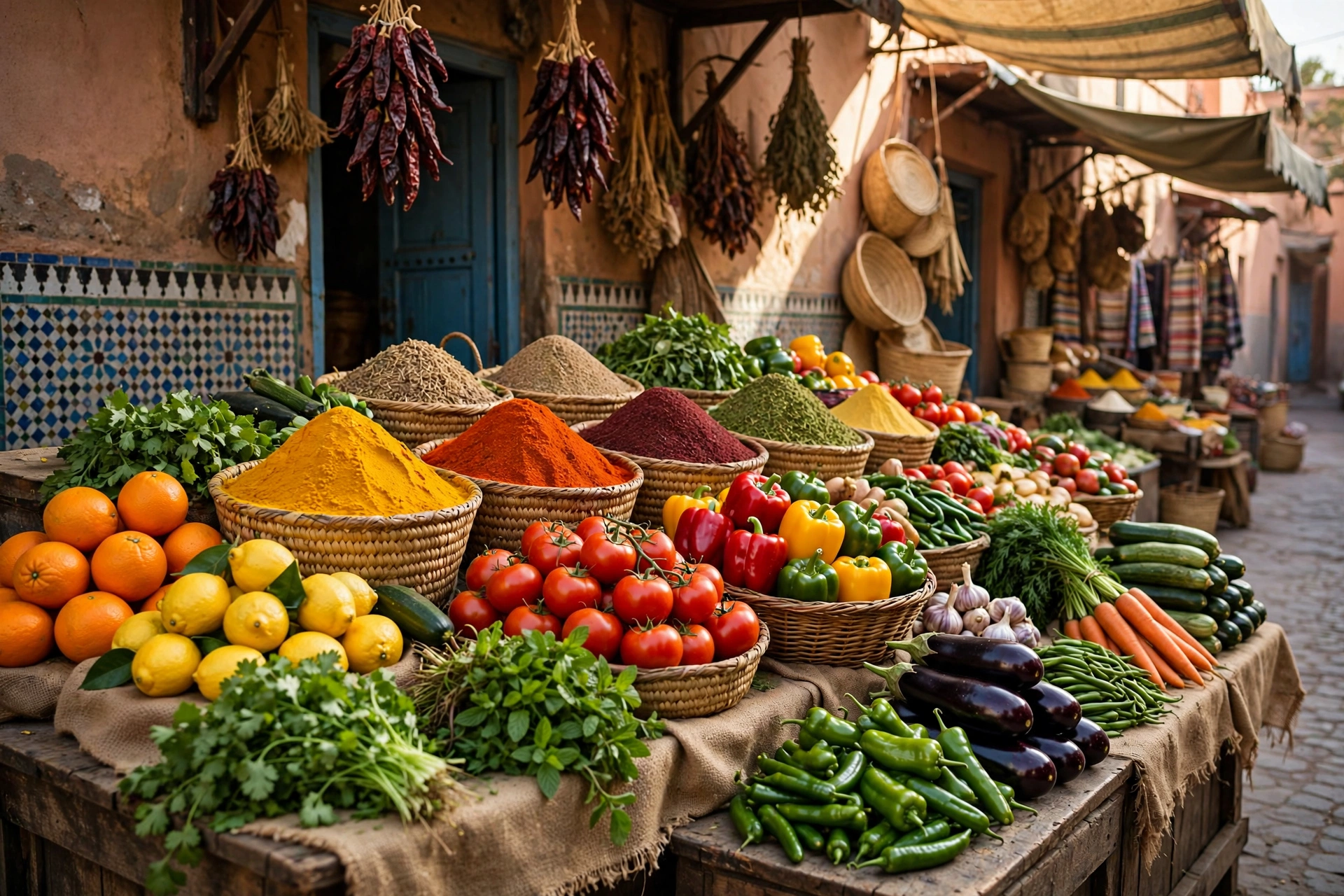
If you are trying to make sense of morocco grocery prices before a move, a long stay or even a month of slow travel, the morning souk is the best place to start. Stalls spill over with tomatoes, oranges, mint and olives, vendors call out prices by the kilo, and a bag that would cost twenty euros back home often comes to less than a third of that here. Food is one of the biggest reasons Morocco feels affordable, and groceries are where that affordability shows up most clearly. This guide gives you real, checked prices, so you can plan a weekly shop with confidence.
All prices in this guide are in Moroccan dirhams (MAD) with a US-dollar equivalent, checked and verified in November 2026 at an exchange rate of roughly 10 dirhams to the dollar. You will find that morocco grocery prices vary more by where and how you shop than by what you buy: the same kilo of tomatoes can cost half as much at a neighbourhood souk as it does in a gleaming hypermarket, and seasonal fruit can double in price from one month to the next. Once you know the pattern, eating well in Morocco is remarkably cheap.
In this guide
- Weekly Basket at a Glance: What a Shop Costs in 2026
- Where to Shop: Souks, Supermarkets and Discount Stores
- What Staples Cost: Prices by Item
- Weekly Basket Totals by Household Size and City
- Regional Price Differences: Big Cities vs Smaller Towns
- How to Pay Less: Practical Tips for the Weekly Shop
- Frequently Asked Questions
Morocco Grocery Prices at a Glance: The Weekly Basket in 2026
For most households, morocco grocery prices work out to roughly 300 to 400 dirhams a week for one person who cooks at home most days, 500 to 650 dirhams for a couple, and 800 to 1,000 dirhams for a family of four. Those figures cover the staples of a Moroccan kitchen — bread, olive oil, vegetables, fruit, eggs, chicken, dairy, tea and coffee — plus cleaning basics. They do not include restaurant meals or imported brands, which are where budgets usually leak. For the bigger picture, see our full breakdown of the cost of living in Morocco.
Two things shape morocco grocery prices more than anything else: the season and the shop. Summer brings tomatoes, peppers and melons at rock-bottom prices; winter favours citrus and root vegetables. Shop at the souk and you pay the local price; shop at a hypermarket and you pay for packaging, air conditioning and imported choice. Neither is wrong — most long-term residents use both, buying fresh produce at the market and pantry goods at the supermarket.
A note on the numbers in this guide. Prices were gathered from souks and supermarkets in Marrakech, Casablanca and smaller towns during November 2026, and cross-checked against the consumer-price data published by Morocco’s Haut-Commissariat au Plan (hcp.ma). Where a price varies, we give a range rather than a single figure, because a kilo of sardines costs less in Essaouira than in Fès. Our Morocco money and dirham guide explains coins, notes and cash habits.
Where to Shop: Souks, Supermarkets and Discount Stores
Understanding morocco grocery prices starts with understanding the three places Moroccans actually buy food. Each has its own price level and its own unwritten rules.
The Souk: Cheapest for Fresh Produce
The souk is where Moroccan food shopping begins, and it is still the cheapest place to buy anything fresh. Vendors sell by the kilo, produce is weighed in front of you, and prices follow the season so closely that a glut of tomatoes in August can halve the price overnight. This is where morocco grocery prices are at their lowest: vegetables, fruit, olives, eggs and fresh fish all cost noticeably less here than under supermarket lights. Go early for the best choice, and late in the afternoon for bargains, when sellers cut prices rather than carry stock home.
A few habits make souk shopping easy. Prices are usually displayed on small cardboard signs, so you rarely need to haggle over vegetables — the posted price is generally the real one. Always watch the scales as your produce is weighed, and buy what is in season. Comparing morocco grocery prices across two or three stalls takes minutes and shows you the fair price fast. Our guide to haggling in Morocco explains when to bargain and when not to.
Supermarkets: Marjane, Carrefour and Acima
Marjane and Carrefour are the big hypermarkets, usually on the edge of large cities, while Acima and Carrefour Market cover the smaller city-centre format. For packaged goods, dairy, frozen food and anything imported, morocco grocery prices at these stores are predictable and clearly labelled, which many newcomers find reassuring.
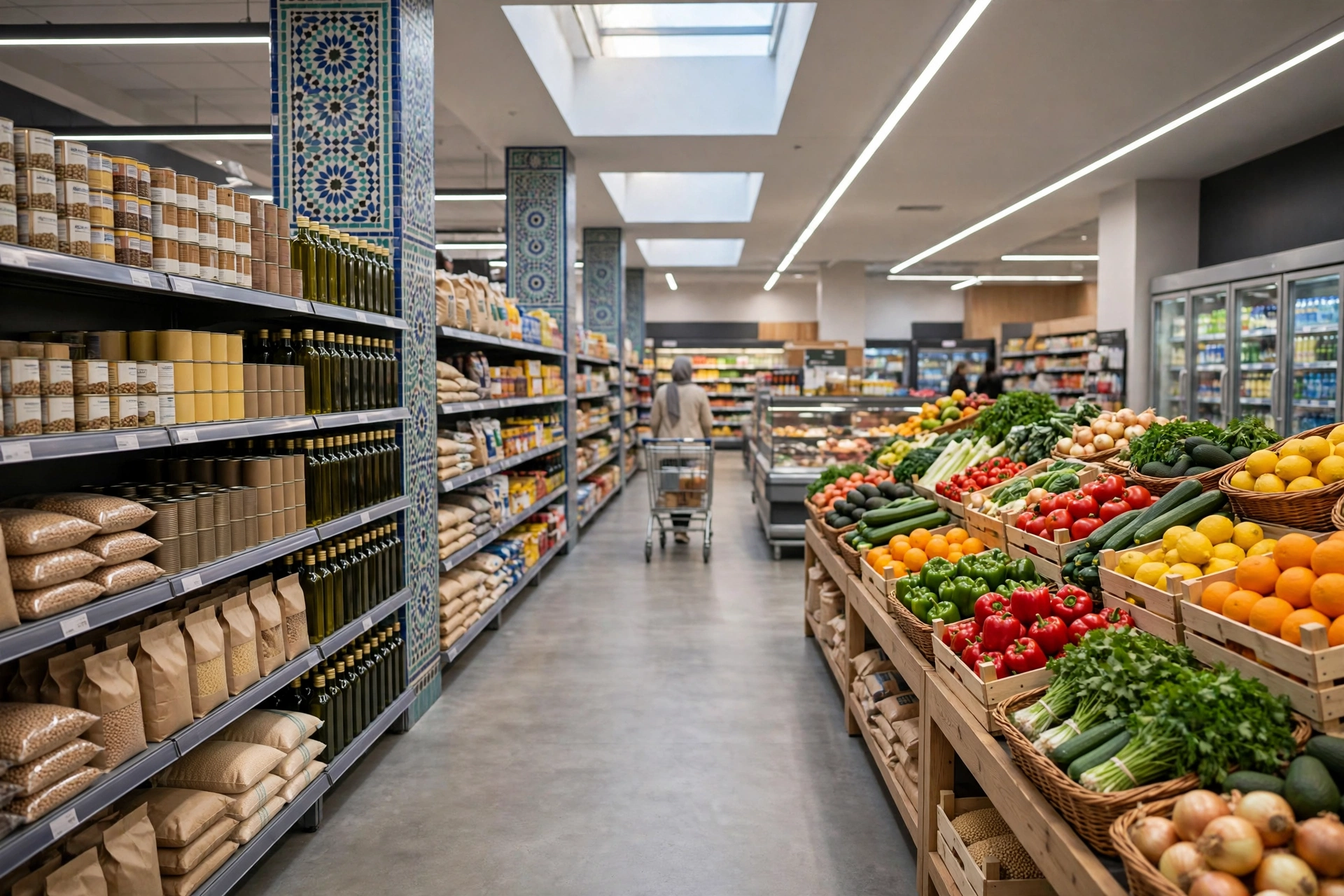
The trade-off is that fresh produce in a hypermarket often costs 30 to 50 percent more than the same item at the souk, and imported brands can cost double what you would pay at home. That gap is the clearest lesson in morocco grocery prices: supermarkets shine for pantry staples bought in bulk, cheese and yoghurt, cleaning products, and the weekly big shop when you have a car. Most run loyalty cards that give small but real discounts, and weekend promotions on cooking oil, rice and laundry products are worth planning around.
BIM and the Discount Shops
The third option is the hard discounter, led by the Turkish chain BIM, which has spread to almost every Moroccan town. BIM shops are small, plain and cheap, with a rotating range of pantry goods, dairy, frozen food and household basics at prices that often undercut the hypermarkets. The catch is the limited range: no full fish counter, and popular items sell out fast. Many residents stop at BIM first for the basics, then fill the gaps at the souk or the supermarket. Used this way, discount shops can shave 10 to 15 percent off a weekly shop, which is a useful saving once morocco grocery prices are your baseline.
What Staples Cost: Prices by Item
The table below gives the prices that matter most, but the story behind morocco grocery prices is just as important as the numbers. Bread, sugar and cooking gas are subsidised in Morocco, which keeps the very basics cheap for everyone. Olive oil is the exception: poor harvests have pushed it to record highs in recent years, and it is now the single most expensive everyday item in many kitchens.
Vegetables and Fruit
Vegetables are the bargain of the Moroccan kitchen. Tomatoes, onions, potatoes, carrots and peppers usually sell for 5 to 9 dirhams a kilo at the souk, with aubergines, courgettes and green beans rarely far behind. Seasonal fruit follows the same pattern: oranges and clementines cost 8 to 12 dirhams a kilo in winter, melons and peaches drop to similar levels in summer, and bananas hold steady at 12 to 15 dirhams all year. This is why morocco grocery prices feel so low to newcomers — a family can eat fresh vegetables at every meal for less than the price of a single takeaway back home.
Meat, Fish and Eggs
Chicken is the everyday protein, at 22 to 28 dirhams a kilo, and most families buy a whole bird rather than pre-cut pieces. Beef runs 90 to 110 dirhams a kilo, lamb 110 to 130, and both are usually bought from a neighbourhood butcher who cuts to order. Fish is a different story, and one where morocco grocery prices swing widest: sardines, the classic cheap fish, cost 15 to 20 dirhams a kilo in coastal towns, while sea bream and sea bass climb to 60 or 80. Eggs are a steady bargain at 18 to 24 dirhams a dozen.
Pantry Staples: Oil, Couscous, Tea and Coffee
Couscous costs 12 to 15 dirhams a kilo, lentils 15 to 18, chickpeas 14 to 17, and white flour 7 to 9. These steady staples keep morocco grocery prices low even when one item spikes. Olive oil is the big-ticket item at 90 to 110 dirhams a litre, so many households mix it with cheaper sunflower oil for everyday frying and save the good oil for salads and finishing. Green tea, the heart of Moroccan hospitality, costs 12 to 15 dirhams for a 200-gram box, and ground coffee runs 25 to 35 dirhams for 250 grams. Our Moroccan food guide shows what these ingredients become on the plate, and the overview of Moroccan cuisine on Wikipedia gives the background.
| Item | Typical price (MAD) | Approx. USD |
|---|---|---|
| Khobz bread (1 loaf) | 1.20 | $0.12 |
| Olive oil (1 litre) | 90–110 | $9–$11 |
| Couscous (1 kg) | 12–15 | $1.20–$1.50 |
| Tomatoes (1 kg) | 5–8 | $0.50–$0.80 |
| Onions (1 kg) | 6–9 | $0.60–$0.90 |
| Potatoes (1 kg) | 5–7 | $0.50–$0.70 |
| Oranges (1 kg) | 8–12 | $0.80–$1.20 |
| Bananas (1 kg) | 12–15 | $1.20–$1.50 |
| Chicken (1 kg) | 22–28 | $2.20–$2.80 |
| Beef (1 kg) | 90–110 | $9–$11 |
| Lamb (1 kg) | 110–130 | $11–$13 |
| Sardines (1 kg) | 15–20 | $1.50–$2 |
| Eggs (dozen) | 18–24 | $1.80–$2.40 |
| Milk (1 litre) | 8–9 | $0.80–$0.90 |
| Green tea (200 g) | 12–15 | $1.20–$1.50 |
| Ground coffee (250 g) | 25–35 | $2.50–$3.50 |
| Sugar (1 kg) | 9–10 | $0.90–$1 |
| Lentils (1 kg) | 15–18 | $1.50–$1.80 |
Prices verified November 2026; 1 USD ≈ 10 MAD. Souk prices are at the low end of each range, supermarket prices at the high end.
Weekly Basket Totals by Household Size and City
Averages only tell half the story, so here is what morocco grocery prices mean for a real weekly basket. The totals below assume home cooking for most meals, with fresh produce from the souk and pantry goods from the supermarket. They include breakfast, lunch and dinner ingredients, plus tea, coffee, dairy and cleaning products. They exclude eating out.
One Person: 300–400 MAD a Week
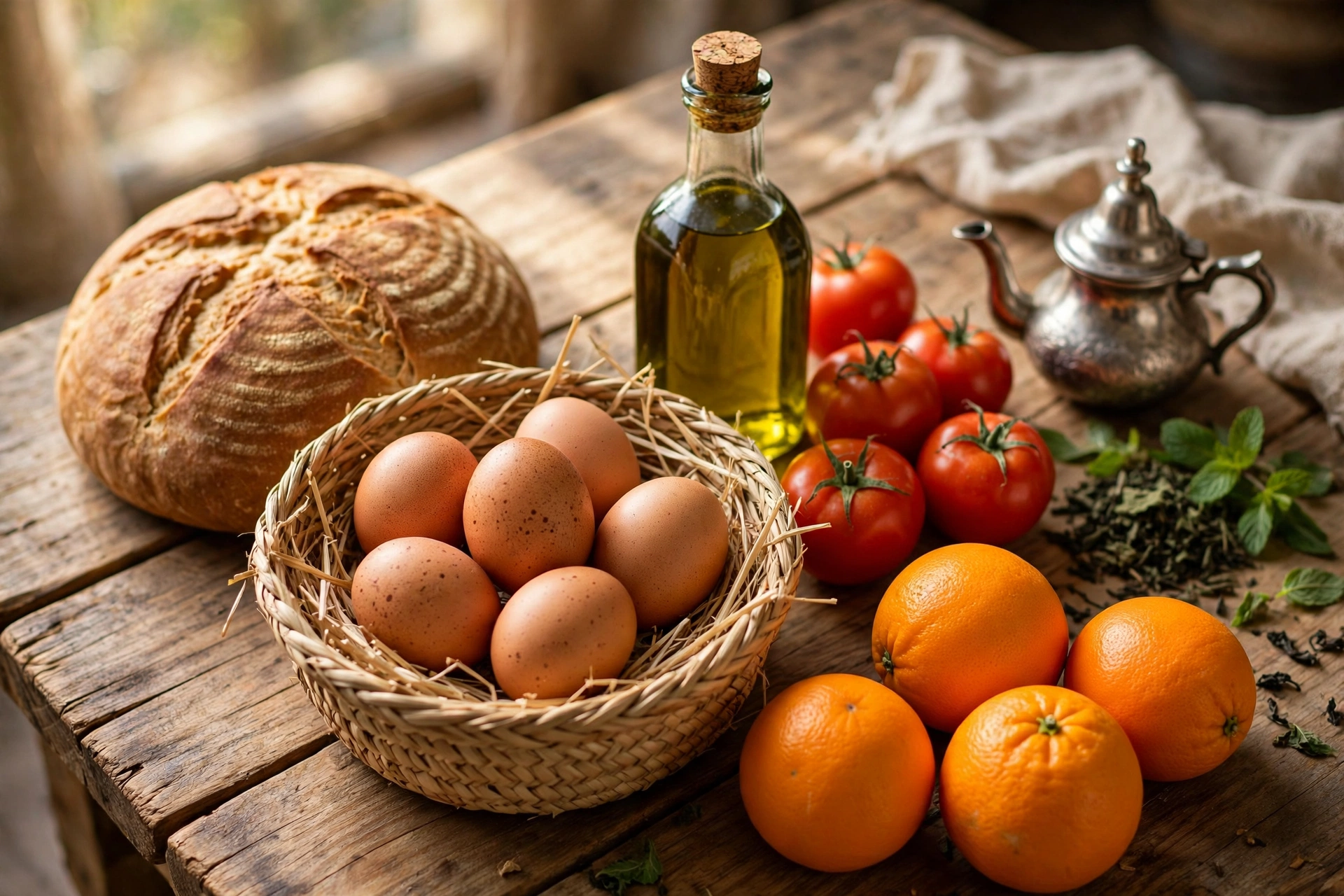
A single person cooking at home spends roughly 300 to 400 dirhams a week, or about $30 to $40. The basket is simple: bread and eggs for breakfast, a chicken or sardine dish for lunch, vegetables and couscous for dinner, and fruit for snacking. Single shoppers waste the most food, so buying smaller amounts more often — two short souk trips a week instead of one big one — usually saves money and keeps morocco grocery prices working in your favour.
A Couple: 500–650 MAD a Week
For two people, morocco grocery prices settle at around 500 to 650 dirhams a week, or $50 to $65. Cooking together brings the per-person cost down: a whole chicken feeds two for two meals, a kilo of vegetables stretches across several dishes, and pantry staples bought in larger packs cost less per kilo. Couples who shop at the souk twice a week and the supermarket once land at the low end; those who rely on the hypermarket for everything land at the high end.
A Family of Four: 800–1,000 MAD a Week
A family of four spends roughly 800 to 1,000 dirhams a week, or $80 to $100, on groceries. That covers a full Moroccan table: bread with every meal, a large Friday couscous, several chicken or fish dishes, and plenty of fruit. Families feel olive oil prices most, since a litre can disappear in a week of daily cooking. Buying oil, rice, lentils and sugar in bulk from the supermarket, while keeping produce shopping at the souk, is the combination that keeps a family basket closest to 800 dirhams — the cheapest end of morocco grocery prices for a household this size.
How the City Changes the Total
Where you live moves the total by roughly 10 to 20 percent. Marrakech and Casablanca sit at the top of the range, especially in tourist-heavy neighbourhoods where a few stalls charge visitor prices. Rabat and Fès sit in the middle, while smaller towns such as Meknès, Essaouira and Taroudant are the cheapest, particularly for fish on the coast and vegetables near farming areas. The pattern holds across household sizes: the same basket that costs 900 dirhams in Casablanca often costs 750 in a smaller town, which shows how much morocco grocery prices depend on place.
| Household | Weekly basket (MAD) | Approx. USD | Notes |
|---|---|---|---|
| Single person | 300–400 | $30–$40 | Souk produce, home cooking |
| Couple | 500–650 | $50–$65 | Mixed souk + supermarket |
| Family of four | 800–1,000 | $80–$100 | Bulk pantry, souk produce |
| Family of four, Casablanca | 900–1,100 | $90–$110 | Big-city premium |
| Family of four, small town | 700–900 | $70–$90 | Cheapest basket |
| Single person, Marrakech medina | 350–450 | $35–$45 | Tourist-area premium |
Basket totals verified November 2026; 1 USD ≈ 10 MAD. Totals exclude restaurant meals and imported brands.
Regional Price Differences: Big Cities vs Smaller Towns
The gap between big cities and smaller towns is one of the most useful things to know about morocco grocery prices. In Casablanca and Marrakech, rents are higher, shops pay more for space, and a visible tourist trade lets some sellers charge more — so the same kilo of oranges can cost 12 dirhams in the medina and 8 dirhams in a working-class neighbourhood a short walk away.
Coastal towns have their own advantage: fish. In Essaouira, Agadir and Tangier, sardines and the daily catch are sold at the port for prices that inland cities cannot match, and a fish dinner that costs 60 dirhams a kilo in Fès might cost 25 on the coast — the sharpest regional split in morocco grocery prices. Inland towns, meanwhile, are often cheaper for vegetables and fruit, since prices fall the closer you get to the farms that grow them.
The practical lesson is simple: wherever you live, find the neighbourhood souk rather than the tourist souk. Ask a neighbour where they shop, follow the morning crowds, and compare two or three stalls before buying. The cheapest stall is usually the busiest one, and that single habit does more for a weekly budget than any loyalty card.
How to Pay Less: Practical Tips for the Weekly Shop
The easiest savings come from shopping like a local, and the first rule is to buy what is in season. Out-of-season tomatoes in winter or strawberries in autumn cost double, while the fruit of the moment is almost given away. Following the seasons means eating better for less, since Moroccan tagines, salads and soups are built around whatever is cheap and abundant.
The second rule is to split the shop. Buy fresh produce at the souk, pantry staples and dairy at the supermarket, and bulk basics at BIM or a wholesaler. Each channel is cheapest at what it does best, and combining all three is how long-term residents keep morocco grocery prices at the low end of every range in this guide. One weekly trip to a single shop is convenient, but it is the most expensive way to fill a kitchen.
Finally, watch for the traps that catch visitors. Pre-cut fruit and ready-made salads in tourist areas can cost five times the price of whole fruit, and single-serve snacks add up fast. And remember that a smile and a greeting go further than hard bargaining over vegetables, where margins are already thin. If someone carries your bags to a taxi, a small tip is customary — our guide to tipping in Morocco explains the usual amounts.
Conclusion
Food is the best-value part of life in Morocco, and a weekly shop proves it. With fresh produce from the souk, pantry staples from the supermarket and a little seasonal sense, one person eats well for around 300 to 400 dirhams a week, a couple for 500 to 650, and a family of four for under 1,000. Once you know where to shop and what is in season, morocco grocery prices stop being a mystery and start being one of the easiest wins in your monthly budget — leaving more dirhams for travel and the long lunches that brought you here.
Frequently Asked Questions
How much does a weekly shop cost in Morocco?
For one person cooking at home, expect 300 to 400 dirhams (about $30 to $40) a week. A couple spends roughly 500 to 650 dirhams, and a family of four spends 800 to 1,000 dirhams, excluding restaurant meals and imported brands.
Are groceries cheaper at the souk or the supermarket?
The souk is cheaper for fresh produce, fish and eggs, often by 30 to 50 percent. Supermarkets are better for packaged goods, dairy, frozen food and bulk pantry staples, where fixed prices and promotions win. Most residents use both.
Why is olive oil so expensive in Morocco?
Poor harvests in recent years have pushed olive oil to 90 to 110 dirhams a litre, making it the priciest everyday staple. Many households now mix olive oil with sunflower oil for frying and save the good oil for salads.
Do I need to haggle for groceries in Morocco?
Usually not. Vegetable and fruit prices are posted on signs and are generally fixed, so a short friendly exchange is enough. Haggling matters more for crafts, textiles and souvenirs than for food, and it is never expected over a kilo of tomatoes.
What do tourists overpay for most?
Pre-cut fruit, bottled water, snacks and anything sold in the busiest tourist streets cost several times the local price. Walk a few streets from the main square, buy whole fruit, and carry a reusable water bottle.
Is food in Morocco cheap compared to Europe?
Yes, very. Overall, morocco grocery prices run at roughly a third to a half of Western European levels for fresh produce and everyday staples, with the biggest savings on vegetables, fruit, eggs and fish. Imported brands are the exception, and they can cost as much as they do at home.