
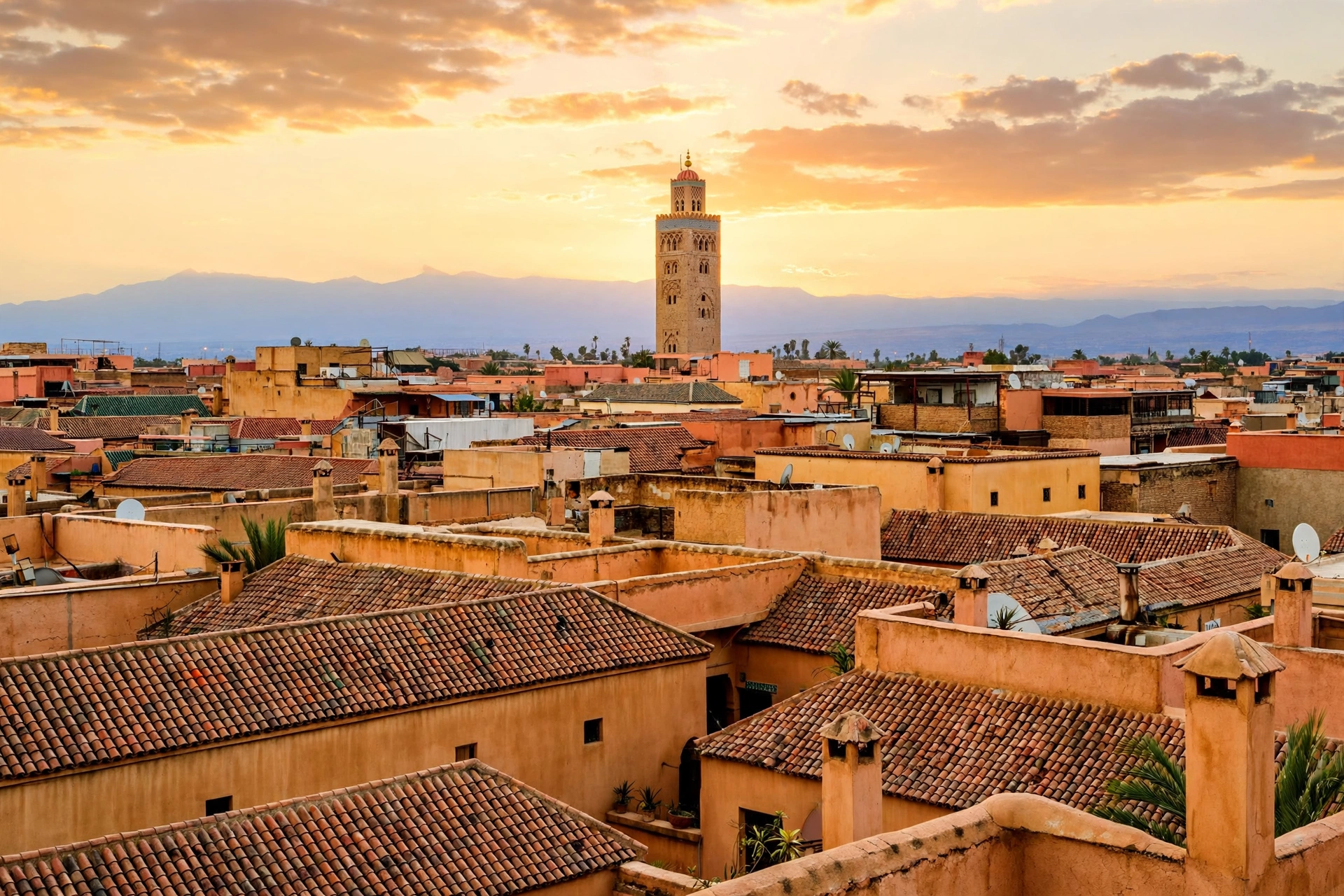
Marrakech is two cities at once: a medieval walled medina of shaded lanes and rooftop terraces, and a modern new town of wide avenues, cafes and apartment blocks. Choosing where to live here shapes everything — your rent, your commute, how hot your summers feel and how quickly you make friends. This guide to the best neighbourhoods to live in Marrakech compares the areas expats actually choose, with honest rents in dirhams, real trade-offs and practical advice for signing a lease.
There is no single right answer. A single remote worker, a family with two children and a retiree on a fixed budget will choose very differently, and the best neighbourhoods to live in Marrakech for one of them may be the worst for another. Expect plain talk about noise, summer heat, winter damp and the streets to avoid, alongside the charms of each area.
Use this guide alongside our broader Living in Morocco expat guide, which covers visas, money and healthcare. Rents below are indicative ranges from listings and local agencies in November 2026, not guarantees: the exact price always depends on the street, the building and your negotiating skills.
In this guide:
- How to Choose Among the Best Neighbourhoods to Live in Marrakech
- Medina: Life Inside the Old City Walls
- Guéliz and Hivernage: The Modern Heart of the City
- Targa and the Majorelle Area: Quiet Streets and Family Living
- Palmeraie and Ménara: Space, Villas and the Long Game
- Renting in Marrakech: Contracts, Costs and Where to Look
- Frequently Asked Questions
How to Choose Among the Best Neighbourhoods to Live in Marrakech
Start with your daily life, not with a map. The best neighbourhoods to live in Marrakech for a remote worker who needs quiet and fast internet are not the same as those for a family that needs a school run and a garden. Before you shortlist anywhere, decide what you will not compromise on: a short walk to cafes and shops, a quiet street, a garden or terrace, parking, or a budget ceiling that rules out the smartest districts.
Then test the city in person: spend a week in a short-term rental in your favourite area, walk its streets at noon and at midnight, and listen. The best neighbourhoods to live in Marrakech reveal their drawbacks only after dark, when a wedding hall starts up or a main road fills with scooters. A daytime viewing says almost nothing about noise.
Medina: Life Inside the Old City Walls
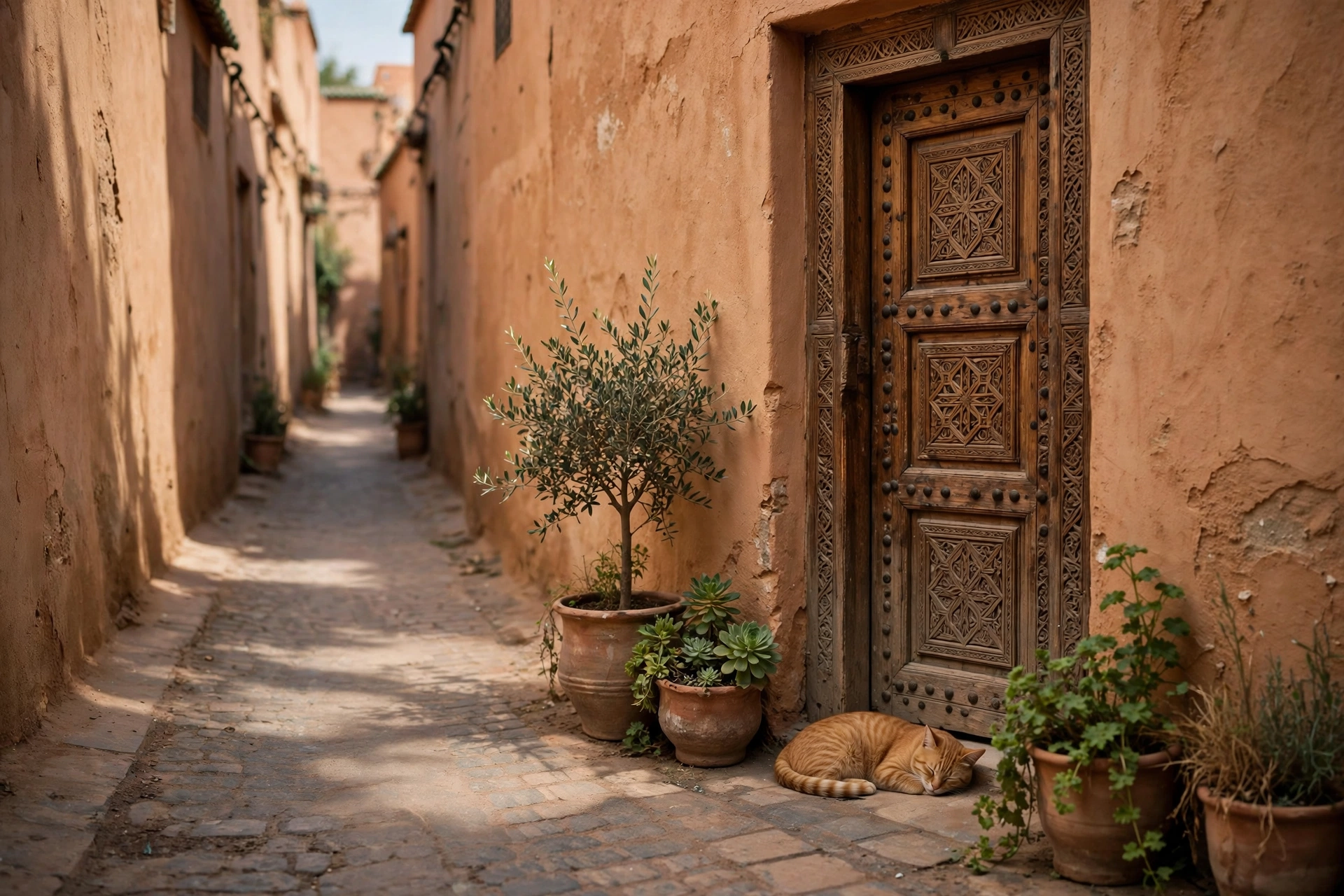
The medina is Marrakech as the world imagines it: a walled old city of ochre lanes, carved wooden doors, hidden riads and the great Jemaa el-Fnaa square at its heart. For expats who fall in love with the city, the medina is often the first dream — and the first place where the dream needs a reality check. Among the best neighbourhoods to live in Marrakech, the medina offers the most atmosphere per square metre and the most daily friction.
Rents in the medina vary wildly by street. A small one-bedroom riad on a quiet lane may cost 4,000 to 6,000 MAD (about $400 to $600) a month, while a restored three-bedroom riad with a pool and roof terrace near the square can reach 12,000 to 18,000 MAD (about $1,200 to $1,800). Among the best neighbourhoods to live in Marrakech for character, the medina wins; for comfort, it demands compromise: damp in winter, steep stairs, no car access to your door, and the walk home carrying the shopping.
Who the Medina Suits — and Who Should Skip It
The medina suits singles and couples who work from home, artists and writers, and anyone who wants the city at their doorstep and does not mind walking everywhere. It suits families less well: pushchairs struggle on uneven lanes, and small children cannot play outside the door. If you need a car every day, regular deliveries, or silence after 10 p.m., look elsewhere. Visit any riad twice — once by day, once after dark — before you commit.
Guéliz and Hivernage: The Modern Heart of the City
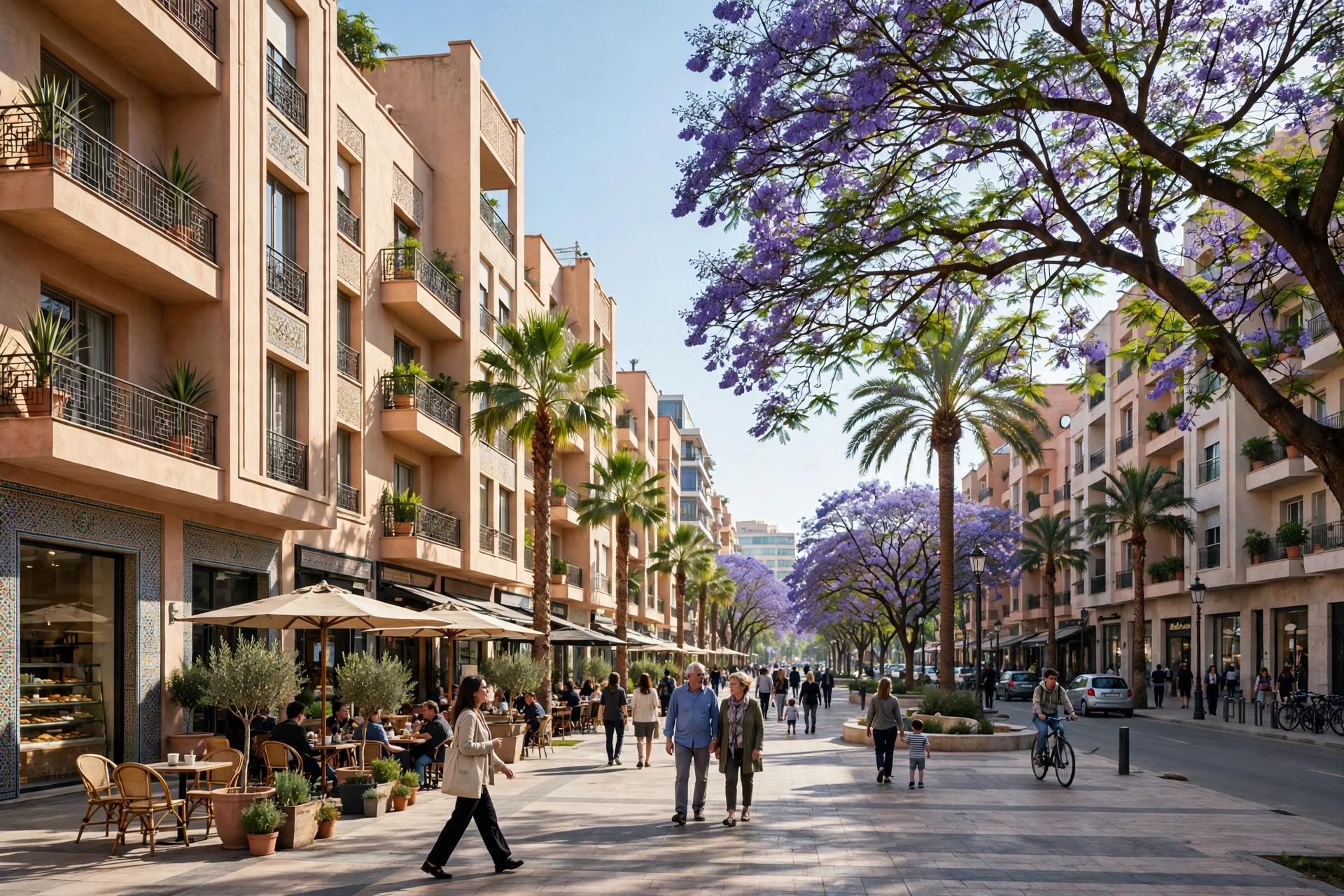
Guéliz is the new town built under the French protectorate in the early twentieth century, and it still feels like a different city from the medina: wide, tree-lined avenues, apartment buildings with balconies, cafes with terraces, supermarkets and offices. For many newcomers, the best neighbourhoods to live in Marrakech begin here, because Guéliz is the easiest place to land: you can walk to almost everything, find a furnished flat quickly, and meet other expats without trying.
Hivernage sits just south of Guéliz, between the new town and the medina, and it is the quieter, greener, more expensive sibling. Its streets are lined with villas, hotels and gardens, and it is the address many long-term expats graduate to once they know the city. The best neighbourhoods to live in Marrakech for a balance of calm and convenience often come down to a choice between these two districts, and the difference is mostly one of budget and tolerance for bustle.
Guéliz: Practical, Social and Sometimes Noisy
A one-bedroom apartment in Guéliz typically costs 5,000 to 9,000 MAD (about $500 to $900) a month, and a two-bedroom flat 8,000 to 14,000 MAD (about $800 to $1,400). The trade-off is noise: Avenue Mohammed V and the streets around the main square stay busy late, and a flat on a main road needs double glazing and good shutters. Guéliz suits singles, couples and remote workers best, and its summers are easier than the medina’s because most apartments have air conditioning and lifts.
Hivernage: The Calm Upgrade
Hivernage costs more and gives you more quiet. One- and two-bedroom apartments run 7,000 to 12,000 MAD (about $700 to $1,200) a month, and villas start around 15,000 MAD (about $1,500). The Majorelle Garden is on its edge, the streets are green and walkable, and the medina is a ten-minute walk away. Families like it for the space and the calm, and couples like it for the restaurants.
Targa and the Majorelle Area: Quiet Streets and Family Living
Targa lies west of Guéliz, a residential district of villas, small apartment blocks and wide, calm streets that feels almost suburban. It is the choice of expat families who want a garden, a driveway and a quiet night, and it is home to several international schools — which is why our guide to schools in Morocco for expat families points many parents here first. The best neighbourhoods to live in Marrakech for families almost always include Targa, though it is a poor fit if you want to walk to dinner.
The Majorelle area, around the famous blue garden, is smaller and pricier: a pocket of elegant villas and boutique guesthouses north of Guéliz. It shares Targa’s calm but adds walkability, since the garden, the cafes and the shops of Guéliz are a short stroll away. The best neighbourhoods to live in Marrakech for a couple who want green streets without giving up the city centre often end up here, and prices reflect that — expect to pay a premium of roughly a fifth over similar homes in Targa.
Palmeraie and Ménara: Space, Villas and the Long Game
The Palmeraie is the great palm grove north-east of the city, a landscape of villas, hotels and golf courses spread among the palms. Living here means space: large plots, private pools, silence at night and stars overhead. The best neighbourhoods to live in Marrakech for a long stay with a generous budget include the Palmeraie, but it is a resort lifestyle rather than a city one, and the fifteen-minute drive to Guéliz becomes a daily fact of life.
Ménara, by contrast, is a large residential district south-west of the centre, around the airport and the famous Ménara gardens, and it is one of the most affordable areas on this list. Modern apartment blocks, local shops and a strong Moroccan community make it a good value choice, and the best neighbourhoods to live in Marrakech for expats on a tighter budget deserve a look here — provided you accept that English is less common and the cafes are more local than international.
Renting in Marrakech: Contracts, Costs and Where to Look
Whatever area you choose, the rental process is similar across the city. Most landlords ask for one or two months’ rent as a deposit, plus the first month in advance, and many prefer a one-year contract with a notice period of one to three months. The best neighbourhoods to live in Marrakech will not protect you from a bad contract, so read every clause: who pays for repairs, whether the rent is fixed for the year, and what happens to your deposit at the end.
Furnished flats cost roughly 20 to 40 percent more than unfurnished ones, and the quality of the furniture varies enormously — check the mattress, the water heater and the air conditioning before you sign, not after. The best neighbourhoods to live in Marrakech all have both good and bad landlords, so the building and the owner matter as much as the district. Always visit in person, test the taps and the Wi-Fi, and meet the neighbours if you can.
Agency Fees, Deposits and Paperwork
An agency fee is usually one month’s rent, sometimes half, and you should agree it in writing before the agency starts working for you. Always get a receipt for every payment, including the deposit, and keep a copy of the signed contract. Your landlord may ask for your passport and residency papers; if you are still sorting out your status, our guide to renewing your carte de séjour explains the process. Many landlords also prefer rent paid from a Moroccan account, so it helps to open a bank account in Morocco as a foreigner early in your move.
Where to Look
Start with the agencies on Avenue Mohammed V and in Guéliz, which hold most of the central listings, then widen the search to Facebook groups for Marrakech expats and rentals. The best neighbourhoods to live in Marrakech are small enough that word of mouth still works: ask in the groups which streets are quiet, which landlords are fair, and which buildings have reliable water pressure. Never pay anything before viewing a property in person, and be wary of listings whose photos look too good and whose price looks too low.
| Neighbourhood | 1-bed apartment (MAD/month) | Approx. USD | Best for |
|---|---|---|---|
| Medina (riad) | 4,000–7,000 MAD | about $400–$700 | Character lovers, singles |
| Guéliz | 5,000–9,000 MAD | about $500–$900 | Newcomers, remote workers |
| Hivernage | 7,000–12,000 MAD | about $700–$1,200 | Quiet comfort, couples |
| Targa | 8,000–15,000 MAD | about $800–$1,500 | Families, villas |
| Majorelle area | 6,000–10,000 MAD | about $600–$1,000 | Walkable calm, couples |
| Palmeraie (villa) | 15,000–30,000 MAD | about $1,500–$3,000 | Space, long stays |
| Ménara | 4,500–8,000 MAD | about $450–$800 | Budget, local life |
Indicative monthly rents, November 2026. Ranges depend on the street, the condition of the property and whether it is furnished; always confirm the current price in person.
| Monthly cost beyond rent | Typical range (MAD) | Approx. USD |
|---|---|---|
| Electricity | 150–500 MAD | about $15–$50 |
| Water | 80–200 MAD | about $8–$20 |
| Internet (fibre) | 200–400 MAD | about $20–$40 |
| Home cleaning, 4 hours a week | 800–1,200 MAD | about $80–$120 |
| Petit taxi budget | 300–600 MAD | about $30–$60 |
| Groceries for a couple | 2,500–4,000 MAD | about $250–$400 |
Typical monthly running costs, November 2026. For a wider cost-of-living comparison, see Numbeo’s Marrakech page.
Frequently Asked Questions
What are the best neighbourhoods to live in Marrakech for families?
For families, the best neighbourhoods to live in Marrakech are usually Targa and the Majorelle area, with Hivernage as a central alternative. Targa offers gardens, villas and proximity to international schools, while Hivernage keeps you close to the centre.
Is the medina safe for expats to live in?
Yes, the medina is generally safe, and violent crime against residents is rare. Safety varies more by street than by district, and the best neighbourhoods to live in Marrakech are safe largely because their streets are busy and well known. Choose a well-lit lane, get to know your neighbours, lock your door at night, and use the normal precautions you would use in any old city.
How much should I budget for rent in Marrakech?
As a rough guide, budget 5,000 to 9,000 MAD (about $500 to $900) a month for a decent one-bedroom apartment in Guéliz or Ménara, 7,000 to 12,000 MAD (about $700 to $1,200) in Hivernage, and 15,000 MAD (about $1,500) or more for a villa in Targa or the Palmeraie. Add 1,000 to 2,000 MAD (about $100 to $200) for bills and internet, and remember that furnished homes cost more than unfurnished ones.
Do I need a car to live in Marrakech?
It depends on the neighbourhood. In Guéliz, Hivernage and the medina you can live well without one, using petits taxis that cost 10 to 20 MAD (about $1 to $2) for most central rides. In Targa and the Palmeraie a car is almost essential, since taxis add up and buses are infrequent. Many expats start without a car and buy one only after choosing their neighbourhood.
Which neighbourhood is best for remote workers?
Guéliz is the usual first choice, with cafes, coworking spaces and reliable fibre internet, followed by Hivernage for those who want the same infrastructure with quieter streets. The best neighbourhoods to live in Marrakech for remote work combine fast internet, cafes with Wi-Fi and a flat quiet enough for calls — Guéliz and Hivernage tick all three, while the medina can be a gamble for both internet speed and noise.
Can I rent in Marrakech without a residency card?
Yes, in practice many landlords will rent to you on a passport alone, especially for a first short-term lease. Some agencies and landlords do ask for a residency card, and having one makes everything easier, from signing a long contract to opening a bank account. Start the residency process early and keep copies of every document you submit.
Marrakech gives every expat a different city, and the right neighbourhood is the one that fits your days rather than your postcards. The best neighbourhoods to live in Marrakech are not the prettiest or the cheapest in the abstract: they are the streets where your mornings work, your evenings are quiet, and your budget still leaves room for the life that brought you here.
Spend a week in your shortlisted area before you sign a year-long lease, walk it after dark, talk to the neighbours, and check the water pressure and the Wi-Fi. The best neighbourhoods to live in Marrakech reward that patience — and the city, once you have found your corner of it, tends to keep people far longer than they planned.