
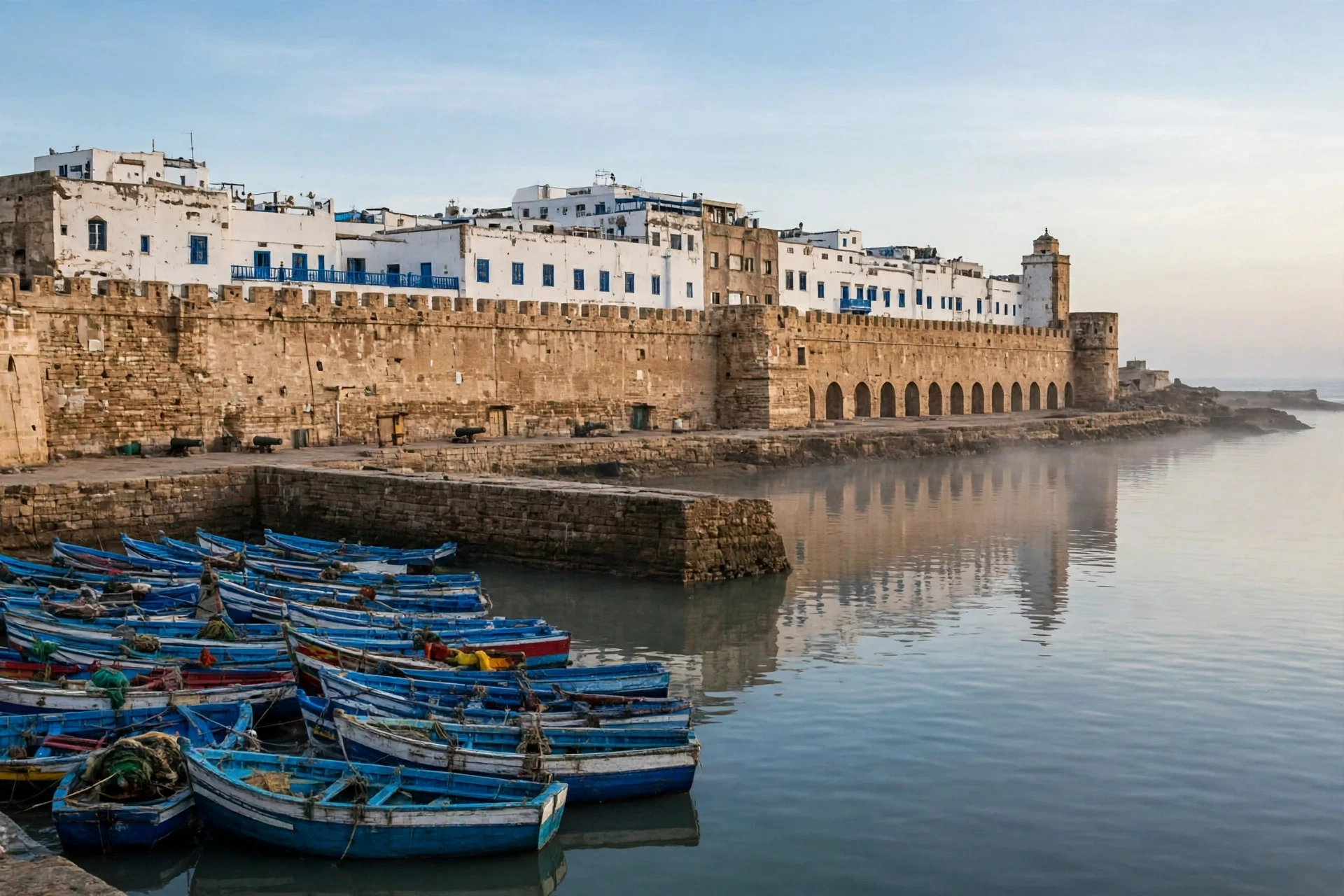
Living in Essaouira is the gentlest version of a Moroccan move: a small, white-walled, walkable city where the Atlantic is never more than a few minutes away, and the pace is set by fishermen, surfers and the afternoon wind. If Marrakech feels intense and Casablanca feels like work, living in Essaouira feels like a long exhale — which is why remote workers, retirees and artists keep moving here.
Essaouira is quiet in winter, windy almost all year, and short on big-city services. This guide is honest about both sides: the rents, the neighbourhoods, the cost of living, the visa steps and the daily routines. It sits in our Living in Morocco section, alongside our wider Living in Morocco: The Complete Guide for Expats.
In this guide
- Why Expats Choose Living in Essaouira
- Essaouira at a Glance
- Best Neighbourhoods for Living in Essaouira
- Rents and Housing: What You Pay in 2026
- Monthly Cost of Living in Essaouira
- Weather and the Famous Wind
- Working Remotely from Essaouira
- Daily Life: Food, Markets and Getting Around
- Healthcare and Schools
- The Downsides: Who Should Not Move Here
- Practical Steps to Move to Essaouira
- Frequently Asked Questions
- Conclusion: Is Living in Essaouira Right for You?
Why Expats Choose Living in Essaouira
The first reason people stay is scale: around 80,000 residents, and a historic centre you can cross on foot in fifteen minutes. There is no rush hour worth the name and no sprawling suburb to get lost in. Within a week you learn the streets and the shopkeepers, and the city starts to feel like yours.
The second reason is the light and the air. The medina is a UNESCO-listed grid of white houses with blue shutters, built in the 18th century around a working fishing port. Mornings are bright and cool, and even in August the ocean breeze keeps temperatures far below Marrakech. Surfers, walkers and anyone who works outdoors notice the difference within days.
The third reason is price. Living in Essaouira costs noticeably less than living in Marrakech, Rabat or Tangier, especially for rent. A comfortable one-bedroom flat starts around 3,500 MAD (about $350) a month, and a couple can live well on 10,000–12,000 MAD (about $1,000–$1,200). Our Cost of Living in Morocco guide ranks Essaouira among the cheapest coastal cities.
Finally, there is the community. Essaouira has hosted foreign residents for decades — French retirees, British and German surfers, artists drawn by the Gnaoua festival — so newcomers are not a novelty. English and French are widely spoken, expat cafés and surf schools double as social hubs, and it is easy to make friends without speaking Darija on day one. Learning a little Moroccan Arabic changes everything — our guide to learning Darija is a good place to start.
Essaouira at a Glance
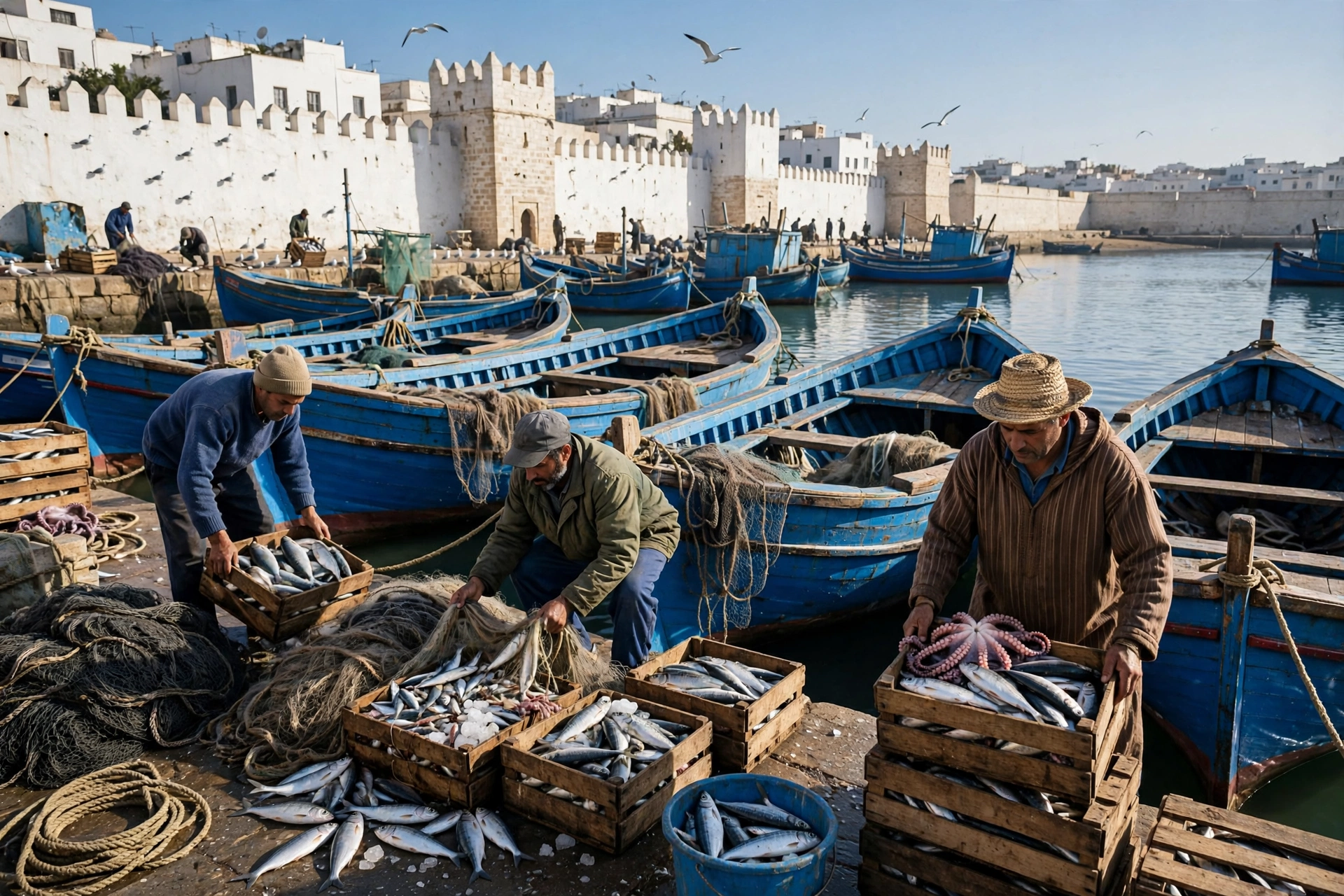
Essaouira sits on the Atlantic coast 175 km west of Marrakech, a three-hour drive on a good road. Essaouira was founded as a fortified port in the 1760s under Sultan Mohammed III, and its grid-plan medina, ramparts and harbour are unlike any other Moroccan old city. The fishing fleet still works from the harbour every morning, and the fish auction is one of the most vivid scenes in the country.
| Fact | Detail |
|---|---|
| Population | About 80,000 |
| Distance from Marrakech | 175 km, about 3 hours by road |
| Airport | Essaouira-Mogador (ESU), with flights to Europe |
| Climate | Mild Atlantic, 15–28°C most of the year |
| Best months to settle in | March to June, September to November |
| Main draws | Surf, fishing port, music, slow pace |
| Watch out for | Wind, winter quiet, limited specialist healthcare |
Most expats arrive overland from Marrakech or fly into Essaouira-Mogador airport, with seasonal flights from London, Paris and Brussels. If you are scouting living in Essaouira first, our Essaouira Travel Guide covers where to stay and what to see in a long weekend.
Best Neighbourhoods for Living in Essaouira
Choosing where to live matters more when living in Essaouira than in a big city, because each area has a very different character. The medina suits walkers, the new town suits families, and the beach road suits surfers. Here is how they compare.
The medina is the white-walled old city, and it is where most single expats and couples start living in Essaouira. Flats are often in renovated riads with tiled floors and rooftop terraces. You are steps from the fish market, the cafés of Place Moulay Hassan and the ramparts. The trade-off is noise in summer, stairs and no parking — cars cannot enter most of the medina.
The Mellah, the old Jewish quarter inside the medina, is quieter and slightly cheaper, with a village feel and a growing number of renovated houses. It appeals to buyers and long-stay renters who want medina life without the main-street bustle.
The new town, or Ville Nouvelle, sits just outside the medina walls. Here you find modern blocks, wider streets, supermarkets and parking. Families living in Essaouira often prefer it: flats are bigger, lifts exist, and the beach is a ten-minute walk.
Diabat, 4 km south along the beach, is a loose village of villas, surf camps and guesthouses among eucalyptus trees. It is the choice of surfers living in Essaouira who want a garden and quiet nights, but you need a car, a bike or a grand taxi for almost everything. Sidi Kaouki, 25 km further south, is a handful of surf lodges facing a wild beach, and suits only the most self-sufficient.
If you are buying rather than renting, read our Buying Property in Morocco guide first: foreign buyers can purchase freely in most areas, but the paperwork and the notary process deserve careful attention.
Rents and Housing: What You Pay in 2026
Rents are the first pleasant surprise of living in Essaouira: among the lowest on the Moroccan coast, and rising more slowly than in Marrakech or Tangier. The figures below are typical asking rents for unfurnished or lightly furnished flats in November 2026. Furnished flats cost 500–1,500 MAD more, and short summer lets can double in July and August.
| Home | Medina | New town | Diabat / beach road |
|---|---|---|---|
| Studio flat | 2,500–3,500 MAD ($250–$350) | 2,000–3,000 MAD ($200–$300) | 2,500–4,000 MAD ($250–$400) |
| One-bedroom flat | 3,500–5,000 MAD ($350–$500) | 3,000–4,500 MAD ($300–$450) | 4,000–6,000 MAD ($400–$600) |
| Two-bedroom flat | 5,000–7,500 MAD ($500–$750) | 4,500–6,500 MAD ($450–$650) | 6,000–9,000 MAD ($600–$900) |
| Small house or riad | 8,000–15,000 MAD ($800–$1,500) | 7,000–12,000 MAD ($700–$1,200) | 8,000–14,000 MAD ($800–$1,400) |
Landlords usually ask for one or two months’ deposit plus the first month in advance; a one-year lease is standard. Always get a written contract in French or Arabic, and check who pays the building charges and whether utilities are included. Our Renting an Apartment in Morocco guide explains the traps to avoid.
A practical tip: visit in the season you plan to live in. A medina flat that charms in May can be damp and cold in January. Spend at least a week, ideally a month, in a short-term rental before you commit to a year.
Monthly Cost of Living in Essaouira
Beyond rent, the daily cost of living in Essaouira is modest. The fish market and the souk keep food prices low: a café coffee costs 8–15 MAD (about $0.80–$1.50), and a good lunch is 40–70 MAD (about $4–$7). The table below is a realistic monthly budget for November 2026.
| Expense | Single person | Couple |
|---|---|---|
| Rent, one-bedroom flat | 3,500–5,000 MAD ($350–$500) | 5,000–7,000 MAD ($500–$700) |
| Groceries and market food | 1,500–2,000 MAD ($150–$200) | 2,500–3,500 MAD ($250–$350) |
| Eating out and cafés | 800–1,500 MAD ($80–$150) | 1,500–2,500 MAD ($150–$250) |
| Utilities, water and electricity | 400–700 MAD ($40–$70) | 600–1,000 MAD ($60–$100) |
| Internet and phone | 250–400 MAD ($25–$40) | 300–500 MAD ($30–$50) |
| Local transport | 200–500 MAD ($20–$50) | 400–800 MAD ($40–$80) |
| Leisure, surf and gym | 500–1,000 MAD ($50–$100) | 800–1,500 MAD ($80–$150) |
| Monthly total | 7,150–11,100 MAD ($715–$1,110) | 11,600–17,300 MAD ($1,160–$1,730) |
Retirees living in Essaouira on a fixed pension find these numbers comfortable, and they are one reason Essaouira appears in our Retiring in Morocco guide. Families spend more on schooling and transport, but the total stays well below a European coastal town. Keep a buffer for flights home, car repairs and clinic visits.
Weather and the Famous Wind
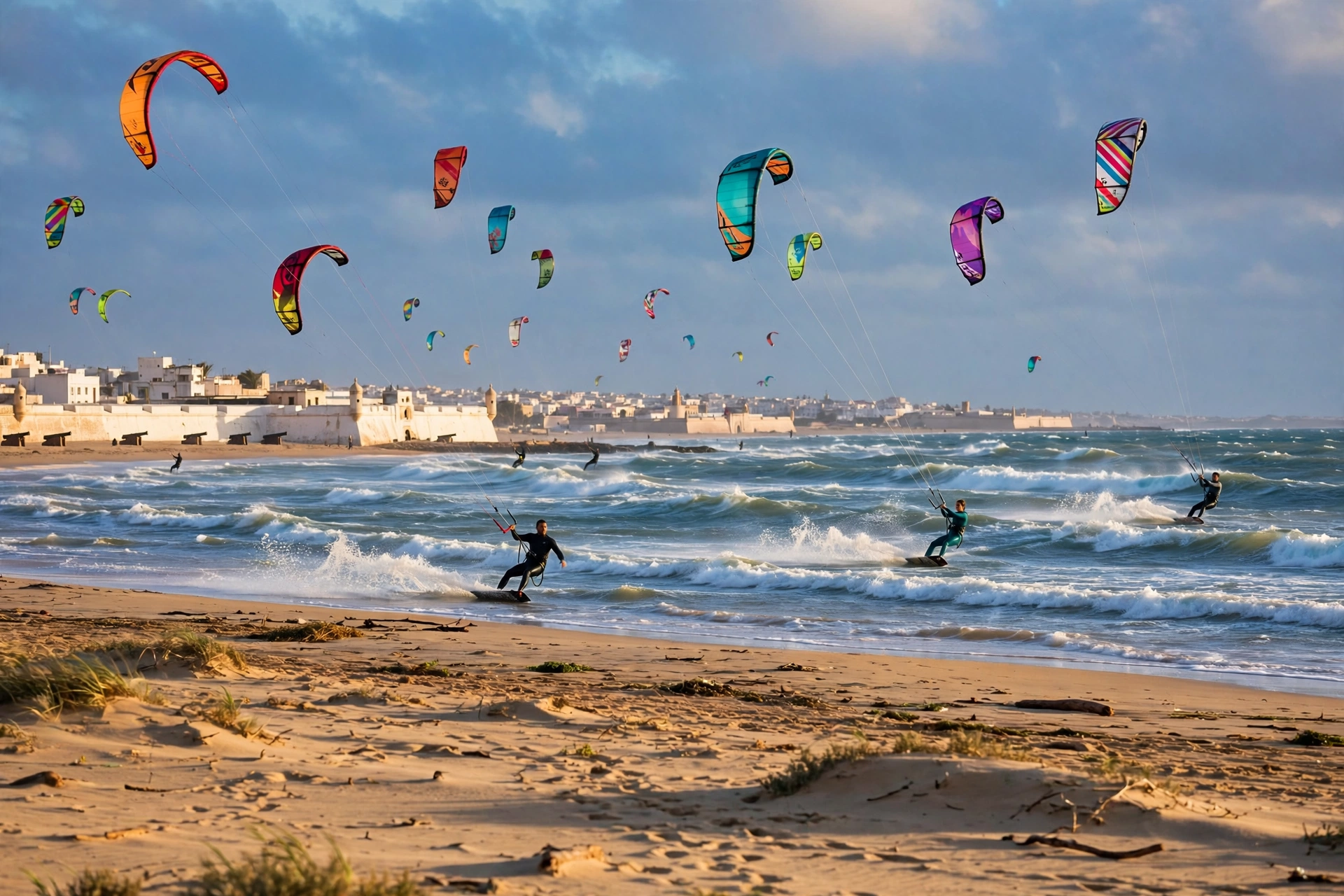
Essaouira’s climate is its greatest asset and its most common complaint, and they are the same thing: the wind. The trade wind, the alizé, blows most afternoons from spring to autumn, keeping summer temperatures around 22–26°C while Marrakech bakes at 40°C. Surfers love it; people who hate wind in their hair do not.
Winters are mild by European standards, with daytime highs of 17–20°C and nights around 10–12°C, but houses are built for summer, not winter. Thick stone walls stay cold, heating is usually a portable gas or electric heater, and damp can creep into ground-floor flats. Budget for a good heater and warm bedding.
Rain falls mostly between November and February, and January feels very quiet. Many cafés and guesthouses reduce their hours, and the social scene shrinks to the year-round residents. Some expats love that stillness; others escape to Marrakech for a month. Spend one January there before you decide.
Working Remotely from Essaouira
Living in Essaouira works well for remote workers, with one condition: check the internet in your exact flat before you sign. Fibre is available in much of the new town and parts of the medina, with typical plans of 100–200 Mbps for 300–500 MAD (about $30–$50) a month. In older medina buildings it can be slower or limited to ADSL, so ask for a speed test, not a promise. Our Morocco Internet for Expats guide explains the providers and the 4G backup options.
Coworking is informal rather than corporate. A few cafés on the seafront and in the medina welcome laptops, and surf camps and guesthouses often have work tables with decent wifi. There is no large coworking chain in town, which suits home workers, not those who need meeting rooms. For the bigger picture on visas, taxes and where to base yourself while living in Essaouira, see our Digital Nomad Guide to Morocco.
The time zone helps: Morocco is on GMT or GMT+1, so European clients share your working hours, and the US East Coast is only a few hours behind. Power cuts are rare, and a 4G hotspot covers the occasional outage. The real risk to productivity when living in Essaouira is not infrastructure but distraction — the beach and the long café mornings are always calling.
Daily Life: Food, Markets and Getting Around
Daily life when living in Essaouira runs on the markets. The fish market sells the morning catch — sardines, sea bass, squid — and the grill restaurants beside it will cook your purchase for a small fee. The medina souk covers vegetables, spices, bread and household goods. Supermarkets stock imported goods at higher prices, so most residents shop local for food.
Eating out is cheap and varied. A grilled sardine lunch at the port costs 30–50 MAD (about $3–$5), a pizza in the medina is 60–90 MAD (about $6–$9), and dinner for two with wine in a nicer restaurant is 300–500 MAD (about $30–$50). The Gnaoua festival fills the city each June; the rest of the year brings small concerts, galleries and surf competitions.
Getting around is simple. The medina and the beach are walkable, petit taxis charge 7–10 MAD (about $0.70–$1) for a ride inside the city, and grand taxis and buses run to Diabat and the villages. Many residents buy a bicycle; some keep a car for trips to Marrakech. For living in Essaouira you do not need a car, but you will want one if you settle in Diabat or Sidi Kaouki.
Household help is affordable: a cleaner costs around 100–150 MAD (about $10–$15) for a half day, and a gardener less. Our Morocco Household Help guide covers rates, contracts and the social security registration honest employers should arrange.
Healthcare and Schools
Healthcare is the weakest point of living in Essaouira, and it is the reason some expats eventually move to a bigger city. The town has a public hospital, private clinics and good pharmacies, and routine care is fine. For specialist treatment or serious surgery, most residents travel to Marrakech, about three hours away. Private health insurance is essential. Our Healthcare in Morocco for Expats guide explains the public and private systems in detail.
Schools are adequate for younger children but limited for teenagers. There are Moroccan public and private schools and a French school, but older children aiming for an international diploma often board in Marrakech or Casablanca, or study online. Schooling, more than rent, often decides whether a family stays — families living in Essaouira should research it early, with our Schools in Morocco for Expat Families guide.
The Downsides: Who Should Not Move Here
Honesty matters more than enthusiasm. Living in Essaouira is not for everyone, and the people who leave usually leave for the same four reasons. First, the wind: constant, everywhere, and some people never get used to it. Second, the quiet: outside summer the nightlife is a handful of bars and restaurants, and if you need concerts, cinemas and variety, you will feel starved.
Third, the services: no big hospital, no international school for teenagers, no large shopping centre, and some admin tasks need a trip to Marrakech or Agadir. Fourth, the job market: unless you work remotely, run a guesthouse or work in tourism, local salaries are low. If you need a local job, read our Working in Morocco guide before you move.
None of this makes Essaouira a bad choice — it makes it a specific one, for people who value quiet, space and the sea over variety and convenience. The expats who stay longest living in Essaouira are the ones who arrived with open eyes and a portable income.
Practical Steps to Move to Essaouira
A smooth move follows a simple order: visit first, rent short-term, then commit. Come for at least two weeks, ideally in the season you will live in, and stay in different neighbourhoods. Talk to expats in cafés, visit the clinics and schools, and test the internet in any flat you consider. The official Visit Morocco site lists current events and practical visitor information.
On the paperwork side, most nationalities enter Morocco visa-free for 90 days, and a longer stay means applying for a residence permit, the carte de séjour, at the local police station. Our Moving to Morocco: Visas and Residency guide walks through the documents and the renewal process. Open a Moroccan bank account early, and arrange health insurance before you arrive, not after.
Money when living in Essaouira is straightforward: the dirham is the only currency in daily use, ATMs are plentiful, and card payments are common in restaurants and supermarkets but not in the souk. Bring a fee-free card, keep cash for markets and taxis, and never change money on the street.
Frequently Asked Questions
Is living in Essaouira cheap?
Yes, by Moroccan and European standards. A single person living in Essaouira lives comfortably on 7,000–11,000 MAD (about $700–$1,100) a month including rent, and a couple on 11,500–17,000 MAD (about $1,150–$1,730). Rents from 3,500 MAD are the main reason the total stays low.
Can foreigners live in Essaouira long-term?
Yes. Most nationalities enter visa-free for 90 days, then apply for a carte de séjour. The process is bureaucratic but routine. Start well before your 90 days expire.
Is Essaouira safe for expats?
Essaouira is one of the safest cities in Morocco for foreigners. Violent crime is rare, the medina is walkable at night, and solo women report feeling comfortable. Normal precautions still apply.
How windy is Essaouira really?
Very windy, most afternoons from April to October. Mornings are usually calm, and the wind is why the city is a world-class surf and kitesurf destination. If you hate wind, visit on a windy day before committing to living in Essaouira.
Is there good internet for remote work?
Yes in most of the new town and parts of the medina, where fibre reaches 100–200 Mbps, with 4G as a reliable backup everywhere when living in Essaouira. Always test the speed in your exact flat before signing a lease.
Is Essaouira good for families?
For families with young children, living in Essaouira works well: safe, walkable and affordable, with beaches and a gentle pace. For teenagers, limited secondary schooling is the main constraint. Visit the schools before you decide.
Conclusion: Is Living in Essaouira Right for You?
Living in Essaouira suits people who want the sea, the light and a slower rhythm more than they want variety, nightlife or big-city services. If you work remotely, live on a pension, or want a quiet base with a strong community and low costs, it is one of the best choices in Morocco. Rents are low, food is fresh, neighbours become friends, and the ramparts walk at sunset never gets old.
Living in Essaouira is not the right move if you need specialist healthcare nearby, an international school for teenagers, or a buzzing social scene all year round. But for the right person, it is not a compromise — it is the point. Come for a month, live like a resident, and let the city decide for you. If it fits, you will know by the second week, somewhere between the morning fish market and the afternoon wind.