
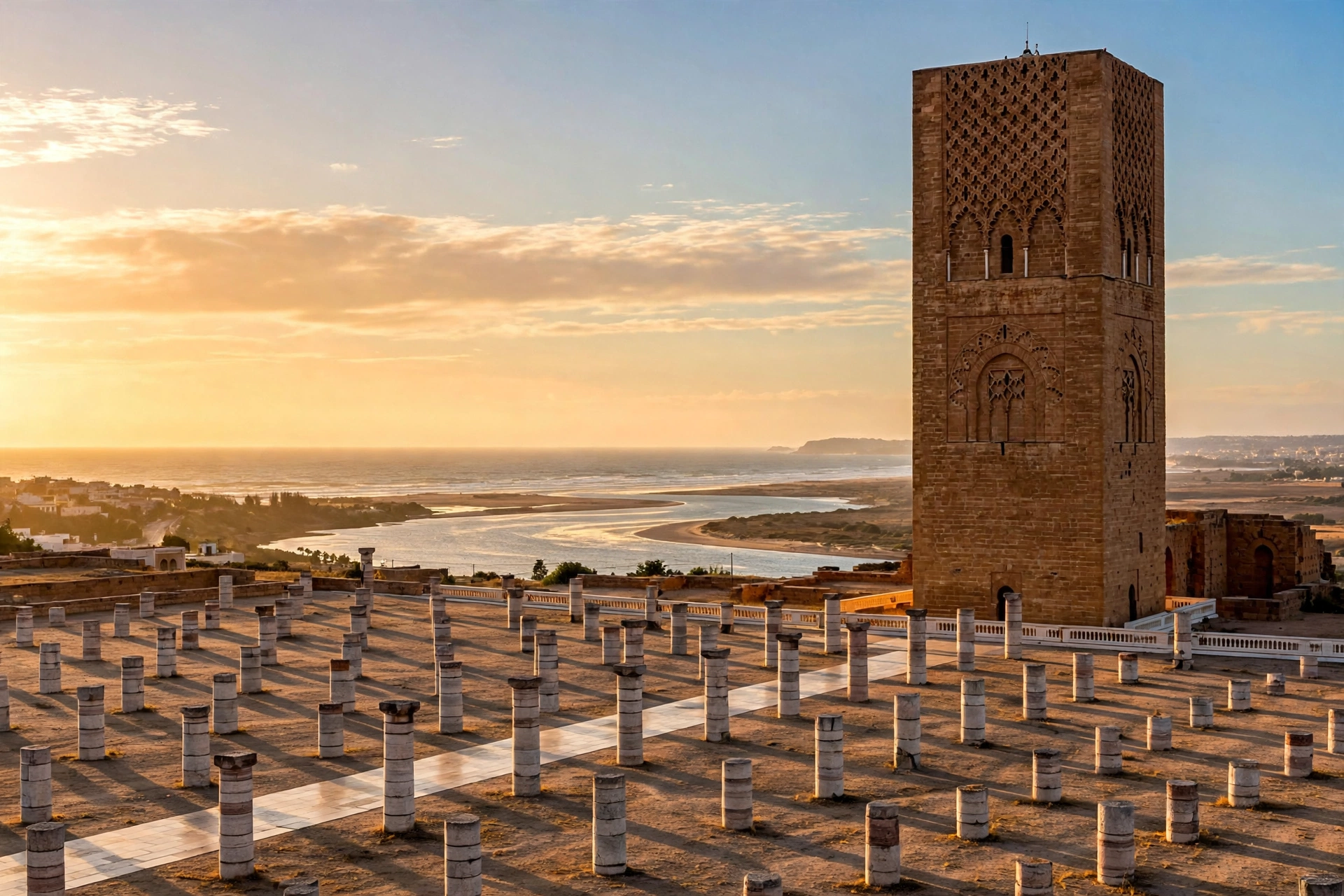
Living in Rabat is Morocco at its calmest: a capital of wide boulevards, embassy gardens and Atlantic air, where the rush of Casablanca feels a world away. If you want Morocco without the noise, living in Rabat is the gentlest landing in the country — a city where diplomats, civil servants and remote workers share quiet streets, good cafes and one of the safest urban centres in North Africa.
Rabat is not Morocco's most exciting city — it will not thrill you the way Marrakech or Fes does. What living in Rabat offers instead is ease: clean streets, reliable services, green parks, a proper tram network and rents that stay below Casablanca's. It sits in our Living in Morocco section, alongside our wider Living in Morocco: The Complete Guide for Expats.
In this guide
- Why Expats Choose Living in Rabat
- Rabat at a Glance
- Best Neighbourhoods for Living in Rabat
- Rents and Housing: What You Pay in 2026
- Monthly Cost of Living in Rabat
- Weather: Four Real Seasons by the Atlantic
- Working Remotely While Living in Rabat
- Daily Life: Food, Markets and Getting Around
- Healthcare and Schools
- The Downsides: Who Should Not Move Here
- Practical Steps to Move to Rabat
- Frequently Asked Questions
- Conclusion: Is Living in Rabat Right for You?
Why Expats Choose Living in Rabat
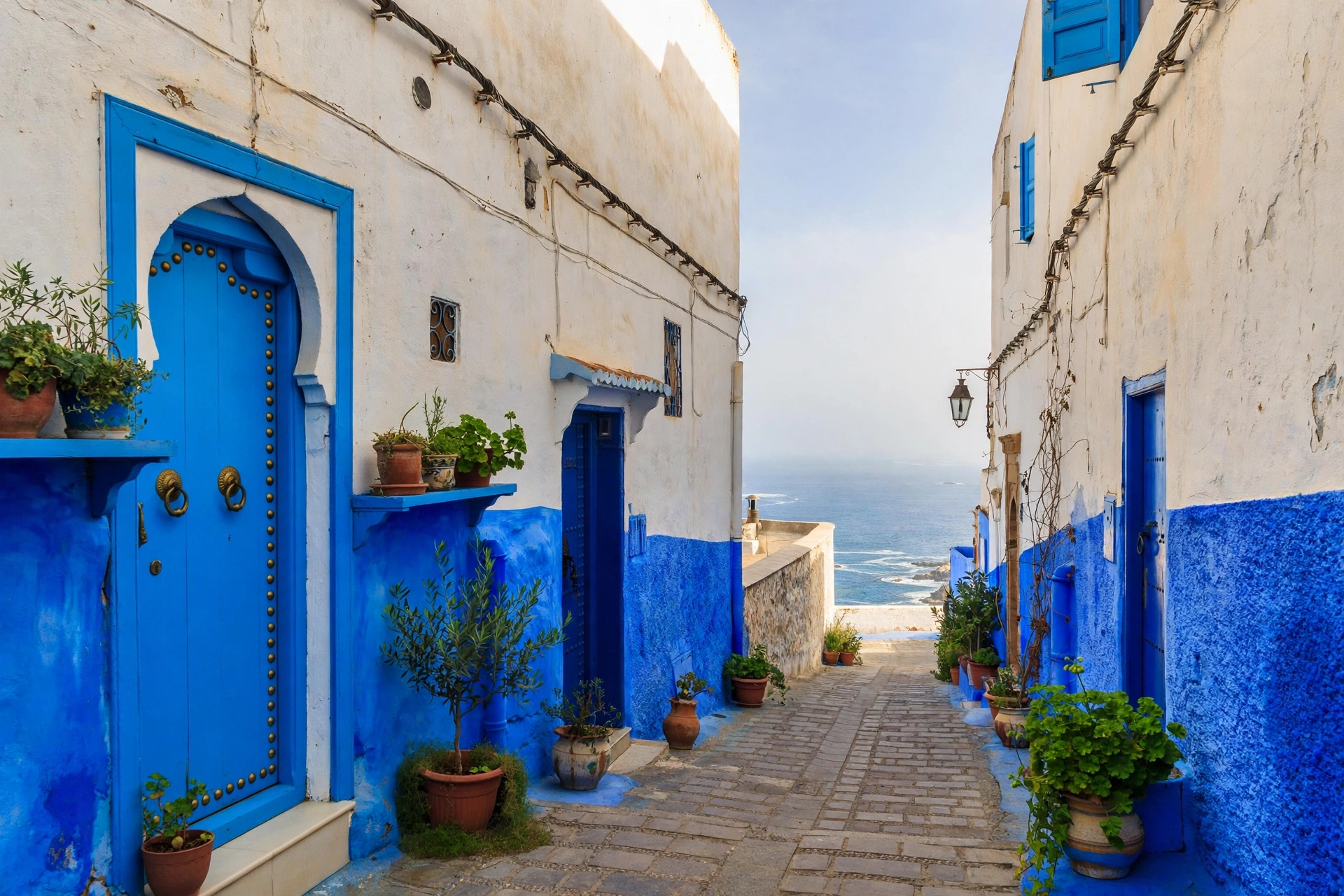
Rabat is a capital that behaves like a garden city. It is the seat of government, the royal palace and the foreign embassies, so it is orderly and well kept in a way no other Moroccan city quite manages. UNESCO listed the historic centre as a World Heritage site in 2012, and the mix of a 12th-century kasbah, a French-built art deco centre and modern districts gives living in Rabat a variety most capitals cannot match.
The foreign community is small but settled: diplomats and NGO staff, teachers at the international schools, retirees who chose the capital over the coast, and a growing number of remote workers who discovered that the same time zone as Western Europe pairs well with Atlantic views. French is the working language of offices and cafes, English is common in international circles, and living in Rabat means joining a city used to newcomers: you will not be stared at or overcharged the way first-timers are elsewhere.
The trade is simple and honest: Rabat gives you calm, safety and order, and asks you to give up a little excitement. There is no all-night medina buzz here, no huge beach-resort scene, and the social calendar runs on dinners and embassy receptions rather than festivals. For many expats, living in Rabat is exactly the point.
Rabat at a Glance
Living in Rabat rewards people who like their cities walkable, green and predictable. The essentials below are what most newcomers ask about first, before they start comparing districts and rents.
| Fact | Detail |
|---|---|
| Population | About 580,000 in the city, 1.2 million with Salé across the river |
| Region | Rabat-Salé-Kénitra, on the Atlantic coast at the Bouregreg river |
| Climate | Mediterranean with Atlantic influence; mild, damp winters |
| Summer highs | 26–28°C on the coast, warmer inland |
| Winter lows | 8–10°C at night, 17–19°C by day |
| Best months to arrive | April–June and September–October |
| Airport | Rabat-Salé (RBA), 10 km from the centre; Casablanca (CMN) 1 hour by train |
| Trains | Al Boraq high-speed line to Tangier in 1h20; Casablanca in about 1 hour |
| Public transport | Two tram lines plus city buses; tram single ticket 6 MAD (about $0.60) |
| Currency | Moroccan dirham (MAD); about 10 MAD to $1 in November 2026 |
Best Neighbourhoods for Living in Rabat
Choosing a district matters more when living in Rabat than in most Moroccan cities, because the city is spread out and each area has a distinct character. Our full comparison, Best Neighbourhoods to Live in Rabat for Expats, covers each in detail; the short version is below.
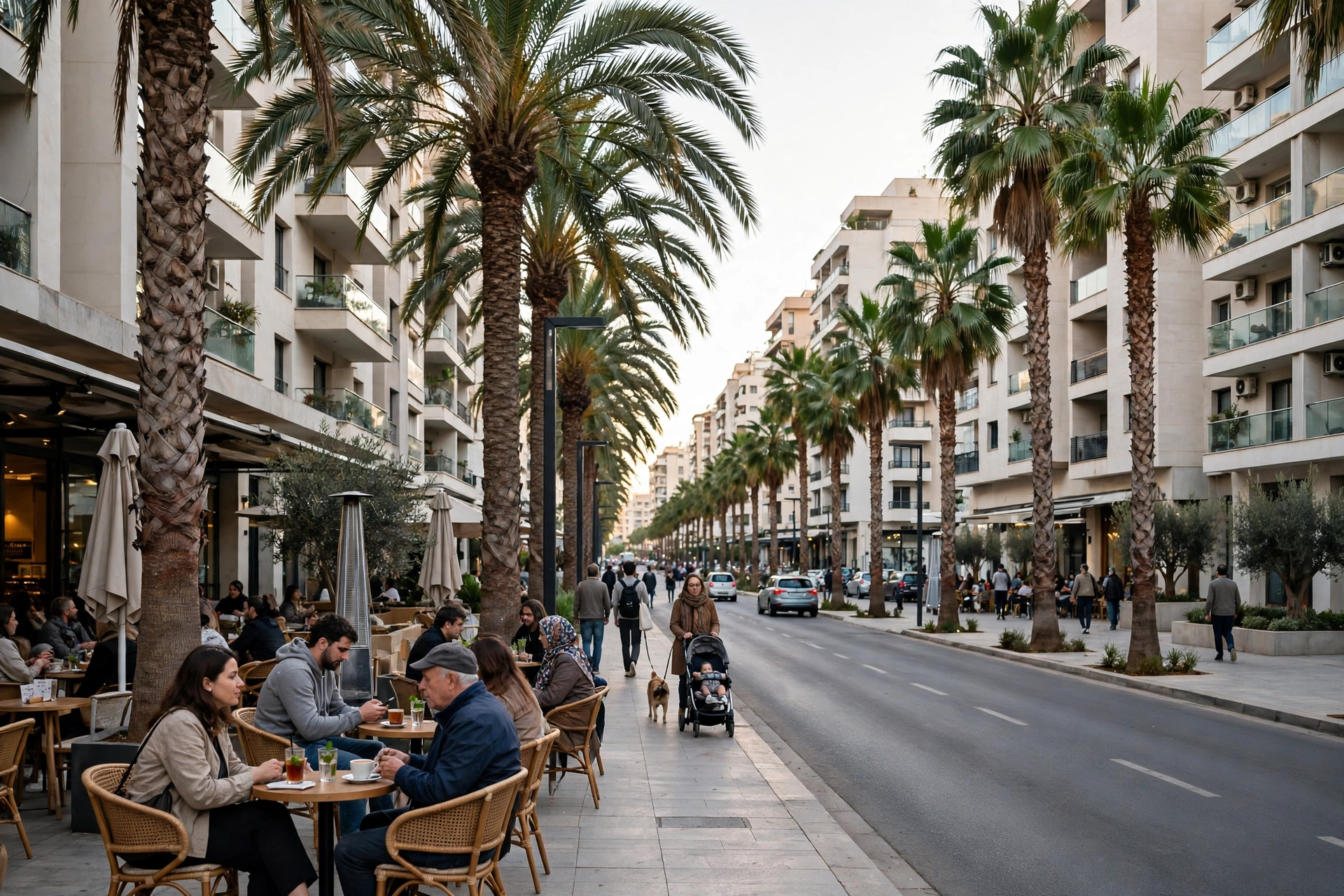
Agdal is where most newcomers land first. It is the modern, cafe-filled district around Avenue Fal Ould Oumeir and Avenue Annakhil, with apartment blocks, supermarkets and gyms. Living in Rabat from Agdal means walking to dinner, to the tram and to a dozen coffee shops, and the area suits young professionals and remote workers who want the city at their door.
Hay Riad is the leafy, family choice: wide streets, villas and modern apartment buildings, embassies, international schools and the biggest park in the city. It is quieter and pricier than Agdal, and many long-term residents settle here once they know the city. Living in Rabat from Hay Riad means space and greenery — but you will want a car, because the district is spread out.
Centre-Ville and Les Orangers suit people who like old buildings and walking. The art deco centre around Avenue Mohammed V has characterful apartments, the medina and the Kasbah of the Udayas within walking distance, and the cheapest central rents. The trade is older plumbing, street noise and fewer parking spaces — a fair deal if you value charm over comfort.
Souissi is the villa district: embassies, big gardens and the quietest streets in Rabat, popular with senior diplomats and wealthy families. Rents are the highest in the city and a car is essential. The coastal strip towards Harhoura and Temara offers a quieter, almost suburban life with beaches nearby, for those happy to be twenty minutes from the centre.
Rents and Housing: What You Pay in 2026
Rents for living in Rabat sit below Casablanca and well below European capitals, but they have risen steadily as the city attracts more diplomats and remote workers. Expect to pay two months' deposit plus the first month up front, and always check the water pressure, the internet and the heating before signing — our guide to renting an apartment in Morocco explains the contract traps to avoid.
| Home type | Monthly rent (MAD) | Approx. USD |
|---|---|---|
| Studio, Centre-Ville | 3,500–5,000 | $350–$500 |
| One-bedroom, Agdal | 5,000–7,500 | $500–$750 |
| Two-bedroom, Centre-Ville | 5,500–8,000 | $550–$800 |
| Two-bedroom, Hay Riad | 7,000–10,000 | $700–$1,000 |
| Three-bedroom, Hay Riad | 10,000–15,000 | $1,000–$1,500 |
| Villa, Souissi | 15,000–25,000 | $1,500–$2,500 |
| Room in a shared flat | 2,000–3,500 | $200–$350 |
Furnished flats cost roughly 20–30% more, and most long-term rentals are unfurnished — budget for furniture if you stay. Agency fees run about one month's rent when a semsar (agent) finds the flat, and that fee is negotiable. Prices are typical ranges for long-term rentals in November 2026; short-term and Airbnb-style lets cost far more per month.
Monthly Cost of Living in Rabat
A single person lives comfortably in Rabat on 10,500–13,000 MAD a month (about $1,050–$1,300), including rent. A couple needs roughly 15,000–19,000 MAD (about $1,500–$1,900). Living in Rabat is not the cheapest Moroccan life — Marrakech and Fes run lower — but for a capital city with this quality of services, it is a bargain by European standards. Our full cost of living in Morocco guide breaks down the same budget city by city.
| Expense | Single person (MAD/month) | Approx. USD |
|---|---|---|
| Rent, one-bedroom in Agdal | 6,000 | $600 |
| Utilities (electricity, water, gas) | 500–800 | $50–$80 |
| Fibre internet 100–200 Mbps | 200–400 | $20–$40 |
| Groceries and markets | 2,000–2,500 | $200–$250 |
| Eating out and cafes | 1,200 | $120 |
| Transport (tram pass + taxis) | 400–600 | $40–$60 |
| Gym and leisure | 300–500 | $30–$50 |
| Total | 10,500–13,000 | $1,050–$1,300 |
Eating out is where living in Rabat surprises newcomers: a cafe breakfast costs 25–40 MAD, a lunch menu in Agdal runs 60–100 MAD, and a good fish dinner near the port is 120–180 MAD. Groceries are cheaper still if you shop at the markets rather than the supermarkets — the medina souk and Marché Central sell the same vegetables for half the price.
Weather: Four Real Seasons by the Atlantic
Rabat is one of the few Moroccan cities with four distinct seasons, and the Atlantic sets the rules. Summers when living in Rabat are warm rather than punishing: coastal highs of 26–28°C, cooled by the afternoon sea breeze, with only the occasional inland wind pushing temperatures past 35°C. Unlike Marrakech, most flats manage without air conditioning, though a fan earns its keep in August.
Winter is the season that catches newcomers by surprise. Daytime temperatures of 17–19°C sound mild, but nights drop to 8–10°C, rain falls steadily from December to February, and Moroccan homes have no central heating. Damp, chilly flats are the most common complaint among winter arrivals — bring warm clothes and a good heater, and choose a flat with afternoon sun.
Spring and autumn are the payoff: April to June and September to October bring clear skies, temperatures in the low twenties and the city at its greenest. Morning fog rolls in off the ocean and burns off by ten, and the parks — the Botanical Garden, the Andalusian Gardens, the green belt of Hay Riad — are at their best. If you can choose your arrival date, aim for one of these windows.
Working Remotely While Living in Rabat
Rabat is quietly becoming one of Morocco's best bases for remote work, and living in Rabat works well for anyone whose clients sit in Europe. The time zone is Western European Time (GMT+1 in winter, the same as London and Paris), so there is no awkward scheduling, and the city runs on a European working rhythm — cafes open early, offices close for lunch, and evenings are long.
Fibre is the key question, and the answer is good but patchy. Most buildings in Agdal, Hay Riad and Centre-Ville offer fibre of 100–200 Mbps for 200–400 MAD a month, but some older buildings are still on ADSL — test the connection at the exact flat before signing a lease. Our guide to Morocco internet for expats explains the providers and the 4G backup that costs 100–150 MAD a month. Coworking is still small — a handful of spaces in Agdal and Hay Riad — and our Morocco coworking spaces guide lists the current options.
One practical warning: working remotely on a tourist visa has limits. The 90-day visa-free stay does not automatically become a long-term right to live and work from Morocco, and the tax picture depends on where your income is earned and where you are resident. Read our digital nomad guide to Morocco and our Morocco tax guide for expats before committing to a year.
Daily Life: Food, Markets and Getting Around
Daily life when living in Rabat runs on cafes, markets and the tram. Mornings start slowly — coffee and a croissant on a terrace in Agdal for 15–25 MAD — and the city fills up by ten. The markets are the heart of the food budget: the medina souk and Marché Central sell vegetables, olives, spices and bread for far less than the supermarkets, and the fish stalls near the port sell the morning catch at prices that make a weekly fish dinner a habit rather than a luxury.
Getting around is easy without a car. The tram has two lines crossing the city and reaching Salé, with a single ticket at 6 MAD and a monthly pass around 200 MAD. Petit taxis start at about 7 MAD and most central rides cost 10–20 MAD — insist on the meter. For trips further afield, Rabat's two main stations connect to the whole country: our guide to Morocco by train covers the Al Boraq line to Tangier and the hourly trains to Casablanca. If you do drive, read our guide to learning Moroccan Arabic (Darija) — ten words of Darija transform every taxi ride and market visit.
Weekends when living in Rabat have a rhythm of their own: Saturday walks along the corniche and the Kasbah of the Udayas, Sunday lunch in the medina, and day trips to the Chellah ruins, the beaches of Temara or the forests of Maâmora. Rabat's travel guide covers the sights in detail, and it doubles as a checklist for showing visiting friends around; the official Visit Morocco site lists what's on.
Healthcare and Schools
Healthcare is one of Rabat's quiet strengths: as the capital, it has the country's best hospitals and the widest choice of private clinics. Most expats living in Rabat use private clinics in Agdal and Hay Riad for day-to-day care — a consultation costs 200–400 MAD — and the big public hospital CHU Ibn Sina handles serious cases. Pharmacies are everywhere and well stocked. Health insurance is essential, and our guide to healthcare in Morocco for expats explains the public and private options and what to check before you sign a policy.
Schools are a genuine reason families choose Rabat over other cities. The Rabat American School, the French Lycée Descartes and several bilingual private schools serve the international community, with fees that are high by Moroccan standards but far below London or Paris. Waiting lists exist at the most popular schools, so apply before you move — our guide to schools in Morocco for expat families covers the options, the fees and the application timing.
The Downsides: Who Should Not Move Here
Honesty first: Rabat is quiet, and quiet is not for everyone. Nightlife is thin — a few bars in hotels, some live music in Agdal, but nothing like Casablanca's scene — and the social world is small enough that you will know the same faces within months. If you need constant stimulation, new people every week and a city that never sleeps, living in Rabat will feel slow within a year.
The second downside of living in Rabat is the winter damp, already mentioned above: cold flats, grey skies and rain from December to February. It is not severe, but it surprises people who moved for sunshine. The third is practical: Rabat-Salé airport has far fewer flights than Casablanca, so most long-haul travel means an hour by train to Mohammed V airport — easy, but an extra step every trip. And administration runs in French and Arabic; without some French, paperwork takes twice as long.
Practical Steps to Move to Rabat
A move to Rabat is straightforward if you do it in order. Start with a scouting trip of two to three weeks in winter — the hardest season — renting a flat in the district you are considering. Use the trip to test the internet, meet a semsar, walk the neighbourhood at night and check how damp the flat feels in the morning.
Second, sort the paperwork early. Most nationalities enter visa-free for 90 days; staying longer means a carte de séjour from the préfecture, with proof of income, housing and health insurance. Our guide to moving to Morocco: visas and residency walks through the process, and our carte de séjour renewal guide covers the first renewal.
Third, open a bank account as a non-resident with your passport — it makes paying rent and utilities far simpler; our guide to opening a bank account in Morocco explains the documents. Fourth, rent for a year before deciding whether to buy — and read our buying property in Morocco guide first. If you are retiring rather than working, our retiring in Morocco guide covers the specific rules and the best towns.
Frequently Asked Questions
Is living in Rabat expensive compared with Europe?
No. A comfortable single-person life living in Rabat costs roughly 10,500–13,000 MAD a month (about $1,050–$1,300), including rent, food and transport — roughly half a similar life in a mid-sized European city.
What is the best neighbourhood for living in Rabat?
For most newcomers living in Rabat, Agdal for a first year near cafes and the tram, and Hay Riad for families who want space and quiet. Centre-Ville suits people who love old buildings and walking everywhere.
Do I need to speak French to live in Rabat?
Not strictly, but it helps enormously. French runs the administration, the clinics and most offices, and English works mainly in international circles. Basic Darija makes daily life warmer and cheaper.
How cold does Rabat get in winter?
Nights drop to 8–10°C and days run 17–19°C, with steady rain from December to February. The cold feels worse indoors, because homes have no central heating — a heater matters more than the outdoor temperature.
Can I work remotely from Rabat?
Yes, and many people do. Fibre of 100–200 Mbps costs 200–400 MAD a month, 4G is a reliable backup, and the time zone matches Western Europe. Check the fibre connection at your exact address before signing a lease.
Is Rabat safe for expats?
Rabat is one of the safest cities in Morocco, with low street crime and a calm, well-policed centre. The usual precautions apply — watch your bag in the medina, use metered taxis — but most residents call it the easiest Moroccan city to feel at home in.
Conclusion: Is Living in Rabat Right for You?
Living in Rabat suits people who want Morocco's warmth and prices without its intensity: diplomats and NGO staff posted here, retirees who want a calm winter, remote workers who want a European time zone with Atlantic air, and families who want good schools and safe streets. Think tram rides to the medina, coffee on a terrace in Agdal, and a life at the speed of the tide.
It will not suit you if you came for nightlife, constant novelty or the buzz of a big city — Rabat is none of those things, and it does not pretend otherwise. But if you want a clean, safe, affordable capital where the sea is always ten minutes away, living in Rabat is the calmest place in Morocco to build a life. Rent a flat for three months, learn ten words of Darija, and let the city decide.
Last checked: November 2026. Prices are typical ranges for long-term rentals and everyday spending, checked against listings and market prices in November 2026.
1 thought on “Living in Rabat: Morocco’s Calm Capital for Expats”