
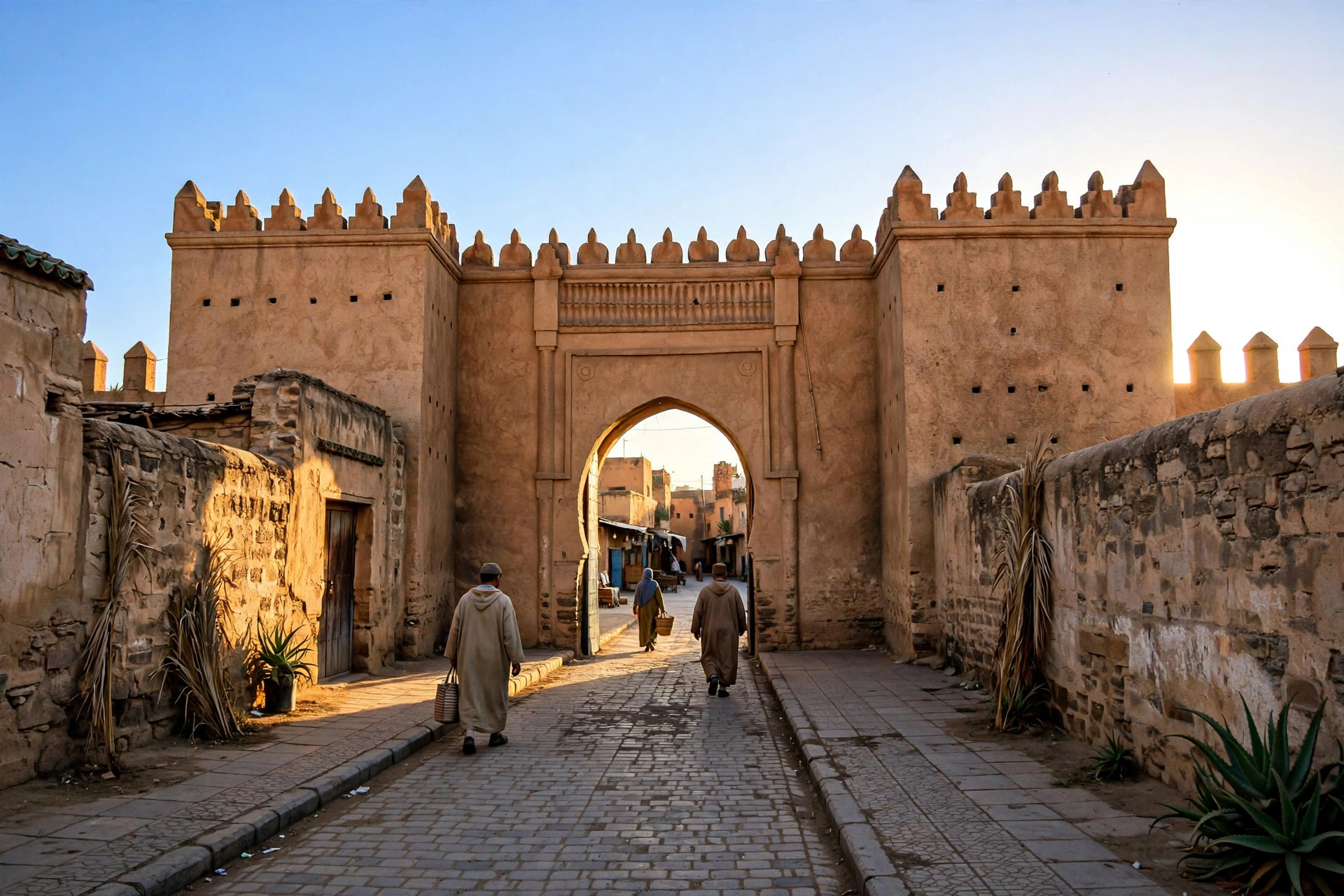
Living in Oujda is Morocco's most overlooked expat choice: a regional capital of 506,224 people (2024 census) in the far east of the country, 15 kilometres from the Algerian border and 60 kilometres south of the Mediterranean, where rai music, a working medina and a big university set the rhythm of daily life. For expats who want the lowest rents in any Moroccan city of this size, a real Moroccan town without a tourist show, and the beach and the mountains both an hour away, living in oujda is one of the most honest choices in the country.
This guide covers the neighbourhoods, rents and routines that make a move to Oujda work. It sits in our Living in Morocco section.
Oujda was founded in 994 and has been the capital of the Oriental region ever since, a frontier city shaped by trade routes, the Beni Snassen mountains and the Algerian border. It is the home of rai music in Morocco and the seat of Mohammed I University, one of the country's largest universities. Every summer the return of emigrant families from France, Belgium and the Netherlands fills the city with cars, weddings and reunions. The city grew from 494,252 people in 2014 to 506,224 in 2024.
In this guide
- Why Expats Choose Living in Oujda
- Oujda at a Glance
- Best Neighbourhoods for Living in Oujda
- Rents and Housing: What You Pay in 2026
- Monthly Cost of Living in Oujda
- Weather: Hot Dry Summers and Cold Winter Nights
- Getting Around: Trains, Buses and Angads Airport
- Working and Living in Oujda: Remote Work, Teaching and the University
- Daily Life: Markets, Food and Rai Music
- Healthcare in Oujda
- Schools for Expat Families
- The Downsides of Living in Oujda
- Moving to Oujda: Your First Steps
- Frequently Asked Questions
- Conclusion: Is Oujda Right for You?
Why Expats Choose Living in Oujda
The single biggest reason expats choose living in oujda is the price. A furnished one-bedroom flat in the centre costs around 1,962 MAD a month, about $197, and outside the centre around 1,275 MAD, about $128 — the cheapest rents of any Moroccan city this size. Groceries and transport follow the same pattern, so a foreign pension or remote salary stretches further here than in any coastal city.
The second reason is the geography. Oujda is the only Moroccan city where you can live inland and still reach the sea in an hour: Saidia beach sits about 60 kilometres north, and the Beni Snassen mountains with the Zegzel gorge are an hour the other way. Living in oujda means a dry plain in the week and a Mediterranean beach or a mountain valley at the weekend.
The third reason is the authenticity. Oujda has almost no foreign tourists, so the medina is a working market rather than a showpiece, the cafes are full of locals rather than tour groups, and the expats who settle here are treated as neighbours rather than customers. If you want to live inside Moroccan life rather than beside it, living in oujda gives you that from the first week.
Oujda at a Glance
| Fact | Detail |
|---|---|
| Population (city, 2024 census) | 506,224 |
| Population (2014 census) | 494,252 |
| Population (metro area) | ~610,000 |
| Region | Oriental (L'Oriental) |
| Founded | 994 |
| Distance to Algerian border | ~15 km east |
| Distance to Mediterranean coast | ~55–60 km north |
| Distance to Saidia beach | ~60 km, ~1 hour |
| Altitude | ~450–470 m |
| Train to Fes | ~5.5–6 hours |
| Train to Casablanca | ~10 hours |
| Flight to Casablanca | ~1.5 hours |
| Climate | Cold semi-arid, summer daily mean ~27°C, winter ~10–11°C |
| Annual rainfall | 300–500 mm |
| Best months | March to May and September to November |
| Famous for | Rai music, Mohammed I University, medina, Sidi Yahya oasis |
| Main languages | Arabic, French; English limited, Spanish less common than in the north |
Best Neighbourhoods for Living in Oujda
The medina is where Oujda feels oldest. Inside the walls, the lanes around Bab Sidi Abdelwahab and the Grand Mosque are full of spice stalls, tailors and small workshops, and the houses are traditional, often built around a courtyard. Rents here are low, but the houses are old and the lanes narrow and noisy at market hours. It suits single expats and Arabic learners.
The centre-ville around Boulevard Mohammed V and Place du 16 Aout is where most expats land first. Banks, cafes and the main shopping streets all sit here, and the flats are practical: one- and two-bedroom apartments with balconies, often furnished, from about 1,800 MAD a month. Everything is a short walk away.
Hay Ennahda and Hay Al Massira are the modern residential districts east and south of the centre, with newer apartment blocks, wider streets and parking. The flats are bigger and brighter than in the centre, with three-bedroom family flats around 2,600–3,700 MAD a month. For a family that wants space and quiet streets, these districts are the sensible choice.
Sidi Maafa and the southern edge suit expats who want green space. The Sidi Maafa park and the Jbel Hamra forest sit about 5 kilometres south of the centre, and the villas around them rent for 4,000–7,000 MAD a month. It is quieter and cooler than the centre, though you will want a car.
The university district around Mohammed I University is the youngest part of town. Student flats and cheap cafes cluster here, and a small one-bedroom flat can be found for 1,200–1,800 MAD a month. It suits young remote workers, though the streets are lively late at night during term time. For many newcomers, living in oujda starts here, in a cheap flat near the campus.
Rents and Housing: What You Pay in 2026
Rents for anyone living in oujda are the city's strongest argument. Expat guide data for November 2026 puts a one-bedroom flat in the centre at around 1,962 MAD a month (about $197), and outside the centre at around 1,275 MAD (about $128), while a three-bedroom flat in the centre runs around 3,693 MAD (about $371) and outside the centre around 2,578 MAD (about $259). Furnished flats cost roughly 20–30% more, and landlords often ask for two to three months' rent as a deposit.
Search on Avito, Mubawab and local agencies, and always view in person before paying anything. Summer rents rise when the diaspora returns, so a twelve-month contract signed in winter locks in the best price. Read our guide to renting an apartment in Morocco before you sign, and check whether the price includes syndic charges, which can add 200–500 MAD a month in new residences. Winters are cold at night, so ask whether the flat has a gas heater or air conditioning that heats.
| Housing type | Monthly rent (MAD) | Monthly rent (USD) |
|---|---|---|
| 1-bed, outside centre | 1,275–1,800 | $128–$180 |
| 1-bed, centre | ~1,962 | ~$197 |
| 2-bed flat, Hay Ennahda | 2,000–3,000 | $200–$300 |
| 3-bed, outside centre | ~2,578 | ~$259 |
| 3-bed, centre | ~3,693 | ~$371 |
| Villa, Sidi Maafa / south | 4,000–7,000 | $400–$700 |
| Student flat, university district | 1,200–1,800 | $120–$180 |
| Deposit (typical) | 2–3 months' rent | — |
| Agency fee (typical) | ~1 month's rent | — |
Last checked: November 2026. Prices are typical ranges from expat guide data and vary by building, floor and furnishing.
Monthly Cost of Living in Oujda
A single expat can live comfortably in Oujda on 6,500–10,000 MAD a month, a couple on 10,000–15,000 MAD and a family of three on 13,500–20,000 MAD. Expat guide data for November 2026 puts a single person's total at about $645 a month including rent, roughly 6,450 MAD, with groceries around $185 a month and utilities for two people around 547 MAD. A grilled meat lunch costs 40–70 MAD and a mint tea 6–10 MAD. The monthly cost of living in oujda sits about 29% below Rabat, and well below Tangier.
| Monthly expense | Single (MAD) | Couple (MAD) | Family of three (MAD) |
|---|---|---|---|
| Rent (1–3 bed flat) | 1,275–3,693 | 2,000–4,000 | 2,578–5,000 |
| Groceries and markets | 1,200–1,850 | 2,000–3,200 | 3,000–4,500 |
| Eating out and cafes | 500–1,000 | 800–1,600 | 1,200–2,500 |
| Utilities and internet | 400–800 | 550–1,000 | 700–1,300 |
| Transport (taxis, trains) | 300–700 | 500–1,000 | 700–1,400 |
| Health insurance | 300–800 | 600–1,500 | 1,000–2,500 |
| Leisure and weekends | 300–700 | 500–1,000 | 800–1,500 |
| Total | 6,500–10,000 | 10,000–15,000 | 13,500–20,000 |
| Total (USD) | $650–$1,000 | $1,000–$1,500 | $1,350–$2,000 |
Last checked: November 2026. Budget ranges are typical for November 2026 and vary by lifestyle.
Weather: Hot Dry Summers and Cold Winter Nights
Oujda has a cold semi-arid climate, drier and more extreme than the Atlantic coast. Summer days average around 27°C in July and August, and the dry heat arrives early and stays late. Winter days average around 10–11°C, nights can drop near freezing, and the city sits at about 450 metres, so the cold feels real. Rain is scarce, 300–500 mm a year, falling mostly between November and February, and snow is rare — the last snowfall was in January 2026.
The best months are March to May and September to November, when the days are mild and the light is good for walking the medina and driving into the mountains. Summer heat is the price of the low rents, and winter cold is the surprise: houses here have little insulation and no central heating, and most expats heat with butane gas heaters or air conditioning. The upside is the sunshine: Oujda records nearly 3,000 hours of sun a year.
Getting Around: Trains, Buses and Angads Airport
Oujda's railway station is the eastern terminus of the national network, and trains run west through Taourirt and Taza to Fes and on to Casablanca. The train to Fes takes about 5.5 to 6 hours and costs 140–290 MAD depending on class, while the train to Casablanca takes around 10 hours and costs 270–550 MAD, with a sleeper on the overnight service. Book on ONCF Voyages or at the station. CTM buses run to Casablanca in about 8 hours for 315–600 MAD, and to Fes in about 4 hours 45 minutes for 220–310 MAD.
Inside the city, petits taxis cost 7–10 MAD for a ride across town, and grand taxis connect Oujda with Nador, Saidia and the Beni Snassen villages. Oujda Angads Airport sits about 12 kilometres north, with flights to Casablanca in about 1.5 hours for 950–2,200 MAD and direct flights to several European cities. Many expats buy a cheap second-hand car after a few months, since the beach and the mountains are both an hour away and the bus network is thin. Living in oujda without a car is perfectly doable, but a car turns the whole Oriental region into a weekend option.
| Route | Mode | Time | Price (MAD) |
|---|---|---|---|
| Oujda – Fes | Train | 5.5–6 h | 140–290 |
| Oujda – Fes | Bus (CTM) | ~4 h 45 min | 220–310 |
| Oujda – Casablanca | Train | ~10 h | 270–550 |
| Oujda – Casablanca | Bus (CTM) | ~8 h | 315–600 |
| Oujda – Casablanca | Flight (OUD–CMN) | ~1.5 h | 950–2,200 |
| Oujda – Nador | Grand taxi / bus | ~2 h | 60–100 |
| Oujda – Saidia | Grand taxi / car | ~1 h | 40–60 per seat |
| Across town | Petit taxi | 5–10 min | 7–10 |
| Across town | On foot | 10–20 min | Free |
Last checked: November 2026. Fares vary by class, date and how far ahead you book.
Working and Living in Oujda: Remote Work, Teaching and the University
Oujda's economy is trade, agriculture, the university and public administration rather than tourism or industry. Most foreign residents are retirees, remote workers, language teachers and a few academics attached to Mohammed I University. There is no large employer hiring expats in town, so most newcomers either bring their income with them or work online. French is the working language of the university and the administration, and English teaching work is thinner here than in Casablanca or Rabat.
For remote workers, living in oujda is a trade-off worth weighing. Average internet speeds run around 40 Mbps, fibre is spreading in the newer districts but is not everywhere, and there are no coworking spaces, so most people work from home or a cafe with good wifi. Low costs stretch a foreign salary further than almost anywhere else in Morocco, and the quiet winters suit deep work.
Daily Life: Markets, Food and Rai Music
Daily life in Oujda runs on the souk, the bakery and the cafe. The medina market sells vegetables, olives, spices and bread at prices that make weekly shopping a pleasure, and the city's food has its own eastern character: karantika, the chickpea-flour flan sold hot from street carts, is the snack Oujda is known for, and grilled meats and harira anchor the evening meal. Between the university, the music and the summer return of the diaspora, living in oujda has more energy than its quiet reputation suggests: rai music was born across the border in Oran but Oujda is its Moroccan capital, and the summer festival fills the city with concerts.
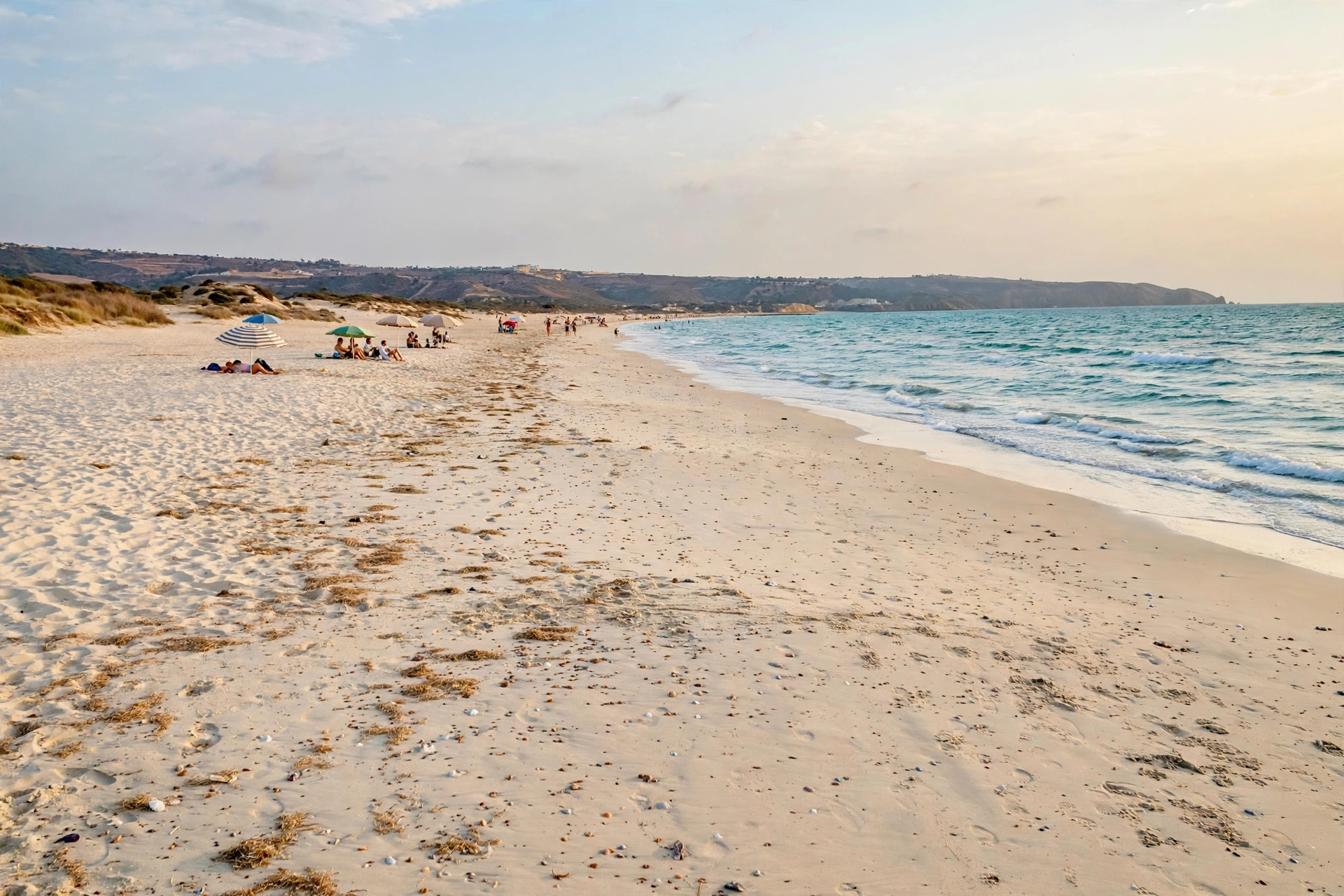
Summer is the busy season: families return from France, Belgium and the Netherlands, the streets fill with European plates, and the cafes stay open late. Winter is the opposite — quiet streets, little open before 10am, and the city to itself. French will carry you through daily life, Arabic opens the medina, and English is limited — a few months of either will change your experience more than any other single investment. Weekends are for the coast: Saidia's long beach an hour north, or the Zegzel gorge and Tafoughalt in the Beni Snassen for walking and orchards.
Healthcare in Oujda
Oujda has local clinics, private practices and pharmacies for routine care, and a GP consultation runs 150–300 MAD. The city also has a university hospital, the CHU Mohammed VI, which handles serious cases for the whole Oriental region, so most expats living in oujda do not need to travel west for hospital care.
Register with the CNSS if you are employed locally, and take out private health insurance as well: decent international cover costs roughly 300–800 MAD a month for a single person, and it gets you seen quickly in a private clinic. Pharmacies are plentiful, and most pharmacists speak French.
Schools for Expat Families
Oujda has nurseries and Moroccan public and private schools, but families should plan schooling carefully: there is no large international school in town, so most expat families choose a local private school with French teaching, or accept that older children may need to study elsewhere for an international curriculum. Younger children pick up French and Arabic fast. Nurseries and preschools are plentiful and affordable, typically 1,000–2,500 MAD a month, and Moroccan public schools are free but taught in Arabic. Living in oujda with school-age children works best when the school choice is settled first and the neighbourhood second.
The Downsides of Living in Oujda
Honesty first: Oujda is not for everyone. The expat community is tiny, mostly Europeans and a few Americans, and winter can feel lonely when the city empties and the nights turn cold. If you need a buzzing social life in English, living in oujda means making your own fun or taking the train west to Fes, five and a half hours away.
Services are limited: no coworking space, no big international supermarket, and specialist shopping means a trip to Casablanca or an online order. The distance from the rest of Morocco is the real cost: ten hours by train to Casablanca, and the border with Algeria, 15 kilometres away, is closed to travellers. Summer heat, cold houses and the quiet off-season are the price of the lowest rents in the country.
Moving to Oujda: Your First Steps
Start with a scouting trip: spend a week in Oujda, walk the medina at sunset, eat karantika from a street cart and view three or four flats. Most expats decide within days whether living in oujda suits them, and a week here costs less than a weekend in Casablanca.
On paperwork, the standard path applies: enter on a 90-day tourist stamp, then apply for a carte de séjour at the police prefecture with your rental contract, bank statements and health insurance. Our Morocco carte de séjour renewal guide walks through the documents and the timeline, and our Morocco visa costs guide covers the fees. Open a Moroccan bank account early and bring certified translations of key documents. Living in oujda becomes simple once the residence card is in your pocket.
- Visit for a week and choose your neighbourhood.
- Secure a long-term rental with a written contract.
- Open a bank account and arrange health insurance.
- Apply for your carte de séjour within the first 90 days.
- Learn basic French and Darija before you arrive if you can.
- Join the local expat and university networks once you land.
Frequently Asked Questions
Is Oujda a good place for expats to live?
Yes, for the right expat. Oujda suits remote workers, retirees, teachers and families who want the lowest rents in Morocco, a genuine Moroccan city and the beach and the mountains both an hour away. It is less suited to anyone who wants a large English-speaking social scene or a big-city job market.
How much does it cost to live in Oujda?
A single expat needs roughly 6,500–10,000 MAD ($650–$1,000) a month, a couple 10,000–15,000 MAD ($1,000–$1,500), and a family of three 13,500–20,000 MAD ($1,350–$2,000), including rent. Rents are the biggest saving: a one-bedroom flat costs 1,275–1,962 MAD, which is what makes Oujda so affordable next to Rabat.
How long is the train from Oujda to Fes?
About 5.5 to 6 hours on trains running west through Taza. Fares run 140–290 MAD depending on class, and CTM buses take about 4 hours 45 minutes for 220–310 MAD. The train to Casablanca takes around 10 hours.
What is the weather like in Oujda?
Dry and extreme by Moroccan standards: summer days average around 27°C with a record high of 47.3°C, winter days average around 10–11°C with cold nights, and rain is only 300–500 mm a year. March to May and September to November are the best months.
Is Oujda safe for foreigners?
Yes. Oujda is a calm, family-oriented and conservative city with low street crime by Moroccan standards. Normal precautions apply: watch your bag at the station and the souk, and use registered taxis after dark.
Can foreigners buy property in Oujda?
Yes, foreigners can buy property in Morocco, including in Oujda, except for agricultural land. Prices here are among the lowest in the country, so some expats rent first and buy later.
Conclusion: Is Oujda Right for You?
Oujda is the choice for expats who value price and authenticity over comfort and buzz: a regional capital of 506,224 people with a medina founded in 994, rai music in the cafes, rents from 1,275 MAD and the Mediterranean beach an hour north. It will not entertain you like Marrakech or employ you like Casablanca, but it will give you a comfortable, affordable, genuinely Moroccan life at the lowest cost in the country.
Visit for a week and test living in oujda yourself: walk the medina at sunset and take a day trip to Saidia. If the quiet feels like freedom rather than boredom, Oujda is your town — and our Morocco in 24 days route is a good way to see the rest of the country first.
Last checked: November 2026