
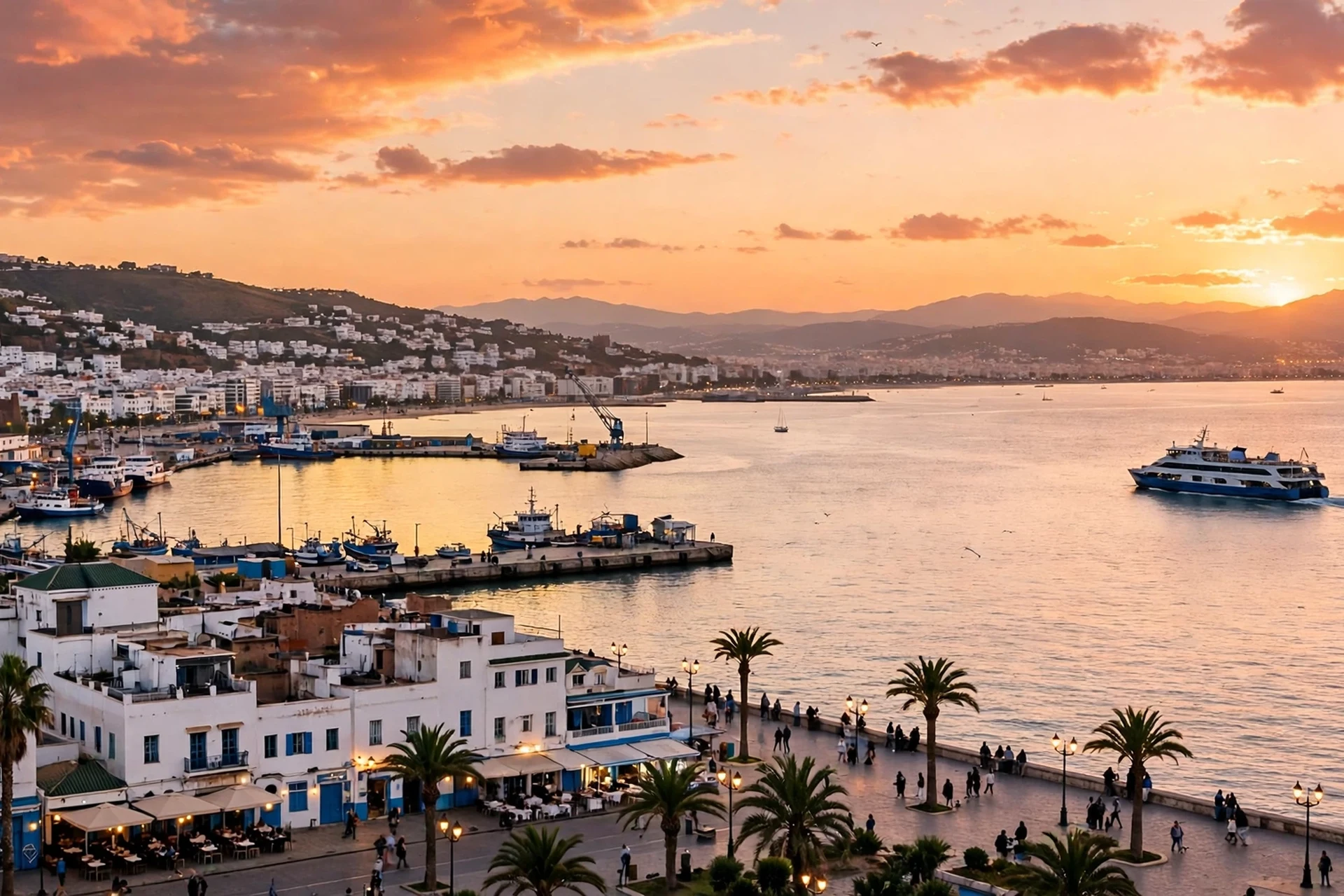
Living in Tangier is Morocco at its most outward-looking: a port city where the Atlantic meets the Mediterranean, Spain sits fourteen kilometres across the water. If you want Morocco with a European escape hatch, living in Tangier is the easiest landing in the country — a city where writers, diplomats and remote workers have settled for a century, drawn by the light, the sea air and the feeling that two continents are always in view.
Tangier is not Morocco’s calmest city — it will not soothe you the way Rabat does. What living in Tangier offers instead is energy: a busy port, a famous medina, an art scene that never quite sleeps, and a ferry to Europe that leaves every hour. It sits in our Living in Morocco section, alongside our wider Living in Morocco: The Complete Guide for Expats.
In this guide
- Why Expats Choose Living in Tangier
- Tangier at a Glance
- Best Neighbourhoods for Living in Tangier
- Rents and Housing: What You Pay in 2026
- Monthly Cost of Living in Tangier
- Weather: Wind, Sun and the Strait
- Working Remotely While Living in Tangier
- Daily Life: Food, Markets and Getting Around
- Healthcare and Schools
- The Downsides: Who Should Not Move Here
- Practical Steps to Move to Tangier
- Frequently Asked Questions
- Conclusion: Is Living in Tangier Right for You?
Why Expats Choose Living in Tangier
Tangier has been an international city for longer than almost anywhere else in Morocco. From 1923 to 1956 it was an international zone run by a dozen foreign powers, and the writers, painters and spies who passed through — Paul Bowles, Tennessee Williams, Henri Matisse — left a bohemian reputation the city still trades on. Living in Tangier today means joining a place that is used to outsiders: you will find French, Spanish and English spoken in the cafes, and a foreign community older and more mixed than anywhere else in the north.
The foreign community is a blend: retirees from France and Spain who came for the light and the prices, diplomats and teachers, business people tied to the port and the free zone, and a growing number of remote workers who discovered that the same time zone as Western Europe pairs well with a sea view. Spanish is genuinely useful here in a way it is not elsewhere in Morocco — many older Tangier residents speak it fluently — and living in Tangier is the only Moroccan life where a weekend in Spain is a one-hour ferry ride, not a flight.
The trade is simple and honest: Tangier gives you a port city’s buzz, a real art and cafe culture, and Europe next door, and asks you to accept a busy, windy, sometimes scruffy city. There is traffic, there is noise, and the famous wind never really stops. For many expats, living in Tangier is exactly the point.
Tangier at a Glance
Living in Tangier rewards people who like their cities compact, walkable and full of contrast. The essentials below are what most newcomers ask about first, before they start comparing districts and rents.
| Fact | Detail |
|---|---|
| Population | About 1.1 million in the city, the largest in northern Morocco |
| Region | Tanger-Tétouan-Al Hoceïma, where the Atlantic meets the Mediterranean |
| Climate | Mediterranean with strong Atlantic wind; mild, damp winters |
| Summer highs | 28–30°C, cooled by the sea breeze and the strait wind |
| Winter lows | 9–11°C at night, 16–18°C by day |
| Best months to arrive | April–June and September–October |
| Airport | Tangier Ibn Battouta (TNG), 12 km from the centre |
| Ferries | Tangier Ville to Tarifa in 1 hour; Tangier Med to Algeciras in about 1.5 hours |
| Trains | Al Boraq high-speed line to Rabat in 1h20 and Casablanca in 2h10 |
| Public transport | City buses plus petit taxis; a bus ride costs about 5 MAD (about $0.50) |
| Currency | Moroccan dirham (MAD); about 10 MAD to $1 in November 2026 |
Best Neighbourhoods for Living in Tangier
Choosing a district matters when living in Tangier, because the city stretches from the old port to the new marina and each area has a distinct character. Our full comparison, Best Neighbourhoods to Live in Tangier for Expats, covers each in detail; the short version is below.
The city centre around Boulevard Pasteur is where most newcomers land first. It is the old international zone: art deco buildings, bookshops, the Grand Socco, and cafes that have served writers for a century. Living in Tangier from the centre means walking to the medina, the port and dinner, and the area suits single expats and remote workers who want the city at their door.
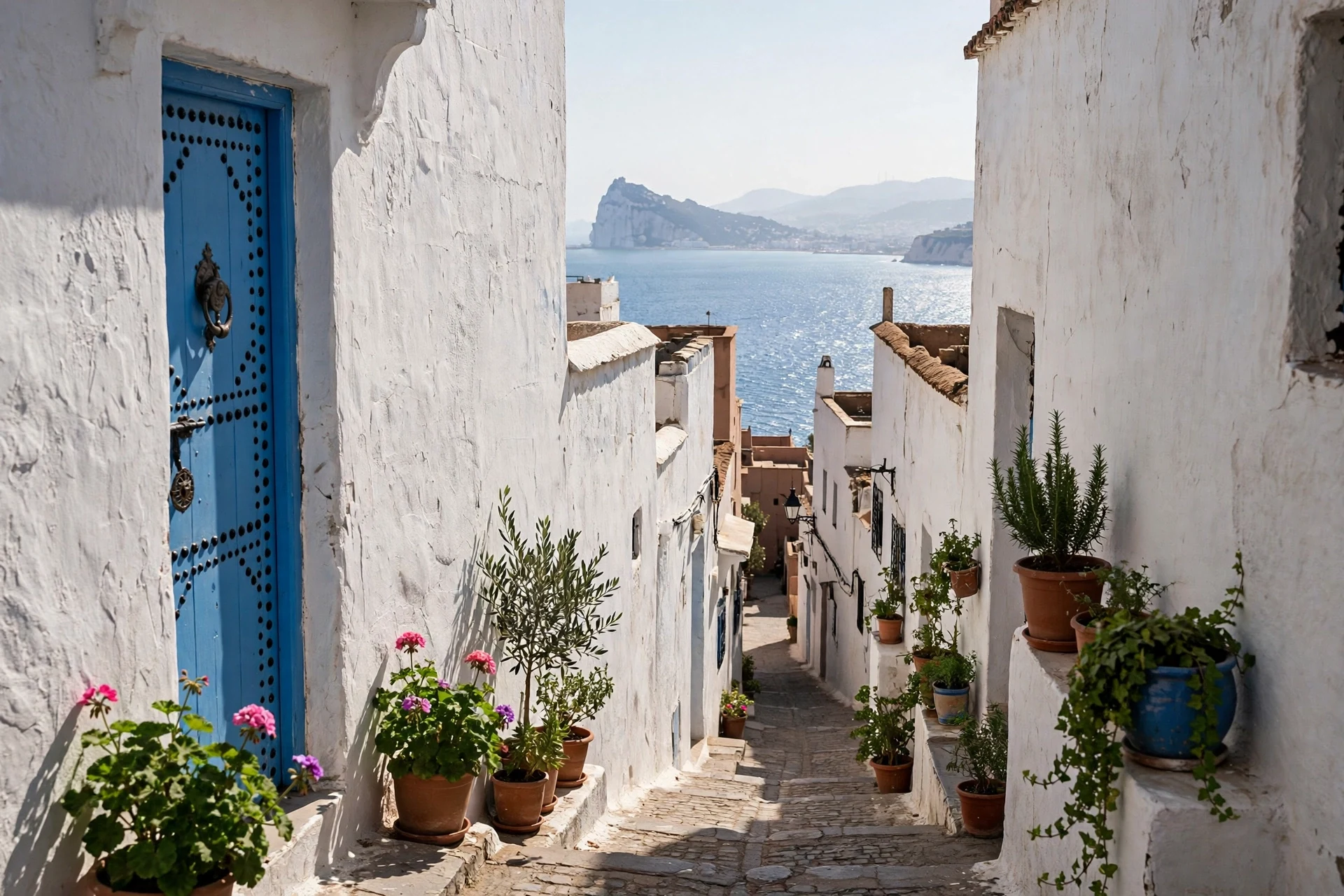
Marshan and the Kasbah suit people who love old stone and sea views. Marshan is a quiet, residential hill with villas and gardens above the port, while the kasbah is a maze of whitewashed lanes with views over the strait. Living in Tangier from either means beauty and calm — but steep streets, limited parking and flats that need a good heater in winter.
The Corniche and Malabata are the modern, seaside choice: new apartment blocks, the marina, beach cafes and the longest promenade in the city. Families and retirees settle here for the sea air and the easy walking, and the new developments have lifts, parking and reliable fibre. The trade is distance from the medina and a slightly resort-like feel.
California and the southern suburbs offer space: villas, gardens and the quietest streets in Tangier, popular with long-term residents who want room and a car. Rents are lower than on the corniche, but you will drive everywhere.
Rents and Housing: What You Pay in 2026
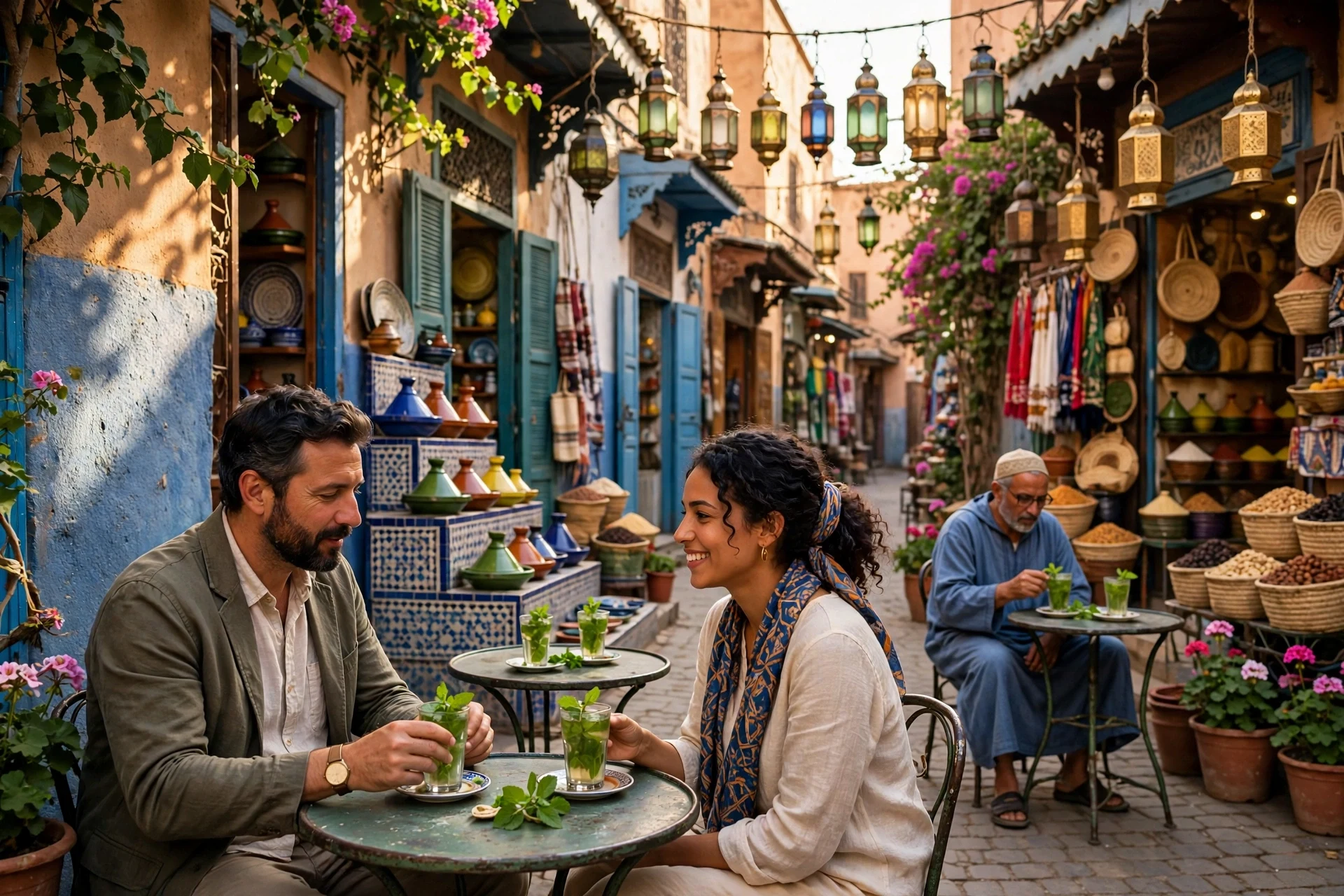
Rents for living in Tangier sit below Casablanca and Rabat, but the best flats — sea views, new buildings, the corniche — command a premium and go fast. Expect to pay two months’ deposit plus the first month up front, and always check the water pressure, the internet and the damp before signing — our guide to renting an apartment in Morocco explains the contract traps to avoid.
| Home type | Monthly rent (MAD) | Approx. USD |
|---|---|---|
| Studio, city centre | 3,000–4,500 | $300–$450 |
| One-bedroom, city centre | 4,000–6,000 | $400–$600 |
| Two-bedroom, city centre | 5,500–8,000 | $550–$800 |
| Two-bedroom, Corniche | 6,000–9,000 | $600–$900 |
| Three-bedroom, Marshan | 8,000–12,000 | $800–$1,200 |
| Villa, California | 12,000–20,000 | $1,200–$2,000 |
| Room in a shared flat | 1,800–3,000 | $180–$300 |
Furnished flats cost roughly 20–30% more, and most long-term rentals are unfurnished — budget for furniture if you stay. Agency fees run about one month’s rent when a semsar (agent) finds the flat, and that fee is negotiable. Prices are typical ranges for long-term rentals in November 2026; short-term and Airbnb-style lets cost far more per month.
Monthly Cost of Living in Tangier
A single person lives comfortably in Tangier on 9,500–12,000 MAD a month (about $950–$1,200), including rent. A couple needs roughly 14,000–18,000 MAD (about $1,400–$1,800). Living in Tangier is one of the cheaper coastal lives in Morocco — below Rabat and Casablanca — and for a port city with this much culture and a ferry to Europe, it is a bargain by European standards. Our full cost of living in Morocco guide breaks down the same budget city by city.
| Expense | Single person (MAD/month) | Approx. USD |
|---|---|---|
| Rent, one-bedroom in the centre | 5,000 | $500 |
| Utilities (electricity, water, gas) | 400–700 | $40–$70 |
| Fibre internet 100–200 Mbps | 200–400 | $20–$40 |
| Groceries and markets | 1,800–2,200 | $180–$220 |
| Eating out and cafes | 1,100 | $110 |
| Transport (buses + taxis) | 350–500 | $35–$50 |
| Gym and leisure | 300–500 | $30–$50 |
| Total | 9,500–12,000 | $950–$1,200 |
Eating out is where living in Tangier surprises newcomers: a cafe breakfast costs 20–35 MAD, a lunch menu runs 50–90 MAD, and a fish dinner at the port is 100–160 MAD. Groceries are cheaper still if you shop at the markets rather than the supermarkets — the medina souk and the Marché Central sell the same vegetables for half the price.
Weather: Wind, Sun and the Strait
Tangier is one of the windiest cities in Morocco, and the wind sets the rules. Summers when living in Tangier are warm rather than punishing: coastal highs of 28–30°C, cooled by the afternoon sea breeze, with the strait wind keeping the air moving even in August. Unlike Marrakech, most flats manage without air conditioning, though a fan earns its keep on the still days.
Winter is the season that catches newcomers by surprise. Daytime temperatures of 16–18°C sound mild, but nights drop to 9–11°C, rain falls steadily from December to February, and the wind drives the damp straight through old buildings. Cold, draughty flats are the most common complaint among winter arrivals — bring warm clothes and a good heater, and choose a flat with afternoon sun.
Spring and autumn are the payoff: April to June and September to October bring clear skies, temperatures in the low twenties and the city at its brightest. The corniche and the Cap Spartel road are at their best. If you can choose your arrival date, aim for one of these windows.
Working Remotely While Living in Tangier
Tangier is quietly becoming one of Morocco’s best bases for remote work, and living in Tangier works well for anyone whose clients sit in Europe. The time zone is Western European Time (GMT+1 in winter, the same as London and Paris), so there is no awkward scheduling, and the city runs on a European working rhythm.
Fibre is the key question, and the answer is good but patchy. Most buildings in the centre, the Corniche and the new developments offer fibre of 100–200 Mbps for 200–400 MAD a month, but some older buildings in the medina and the kasbah are still on ADSL — test the connection at the exact flat before signing a lease. Our guide to Morocco internet for expats explains the providers and the 4G backup that costs 100–150 MAD a month. Coworking is growing — a handful of spaces in the centre and near the marina — and our Morocco coworking spaces guide lists the current options.
One practical warning: working remotely on a tourist visa has limits. The 90-day visa-free stay does not automatically become a long-term right to live and work from Morocco, and the tax picture depends on where your income is earned and where you are resident. Read our digital nomad guide to Morocco and our Morocco tax guide for expats before committing to a year.
Daily Life: Food, Markets and Getting Around
Daily life when living in Tangier runs on cafes, markets and the port. Mornings start slowly — coffee and a croissant on a terrace near the Grand Socco for 12–20 MAD — and the city fills up by ten. The markets are the heart of the food budget: the medina souk and Marché Central sell vegetables, olives, spices and bread for far less than the supermarkets, and the fish stalls at the port sell the morning catch at prices that make a weekly fish dinner a habit rather than a luxury.
Getting around is easy without a car. City buses cost about 5 MAD a ride, and petit taxis start at about 7 MAD with most central rides at 10–20 MAD — insist on the meter. For trips further afield, Tangier’s two stations connect to the whole country: our guide to Morocco by train covers the Al Boraq line to Rabat and Casablanca. If you do drive, read our guide to learning Moroccan Arabic (Darija) — ten words of Darija transform every taxi ride and market visit.
Weekends when living in Tangier have a rhythm of their own: Saturday walks along the corniche and out to Cap Spartel, Sunday lunch in the medina, and day trips to Asilah or the caves of Hercules. Tangier’s travel guide covers the sights in detail, and it doubles as a checklist for showing visiting friends around; the official Visit Morocco site lists what’s on.
Healthcare and Schools
Healthcare is one of Tangier’s improving strengths: as the north’s biggest city it has a growing choice of private clinics. Most expats living in Tangier use private clinics in the centre and on the corniche for day-to-day care — a consultation costs 200–400 MAD — and the public hospital handles serious cases. Pharmacies are everywhere and well stocked. Health insurance is essential, and our guide to healthcare in Morocco for expats explains the public and private options and what to check before you sign a policy.
Schools are a genuine reason families choose Tangier over other northern cities. The American School of Tangier — founded in 1950, the oldest American school abroad — sits alongside French lycées and several bilingual private schools, with fees that are high by Moroccan standards but far below London or Paris. Waiting lists exist at the most popular schools, so apply before you move — our guide to schools in Morocco for expat families covers the options, the fees and the application timing.
The Downsides: Who Should Not Move Here
Honesty first: Tangier is busy, and busy is not for everyone. Traffic is heavy, the port area is noisy, and the famous wind can turn a pleasant walk into a battle — some days the strait wind blows hard enough to cancel the ferries. If you need silence, wide empty streets and a city that slows down, living in Tangier will feel hectic within a year.
The second downside of living in Tangier is the winter damp, already mentioned above: cold flats, grey skies and rain from December to February. It is not severe, but it surprises people who moved for sunshine. The third is practical: the city is still catching up on infrastructure, so pavements, parking and public services can feel scruffy beside the new marina. And administration runs in French and Arabic, with Spanish widely spoken too; without some French, paperwork takes twice as long.
Practical Steps to Move to Tangier
A move to Tangier is straightforward if you do it in order. Start with a scouting trip of two to three weeks in winter, renting a flat in the district you are considering. Use the trip to test the internet, meet a semsar, walk the neighbourhood at night and check how damp the flat feels in the morning.
Second, sort the paperwork early. Most nationalities enter visa-free for 90 days; staying longer means a carte de séjour from the préfecture, with proof of income, housing and health insurance. Our guide to moving to Morocco: visas and residency walks through the process, and our carte de séjour renewal guide covers the first renewal.
Third, open a bank account as a non-resident with your passport — it makes paying rent and utilities far simpler; our guide to opening a bank account in Morocco explains the documents. Fourth, rent for a year before deciding whether to buy — and read our buying property in Morocco guide first. If you are retiring rather than working, our retiring in Morocco guide covers the specific rules and the best towns.
Frequently Asked Questions
Is living in Tangier expensive compared with Europe?
No. A comfortable single-person life living in Tangier costs roughly 9,500–12,000 MAD a month (about $950–$1,200), including rent, food and transport — roughly half a similar life in a mid-sized European city.
What is the best neighbourhood for living in Tangier?
For most newcomers living in Tangier, the city centre for a first year near cafes and the medina, and the Corniche or Marshan for families who want sea air and quiet. The kasbah suits people who love old streets and views.
Do I need to speak French to live in Tangier?
Not strictly, but it helps enormously. French runs the administration, the clinics and most offices, and Spanish is widely spoken too — Tangier is the one Moroccan city where Spanish opens as many doors as French. Basic Darija makes daily life warmer and cheaper.
How windy does Tangier get?
Very. The strait wind blows most days of the year and can be strong enough to delay or cancel ferries in winter. It keeps summers cool, but it also drives damp into old flats.
Can I work remotely from Tangier?
Yes, and many people do. Fibre of 100–200 Mbps costs 200–400 MAD a month, 4G is a reliable backup, and the time zone matches Western Europe. Check the fibre connection at your exact address before signing a lease.
Is Tangier safe for expats?
Tangier is a busy port city, so it needs a little more street sense than Rabat, but most residents feel safe day and night in the centre, the corniche and Marshan. The usual precautions apply — watch your bag in the medina, use metered taxis — and most expats call it the liveliest Moroccan city to feel at home in.
Conclusion: Is Living in Tangier Right for You?
Living in Tangier suits people who want Morocco’s warmth and prices with Europe next door: retirees who want sea air and a ferry to Spain, remote workers who want a European time zone with a strait view, and families who want good schools and a port city’s energy. Think coffee on a terrace above the Grand Socco, walks along the corniche at sunset, and a life at the speed of the tide.
It will not suit you if you came for quiet, order or a slow village pace — Tangier is none of those things, and it does not pretend otherwise. But if you want a lively, affordable port city where two continents are always in sight, living in Tangier is the most outward-looking place in Morocco to build a life. Rent a flat for three months, learn ten words of Darija, and let the city decide.
Last checked: November 2026. Prices are typical ranges for long-term rentals and everyday spending, checked against listings and market prices in November 2026.