
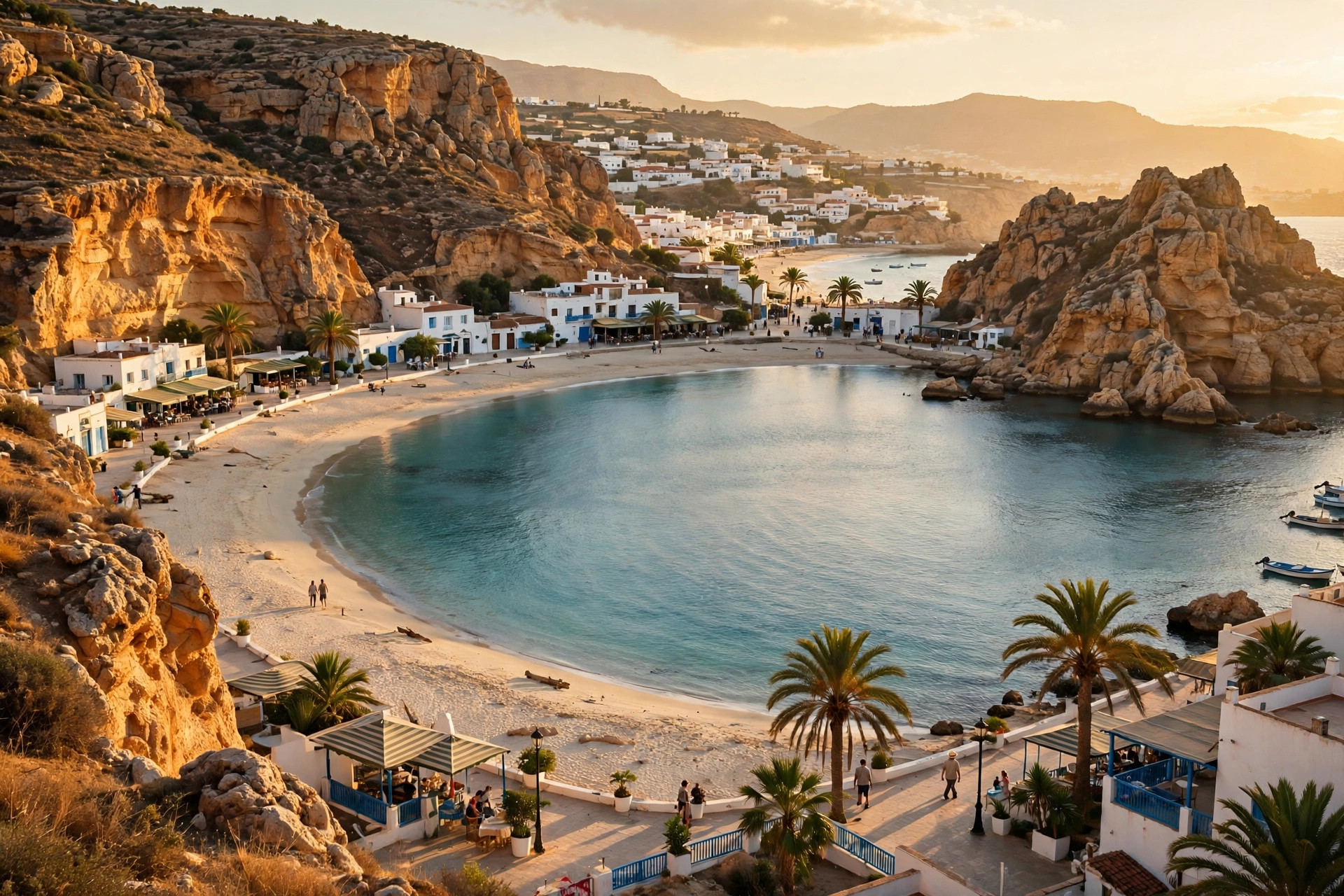
Living in Al Hoceima is the quietest move you can make on Morocco's Mediterranean coast. This small Rif city of 50,225 people (2024 census) sits in a bay framed by ochre cliffs, with a town beach below the centre and a national park at its edge. For expats who want sea swimming, fresh fish and low rents without Tangier's crowds or Casablanca's prices, living in Al Hoceima rewards a closer look.
This guide to living in Al Hoceima covers the neighbourhoods, rents and routines of a move here, with prices checked in November 2026. It sits in our Living in Morocco section, alongside our guides to Nador and Tetouan, the two bigger cities on either side of the Rif coast.
In short, living in Al Hoceima means a small-town life with a big coastline: slow mornings, cheap fish and a horizon that never gets old.
In this guide
- Al Hoceima at a Glance
- Best Neighbourhoods for Living in Al Hoceima
- Rents and Housing in Al Hoceima: What You Pay in 2026
- Monthly Costs: What a Couple Spends in Al Hoceima
- Weather and Seasons for Living in Al Hoceima
- Getting Around While Living in Al Hoceima
- Working in Al Hoceima: Remote Work, Internet and Local Jobs
- Daily Life in Al Hoceima: Fish Markets, Beaches and the National Park
- Healthcare and Schools in Al Hoceima
- The Honest Downsides of Living in Al Hoceima
- Moving to Al Hoceima: Your First Steps
- Frequently Asked Questions About Living in Al Hoceima
- Living in Al Hoceima: Is It Right for You?
Al Hoceima at a Glance
Al Hoceima is the capital of its province and the main town of the central Rif coast, in the Tanger-Tétouan-Al Hoceima region. Founded in the 1920s as Villa Sanjurjo, a Spanish colonial town, it still speaks Spanish widely alongside Tarifit, the local Amazigh language, and Darija. The centre is compact and walkable, the port is the second in the Rif after Nador, and ferries link it with Motril in southern Spain.
The city is smaller than it was: the 2024 census counted 50,225 residents, down from 56,716 in 2014, while the province holds 371,527 people. Many locals live abroad — above all in the Netherlands and Belgium — and return every summer, when the town doubles in energy and rents jump. Outside July and August, Al Hoceima is calm, affordable and uncrowded.
| Fact | Detail |
|---|---|
| Population (city) | 50,225 (2024 census) |
| Population (province) | 371,527 (2024 census) |
| Region | Tanger-Tétouan-Al Hoceima |
| Setting | Mediterranean bay at the foot of the Rif mountains |
| Airport | Cherif Al Idrissi (AHU), about 9 km from the centre |
| Nearest train station | Nador, about 150 km east |
| Climate | Mediterranean; January mean 12.7°C, August mean 24.9°C |
| Rainfall | About 305 mm a year (1991–2020 averages) |
| Languages | Tarifit (Amazigh), Darija, Spanish widely spoken, French |
| Best for | Beach lovers, slow living, remote workers on a budget |
| Watch out for | Small-town limits, summer crowds, seismic history |
Best Neighbourhoods for Living in Al Hoceima
The city centre is where most newcomers land, and it is the obvious first choice for living in Al Hoceima. Everything is on foot: the port, the fish market, the main square, the cafés of Avenue Mohammed V and the steps down to Quemado Beach. Flats here are mostly in low white apartment blocks, and a one-bedroom in the centre is the easiest rental to find. It is also the liveliest part of town in summer, which means noise on August nights.
Above the bay, the Mirador and the hillside streets around it trade convenience for views. Flats here are newer and quieter, with balconies over the water, and you will need a petit taxi or a car for the daily shop. The Quemado and Cala Bonita area, at the foot of the cliffs below the centre, is the prettiest pocket of town: small coves, fish restaurants and a promenade that fills at sunset. Expect the highest rents here.
For cheaper rents, look inland. Imzouren, the fast-growing town just inland with 34,848 people in the 2024 census, has newer blocks, lower prices and a more local feel, and Ajdir, a small town of 5,630 beside it, is quieter still. Both suit car owners who work from home. Whichever area you pick, living in Al Hoceima works best when you visit first and walk the streets: the difference between a sea-view flat and a noisy summer street can be one block.
Rents and Housing in Al Hoceima: What You Pay in 2026
Rents in Al Hoceima are among the lowest on Morocco's Mediterranean coast, well below Tangier and far below Casablanca. The market is small and informal: most flats are found through local agents and word of mouth rather than big websites, and landlords usually ask for one month's deposit in advance. Prices below are typical ranges for November 2026 — check on arrival.
Furnished flats cost more than empty ones, and a sea view adds a clear premium. For a longer stay, living in Al Hoceima on a one-year lease is the cheapest route: landlords prefer a stable tenant and the rate drops sharply outside summer. Always check the water pressure, hot water and winter damp before you sign — older blocks can be cold and humid in January.
| Home | Typical monthly rent | In dollars |
|---|---|---|
| Studio or 1-bedroom, city centre | 2,000–3,500 MAD | $200–$350 |
| 2-bedroom apartment, centre or Quemado | 3,000–5,000 MAD | $300–$500 |
| 2-bedroom, Mirador or newer districts | 2,500–4,000 MAD | $250–$400 |
| 3-bedroom apartment or small house | 4,000–6,500 MAD | $400–$650 |
| 1-bedroom, Imzouren or Ajdir | 1,500–2,500 MAD | $150–$250 |
| Short-term summer let (July–August, per week) | 2,500–5,000 MAD | $250–$500 |
Monthly Costs: What a Couple Spends in Al Hoceima
Daily life is cheap by Mediterranean standards. Fish from the port market, bread, vegetables and mint tea cost very little, and a café lunch with grilled sardines rarely passes 60 dirhams. The table below shows a realistic monthly budget for a couple renting a two-bedroom flat in the centre. Prices are typical ranges checked in November 2026 — check on arrival.
A couple can live comfortably on roughly 7,950–13,200 dirhams a month ($795–$1,320), and a single person in a one-bedroom can manage on 5,500–9,000 dirhams ($550–$900). Living in Al Hoceima on a remote salary is comfortable at almost any level; on a local salary it is still one of the cheapest coastal cities in the country.
| Monthly cost (couple) | Range | In dollars |
|---|---|---|
| Rent (2-bedroom, centre) | 3,000–5,000 MAD | $300–$500 |
| Utilities (electricity, water, gas) | 500–800 MAD | $50–$80 |
| Groceries and fish market | 2,500–3,500 MAD | $250–$350 |
| Eating out and cafés | 600–1,200 MAD | $60–$120 |
| Transport (petit taxis, bus, grand taxi) | 400–800 MAD | $40–$80 |
| Internet and mobile | 250–400 MAD | $25–$40 |
| Leisure, beach and hiking | 300–700 MAD | $30–$70 |
| Health and miscellaneous | 400–800 MAD | $40–$80 |
| Total | 7,950–13,200 MAD | $795–$1,320 |
Weather and Seasons for Living in Al Hoceima
Al Hoceima has a classic Mediterranean climate: mild, relatively rainy winters and hot, dry summers. January, the coldest month, averages 12.7°C, with daytime highs around 17°C and nights near 8°C. August, the warmest month, averages 24.9°C, with highs near 29°C. Rain is scarce, about 305 millimetres a year, and falls mostly between November and March.
The best months are May, June, September and October, when the sea is warm enough to swim and the town is quiet. July and August bring heat, crowds and the diaspora summer, when prices rise. Winter is the season locals love for walking: clear light, empty beaches and the Rif green after rain. Living in Al Hoceima through the seasons means learning to love the quiet months as much as the summer.
Getting Around While Living in Al Hoceima
Al Hoceima has no train station, and that shapes every journey. The nearest rail link is in Nador, about 150 kilometres east, and most long-distance travel runs by bus or car. CTM buses connect the city with Fez, Nador and Tetouan, and local buses and grand taxis cover the nearby towns. The drive to Tetouan takes about four hours along the N16 coast road, roughly 230 kilometres, while Fez is about 270 kilometres south.
Inside the city, everything is walkable and petit taxis are cheap: most rides within town cost 10–20 dirhams. A car is not essential for daily life, but it changes the map — Sfiha and Tala Youssef beaches, the national park trails and the mountain villages all need wheels. Living in Al Hoceima without a car is perfectly workable; with one, the whole Rif coast opens up.
Flying in and out is easier than most people expect. Cherif Al Idrissi Airport (AHU) sits about 9 kilometres from the centre, with Royal Air Maroc flights to Casablanca, Tangier and Tetouan, and seasonal European routes to Rotterdam, Brussels and Eindhoven. Flights do not run daily, so check the schedule first.
Working in Al Hoceima: Remote Work, Internet and Local Jobs
Remote work is the most realistic way to earn a living here. Fibre internet is available in the centre and the newer districts, with typical home packages at 200–400 dirhams a month, and 4G coverage is good across town. Speeds are fine for video calls and file uploads, though they dip on summer evenings. There is no coworking scene yet, so most remote workers set up at home or in a quiet café.
Local jobs are scarce and mostly tied to fishing, tourism, teaching and small trade. English teaching, guesthouse work and seasonal summer jobs exist, but pay is local. The honest picture is that living in Al Hoceima works best for people who bring their income with them — remote workers, retirees and writers — rather than people who need to find work on arrival.
Daily Life in Al Hoceima: Fish Markets, Beaches and the National Park
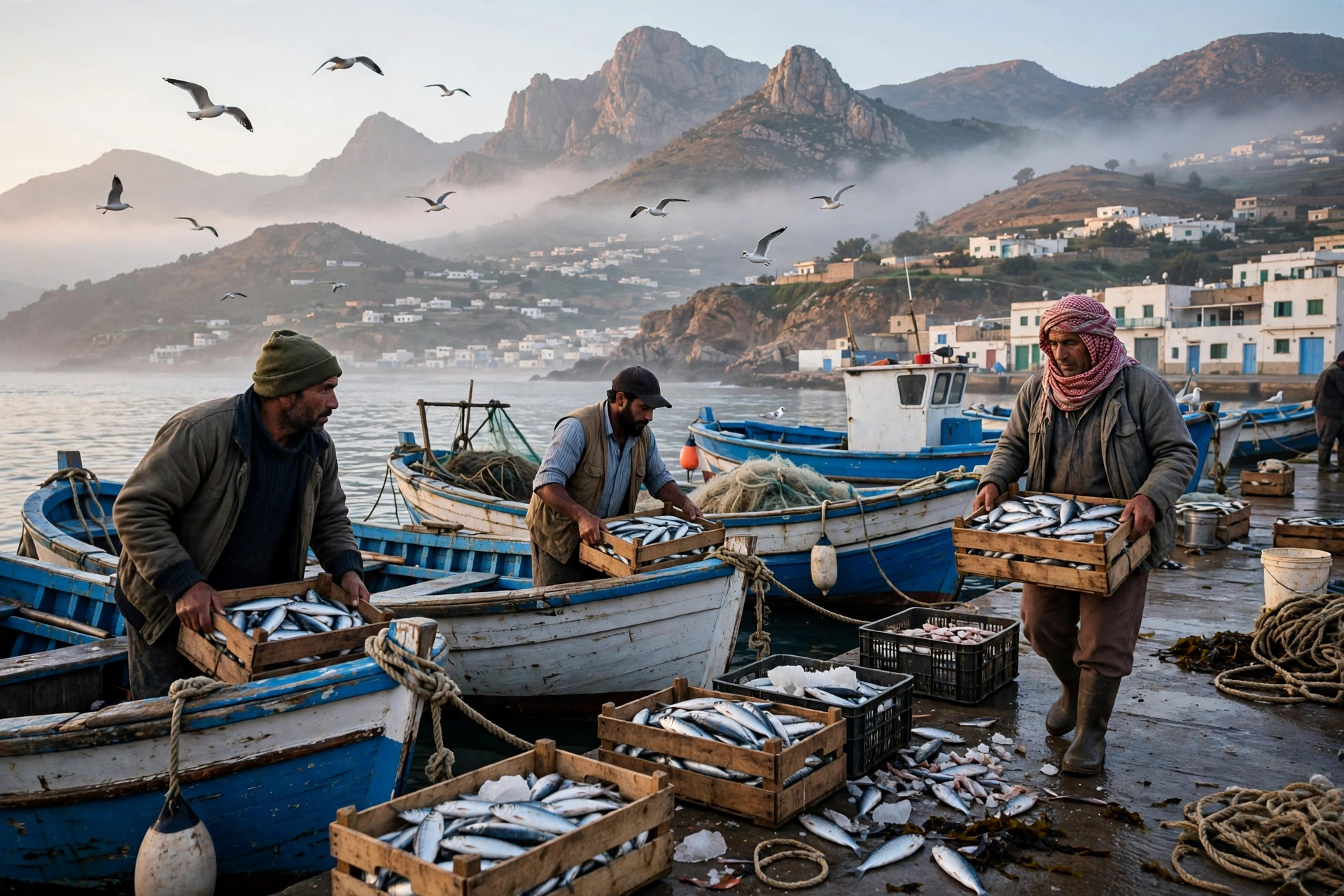
Daily life here runs on the sea. Mornings start at the port, where fishermen unload sardines and the day's catch, and the fish market near the harbour sells it within the hour. Lunch is grilled fish with bread and salad for a few dozen dirhams, and the café culture is slow and social: mint tea on the corniche and an evening promenade along the bay as the sun drops behind the cliffs.
The beaches are the reason most people stay. Quemado Beach, the town beach between two cliffs at the foot of the centre, is a short walk from anywhere in town. Cala Bonita is a smaller pine-shaded cove, and Sfiha, the long beach to the east, is where local families go. Further out, Tala Youssef and Cala Iris — about 60 kilometres along the coast — are wilder still, with the Peñón de Alhucemas islet in the bay.
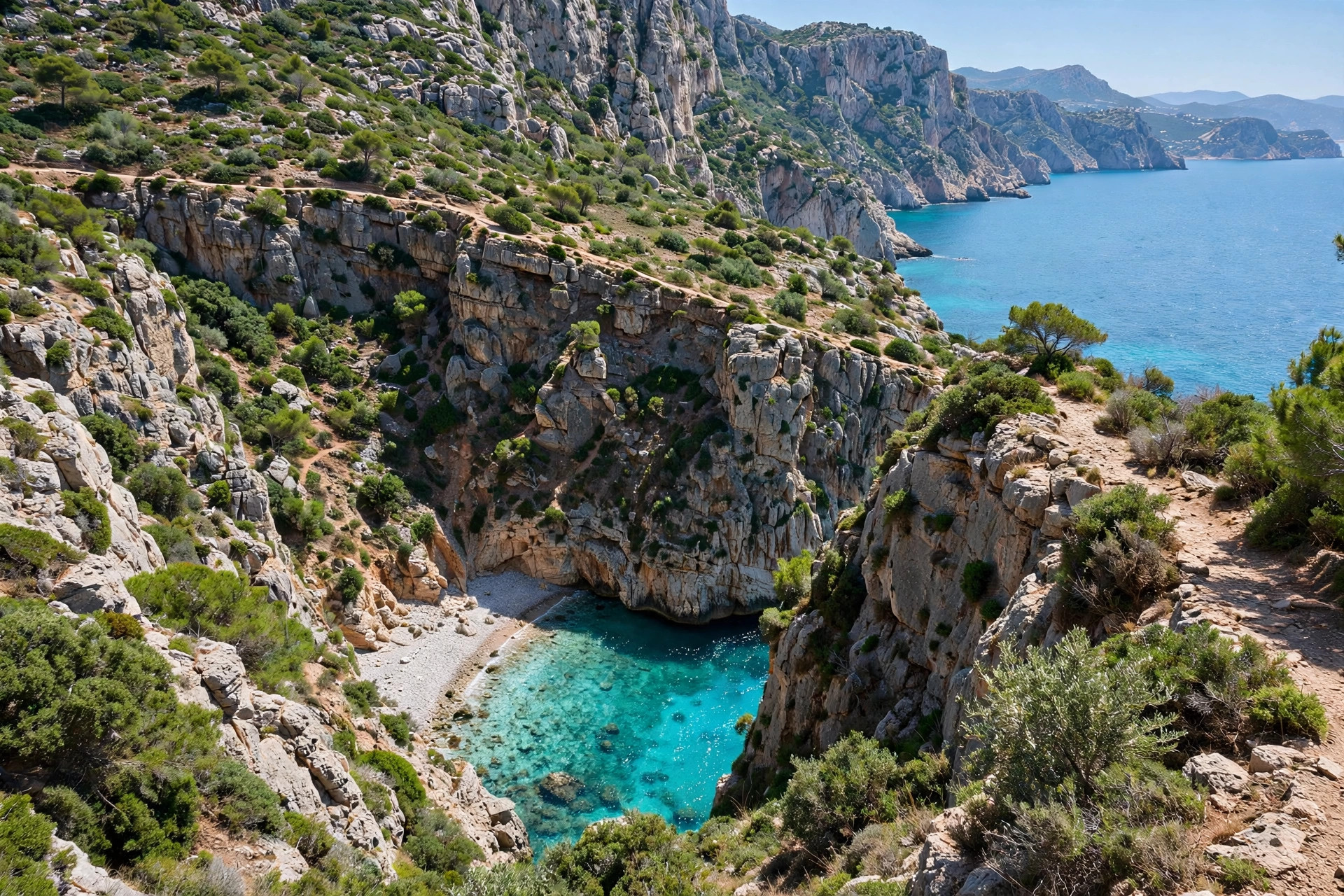
Beyond the beaches, Al Hoceima National Park protects 480 square kilometres of cliffs, coves and Rif mountains along some 50 kilometres of coast, and was created in 2004. Trails lead to hidden coves, osprey nest on the cliffs, and dolphins are often seen offshore. Go with a local guide on the less marked trails and carry water. Our guide to living in Al Hoceima would be incomplete without the park: it is the city's backyard and its best reason to stay.
Healthcare and Schools in Al Hoceima
Healthcare is adequate for routine needs and thin for anything serious. The provincial hospital, Mohammed V, handles emergencies and everyday care, and private clinics in town cover consultations, dentistry and minor treatment. For specialist care or a serious emergency, residents travel to Nador or Tetouan, and some go to Tangier. Keep good travel insurance and know the route to the nearest big-city hospital, and carry a basic first-aid kit.
Schools are the one area to research before you commit. The city has Moroccan public and private schools, but we could not confirm an international school inside the city, so families wanting an international curriculum usually plan around Tangier or Tetouan, or choose a Moroccan private school. For a single person or a couple, living in Al Hoceima raises no schooling question at all — for a family, it is the first thing to settle.
The Honest Downsides of Living in Al Hoceima
No honest guide hides the hard parts, and Al Hoceima has real ones. The city is small, so the choice of restaurants, shops and entertainment is limited, and winter nights can feel very quiet. Nightlife is modest: cafés and the corniche rather than bars and clubs. Anyone who needs a big-city buzz or a busy social calendar will feel the limits within a few months.
The region's history matters too, and it is worth knowing before you move. On 24 February 2004, an earthquake of magnitude 6.3–6.4 struck the province, killing 631 people and injuring 926, mostly in mountain villages around Imzouren and Ait Kamara; a further offshore quake of magnitude 6.3 shook the area in January 2016. Modern buildings follow seismic rules, but keep a small emergency kit — tremors are part of life on this coast. In 2016–2017 the city also saw the Hirak Rif protests, a months-long movement that began after the death of fishmonger Mouhcine Fikri in October 2016. The protests are over and daily life is ordinary — but the Rif's sense of identity is strong, and newcomers who listen are welcomed warmly.
Finally, the summer changes everything. In July and August the town fills with returning families, traffic thickens and rents spike — the same flat can cost far more by the week. Living in Al Hoceima suits people who want the quiet version of the place, not only its summer face.
Moving to Al Hoceima: Your First Steps
Visit first, in the quiet season. Spend a week in October or March, walk the neighbourhoods, test the internet and eat at the port. Then rent for three to six months before you commit to a year — a short trial saves an expensive mistake. Bring your residence paperwork in order: a long stay needs a carte de séjour, and the renewal process is covered in our guide.
Practical steps for living in Al Hoceima: open a Moroccan bank account if you plan to stay, keep cash for the markets and petit taxis, and learn a little Tarifit or Darija — even a greeting changes how people treat you. Ship little and buy locally: furniture is cheap in town. For the wider picture, start with our pillar guide to living in Morocco and our cost of living in Morocco guide, and compare the Rif coast with our Nador guide before you decide.
Frequently Asked Questions About Living in Al Hoceima
Is Al Hoceima safe for expats?
Yes, for everyday life. Al Hoceima is a small, calm city with low street crime, and expats walk the centre and the corniche late without trouble. Take the usual care with valuables in summer crowds, and respect local customs during Ramadan.
Is Al Hoceima cheap to live in?
Yes — it is one of the cheapest coastal cities in Morocco. A single person can live well on 5,500–9,000 dirhams a month ($550–$900), and a couple on roughly 7,950–13,200 dirhams ($795–$1,320). Rents are the main reason: a one-bedroom starts around 2,000 dirhams.
Can I work remotely from Al Hoceima?
Yes. Fibre internet is available in the centre and newer districts, 4G is good across town, and video calls work well outside the busy summer evenings. There is no coworking space yet, so set up a proper home office.
How do I get to Al Hoceima?
Fly into Cherif Al Idrissi Airport (AHU) from Casablanca, Tangier, Tetouan or seasonal European cities, or take a CTM bus from Fez, Nador or Tetouan. There is no train: the nearest station is in Nador, about 150 kilometres east.
What is the best area to live in Al Hoceima?
The city centre is best for a first stay: everything is on foot and rentals are easiest to find. The Mirador suits quiet sea views, the Quemado area suits beach lovers, and Imzouren suits a bigger flat on a smaller budget. Walk each area before you sign.
Is Al Hoceima good for families?
It suits families who want a safe, slow, seaside childhood with beaches on the doorstep. The trade-off is schooling: the city has Moroccan public and private schools but no international school of its own, so settle the school question before you move. Living in Al Hoceima with children works best when the school plan is settled first.
Living in Al Hoceima: Is It Right for You?
Living in Al Hoceima is a trade: you give up big-city choice and fast transport, and you get a quiet bay, cheap rents and a daily life built around the sea. It suits remote workers, retirees and anyone who wants Morocco at a slower pace. If that trade sounds right, come in the quiet season and rent for a few months. Living in Al Hoceima rewards patience, and patience is the one thing the Rif has in abundance.