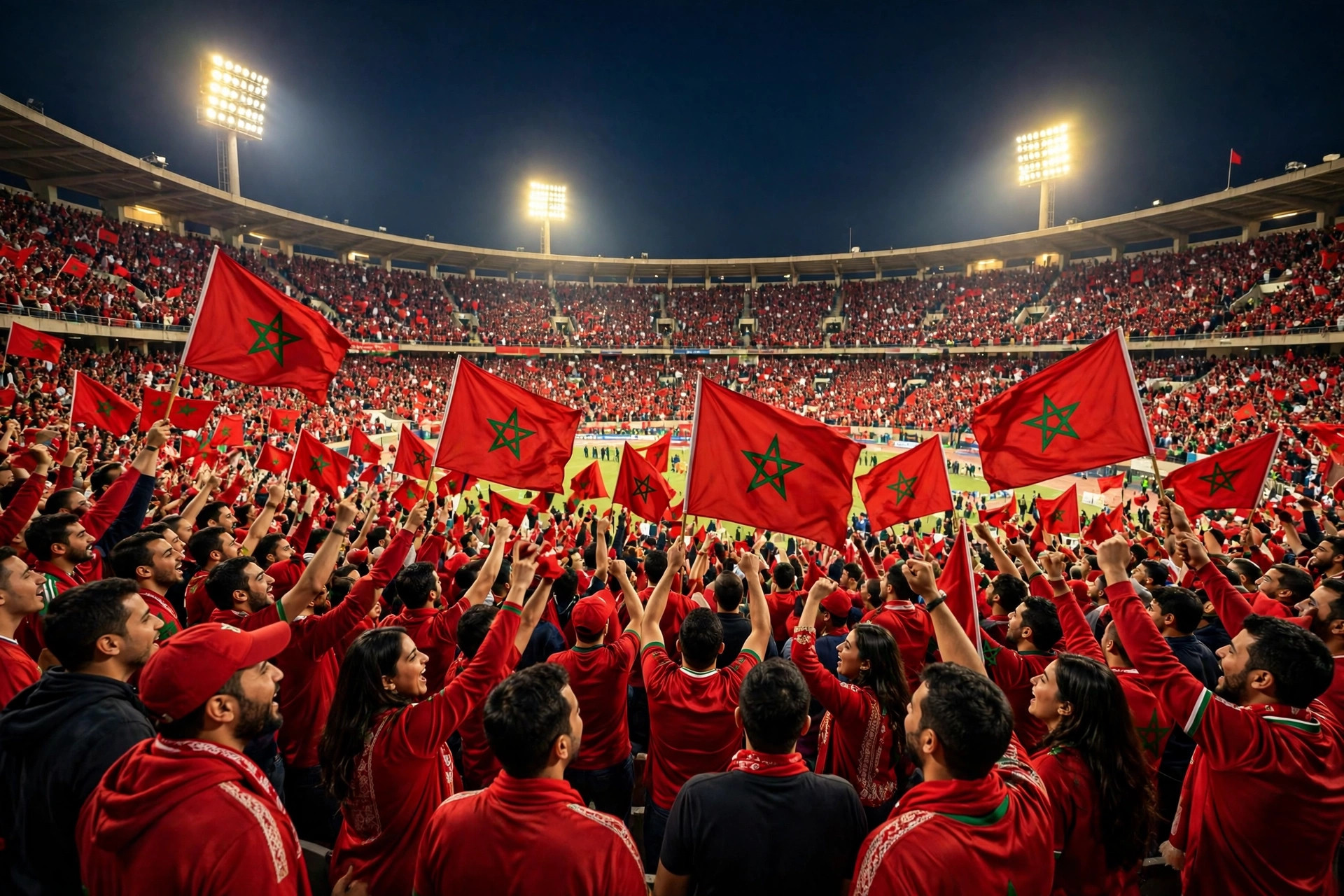
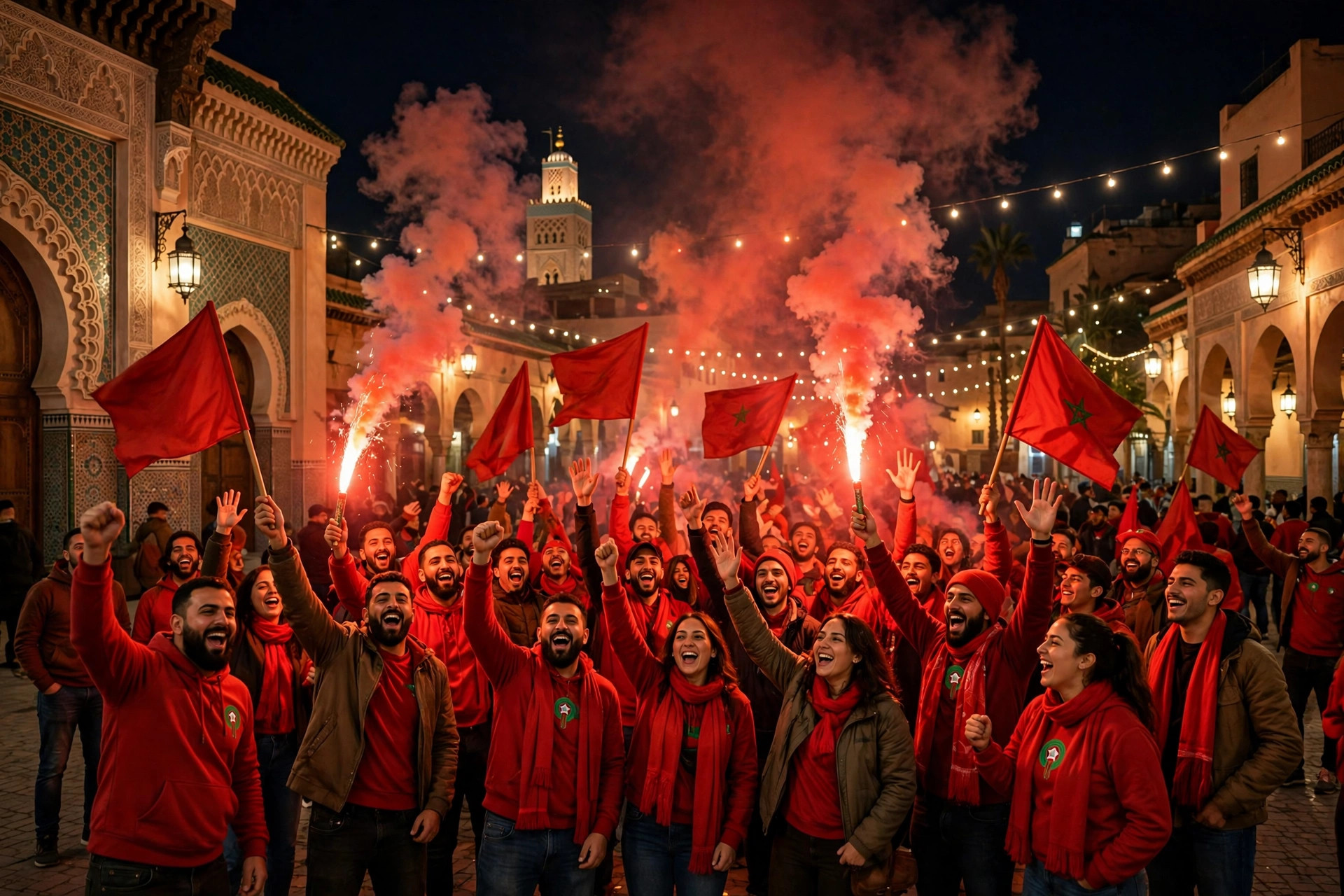
On a December night in 2022, Moroccans poured into the streets of Casablanca, Rabat and Marrakech, waving red flags long after the final whistle. Their team had just beaten Portugal to reach the World Cup semi-final, a first for Africa and the Arab world. The history of football in Morocco begins long before that night, though, on dusty pitches under the protectorate, in clubs founded as acts of quiet defiance.
This guide follows that road from the first kick to 2030, when Morocco will co-host the World Cup, meeting the founders of Wydad and Raja, the heroes of Mexico 1986, the champions of 1976, and the team that stunned the world in Qatar. The history of football in Morocco has its share of open questions too, and where the dates are disputed, this guide says so plainly.
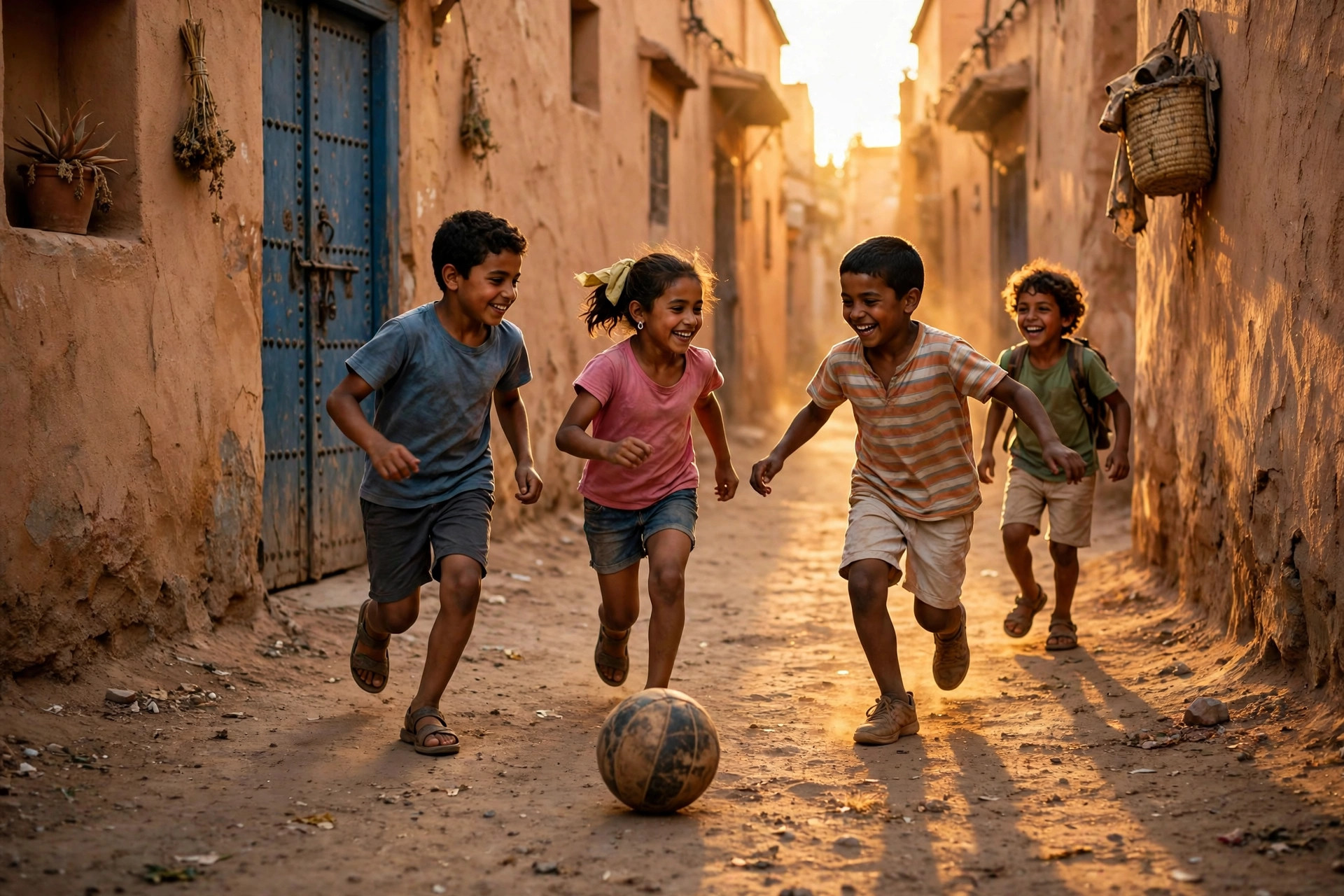
Football reached Morocco in the late nineteenth century, brought by French expatriates, soldiers, merchants and civil servants. The first known club, the Association Sportive des Postes, Télégraphes et Téléphones of Casablanca, dates to 1892, two decades before the French protectorate was formally established in 1912. The game spread through Casablanca, Tangier and Rabat, played first by European settlers and then by the Moroccan workers and schoolboys who had watched from the touchlines. The history of football in Morocco is inseparable from that colonial setting: a foreign pastime that became, within a generation, a Moroccan passion.
In 1922 the Moroccan Football League Association was created to run domestic competitions, and it joined FIFA the same year. Clubs multiplied through the 1920s and 1930s. One warning belongs here: the exact founding dates of the earliest clubs are not settled. Records from the protectorate era are incomplete, and some clubs existed informally for years before a date was written down, so the early dates in this guide are the best available, not proven facts. The Wikipedia overview of football in Morocco tells the same story.
The First Clubs in the History of Football in Morocco
Wydad Athletic Club was founded in Casablanca in 1937, and Raja Club Athletic followed on 20 March 1949, founded in Derb Sultan by Moroccan nationalists who saw football as resistance. Under French rule both clubs became legal places for Moroccans to gather and express a national feeling that could not be spoken openly elsewhere. The history of football in Morocco runs through these two clubs more than through any other institution, and their rivalry still sets the rhythm of the domestic season.
They were not alone. FAR Rabat, the army club, was founded in 1958, just after independence. Kawkab of Marrakech dates to 1947 and Maghreb Fès to 1946. The first great Moroccan player was Larbi Ben Barek, the Casablanca-born forward known as the Black Pearl, who debuted in 1934 and went on to star in France.
Club
City
Founded
Home ground
Known for
Wydad Athletic Club
Casablanca
1937
Stade Mohammed V
The oldest of the big three; the red of Casablanca
Raja Club Athletic
Casablanca
1949
Stade Mohammed V
The people’s club; the green of Derb Sultan
AS FAR
Rabat
1958
Prince Moulay Abdellah Stadium
The army club; a dominant women’s team
Kawkab
Marrakech
1947
Grand Stade de Marrakech
The great club of the south
Maghreb Fès
Fès
1946
Fez Stadium
The historic club of the north
Football and the Fight for Independence
By the 1940s football and politics could not be separated. In 1946 a Free Moroccan League was created under Ahmed Lyazidi, later the first president of the national federation, to boycott the French-run league association and its restrictions on Moroccan clubs. The boycott turned football grounds into meeting places for the national movement. Football in these years doubled as a form of protest, and the game carried a weight far beyond sport.
Independence arrived in 1956, and the game changed hands with the country. The history of Morocco after independence was written on football pitches as much as anywhere else, because the new state needed institutions of its own. Our guide to Morocco’s independence in 1956 tells the wider story of that year. The clubs that had carried the national feeling under the protectorate now carried the pride of a free country. The history of football in Morocco after 1956 is the story of a game becoming a national institution.
The FRMF and the Birth of the Botola
The Royal Moroccan Football Federation, the FRMF, was created to run the game for an independent Morocco. Its founding is commonly dated to 1955, but some sources give 1956, and the date is not fully settled. What is certain is the first season: the new national championship, the Botola, kicked off on 15 November 1956. The history of football in Morocco as an organised national sport starts on that day.
The national team followed. Morocco played its first official international on 19 October 1957, drawing 3–3 with Iraq at the Pan Arab Games in Beirut. The Botola grew into a league of 16 clubs playing 30 matches each from September to May, and the Throne Cup, the national knockout competition, gave smaller clubs their day in the sun. One date deserves care: the Botola is sometimes traced to 1915, but that was the French-era league, not the national championship.
The Casablanca Derby: Raja Against Wydad
No fixture in African football is quite like the Casablanca derby. The first league meeting was played on 10 February 1957, and Raja won 1–0. Nearly seventy years later the derby still fills the Stade Mohammed V, the ground both clubs share, with tifos, smoke, drums and ninety minutes of noise. For a visitor it is the most intense football experience in the country, and the hardest ticket to find. The history of football in Morocco has no louder stage than this fixture.
The rivalry is about more than football. Wydad and Raja have traded the league title between them for decades, with FAR Rabat as the third force. The history of football in Morocco cannot be told without this fixture, because the derby is where the game’s passion, its choreography and its neighbourhood loyalties are all on display at once. Go with a local if you can: the atmosphere is fierce.
The Atlas Lions’ First World Cup Adventures
Morocco’s first World Cup came in Mexico in 1970. The Atlas Lions went out in the group stage, but they had announced themselves. The breakthrough came in Mexico again in 1986, when Morocco topped its group and beat Portugal 3–1 in Guadalajara, with two goals from Abderrazak Khairi. That win made Morocco the first African team ever to reach the knockout stage, and only a West German goal in the 88th minute ended the run. The history of football in Morocco changed that summer, and the whole continent noticed.
France 1998 brought a 3–0 win over Scotland but another group-stage exit, and Russia 2018 brought defeats to Iran and Portugal and a 2–2 draw with Spain. For a generation of supporters the 1986 team remained the standard everything else was measured against. Then came Qatar, and the standard moved. The history of football in Morocco in those twenty years was a long wait for a new breakthrough.
The story did not stop in Qatar. At the 2026 World Cup, Morocco drew 1–1 with Brazil, beat Scotland 1–0 and beat Haiti 4–2 to finish second in Group C, reaching the knockout stage for the third time. It was further proof that 2022 had not been a one-off.
Year
Host
Result
The story
1970
Mexico
Group stage
Morocco’s first World Cup appearance
1986
Mexico
Round of 16
Beat Portugal 3–1; first African team past the group stage
1998
France
Group stage
Beat Scotland 3–0 but went out in the group
2018
Russia
Group stage
Lost to Iran and Portugal; drew 2–2 with Spain
2022
Qatar
Fourth place
Beat Belgium, Spain on penalties and Portugal; lost to France and Croatia
2026
USA, Canada, Mexico
Round of 32
Second in Group C with 7 points (1–1 Brazil, 1–0 Scotland, 4–2 Haiti)
The 1976 Africa Cup of Nations Triumph
Before the World Cup runs, there was Ethiopia 1976. Morocco won the Africa Cup of Nations that year, the only time the Atlas Lions have lifted the trophy, It came a year after the Green March of 1975, and felt like a second national celebration in twelve months. The history of football in Morocco still measures its national team against that 1976 side.
Morocco has hosted the tournament twice since, in 1988 and again in 2025. The national team has also won the Arab Cup twice and the African Nations Championship three times.
Qatar 2022: The Night the History of Football in Morocco Changed
Walid Regragui took charge about three months before the tournament, and what followed is the most famous chapter in African football. Morocco held Croatia 0–0, beat Belgium 2–0 and beat Canada 2–1 to top Group F. In the last sixteen, Spain were held 0–0 and beaten 3–0 on penalties, with goalkeeper Yassine Bounou the hero. In the quarter-final, a towering header from Youssef En-Nesyri beat Portugal 1–0, and Morocco became the first African and Arab team ever to reach a World Cup semi-final. The history of football in Morocco was rewritten in three weeks.
France won the semi-final 2–0, and Croatia took the third-place match 2–1, but the result no longer mattered as much as the run. When the team returned to Rabat, hundreds of thousands lined the streets for an open-top bus parade. The history of football in Morocco will always divide into before and after Qatar, because that winter the Atlas Lions stopped being outsiders.
The Heroes of 2022: Regragui, Bounou and En-Nesyri
Regragui built the run on defensive discipline and a family spirit. Bounou was immense in goal, Achraf Hakimi sealed the win over Spain with a Panenka penalty, Hakim Ziyech supplied the craft, and Sofiane Amrabat and Azzedine Ounahi ran the midfield. Many of the squad were born or raised in Europe, and their choice to play for Morocco made the team a bridge between the country and its diaspora. The history of football in Morocco gained a new generation of heroes that winter.
Investment in academies and training centres followed, and the Mohammed VI Football Academy in Salé, opened in 2009, became the model for the pipeline that now feeds the national team. Moroccan football since 2022 is a story of structure catching up with talent, and the results in 2026 suggest the structure is working.
Women’s Football in the History of Football in Morocco
The women’s game has its own remarkable story. The first women’s national team was formed in 1997, and it played its first international in 1998. For two decades it was neglected, but the revival came fast: in 2022 Morocco hosted the Women’s Africa Cup of Nations and reached the final in Rabat, losing 2–1 to South Africa, and the team finished runners-up again in 2024. The history of football in Morocco is incomplete without the Atlas Lionesses.
In 2023 Morocco became the first Arab country to play at a Women’s World Cup, reaching the round of sixteen before losing to France. At club level, AS FAR of Rabat have won the CAF Women’s Champions League three times, and their players form the backbone of the national team, including captain Ghizlane Chebbak. The women’s league is now a genuine pathway.
The Road to 2030: Morocco as World Cup Co-Host
In December 2024 FIFA confirmed that Morocco will co-host the 2030 World Cup with Spain and Portugal, with three opening matches in South America to mark the centenary. Six Moroccan stadiums are in the plans: the new Grand Stade Hassan II near Casablanca, planned for around 115,000 seats, alongside the Prince Moulay Abdellah Stadium in Rabat, the Ibn Batouta Stadium in Tangier, the Grand Stade de Marrakech, the Fez Stadium and the Adrar Stadium in Agadir. The history of football in Morocco will come home in 2030, on pitches across the country.
The final venue is still undecided, with the Bernabéu, the Camp Nou and the Hassan II Stadium the leading candidates. For Morocco the tournament is far more than football, and the Atlas Lions will play a home World Cup for the first time. The history of football in Morocco is heading towards its biggest stage yet, and the whole country is counting down to June 2030.
Watching a Match in Morocco: Stadiums, Tickets and Matchday
The easiest place to start is the Stade Mohammed V in Casablanca, home of Raja and Wydad, renovated and reopened in April 2025 with a derby. The other great grounds are in Marrakech, Tangier and Rabat. While you are in Rabat, the Kasbah of the Udayas makes a fine morning before an evening match. The game is best understood from the stands, in the noise, rather than from a screen.
Tickets for a regular Botola match usually cost 60 to 150 dirhams, about $6 to $15, for a standard seat. The derby costs more, from 60 dirhams in the club ends to 2,000 dirhams for the best VIP seats, and national-team matches run from 100 to 2,000 dirhams depending on the category. National-team tickets are sold online through the Webook platform, and club tickets through the home club’s own channels. Arrive early, bring identification, and check at the gate. For the food around the ground, see our Moroccan food guide.
Item
Typical price (November 2026)
What to check
Botola regular match, standard seat
60–150 MAD (about $6–$15)
Buy through the home club’s channels; check at the gate
Casablanca derby, standard seat
60–150 MAD (about $6–$15)
Sells out fast; buy early; check at the gate
Casablanca derby, VIP seat
500–2,000 MAD (about $50–$200)
Covered stand; buy through the club
National team match, standard seat
100–300 MAD (about $10–$30)
Sold online via Webook; check at the gate
National team match, VIP seat
1,500–2,000 MAD (about $150–$200)
Premium and VIP categories; check at the gate
Scarf or flag outside the ground
30–80 MAD (about $3–$8)
Haggle politely; check quality before paying
Prices are typical ranges as of November 2026; always check at the gate, as prices and sales channels change from match to match.
Frequently Asked Questions
When was football introduced to Morocco?
Football arrived in the late nineteenth century, and the first known club, ASPTT Casablanca, dates to 1892. The exact founding dates of the earliest clubs are not settled, as records from the protectorate era are incomplete.
When was the FRMF founded?
The Royal Moroccan Football Federation is commonly dated to 1955, though some sources give 1956. Its first national championship, the Botola, began on 15 November 1956.
How many times has Morocco played at the World Cup?
Six times: 1970, 1986, 1998, 2018, 2022 and 2026. The best result came in 2022: fourth place, the first African and Arab team to reach a semi-final.
What was Morocco’s best World Cup result?
Fourth place at Qatar 2022. Morocco topped its group, beat Belgium, Spain on penalties and Portugal, then lost to France in the semi-final and to Croatia in the third-place match.
When will Morocco host the World Cup?
In 2030, together with Spain and Portugal. Six Moroccan stadiums will host matches, and the tournament will open in June 2030.
How much does a football ticket cost in Morocco?
Standard seats at a Botola match usually cost 60 to 150 dirhams, about $6 to $15. Derby and national-team tickets range from 60 to 2,000 dirhams, so always check at the gate.
Conclusion
From a postal workers’ team in Casablanca in 1892 to a World Cup semi-final in Qatar and a home World Cup in 2030, the history of football in Morocco is the story of a game that arrived as a colonial pastime and became a national language. It was played in defiance under the protectorate, organised in freedom after independence, and carried around the world.
The next chapter is already being written, in the academies of Salé, in the women’s league, and in the stadiums rising for 2030. The history of football in Morocco will keep being told in the stands, in the streets and in the derbies, because in Morocco football has never been only a game.