
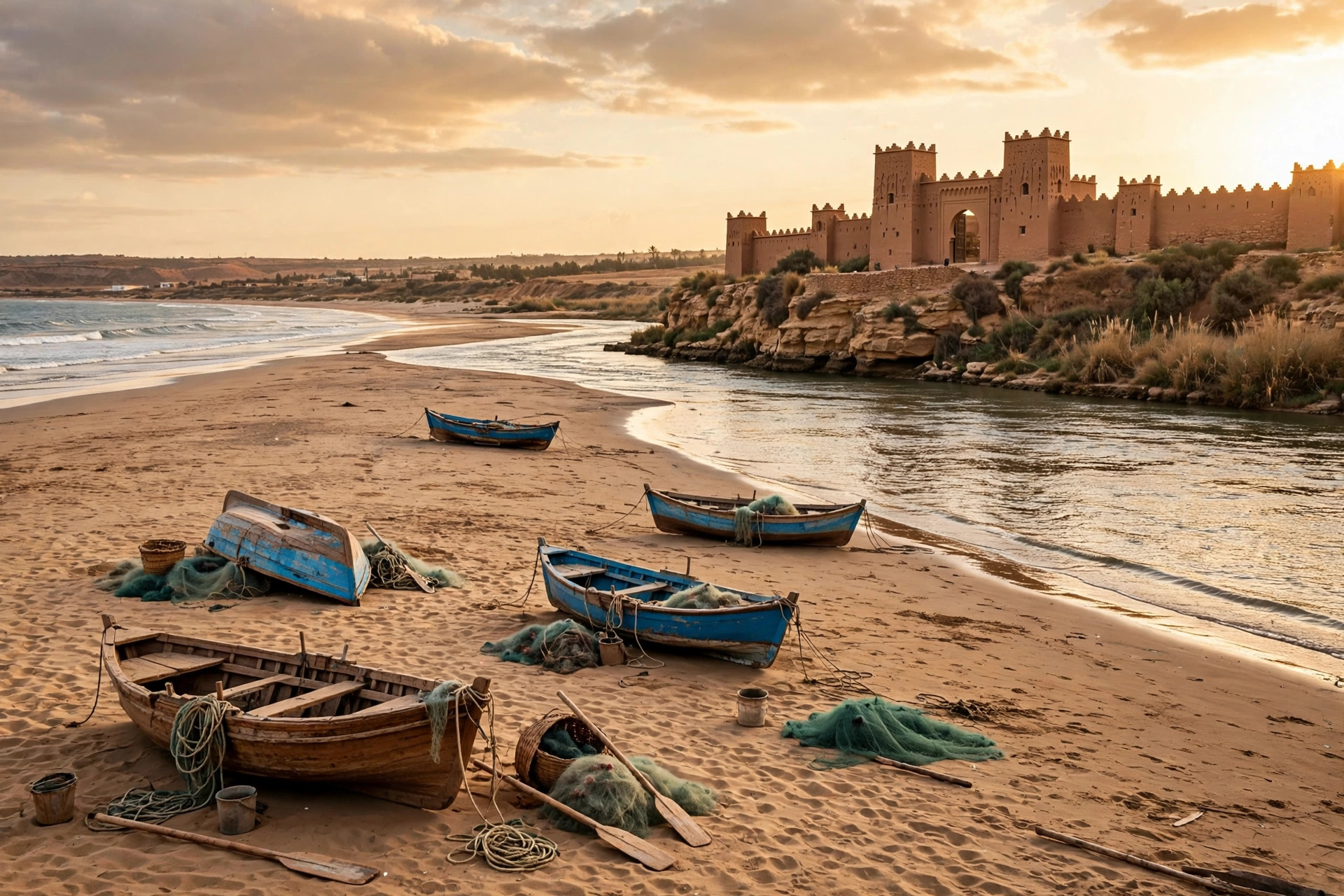
Living in Kenitra is Morocco's best-kept secret for expats who want a real Atlantic city without Rabat prices or Casablanca noise: a fast-growing city of 507,736 people (2024 census) on the mouth of the Sebou River, 40 kilometres north of the capital, where high-speed trains, a big university and a wild Atlantic beach sit close together. For expats who want low rents, genuine Moroccan daily life and the capital within half an hour, living in kenitra is one of the most practical choices in the country.
This guide covers the neighbourhoods, rents and routines that make a move to Kenitra work. It sits in our Living in Morocco section, alongside our Morocco travel guide for first-time visitors.
Kenitra is Morocco's eighth-largest city and one of its fastest growing: the population rose from 423,890 in 2014 to 507,736 in 2024, and the wider province now holds 1,284,247 people. Founded in 1912 as Port Lyautey under the French protectorate, it took the name Kenitra at independence in 1956. Today it is the Atlantic Free Zone's industrial hub, with a major car plant, a large university and the Maamora cork-oak forest on its doorstep. Mehdia, the old beach town at the river mouth 10 kilometres away, counted another 58,558 people in 2024.
In this guide
- Why Expats Choose Living in Kenitra
- Kenitra at a Glance
- Best Neighbourhoods for Living in Kenitra
- Rents and Housing: What You Pay in 2026
- Monthly Cost of Living in Kenitra
- Weather: Hot Summers and Mild Atlantic Winters
- Getting Around: Trains, Buses and the Airport
- Working and Living in Kenitra: Industry, University and Remote Work
- Daily Life: Markets, Food and Mehdia Beach
- Healthcare in Kenitra
- Schools for Expat Families
- The Downsides of Living in Kenitra
- Moving to Kenitra: Your First Steps
- Frequently Asked Questions
- Conclusion: Is Kenitra Right for You?
Why Expats Choose Living in Kenitra
The single biggest reason expats choose living in kenitra is the commute that is not really a commute. Al Boraq high-speed trains reach Rabat Agdal in about 30 minutes, which means you can live on Kenitra rents and work, study or socialise in the capital — a city of half a million people at prices well below Rabat and Casablanca.
The second reason is space. Kenitra is a flat, wide, modern city built on a grid, with broad avenues, new apartment blocks and far less congestion than the old imperial cities. Parking is easy, rents buy more square metres, and the Maamora forest and Mehdia beach give you green space and ocean within minutes.
The third reason is growth. The Atlantic Free Zone and the car industry brought engineers, managers and suppliers from Europe and Asia, and Ibn Tofail University brings students and academics from across Morocco and sub-Saharan Africa. The expat community is small but real and growing. Living in kenitra puts you in a city that is going somewhere, not one standing still.
Kenitra at a Glance
| Fact | Detail |
|---|---|
| Population (city, 2024 census) | 507,736 |
| Population (province, 2024) | 1,284,247 |
| Region | Rabat-Salé-Kénitra |
| Distance to Rabat | ~40 km south |
| Distance to Mehdia beach | ~10 km west |
| Distance to Rabat-Salé Airport | ~39 km |
| Train to Rabat Agdal (Al Boraq) | ~30 minutes |
| Train to Tangier (Al Boraq) | ~1 hour 10 minutes |
| Climate | Mediterranean (Csa), hot dry summers, mild wet winters |
| Best months | April to October |
| University | Ibn Tofail University |
| Main industries | Automotive, agri-food, paper, port and logistics |
Best Neighbourhoods for Living in Kenitra
Maamora is the neighbourhood most expats choose first. It is the modern, upmarket district around Avenue Mohammed V and the prefecture, full of new apartment blocks, cafes, pharmacies and supermarkets, with rents to match: furnished two-bedroom flats in recent residences run 6,800–8,500 MAD a month. Quiet, well lit and walkable, it is where agencies show newcomers first. If you want a soft landing, start here.
Centre-ville and the Ville Nouvelle form the old French grid around the station and the main avenues. The stock is older and cheaper, the streets busier, and everything is on foot: the souk, the banks, the bus station and the train station. A one-bedroom here costs roughly 2,500–4,000 MAD a month and suits singles and couples who like being in the middle of things.
Mehdia is Kenitra's beach suburb, a separate town of 58,558 people at the mouth of the Sebou, 10 kilometres from the centre. Sea-view flats go for around 5,500 MAD a month for a furnished one-bedroom, and the pace is slower, windier and more seasonal: lively in summer, very quiet in winter. It suits remote workers and retirees who want the ocean on their doorstep, but you will need a car or regular taxis for city errands.
Bir Rami, Val Fleuri and the newer eastern districts are where young Moroccan families buy, with modern mid-rise blocks, schools and small malls. Rents are lower than Maamora for similar space, and the areas feel residential rather than expat. For a family planning a longer stay, living in kenitra works best here: more room, more neighbours with children and a 10-minute drive to the centre.
Rents and Housing: What You Pay in 2026
Rents for anyone living in kenitra are the city's strongest argument. Listings in November 2026 show furnished one-bedroom flats from 2,500 MAD a month in older stock near the Kasbah in Mehdia and 4,000 MAD in Maamora, furnished two-bedroom flats in recent Maamora residences at 6,800–8,500 MAD, and a sea-view one-bedroom in Mehdia at about 5,500 MAD. Unfurnished flats cost roughly 30–40% less, and landlords often ask for two to three months' rent as a deposit plus an agency fee of about one month's rent.
Search on Avito, Mubawab and local agencies, and always view in person before paying anything. Some older listings ask for a civil-servant tenant or a married couple, which is legal in Morocco, so keep your options open. Read our guide to renting an apartment in Morocco before you sign, and check whether the price includes syndic charges, which can add 200–500 MAD a month in new residences.
| Housing type | Monthly rent (MAD) | Monthly rent (USD) |
|---|---|---|
| Studio / 1-bed, older stock | 2,500–4,000 | $250–$400 |
| 1-bed furnished, Maamora | 4,000–5,500 | $400–$550 |
| 1-bed sea-view, Mehdia | ~5,500 | ~$550 |
| 2-bed furnished, Maamora (new) | 6,800–8,500 | $680–$850 |
| 2-bed unfurnished, eastern districts | 3,500–5,000 | $350–$500 |
| 3-bed family flat, Maamora / Val Fleuri | 7,000–10,000 | $700–$1,000 |
| Villa with garden, outskirts | 10,000–15,000 | $1,000–$1,500 |
| Deposit (typical) | 2–3 months' rent | — |
| Agency fee (typical) | ~1 month's rent | — |
Last checked: November 2026. Prices are from live listings and vary by building, floor and furnishing.
Monthly Cost of Living in Kenitra
A single expat can live comfortably in Kenitra on 8,000–12,000 MAD a month, a couple on 14,000–20,000 MAD and a family of four on 20,000–30,000 MAD. A week's vegetables, bread, eggs and chicken from the souk runs 300–500 MAD for two. A tajine in a neighbourhood restaurant costs 40–80 MAD, a mint tea 6–10 MAD, and a grilled fish lunch in Mehdia 80–150 MAD.
| Monthly expense | Single (MAD) | Couple (MAD) | Family of four (MAD) |
|---|---|---|---|
| Rent (1–3 bed flat) | 3,000–5,500 | 5,000–8,500 | 7,000–10,000 |
| Groceries and markets | 1,500–2,500 | 2,500–4,000 | 4,000–6,000 |
| Eating out and cafes | 800–1,500 | 1,200–2,500 | 2,000–3,500 |
| Utilities and internet | 600–1,000 | 700–1,200 | 900–1,500 |
| Transport (taxis, trains) | 500–1,000 | 800–1,500 | 1,000–2,000 |
| Health insurance | 300–800 | 600–1,500 | 1,000–2,500 |
| Leisure and gym | 500–1,000 | 800–1,500 | 1,200–2,500 |
| Total | 8,000–12,000 | 14,000–20,000 | 20,000–30,000 |
| Total (USD) | $800–$1,200 | $1,400–$2,000 | $2,000–$3,000 |
Last checked: November 2026. The monthly cost of living in kenitra stays well below Rabat, where similar flats rent for 30–50% more — and the gap is the whole point of choosing the city.
Weather: Hot Summers and Mild Atlantic Winters
Kenitra has a hot-summer Mediterranean climate (Csa), softened by the Atlantic. August highs average around 30°C with lows near 22°C; January highs average about 17°C with lows near 11°C. Rain falls mainly from November to February, November the wettest at roughly 130–150 mm, and summers are almost completely dry. The best months are April to October, warm, sunny and dry.
The Atlantic brings humidity and wind in winter, so living in kenitra in January and February can feel damp indoors. Choose a flat with good sun exposure, check for mould before signing, and budget for a dehumidifier. Summer heat is real but rarely extreme, and the sea breeze keeps Kenitra cooler than inland cities such as Meknes and Fes.
Getting Around: Trains, Buses and the Airport
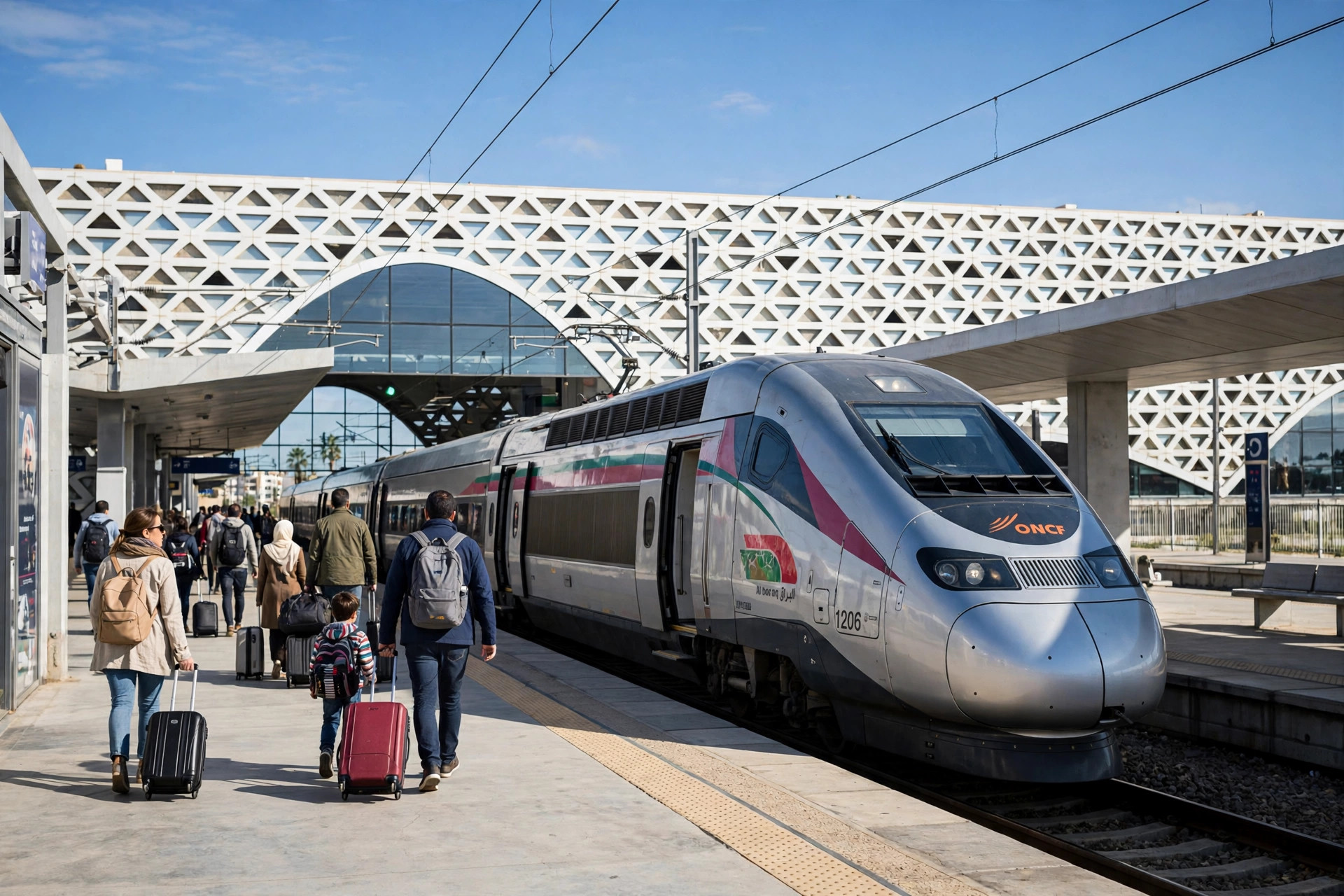
Kenitra's station is one of the best-connected in Morocco. Al Boraq trains stop here on the Tangier–Casablanca line, reaching Rabat Agdal in about 30 minutes and Tangier in about 1 hour 10 minutes, while slower Atlas trains take around 50 minutes to Rabat. Fares to Rabat run roughly 45–110 MAD by train and class, and Casablanca takes about 1 hour 30 minutes. Book on ONCF Voyages or at the station; a week ahead often unlocks the cheapest fares.
Inside the city, petits taxis cost 10–20 MAD for most trips and city buses about 5 MAD. Many expats buy a cheap second-hand car after a few months, since Mehdia and the forest are easier with wheels. Rabat-Salé Airport is about 39 kilometres away, roughly a 40-minute drive, with flights to Europe and the Gulf; Casablanca's Mohammed V Airport is about 1 hour 45 minutes away by road or train. Living in kenitra without a car is perfectly doable, but a car turns the beach and the forest into daily options rather than weekend trips.
| Route | Mode | Time | Price (MAD) |
|---|---|---|---|
| Kenitra – Rabat Agdal | Al Boraq | ~30 min | 45–110 |
| Kenitra – Rabat Ville | Atlas train | ~50 min | 40–70 |
| Kenitra – Tangier | Al Boraq | ~1 h 10 | 90–160 |
| Kenitra – Casablanca | Al Boraq / Atlas | ~1 h 30 | 90–180 |
| Kenitra – Mehdia beach | Taxi / bus | 15–20 min | 15–30 |
| Kenitra – Rabat-Salé Airport | Taxi / car | ~40 min | 150–250 |
| Across town | Petit taxi | 10–15 min | 10–20 |
| Across town | City bus | 20–40 min | ~5 |
Last checked: November 2026. Fares vary by class, date and how far ahead you book.
Working and Living in Kenitra: Industry, University and Remote Work
Kenitra's economy is industrial and academic rather than tourist. The Atlantic Free Zone hosts automotive plants and suppliers, including a major Stellantis factory that opened in 2019. Most foreign professionals are engineers, quality managers and logistics staff on employer-arranged contracts, which also handle their residence paperwork.
Ibn Tofail University is one of Morocco's largest, with tens of thousands of students, bringing lecturers, researchers and language teachers to the city. English teaching work exists but is thinner than in Rabat or Casablanca. For remote workers, living in kenitra is arguably the better bet: fibre internet is widely available, coworking is informal rather than organised, and the low cost of living stretches a foreign salary further than almost anywhere else on the Atlantic coast.
Daily Life: Markets, Food and Mehdia Beach
Daily life in Kenitra runs on the souk, the bakery and the cafe. The central market sells fish from the Atlantic and the Sebou, vegetables from the Gharb plain — one of Morocco's most fertile regions — and spices, olives and pottery at prices that make weekly shopping a pleasure rather than a chore. The food is classic north-western Moroccan: fish tajines, sardines, harira and wood-oven bread.
Mehdia beach is the city's release valve: wide Atlantic sand, the old kasbah above the river mouth and surf schools make it a genuine seaside town in summer, quieter than El Jadida further south, and a windswept walk in winter. The Maamora forest, one of the largest cork-oak forests in the Mediterranean, starts at the city's edge and offers shaded walks, picnics and horse riding. Between the beach, the forest and the river, living in kenitra has more outdoors in it than most Moroccan cities of this size.
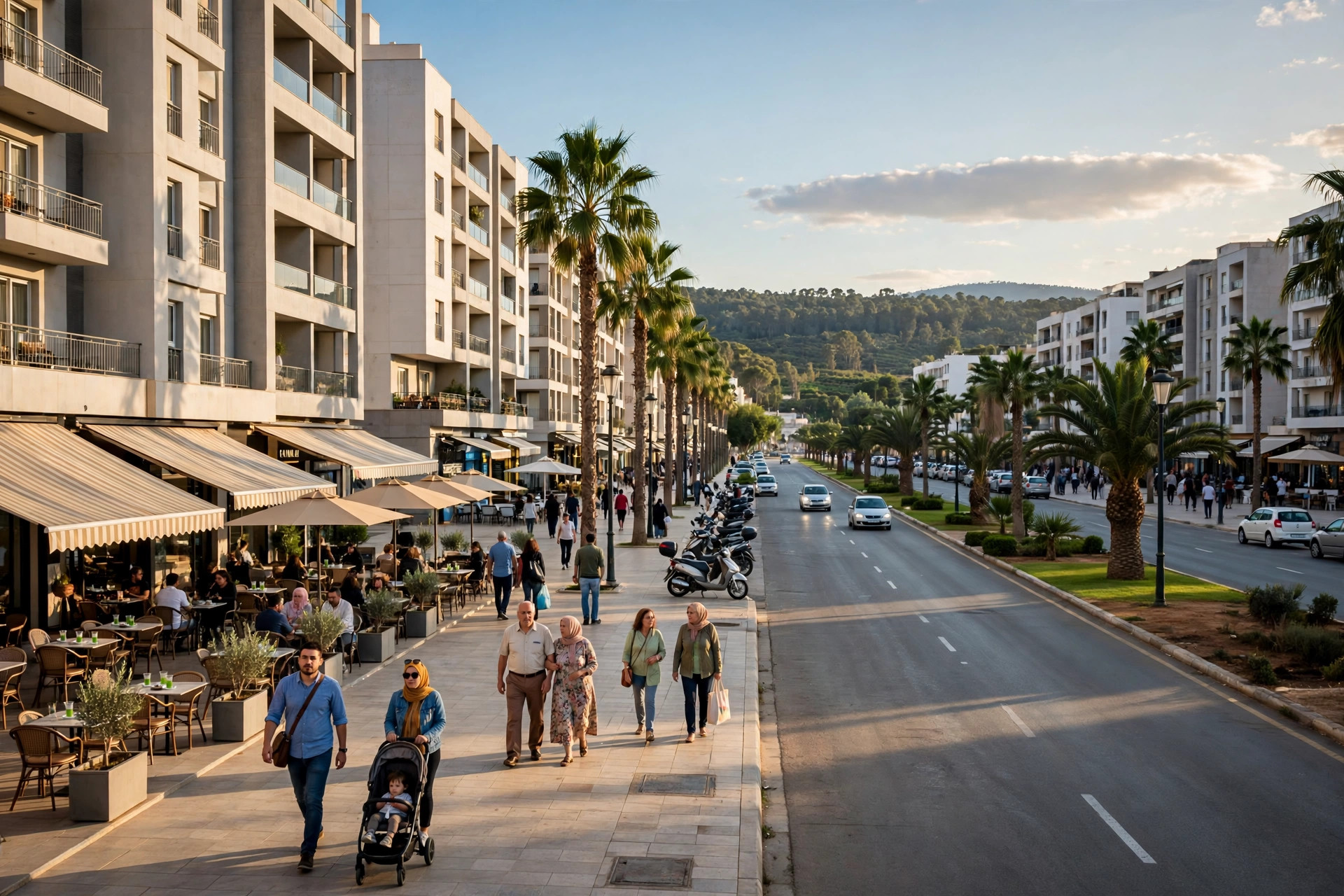
Cafes are the social infrastructure: long afternoons over an 8–10 MAD coffee. French is widely spoken in business, Darija runs daily life, and English is growing among students. A few months of French will change your experience of the city more than any other single investment.
Healthcare in Kenitra
Kenitra has a public hospital, the Moulay Youssef Hospital, plus private clinics — including Clinique Maamora — and dozens of private practices and pharmacies across the centre. Routine care is good and cheap: a GP consultation runs 150–300 MAD and a specialist 300–600 MAD. For complex treatment, most expats living in kenitra go to Rabat, 30 minutes away by train, where the big university hospitals and international-standard clinics are. Read our guide to healthcare in Morocco for expats for the full picture.
Register with the CNSS if you are employed locally, and take out private health insurance as well: decent international cover costs roughly 300–800 MAD a month for a single person, and it is what gets you seen quickly in a private clinic. Pharmacies are plentiful, and most pharmacists speak French and can advise on minor problems without a prescription.
Schools for Expat Families
Kenitra has several private Moroccan schools and bilingual options, but families should plan schooling carefully: there is no large international school in the city itself, so most expat families either choose a private Moroccan school with French teaching or commute to Rabat, where the French lycée and several international schools sit about 30–40 minutes away by train. That commute works for older children and is common among families based in Kenitra.
Nurseries and preschools are plentiful and affordable, typically 1,000–2,500 MAD a month, and Moroccan public schools are free but taught in Arabic. If schooling is your deciding factor, visit the schools before you sign a lease, and talk to other expat parents in the small, close-knit foreign community. Living in kenitra with school-age children works best when the school choice is settled first and the neighbourhood second.
The Downsides of Living in Kenitra
Honesty first: Kenitra is not for everyone. The expat scene is small, nightlife is limited to cafes and a few restaurants, and you will not find the art galleries, international restaurants or coworking culture of Rabat or Marrakech. If you need a buzzing social life in English, living in kenitra means making your own fun or taking the train south.
Winter brings heavy rain and humidity, and the Sebou has flooded low-lying districts in past wet winters, so check a flat's flood history before renting near the river. Summers are hot and humid, and the centre can feel dusty at rush hour. Mehdia empties out in winter, charming for a week and lonely for a season. None of this is a deal-breaker, but it is the price of the low rents and the calm.
Moving to Kenitra: Your First Steps
Start with a scouting trip: spend a week in Kenitra, walk Maamora in the evening, take the train to Rabat, eat in Mehdia and view three or four flats in different districts. Most expats decide within days whether living in kenitra suits them or bores them, and a week here costs less than a weekend in the capital.
On paperwork, the standard path applies: enter on a 90-day tourist stamp, then apply for a carte de séjour at the police prefecture with your rental contract, bank statements and health insurance. Our Morocco carte de séjour renewal guide walks through the documents and the timeline. Open a Moroccan bank account early — see our guide to buying property in Morocco for the banking basics — and bring certified translations of key documents. Living in kenitra becomes simple once the residence card is in your pocket; before that, keep every document and receipt.
- Visit for a week and choose your neighbourhood.
- Secure a long-term rental with a written contract.
- Open a bank account and arrange health insurance.
- Apply for your carte de séjour within the first 90 days.
- Learn basic French and Darija before you arrive if you can.
- Join the local expat and university networks once you land.
Frequently Asked Questions
Is Kenitra a good place for expats to live?
Yes, for the right expat. Kenitra suits remote workers, families and professionals who want low rents, a real Moroccan city and Rabat 30 minutes away by train. It is less suited to anyone who wants a large English-speaking social scene or busy nightlife.
How much does it cost to live in Kenitra?
A single expat needs roughly 8,000–12,000 MAD ($800–$1,200) a month, a couple 14,000–20,000 MAD ($1,400–$2,000), and a family of four 20,000–30,000 MAD ($2,000–$3,000), including rent. Rents are the biggest saving: a furnished one-bedroom flat costs 2,500–5,500 MAD, against 30–50% more in Rabat.
How long is the train from Kenitra to Rabat?
About 30 minutes on Al Boraq trains to Rabat Agdal, and about 50 minutes on slower Atlas trains to Rabat Ville. Fares run roughly 45–110 MAD, and trains run frequently all day — which is what makes living in kenitra while working in Rabat realistic.
What is the weather like in Kenitra?
Mediterranean and Atlantic-influenced: August averages around 30°C, January around 17°C, with most rain falling between November and February. April to October is the best stretch, warm and dry, with the sea at Mehdia reaching about 22°C in late summer.
Is Kenitra safe for foreigners?
Yes. Kenitra is a calm, family-oriented city with low street crime by Moroccan standards. Normal precautions apply: watch your bag in the souk and at the station, avoid unlit streets late at night, and use registered taxis after dark.
Can foreigners buy property in Kenitra?
Yes, foreigners can buy property in Morocco, including in Kenitra, except for agricultural land. Prices here are well below Rabat and Casablanca, which is why some expats rent first and buy later. See our guide to buying property in Morocco for the process and the costs.
Conclusion: Is Kenitra Right for You?
Kenitra is the choice for expats who value substance over scene: a half-million-strong Atlantic city with a 30-minute train to the capital, rents from 2,500 MAD, a university, a forest and a beach. It will not entertain you like Marrakech or flatter you like Tangier, but it will give you a comfortable, affordable, genuinely Moroccan life with the capital in easy reach. Visit for a week and test living in kenitra yourself: walk Maamora at dusk, swim at Mehdia and take the train to Rabat. If the calm feels like freedom rather than boredom, Kenitra is your city — and our Morocco in 21 days route is a good way to see the rest of the country first. Living in kenitra rewards the expats who come for the life, not the postcard.