
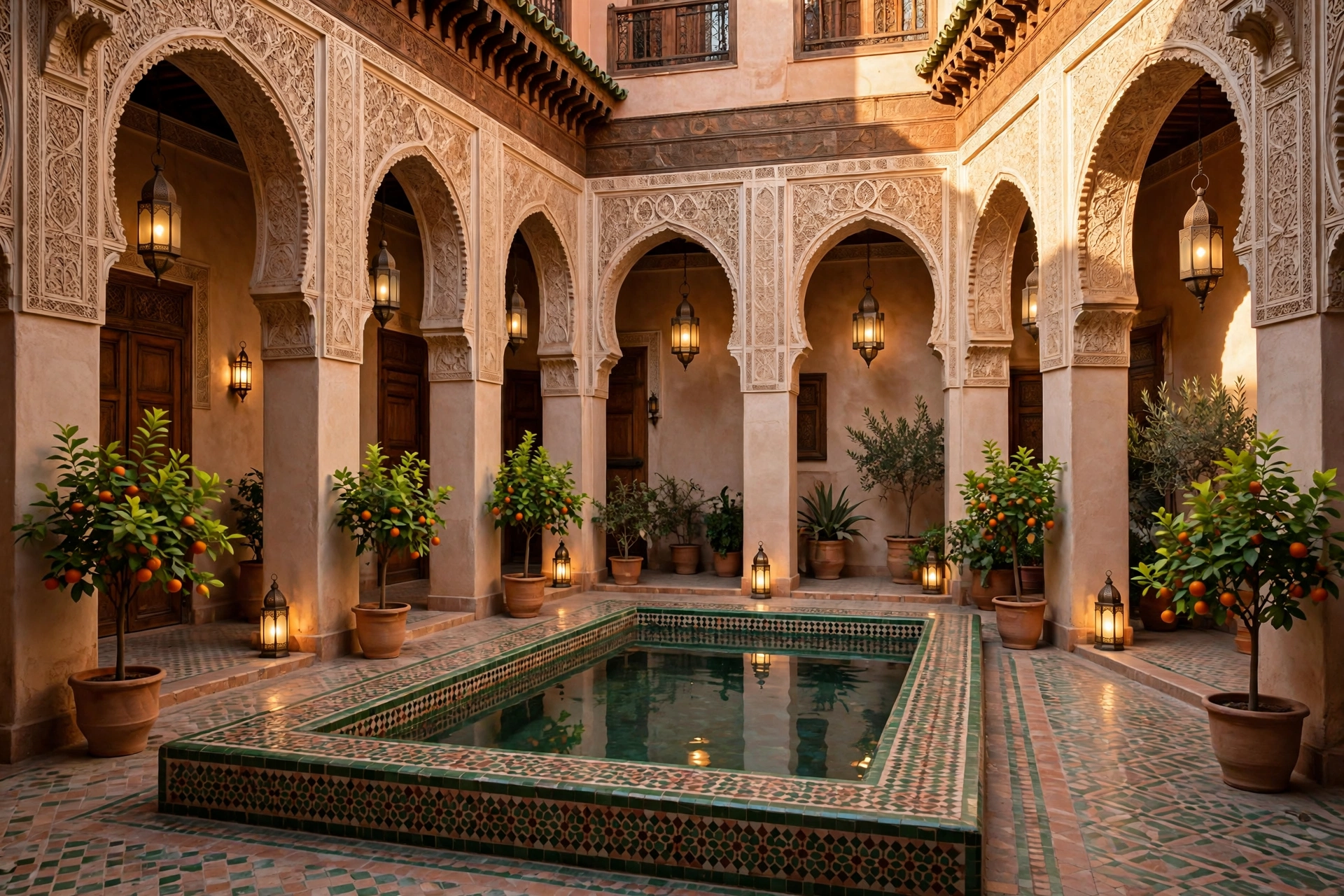
The internet tells two opposite stories: one says Morocco is dirt cheap and a beautiful riad costs almost nothing, the other warns Marrakech has become as expensive as Paris. Both are half true, and that is why a single nightly rate tells you so little. The real morocco hotel prices depend on the city, the season, the type of place and — more than visitors expect — on how you book.
This guide gives you the honest numbers for 2026, gathered the way a local would: by comparing what the same kind of room actually sells for in Marrakech, Fes, Casablanca, Chefchaouen, Essaouira and the desert, in high season and low season, online and at the front desk. Every price is in Moroccan dirhams (MAD) with a dollar equivalent, checked in November 2026 at roughly 10 MAD to the dollar. For the wider picture of what a trip costs, see our cost of living in Morocco guide and browse the Costs & Practical Life section.
In this guide
- Morocco Hotel Prices: The Short Answer
- What a Night Costs by Hotel Type
- Morocco Hotel Prices by City
- Riads vs Hotels: What You Actually Get
- When Prices Spike: Seasons, Festivals and Ramadan
- How to Book Cheaper: The Local Playbook
- What the Price Includes — and What It Does Not
- Budget Examples: Three Real Nights
- Morocco Hotel Prices FAQ
Morocco Hotel Prices: The Short Answer
If you want one number: a decent double room in Morocco in 2026 costs 300–600 MAD ($30–$60) a night in most cities outside the Marrakech peak season. That buys a clean, well-located riad or three-star hotel with breakfast and hot water that works. Below 200 MAD ($20) you are in hostel dorms and the simplest family guesthouses; above 1,500 MAD ($150) you are in the boutique riads and five-star hotels of the glossy photos.
But the range is wide, and the averages hide the real story behind morocco hotel prices. Marrakech in April can cost double what the same room costs in July, when the heat empties the city. A riad in the Fes medina can be cheaper than a business hotel in Casablanca on a Tuesday, because Casablanca prices follow the working week, not the tourist calendar.
And the morocco hotel prices you see online are often not the prices you pay: city tourist tax (usually 20–40 MAD per person per night) is added at checkout, breakfast is sometimes priced separately, and the "free airport transfer" on a booking site may turn out to be a taxi you pay for twice. Remember too that Morocco is not one hotel market: a 400 MAD riad in Fes and a 400 MAD hotel in Casablanca are two different products that happen to share a price.
What a Night Costs by Hotel Type
The table below is the backbone of this guide. Prices are for a double room for two people in mid-season (spring or autumn), outside festival weeks, booked a few weeks ahead; dorm beds are per person. These morocco hotel prices are the rates you should expect to pay, not the cheapest ever advertised or the most expensive suite in the house.
| Type of stay | Typical price per night | What it usually includes |
|---|---|---|
| Hostel dorm bed | 80–150 MAD ($8–$15) | Bed in a shared room, Wi-Fi, sometimes breakfast |
| Budget guesthouse / family riad | 200–350 MAD ($20–$35) | Private room, shared or private bathroom, breakfast |
| Mid-range riad or 3-star hotel | 350–700 MAD ($35–$70) | Private room, breakfast, rooftop terrace, Wi-Fi |
| Boutique riad (4-star feel) | 700–1,500 MAD ($70–$150) | Design rooms, pool or plunge pool, restaurant, staff |
| 4-star hotel | 800–1,600 MAD ($80–$160) | Full services, restaurant, often a pool and gym |
| 5-star hotel / palace riad | 1,800–4,500 MAD ($180–$450) | Spa, fine dining, concierge, large rooms |
| Desert camp (Erg Chebbi) | 400–1,200 MAD ($40–$120) | Tent, dinner, breakfast, camel ride, transport from Merzouga |
The biggest jump in value is not between cheap and expensive, but between the first two rows and the third. For roughly 100 MAD more than a basic guesthouse, a mid-range riad usually buys you a private bathroom that works properly, a breakfast you would actually want to eat, and a rooftop for sunset. That is the sweet spot for most travellers.
Desert camps deserve a note of their own. A camp price almost always includes dinner, breakfast and a camel ride, so a 600 MAD camp night is closer in value to a 400 MAD hotel night plus a 200 MAD dinner than it looks. Camps advertising 150 MAD a night usually sell a mattress in a shared tent with no dinner, and the food and camel ride are then sold separately at inflated prices.
Morocco Hotel Prices by City
City matters as much as hotel type for morocco hotel prices. Marrakech is the most expensive city in the country by a clear margin, and the city where prices swing the most. Fes and Meknes are the best value of the imperial cities. Casablanca is expensive on weekdays and oddly cheap on weekends. Chefchaouen and Essaouira sit in the middle, with small, charming places that book out early in spring.
| City | Budget double | Mid-range double | Boutique / luxury |
|---|---|---|---|
| Marrakech | 300–500 MAD ($30–$50) | 600–1,200 MAD ($60–$120) | 1,500–4,500 MAD ($150–$450) |
| Fes | 200–400 MAD ($20–$40) | 400–800 MAD ($40–$80) | 900–2,500 MAD ($90–$250) |
| Casablanca | 350–600 MAD ($35–$60) | 700–1,400 MAD ($70–$140) | 1,500–3,500 MAD ($150–$350) |
| Rabat | 300–500 MAD ($30–$50) | 600–1,100 MAD ($60–$110) | 1,200–3,000 MAD ($120–$300) |
| Chefchaouen | 200–350 MAD ($20–$35) | 400–700 MAD ($40–$70) | 800–1,800 MAD ($80–$180) |
| Essaouira | 250–450 MAD ($25–$45) | 500–900 MAD ($50–$90) | 1,000–2,500 MAD ($100–$250) |
| Merzouga / desert | 250–500 MAD ($25–$50) | 500–900 MAD ($50–$90) | 1,000–2,000 MAD ($100–$200) |
| Tangier | 300–500 MAD ($30–$50) | 600–1,000 MAD ($60–$100) | 1,200–3,000 MAD ($120–$300) |
Two patterns in this table surprise first-time visitors. First, the gap between Marrakech and Fes is real and large: the same quality of riad costs roughly 50% more in Marrakech, and the gap widens in April and October. Second, Casablanca is the only city where a Tuesday night can cost more than a Saturday night, because its hotels are filled by business travellers who leave on Friday. If your trip is flexible, a weekend night in Casablanca is one of the best deals in the country.
The morocco hotel prices above are mid-season averages for a double room. In the depths of summer, Marrakech prices fall by a third or more, while Essaouira — cool, windy and pleasant in July — barely drops at all. You pay for the weather you want, not for the room alone.
Riads vs Hotels: What You Actually Get
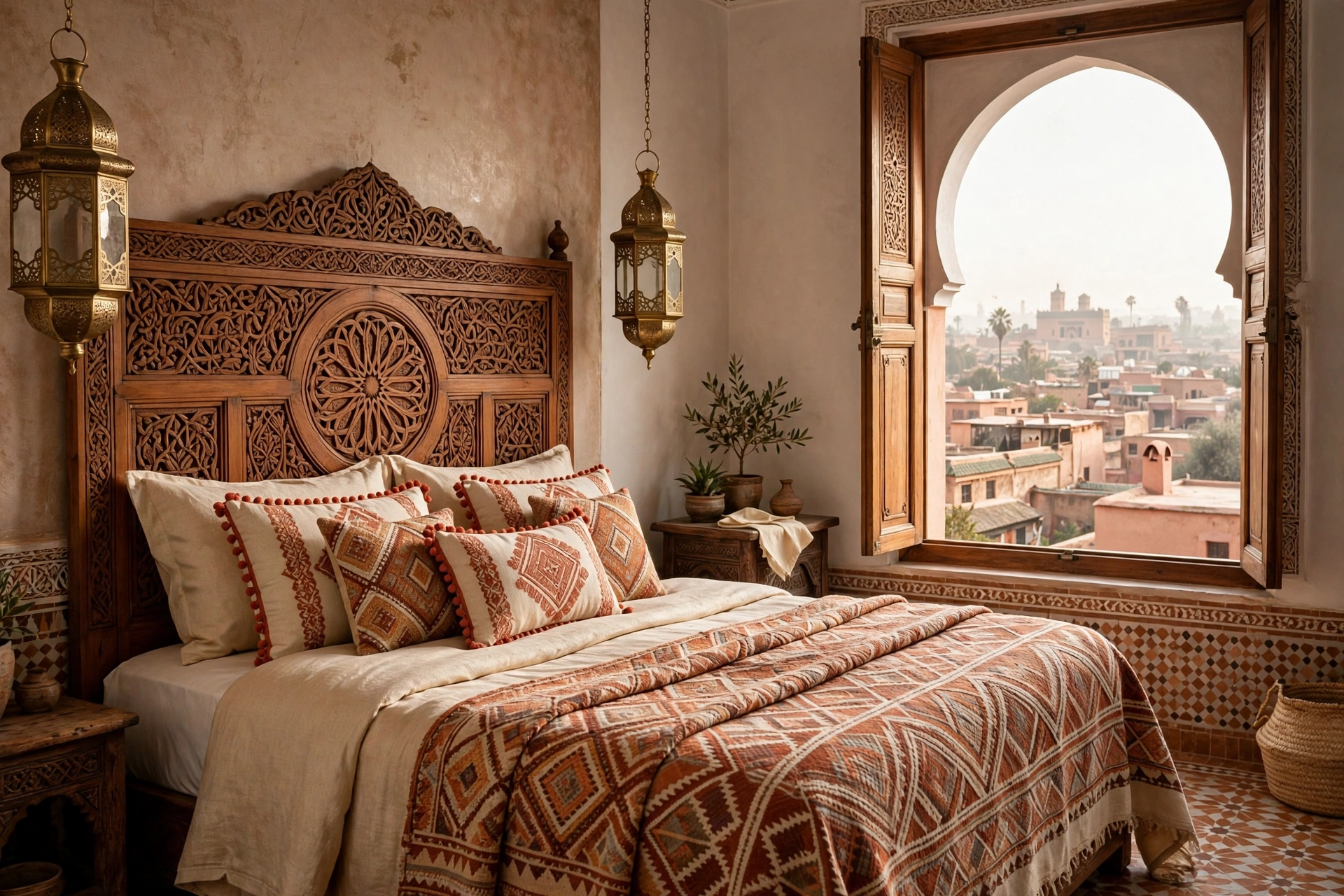
The word "riad" does a lot of work in Moroccan tourism. A real riad is a traditional house built around an interior courtyard, usually in the old medina, with rooms opening onto that courtyard rather than onto the street. The best ones have been restored with carved plaster, painted wood and zellige tiles, and feel like staying inside a piece of history. But the word is now used for almost any small hotel in a medina, including modern buildings with a courtyard-shaped lobby and no history at all.
A riad gives you atmosphere, location and personal service. The owner or manager usually knows the neighbourhood, will call you a trustworthy taxi, and will tell you honestly which restaurant is a trap. The trade-offs are real, though: rooms can be dark (they face an interior courtyard, not the street), stairs are steep and narrow, there is rarely a lift, and a courtyard that is magical at breakfast can echo with noise until late. If you are a light sleeper, ask for a room on the top floor, and check whether the riad has a pool — many "pool" photos show a plunge pool the size of a bathtub.
A standard hotel, by contrast, gives you predictability: a lift, a front desk that works around the clock, a room with a window, air conditioning that is maintained, and a breakfast buffet rather than a set menu. In Casablanca and Rabat, where the medinas are smaller and the business districts are modern, a hotel is usually the better choice. In Marrakech and Fes, a riad is the experience you came for — just choose it with your eyes open, and read recent reviews rather than the photos.
The honest rule is simple: book a riad for the old cities and a hotel for the business cities, and never pay luxury prices for a riad that has no pool, no restaurant and no staff after 10 p.m. At that point you are paying for a pretty courtyard and a thin mattress, and the morocco hotel prices in the table above will tell you so.
When Prices Spike: Seasons, Festivals and Ramadan
Morocco hotel prices follow the weather, and the weather follows the calendar more sharply than in most Mediterranean destinations. The high season runs roughly from mid-March to May and from mid-September to mid-November, when the days are warm and the nights are cool. In those months, the best riads in Marrakech and Chefchaouen sell out weeks ahead, and prices rise 30–50% above the figures in this guide.
Winter is the quiet surprise: December and January are cold in the Atlas, but Marrakech, Fes and the coast are mild and sunny, and morocco hotel prices fall to near summer levels — except for Christmas and New Year, when Marrakech fills with Europeans escaping the cold. Festivals spike prices too: the Gnaoua festival in Essaouira, the Fes sacred music festival (both usually June) and the Marrakech film festival (usually late November) each push local rates up for a few nights — book months ahead or stay in a nearby town. Ramadan changes the rhythm rather than the price: rooms are usually cheaper, restaurants close by day, and the cities come alive after sunset. The official Visit Morocco portal lists festival dates and seasonal highlights if you are planning around them.
How to Book Cheaper: The Local Playbook
The single most useful thing to know about booking in Morocco is that the price you see first is rarely the best price available. The big booking sites charge hotels a commission of 15–20%, and many riads would rather give you that money as a discount than hand it to a platform. The trick is knowing when the morocco hotel prices on the platforms beat the price at the desk.
First, use the booking sites to research, not necessarily to buy. Compare three or four options, read the most recent reviews (anything older than a year is suspect), and check the exact location on a map — a riad listed as "in the medina" can be a twenty-minute walk from the main square. Then contact your favourite place directly, by email or WhatsApp, and ask for their best price. Small riads answer quickly and often offer 10–20% off the platform price, a free airport transfer, or a room upgrade, especially for stays of three nights or more.
Second, book the refundable rate when you can, and book early for the spring and autumn peaks — the best riads in Marrakech and Chefchaouen have ten rooms or fewer and sell out. A refundable booking made two months ahead costs little more than a non-refundable one made two weeks ahead, and it protects you if your flights change. For Casablanca business hotels, the opposite applies: last-minute weekend rates are often the cheapest, because the weekday crowd has gone home.
Third, watch the small print. Confirm whether breakfast is included — a "room only" rate that looks cheap becomes expensive once you add 80–120 MAD per person for breakfast. Confirm the tourist tax, which is charged per person per night and is almost never included in the headline price. And confirm the airport transfer in writing: a riad that offers a "free" transfer and then sends a taxi demanding 200 MAD at the door is a story every long-term resident knows. Our Morocco taxi prices guide lists the fair fixed fares from the main airports, and our Morocco train ticket prices guide covers the cheaper way to move between cities once you arrive.
Finally, do not haggle over a hotel room the way you haggle in a souk. A polite email asking for a better rate for a longer stay works; standing at the desk at midnight demanding a discount does not. The people who run Morocco's best riads remember their guests, and a good relationship is worth more than a one-night saving.
What the Price Includes — and What It Does Not
A Moroccan hotel bill has a few quirks that catch first-time visitors. The headline rate is almost always for the room, not per person, and it usually includes breakfast in riads and small hotels. In larger hotels, breakfast is often a separate line — 80–150 MAD per person — and the buffet is generous enough to count as lunch.
The tourist tax is the charge most people miss. Every city levies a per-person, per-night tax the hotel collects and passes on: typically 20–30 MAD in smaller towns and 30–40 MAD in Marrakech and Casablanca, with higher rates in five-star hotels. It is not a scam and it is not negotiable; it is simply rarely included in the price you see online. On a ten-night trip for two people, it adds 600–800 MAD ($60–$80) to the morocco hotel prices you budgeted for.
Air conditioning is included everywhere in theory and works properly in most mid-range places and above. In budget guesthouses, check before you book in summer: some older buildings have fans rather than air conditioning, and a fan in a Marrakech August is decoration, not cooling. Wi-Fi is free almost everywhere, but its quality varies — a riad in a thick-walled medina house can have dead spots in the rooms farthest from the router. Parking is the other hidden cost: medina riads have no parking at all, and a hotel car park in central Casablanca can cost 50–100 MAD a night.
What you should never pay extra for is the "help" that appears at the door. If someone offers to carry your bag from the taxi to the riad and then demands a fee, that is not a hotel charge — it is the medina's informal economy, and a firm "no, thank you" plus a small tip if they genuinely helped is the local answer. The same goes for the "guide" who attaches himself to you on the walk from the taxi rank: the riad's own staff will meet you if you ask.
Budget Examples: Three Real Nights
Here are three real nights built from the morocco hotel prices in this guide, all for two people sharing a double room in mid-season, with breakfast and tourist tax included — the number you actually pay, not the number on the booking site.
The budget night is a hostel private room in Essaouira: 280 MAD for the room, 60 MAD tourist tax for two, breakfast included, total 340 MAD ($34). You sleep in a whitewashed guesthouse five minutes from the beach, eat bread, eggs and mint tea on a terrace, and walk the ramparts for free. Add 100 MAD for lunch and dinner at the harbour stalls, and the whole day costs less than one cocktail in a Marrakech luxury hotel.
The comfortable night is a mid-range riad in Fes: 550 MAD for a room with a private bathroom and a rooftop, 60 MAD tourist tax, breakfast included, total 610 MAD ($61). You get a courtyard breakfast, a rooftop sunset over the medina, and a manager who books a trustworthy taxi to Volubilis. Dinner in a good local restaurant adds 200–300 MAD for two, and the day still comes in under $100 all-in.
The splurge night is a boutique riad in Marrakech in April: 1,400 MAD for the room, 80 MAD tourist tax, breakfast included, total 1,480 MAD ($148). You get a plunge pool, a candlelit dinner on the terrace for another 600 MAD, and a room you will photograph more than the monuments. It is a lot of money by Moroccan standards, but it is also the night most travellers remember. The point of the morocco hotel prices in this guide is that all three nights are good value at their own level; the mistake is paying splurge money for a budget experience.
If you are planning a full trip around these numbers, our Morocco in 10 days itinerary shows how the nightly costs add up across the classic route, and the tourism in Morocco page on Wikipedia gives the wider context of how the industry has grown — useful background for understanding why Marrakech prices have risen faster than anywhere else in the country.
Morocco Hotel Prices FAQ
How much does a hotel in Morocco cost per night?
A decent double room costs 300–600 MAD ($30–$60) a night in most cities in mid-season. Budget rooms start around 200 MAD ($20), mid-range riads run 350–700 MAD ($35–$70), and luxury riads and five-star hotels start around 1,800 MAD ($180). Marrakech is the most expensive city; Fes and Meknes are the best value.
Are riads cheaper than hotels in Morocco?
Usually, yes, at the same level of comfort. A mid-range riad in Fes or Marrakech often costs 20–30% less than an equivalent four-star hotel, and it includes breakfast and a more personal service. The exception is Casablanca and Rabat, where business hotels compete hard on price and riads are rarer.
Is breakfast included in Morocco hotel prices?
In riads and small guesthouses, almost always. In larger hotels, breakfast is often charged separately at 80–150 MAD per person. Always check before booking: a cheap room-only rate plus breakfast for two can cost more than a slightly dearer rate that includes it.
Do Morocco hotel prices include tourist tax?
No, almost never. The city tourist tax of roughly 20–40 MAD per person per night is added at checkout. It is a legal charge, not a scam, but it is rarely shown in the headline price, so add it to your budget — around 600–800 MAD for two people over ten nights.
When is the cheapest time to stay in Morocco?
Summer (July and August) is cheapest in Marrakech and Fes, where the heat cuts prices by a third or more. Winter (December and January, outside Christmas and New Year) is also good value. The most expensive months are April, May, October and early November.
Should I book a hotel in Morocco in advance?
Yes for the spring and autumn peaks, especially in Marrakech, Chefchaouen and Essaouira, where the best small riads sell out weeks ahead. Book a refundable rate early, then contact the riad directly to ask for a better price or a free transfer. In Casablanca, weekend stays can be booked last minute at a discount.
Last checked: November 2026. Prices are mid-season averages in Moroccan dirhams, with dollar equivalents at roughly 10 MAD to the dollar. The morocco hotel prices in this guide will be re-checked before the spring 2027 season.
2 thoughts on “Morocco Hotel Prices: What a Night Really Costs in 2026”