
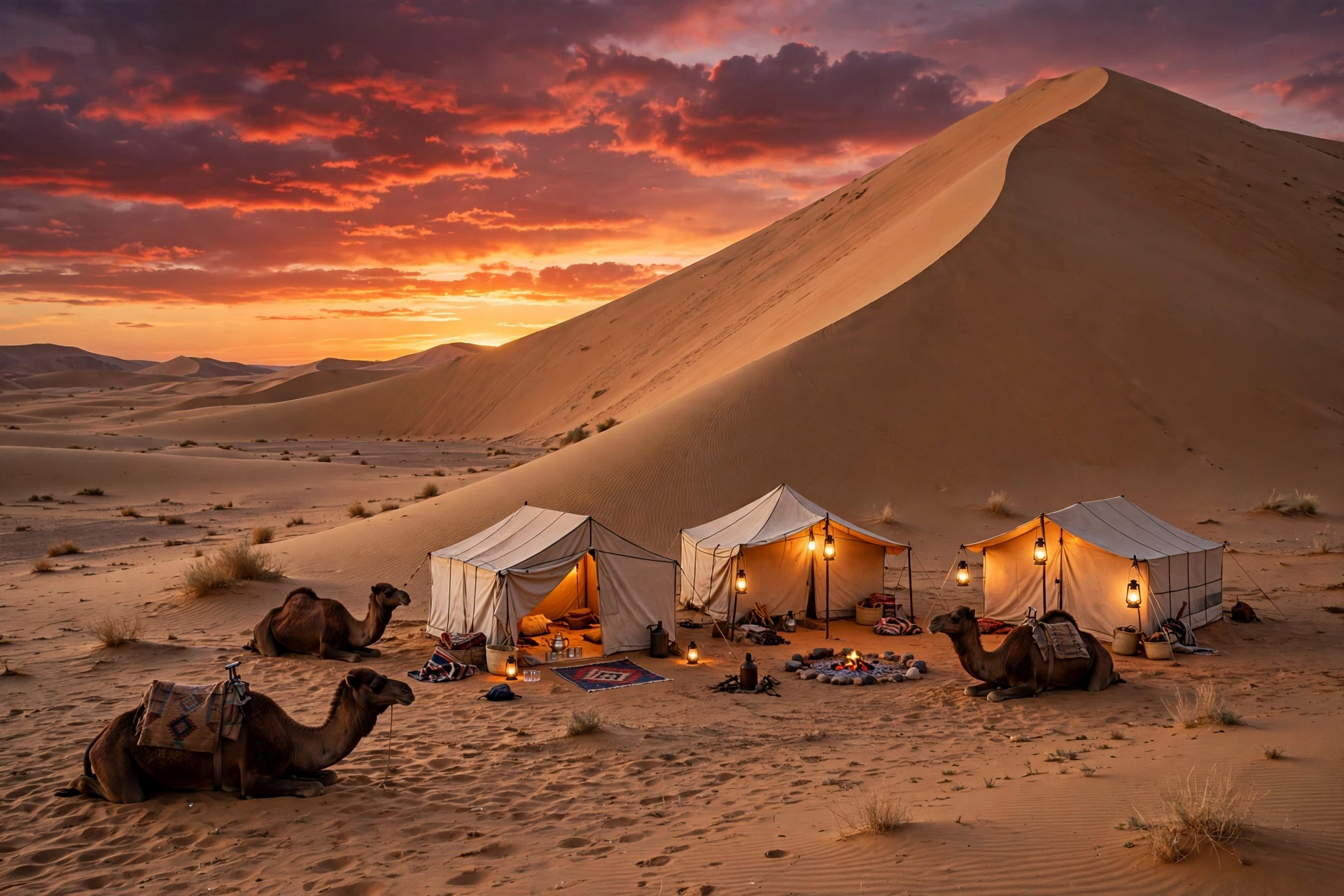
There is a moment on every Morocco Sahara camping trip that no photograph quite captures. The sun drops behind the dunes of Erg Chebbi, the sand turns from gold to deep red, and the whole desert goes suddenly quiet. Your camel kneels, you slide off onto soft sand, and a row of canvas tents glows with lantern light at the foot of the tallest dune. This is the night itself. Not the long drive to get here, not a day trip from Marrakech, but a real night sleeping out in the sand sea near Merzouga, in the far south-east of Morocco.
This guide is about that night, hour by hour. You will learn how to choose between a standard and a luxury camp, what a Morocco Sahara camping package actually includes, what the toilets and showers are really like, and what the night costs in dirhams, checked in November 2026. You will also learn what to pack, when to go, how the camel trek works, and how to spot the booking tricks that spoil an otherwise perfect evening. If you are still choosing between Merzouga, Zagora and Agafay, read our Sahara desert guide first — it compares the three places honestly. This article is only about the camping experience itself: the night in Erg Chebbi, from the sunset camel ride to the sunrise climb.
One thing to know before you book: a Morocco Sahara camping night is simple by design. There is no hotel lobby, no room service and no Wi-Fi worth the name. What you get instead is silence, stars and a bed in the sand — and for most travellers, that trade is the whole point. The rest of this guide makes sure you arrive knowing exactly what to expect, so the night feels like an adventure rather than a surprise.
In this guide
- What a Night of Morocco Sahara Camping in Erg Chebbi Is Actually Like
- Standard vs Luxury: Morocco Sahara Camping Camp Types and Prices
- Getting to Merzouga and Into the Dunes
- What to Pack for a Night in the Dunes
- Stargazing and the Milky Way
- Safety, Scams and Booking Smart
- One Night or Two? Fitting the Desert Into Your Trip
What a Night of Morocco Sahara Camping in Erg Chebbi Is Actually Like
Most Morocco Sahara camping nights begin the same way, in the late afternoon in Merzouga. You leave your big bag at a guesthouse or with your driver, take a small overnight bag, and meet your camel at the edge of the village. The ride into the dunes takes 45 to 60 minutes, timed so you arrive as the light turns gold. Your guide walks beside the camels, and the camp appears slowly: a circle of tents at the foot of a tall dune, smoke from the kitchen tent, and lanterns already lit along the paths.
The Timeline of a Camp Night
A typical night runs to a simple rhythm. You arrive around 5 or 6 p.m., climb the nearest dune for sunset, then gather for dinner at about 7:30 or 8 p.m. Dinner is usually a tagine or couscous, served on carpets in a shared dining tent or outside under the sky. After dinner comes the part every camp is proudest of: Amazigh drums and songs around the fire, with guests invited to clap and dance. By 10 or 11 p.m. the fire burns low, the camp goes quiet, and you walk back to your tent under more stars than you have probably ever seen.
Dinner, Drums and the Campfire
The evening entertainment is Amazigh music, played by local musicians on drums and traditional instruments, and it is the warmest part of any Morocco Sahara camping night. The songs are old desert songs, and the musicians are usually from Merzouga or the nearby village of Khamlia, famous for its Gnawa music. Nobody is forced to join in, but most people do. After the music, the desert does the rest: silence, cold clean air and a sky so full of stars that first-timers often just stand and stare. Bring a warm layer for this hour — the temperature drops fast once the sun is gone.
Standard vs Luxury: Morocco Sahara Camping Camp Types and Prices
The first choice in Morocco Sahara camping is the camp itself, and the difference between standard and luxury is comfort, not location. Both sit in the same dunes, both watch the same sunset, and both serve dinner under the same stars. What changes is the tent, the bathroom and the size of the bill. Standard camps are the classic experience and the best value; luxury camps add privacy, proper beds and en-suite bathrooms. Neither is wrong — but they are different holidays, and the listings do not always make that clear.
Prices below are per person per night, checked in November 2026, in Moroccan dirhams with approximate US dollar equivalents at about 10 MAD to $1.
| Camp type | What is included | Price per person, per night (MAD) | Approx. USD |
|---|---|---|---|
| Standard camp | Camel trek, dinner, breakfast, shared bathroom, drums | 300–700 MAD | $30–70 |
| Comfort camp | Private tent, dinner, breakfast, shared or private bathroom | 700–1,200 MAD | $70–120 |
| Luxury camp | En-suite tent, proper bed, dinner, breakfast, sandboarding | 1,500–4,000 MAD | $150–400 |
| Private luxury camp | En-suite tent, private dinner, 4×4 transfer, extras | 4,000–8,000 MAD | $400–800 |
Almost every Morocco Sahara camping package includes the same core: a sunset camel trek into the dunes, dinner, breakfast, the evening drums and a sunrise camel ride or walk back to the village. Sandboarding on a spare dune is often included too, and it is free to try — ask your guide for a board after breakfast. What is rarely included is lunch on the driving days, drinks beyond mint tea and water, and tips for your camel guide and driver. Budget about 60–120 MAD ($6–12) for each roadside lunch and 50–100 MAD ($5–10) in tips for the camp team.
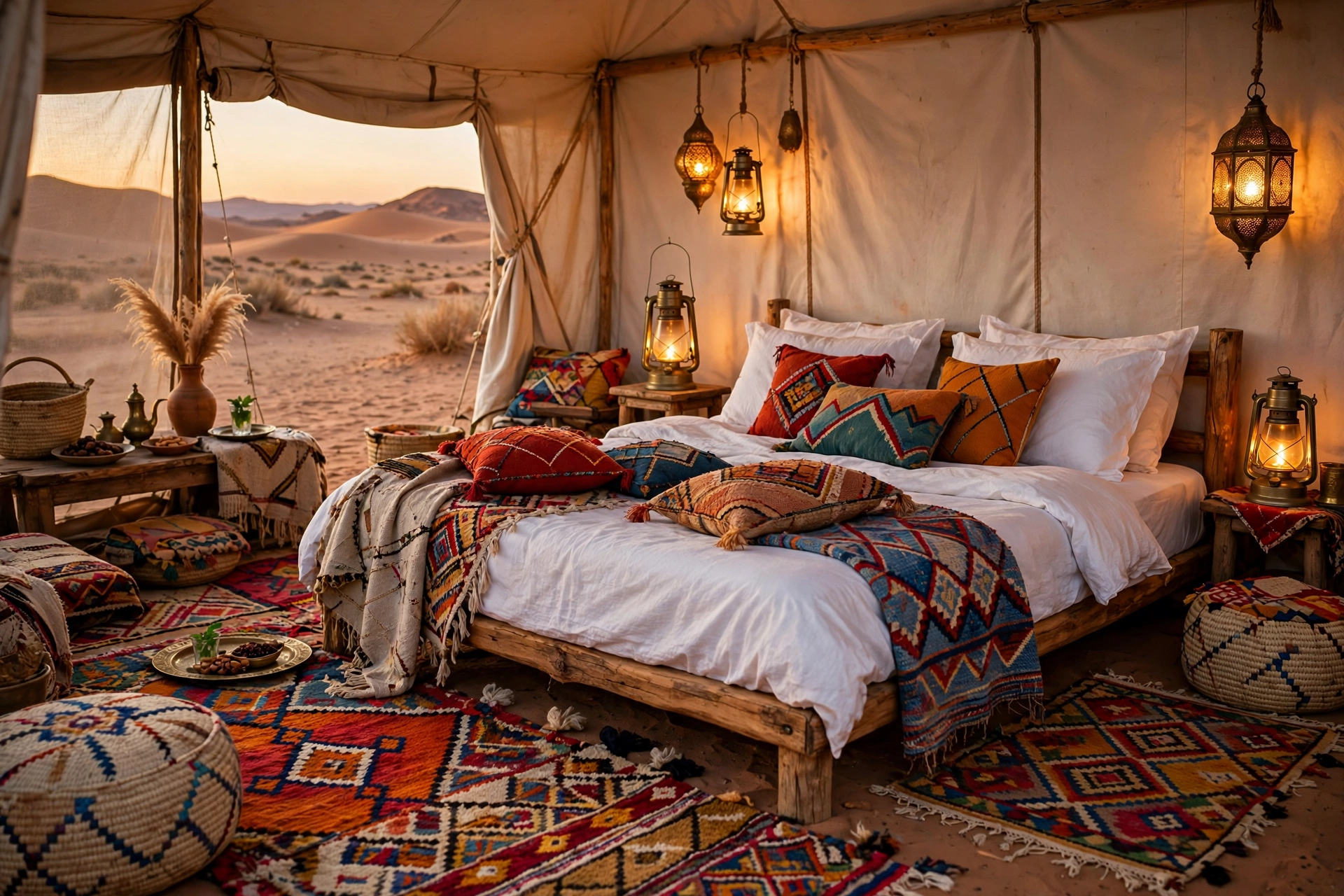
Which camp is right for you? If you sleep well anywhere and want the classic night at the best price, book a standard camp and spend the saving on a private driver or an extra day. If you need a proper bed, a private bathroom and quiet, book luxury — especially for a honeymoon or a trip with older travellers. The middle comfort tier suits families: private tents without the luxury price. Whatever you choose, check recent traveller photos before paying, because a listing can call any tent “luxury”.
Toilets and Showers: The Honest Version
This is the question every traveller asks, and the honest answer depends on the camp. In a standard camp, the toilets and showers sit in a shared block a short walk from the tents — clean, but basic, with limited hot water and no heating. In a luxury camp, your tent has its own bathroom with a proper toilet and a hot shower, though the water still comes from a limited solar-heated supply. Either way, bring a headlamp for the walk at night, and expect sand in the shower room. It is part of the deal, and nobody minds.
Getting to Merzouga and Into the Dunes
Merzouga is the gateway to Erg Chebbi, and every Morocco Sahara camping night starts there. The village sits at the edge of the dunes in the far south-east of Morocco, and the erg itself — a sand sea about 22 kilometres long, with dunes up to 150 metres high — begins where the last houses end. You can read the background on Erg Chebbi on Wikipedia before you go, and the Morocco National Tourist Office lists the region among the country’s flagship experiences.
| Route | Distance | Driving time | Best option |
|---|---|---|---|
| Marrakech to Merzouga | about 560 km | 9–10 hours | 3-day tour or private driver |
| Fes to Merzouga | about 470 km | 7–8 hours | Bus to Merzouga or private driver |
| Ouarzazate to Merzouga | about 360 km | 5–6 hours | Grand taxi or tour stop |
| Erfoud to Merzouga | about 50 km | 45 minutes | Grand taxi or camp transfer |
| Merzouga village to camp | 3–8 km into the dunes | 45–60 min by camel; 20 min by 4×4 | Camel at sunset or 4×4 |
From Marrakech
The classic route runs from Marrakech over the High Atlas mountains, through Ouarzazate and the Draa Valley, and on to Merzouga — nine to ten hours of driving, usually spread over two days with a night in the Dades Valley or Ouarzazate. Our Ouarzazate travel guide covers the film studios and kasbahs that make the stop worthwhile, and our Morocco 10-day itinerary shows how the desert fits into a full loop without backtracking. If you only have two days, the desert will feel like a drive with a night in the middle — and that is the most common disappointment in Moroccan travel.
From Fes
Fes is the smarter starting point if you can arrange it: seven to eight hours through the Middle Atlas, past Ifrane and the cedar forests, then down the Ziz Valley to Merzouga. Many travellers run the desert one-way, Marrakech to Fes or Fes to Marrakech, so the long road is travelled once instead of twice. Buses run from Fes to Merzouga, and a private driver costs more but lets you stop where you like.
The Last Stretch: Camel or 4×4
From Merzouga village, the camp is 45 to 60 minutes by camel or about 20 minutes by 4×4. The camel ride is the experience — slow, swaying, timed for sunset — and it is included in almost every package. Choose the 4×4 instead if you travel with small children, have knee or back trouble, or simply prefer not to ride. A good camp offers both without a fuss, and the 4×4 track ends where the walking begins, so the dunes stay quiet.
What to Pack for a Night in the Dunes
Packing for Morocco Sahara camping is an exercise in travelling light. You carry your own overnight bag from the village to the camp, and your big suitcase stays in the vehicle or at the guesthouse. Everything you need for one night fits in a small backpack — and everything you do not need becomes weight on a camel or dust in a bag.
The Overnight Bag
Pack a warm layer first on any Morocco Sahara camping trip, even in spring: desert nights in winter can fall to near freezing, and even in October the temperature drops fast after sunset. Add a scarf for sand and sun, sunscreen, a water bottle, a headlamp for the walk to the bathroom, a power bank, and any medicine you need — the nearest pharmacy is back in Merzouga. Bring cash in dirhams for tips, lunches and extras, because camps and villages rarely take cards. A small bag for your phone and camera keeps the sand out.
What to Leave Behind
Leave the big suitcase, the white clothes and anything you would mind getting sandy. Sand finds its way into every pocket, every zip and every shoe, and it will still be falling out of your bag days later. Leave expensive jewellery at the hotel, and keep your passport and valuables in the vehicle or the guesthouse safe rather than in a tent. The camps are safe, but a tent has no lock, and simple precautions beat worry.
Stargazing and the Milky Way on a Morocco Sahara Camping Night
The stars are the reason many travellers call a Morocco Sahara camping night the best night of their trip. Far from any town, with no street lights for a hundred kilometres, the sky over Erg Chebbi is among the darkest in North Africa. On a clear winter night the Milky Way arches overhead, and in late spring and summer its bright core is visible for hours after dark. The best months for camping are October to April, when the nights are cool and the skies are at their clearest — though the Milky Way’s core shows best from April to September, when the days are hot and the desert demands an early start.
The Sunrise Climb
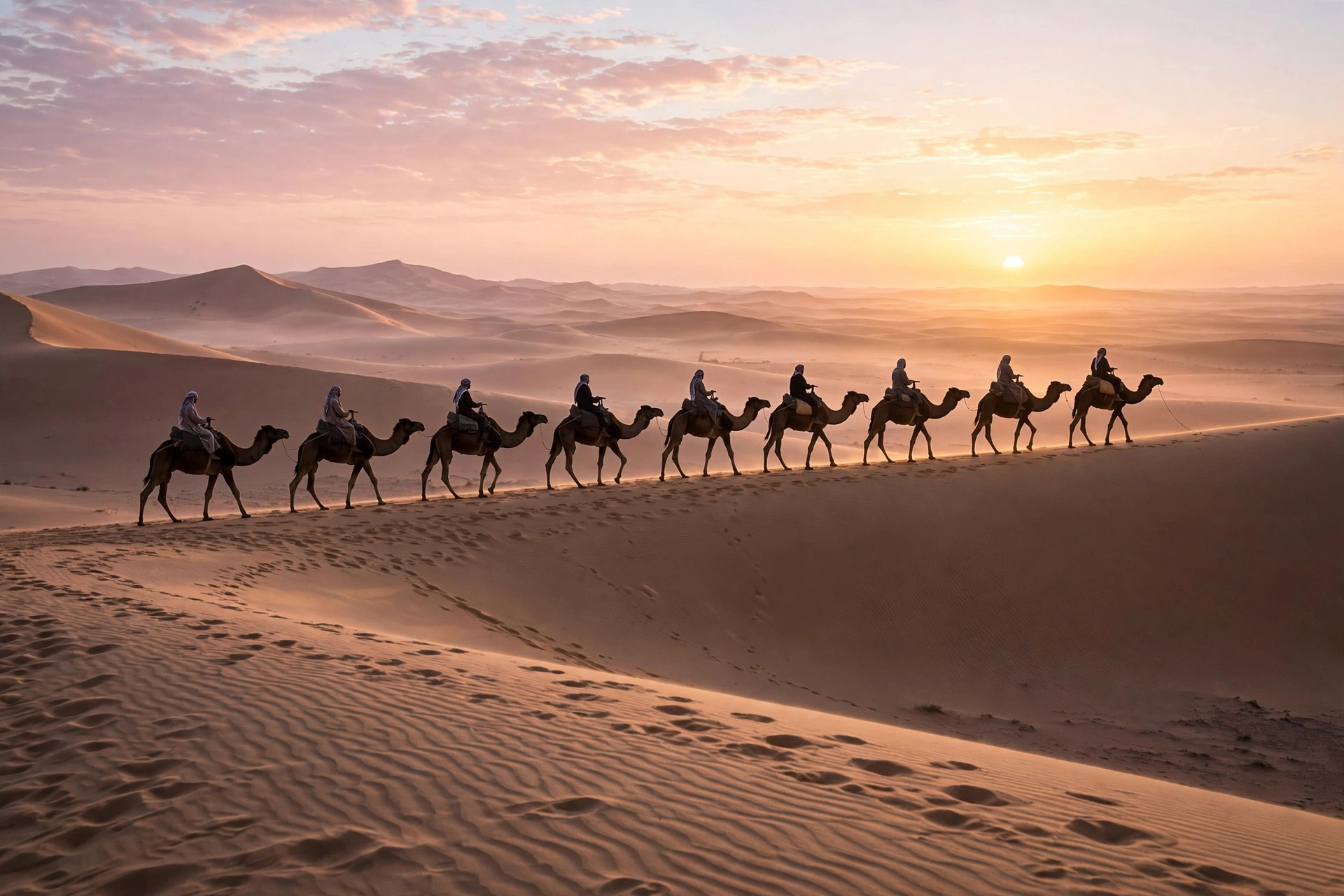
Set an alarm. The sunrise climb is quieter than the sunset, because half the camp sleeps through it, and the light is softer. Climb the tallest dune near camp in the dark, sit on the crest with a blanket, and watch the sand change colour minute by minute. Then walk or ride back for breakfast — bread, eggs, jam and mint tea — before the heat builds. It is the calmest hour of the whole trip, and the one most people remember.
Safety, Scams and Booking Smart
Most Morocco Sahara camping trips run smoothly, and the scams are small rather than dramatic — but they are real, and a little care saves money and mood. Book through a camp or operator with recent traveller photos and reviews, not just a glossy gallery: some listings show photographs of camps that are not theirs. If a “luxury” three-day tour costs less than a nice dinner, it is not luxury. Confirm in writing what is included — camel trek, dinner, breakfast, bathroom type — before you pay anything.
The two tricks to watch for are the “closed road” detour into a carpet shop or fossil shop, where the pressure to buy is real, and the camel handler who asks for a tip before you have even mounted. You are never obliged to buy anything, and a polite no is enough. At the camp, stay with the group after dark, keep water with you, and tell your guide if you feel unwell — the cold and the altitude of the drive can catch people out. A reputable operator moves you to a solid room in the village if the weather turns, so ask about the bad-weather plan when you book.
Booking the camp yourself is often cheaper than a Marrakech package, and it gives you control over the camp you sleep in. Take a bus or grand taxi to Merzouga, stay a night in a village guesthouse, and book the camel ride and camp night locally — the guesthouse owner will know the camps by name. The trade-off is effort: you arrange the transport, you carry the risk of a camp being full, and you need to confirm the details yourself. For a first trip, a package with a named camp is the safer choice; for a second trip, go direct.
One Night or Two? Fitting the Desert Into Your Trip
One night is enough for most people, and it is what almost every Morocco Sahara camping package sells: sunset ride in, dinner and drums, sunrise, ride out. A second night buys a full desert day — sandboarding without rushing, a walk to the nearby village of Khamlia to hear Gnawa music, or simply an afternoon doing nothing on a dune. If you have the time, the second night is when the desert stops being a photograph and starts feeling like a place.
Fit the desert into a route, not a return journey. The classic shape is Marrakech over the Atlas to Merzouga, then on to Fes through the Ziz Valley — or the reverse — and our Morocco 10-day itinerary runs it exactly that way, saving a full day of backtracking. Two nights in the desert also lets you recover from the drive before the next long day on the road, which your back will thank you for.
Conclusion
A night in Erg Chebbi is simple, and that is its magic. No lobby, no Wi-Fi, no noise — just dunes, drums, dinner and a sky full of stars. Booked honestly, with the right camp for your budget and the right expectations for the toilets, the cold and the drive, a Morocco Sahara camping night is the one most travellers talk about for years afterwards. Choose the camp, pack the warm layer, and go: the desert is waiting, and it does not disappoint travellers who arrive prepared.
If you are planning the wider trip, our Sahara desert guide compares Merzouga with the other desert options, and the Morocco Travel category has the full set of routes, city guides and costs to build around this night. Sleep well under the stars.
Frequently Asked Questions
How much does a night in a Sahara camp cost?
A standard Morocco Sahara camping night costs 300–700 MAD ($30–70) per person, including the camel trek, dinner and breakfast. Comfort camps run 700–1,200 MAD ($70–120), and luxury camps 1,500–4,000 MAD ($150–400). Prices are checked November 2026 and rise in high season, so book early for October and Easter.
Is one night in the desert enough?
Yes, for most travellers. One night gives you the sunset camel ride, dinner and drums, the stars and the sunrise. Add a second night if you want a full desert day, sandboarding and a visit to Khamlia village without rushing.
How cold does it get at night in Erg Chebbi?
In December and January, nights can fall to around 0–5°C, and in spring and autumn they are usually 10–15°C. Summer nights stay warm at 20–25°C. Bring a warm layer in every season — the temperature drops fast after sunset.
Are there toilets and showers at desert camps?
Yes. Standard camps have a shared toilet and shower block a short walk from the tents, with limited hot water. Luxury camps have en-suite bathrooms in the tent, though the hot water supply is still limited. Bring a headlamp for the night-time walk.
Is Morocco Sahara camping safe for families with children?
Yes, with the right camp. Morocco Sahara camping is safe for families when you choose a 4×4 transfer instead of camels for small children, pick a camp with proper beds and nearby toilets, and avoid the summer heat. Children under five will struggle with the long drive, so keep the driving days short.
When is the best time to camp in the Erg Chebbi desert?
October to November and February to April are the best months: warm days, cool nights and clear skies. December and January bring the coldest nights and the clearest stars. Avoid July and August, when daytime temperatures pass 45°C and the desert is best enjoyed only at dawn and dusk.
4 thoughts on “Morocco Sahara Camping: Sleeping Under the Stars in Erg Chebbi”