If you are planning a first trip, the question is Morocco safe is probably the first one you type into Google — and it deserves a straight answer, not a sales pitch. The short version: yes, Morocco is safe for most travellers, including solo travellers and families, provided you travel with the same common sense you would use in any busy Mediterranean country. If you are still asking is Morocco safe for a first visit, the honest answer in this guide should put your mind at ease.
Violent crime against tourists is rare. What most visitors actually meet is not danger but hassle: persistent shopkeepers, unofficial “guides”, taxi drivers who would rather negotiate than switch on the meter, and the occasional overcharge. Those things are annoying, sometimes exhausting, but they are not the same as being unsafe.
This guide is written from a local point of view. It tells you where the real risks are, which places need extra care, how women travelling alone can reduce unwanted attention, what to do in an emergency, and exactly what to say when a scam starts. Prices below are in Moroccan dirhams (MAD) with US dollar equivalents, checked in November 2026 at roughly 10 MAD to $1.
Table of Contents
- Is Morocco Safe Overall?
- Safety by City and Region
- Solo Female Travellers in Morocco
- Staying Safe at Night
- Transport Safety
- The Common Scams — and the Exact Counter-Moves
- Money, Pickpockets and Your Valuables
- Health and Food Safety
- Police and Emergencies
- Practical Safety Table
- Frequently Asked Questions
Is Morocco Safe Overall?
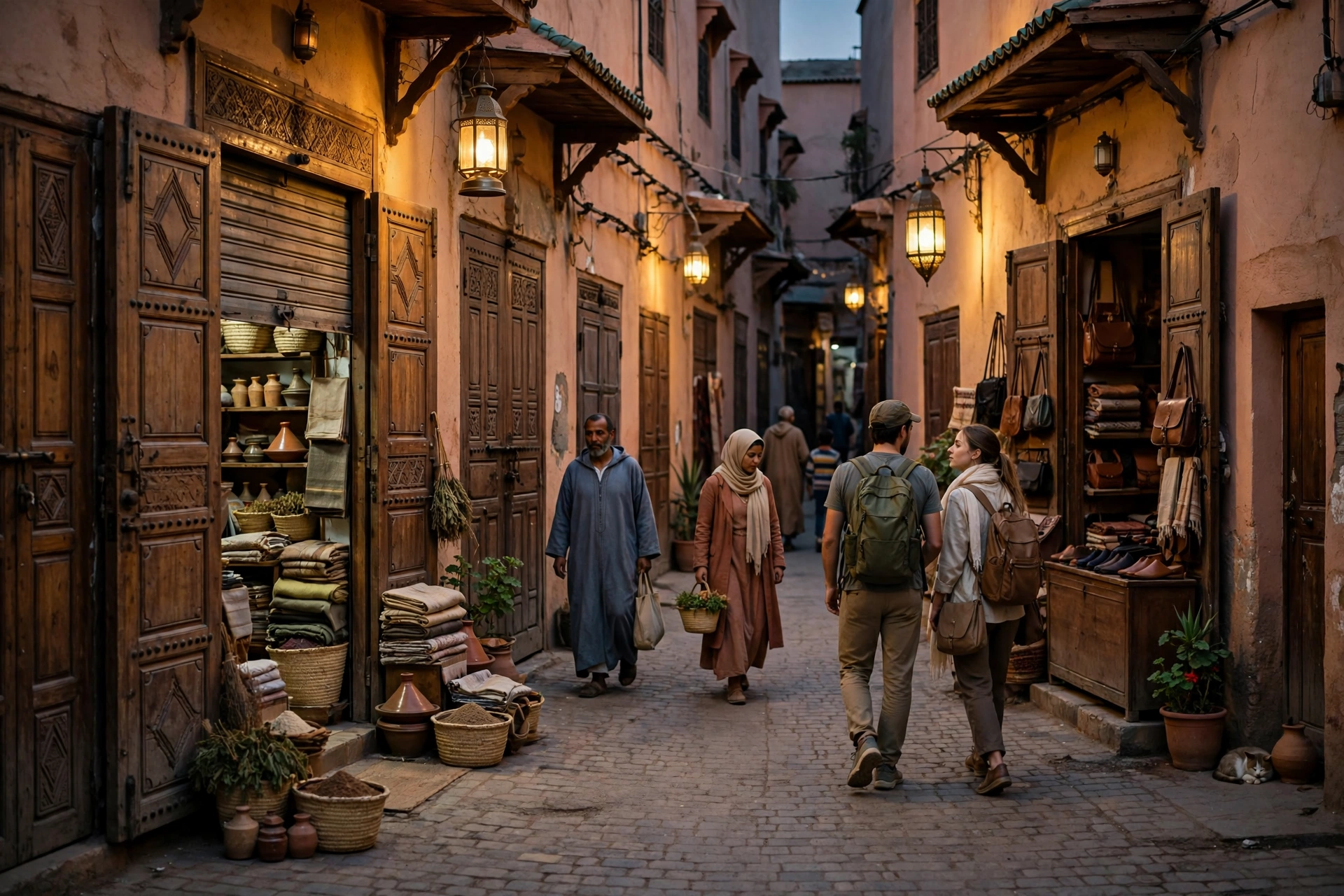
So, is Morocco safe in the everyday sense that matters to a visitor? For the overwhelming majority of trips, yes. Morocco receives millions of visitors a year, tourism is a pillar of the economy, and the tourist police take incidents involving foreigners seriously. In the main tourist cities — Marrakech, Fes, Casablanca, Rabat, Chefchaouen, Essaouira and Agadir — you will see families out late, cafés full after midnight, and travellers walking freely.
That does not mean the risk is zero. Petty theft happens, especially in crowded souks and at train stations. Street harassment exists, particularly for women walking alone in some areas. Road accidents are a far bigger statistical risk than crime: driving standards, speeding and poor lighting on rural roads cause more injuries to visitors than muggings ever will.
The honest comparison is with southern Europe. Morocco feels about as safe as Spain or Italy in terms of violent crime, a little less predictable in terms of hassle, and noticeably riskier on the roads. If you keep your bag closed, stay aware in crowds, avoid isolated streets after dark, and do not flash expensive jewellery or large amounts of cash, you have removed most of the risk already.
One more point matters: Morocco is politically stable for travellers, and large-scale unrest is uncommon. Check the UK FCDO travel advice for Morocco and the US State Department Morocco page before you travel, and again if regional news changes. They are the two most useful official sources, and they are updated when advice changes.
Travellers who ask is Morocco safe for families will find the same advice applies to children as to adults: the same precautions, the same busy, well-lit streets, and the same need to keep bags zipped in crowds.
Safety by City and Region
Morocco is not one place. A quiet Atlantic town and a crowded medina at rush hour are different worlds, so when you ask is Morocco safe, plan by place, not by country.
Marrakech is the busiest and the most intense. Jemaa el-Fnaa and the surrounding souks are safe in the sense that thousands of people are around you, but they are also where pickpockets and the most persistent touts work. Stay alert in the crowd, keep your phone in a front pocket or a zipped bag, and agree taxi prices before you get in. The modern Gueliz district is calmer, with wide pavements and ordinary city life. For a full city briefing, read our Marrakech travel guide.
Fes has the most confusing medina in the country, Fes el Bali, a car-free maze of more than 9,000 alleys. It is fascinating and generally safe during the day, but it is easy to get lost, and that is exactly when fake guides appear. Hire an official guide through your riad, or use a map app and walk confidently. After dark, stick to the main streets and take a taxi back to your hotel rather than wandering the back alleys.
Casablanca is a working business city, not a resort. The Corniche and the area around the Hassan II Mosque are fine, but some neighbourhoods feel rougher after dark, and bag-snatching from scooters has been reported. Use ride-hailing or a hotel taxi at night, and avoid walking alone through poorly lit side streets. If you ask is Morocco safe in Casablanca after dark, the honest answer is to take a taxi rather than walk alone through quiet streets.
Rabat, the capital, is the calmest big city in Morocco. It is clean, well policed and easy to walk around, including in the evening. Chefchaouen and Essaouira are among the most relaxed places in the country: small, walkable, and popular with solo travellers for good reason. Agadir is a purpose-built resort city with a long beach promenade and a strong police presence, though the usual beach-town pickpocketing applies.
In the Atlas Mountains, the main risk is the terrain and the weather, not people. Hire a licensed local mountain guide, tell your accommodation where you are going, and do not hike alone in winter conditions. In the Sahara around Merzouga, go with a reputable desert camp and a licensed driver; the drive itself, on long desert roads, is the part that needs care.
The far south and the border areas near Algeria and Mauritania need more caution. Most tourists never go there, and official travel advice sometimes warns against non-essential travel in remote border zones. If your itinerary takes you that far, read the FCDO advice for that specific region first.
Solo Female Travellers in Morocco
Many women travel alone in Morocco every year and have a wonderful time. It is also true that solo women get more unwanted attention than men, especially in Marrakech and Fes. Being honest about both facts is the best preparation. The question is Morocco safe for women travelling alone comes up constantly, and the experience of most solo women is a positive one.
The most common experience is verbal: greetings that turn into questions, comments on appearance, and men offering to “help” or walk with you. It is rarely threatening, but it can be tiring. A firm, brief “No, thank you” — la shukran — and keep walking works better than engaging in conversation. Sunglasses and headphones, even with nothing playing, are a useful shield in the medina.
Dress helps, though it is not a guarantee and the responsibility is never yours. In cities, many Moroccan women dress in a modern, varied way, but outside the big resorts, covering shoulders and knees draws noticeably less attention. A light scarf is useful for entering mosques and for dusty days, and it costs a few dirhams in any souk.
Practical habits make a real difference. Stay in a well-reviewed riad or hotel in a central area, and let the staff know your plans. Sit in the front seat of a taxi or in a busy carriage on a train. In restaurants, sit inside or on a busy terrace rather than alone on a quiet side street. At night, take a taxi door to door instead of walking through a dark medina.
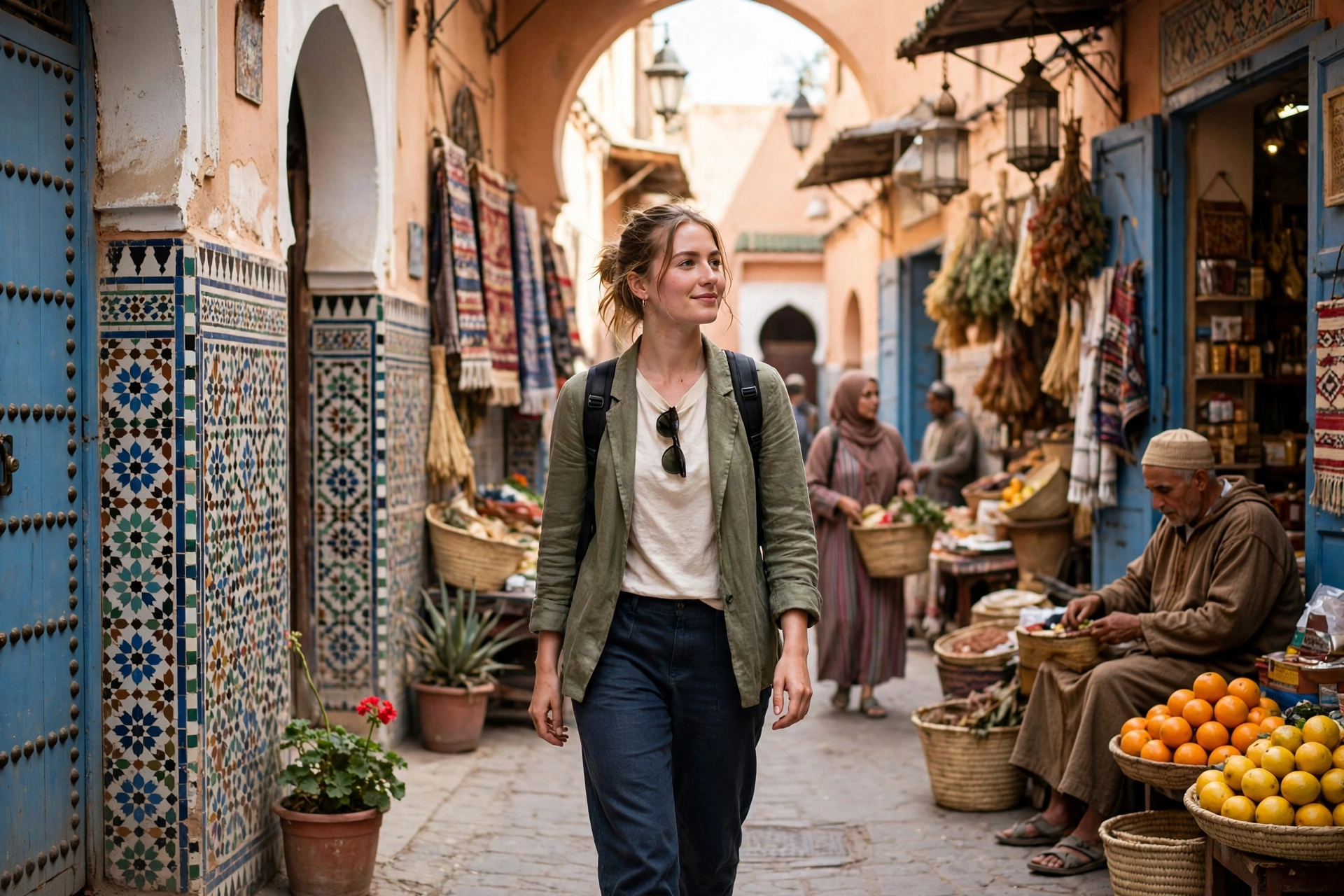
If someone follows you, walk into a shop, café or hotel and tell the staff. Moroccans are generally protective of guests, and shopkeepers will usually help. If harassment becomes persistent or physical, call the police on 19 and report it; tourist police stations exist in the main cities and take these reports seriously.
Staying Safe at Night
Moroccan cities come alive at night. Families stroll, cafés fill up, and Jemaa el-Fnaa in Marrakech is at its busiest after sunset. If you wonder is Morocco safe after dark, the answer is the same as by day: night is not something to fear — it is something to navigate sensibly.
In tourist centres and main squares, walking at night is normal and safe. In quiet residential streets, empty medina alleys and unlit roads, it is not. The rule is simple: stay where other people are, and where there is light. If your riad is deep inside a medina, ask the riad to arrange a taxi or a staff member to meet you at a known point, especially on your first night.
Keep your phone charged and your accommodation’s address saved offline, in Arabic as well as English, so you can show it to a driver. A portable charger costs about 100–200 MAD ($10–$20) in Morocco and is worth every dirham. Avoid drinking heavily; Morocco’s bars are concentrated in hotels and tourist areas, alcohol is expensive — a beer in a bar is often 40–60 MAD ($4–$6) — and being visibly drunk makes you an easy target for overcharging and theft. That is the simplest answer to is Morocco safe at night: stay where it is lit, stay where it is busy, and stay aware.
Transport Safety
Getting around Morocco is covered in detail in our guide to getting around Morocco by train, bus, taxi and Al Boraq, but the safety essentials are worth repeating here.
Trains run by ONCF are the safest and most comfortable way to travel between cities. First-class seats cost roughly 100–250 MAD ($10–$25) on the main lines, and the Al Boraq high-speed train between Tangier and Casablanca is modern, punctual and well staffed. Keep your bag where you can see it, as you would anywhere. Travellers who ask is Morocco safe on trains can relax: ONCF services are staffed, busy and well used by Moroccan families.
Buses from CTM and Supratours are reliable and cheap. Book in advance in high season, keep valuables in your day bag rather than in the luggage hold, and arrive early at the station, where touts gather.
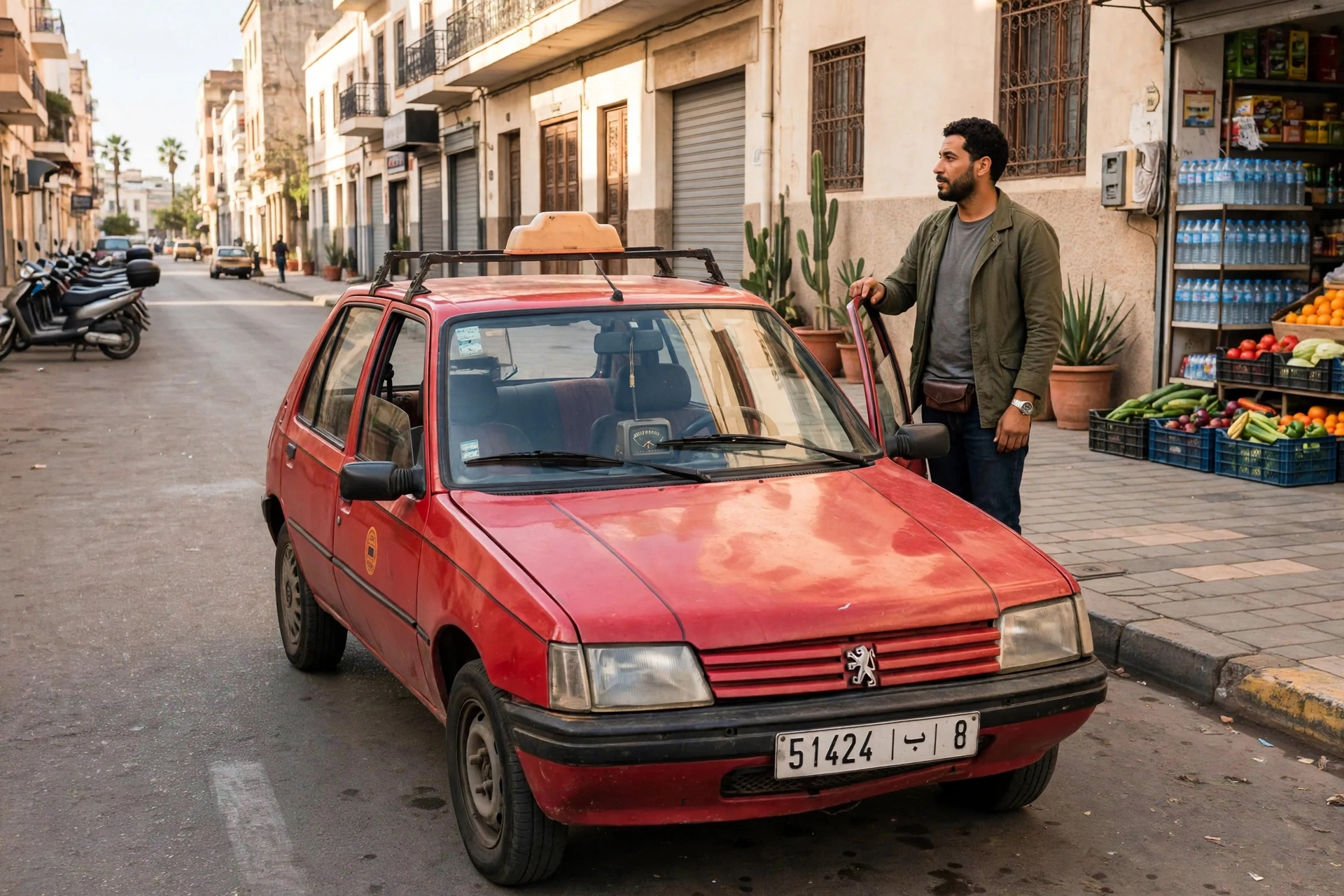
Petit taxis are the small city taxis. They are licensed, metered and cheap — a short ride inside a city is usually 10–30 MAD ($1–$3). The problem is that some drivers refuse the meter. The counter-move is simple: agree the price before you get in, or walk away and take the next taxi. There is always a next taxi.
Grand taxis are shared intercity taxis. They are faster than buses on some routes but drive fast, and seatbelts in the back are often absent. If you hire one privately, agree the price in advance and ask the driver to slow down if needed. Ride-hailing apps work in Casablanca and Rabat, and hotel-arranged drivers are the safest choice late at night.
If you drive yourself, be ready for a different rhythm: scooters weaving through traffic, donkeys on rural roads, speed bumps with no warning, and night driving with unlit vehicles. Avoid driving after dark outside cities, and never drive after drinking. For general first-trip planning, our Morocco travel guide for first-time visitors covers routes and transport choices in more depth.
The Common Scams — and the Exact Counter-Moves
No one is going to steal your passport at gunpoint. What happens instead is a series of small, practiced routines designed to part you from 50 or 200 dirhams. Once you know them, they lose their power. Knowing these routines is the best answer to is Morocco safe from scams — once you can spot them, they stop working.
The closed-street detour
A friendly man tells you the street ahead is closed and offers to show you another way. The “other way” leads past his friend’s shop, or to a place where he asks for money for his help. The counter-move: say “No, thank you”, keep walking the way you were going, and check your map. Streets in the medina are rarely closed to pedestrians.
The tannery gift
In Fes, someone offers to show you the famous tanneries for free, then leads you to a leather shop where you are pressured to buy. Or a man presses a small “gift” into your hand — a rose, a bracelet — then demands payment. The counter-move: do not accept anything pressed into your hand, and do not follow anyone to a tannery. Book the official tannery viewpoint through your riad, and expect to pay a small tip of 10–20 MAD ($1–$2) to the viewpoint attendant, not 200 MAD to a stranger.
The unmetered taxi
The driver says the meter is broken, or quotes a price three times the normal fare. The counter-move: step out, close the door politely, and take the next taxi. In Marrakech, a ride from the medina to Gueliz should be around 20–30 MAD ($2–$3) by meter. If a driver asks 100 MAD, he is testing you.
The fake guide
A man introduces himself as an official guide, walks with you uninvited, and then demands 200–300 MAD ($20–$30) for his “tour”. The counter-move: say clearly at the start, “No guide, thank you”, and do not let him walk with you. Real guides carry an official badge, are booked through a hotel or agency, and cost around 300–500 MAD ($30–$50) for a half-day medina tour — a price agreed in advance.
Henna and the carpet shop
A woman offers a “free” henna design, then charges 100 MAD or more for it. In carpet shops, the tea is free, the pressure is not. The counter-move for henna: agree the price and the design before she starts, or say no and walk on. For carpets: enjoy the tea, enjoy looking, and say a polite but firm no if you do not want to buy. No one can make you buy a carpet, however long the demonstration lasts.
The helpful stranger at the ATM
Someone offers to help you at an ATM or a money exchange, or watches over your shoulder. The counter-move: say no, shield the keypad, and use ATMs inside banks or hotels. For more on cash, cards and exchange, see our Morocco money and dirham guide.
The pattern behind every one of these scams is the same: friendliness first, obligation second, payment third. Breaking the pattern at step one — a polite, early no — ends almost all of them.
Money, Pickpockets and Your Valuables
Morocco is a cash-heavy country, so money safety is part of travel safety. Carry small notes: 20, 50 and 100 MAD notes are far more useful than 200 MAD notes, which small shops often cannot change. A day’s spending money — 200–400 MAD ($20–$40) for meals, taxis and small purchases — is enough to carry; keep the rest in your hotel safe or a money belt. Visitors who ask is Morocco safe for carrying cash should keep most of their money in the hotel safe and carry only a day’s spending money.
Pickpockets work in the same places they work everywhere: crowded markets, busy squares, packed buses and train stations. A cross-body bag with a zip, worn in front of you in a crowd, beats a backpack with an open pocket. Keep your phone in a front pocket or a zipped bag, not in a back pocket or on a café table near the street.
Keep a photo of your passport on your phone and leave the original in your hotel safe when you do not need it. Carry a photocopy for everyday identification. If your passport is stolen, report it to the police and contact your embassy; a police report is essential for a replacement and for any insurance claim.
Health and Food Safety
Morocco’s food is one of its great pleasures, and most travellers eat street food without any problem. The rules are simple and they work. Eat where locals eat, and where the food is cooked fresh in front of you. Avoid salads washed in tap water from street stalls, and peel fruit yourself. Drink bottled water, which costs 5–10 MAD ($0.50–$1) for a large bottle, and use it for brushing your teeth in rural areas. If you ask is Morocco safe for eating street food, the answer is yes when you choose busy stalls where the food is cooked fresh in front of you.
Tap water in big cities is treated, but most visitors stick to bottled water to be safe. Ice in established restaurants is usually made from filtered water; ice from a street cart is a risk worth skipping.
The sun is the most underestimated health risk. Morocco is hot, dry and bright, and dehydration and sunburn arrive faster than you expect. Carry water, wear a hat, and use sunscreen. In summer in Marrakech, temperatures regularly pass 40°C, and walking the medina at midday without water is genuinely dangerous. Plan your walking for the morning and late afternoon, and rest in the heat of the day — our best time to visit Morocco guide helps you pick the kindest season for your trip.
Pharmacies are widespread, well stocked and easy to recognise by the green cross. Pharmacists can help with minor problems and sell many medicines without a prescription. For anything serious, go to a private clinic in a big city; costs are reasonable by European standards, but travel insurance is essential, because a hospital stay or a medical evacuation can cost thousands of dollars without it.
Police and Emergencies
Morocco’s emergency numbers are short and worth saving in your phone before you arrive:
- Police: 19
- Ambulance / emergency medical: 15
- Fire brigade: 15 (the same number covers fire in many areas; in some cities it is 15 for both)
- Royal Gendarmerie (rural roads and highways): 177
- Tourist police: available in Marrakech, Fes, Casablanca, Rabat, Agadir and other tourist cities — ask your hotel for the nearest station.
If you are a victim of a crime, report it at the nearest police station and get a written report. You will need it for your insurer and your embassy. In a medical emergency, call 15 and ask your hotel to help; staff in tourist hotels are used to doing this and will stay with you.
Keep your embassy’s number saved too, and keep your travel insurance details on your phone and on paper. A small amount of preparation here turns a bad hour into a manageable one. Knowing these numbers is part of answering is Morocco safe in an emergency: help is a short call away.
Practical Safety Table
| Situation | Risk level | What to do |
|---|---|---|
| Walking in a tourist medina by day | Low | Stay aware in crowds, zip your bag |
| Walking a dark medina alley at night | Medium | Take a taxi door to door |
| Solo female traveller in a big city | Low–Medium | Dress modestly, firm “no”, stay in busy areas |
| Petit taxi | Low | Insist on the meter or agree the price first |
| Train (ONCF / Al Boraq) | Low | Keep your bag visible, book first class if you like |
| Driving at night on rural roads | Medium–High | Avoid it; drive by day only |
| Street food from a busy stall | Low | Eat where locals eat, food cooked fresh |
| Tap water | Low–Medium | Drink bottled water, 5–10 MAD a bottle |
| Beach at night, alone | Medium | Stay in lit, busy areas or go with others |
| Desert or mountain trek | Low with a guide | Hire a licensed guide, tell your hotel your route |
Frequently Asked Questions
Is Morocco safe for tourists in 2026?
Yes, for most tourists. Violent crime against visitors is rare, and millions of people visit each year without incident. Petty theft, scams and road accidents are the realistic risks, and all three are manageable with basic awareness. Check official travel advice before you go, as guidance can change.
Is Morocco safe for solo female travellers?
Yes, with preparation. Many women travel alone in Morocco and enjoy it. Expect some verbal attention in busy cities, dress modestly outside resorts, stay in central accommodation, and take taxis at night. If someone follows you, walk into a shop or hotel and ask the staff for help.
Is Morocco safe at night?
In tourist centres, main squares and busy streets, yes — Moroccan cities are lively late into the evening. Avoid dark, empty medina alleys and unlit roads, and take a taxi door to door after dark, especially if your riad is deep inside a medina.
What are the most common scams in Morocco?
The closed-street detour, the “free” tannery tour that ends in a leather shop, unmetered taxis, fake guides, paid “free” henna, and high-pressure carpet shops. The counter-move is always the same: a polite, early no, a price agreed before any service starts, and walking away when the price changes.
Is the tap water safe to drink in Morocco?
Most visitors drink bottled water to be safe, even though tap water in major cities is treated. Bottled water is cheap and everywhere, at 5–10 MAD ($0.50–$1) for a large bottle. Use bottled water for brushing your teeth in rural areas.
Do I need travel insurance for Morocco?
Yes. Morocco’s private clinics are good, but a hospital stay or a medical evacuation is expensive without cover. Make sure your policy covers the activities you plan, including hiking or desert trips, and keep the emergency number saved on your phone.
Conclusion
So, is Morocco safe? The honest local answer is yes — with your eyes open. The country rewards travellers who are alert, polite and firm: alert in crowds, polite when they say no, and firm when a price or a story changes mid-conversation. Learn the six scams above, keep your bag zipped, take a taxi after dark, drink bottled water, and save the emergency numbers before you land.
Do that, and Morocco gives you what it gives millions of visitors every year: extraordinary food, beautiful cities, kind hosts, and a trip you will want to repeat. The question is Morocco safe should not stop you travelling — it should simply help you travel well.