
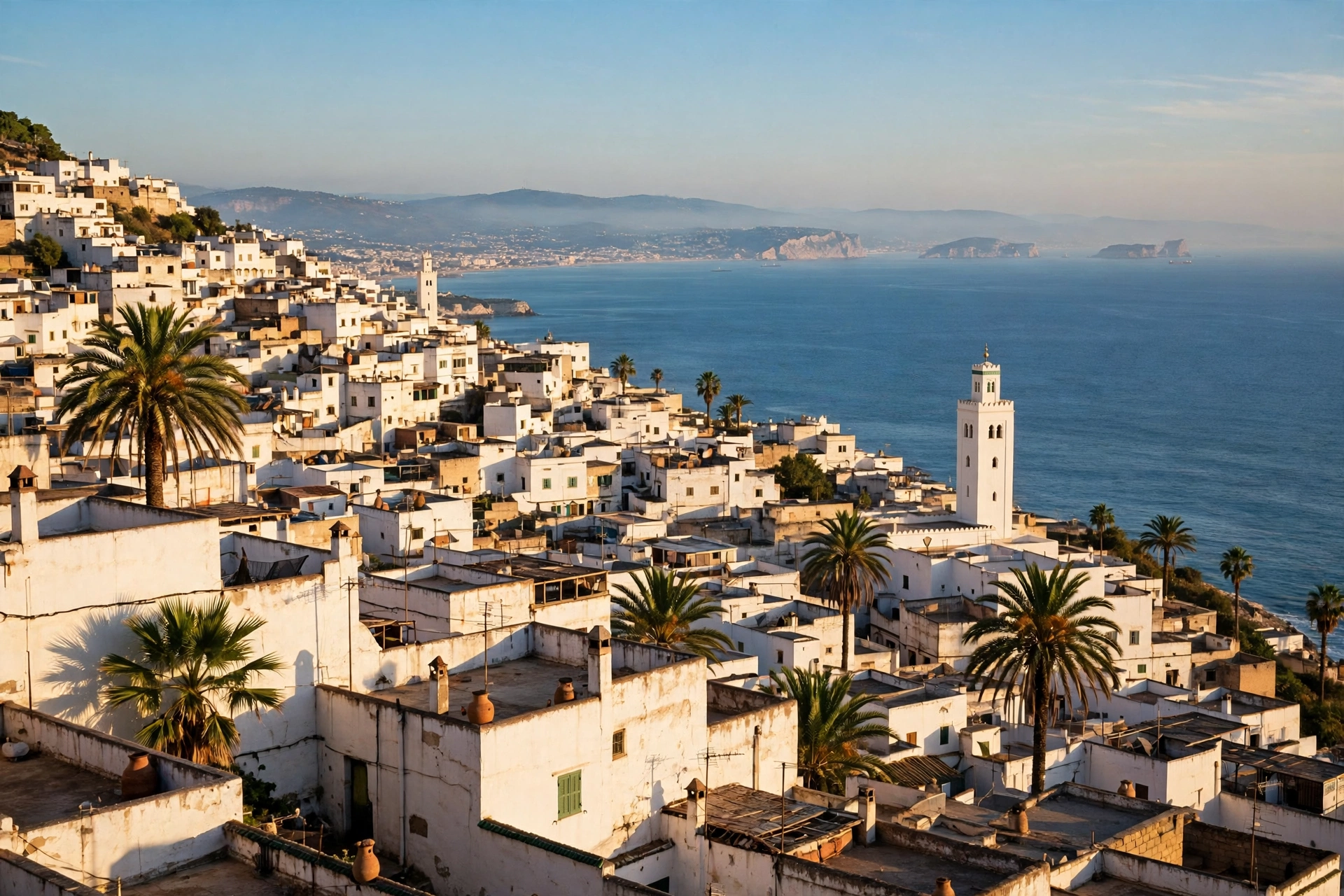
This tangier travel guide starts with a number: 13 kilometres — roughly the distance across the Strait of Gibraltar from Tangier to Spain, and on a clear day you can stand on the corniche and see Europe with the naked eye. No other Moroccan city lives so close to another continent, and that closeness shapes everything here: the light, the languages, the food, the pace of the streets.
Tangier is not the Morocco of the postcards: no red desert, no blue mountain town, no imperial squares. Instead it is a white port city that spent 1924 to 1956 as an international zone, run by several European powers at once, and it still feels like a place between worlds. Everything in this tangier travel guide was checked in November 2026, including ferry fares, train prices and the costs below. Prices are in Moroccan dirhams (MAD), with dollar equivalents at about 10 MAD to the dollar.
New to the country? Start with our Morocco travel guide for first-time visitors for visas, money and safety basics. Our Fes travel guide and Marrakech travel guide cover the two cities most travellers pair with Tangier.
In this guide
- Why This Tangier Travel Guide Starts With the Strait
- The Medina and the Kasbah
- Grand Socco, Petit Socco and the American Legation
- Cap Spartel and the Caves of Hercules
- Malabata, the Beaches and the New Corniche
- Getting to Tangier: Ferries, Trains and the Two Ports
- Where to Stay: Medina, New Town or Malabata
- Where to Eat in Tangier
- What Tangier Costs (Checked November 2026)
- One Day vs Two Days: Two Plans That Actually Work
- Honest Drawbacks: What Nobody Tells You
- Tangier FAQ
Why This Tangier Travel Guide Starts With the Strait
Tangier has been fought over for nearly 3,000 years, because whoever holds it controls the narrow mouth of the Mediterranean. Phoenicians, Romans, Arabs, Portuguese, Spanish and French all ruled it in turn, each leaving a layer: a Moroccan medina, French and Spanish boulevards.
The strangest chapter was the international zone. From 1924 to 1956 Tangier was governed jointly by several European powers — a free port of diplomats, writers, smugglers and spies. Paul Bowles lived here for decades. That era ended when Morocco regained independence in 1956, but this tangier travel guide keeps meeting its ghosts: in the old hotels and the cafés where old men still argue in three languages.
That is why this tangier travel guide treats Tangier as a city to be walked slowly rather than ticked off. The sights are real, but the atmosphere is the point: the light off the Strait, the mix of languages, the feeling of standing at the edge of a continent.
The Medina and the Kasbah
Start in the medina, and start early. This tangier travel guide recommends the morning, when the lanes are quiet and the light is soft. Tangier’s medina is smaller and less maze-like than those of Fes or Marrakech — a good first medina, where you can get happily lost and still find a landmark.
Climb to the Kasbah, the fortified upper town. The Kasbah Museum — the Museum of Mediterranean Cultures — sits in the former sultan’s palace, the Dar el Makhzen, covering the region from prehistory to the 19th century. Entry is about 60 MAD (about $6), checked November 2026. From the terrace, the whole bay opens below you: port, corniche, and Strait beyond.
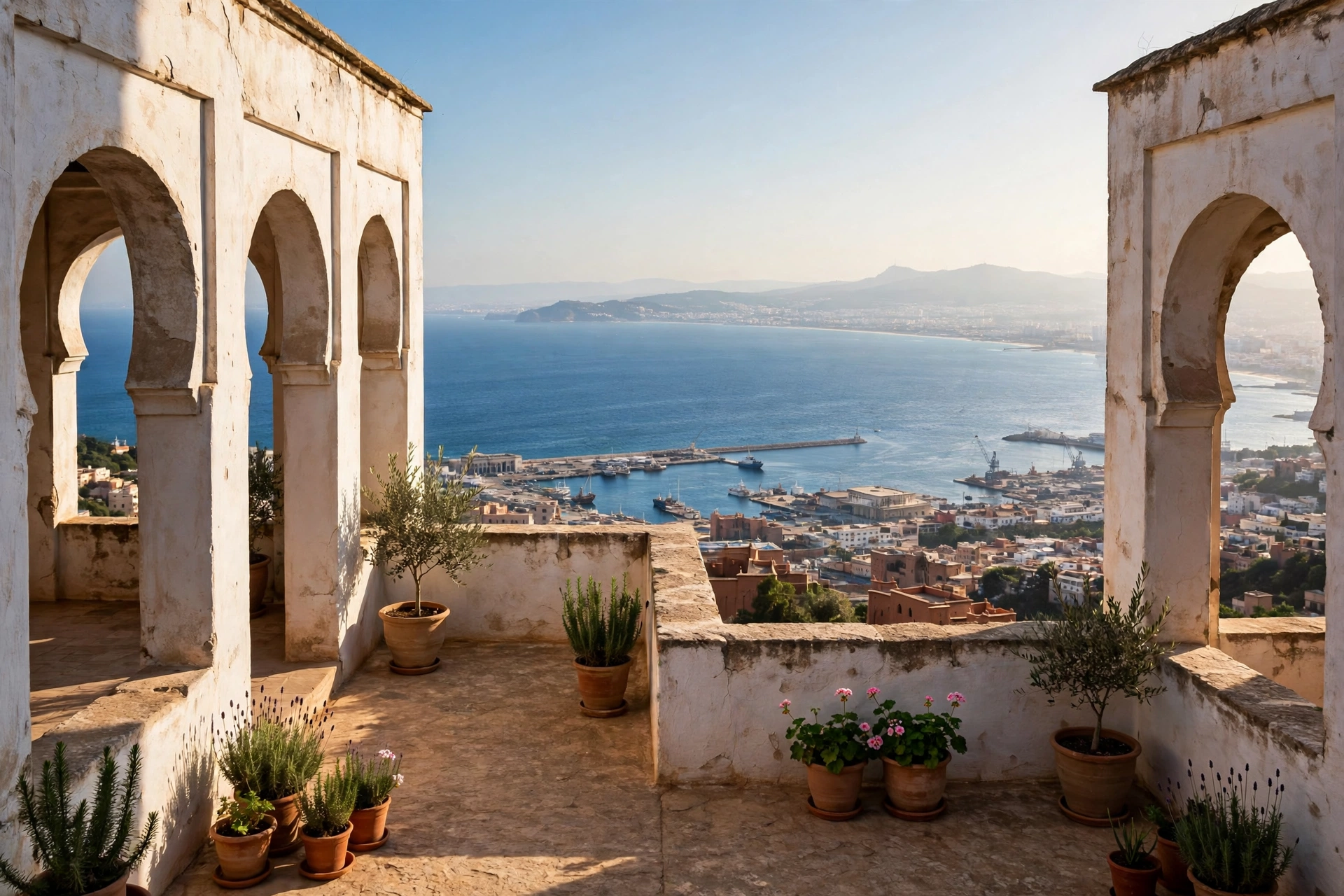
Below the museum, the Kasbah lanes are the prettiest in the city: whitewashed walls, blue doors, potted plants, and almost no shops. It is a residential quarter, so walk quietly. Downhill, the market streets sell spices and second-hand clothes, and the fish market near the port is worth a look.
Grand Socco, Petit Socco and the American Legation
The Grand Socco — officially Place du 9 Avril 1947 — is the big square where the medina meets the new town, and the natural meeting point of this tangier travel guide. Once it was the city’s main market, full of snake charmers and storytellers; today it is a traffic circle with gardens, a fountain and the Cinema Rif, an old art-house cinema.
From the Grand Socco, follow the lanes down to the Petit Socco, the small square at the heart of the medina, lined with cafés where, a century ago, writers and spies drank coffee side by side. It is smaller and shabbier than the photographs suggest — but sit down with a mint tea and watch the square work.
A five-minute walk away is the American Legation, given to the United States by Sultan Moulay Suliman in 1821 — the first property America owned abroad. Today it is a museum and cultural centre, with a room devoted to Paul Bowles, and entry is free, with donations welcome. The Tangier page on Wikipedia is a solid starting point for the full background.
Cap Spartel and the Caves of Hercules
Every tangier travel guide has to send you west, to the point where the Atlantic meets the Mediterranean. Cap Spartel is the north-western tip of Africa, a headland of cliffs and pine trees with a 19th-century lighthouse. On a clear day you can see Spain; on a windy day you can feel why sailors respected this cape.
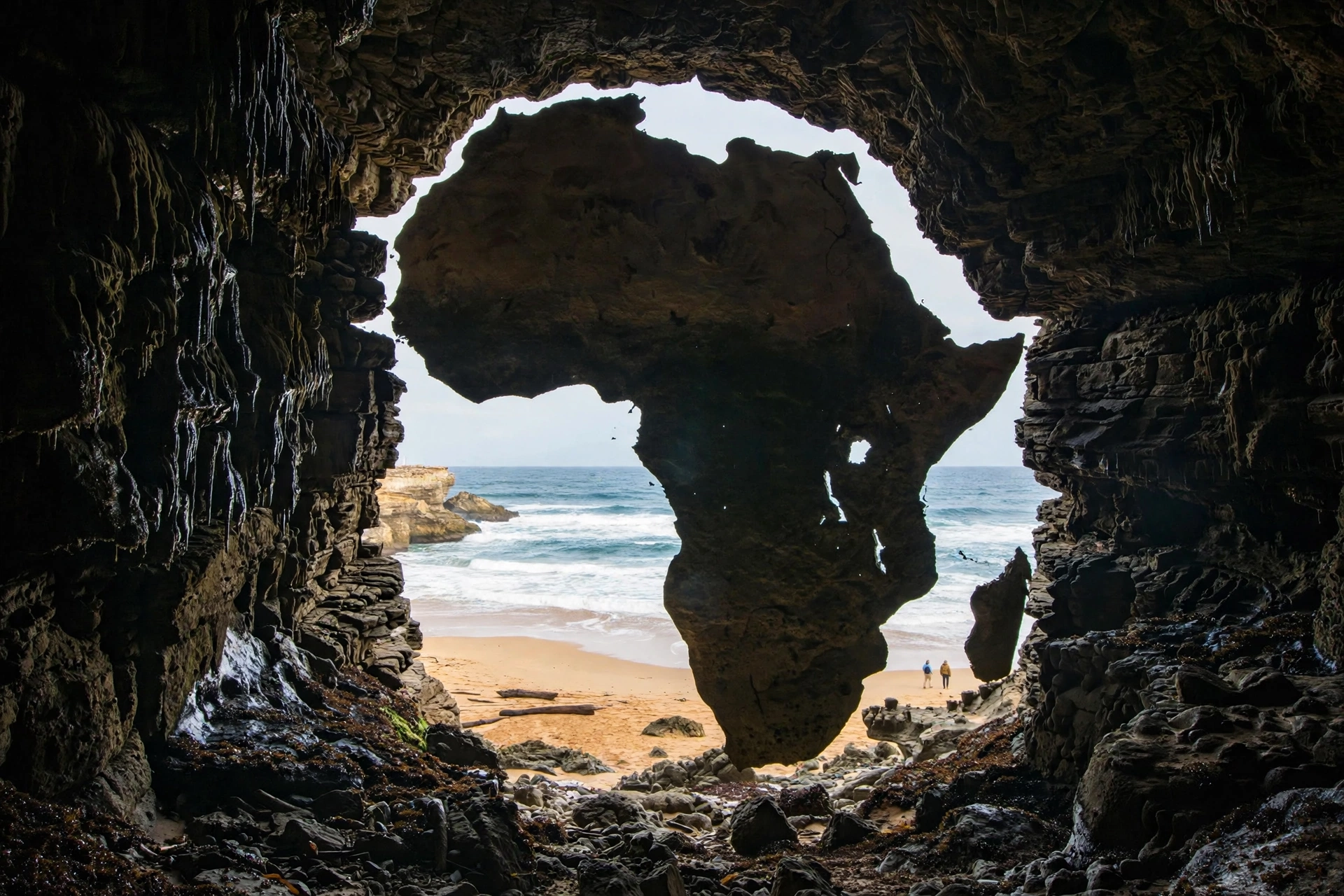
Just below the cape are the Caves of Hercules, a sea cave carved partly by nature and partly by centuries of quarrying. The famous view is from inside, looking out: the opening is shaped, by luck or legend, like the map of Africa. The myth says Hercules rested here before his labours — almost certainly a story, but the cave and the Atlantic light through it are real enough. Entry is about 60 MAD (about $6), checked November 2026.
Getting there is easy: a petit taxi costs roughly 40–60 MAD (about $4–$6) each way, or take bus 2A from the Grand Socco. Combine the cape and caves with Achakar beach, a wide sandy stretch nearby, quieter than the city beach. Give the whole trip half a day.
Malabata, the Beaches and the New Corniche
Tangier’s city beach curves along the bay below the corniche, a long sweep of sand with cafés and a promenade that fills with families in the evening. The water is fine for a paddle, though the sand is coarser than the postcards suggest. This tangier travel guide rates it as a good evening walk rather than a great swimming beach.
For a proper beach day, go east to Malabata, about 20 minutes by taxi. The bay is quieter, the sand cleaner, and seafood restaurants line the road. The new corniche has turned the waterfront into the city’s evening living room: joggers, football games, and the lights of the port coming on as the ferries slide in.
Getting to Tangier: Ferries, Trains and the Two Ports
Tangier has two ports, and confusing them is the classic first mistake — this tangier travel guide flags it first because it costs real money. Tangier Ville is the old port in the city centre, used by the fast ferries from Tarifa. Tangier Med is a huge modern port about 40 kilometres east, used by ferries from Algeciras and other Spanish and French ports. A taxi between the two costs roughly 200–300 MAD (about $20–$30), so check which port your ticket uses before you book.
From Tarifa, the fast ferry to Tangier Ville takes about 35 minutes and costs roughly 400–650 MAD (about $40–$65) one way in November 2026, depending on the season and how far ahead you book. You step off the boat straight into the medina. From Algeciras, ferries to Tangier Med take 1.5 to 2 hours and cost roughly 350–500 MAD (about $35–$50). Book ahead in summer.
By land, the train is the other great arrival: the Al Boraq high-speed line runs from Tangier to Casablanca via Rabat in about two hours and ten minutes, and this tangier travel guide calls it the easiest onward journey in Morocco. A standard second-class ticket costs roughly 150–250 MAD (about $15–$25) to Rabat and 200–300 MAD (about $20–$30) to Casablanca. Our Morocco by train guide has the full routes, classes and booking tips.
| Route / service | Typical price (Nov 2026) | Time |
|---|---|---|
| Fast ferry, Tarifa–Tangier Ville | 400–650 MAD ($40–$65) | ~35 min |
| Ferry, Algeciras–Tangier Med | 350–500 MAD ($35–$50) | 1.5–2 hrs |
| Al Boraq train, Tangier–Rabat | 150–250 MAD ($15–$25) | ~1 hr 20 min |
| Al Boraq train, Tangier–Casablanca | 200–300 MAD ($20–$30) | ~2 hrs 10 min |
| Grand taxi, Tangier–Tetouan (per seat) | 25–35 MAD ($2.50–$3.50) | ~1 hr |
| CTM bus, Tangier–Chefchaouen | 55–70 MAD ($5.50–$7) | ~2.5 hrs |
| Taxi, airport–city centre | 150–200 MAD ($15–$20) | ~20 min |
| Petit taxi in town | 10–20 MAD ($1–$2) | Short rides |
Tangier also has an international airport, Ibn Battuta, about 15 kilometres south-west of the city, with flights from several European cities. A taxi to the centre costs roughly 150–200 MAD (about $15–$20) — agree the price before you get in. Tangier is also the usual starting point for the Rif, including our Chefchaouen blue city guide. For official visitor information, Visit Morocco lists current ferry and transport details.
Where to Stay in Tangier: Medina, New Town or Malabata
Where you sleep changes the trip, and this tangier travel guide splits the choice three ways. The medina is the most atmospheric: small riads in old houses, often with a rooftop terrace over the bay. A double room typically costs 400–800 MAD (about $40–$80) a night, often including breakfast. The trade-off is steps, narrow lanes and no car access — pack light.
The new town, around Boulevard Pasteur and Place de France, is the practical choice: proper hotels, lifts, restaurants and cafés on the doorstep, and the beach a short walk away. A comfortable mid-range room runs roughly 300–600 MAD (about $30–$60). It is less romantic than the medina, but most first-time visitors are happiest here.
Malabata, east along the bay, is the resort option: bigger hotels, pools, sea views and quiet nights, at roughly 800–1,500 MAD (about $80–$150) a night. This tangier travel guide suggests it for families and anyone who wants a beach holiday with a city attached. The trade-off is distance: a taxi into town costs roughly 30–50 MAD (about $3–$5) each way.
Where to Eat in Tangier
Tangier eats from the sea, and this tangier travel guide starts every food recommendation there. The port lands sardines, sea bass, prawns and squid daily, and a grilled-fish dinner near the port costs roughly 80–150 MAD (about $8–$15). The fish market sells the morning catch, and small restaurants nearby will grill what you buy.
The city’s most famous café is Café Hafa, founded in 1921 on the cliffs above the bay, its terrace looking straight across the Strait to Spain. Mint tea is 10–15 MAD (about $1–$1.50), and the view is free. It is crowded at sunset, so come mid-morning. A chicken or lamb tagine costs roughly 60–100 MAD (about $6–$10); a bowl of harira with bread is 15–25 MAD (about $1.50–$2.50).
Spanish influence shows in the food too: tapas-style small plates, olives, and a real café culture with strong coffee. For the wider picture of everyday spending, see our cost of living in Morocco guide. Eat where locals eat — the small restaurants behind the Grand Socco, not the terraces with touts calling you in.
What Tangier Costs (Checked November 2026)
Tangier is one of the pricier cities in Morocco, but it is still cheap by European standards, and this tangier travel guide puts it slightly above Fes and well below Casablanca for a visitor’s budget. Accommodation is the biggest variable; food and transport are cheap. Prices below were checked in November 2026, at about 10 MAD to the dollar.
| Daily budget level | Per person, per day | What it covers |
|---|---|---|
| Budget | 350–550 MAD ($35–$55) | Hostel or simple hotel outside the medina, street food and tagines, buses and walking, free sights |
| Comfortable | 600–900 MAD ($60–$90) | Medina riad with breakfast, restaurant meals, Kasbah and caves, taxis |
| Easy | 900–1,400 MAD ($90–$140) | Best riad or Malabata hotel, seafood dinners, private taxi to Cap Spartel |
Excluding transport to Tangier, a comfortable two days costs roughly 1,200–1,800 MAD (about $120–$180) per person, and this tangier travel guide finds most visitors land in the middle of that range. A careful traveller can manage on 700–1,100 MAD (about $70–$110); the best rooms and seafood dinners need 1,800–2,800 MAD ($180–$280).
One Day vs Two Days: Two Plans That Actually Work
Two days is the honest answer in this tangier travel guide, but one well-planned day still works. The difference is not how much you see; it is the light and the pace. A day trip from Spain gives you the crowded middle of the day; two days give you the quiet morning medina and the sunset from Café Hafa.
| Plan | How it runs |
|---|---|
| One day | Fast ferry from Tarifa; medina and Kasbah in the morning; Grand Socco and Petit Socco at midday; seafood lunch by the port; Cap Spartel and the Caves of Hercules in the afternoon; sunset tea at Café Hafa; evening ferry back. A long day, but it works. |
| Two days | Day one as above, but sleep in the medina. Day two starts at seven in the empty lanes, continues with a slow breakfast on a rooftop, then Malabata beach and the corniche in the afternoon. Leave on the third morning — that second morning is the part nobody regrets paying for. |
With three days, add a day trip: Chefchaouen in the Rif, about two and a half hours by bus, or Tetouan, about an hour by grand taxi. This tangier travel guide recommends Tetouan for a quieter, UNESCO-listed medina that most visitors skip — and Chefchaouen if the blue streets are on your list.
Honest Drawbacks: What Nobody Tells You
An honest tangier travel guide has to name the wind first. Tangier is one of the windiest cities in Morocco, and gusts off the Strait can ruin a rooftop dinner or a beach afternoon. The wind is worst in winter and spring; in summer it is a relief from the heat. Check the forecast, pack a windproof layer, and do not plan a beach day around a calm sea.
The second drawback is the touting around the port and the ferry terminal. Men offering to carry bags, find a hotel or guide you to the medina can be persistent, especially for travellers arriving on foot from Tarifa. A firm, polite “no thank you” — “la shukran” — and steady walking works. Do not follow anyone to a hotel you have not chosen, and agree taxi prices before you get in.
The third drawback is the two ports, which this tangier travel guide already flagged — but it is worth repeating, because it is the mistake that costs the most. Ferries from Tarifa use Tangier Ville in the city centre; ferries from Algeciras use Tangier Med, 40 kilometres away, with no public bus link at night. Check your ticket and screenshot the port name.
Tangier FAQ
How many days do you need in Tangier?
Two days is ideal: one for the medina, Kasbah, Grand Socco and Petit Socco, and one for Cap Spartel, the Caves of Hercules and Malabata beach. One full day is enough for the highlights if you arrive on the early ferry from Tarifa and leave on the evening one. A three-hour stop is not enough, and we do not recommend it.
Which port do ferries from Spain arrive at?
Fast ferries from Tarifa arrive at Tangier Ville, the old port in the city centre, a short walk from the medina. Ferries from Algeciras arrive at Tangier Med, about 40 kilometres east of the city. Check which port your ticket uses before you book, and allow extra time for the taxi between the two.
How do I get from Tangier to Casablanca?
Take the Al Boraq high-speed train from Tangier Ville station: about two hours and ten minutes via Rabat, with a standard second-class ticket costing roughly 200–300 MAD (about $20–$30) in November 2026. Book at the station or online, and arrive early in summer when trains sell out.
Is Tangier safe for solo travellers?
Yes. Tangier is one of the safer Moroccan cities for solo travellers, including women travelling alone. The medina and the corniche are busy in the evenings, and hassle is lighter than in Fes or Marrakech. The usual advice still applies: dress modestly, ignore persistent touts politely, and keep valuables out of sight.
When is the best time to visit Tangier?
April to June and September to October, when the weather is warm, the wind is gentler and the crowds are manageable. Summer is hot, windy and busy with ferry traffic from Spain. Winter is mild but wet, and hotel prices drop — a good time if you do not mind rain.
Can you do Tangier as a day trip from Spain?
You can. The fast ferry from Tarifa takes about 35 minutes, and a day trip works if you arrive on the first sailing and leave on a late one. But the best of Tangier happens in the quiet morning and at sunset, so one night in the medina changes the trip completely. If you can stay, do.
Conclusion
This tangier travel guide ends where it began: on the edge of the Strait, looking at Europe across 13 kilometres of water. Tangier is not Morocco’s prettiest city, and does not try to be. It is its most outward-looking one — a white port city that has spent three thousand years facing the sea.
Come by ferry from Tarifa or train from Casablanca, sleep in the medina, eat fish by the port, watch the sun go down from Café Hafa, and give the city two days. That is the Tangier this tangier travel guide wants you to meet — the White City on the Strait.
Last checked: November 2026
7 thoughts on “Tangier Travel Guide: Morocco’s White City on the Strait of Gibraltar”