
Driving in Morocco is one of the best ways to see the country, from the Atlantic coast to the Atlas Mountains and the Sahara. Before you pick up the keys, it helps to know exactly what the road will cost you, because morocco driving costs are made up of several separate pieces: fuel, motorway tolls, hire charges, insurance, parking and the occasional fine.
This guide brings those pieces together, with prices checked in November 2026 in Moroccan dirhams (MAD) with US-dollar equivalents at roughly 10 MAD to $1. Every figure is labelled as checked or approximate, and morocco driving costs are shown as realistic ranges rather than promises.
In this guide
- Petrol and Diesel Prices in November 2026
- Motorway Tolls: Routes, Prices and How to Pay
- Car Hire Prices in Morocco in 2026
- What the Hire Price Usually Excludes: Insurance, Excess and Deposits
- Driving Licence Rules for Visitors
- Speed Limits, Fines and Road Rules
- Parking Costs in Moroccan Cities
- Fuel Stations: Motorways, Cities and Rural Roads
- A Realistic Weekly and Monthly Driving Budget
- Driving or Taking the Train?
- Planning Your Driving Budget
- FAQs
Petrol and Diesel Prices: The Core of Morocco Driving Costs
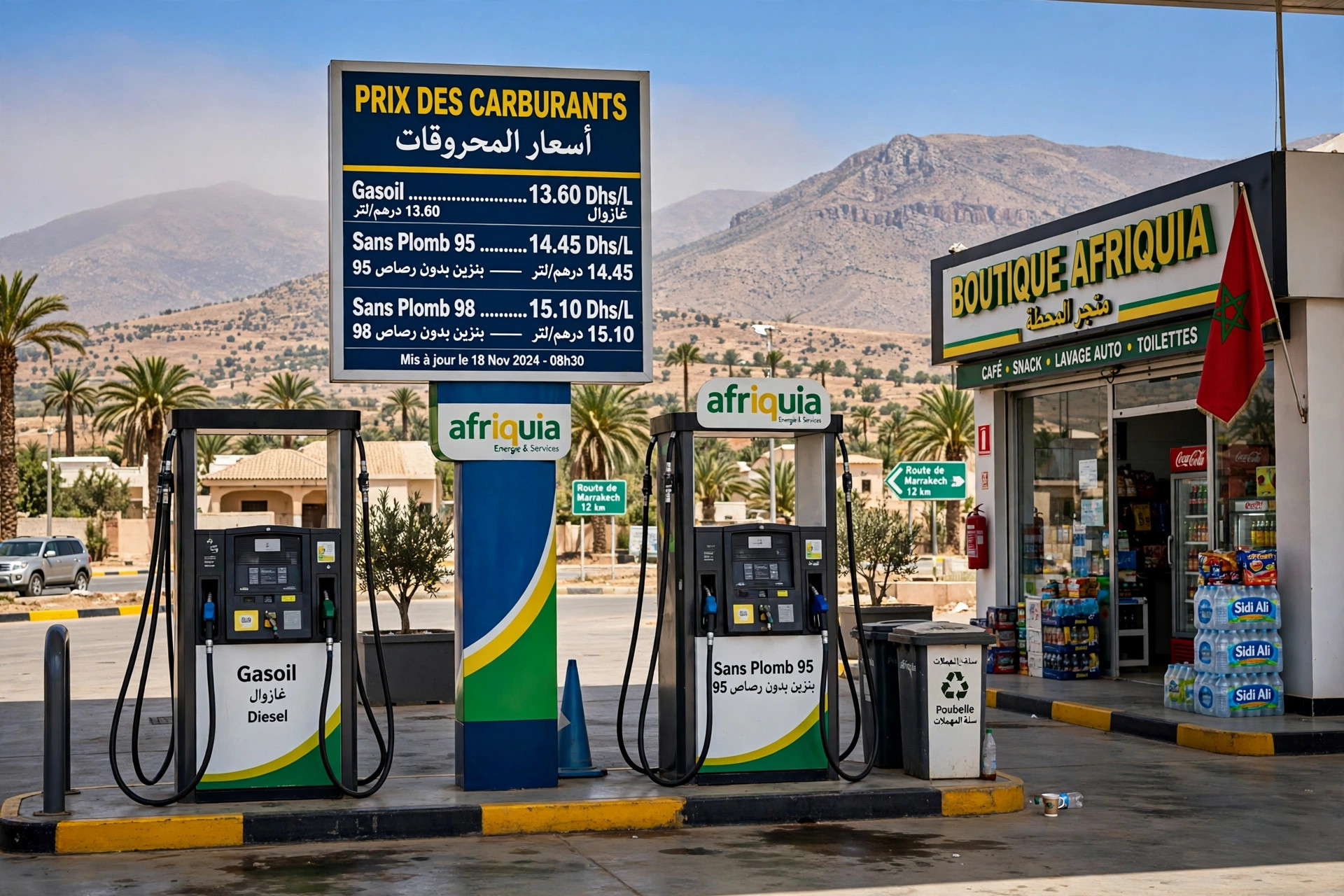
Fuel is the largest single running cost for most drivers in Morocco, and it is also the most predictable. Prices are set nationally and change a few times a year. In November 2026, unleaded petrol (sans plomb) costs approximately 14.50 MAD per litre (about $1.45), and diesel costs approximately 13.80 MAD per litre (about $1.38).
Diesel is cheaper and the usual choice for hire cars, because most small cars in Moroccan hire fleets run on diesel. A compact diesel car typically uses 5 to 6 litres per 100 kilometres, which works out at roughly 70 to 85 MAD (about $7 to $8.50) per 100 kilometres. For a driver covering 1,000 kilometres in a week, morocco driving costs for fuel alone come to roughly 700 to 1,000 MAD (about $70 to $100).
Fuel is sold by the litre everywhere, and every station displays its prices on a board at the entrance, so check before filling up. For the wider picture of everyday spending, our Cost of Living in Morocco guide puts fuel in context beside rent, food and transport.
Motorway Tolls: Routes, Prices and How to Pay
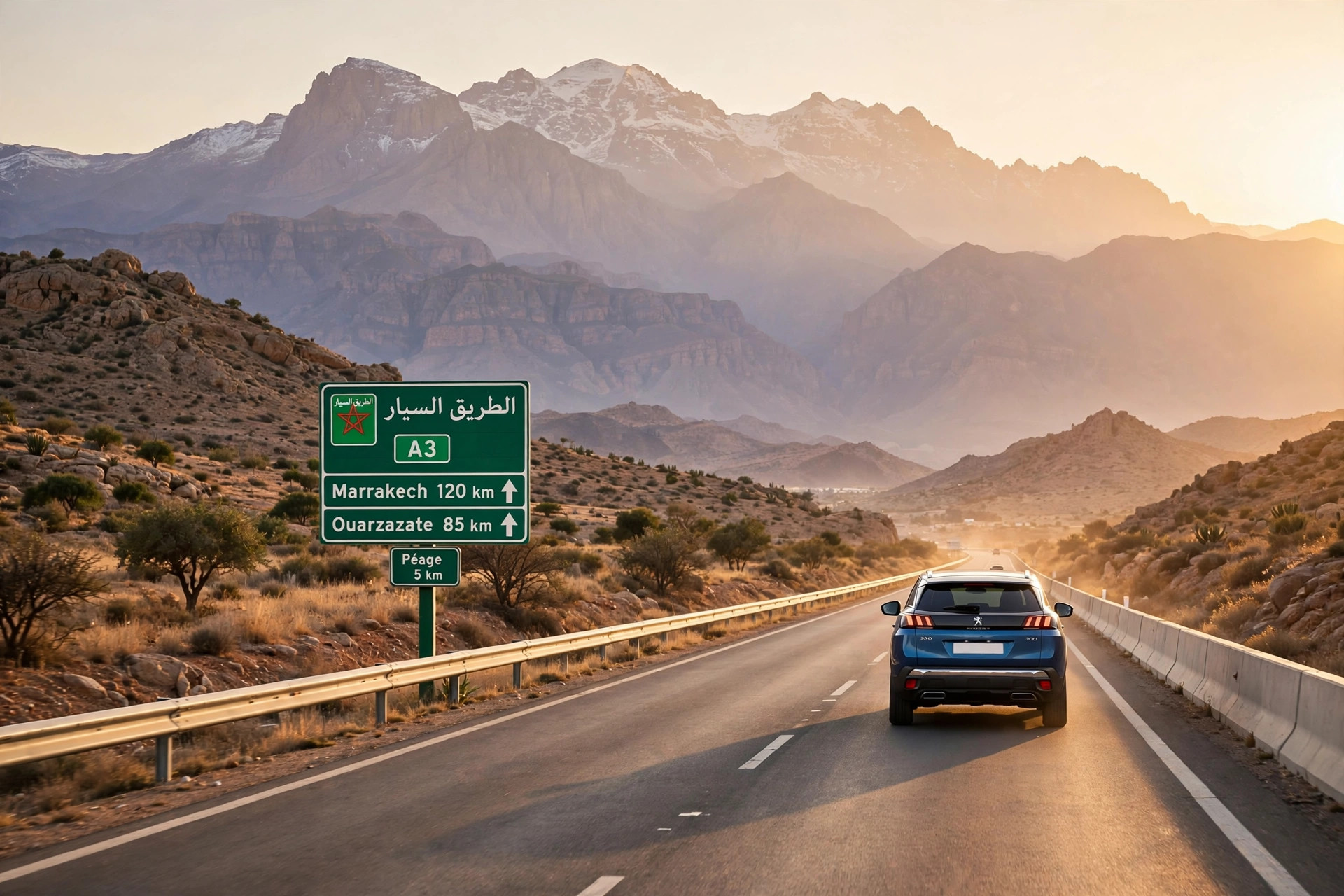
Morocco has a modern motorway network linking Casablanca, Rabat, Tangier, Fez, Marrakech and Agadir, and tolls are the second fixed cost of a road trip. Typical tolls for the most common routes, checked in November 2026, are below. You pay at a plaza when you leave the motorway, and morocco driving costs are easy to predict because the toll is the same for every car of the same class.
| Route | Distance (approx.) | Typical car toll (Nov 2026) |
|---|---|---|
| Casablanca to Rabat | 95 km | 30 MAD (about $3) |
| Casablanca to Marrakech | 240 km | 90 MAD (about $9) |
| Rabat to Tangier | 250 km | 120 MAD (about $12) |
| Marrakech to Agadir | 235 km | 130 MAD (about $13) |
| Fez to Casablanca | 290 km | 110 MAD (about $11) |
You can pay tolls in cash or by card at most plazas, and the lanes are clearly marked, with separate lanes for cash, card and electronic tags. The Jawaz tag is Morocco's electronic toll device, a windscreen sticker that lets you pass through dedicated lanes without stopping. It costs around 50 MAD (about $5), and it is worth having if you will drive motorways for more than a few days, because morocco driving costs in time and hassle fall at every plaza.
Hire cars do not always come with a Jawaz tag, so ask before you leave the desk. Keep small notes and coins ready if you drive without one. For live toll information, Autoroutes du Maroc is the official source, and the history of transport in Morocco gives useful background on the network.
Car Hire Prices in Morocco in 2026
Hire is usually the biggest single item in morocco driving costs for a visitor, and prices vary far more than fuel or tolls. The table below shows typical daily and weekly rates for the main car classes in November 2026. Prices are approximate and move with the season, peaking in July, August and around Christmas.
| Car class | Typical daily rate (Nov 2026) | Typical weekly rate (Nov 2026) | Notes |
|---|---|---|---|
| Economy (e.g. Dacia Logan, Fiat Panda) | 250 to 400 MAD (about $25 to $40) | 1,500 to 2,400 MAD (about $150 to $240) | Diesel, manual, air conditioning |
| Compact (e.g. Dacia Sandero, Renault Clio) | 350 to 550 MAD (about $35 to $55) | 2,100 to 3,300 MAD (about $210 to $330) | Best value for two travellers |
| Family saloon (e.g. Peugeot 301, Skoda Octavia) | 500 to 800 MAD (about $50 to $80) | 3,000 to 4,800 MAD (about $300 to $480) | More boot space for luggage |
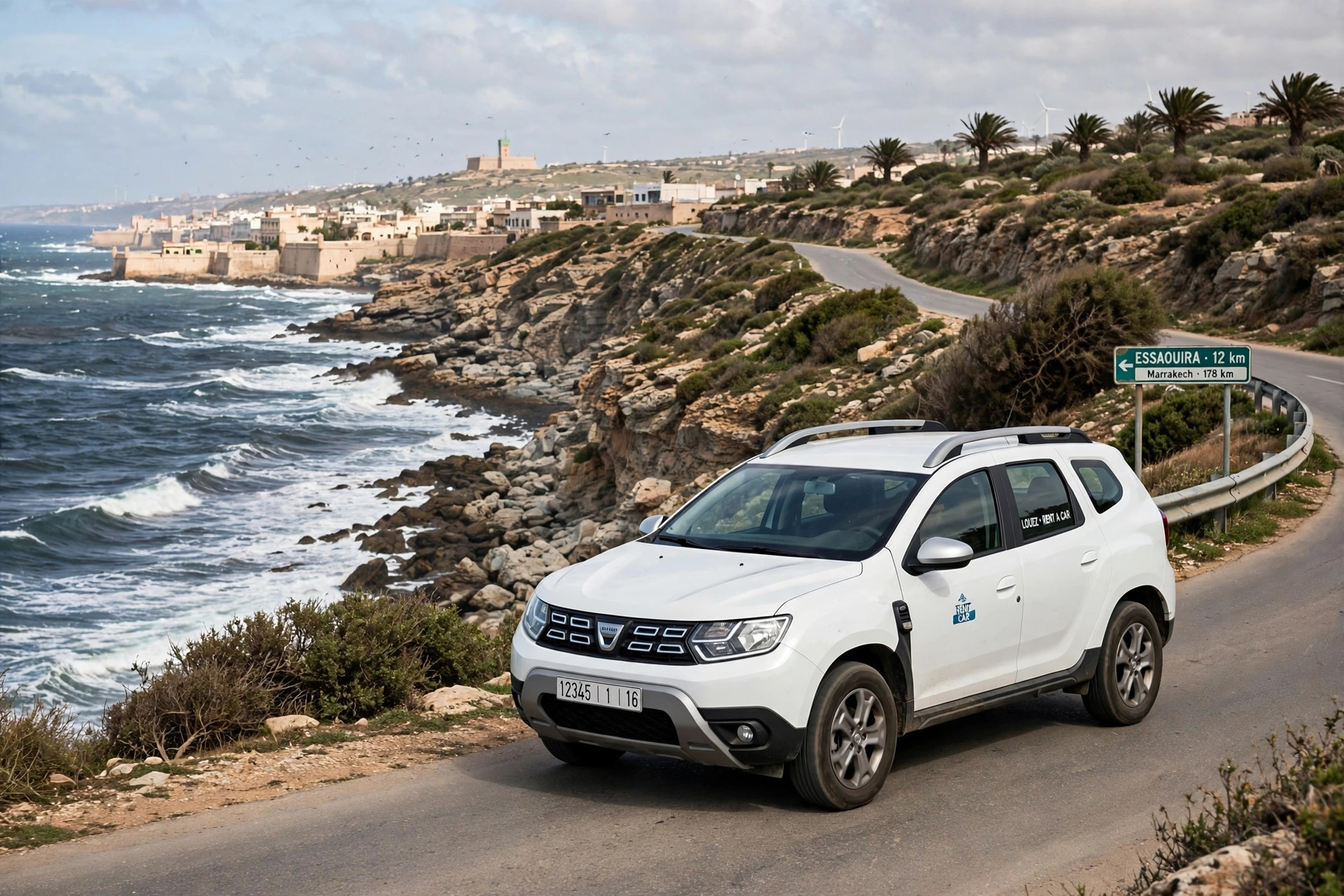
| SUV / 4×4 (e.g. Dacia Duster) | 600 to 1,000 MAD (about $60 to $100) | 3,600 to 6,000 MAD (about $360 to $600) | Worth it for Atlas and desert roads |
| Premium / automatic | 900 to 1,500 MAD (about $90 to $150) | 5,400 to 9,000 MAD (about $540 to $900) | Automatics are scarce and cost more |
International brands such as Hertz, Avis, Europcar and Sixt operate at the main airports, and their prices sit at the top of these ranges. Local agencies often quote 20 to 30 percent less, but their cars are older and their insurance terms need closer reading. Always compare the total price including insurance and fees, not just the headline daily rate.
Weekly hire is almost always cheaper per day than daily hire, so morocco driving costs fall noticeably on longer trips. Airport pickup usually adds 100 to 200 MAD (about $10 to $20), and returning the car to a different city can add 300 to 800 MAD (about $30 to $80).
What the Hire Price Usually Excludes: Insurance, Excess and Deposits
The headline hire rate rarely tells the whole story, and this is where morocco driving costs catch out first-time visitors. The basic price usually includes third-party liability insurance and collision damage waiver with a large excess, the amount you pay yourself if the car is damaged. That excess is often 5,000 to 10,000 MAD (about $500 to $1,000), so a small scrape in a medina car park can cost you the full excess.
Most companies offer extra cover that reduces the excess to zero or to a small amount, typically 100 to 200 MAD (about $10 to $20) per day. Read the policy before you sign: tyres, windscreens and the underside of the car are often excluded, and driving on unpaved desert tracks can void the insurance entirely. If you are thinking of buying instead of hiring, read our Buying a Car in Morocco guide first, because the costs and paperwork are very different.
Deposits are the other item to plan for. The hire company will block a deposit on your credit card, usually 5,000 to 15,000 MAD (about $500 to $1,500), and the block can take a week or more to clear after you return the car. Debit cards are often refused, so bring a real credit card with enough headroom. Photograph the car from every angle before you drive away, note every existing scratch on the handover form, and keep the form until the deposit is released, because morocco driving costs can jump sharply if a company claims damage you did not cause.
Driving Licence Rules for Visitors
Visitors can drive in Morocco on their home licence for up to one year, provided the licence is valid and written in Latin script. An international driving permit is not legally required for most visitors, but it is strongly recommended, because it gives police officers a standard document they recognise, and some hire companies ask for it before handing over the keys. It costs little, so it is a small part of morocco driving costs that pays for itself, and you must get it before you leave home, since it cannot be issued once you are in Morocco.
If you stay longer than a year, or become a resident, you will need a Moroccan licence, usually by exchanging your foreign licence at the local driving licence office, so start early. You must be at least 18 to drive in Morocco, and hire companies usually set their own minimum age of 21 or 23, with some charging a young-driver surcharge of 50 to 100 MAD (about $5 to $10) per day for drivers under 25. Check the age rule before you book, because morocco driving costs for younger drivers include that surcharge.
Speed Limits, Fines and Road Rules
Speed limits in Morocco are 120 km/h on motorways, 100 km/h on national roads outside towns, and 60 km/h in built-up areas, dropping to 50 km/h in some city centres. Respecting them keeps morocco driving costs predictable, since fines are the one cost you can avoid entirely. Speed cameras are common on motorways and main roads, so obey the signs even when the road ahead looks empty. Seat belts are compulsory.
Fines are paid on the spot to the police officer, who issues an official receipt, and the standard fine for speeding is 300 to 700 MAD (about $30 to $70). Morocco's drink-driving limit is effectively zero, so do not drink at all before driving. Always carry your licence, passport and the car's registration papers. Keep the fine receipt, and never pay without one, because morocco driving costs should never include an unofficial payment.
Parking Costs in Moroccan Cities
Parking is cheap in Morocco, but it is rarely free in the cities, and the system is informal in a way that surprises visitors. On most city streets, an unofficial guardian in a coloured vest will watch your car and expect 2 to 5 MAD (about 20 to 50 cents) when you leave, and in busy areas the payment can be 5 to 10 MAD (about 50 cents to $1). These small payments are part of everyday morocco driving costs in the cities.
Official car parks charge more but are safer. A guarded underground car park in Casablanca or Rabat costs around 20 to 50 MAD (about $2 to $5) for a full day. In the medinas, cars cannot enter the old streets, so you park outside the walls and walk in. Budget around 100 to 200 MAD (about $10 to $20) per week for parking in cities, because morocco driving costs include these small daily payments.
Fuel Stations: Motorways, Cities and Rural Roads
Fuel stations are plentiful on the main routes, and you will rarely be far from one. The big brands run modern motorway stations with shops, cafés and toilets, open around the clock. Motorway service areas appear roughly every 40 to 60 kilometres, so even a driver with a small tank can plan stops easily, and prices on the motorway are the same as in the cities, so morocco driving costs do not rise just because you fill up on the motorway. Our Morocco SIM Cards guide explains the cheapest local data plans for navigation.
In the cities, stations are easy to find and usually have an attendant who fills the tank for you. Diesel is available everywhere, and unleaded petrol is standard, but premium grades are less common outside the big cities, so fill up before a long rural drive. In the Atlas Mountains and on desert routes towards Merzouga, stations can be 80 kilometres apart or more, so fill the tank whenever it drops below half, and carry cash, because card machines in remote stations sometimes fail, and morocco driving costs on a mountain road can include a long walk if you run dry.
A Realistic Weekly and Monthly Driving Budget
Here is what a week on the road actually costs. The budget below assumes two people sharing an economy diesel hire car, driving around 1,000 kilometres in a week. Prices are checked November 2026, and morocco driving costs rise in high season, mainly because hire rates rise.
A week of driving costs around 3,500 to 5,000 MAD (about $350 to $500) all in, and morocco driving costs break down as roughly 1,500 to 2,400 MAD (about $150 to $240) for hire, 700 to 1,000 MAD (about $70 to $100) for fuel, 200 to 400 MAD (about $20 to $40) for tolls, 100 to 200 MAD (about $10 to $20) for parking, and 700 to 1,400 MAD (about $70 to $140) for extra insurance.
For a month, multiply the weekly figure by four and subtract 10 to 15 percent, because monthly hire rates are cheaper per day. A month of driving costs roughly 12,000 to 17,000 MAD (about $1,200 to $1,700) all in. Our Morocco Grocery Prices guide covers the food side, and the Cost of Living in Morocco guide brings the whole picture together.
Driving or Taking the Train?
Driving is not the only way to cross Morocco, and for some routes the train is cheaper and easier. The high-speed Al Boraq line links Tangier and Casablanca via Rabat in about two hours, and a standard ticket costs roughly 150 to 250 MAD (about $15 to $25). On the main axis, the train usually wins on cost and comfort, and our Morocco by Train guide has the full routes and prices.
Driving wins when your destination is off the railway, and that is most of Morocco. The Atlas Mountains, the desert, the Atlantic coast south of Essaouira and the small towns of the Rif are all far easier by car. A good compromise is to take the train between the big cities and hire a car locally for a few days, which keeps morocco driving costs down while giving you freedom where it matters. For ideas, our Day Trips from Marrakech guide shows routes that are best done by car.
Planning Your Morocco Driving Costs
Driving in Morocco is affordable and one of the best ways to see the country beyond the main cities, but it rewards planning. Fuel is cheap, tolls are predictable, and hire cars are good value outside high season, yet insurance, deposits and small daily costs can add a third to the headline price if you do not plan for them.
Budget for the whole trip rather than the daily hire rate. A week of driving for two people costs roughly 3,500 to 5,000 MAD (about $350 to $500) all in, and a month costs roughly 12,000 to 17,000 MAD (about $1,200 to $1,700). Plan with those figures, confirm prices at the desk and the pump, and morocco driving costs will stay firmly under control, leaving your money for the journey itself.
FAQs
Q: How much does it cost to drive in Morocco for a week?
A: A week of driving for two people in an economy diesel hire car costs roughly 3,500 to 5,000 MAD (about $350 to $500) all in. The full figure for morocco driving costs depends mainly on the car class and the season.
Q: What is the price of petrol and diesel in Morocco in 2026?
A: In November 2026, unleaded petrol costs approximately 14.50 MAD per litre (about $1.45) and diesel approximately 13.80 MAD (about $1.38). Prices are set nationally, so they are similar across the country.
Q: How much are motorway tolls in Morocco?
A: Typical car tolls in November 2026 are around 30 MAD (about $3) from Casablanca to Rabat, 90 MAD (about $9) from Casablanca to Marrakech, and 120 MAD (about $12) from Rabat to Tangier. You can pay in cash or by card, or use a Jawaz tag, which costs around 50 MAD (about $5).
Q: Do I need an international driving permit to drive in Morocco?
A: No, most visitors can drive on their home licence for up to one year, but a permit is strongly recommended. Some hire companies ask for it, so get one before you leave home.
Q: Is it cheaper to hire a car or take the train in Morocco?
A: The train is cheaper and easier between the big cities, especially the high-speed Al Boraq line. Driving is better value off the railway, such as the Atlas Mountains, the desert or the Atlantic coast, and a mix of both usually works best.
Q: How much deposit do car hire companies block in Morocco?
A: Hire companies usually block 5,000 to 15,000 MAD (about $500 to $1,500) on your credit card, and the block can take a week or more to clear after you return the car. Bring a real credit card, and photograph the car before you drive away.
Last checked: November 2026
2 thoughts on “Morocco Driving Costs: Petrol, Tolls and Car Hire Prices in 2026”