
Introduction
If you are planning a trip, morocco restaurant prices are one of the first things worth understanding, because food is where most travellers spend money every day. Morocco is still one of the best-value food destinations in the world: a filling lunch can cost less than a coffee back home, yet rooftop restaurants charge Paris prices.
That range is why a single average of morocco restaurant prices tells you almost nothing: a tagine in a working-class neighbourhood in Fes is a different purchase from a tagine on Jemaa el-Fnaa in Marrakech, even when the dish looks the same.
I write this as a Moroccan explaining my own country. I have eaten at roadside stalls, family restaurants, riad dining rooms, and smart rooftops, and I have watched tourists pay double for the same meal because they sat in the wrong place. This guide gives real prices in dirhams (MAD) with dollar equivalents, checked November 2026. When you know morocco restaurant prices properly, you stop worrying about the bill and start enjoying the food.
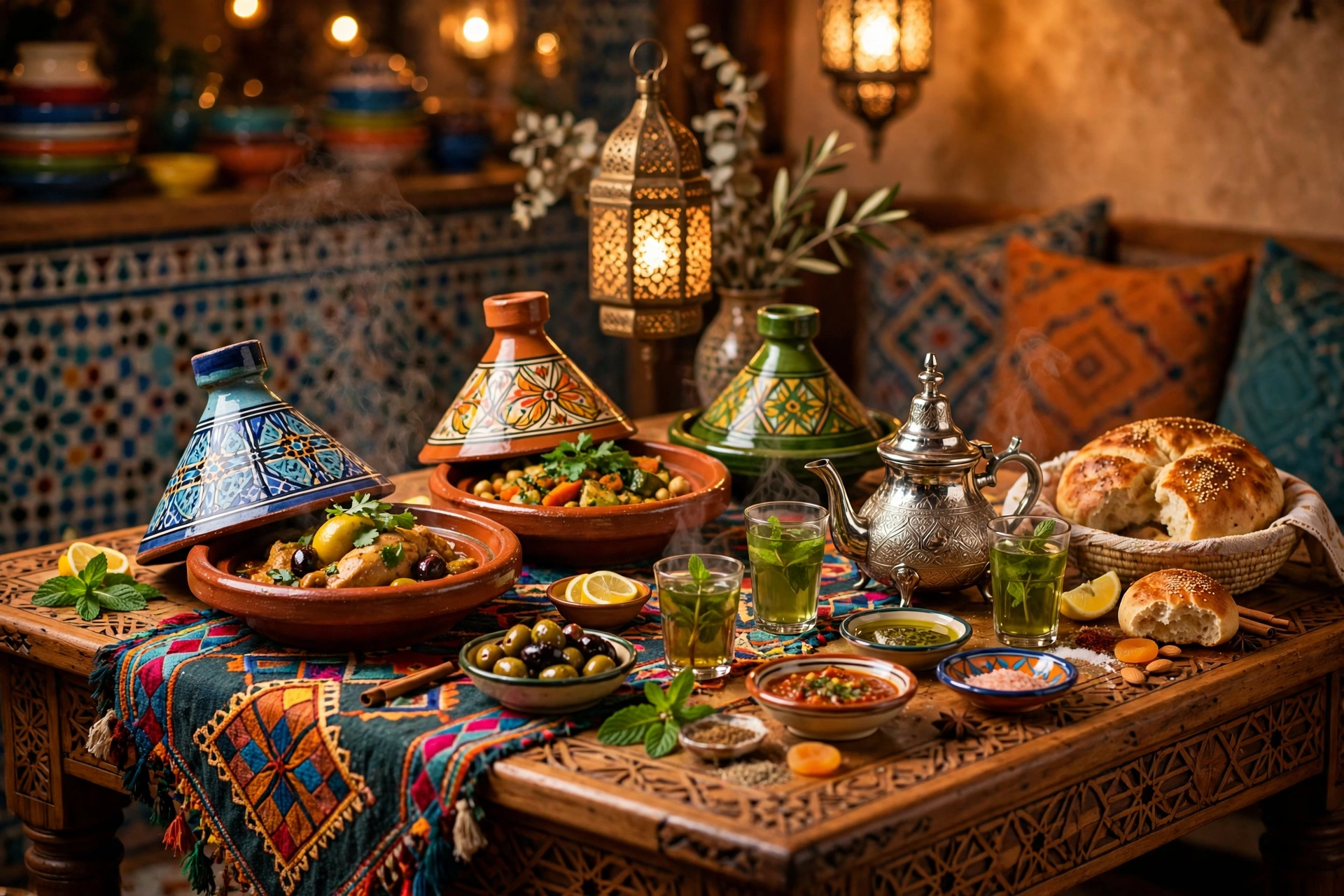
In this guide
- Morocco Restaurant Prices by Venue Type
- Street Food and Market Stalls
- Local Restaurants and Snack Bars
- Mid-Range Restaurants and Riad Dining
- Fine Dining and Rooftop Restaurants
- Drinks: Mint Tea, Coffee, Juice and Alcohol
- How Prices Differ by City
- A Daily Food Budget by Travel Style
- Money-Saving Tips from a Local
- Frequently Asked Questions
Morocco Restaurant Prices by Venue Type
Here is the short version first. The table below shows typical prices by venue type, checked November 2026. One US dollar is roughly 10 MAD.
| Venue type | Typical dish | Price (MAD) | Price (USD) |
|---|---|---|---|
| Street-food stall | Harira soup | 8–15 | $0.80–$1.50 |
| Street-food stall | Bissara with bread and olive oil | 10–15 | $1–$1.50 |
| Street-food stall | Brochettes (4 skewers) with bread | 25–40 | $2.50–$4 |
| Street-food stall | Msemen with honey and cheese | 8–15 | $0.80–$1.50 |
| Local restaurant | Chicken or vegetable tagine | 40–70 | $4–$7 |
| Local restaurant | Couscous (Friday) with vegetables and meat | 50–80 | $5–$8 |
| Local restaurant | Pastilla (chicken or seafood) | 50–90 | $5–$9 |
| Mid-range restaurant | Three-course dinner with mint tea | 150–250 | $15–$25 |
| Fine-dining restaurant | Tasting menu per person | 400–700 | $40–$70 |
| Rooftop restaurant | Main course with a view | 120–220 | $12–$22 |
The pattern is clear: the further you move from the street, the more you pay for setting, service, and atmosphere rather than for the food itself. A 60 MAD tagine is often cooked slowly in a clay pot by a family that has made the same recipe for decades. A 180 MAD tagine on a rooftop may be very good, but much of the extra money buys the view. The trick is knowing what you are paying for. Once you grasp morocco restaurant prices at this level, the details in this guide help you spend wisely.
Street Food and Market Stalls
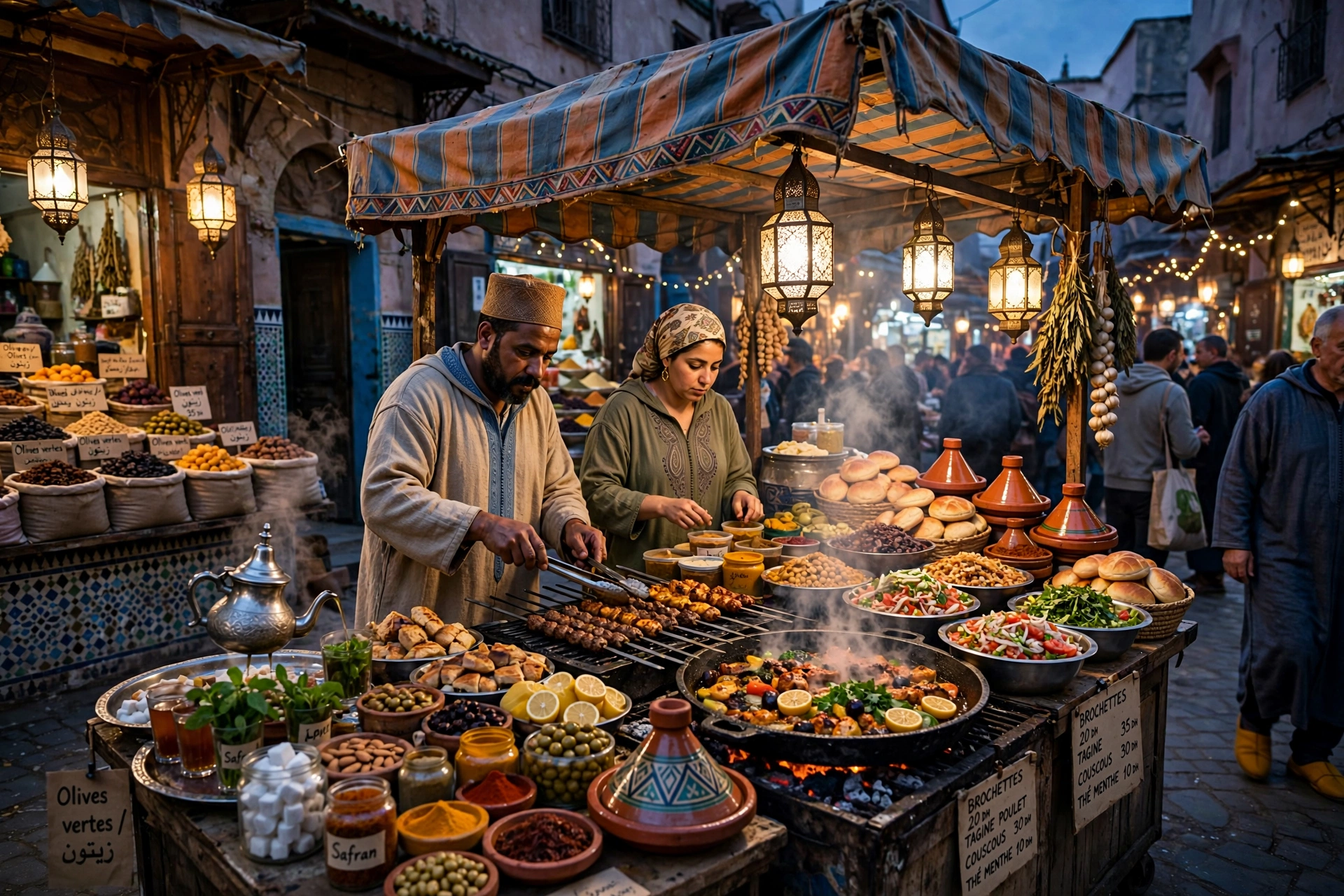
Street food is where Moroccan eating begins, and it is where the best value in the country lives. In the morning, stalls sell msemen, a square, flaky flatbread cooked on a griddle, with honey, soft cheese, or eggs, for 8 to 15 MAD — a complete breakfast for little more than a dollar. Harira, the tomato, lentil, and chickpea soup, costs the same: 8 to 15 MAD a bowl, usually with dates and bread. It is filling and warming.
Bissara is a thick fava-bean soup from the north, served hot with olive oil and cumin, for 10 to 15 MAD in Fes and the Rif. Brochettes are the classic evening street food: small skewers of lamb, chicken, or beef grilled over charcoal, served with bread, onions, and harissa, for 25 to 40 MAD for four skewers. A busy stall with a queue of locals is always the best sign — and this is where morocco restaurant prices are at their lowest.
Snail soup divides visitors. In the evening, vendors in the medinas of Marrakech and Fes sell bowls of snails in a spiced, peppery broth for 10 to 20 MAD. One bowl costs almost nothing, and the experience is part of the medina at night.
A word of honesty: street food is cheap, but it is not always gentle on a new stomach. Eat where food is cooked in front of you, where turnover is fast, and where locals are eating, and avoid anything sitting lukewarm for hours. Follow that rule, and you can eat superbly from stalls alone for 30 to 60 MAD a day — the lowest end of morocco restaurant prices in the country.
Local Restaurants and Snack Bars
Local restaurants and snack bars are the backbone of everyday eating in Morocco, and they are where morocco restaurant prices make the most sense for a traveller. A neighbourhood restaurant — a small room with tiled walls and a handwritten menu — serves a chicken tagine for 40 to 70 MAD. Lamb and beef cost a little more, usually 60 to 90 MAD. Bread and the small salad that arrives first are usually free, and mint tea costs 8 to 15 MAD.
Couscous deserves a special note, because outsiders routinely get it wrong. It is not an everyday restaurant dish in Morocco. It is a Friday dish, cooked at home after the midday prayer and shared with family. The real thing is Friday couscous: fine semolina steamed three times, with vegetables, chickpeas, and meat, for 50 to 80 MAD.
Pastilla is the dish to order when you want something special without paying fine-dining prices. This crisp, layered pie of chicken or seafood, almonds, cinnamon, and sugar costs 50 to 90 MAD in a local restaurant. It is sweet and savoury at once — proof that morocco restaurant prices can buy excellence cheaply.
Snack bars serve sandwiches, tacos (the French-Moroccan pressed sandwich, not the Mexican kind), pizzas, and grilled meats, usually for 20 to 45 MAD. A kefta sandwich with fries for 25 MAD is a perfectly honest lunch. A full lunch in a local restaurant — tagine, bread, salad, tea, and water — typically comes to 60 to 100 MAD per person, the price band I would plan around for most days. For more on everyday eating, see our Moroccan food guide.
Mid-Range Restaurants and Riad Dining
Mid-range restaurants are where many travellers spend their evenings, and the step up buys comfort, choice, and atmosphere. A main course costs 80 to 150 MAD, and a three-course dinner with mint tea usually comes to 150 to 250 MAD per person. The food is often similar to a local restaurant’s, but the room is nicer and the service more formal. At this level, morocco restaurant prices include the room as much as the plate.
Riad dining is a category of its own. Many riads — traditional courtyard houses turned into guesthouses — serve dinner to guests and sometimes to outside visitors. A set menu in this band of morocco restaurant prices costs 180 to 300 MAD per person, usually with a starter, a tagine or pastilla, dessert, and mint tea. The candle-lit courtyard is part of what you pay for, and on a first night in Marrakech or Fes it can be worth every dirham.
The food in a riad is generally reliable, though not always the most exciting cooking in the city, because kitchens cook for guests from many countries and flavours are sometimes softened. If you want the boldest food, a local restaurant will beat a riad kitchen. If you want a beautiful, relaxed evening without leaving your hotel, the riad is the right choice. Ask the set-menu price before you sit down, and whether drinks and service are included — water, juice, and dessert can add 60 MAD to a bill you thought was fixed.
Fine Dining and Rooftop Restaurants
Fine dining in Morocco is a small but growing scene, centred on Marrakech, Casablanca, and Rabat. A tasting menu costs 400 to 700 MAD per person, and a meal with wine can reach 900 MAD or more. These restaurants reinterpret Moroccan classics with careful plating and professional service. At the top end, morocco restaurant prices are set by creativity and presentation as much as by ingredients.
Is it worth it? Sometimes, yes. The best chefs in Marrakech are doing genuinely creative work, and a tasting menu can be a memorable evening. But the gap between a 60 MAD tagine and a 500 MAD tasting menu is much smaller in flavour than in price.
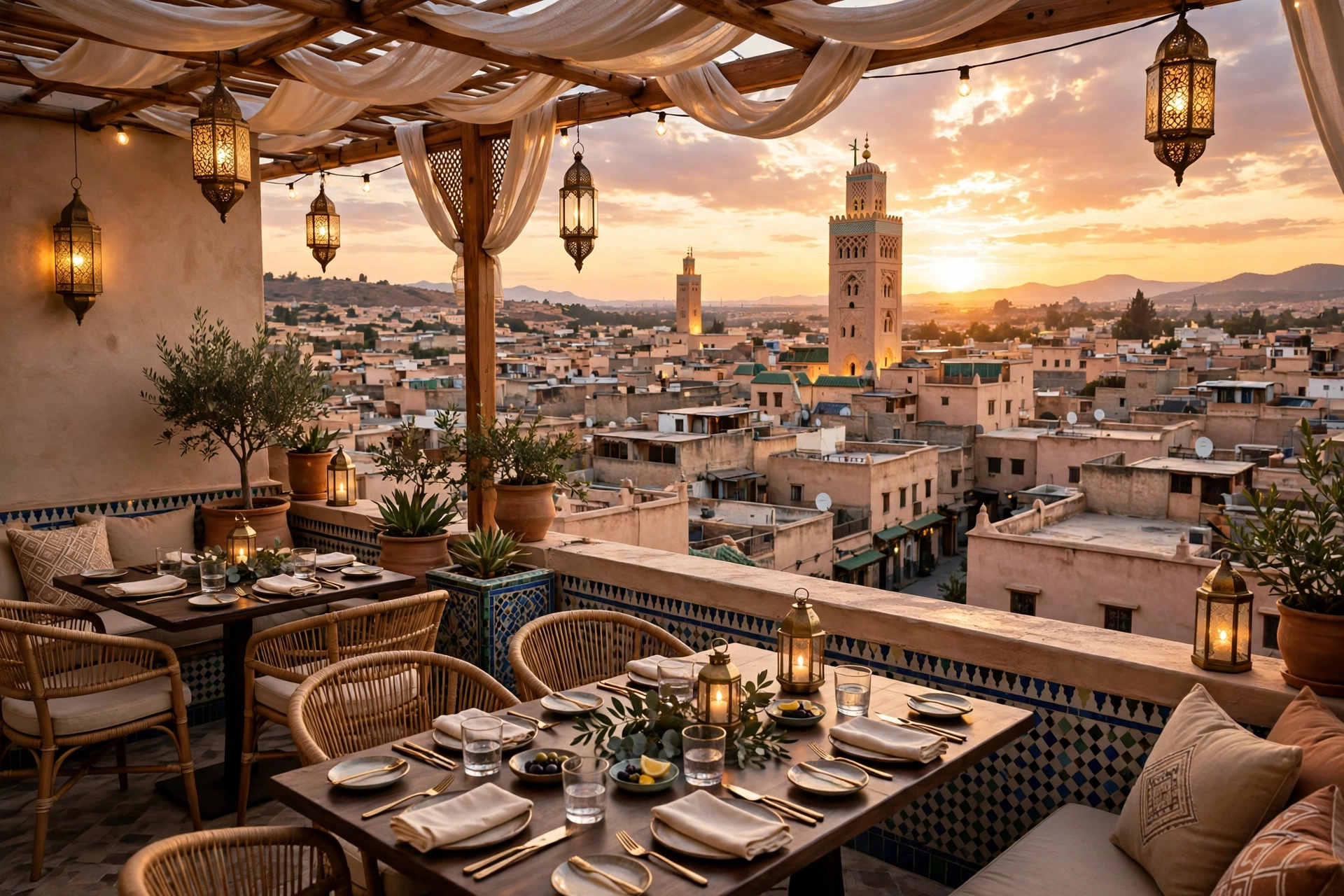
Rooftop restaurants are the most popular splurge for visitors, and their morocco restaurant prices reflect the view as much as the food. A main course on a rooftop overlooking the medina costs 120 to 220 MAD, and dinner for two with drinks often comes to 400 to 600 MAD. The sunset over the rooftops of Marrakech or Fes is genuinely beautiful, and many travellers remember that dinner for years. Go for the sunset, order one main course each, and enjoy it as an occasion. Book ahead, especially on weekends — the good tables go early, and some rooftops have a minimum spend.
Drinks: Mint Tea, Coffee, Juice and Alcohol
Drinks quietly shape your food budget, and morocco restaurant prices for drinks follow the same rule as food: the price follows the room. Mint tea is the national drink and the cheapest pleasure in Morocco: 6 to 10 MAD in a local café, 10 to 20 MAD in a mid-range restaurant, and 25 to 40 MAD on a rooftop. The tea is the same everywhere, but the setting changes the price.
Coffee is similar: a small black coffee, a nous-nouss (half coffee, half milk), or a spiced coffee costs 8 to 15 MAD in a local café and 15 to 30 MAD in a smarter place. Moroccan cafés are social institutions — people sit for hours over one coffee, and nobody hurries you.
Fresh juice is one of the great bargains among morocco restaurant prices. A glass of orange juice in Jemaa el-Fnaa costs 8 to 15 MAD, squeezed in front of you. Avocado, mango, and mixed-fruit juices cost 15 to 30 MAD from a vendor and 20 to 40 MAD in a restaurant.
Alcohol is a different matter. Morocco is a Muslim-majority country, and alcohol is not served everywhere. Licensed restaurants, hotels, and bars in the big cities do serve it, but morocco restaurant prices for alcohol are high by Moroccan standards: a beer costs 35 to 60 MAD, a glass of wine 50 to 90 MAD, and a bottle of Moroccan wine 150 to 300 MAD. Do not expect alcohol in a small local restaurant or a medina café — that is normal, not a problem. Our guide to Moroccan grocery prices covers supermarket costs in detail.
How Prices Differ by City
Morocco restaurant prices change with the city, and the differences matter for your budget. Marrakech is the most expensive place to eat, at least in the medina. Around Jemaa el-Fnaa and the main tourist streets, a tagine can cost 90 to 120 MAD — double the price of the same dish a ten-minute walk away in Gueliz or a residential neighbourhood. The medina premium in morocco restaurant prices is real, and it is paid almost entirely by visitors.
Casablanca is expensive in a different way. It is a business city, so its restaurants serve office workers and professionals, and prices reflect salaries rather than tourism. Lunch in a business district costs 80 to 150 MAD, and dinner in a smart restaurant easily reaches 250 MAD per person.
Fes is the best-value imperial city for food, and its morocco restaurant prices show it. Its medina is a working city, not a tourist stage, and its restaurants still cook mainly for locals. A tagine costs 40 to 70 MAD, a pastilla 50 to 80 MAD, and a full lunch rarely passes 100 MAD. The food is also, in my honest opinion, the best in Morocco.
Essaouira is a pleasant surprise. This small Atlantic town has a strong fishing tradition, so order grilled fish: sardines for 20 to 35 MAD, and a mixed grill of the day’s catch for 60 to 100 MAD at the port restaurants. Agadir is the most resort-like city, and its beachfront restaurants charge tourist prices, with main courses at 100 to 180 MAD. Walk a few streets inland and the same meal costs half as much.
A Daily Food Budget by Travel Style
The table below turns this guide into a daily budget: realistic totals for one person, including three meals and drinks, checked November 2026. They assume a mix of street food, local restaurants, and the occasional smarter meal.
| Travel style | What a day looks like | Daily total (MAD) | Daily total (USD) |
|---|---|---|---|
| Budget traveller | Street breakfast, snack-bar lunch, local tagine dinner | 80–150 | $8–$15 |
| Mid-range traveller | Café breakfast, local lunch, mid-range dinner with tea | 200–350 | $20–$35 |
| Luxury traveller | Hotel breakfast, riad lunch, fine dining or rooftop dinner | 500–900 | $50–$90 |
At the budget end of morocco restaurant prices, a traveller can eat very well for 80 to 150 MAD a day: msemen and tea in the morning, a sandwich or harira at midday, and a tagine with bread and tea in the evening. It is not a hardship budget; it is how many Moroccans eat every day, and the food is good.
A mid-range traveller should plan on 200 to 350 MAD a day: a proper breakfast, a relaxed local lunch, and a mid-range dinner with a starter and a drink. A luxury traveller will spend 500 to 900 MAD a day on food — still good value, since the same day in London or Paris would cost three times as much. These are food budgets only. For the full picture, see our cost of living in Morocco guide, which puts morocco restaurant prices in context.
Money-Saving Tips from a Local
Here is the insider correction that matters most: morocco restaurant prices in the medina are not fixed, and tourist menus cost double. This is the thing outsiders routinely get wrong — they assume a printed menu is a fixed price that everyone pays. In the medina, that is not how it works. Many restaurants near the main squares have two realities: a menu for tourists, often in English with photographs, and the food locals eat a few streets away for half the price. Walk five minutes from the square, find a restaurant with a menu in Arabic or French only, and you will eat the same tagine for 50 MAD instead of 100 MAD.
The language of the menu is the best clue you have. A menu in Arabic and French only, with no photographs, usually means a local restaurant with local prices. A menu in five languages with pictures of every dish usually means a tourist restaurant. Learn a few food words — tagine, couscous, harira, brochette — and ordering anywhere is easy. For more on how prices work in the souks, see our guide to haggling in Morocco.
Eat where locals eat, and eat what is in season. A restaurant full of Moroccan families is almost always good value; a restaurant with a tout outside calling you in is almost always overpriced. This is the simplest rule in this guide, and the one I use myself every day. Tipping is modest: rounding up or leaving 5 to 10 MAD is generous in a local restaurant, and 10% is a good tip in a mid-range one. Our guide to tipping in Morocco explains the details. Understanding morocco restaurant prices is only half the skill; the other half is knowing where to sit down.
Conclusion
Morocco restaurant prices reward the traveller who eats like a local and spends like a visitor only when it matters. Street food and neighbourhood restaurants give you the best food in the country for 40 to 100 MAD a meal. Mid-range restaurants and riad dinners give you comfort and atmosphere for 150 to 300 MAD. Rooftops and fine dining give you an occasion for 400 to 700 MAD. Plan on 150 to 350 MAD a day, eat the Friday couscous on a Friday, walk five minutes from the main square before you sit down, and order mint tea instead of imported drinks. Do that, and morocco restaurant prices will work in your favour — you will eat superbly in Morocco without ever worrying about the bill.
Frequently Asked Questions
How much does a meal cost in Morocco?
A meal in Morocco costs 40 to 70 MAD ($4–$7) for a tagine in a local restaurant, 80 to 150 MAD ($8–$15) for a main course in a mid-range restaurant, and 400 to 700 MAD ($40–$70) for a tasting menu in a fine-dining restaurant. Street food is cheaper still: harira, bissara, and msemen cost 8 to 15 MAD each.
Is food expensive in Morocco for tourists?
No, food in Morocco is cheap by international standards, but tourists often pay more than locals because they eat in the medina’s tourist restaurants. A tagine near Jemaa el-Fnaa can cost double the price of the same dish a few streets away. Eating where locals eat keeps prices at local levels.
How much should I budget per day for food in Morocco?
Budget 80 to 150 MAD ($8–$15) a day as a budget traveller, 200 to 350 MAD ($20–$35) a day as a mid-range traveller, and 500 to 900 MAD ($50–$90) a day as a luxury traveller. These totals cover three meals and drinks, checked November 2026.
Is street food safe to eat in Morocco?
Street food in Morocco is generally safe if you eat where food is cooked fresh in front of you and where locals are queuing. Choose busy stalls with fast turnover, eat food that is served hot, and avoid anything that has been sitting lukewarm for hours. Bottled water is recommended.
Do restaurants in Morocco accept credit cards?
Many mid-range, fine-dining, and hotel restaurants accept credit cards, but street-food stalls and small local restaurants are cash-only. Carry dirhams for everyday eating, and use cards only in smarter restaurants and hotels. ATMs are widely available in cities.
What is the most famous food in Morocco?
The most famous foods in Morocco are tagine, couscous, and pastilla. Tagine is a slow-cooked stew named after the clay pot it is cooked in. Couscous is traditionally a Friday family dish. Pastilla is a crisp, sweet-savoury pie of chicken or seafood with almonds and cinnamon.
Sources and Further Reading
- Moroccan cuisine — en.wikipedia.org/wiki/Moroccan_cuisine
- Visit Morocco, the official tourism portal — visitmorocco.com