
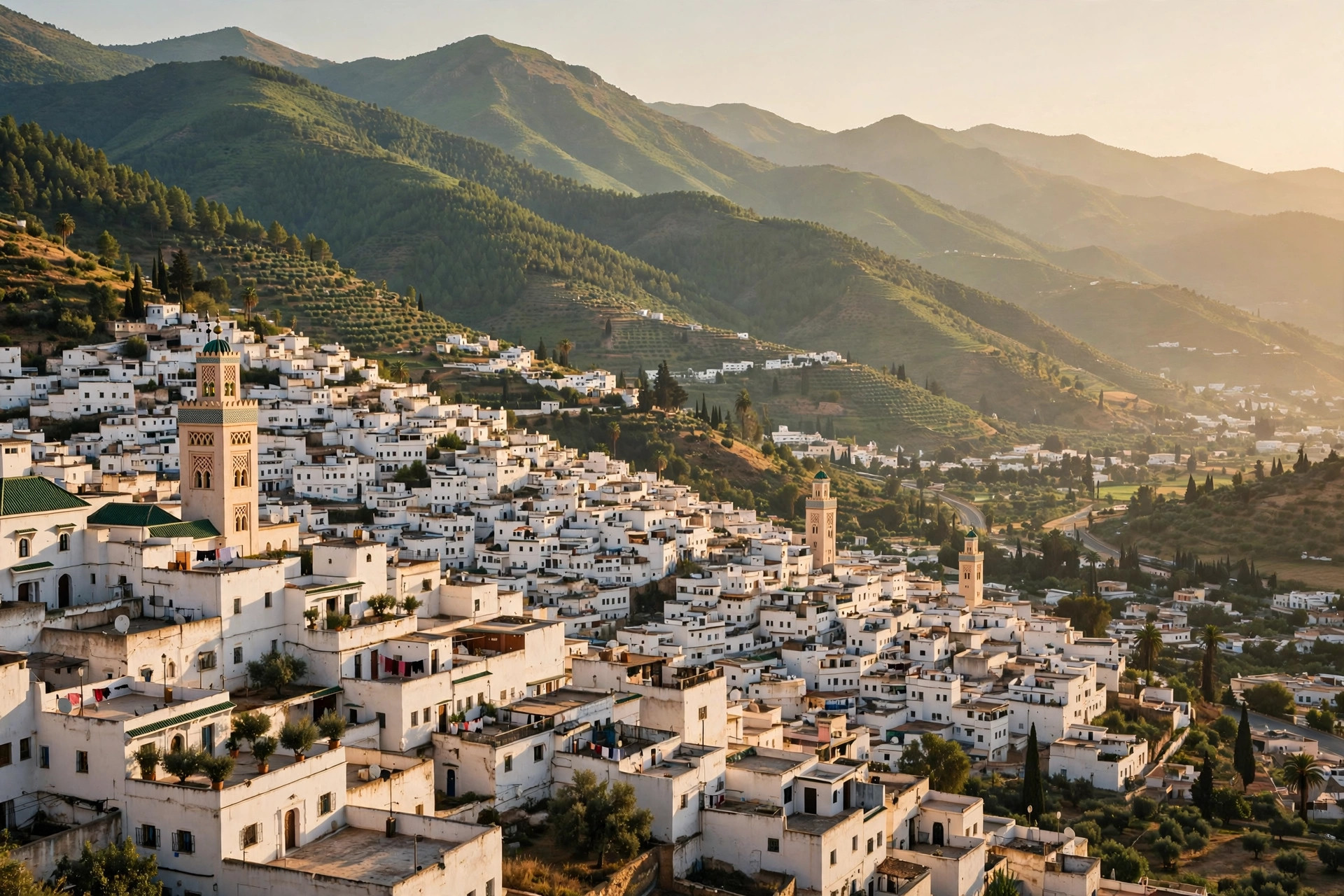
Living in Tetouan is Morocco at its most unhurried: a whitewashed city of around 423,000 people, about 60 kilometres southeast of Tangier, where the Rif mountains meet the Mediterranean and a UNESCO-listed medina still works as a living neighbourhood. It is quieter than Tangier, cheaper than Casablanca and far less discovered than Marrakech. For expats who want mountains, sea and history without big-city prices, living in Tetouan is one of the best-value choices in Morocco.
This guide covers the neighbourhoods, rents and routines that make living in Tetouan work in practice, not just on holiday. It sits in our Living in Morocco section, alongside our Living in Morocco: The Complete Guide for Expats.
In this guide
- Why Expats Choose Living in Tetouan
- Tetouan at a Glance
- Best Neighbourhoods for Living in Tetouan
- Rents and Housing: What You Pay in 2026
- Monthly Cost of Living in Tetouan
- Weather: Mild Winters and Warm Summers
- Getting Around: Buses, Taxis and No Trains
- Working in Tetouan: Jobs and Remote Work
- Daily Life: Markets, Food, Cafes and the Beach
- Healthcare in Tetouan
- Schools for Expat Families
- The Downsides of Living in Tetouan
- Moving to Tetouan: Your First Steps
- Frequently Asked Questions
Why Expats Choose Living in Tetouan
The first reason expats choose living in Tetouan is the position. Tangier is about an hour away by road, Chefchaouen is about 62 kilometres to the southeast, and the beach town of Martil is a twenty-minute bus ride east. The Ceuta border crossing at Fnideq is about half an hour away, and the Rif mountains rise directly behind the city. Few Moroccan cities put a major port, a blue mountain town, a beach and a European border all within an hour.
The second reason is the setting. Tetouan was rebuilt at the end of the 15th century by refugees from Granada, and its whitewashed medina carries that Andalusian heritage in every courtyard and carved door. The medina was inscribed by UNESCO as a World Heritage site in 1997, described as one of the smallest Moroccan medinas and unquestionably the most complete. Tetouan later became the capital of the Spanish protectorate in northern Morocco (1913–1956), and the elegant Spanish-built Ensanche district still stands beside the old town. Living in Tetouan puts that history in your commute: you walk the same white lanes every day, not just on a sightseeing tour.
The third reason for living in Tetouan is the price. A comfortable one-bedroom flat in the centre costs roughly half what the same flat costs in Tangier and a third of a comparable place in Casablanca. Groceries from the souk, a 7-dirham petit taxi across town and a 25-dirham lunch keep daily spending low without any feeling of sacrifice. For retirees on a fixed pension and remote workers earning in euros or dollars, that gap changes what life looks like.
Tetouan at a Glance
| Fact | Detail |
|---|---|
| Population | Around 423,000 (2024 census) |
| Region | Tanger-Tetouan-Al Hoceima, Mediterranean coast |
| Distance to Tangier | 60 km, about 1 hour by road |
| Distance to Chefchaouen | 62 km, about 1 hour 15 minutes by road |
| Nearest beach | Martil, about 10 km east |
| Airport | Sania Ramel (TTU), about 5 km away |
| UNESCO status | Medina listed since 1997 |
| Climate | Mediterranean: winters 9–18°C, summers 21–30°C |
| Best for | Remote workers, retirees, families, slow travellers |
| Watch out for | No train station, small expat community, summer crowds at the coast |
Best Neighbourhoods for Living in Tetouan
The medina is the first choice for newcomers who want living in Tetouan at its most atmospheric. Inside the old walls, whitewashed houses with Andalusian courtyards sit steps from the souks, the craft workshops and the seven gates. Rental options here are mostly small houses and a few renovated riads, cheaper than modern flats of the same size, but they come with narrow lanes, no parking and the occasional plumbing surprise.
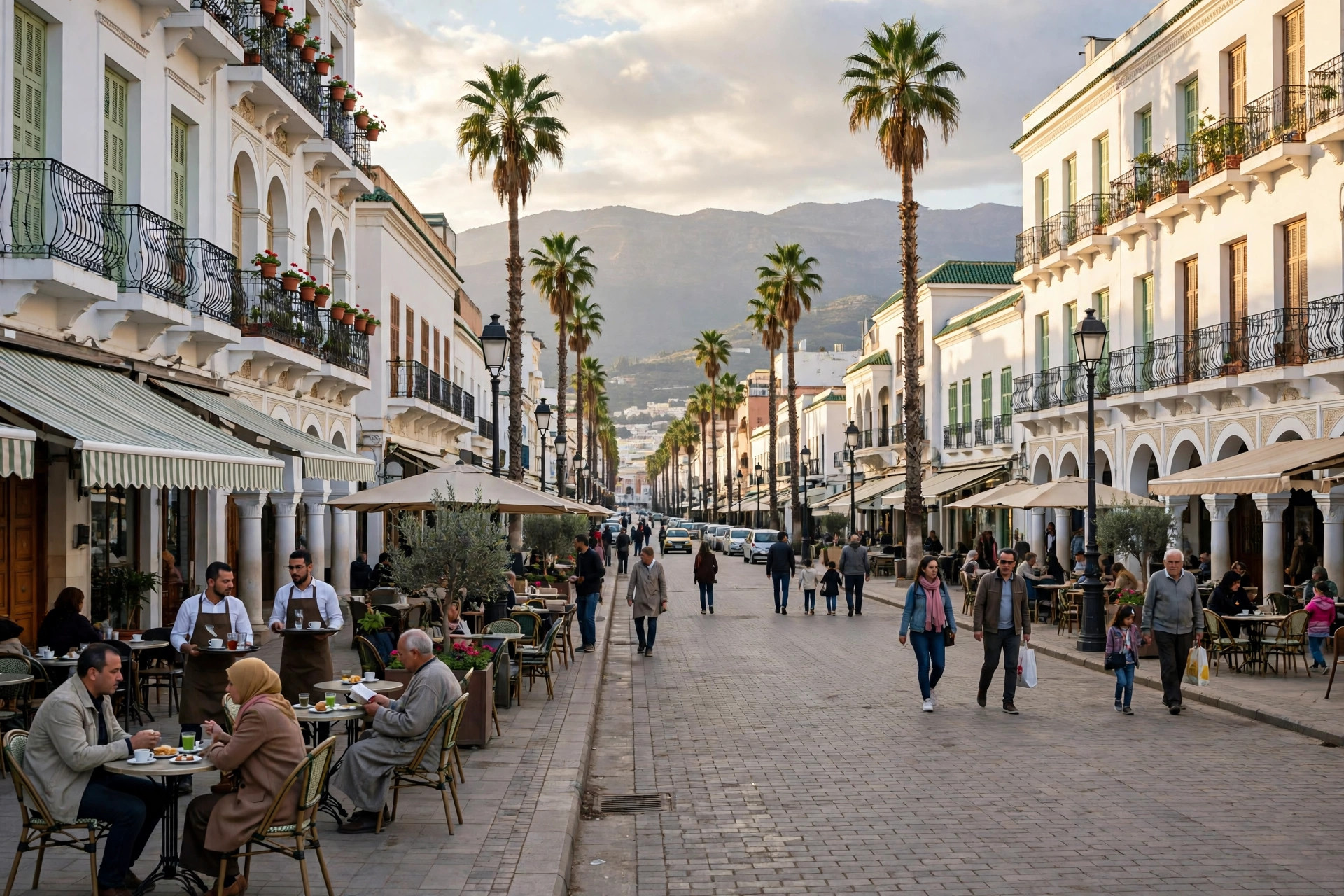
Avenue Hassan II and the city centre suit expats who want a straightforward landing. The wide, palm-lined avenue runs through the Spanish Quarter, past cafes, banks and most of the city’s estate agents, and the apartment blocks here have lifts and parking. It is the best base for your first weeks, while you learn the city.
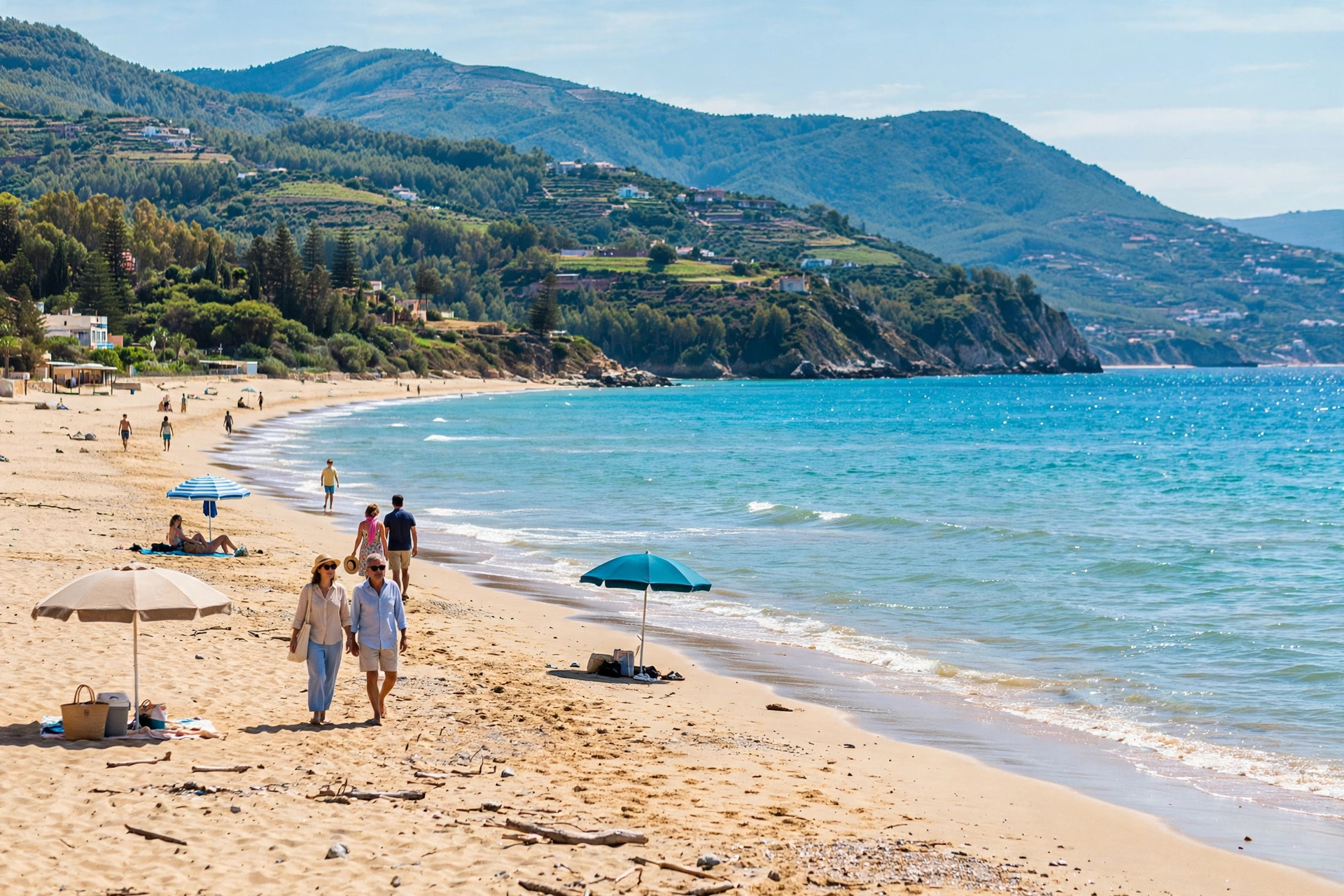
Martil and the coast suit expats who want the beach on foot. The seaside town, about 10 kilometres east, has modern apartment blocks, a long sandy beach and a lively summer season, while nearby Cabo Negro offers quieter, more upmarket villas. Rents at the coast run higher than in the city, and the area goes quiet in winter, but for swimmers and families the trade is worth it.
The hillside districts above the medina, on the slopes of Jebel Dersa, are the quiet option. Newer flats here are larger and cheaper than in the centre, the streets are calm, and many homes have views over the white city and the sea. These areas suit families who do not mind a ten-minute taxi ride to the centre and want space and fresh air.
Rents and Housing: What You Pay in 2026
Rents are the strongest argument for living in Tetouan. A studio in the centre goes for 1,200 to 2,000 MAD a month (about $120 to $200), and a one-bedroom flat there typically costs 1,800 to 3,000 MAD (about $180 to $300). Outside the centre the same one-bedroom drops to 1,500 to 2,500 MAD (about $150 to $250). Furnished flats cost roughly 20 to 40 percent more, and landlords often ask for two months’ rent in advance.
| Home type | Monthly rent (MAD) | Monthly rent (USD) |
|---|---|---|
| Studio, city centre | 1,200–2,000 | $120–$200 |
| One-bedroom, city centre | 1,800–3,000 | $180–$300 |
| One-bedroom, outside centre | 1,500–2,500 | $150–$250 |
| Two-bedroom, city centre | 2,800–4,500 | $280–$450 |
| Three-bedroom, city centre | 3,800–6,000 | $380–$600 |
| Three-bedroom, outside centre | 2,500–4,000 | $250–$400 |
| Villa, Martil or Cabo Negro | 6,000–12,000 | $600–$1,200 |
| Small house, medina | 2,500–5,000 | $250–$500 |
Finding a flat works best on the ground. Estate agents along Avenue Hassan II list most of the decent stock, and the Facebook groups for rentals in Tetouan are active, but the best flats still change hands by word of mouth. Plan a week in a hotel, view at least five places, and check water pressure, hot water and winter damp before you commit. For living in Tetouan, a written contract matters: you need it for your residence file, so read our Renting an Apartment in Morocco guide first.
Monthly Cost of Living in Tetouan
A single person living in Tetouan can live well on 6,500 to 8,000 MAD a month (about $650 to $800), rent included. That covers a one-bedroom flat, market groceries, utilities, transport and a social life of cafes and restaurants. A couple sharing a two-bedroom flat should budget 9,500 to 11,500 MAD (about $950 to $1,150), and a family of three around 13,500 to 16,000 MAD (about $1,350 to $1,600). These are comfortable figures, not survival budgets. Compare the totals with our Cost of Living in Morocco guide.
| Expense | Single person (MAD) | Couple (MAD) |
|---|---|---|
| Rent, one/two-bedroom flat | 2,400 | 3,500 |
| Utilities, electricity and water | 400 | 550 |
| Groceries and markets | 1,500 | 2,500 |
| Internet and mobile | 300 | 400 |
| Local transport | 300 | 450 |
| Eating out and cafes | 600 | 900 |
| Health insurance | 500 | 900 |
| Leisure and weekend trips | 500 | 800 |
| Clothing and household | 300 | 500 |
| Total | 6,800 | 10,500 |
Groceries are where living in Tetouan really saves you money. The central market and the medina souks sell vegetables, fruit, bread and meat well below supermarket prices, and a weekly shop for one person rarely passes 350 MAD (about $35). A coffee in a neighbourhood cafe costs 7 to 10 MAD (about $0.70 to $1), a filling lunch of tagine and bread runs 25 to 40 MAD (about $2.50 to $4), and a restaurant dinner for two is usually 150 to 250 MAD (about $15 to $25).
Weather: Mild Winters and Warm Summers
Tetouan has a Mediterranean climate, with mild, rainy winters and hot, sunny summers. January averages about 13 degrees, with daytime highs around 17 degrees and nights near 9 degrees, while August averages about 26 degrees, with highs around 30 degrees. Rain falls mainly from November to March, and the sea at Martil warms to 21 to 24 degrees from June to September.
Winter flats feel cold even when the thermometer says 15 degrees, because most buildings have no central heating and the damp seeps through the walls. Summer is dry and bright, but the heat can linger into the evening. The best months are March to June and September to November, when the light is golden and the beaches are quiet.
Getting Around: Buses, Taxis and No Trains
The first thing to know is that Tetouan has no train station. The city is not connected to Morocco’s rail network, so the nearest station is Tangier Ville, about 60 kilometres away. Supratours sells combined tickets that pair a bus to Tangier’s station with a train onward, and CTM runs frequent buses from the stations on Avenue Hassan II.
| Route from Tetouan | Time | Typical fare |
|---|---|---|
| Tangier (bus) | About 1 hour 15 minutes | 35–50 MAD (about $3.50–$5) |
| Chefchaouen (bus) | About 1 hour 15 minutes | 30–45 MAD (about $3–$4.50) |
| Martil (local bus) | 20–25 minutes | 4–6 MAD (about $0.40–$0.60) |
| M’diq | About 30 minutes | 8–12 MAD (about $0.80–$1.20) |
| Fnideq and the Ceuta border | About 45 minutes | 20–25 MAD (about $2–$2.50) |
| Tangier airport (TNG) | About 1 hour 15 minutes by road | 60 km, taxi or bus via Tangier |
| Fes (bus) | About 3 hours 30 minutes | 90–120 MAD (about $9–$12) |
For daily living in Tetouan, petit taxis are the default: a ride across town costs 7 to 10 MAD (about $0.70 to $1) on the meter, though drivers sometimes quote a flat price to foreigners. Local buses cost 4 to 5 MAD (about $0.40 to $0.50) and cover the main avenues and the coast road to Martil, while grand taxis run fixed routes to Tangier, Chefchaouen and Fnideq. Sania Ramel airport sits about 5 kilometres away, and a petit taxi there costs 20 to 40 MAD (about $2 to $4), but its flights are limited. See our Morocco Train Ticket Prices guide for fares once you reach the rail network.
Working in Tetouan: Jobs and Remote Work
Local jobs for foreigners are limited, so most expats living in Tetouan either work online or teach. English teaching is the most common local job: private language schools and the university pay modestly, and private tutoring pays 100 to 200 MAD an hour (about $10 to $20). Spanish is widely spoken here, more than in most Moroccan cities, so Spanish speakers find work and daily life easier. A work permit requires a local employer to sponsor you, so check the rules in our Moving to Morocco: Visas and Residency guide before you count on a local salary.
Remote work is the realistic path, and living in Tetouan makes it easy on the budget. Fibre internet is available in the centre and most newer districts, with home packages from 200 to 400 MAD a month (about $20 to $40) and 4G as backup. There is no coworking scene, but several cafes on Avenue Hassan II have fast wifi and do not mind a laptop for the price of a coffee. The time zone suits European clients — the same as London in winter, one hour ahead in summer. Read our Morocco Internet for Expats guide before you plan your setup.
Daily Life: Markets, Food, Cafes and the Beach
Daily life here revolves around the medina and the markets. The central souk and the medina’s craft quarters sell spices, olives, leather, ceramics and the famous Tetouan embroidery, while the fish stalls sell the morning catch from Martil at prices that make seafood an everyday food. Marjane sits on the edge of town for imports, but most expats find the market cheaper and more social. The Andalusian influence shows in the food too: pastilla, harira and grilled sardines sit alongside Spanish-style tapas bars.
The beach is the other half of life here. Summer weekends fill Martil with Moroccan families, while M’diq and Cabo Negro draw swimmers to cleaner water and quieter sand. The medina is the evening walk everyone takes at sunset, and Jebel Dersa, the mountain behind the city, offers hiking with views to the sea. Day trips are easy: Living in Tangier is an hour away and Living in Chefchaouen is about the same.
Healthcare in Tetouan
Healthcare in Tetouan is adequate for routine needs and limited for serious ones. The public hospital handles emergencies and basic care, and private clinics in the centre cover consultations and dentistry. A GP visit costs 150 to 300 MAD (about $15 to $30), and pharmacies are plentiful. Most long-term expats living in Tetouan keep private health insurance and plan on Tangier, about an hour away, for specialist care and major surgery. Read our Healthcare in Morocco for Expats guide for insurance options.
Schools for Expat Families
Families should research schooling early, because Tetouan has fewer international options than Rabat or Casablanca. A Spanish school and several French-language private schools serve the middle class, and public schools teach in Arabic and French. There is no large international school in the city itself, so families wanting an English-language curriculum usually look to Tangier, an hour away, or choose homeschooling. The upside is cost: private fees run well below the big cities. See our Schools in Morocco for Expat Families guide for the full picture.
The Downsides of Living in Tetouan
Honesty matters, and living in Tetouan is not for everyone. The expat community is small, so newcomers who need a ready-made social circle may feel isolated at first. Nightlife is limited to cafes and a few bars, and the city goes quiet early. French or Spanish is close to essential: English is rarely spoken outside hotels and language schools.
The other limits are practical. There is no train station, so rail journeys mean a bus to Tangier first, and the small airport at Sania Ramel has only limited flights, so most international travel means Tangier too. Specialist healthcare means a trip to Tangier, and the same goes for imported goods and international schools. Summer brings crowds to Martil and the coast road. None of this is a deal-breaker for most residents, but it is the trade for the low rents and the calm. If you want constant stimulation, Living in Tangier or Living in Casablanca may fit better.
Moving to Tetouan: Your First Steps
First, sort your visa. Most nationalities enter visa-free for up to 90 days, and longer stays need a residence permit, the carte de sejour, applied for at the local police station with a rental contract and proof of income. Second, open a bank account: you will need your passport and proof of address, and a local account makes rent and bills far simpler. Third, book a short-term stay near Avenue Hassan II for your first week and view flats in person. Our Morocco Carte de Sejour Renewal Guide covers the residence paperwork in detail.
Fourth, arrange health insurance before you arrive, and bring any regular medication with a prescription, since brand names differ. Fifth, start learning Darija: living in Tetouan is far easier with a few dozen phrases, and Spanish helps more here than anywhere else in Morocco. Register with your embassy and join the small online groups for foreigners in northern Morocco.
Frequently Asked Questions
Is Tetouan good for expats?
Yes, for the right expat. Tetouan suits remote workers, retirees and families who want low costs, a UNESCO medina, the Mediterranean and a calm pace. It is less suited to people who need a big expat scene or an international school.
How much does it cost to live in Tetouan?
A single person living in Tetouan needs around 6,500 to 8,000 MAD a month (about $650 to $800), rent included. A couple should budget 9,500 to 11,500 MAD (about $950 to $1,150), and a family of three around 13,500 to 16,000 MAD (about $1,350 to $1,600).
What is the best neighbourhood in Tetouan for expats?
The medina is the most atmospheric choice, inside the UNESCO walls, while Avenue Hassan II suits people who want a modern flat in the centre. Martil suits beach lovers, and the hillside districts suit families who want larger, cheaper flats.
Can I work remotely from Tetouan?
Yes. Fibre internet is available in the centre and newer districts from 200 to 400 MAD a month, 4G is a reliable backup, and the time zone suits European clients. There is no coworking scene, but Avenue Hassan II cafes welcome laptops.
How do I get from Tetouan to Tangier?
The bus takes about 1 hour 15 minutes and costs 35 to 50 MAD (about $3.50 to $5), and grand taxis take about an hour. There is no train in Tetouan; Tangier Ville station, 60 kilometres away, is the nearest rail link.
Is Tetouan safe for foreigners?
Yes. Tetouan is one of the calmer Moroccan cities, with low street crime and a welcoming local population. Normal precautions apply: watch your bag in the souks, agree taxi fares before you ride, and respect local customs during Ramadan.
Conclusion: Is Tetouan Right for You?
Tetouan is the quietest expat choice on Morocco’s Mediterranean coast and the least obvious one, and that is exactly the point. It is the city for people who come to live between the mountains and the sea — to walk a UNESCO medina in the morning and swim at Martil in the afternoon — rather than people who come to climb a career ladder. Rents are low, the climate is gentle and the history is extraordinary.
If that trade sounds right, come and stay near Avenue Hassan II, walk the white lanes of the medina and drink coffee as the sun drops behind Jebel Dersa. Tetouan does not shout for attention; it earns you slowly. That is the quiet reward of living in Tetouan.
Last checked: November 2026. Prices are ranges from 2026 listings and guides; confirm them before signing a lease.