
The cost of hiring household help in Morocco is one of the pleasant surprises of living here. A cleaner, a full-time maid, a nanny or a gardener all cost a fraction of the same help in Europe or North America — but the market is informal, prices vary by city, and the law now sets real obligations for employers. This guide to the cost of hiring household help in Morocco gives you honest 2026 prices, the rules under Law 19-12, and the paperwork that keeps you legal.
Prices are in Moroccan dirhams (MAD), checked in November 2026, with dollar equivalents at roughly 10 MAD to $1. Treat every figure as a starting range to confirm on arrival — rates depend on the city, the worker’s experience and board and lodging.
In this guide
- Household Help in Morocco at a Glance
- What the Law Says: Law 19-12 in Plain English
- The Real Cost of Hiring Household Help in Morocco
- Live-In or Live-Out: Which Costs Less?
- How Cleaners Charge: Per Visit, Per Hour or Per Month
- Nannies and Childcare at Home
- Cooks and Gardeners
- CNSS, Contracts and the Paperwork
- Where to Find Reliable Household Help
- The Hidden Costs Nobody Budgets For
- Red Flags and How to Handle Problems
- Frequently Asked Questions
- Conclusion
Household Help in Morocco at a Glance
| Fact | Detail |
|---|---|
| Cleaner, one visit (3–4 hours) | 100–150 MAD ($10–$15) |
| Cleaner, twice a week (monthly) | 800–1,200 MAD ($80–$120) |
| Full-time live-out maid | 2,500–4,000 MAD ($250–$400) a month |
| Full-time live-in maid | 2,500–4,500 MAD ($250–$450) a month, plus room and food |
| Nanny, full-time | 3,000–5,000 MAD ($300–$500) a month |
| Gardener, one day a week | 400–800 MAD ($40–$80) a month |
| Cook, part-time | 2,000–3,500 MAD ($200–$350) a month |
| Governing law | Law 19-12 on domestic workers (2016, in force since 2018) |
| Social security | CNSS registration is compulsory for the employer |
| Weekly rest | One full day a week, by law |
What the Law Says: Law 19-12 in Plain English
Domestic work in Morocco used to be almost entirely informal. Law 19-12, adopted in 2016 and in force since October 2018, brought household workers under written labour rules for the first time. If you employ someone in your home, this law applies to you — foreign residents included — and it shapes the cost of hiring household help in Morocco as much as the market does.
The law requires a written contract stating the job, wage, hours and rest days. The minimum age is 18. Workers get one full rest day a week, paid leave of 1.5 days per month worked, and paid public holidays. Night work and hazardous tasks are restricted, and the employer must register the worker with the CNSS, the social security fund.
The minimum wage for domestic workers is set by decree as a proportion of the standard minimum wage (SMIG), roughly 3,100 MAD a month in 2026 — but the exact floor is revised by decree, so confirm it with the CNSS before fixing a salary. In practice, most expat households pay above the floor anyway: a full-time maid on 2,500 MAD a month is already close to it, and experienced nannies and cooks earn well above it. The Labour law framework and the global picture of domestic work are useful background on where Morocco’s rules sit internationally.
The Real Cost of Hiring Household Help in Morocco
The cost of hiring household help in Morocco depends on four things: the role, the hours, the city and whether the person lives in. Casablanca, Rabat and Marrakech pay the most; smaller towns pay 20–30% less. The table below shows the going ranges for 2026.
| Role | Arrangement | Typical monthly cost (MAD) | Notes |
|---|---|---|---|
| Cleaner | One visit a week, 3–4 hours | 400–600 ($40–$60) | Most common expat arrangement |
| Cleaner | Two visits a week | 800–1,200 ($80–$120) | Enough for a two-bedroom flat |
| Maid | Full-time, live-out | 2,500–4,000 ($250–$400) | 8 hours a day, 6 days a week |
| Maid | Full-time, live-in | 2,500–4,500 ($250–$450) | Plus a room, food and utilities |
| Nanny | Full-time | 3,000–5,000 ($300–$500) | More for babies or two children |
| Cook | Part-time, 3–4 days a week | 2,000–3,500 ($200–$350) | Lunch and dinner, shopping extra |
| Gardener | One day a week | 400–800 ($40–$80) | Villa gardens; tools usually yours |
| Driver | Full-time | 4,000–6,000 ($400–$600) | Car, fuel and insurance are yours |
Two patterns explain most of the spread. First, live-in maids often earn a similar cash wage to live-out ones, but the room, food and utilities you provide are worth another 1,000–1,500 MAD a month — so the true cost of hiring household help in Morocco is higher than the salary line alone. Second, experienced workers who speak French or some English charge 20–30% above these ranges.
For the wider monthly picture, see our cost of living in Morocco guide and our rent prices in Morocco guide — household help is one of the few budget lines where Morocco is dramatically cheaper than Europe, and the cost of hiring household help in Morocco is why many expats can afford help at all.
Live-In or Live-Out: Which Costs Less?
On paper, a live-in maid looks cheaper: the cash wage is often the same as a live-out maid’s, and you skip the daily commute. In practice, the two cost almost the same once you count the room, the food, the extra water and electricity, and the fact that a live-in worker is simply around more — which usually means more hours worked, even if nobody counts them. That is why the cost of hiring household help in Morocco must be counted with board and lodging included, not just the wage.
Live-in suits families with babies, large villas or elderly relatives who need someone on site. The worker gets her own room, three meals and no transport costs — a real benefit where a daily bus fare eats into a small wage. But you need a spare room with a door that locks, and you must be comfortable with someone living in your home, privacy trade-off included.
Live-out suits flats and couples without children: the worker arrives in the morning, works set hours and goes home, which keeps the boundary clean. You pay transport instead of lodging — a monthly bus pass costs 150–250 MAD, often folded into the wage. If your cleaner travels over an hour each way, expect the wage to reflect it.
How Cleaners Charge: Per Visit, Per Hour or Per Month
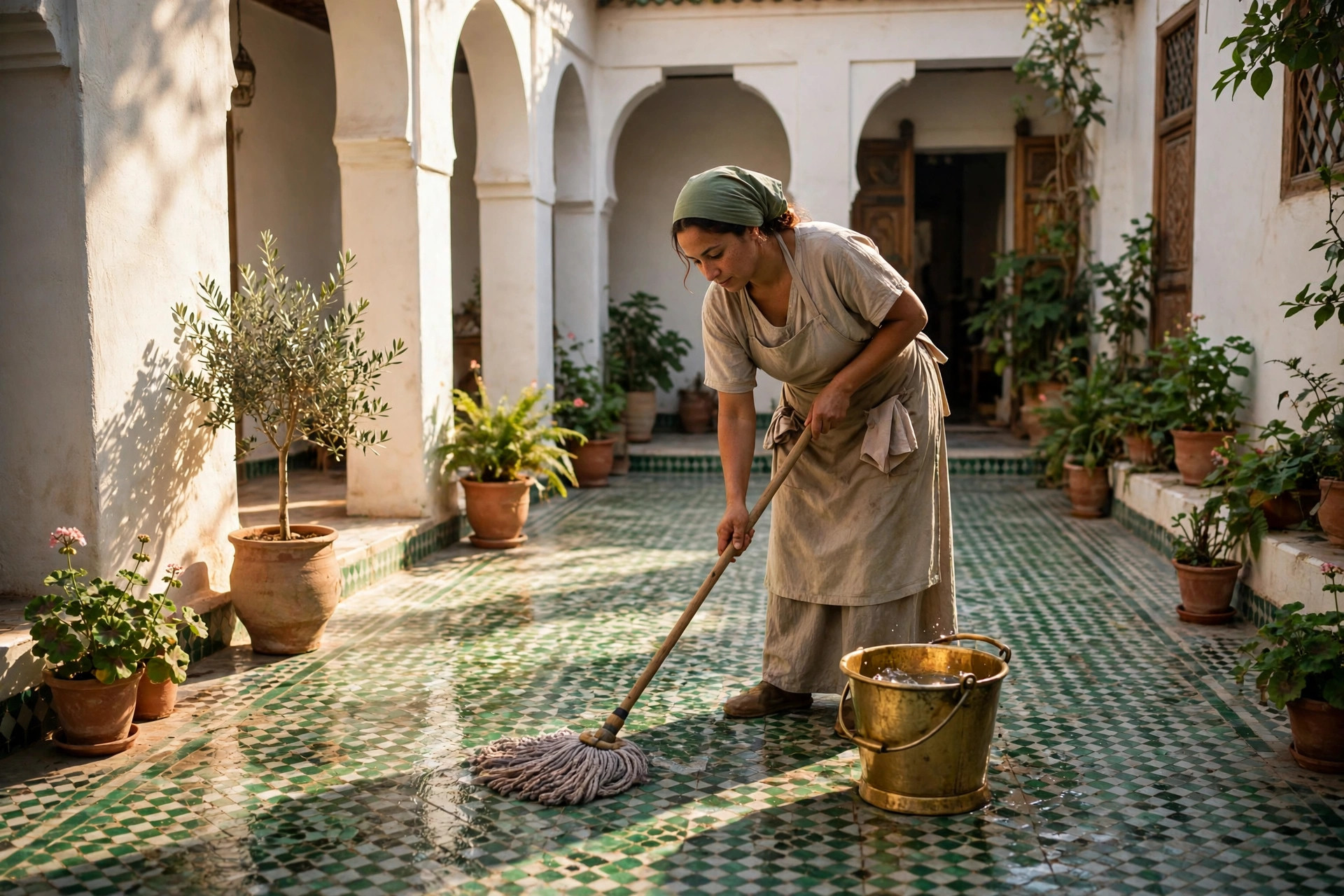
Most Moroccan cleaners charge per visit, not per hour: a standard visit is three to four hours and costs 100–150 MAD in the big cities, 80–120 MAD in smaller towns. That covers a normal clean of a two- or three-bedroom home — floors, bathrooms, kitchen, dusting and laundry. Deep cleans, windows and terraces cost extra, so agree the price before the work starts. That per-visit rate is the floor of the cost of hiring household help in Morocco.
Some cleaners prefer a monthly arrangement: a fixed fee for a fixed number of visits. This is usually better value for you and steadier income for them, and the arrangement we recommend once you have found someone you trust. A monthly cleaner doing two visits a week typically costs 800–1,200 MAD — for most households, that monthly figure is the practical cost of hiring household help in Morocco. Whichever basis you choose, agree the visits, tasks and pay day in writing before the first clean.
Hourly rates exist but are rare, and they are the worst deal for the worker: the clock runs while she waits for the bus and walks to your door. If you agree one, 40–60 MAD an hour is the going range — pay for the full visit, not the minutes spent mopping. Pay on the same day each week or month, in cash or by bank transfer, and keep a simple record; it matters if a CNSS question ever arises.
Nannies and Childcare at Home
A nanny is the most personal hire you will make in Morocco, and the most expensive category of household help. Full-time nannies cost 3,000–5,000 MAD a month, the top of the range for experienced carers who speak French or English, handle babies, or look after two or more children. Part-time nannies, for school pick-ups and afternoons, run 1,500–2,500 MAD a month.
The cost of hiring household help in Morocco rises fastest with children, because a good nanny is scarce: families who find one keep her for years, and word of mouth fills vacancies before they are advertised. Expect a trial month at the agreed rate, and expect the nanny to want the same legal protections as any domestic worker — a contract, a rest day and CNSS registration.
For the full picture of what children cost here, see our Morocco childcare costs guide. One warning: never hire a nanny through a stranger on social media without references from at least two families, and always meet her with the children present before you agree anything.

Cooks and Gardeners
A cook is a luxury most expat households discover late and then wonder how they lived without. A part-time cook who comes three or four days a week, shops at the souk and prepares lunch and dinner costs 2,000–3,500 MAD a month, plus the food budget; a full-time cook for a large family runs 3,500–5,000 MAD. Agree who buys the ingredients: most cooks prefer a daily or weekly food budget in cash, with receipts, rather than shopping on their own money. A cook is the one role where the cost of hiring household help in Morocco climbs fastest with quality: a cook who trained in a hotel kitchen charges at the top of every range.
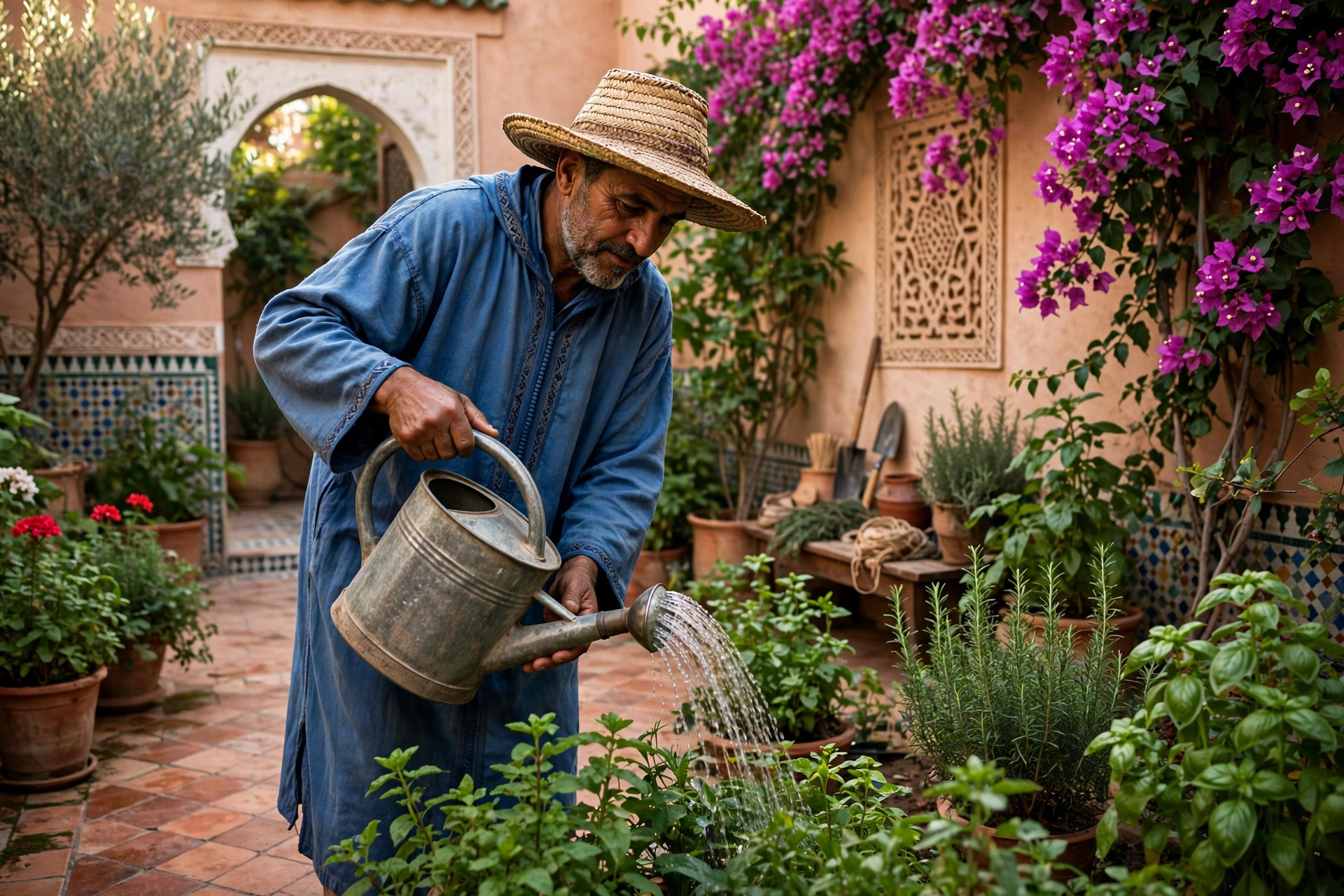
Gardeners are usually hired by the day. One day a week costs 100–200 MAD a visit, or 400–800 MAD a month, and covers watering, pruning, weeding and basic maintenance. You supply the tools, the plants and the water — and in summer, the water bill is the real cost, not the gardener. Our utility bills in Morocco guide explains what watering a garden does to a monthly water bill.
CNSS, Contracts and the Paperwork
The paperwork is simpler than most newcomers fear. Registration with the CNSS is compulsory for domestic workers, and the employer is responsible for it. Treat registration as part of the cost of hiring household help in Morocco from day one. You will need your worker’s national ID card (CIN), a signed employment contract, and a visit to your local CNSS office or the CNSS online portal.
Contributions are shared between employer and employee, calculated on the declared wage, and the monthly total on a typical wage runs to a few hundred dirhams — a small sum against the protection it buys: health cover, family allowances and a pension record for the worker, and legal certainty for you. The exact rates change, so ask the CNSS office for the current domestic-worker schedule rather than trusting a forum figure. Getting this step right is part of the real cost of hiring household help in Morocco, and it is the part newcomers most often skip.
The contract should state the job, monthly wage, working hours, weekly rest day, paid leave and notice period — one month is standard after a year of employment. Keep a signed copy each. If the arrangement ends, pay any outstanding leave and give notice in writing: a clean ending protects your reputation, because household staff talk and a bad employer is known across a neighbourhood within weeks.
Where to Find Reliable Household Help
Word of mouth is how almost all household help is found in Morocco, and the most reliable channel. Ask neighbours, other expats, your landlord, the building guard and the local hanout owner — everyone knows someone looking for work, and a recommendation from a family you trust is worth more than any agency. It also keeps the cost of hiring household help in Morocco honest: a recommended worker quotes the going rate, not a foreigner price.
Agencies exist in Casablanca, Rabat and Marrakech, charging a placement fee of one month’s salary or a flat 1,000–2,000 MAD. They are useful if you need someone fast, but check what the fee covers: some offer no replacement if the worker leaves in the first month, and some take a cut of the worker’s wage — another reason to pay the worker directly and in full.
Online, local Facebook groups for expats in your city carry regular posts from workers and families — treat them as a starting point, not a vetting system. Always interview in person, ask for two references and call them, and run a paid trial week before signing a contract: the worker sees the home and the hours, and you see the work.
The Hidden Costs Nobody Budgets For
The salary is only part of the cost of hiring household help in Morocco. The extras below are small individually, but together they add 15–25% to the monthly bill — and budgeting for them separates a smooth arrangement from a resentful one.
First, food and utilities for a live-in worker run 1,000–1,500 MAD a month: three meals, hot water, laundry and electricity. Second, transport for a live-out worker is 150–250 MAD a month, as a bus pass or folded into the wage.
Third, the thirteenth month — the Eid bonus — is not required by law but is widely expected: one extra month’s wage split between the two Eids, or a single payment at Eid al-Adha. Fourth, gifts and small loans are part of the relationship: a worker with a year behind her will ask for an advance before Ramadan or a family wedding, and saying yes to a reasonable amount is cheaper than finding and training a replacement. Fifth, medical costs: a worker without CNSS cover will come to you when she is ill, and a clinic visit of 150–300 MAD is both decent and practical.
Red Flags and How to Handle Problems
Most arrangements work well, and most problems come from unclear expectations rather than bad faith. Set the expectations in writing on day one — tasks, hours, rest day and wage, in the contract — and the red flags are easier to spot: repeated lateness without explanation, tasks skipped week after week, or money and small items going missing.
Handle the first problem with a calm conversation, not an accusation. In Morocco, direct confrontation with household staff often ends the relationship on the spot, leaving you without help and the worker without income. State what you noticed, ask what happened, and agree what changes. If the problem repeats, give a written warning and a short period to improve; if it still does not improve, end the contract with the notice period and any owed leave paid — and be honest with the next family who asks for a reference. Clear terms keep the cost of hiring household help in Morocco predictable: most disputes start as a misunderstanding about hours or tasks.
Two hard lines: never employ anyone under 18, whatever the family circumstances — Law 19-12 forbids it, and the penalties are real. And never hold a worker’s identity card or passport, for any reason: it is illegal, and the fastest way to destroy trust.
Frequently Asked Questions
How much does a cleaner cost in Morocco?
A cleaner costs 100–150 MAD ($10–$15) for a standard 3–4 hour visit in the big cities, or 800–1,200 MAD ($80–$120) a month for two visits a week; smaller towns run about 20–30% cheaper. That is the entry point for the cost of hiring household help in Morocco, and the arrangement most expat households start with.
What is the minimum wage for a domestic worker in Morocco?
Domestic workers’ minimum pay is set by decree as a proportion of the SMIG, roughly 3,100 MAD a month in 2026. Confirm the current floor with the CNSS before fixing a salary, as the decree figure is revised; most expat households pay above it.
Do I have to register my maid with the CNSS?
Yes. Under Law 19-12 the employer must register domestic workers with the CNSS and pay the shared contributions, a few hundred dirhams a month on a typical wage. Registration gives the worker health cover and a pension record, and gives you legal proof the arrangement is formal.
Is a written contract required for household help?
Yes. Law 19-12 requires a written contract stating the job, wage, hours, rest days and leave — even for a cleaner who comes once a week, a simple written agreement protects both sides if anything is disputed.
How much should I pay a nanny in Morocco?
A full-time nanny costs 3,000–5,000 MAD ($300–$500) a month, the top of the range for experienced carers who speak French or English or look after babies; part-time nannies run 1,500–2,500 MAD a month. The nanny is where the cost of hiring household help in Morocco peaks for most families.
Conclusion
The cost of hiring household help in Morocco is low by international standards — a cleaner from 100 MAD a visit, a full-time maid from 2,500 MAD a month, a nanny from 3,000 MAD — but the cheapest arrangement is the one done properly. A written contract, CNSS registration, a weekly rest day and a fair wage cost little and buy continuity, trust and legal peace of mind. Get those right, and household help becomes one of the best things about living in Morocco: more time for the life you moved here for. That is the real cost of hiring household help in Morocco — not the wage alone, but the wage done right. For more on settling in, browse the Costs & Practical Life archive.