
Morocco cooking class prices are one of the best bargains in Moroccan travel: for the price of a modest restaurant dinner, you spend half a day in a riad kitchen learning to make the tagine, couscous and pastilla you have been eating all week. Most group classes cost 350–900 MAD ($35–$90), including the market visit, all ingredients, the meal you cook and mint tea at the end — which is why morocco cooking class prices feel like a bargain. All prices are in Moroccan dirhams (MAD), checked in November 2026, at roughly 10 MAD to $1 — planning ranges, so confirm them on arrival.
In this guide
- Morocco Cooking Class Prices at a Glance
- What a Moroccan Cooking Class Actually Includes
- How Much a Cooking Class Costs in Marrakech
- Cooking Class Prices in Fes
- Cooking Class Prices in Essaouira
- Cooking Classes in Casablanca, Rabat and Tangier
- Group vs Private Classes: What the Price Difference Buys
- Full-Day Classes with a Market Visit
- Family and Kids' Cooking Classes
- Vegetarian, Vegan and Gluten-Free Classes
- What to Expect: A Typical Class Hour by Hour
- How to Book and When
- Hidden Costs and How to Avoid Them
- Frequently Asked Questions
- Conclusion
Morocco Cooking Class Prices at a Glance
| Class type | Typical price (MAD) | Typical price (USD) | Duration |
|---|---|---|---|
| Group half-day class | 350–600 | $35–$60 | 3–4 hours |
| Group full-day with market visit | 500–900 | $50–$90 | 5–6 hours |
| Private class, 2 people | 800–1,500 | $80–$150 | 4–5 hours |
| Luxury riad class | 1,200–2,500 | $120–$250 | 4–6 hours |
| Family class, 2 adults + 2 children | 1,000–1,800 | $100–$180 | 3–4 hours |
| Short taster or bread-baking session | 150–300 | $15–$30 | 1–2 hours |
| Online Moroccan cooking class | 200–500 | $20–$50 | 1.5–2 hours |
The spread in morocco cooking class prices is wide because the product varies so much: a 350 MAD group class in a medina house and a 2,000 MAD private session in a palace riad are barely the same experience. The middle of the range — 400–700 MAD for a half-day group class with lunch — is where most travellers get the best value. Read more on Moroccan cuisine and Visit Morocco for food experiences across the country.
What a Moroccan Cooking Class Actually Includes
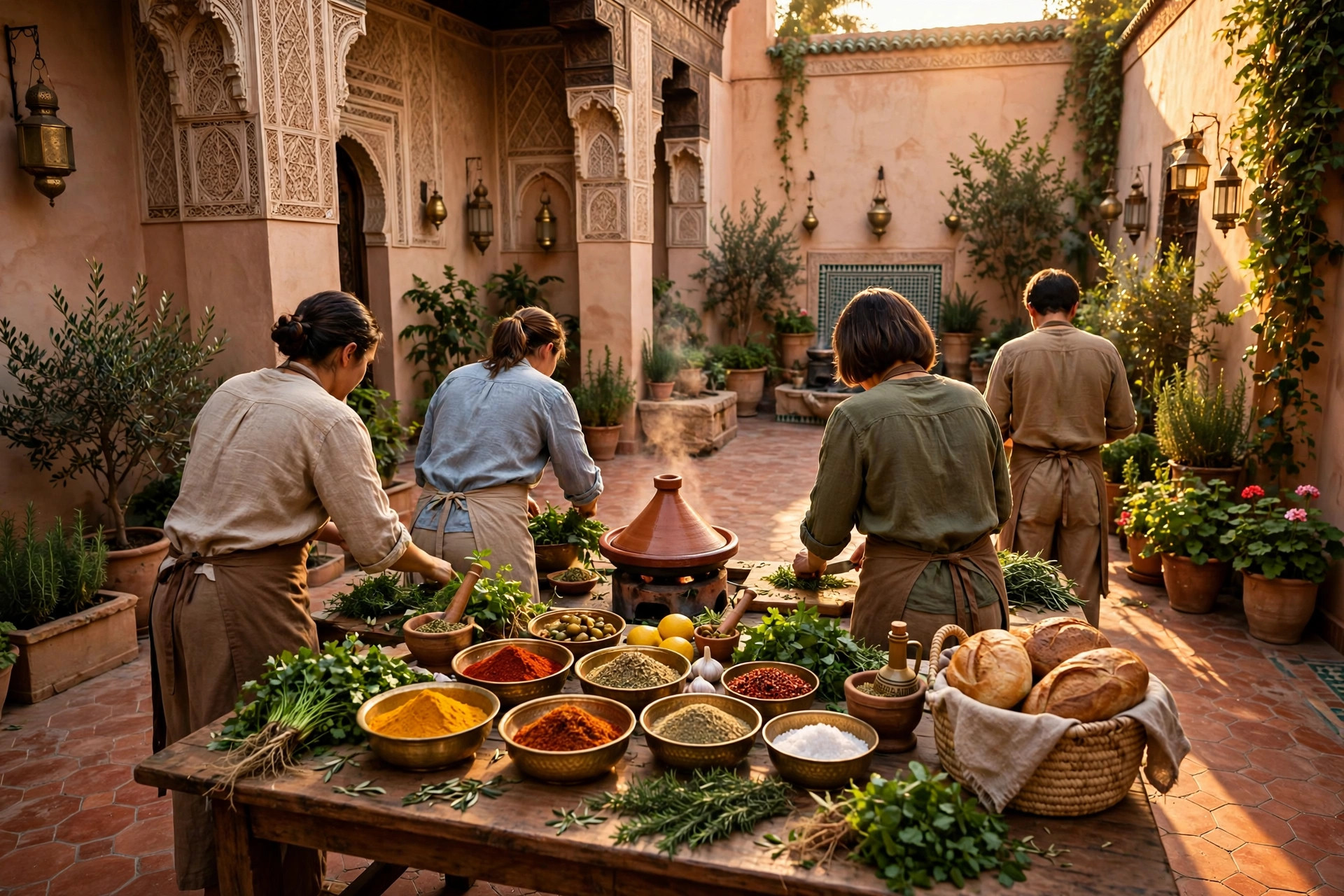
Almost every class in Morocco follows the same shape, and the price covers more than the cooking. A standard booking at these morocco cooking class prices includes the ingredients for the dishes you make, an apron and a workstation, a cook or chef who teaches in English or French, the meal itself eaten together at the end, and mint tea.
What varies is the setting and the extras. A basic class runs in a family house or a small riad kitchen with a group of eight to twelve people sharing burners. A mid-range class adds a guided market visit, a smaller group, and a rooftop or courtyard lunch. A luxury class adds a private chef, a historic riad and sometimes a certificate. None of these is essential to learning the food; the cooking itself is the same tagine and the same couscous. Our Moroccan food guide explains the dishes you will most often cook.
How Much a Cooking Class Costs in Marrakech
Marrakech has the most choice and the most competitive morocco cooking class prices in the country, because dozens of riads and schools compete for the same visitors. For morocco cooking class prices in Marrakech, a group half-day class typically costs 400–650 MAD ($40–$65), and a full-day class with a souk visit runs 550–900 MAD ($55–$90). Private classes start around 900 MAD for two people and rise to 2,000 MAD or more in the grand riads of the medina.
The city also has the best-known social-enterprise option: the Amal Women's Training Center, a nonprofit restaurant and training school, runs popular cooking classes in the medina, with the fee supporting training for disadvantaged women; its classes sit in the mid-range and book out in high season. Luxury riads such as La Maison Arabe, famous for its cooking workshops, charge at the top of the range, including a market tour and a full multi-course lunch.
Cooking Class Prices in Fes
Fes is quieter than Marrakech, and its cooking classes feel it: smaller groups, slower pace, and a stronger focus on the city's own dishes, especially pastilla and the slow-cooked tagines of the old medina. That is one reason morocco cooking class prices in Fes run a little lower. A group half-day class in Fes typically costs 350–600 MAD ($35–$60) — morocco cooking class prices in Fes run a little below Marrakech — and a full-day class with a souk visit runs 500–800 MAD ($50–$80).
The best-known classes run from riads in the medina, including Palais Amani, which offers well-regarded workshops in a restored palace house. Expect the market visit to run through the food souks near Bab Bou Jeloud, where your teacher buys the saffron, preserved lemons and ras el hanout for the class. Our guide to living in Fes covers the medina neighbourhoods where most classes meet.
Cooking Class Prices in Essaouira
Essaouira's classes cost about the same as Fes — 350–600 MAD ($35–$60) for a group half-day, 500–850 MAD ($50–$85) for a full day with a market visit — and morocco cooking class prices in Essaouira stay in that range even in high season. But the food is different, and that is the point. This is the Atlantic coast, so the class usually centres on fish: grilled sardines, a seafood tagine, or a fish pastilla, bought that morning from the port's blue boats.
Classes here are often smaller, because Essaouira gets fewer visitors than Marrakech, which means more time at the stove per person. Some schools run the market visit through the fishing port itself, which is worth choosing over a class that shops in a supermarket; bring shoes you do not mind getting wet, because the morning catch comes in on a wet concrete quay. Our guide to living in Essaouira has the practical details for a longer stay.
Cooking Classes in Casablanca, Rabat and Tangier
The big Atlantic cities have fewer cooking classes than the tourist triangle, and morocco cooking class prices there reflect a market aimed more at residents than visitors. Casablanca classes typically cost 400–700 MAD ($40–$70) for a half-day, often in a modern kitchen rather than a riad. Rabat is similar, at 350–650 MAD, with a few schools in Agdal and the medina.
Tangier is the wildcard: fewer scheduled classes, but a lively scene of home cooks who teach from their own kitchens, usually arranged through a riad or a local guide. Expect 400–800 MAD for a half-day, and book through a recommendation rather than a platform listing. In all three cities, check the language before you pay: French is more common than in Marrakech, and some classes are French-only.
Group vs Private Classes: What the Price Difference Buys
The single biggest choice in morocco cooking class prices is group versus private, and the price gap is roughly double. At standard morocco cooking class prices, a group class at 400–600 MAD puts you at a shared workstation with eight to twelve strangers; you will chop, stir and roll couscous, but the chef's attention is spread thin, and you may only make one dish yourself.
A private class at 900–1,500 MAD for two people buys the chef's full attention, your own workstation, and usually a longer menu — three or four dishes instead of two. For a couple celebrating something, or for a serious cook who wants technique rather than a fun morning, the private class is worth it. For a solo traveller on a budget, the group class is better value and more social; ask how many people the group caps at, and avoid anything above twelve.
Full-Day Classes with a Market Visit
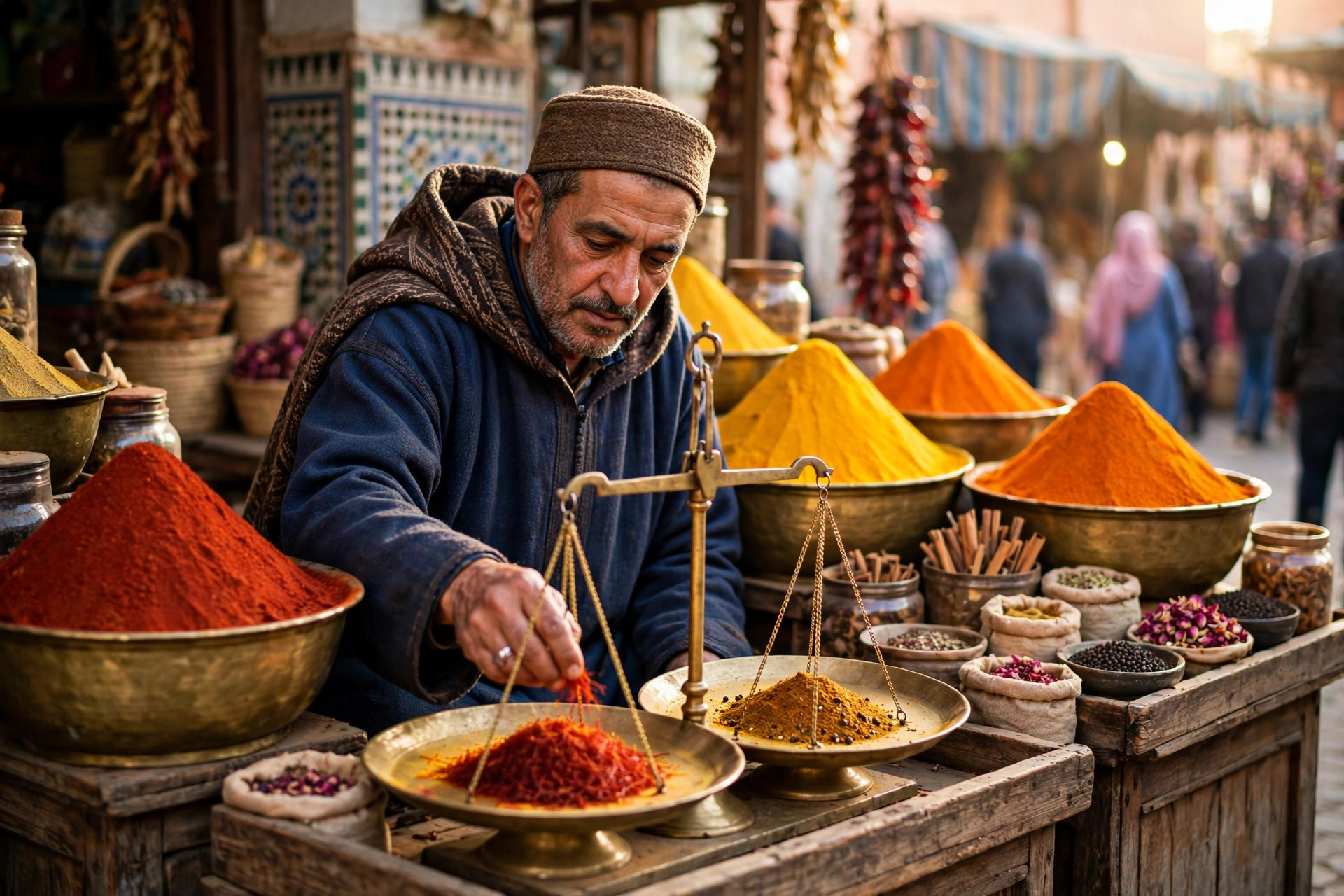
The market visit is the part of the class travellers remember most. The day starts in the souk: your teacher shows you how to pick a good tagine pot, how to tell real saffron from dyed corn silk, and how to buy preserved lemons and argan oil without paying tourist prices. Then you carry the shopping back to the kitchen and cook it.
A full-day class with a market visit costs 500–900 MAD ($50–$90) in most cities, against 350–600 MAD for a kitchen-only half-day — a premium of roughly 150–300 MAD for the market hour and the extra dish. It is worth paying if this is your first time in a Moroccan souk — the market hour is the best value inside morocco cooking class prices; if you have already been shopping in the medina for days, the kitchen-only class is better value. Our haggling guide explains the fair-price rules your teacher will be using at the stalls.
Family and Kids' Cooking Classes
Cooking classes are one of the best family activities in Morocco, and most schools welcome children from about six years old. A family class for two adults and two children typically costs 1,000–1,800 MAD ($100–$180), and many schools charge children under twelve at half price or less. The menu is usually simpler — bread, a chicken tagine, and orange salad — and the pace is slower.
Book a private family class if you can: a group class with strangers and two tired children is a long morning for everyone. Morning classes suit children better, and ask in advance about allergies — nut allergies matter here, because argan oil and some pastries are processed near nuts.
Vegetarian, Vegan and Gluten-Free Classes
Vegetarian cooking is easy in Morocco, and most classes can switch the menu with a day's notice at no change to morocco cooking class prices: a vegetable tagine, a seven-vegetable couscous, zaalouk, and harira without meat. Vegan classes are rarer — ask specifically, and expect a small surcharge of 50–100 MAD if the school has to shop separately.
Gluten-free is the hard one. Couscous is wheat, bread is everywhere, and most kitchens are not set up to avoid cross-contact, so a genuinely gluten-free class is rare and needs a private booking. Be direct when you book: say exactly what you cannot eat, rather than relying on the word "vegetarian" to mean the same thing it means at home. For the price of eating out instead, see our Morocco restaurant prices guide.
What to Expect: A Typical Class Hour by Hour
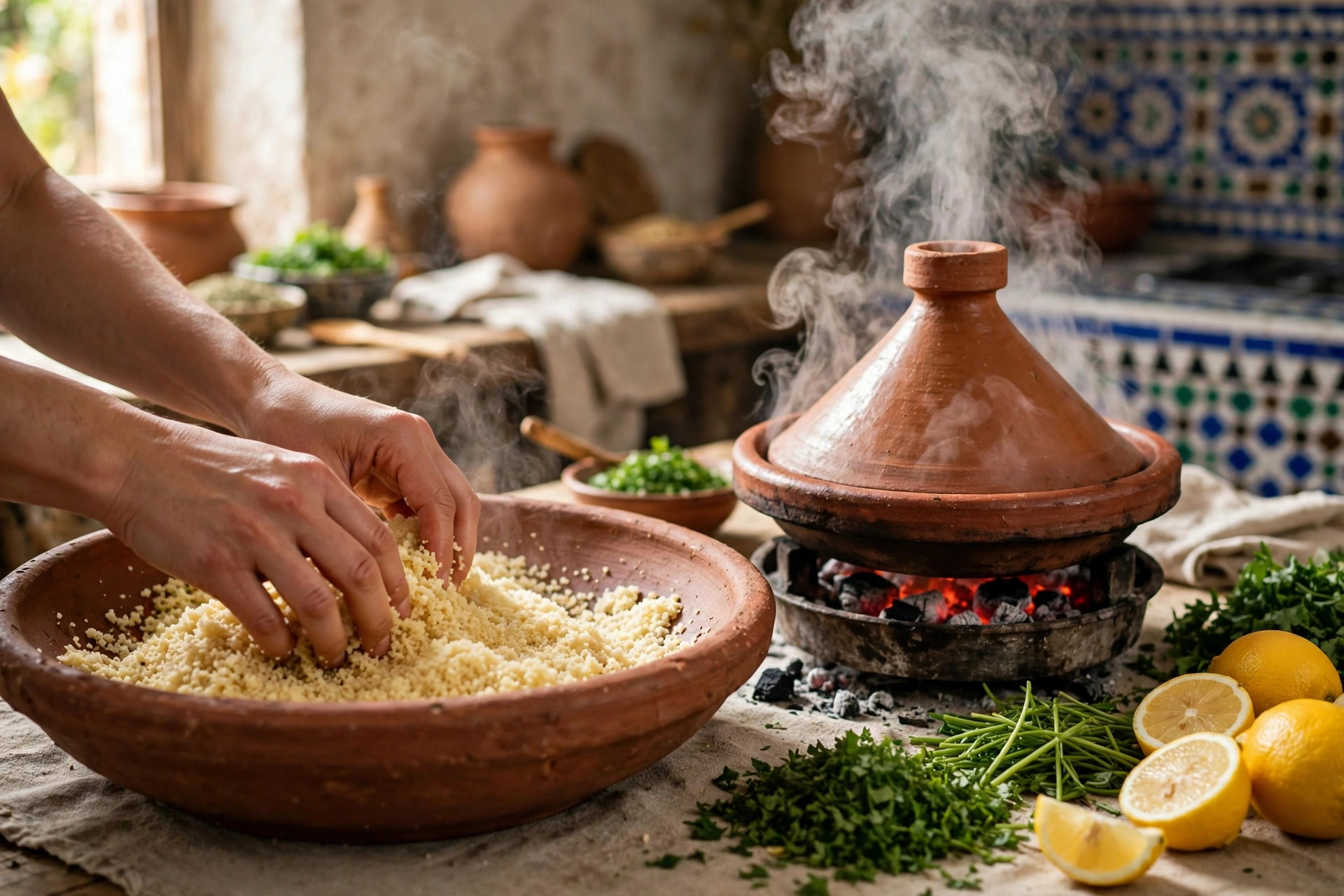
A half-day class usually starts at 10:00 and ends around 14:00, with lunch as the finish line — the schedule behind most morocco cooking class prices. The first hour is the market or the introduction: tea, a talk through the menu, and the spices laid out to smell and taste. The second hour is preparation — chopping onions and herbs, marinating the meat or vegetables, and learning to roll couscous by hand, which is the skill most people take home.
The third hour is the cooking: the tagine goes on the fire, the couscous steams twice, and the salads are assembled. The last half hour is the meal, eaten together, usually on a rooftop, with mint tea poured from a height. The pace is relaxed by design, and a good teacher explains why each step matters rather than just telling you what to do. Wear clothes you do not mind staining.
How to Book and When
Book one to three days ahead in high season (March to May and September to November), when the best classes sell out; in winter and in the summer heat, same-day booking often works. Riads and hotels can book a class for you, but they usually add a commission of 50–100 MAD on top of morocco cooking class prices, so booking direct with the school is cheaper.
Online platforms are convenient, but their prices run 10–20% above the school's direct price — compare the two before you book. Most schools ask for a deposit of 50% or full payment upfront, refundable if you cancel 24–48 hours ahead; check the rule before you pay, because no-show policies are strict in high season.
Hidden Costs and How to Avoid Them
The headline figure in morocco cooking class prices is usually honest, but a few extras can creep in. Transport to a class outside the medina is the most common extra beyond quoted morocco cooking class prices: some schools charge 50–100 MAD for pickup, or expect you to take a taxi. Ask whether pickup is included when you book. Drinks beyond mint tea and water — soft drinks, wine, extra coffee — are sometimes charged separately, typically 10–30 MAD each.
The other extra is the shopping: the market visit is a class, not a shopping trip, but some stalls will press you to buy saffron, argan oil or a tagine pot at the end, at prices that are not always the local ones. Buy your spices in the main souk later, after reading our Morocco souvenir prices guide, rather than at the class. Tipping the chef is optional: 20–50 MAD per person is generous.
Frequently Asked Questions
How much does a cooking class in Morocco cost?
Most group cooking classes in Morocco cost 350–900 MAD ($35–$90) depending on the city, the duration and whether a market visit is included — that range is the core of morocco cooking class prices in 2026. A half-day group class is 350–600 MAD, a full day with a market visit is 500–900 MAD, and a private class for two people starts around 900 MAD. Prices are planning ranges checked in November 2026.
Are cooking classes in Marrakech more expensive than in Fes?
Yes, slightly. Marrakech group classes run 400–650 MAD for a half-day against 350–600 MAD in Fes, because demand is higher and the grand riads charge a premium. Essaouira sits in the same range as Fes. The difference is small when you compare morocco cooking class prices city by city, so choose the city for the food and the atmosphere, not for a 50 MAD saving.
Do I need to speak French or Arabic to take a class?
No. Almost all classes aimed at visitors are taught in English, often with some French. Tell the school your language when you book, and avoid a class advertised only in French unless you speak it.
What dishes will I learn to cook?
A standard class covers two or three dishes: usually a tagine (chicken with preserved lemon, or vegetable), couscous with seven vegetables, a salad such as zaalouk, and mint tea. In Fes you are more likely to make pastilla; in Essaouira, a fish dish; in Marrakech, a harira or a mechoui-style lamb dish. The menu is usually fixed, so ask before booking if you have your heart set on one dish.
Can children join a cooking class?
Yes, most schools welcome children from about six years old, and many charge under-twelves at half price. A private family class is the best option with young children, and morning classes suit them better. Tell the school your children's ages and any allergies when you book.
Is a cooking class worth it in Morocco?
For most visitors, yes. A half-day class costs about the same as a good restaurant dinner, and you leave with a skill, the recipes, and a meal you cooked yourself. It is best value as a group class, and best as a private class if you are a serious cook or travelling with children.
Conclusion
Morocco cooking class prices reward the traveller who books direct, chooses a group class, and picks the city for its food rather than its fame: 350–600 MAD buys a proper half-day in most cities, 500–900 MAD adds the market visit that makes the day, and a private class at 900–1,500 MAD is worth it when the cooking itself is the point of the trip. The prices in this guide are planning ranges checked in November 2026, so confirm the exact morocco cooking class prices with the school before you book. Whichever city you choose, the tagine you make yourself will taste better than any you order — and the recipes come home with you.