
This ifrane travel guide is for travellers who want a different Morocco: pine-scented air, chalet roofs, snow in winter and lakes in summer. Ifrane is a small mountain town of about 15,000 people at 1,665 metres in the Middle Atlas, roughly 65 km south of Fez — built by the French in 1929 as a cool hill station.
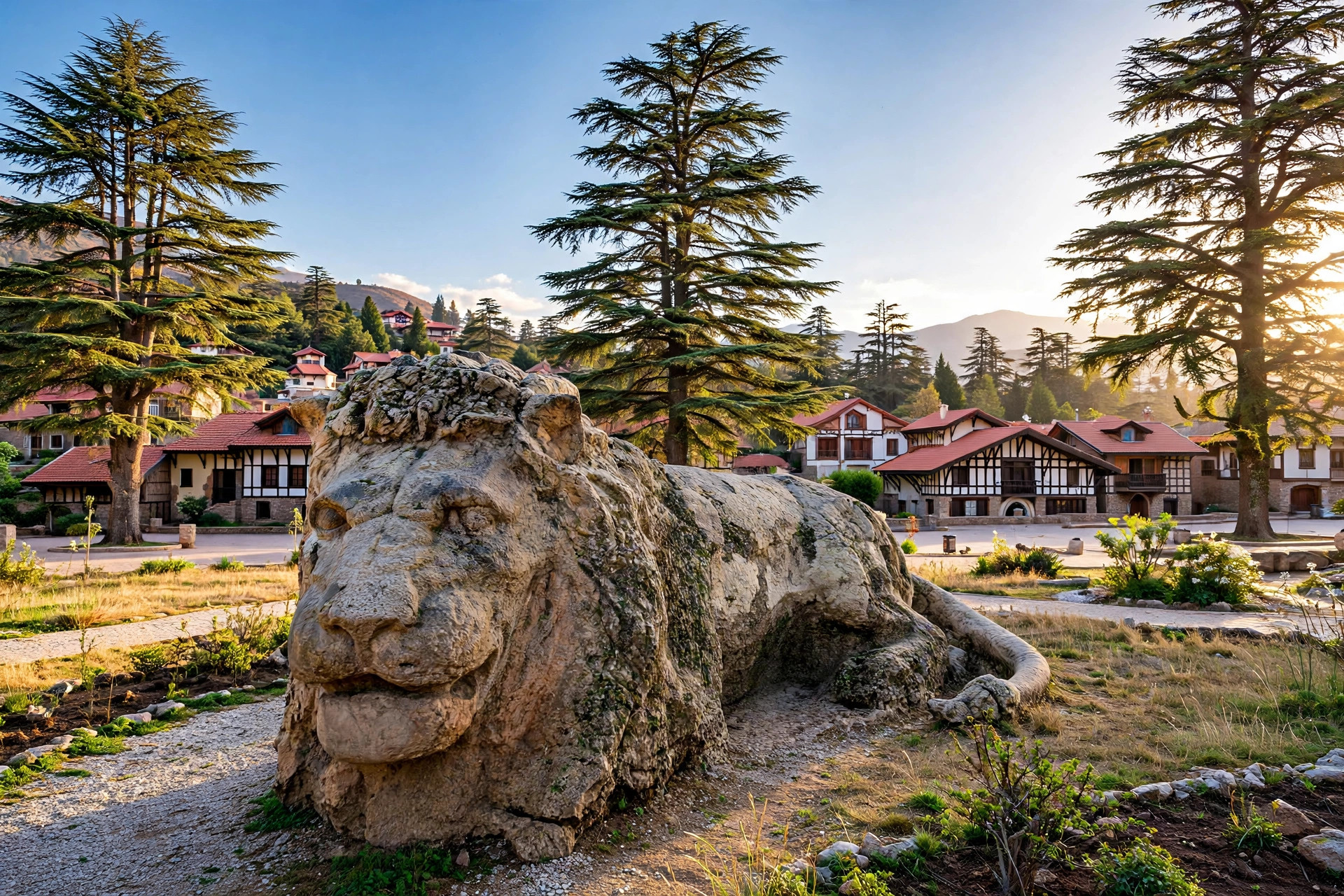
Ifrane feels like nowhere else in Morocco: cedar-lined streets, houses with pitched red roofs and stone chimneys, and a stone lion guarding the town centre. In summer it is a refuge from the heat of Fez and Marrakech; in winter it is Morocco's best-known snow town, with the slopes of Michlifen twenty minutes away.
This ifrane travel guide covers what to see, where to eat and sleep, what it costs, and how to get here — plus the lakes, forests and day trips that make it worth two nights.
All prices are in Moroccan dirhams (MAD), checked in November 2026, with dollar equivalents at roughly 10 MAD to $1 — planning ranges, so check on arrival. Ifrane costs more than most small Moroccan towns, but the forests, lakes and trails are free.
In this guide
- Ifrane at a Glance
- Why Visit Ifrane: Morocco's Little Switzerland
- The Lion Statue and the Town Centre
- The Cedar Forests and Barbary Macaques
- Dayet Aoua and the Middle Atlas Lakes
- Skiing at Michlifen
- Walking and Hiking Around Ifrane
- Where to Eat in Ifrane
- Where to Stay in Ifrane
- Getting to Ifrane (and Around)
- Costs: What to Budget in Ifrane
- Day Trips from Ifrane
- Best Time to Visit Ifrane
- Frequently Asked Questions
- Conclusion
Ifrane at a Glance
| Fact | Detail |
|---|---|
| Location | Middle Atlas, Ifrane province, Fès-Meknès region |
| Population | About 15,000 (2014 census) |
| Elevation | About 1,665 m above sea level |
| Distance from Fez | About 65 km south (~1 hour by road) |
| Distance from Meknes | About 70 km south-east |
| Distance from Azrou | About 18 km south |
| Main sights | Lion statue, cedar forests, Dayet Aoua, Michlifen ski slopes |
| Best time to visit | May–October for lakes and hiking; December–February for snow |
| How long to stay | 1–2 nights (2 with a ski day or a lake day) |
Why Visit Ifrane: Morocco's Little Switzerland
Most travellers picture Morocco as desert and medina. Ifrane breaks the picture completely, and that is the point of this ifrane travel guide. The town was founded in 1929, when the French protectorate built a hill station in the cedars so its officials could escape the summer heat, to a plan by the architect Henri Prost.
The name Ifrane comes from the Tamazight word for caves. Winter here is real winter — Ifrane recorded −23.9 °C in February 1935, often cited as among the coldest temperatures ever measured in Africa — and summer is mild, rarely above 30 °C.
What makes Ifrane worth the detour is the combination: a walkable little town with a famous statue, a national park of cedars and macaques on its doorstep, lakes within a short drive, and a ski station close enough for a morning on the slopes.
The Lion Statue and the Town Centre
The centrepiece of Ifrane — literally — is the stone lion in the middle of town, and the first stop on this ifrane travel guide. The Atlas lion was carved in 1930 by Henri Moreau, a French soldier, from a single block of limestone, and it is now the symbol of the town: every visitor photographs it, and the cafés around it are its social heart.
Around the statue stand the chalets with their steep pitched roofs, the post office, the town hall and a small park where families gather at dusk. The streets are clean, quiet and lined with cedars, and the whole centre can be walked in twenty minutes. There is no medina here — Ifrane is a twentieth-century town, and its charm is architectural rather than ancient.
The Cedar Forests and Barbary Macaques
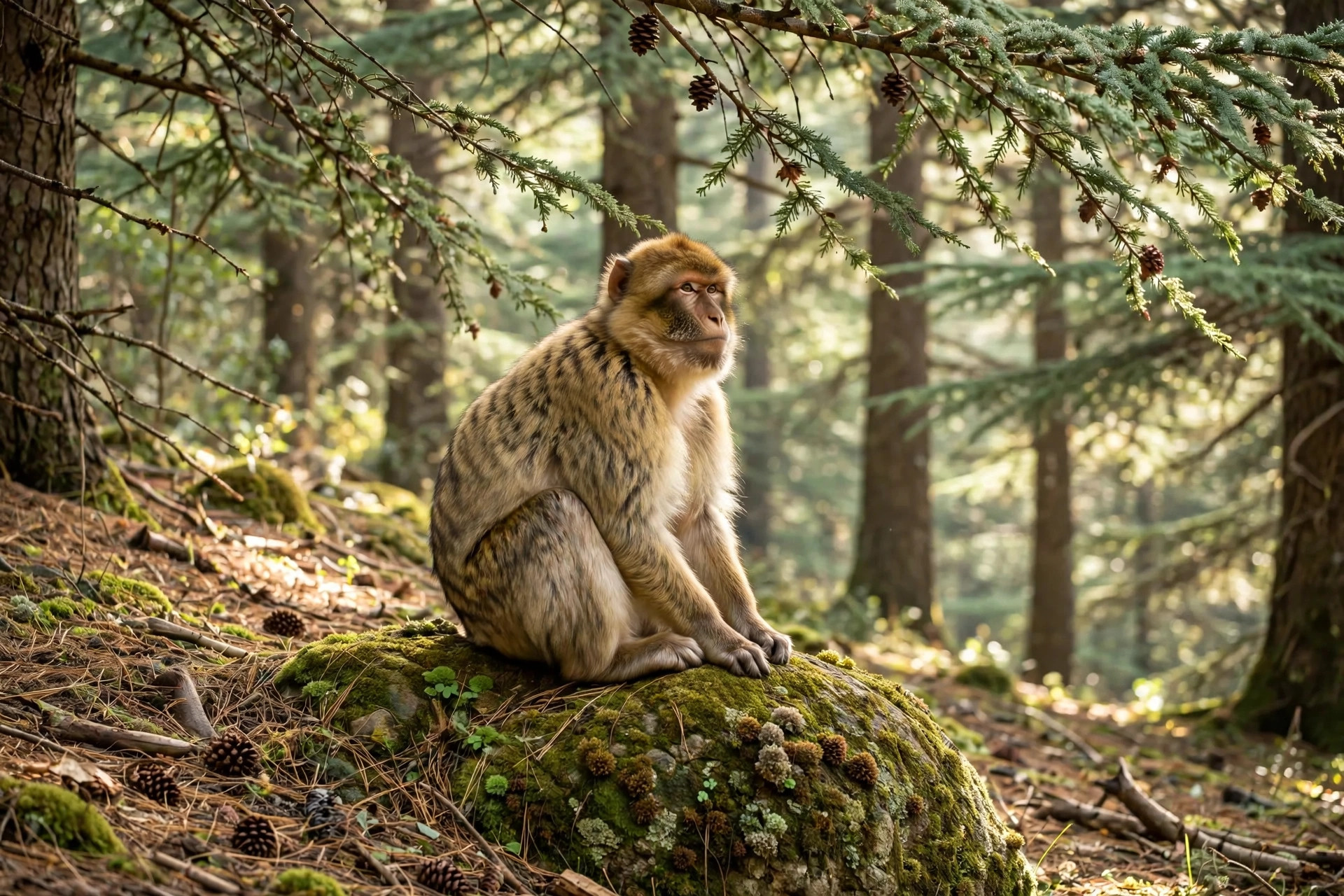
Ifrane's real treasure is around it, not in it: the cedar forests of the Middle Atlas, part of Ifrane National Park. The forests begin at the edge of town and stretch south towards Azrou, and they are the best place in Morocco to see Barbary macaques in the wild — a highlight of this ifrane travel guide. See Wikipedia's Ifrane page for the park's background.
The macaques are the forest's celebrities. The troops around the famous Cèdre Gouraud — a giant cedar named after a French general, about 30 km south near Azrou — are used to visitors and come down to the roadside to be photographed. Keep your distance and do not feed them: the animals can bite. A local guide, hired in Ifrane or Azrou for 150–300 MAD ($15–$30), knows where the troops are on any given day.
The cedars themselves are worth the walk: some are centuries old, with trunks too wide to hug and branches that hold snow in winter.
Dayet Aoua and the Middle Atlas Lakes
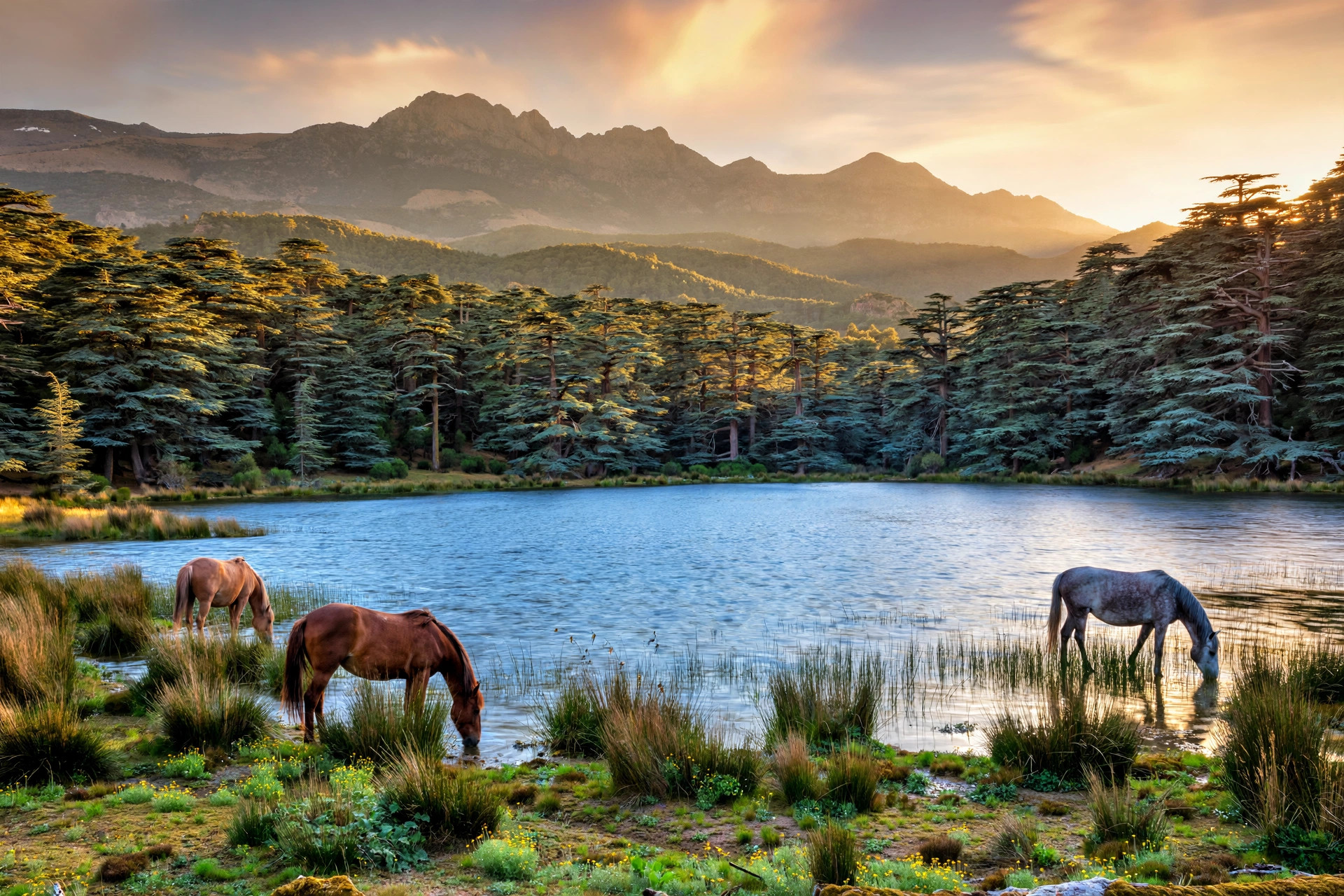
The Middle Atlas is a land of lakes, and the most visited is Dayet Aoua, about 15 km north of Ifrane — a full chapter of this ifrane travel guide. The lake sits in a wide valley of cedar forest and pasture, and in spring it fills with water and birdlife; in dry years it shrinks to marsh, so check the season before you go. Horses graze at the water's edge, shepherds watch their flocks, and forested slopes rise behind.
Dayet Aoua is a picnic lake rather than a swimming lake. Families from Fez arrive with baskets, and a few small cafés and horse-rental stalls work the shore in the warm months. A horse ride around the lake costs roughly 50–100 MAD ($5–$10) for a short circuit, and a rowing boat can sometimes be hired for 50–80 MAD ($5–$8). Bring your own food for a proper picnic.
Beyond Aoua, the lakes multiply. Dayet Hachlaf and Dayet Ifrah lie within a short drive, smaller and quieter, and Aguelmam Azegza — a deep blue lake ringed by cedar forest about 30 km south — is the most beautiful of them all. Late spring is the best time, when the water is high and the wildflowers are out.
Skiing at Michlifen
Ifrane is Morocco's snow town, and Michlifen is its ski station — about 20 km south of town, at around 2,000 metres. The season runs from December to March, depending on snowfall, and the station is small and friendly: a handful of pistes, a drag lift or two, and equipment rental on site. It is where the families of Fez and Meknes learn to ski.
Expect modest facilities and honest prices: a day's ski pass and equipment rental together typically cost 200–400 MAD ($20–$40), and a lesson runs about 150–250 MAD ($15–$25) per hour. The slopes suit beginners and intermediates; experts will find them short. Snow is never guaranteed — check conditions before you set out.
Even without skis, Michlifen is worth the drive in winter for the cedar forest in snow and the small chalets serving hot drinks. This ifrane travel guide rates Michlifen as the town's best half-day out.
Walking and Hiking Around Ifrane
Ifrane rewards walkers more than any other town in Morocco, and this ifrane travel guide keeps coming back to the trails. The town is built for strolling — clean pavements, gardens, and forest paths that start at the last houses. The most popular walk is the loop to the Ain Vittel spring.
Longer hikes head into Ifrane National Park, where the trails are not always signposted — for anything beyond an hour, hire a local guide in town (150–300 MAD, $15–$30 for a half day). Guides know the forest tracks and the macaque troops, and they are the safest way to explore the park's deeper corners. Carry water and a layer: mountain weather changes fast.
Where to Eat in Ifrane
Ifrane eats well for a small town: the restaurants cluster around the centre and the main road, and the style is Moroccan classics with a mountain twist. Expect tagines, grilled meats, harira and trout — the Middle Atlas streams supply trout to the town's restaurants, and a grilled trout with salad is the local signature, typically 60–100 MAD ($6–$10), and this ifrane travel guide's pick for lunch.
A full meal — soup, tagine or trout, bread and mint tea — costs 80–150 MAD ($8–$15) per person in a mid-range restaurant, and less in the small cafés and snack bars that serve the university crowd. Al Akhawayn University, founded in 1995 by King Hassan II, fills the town with students, and the cafés near the campus are the cheapest places to eat.
Where to Stay in Ifrane
Ifrane has the best hotels of any small town in Morocco, and accommodation is the one area where this ifrane travel guide advises booking ahead — weekends fill up fast with visitors from Fez and Casablanca. The landmark is the Michlifen Hotel & Golf, a grand chalet-style resort on the edge of town; rooms typically start around 1,200–2,000 MAD ($120–$200) a night.
Mid-range options cluster in the centre: comfortable hotels and guesthouses with heating — essential in winter — at 400–800 MAD ($40–$80) for a double. Budget travellers can find small hotels and apartments at 200–400 MAD ($20–$40). Whatever you choose, confirm the heating and hot water: mountain nights are cold, and a room without proper heating is miserable.
Getting to Ifrane (and Around)
Getting to Ifrane is straightforward: the road south from Fez climbs into the Middle Atlas through the cedar forest. Once here, Ifrane is a walking town, and petit taxis cover the rest for 5–10 MAD — this ifrane travel guide's advice is to walk the centre and taxi the rest.
By bus and grand taxi
CTM and local buses run from Fez (about 1 hour, 25–40 MAD, $2.50–$4) and from Meknes (about 1.5 hours, 30–50 MAD, $3–$5). Grand taxis run the same routes faster and leave when full.
By train — almost
Ifrane has no train station. The nearest ONCF stations are at Fez and Meknes, both about an hour away by road; buses and grand taxis cover the last stretch. Check times on ONCF's website before you travel.
By car
The N13 from Fez is the main route: a good road that climbs through the forest. In winter, carry chains or check conditions — snow can close the higher passes, and the road to Michlifen is the first to be affected. Read our Fez travel guide for the city at the foot of the mountains.
Costs: What to Budget in Ifrane
Ifrane costs more than most Moroccan small towns — but it is still far cheaper than a European ski town. The table below is the budget summary of this ifrane travel guide, checked in November 2026. Cash is useful: the small cafés, the horse rentals and the petit taxis take dirhams only.
| Item | Typical cost (MAD) | Approx. USD |
|---|---|---|
| Double room, mid-range hotel | 400–800 per night | $40–$80 |
| Double room, budget hotel | 200–400 per night | $20–$40 |
| Grilled trout lunch | 60–100 | $6–$10 |
| Full restaurant dinner | 80–150 | $8–$15 |
| Mint tea in a café | 10–15 | $1–$1.50 |
| Café breakfast | 20–35 | $2–$3.50 |
| Ski pass + rental, Michlifen | 200–400 per day | $20–$40 |
| Local guide, half day | 150–300 | $15–$30 |
| Grand taxi, half-day hire | 200–350 | $20–$35 |
| Petit taxi in town | 5–10 | Under $1 |
| Bus Fez–Ifrane | 25–40 | $2.50–$4 |
| Comfortable daily budget | 500–900 | $50–$90 |
Day Trips from Ifrane
Ifrane makes a good base for the Middle Atlas, and this ifrane travel guide's first suggestion is Azrou, 18 km south — the cedar town, with the Cèdre Gouraud nearby and the macaque troops that gather along the forest road. Read our Meknes travel guide for the imperial city an hour north-west, and our guide to living in Khenifra for the Middle Atlas town further south.
Fez is an hour north, and the contrast is the point: leave the cedars and the cold air in the morning and be in the medina by ten. Meknes is a similar distance, quieter than Fez and worth a day of its own.
Best Time to Visit Ifrane
The best time for this ifrane travel guide depends on what you want. For lakes, hiking and the cedar forests, come from May to October, when the days are mild and the water is high; June is the sweet spot, with wildflowers and long evenings. For snow and skiing, come from December to February, and check the Michlifen conditions first.
Spring and autumn are the quiet seasons: the town is at its greenest, the hotels are cheapest, and the forests are empty. See our best time to visit Morocco guide, and pack a warm layer whatever the season.
Frequently Asked Questions
Is Ifrane worth visiting?
Yes — if you like mountains, forests and cool air, and this ifrane travel guide's answer is a clear yes. Ifrane is not a medina town: no souks, no ancient monuments. It has an alpine centre, a famous lion statue, cedar forests with macaques, lakes and a ski station.
How do I get from Fez to Ifrane?
By bus or grand taxi from Fez, about 1 hour and 25–40 MAD ($2.50–$4). There is no train to Ifrane; the nearest stations are Fez and Meknes.
Can I see snow in Ifrane?
Yes, in winter — typically December to February, with January and February the best months for snow. The town itself gets snow most winters, and Michlifen, 20 km away, is the ski station. Check conditions first.
Is Ifrane cold?
Yes, by Moroccan standards. Winter nights regularly fall below freezing, and the town recorded −23.9 °C in 1935, a figure often cited as among the coldest ever measured in Africa. Summer is mild, but evenings are cool.
Can I visit the cedar forests without a car?
Yes — and it is the highlight of this ifrane travel guide. The forest begins at the edge of town, and the lakes are reachable by grand taxi. For the deeper forest, hire a guide or a grand taxi for a half day (200–350 MAD, $20–$35).
How many days do I need in Ifrane?
One full day covers the lion statue, the centre and a lake. Two days adds a ski morning at Michlifen or a forest hike and a day trip to Azrou — the pace this ifrane travel guide recommends.
Conclusion
Ifrane is Morocco's little Switzerland — a town that proves the country is more than desert and medina. The stone lion, the chalet roofs, the cedar forests with their macaques, the lakes of the Middle Atlas and the snow at Michlifen are the most surprising stop in the kingdom.
Come for a weekend between Fez and the desert, walk the forests in the morning, eat trout for lunch, and leave feeling you have seen a Morocco most travellers never meet. That is what this ifrane travel guide promises — and Ifrane, quietly and coolly, delivers.