
Moroccan souks are wonderful and confusing in equal measure. One stall asks 3,000 dirhams for a rug, the next asks 800 for one that looks the same. Knowing morocco souvenir prices before you shop is the difference between a treasure and a regret.
Every price below is an approximate planning range in Moroccan dirhams (MAD), with a US dollar equivalent at 10 MAD to $1. Prices move with the season, the city and your bargaining, so confirm on arrival. Disputed dates are flagged as unsettled, not asserted.
In this guide
- Morocco Souvenir Prices at a Glance
- How Souvenir Shopping Works in Morocco
- Rugs: Beni Ourain and Azilal Prices
- Leather Goods: Babouches, Bags and Jackets
- Fez Blue Ceramics and Safi Pottery
- Argan Oil: Real Prices and How to Spot Fakes
- Lanterns, Metalwork and Brass
- Spices, Saffron and Herbal Remedies
- Kaftans, Textiles and Scarves
- Where Prices Differ by City
- How to Bargain: A Simple Framework
- Spotting Fakes: A Practical Checklist
- Packing, Shipping and Customs
- Frequently Asked Questions
- Conclusion
Morocco Souvenir Prices at a Glance
If you only remember one table from this guide, make it this one. These morocco souvenir prices are November 2026 planning ranges.
| Item | Typical range (MAD) | Approx. USD | Notes |
|---|---|---|---|
| Small Beni Ourain rug (about 1 x 1.5 m) | 800–2,500 | $80–$250 | Hand-knotted wool; machine copies cost far less |
| Medium Beni Ourain rug (about 2 x 3 m) | 3,000–9,000 | $300–$900 | Price rises with knot density and age |
| Azilal rug (about 1.5 x 2 m) | 1,500–5,000 | $150–$500 | Colourful, woollen, with Amazigh motifs |
| Leather babouches (pair) | 80–250 | $8–$25 | Goat leather; dyed pairs cost a little more |
| Leather bag | 300–1,200 | $30–$120 | Hand-stitched; zips and lining add value |
| Leather jacket | 800–3,000 | $80–$300 | Full-grain costs more than split leather |
| Fez blue ceramic plate (medium) | 60–250 | $6–$25 | Hand-painted; factory pieces are cheaper |
| Tagine pot (decorative, medium) | 100–400 | $10–$40 | Cooking tagines are usually unglazed clay |
| Argan oil, cosmetic (100 ml) | 80–200 | $8–$20 | Pure, cold-pressed; see the fake checks below |
| Argan oil, culinary (1 litre) | 300–600 | $30–$60 | Roasted kernels; darker and nuttier |
| Brass lantern (medium) | 150–600 | $15–$60 | Hand-pierced; size and detail set the price |
| Saffron (1 gram) | 30–80 | $3–$8 | Real saffron is never cheap; beware fakes |
| Kaftan (ready-made) | 250–900 | $25–$90 | Embroidered and silk-blend kaftans cost more |
| Wool scarf or shawl | 60–250 | $6–$25 | Handwoven pieces sit at the top of the range |
In a souk, the first price you hear is an opening bid, not a price tag. The sections below explain what drives each range.
How Souvenir Shopping Works in Morocco
Most souk stalls have no price tags. The seller names a price, you counter, and the two of you meet somewhere in between. This is normal and expected.
In a busy tourist souk, the opening price is often two to four times the price the seller will accept. That gap is why morocco souvenir prices feel so unpredictable.
Browse before you buy anything. Walk the whole souk, note prices, and only then negotiate for the piece you liked best. Pay in dirhams, not euros or dollars, because the exchange rate a stall offers is never in your favour.
Rugs: Beni Ourain and Azilal Prices
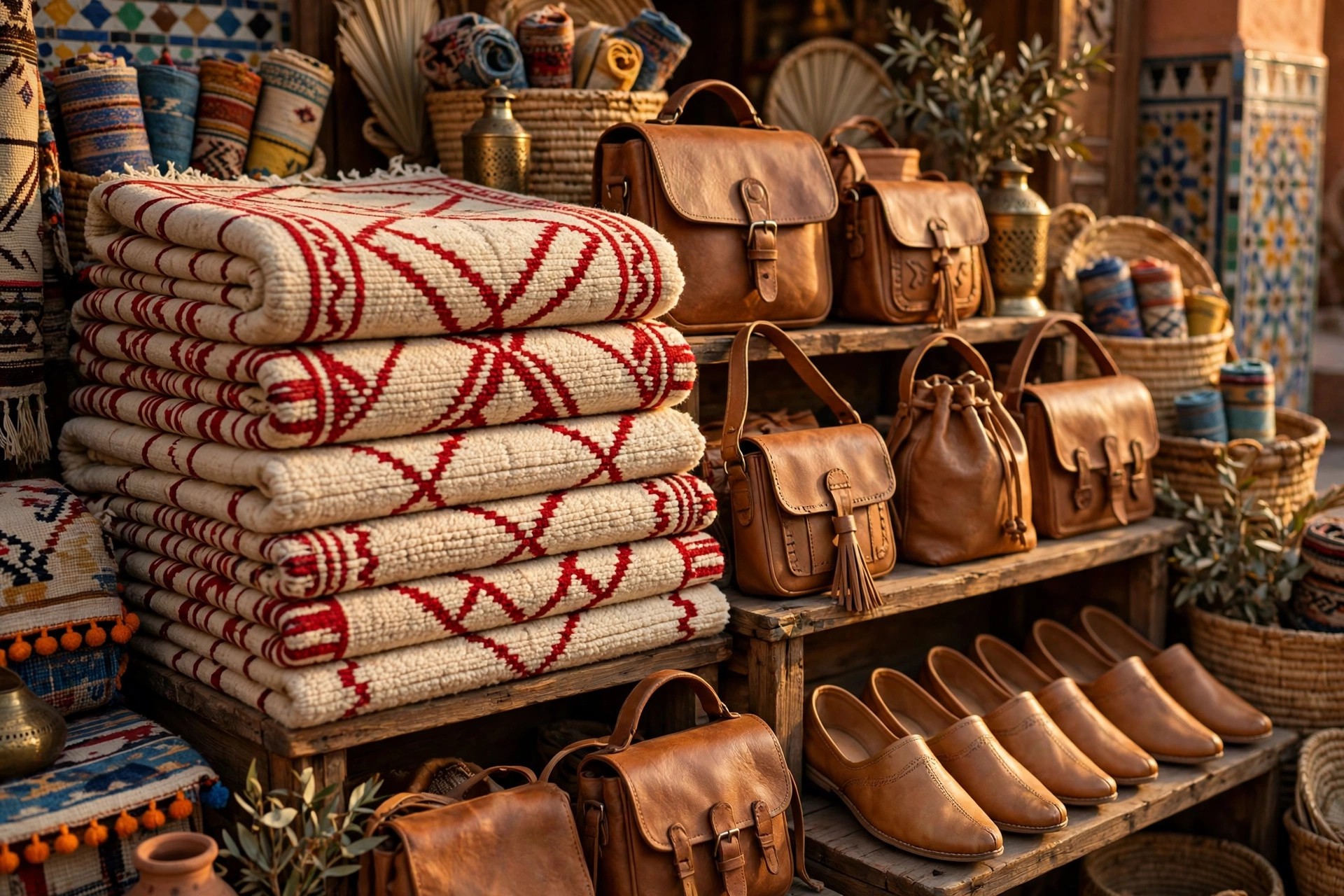
Rugs are the biggest souvenir purchase most travellers make in Morocco. A genuine hand-knotted Beni Ourain rug is made by Amazigh women of the Middle Atlas from undyed sheep wool. The tradition is old; the exact date its modern form appeared is not settled.
A small rug of about 1 x 1.5 metres sells for 800–2,500 MAD ($80–$250). A medium rug of about 2 x 3 metres runs 3,000–9,000 MAD ($300–$900). Any "Beni Ourain" of 2 x 3 metres offered for 500 MAD breaks every rule of morocco souvenir prices: it is almost certainly a machine-made copy.
Azilal rugs come from the High Atlas and look completely different: a cream wool base covered in bright, irregular splashes of colour and simple symbols. They are usually a little cheaper than Beni Ourain rugs of the same size, at 1,500–5,000 MAD ($150–$500) for a rug of about 1.5 x 2 metres. No two are alike.
| Rug type and size | Typical range (MAD) | Approx. USD | What sets the price |
|---|---|---|---|
| Beni Ourain, small (1 x 1.5 m) | 800–2,500 | $80–$250 | Knot density, wool softness |
| Beni Ourain, medium (2 x 3 m) | 3,000–9,000 | $300–$900 | Size, density, age |
| Beni Ourain, large (3 x 4 m+) | 10,000–25,000 | $1,000–$2,500 | Rarity, vintage value |
| Azilal, medium (1.5 x 2 m) | 1,500–5,000 | $150–$500 | Colour range, wool quality |
| Azilal, small (1 x 1.5 m) | 700–2,000 | $70–$200 | Simplicity of design |
| Boucherouite rag rug (1 x 1.5 m) | 300–1,200 | $30–$120 | Recycled cloth, folk style |
| Kilim / flatweave (2 x 3 m) | 1,000–4,000 | $100–$400 | Region, wool, dye |
| Runner (0.8 x 2.5 m) | 600–2,500 | $60–$250 | Length, pattern complexity |
Before you pay, turn the rug over. A hand-knotted rug shows the same pattern on the back, slightly less crisp, with visible knots. A machine copy has a stiff, uniform backing, with glue or a fabric lining hiding the weave. Real wool feels soft and slightly greasy, while synthetic copies feel dry and plasticky.
Leather Goods: Babouches, Bags and Jackets
Fez is the heart of Moroccan leather, where morocco souvenir prices reward buying at the source. The Chouara tannery, one of the oldest in the world, still dyes hides in stone vats, though the exact date of its founding is not settled. You can read the background on the Chouara Tannery before you visit.
Babouches, the pointed leather slippers, are the classic small purchase, and morocco souvenir prices for them are refreshingly simple. A plain pair in natural tan goat leather costs 80–180 MAD ($8–$18). Dyed pairs in yellow, red or blue run 120–250 MAD ($12–$25).
Leather bags are the next step up. A simple hand-stitched shoulder bag sells for 300–700 MAD ($30–$70). A larger tote with a proper lining, brass fittings and a zip runs 600–1,200 MAD ($60–$120). A simple goat-leather jacket costs 800–1,500 MAD ($80–$150), and a well-cut lambskin jacket with a lining runs 1,500–3,000 MAD ($150–$300).
Fez Blue Ceramics and Safi Pottery
Fez blue is the most recognisable pottery in Morocco: deep cobalt blue and white, painted by hand. A medium hand-painted plate costs 60–250 MAD ($6–$25). A hand-painted vase runs 150–600 MAD ($15–$60). Factory-made pieces with printed patterns sell for a fraction of that, often 20–50 MAD ($2–$5) for a plate. That gap explains most of the spread in morocco souvenir prices for ceramics.
When comparing morocco souvenir prices for ceramics, always check whether the piece is hand-painted or printed. A Safi bowl costs 30–120 MAD ($3–$12), a large serving tagine 100–400 MAD ($10–$40), and a decorative platter 150–500 MAD ($15–$50). Buying in Safi itself is usually cheaper than buying Safi pottery in Marrakech or Fez.
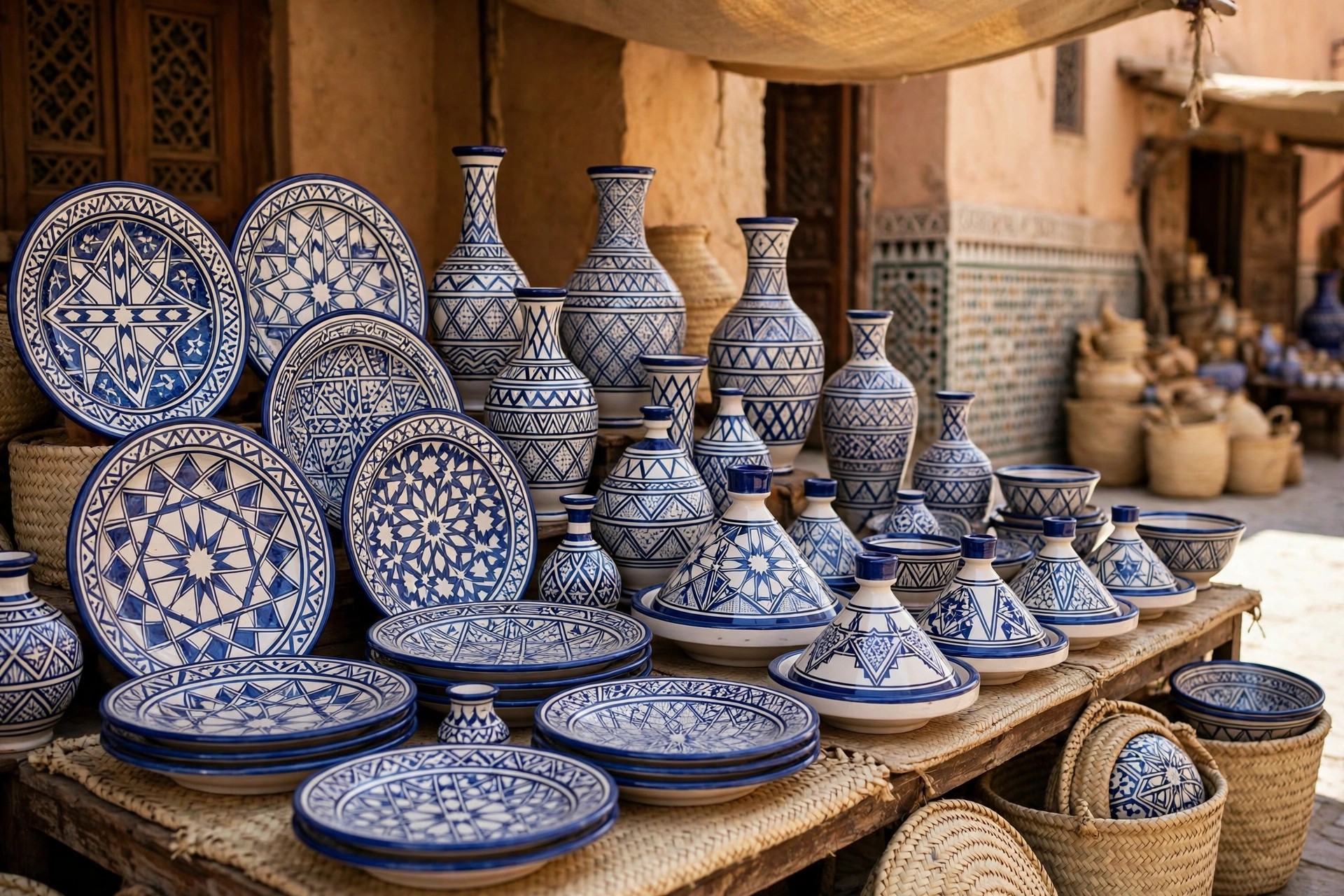
How do you tell hand-painted from printed? Hand-painted lines wobble slightly, colours vary a little, and the same motif is never perfectly identical twice. Printed patterns are razor-sharp and repeat exactly.
Argan Oil: Real Prices and How to Spot Fakes
Argan oil is the most faked souvenir in Morocco, and it is the section where morocco souvenir prices matter most as a warning system. Real argan oil comes only from the argan tree of south-west Morocco, and it takes roughly 30 kilograms of fruit to make a single litre of oil.
For cosmetic argan oil, expect 80–200 MAD ($8–$20) for 100 ml, and 150–350 MAD ($15–$35) for 250 ml. Culinary argan oil, made from roasted kernels and used in cooking, costs 300–600 MAD ($30–$60) per litre. If someone offers you a litre of "pure argan oil" for 100 MAD, it is not pure argan oil. Below those ranges, morocco souvenir prices for argan oil are a warning sign, not a bargain.
Buy from a women's cooperative or a fixed-price shop with a clear label, and read the label before you pay. Real argan oil lists one ingredient: Argania spinosa kernel oil. If the label lists other oils, fragrance or "argan extract" buried in a long list, walk away. You can check the background on argan oil to understand how it is made and why the price floor exists.
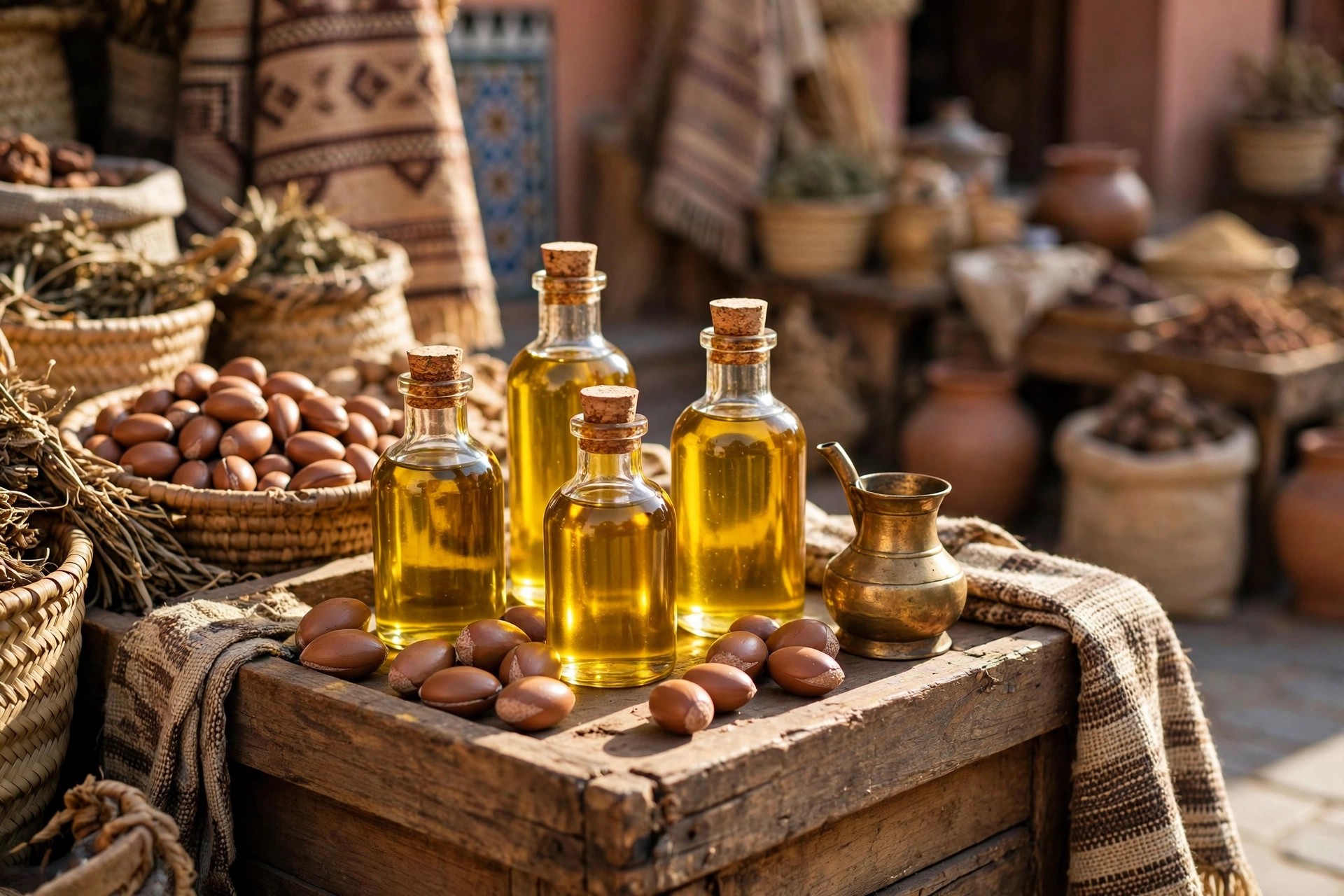
The quick tests help, but none of them is proof on its own. Real cosmetic argan oil is pale gold, absorbs quickly, and smells faintly nutty, not perfumed. Rub a drop between your fingers: it should feel light, not greasy, and sink into the skin within a minute or two.
Lanterns, Metalwork and Brass
Moroccan lanterns look best in a photograph and worst in a suitcase, so plan for the size. A small pierced-brass lantern costs 80–250 MAD ($8–$25). A medium lantern, the kind that hangs over a table, runs 150–600 MAD ($15–$60). A large floor lantern can cost 800–2,500 MAD ($80–$250). Hand-pierced work costs more than stamped patterns, as with every category in this guide to morocco souvenir prices.
Brass trays, teapots and mirrors follow the same logic. A full mint tea set with a teapot and six glasses runs 250–800 MAD ($25–$80). Silver jewellery is a separate world: a simple silver ring costs 100–400 MAD ($10–$40), while a heavy bracelet can reach 500–2,000 MAD ($50–$200). Check the wiring if a lantern is electric, since Moroccan plugs differ from European and North American standards.
Spices, Saffron and Herbal Remedies
The spice pyramids of the souk are beautiful, and the spices are good value. A small bag of cumin, paprika or ginger costs 10–30 MAD ($1–$3) per 100 grams. Ras el hanout, the house blend of a dozen or more spices, sells for 20–50 MAD ($2–$5) per 100 grams. These are the lowest morocco souvenir prices in this guide.
Saffron deserves a warning of its own. Real Moroccan saffron, mostly grown around Taliouine, costs 30–80 MAD ($3–$8) per gram. The trap is the fake version, sold for 5–10 MAD per gram, which is usually dyed corn silk or safflower. Real saffron threads are deep red with a slightly orange tip, and they smell of hay and honey.
Herbal remedies are sold everywhere, from kohl to musk to dried herbs for tea. Prices are low, usually 10–50 MAD ($1–$5) for a small bag or bottle, but be careful with anything you plan to put on your skin or swallow. Buy from an established herbalist and ask exactly what it is.
Kaftans, Textiles and Scarves
A simple ready-made cotton kaftan costs 250–500 MAD ($25–$50). A kaftan with embroidery, beading or a silk blend runs 500–900 MAD ($50–$90). A made-to-measure kaftan from a tailor starts around 800 MAD ($80) and can reach 2,000 MAD ($200) or more for fine silk and heavy hand embroidery. Remember that morocco souvenir prices for made-to-measure work include the tailor's labour.
Jellabas, the hooded robes worn across Morocco, are cheaper: 200–600 MAD ($20–$60) for a good wool or cotton one. Handwoven wool scarves and shawls sell for 60–250 MAD ($6–$25), and cotton scarves in bright colours go for 30–100 MAD ($3–$10). Check the fabric before you buy, and look at the seams from the inside, where shortcuts show.
Where Prices Differ by City
Marrakech, the most visited city, has the highest opening prices and the most aggressive selling, but also the widest choice. Fez is cheaper for leather and ceramics, because the workshops are there. Essaouira is good for argan oil and woodwork, and its souk is calmer. City differences are one of the biggest reasons morocco souvenir prices vary so much from one traveller's report to the next.
| City or setting | Price level | Best buys | Bargaining room |
|---|---|---|---|
| Marrakech medina | Highest | Widest choice, rugs, lanterns | Large: opening prices often 3–4x |
| Fez medina | Medium | Leather, Fez blue ceramics | Good: workshops nearby |
| Essaouira medina | Medium-low | Argan oil, thuya wood, art | Moderate: calmer souk |
| Chefchaouen medina | Medium | Woven textiles, scarves | Moderate: small shops |
| Agadir / Taroudant | Lower | Argan oil, cooperatives | Small: fair prices already |
| Fixed-price shop (any city) | Medium-high | Guaranteed quality, no haggle | Almost none |
| Artisan cooperative | Fair | Direct from makers | Small or none |
The rule is simple: buy each thing where it is made — the simplest rule in this guide to morocco souvenir prices. Rugs in the Atlas foothills or from a rug cooperative, leather in Fez, ceramics in Fez or Safi, argan oil in the Souss, and woodwork in Essaouira. Fixed-price shops suit many travellers better than the souk: you pay 20–50% more, but a fair price for a genuine item with no stress.
How to Bargain: A Simple Framework
Start by showing interest without showing excitement. Pick the item up, look at it, ask the price, and then pause. The pause matters: it tells the seller you are thinking, not desperate.
Your first counter-offer should be about a third to half of the opening price. If the seller asks 900 MAD, offer 300–400. That sounds rude to a first-timer, but it is the normal opening move, and the seller expects it. A good deal usually lands at 40–60% of the opening price in a tourist souk.
Set your walk-away price before you start, and mean it. If you reach it and the seller will not meet you, thank them, put the item down, and walk away slowly. Never start bargaining unless you actually want the item. Our haggling guide walks through the same framework with more examples and phrases. That is how the morocco souvenir prices in this guide were set.
Spotting Fakes: A Practical Checklist
Fakes cluster around the most valuable items: rugs, argan oil, leather and saffron. The checklist below gives you one quick test for each, so you can check before you pay rather than after you get home. Learning these tests is the best protection you have.
| Item | Sign of the real thing | Sign of a fake |
|---|---|---|
| Beni Ourain rug | Pattern visible on the back, visible knots, soft wool smell | Stiff backing, glue, fabric lining, chemical smell |
| Argan oil | One ingredient on the label, pale gold, absorbs fast, faint nutty smell | Long ingredient list, strong perfume, greasy feel |
| Leather | Creases softly, smells of leather, neat stitching, leather sole | Stiff, plasticky shine, cardboard sole, chemical smell |
| Fez ceramics | Wobbling hand-painted lines, uneven rim, thumbprint on base | Razor-sharp printed pattern, perfectly uniform |
| Saffron | Deep red threads, hay smell, colours water slowly golden | Instant bright red water, uniform orange threads |
| Silver jewellery | Stamped 925, solid weight, tarnishes slowly | Very light, no stamp, bright white coating |
| "Silk" scarf | Warm feel, wrinkles then smooths, uneven weave | Slippery plastic feel, perfectly even, no wrinkle |
The single best defence against fakes is where you buy. A cooperative, a workshop you can watch, or a fixed-price shop with a reputation will almost never sell you a fake, because their business depends on trust. No list of morocco souvenir prices can help you if the item itself is not what it claims to be.
Packing, Shipping and Customs
Rugs roll; ceramics do not. Roll a rug tightly, tie it, and carry it as hand luggage if you can, because checked luggage is where rugs get damp and crushed. A medium rug rolls to about the size of a yoga mat and usually fits in an overhead locker.
Ceramics need wrapping. Ask the seller to wrap each piece in newspaper, then in a plastic bag, then in cardboard, and pack them in the middle of your suitcase surrounded by clothes. If you are buying a lot, consider shipping: many larger shops will arrange insured shipping, typically 300–800 MAD ($30–$80) for a small box to Europe or North America. Shipping costs belong in any honest total of morocco souvenir prices.
Most countries allow a reasonable quantity of souvenirs for personal use without duty, but some countries restrict the import of certain animal products, including some leather goods. Keep your receipts, and declare anything valuable honestly. Exporting genuine antiques is restricted in Morocco, so ask the seller if a piece looks genuinely antique.
Frequently Asked Questions
How much should I budget for souvenirs in Morocco?
For a one-week trip, budget 1,000–3,000 MAD ($100–$300) per person for items like ceramics, spices, scarves and argan oil. Add 3,000–10,000 MAD ($300–$1,000) if you plan to buy a rug or a leather jacket. These morocco souvenir prices are November 2026 planning ranges, so confirm on arrival.
Are Morocco souvenir prices negotiable everywhere?
Almost everywhere in the souks, yes. Morocco souvenir prices are negotiable in the medina stalls, the rug shops and the leather workshops. Fixed-price shops, cooperatives and supermarkets are the exceptions: their prices are labelled and rarely move.
What is a fair price for a Beni Ourain rug in 2026?
A small hand-knotted Beni Ourain rug of about 1 x 1.5 metres fairly costs 800–2,500 MAD ($80–$250), and a medium rug of about 2 x 3 metres fairly costs 3,000–9,000 MAD ($300–$900). Anything far below those ranges is likely a machine-made copy.
How can I tell real argan oil from fake?
Real argan oil lists a single ingredient, Argania spinosa kernel oil, and it is pale gold and faintly nutty in smell. Expect 80–200 MAD ($8–$20) for 100 ml of cosmetic oil and 300–600 MAD ($30–$60) per litre of culinary oil.
Where is the cheapest place to buy souvenirs in Morocco?
Buy each item where it is made — and that is where morocco souvenir prices are fairest: leather and ceramics in Fez, argan oil around Agadir and Taroudant, pottery in Safi, and rugs from Atlas cooperatives. Marrakech has the widest choice but the highest opening prices.
Can I pay by card in the souks?
Most small souk stalls take cash only, in dirhams. Larger shops and cooperatives often accept cards, but they may add a surcharge. Bring dirhams for the souks and keep small notes handy. For everyday costs beyond souvenirs, see our Morocco restaurant prices guide.
Conclusion
Good souvenir shopping in Morocco comes down to three things: knowing morocco souvenir prices before you start, buying each item where it is made, and bargaining with a smile and a firm ceiling. A hand-knotted Beni Ourain rug, a pair of Fez babouches, a blue ceramic plate and a bottle of real argan oil are worth their price when genuine, and overpriced when not.
If you are still planning the food side of your trip, our Moroccan food guide covers what to eat and what it costs, and the Costs & Practical Life archive has every budgeting guide on the site. Prices here are November 2026 planning ranges, so confirm on arrival, and enjoy the souks.