
This dakhla travel guide is for travellers who want the Morocco most visitors never reach: a low, sun-bleached port town on a narrow finger of sand where the Sahara meets the Atlantic, sheltering a lagoon so flat and so windy that it has become one of the best kitesurfing spots on the planet. Dakhla sits about 550 kilometres south of Laayoune and roughly 1,170 kilometres south of Marrakech — and that distance is exactly the point.
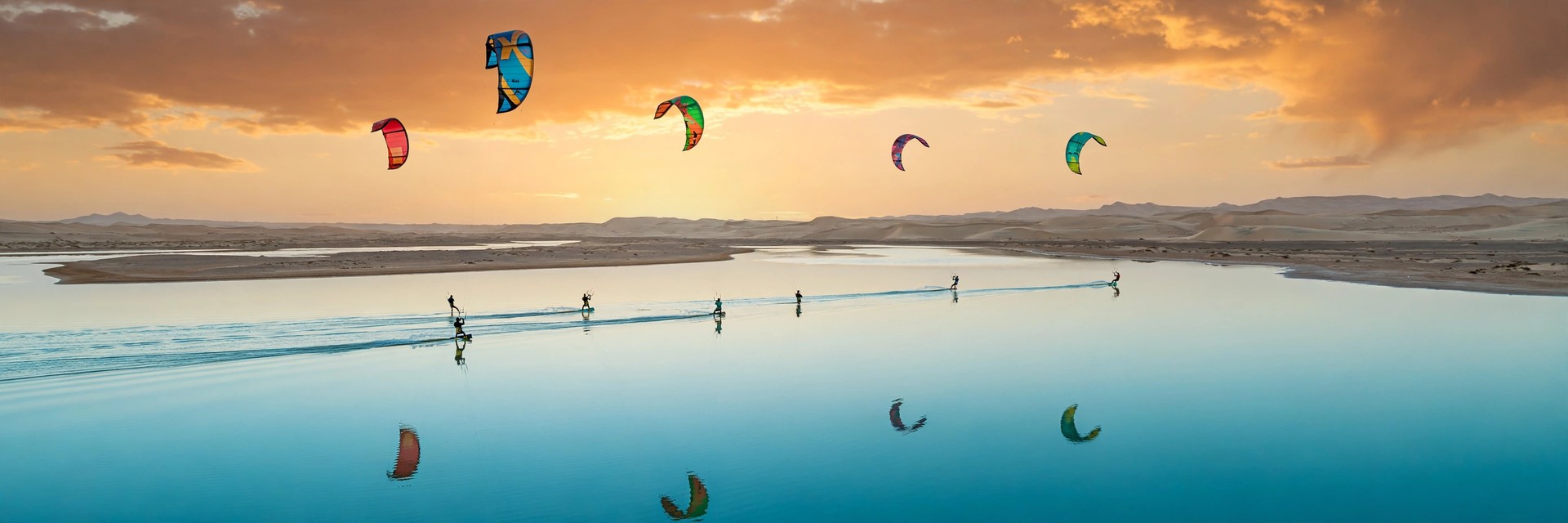
Dakhla is not a city of monuments. There is no old medina to get lost in, no imperial gate to photograph, no famous square. What there is: a vast turquoise lagoon that changes colour with the tide, dozens of kites leaning across the sky, oyster farms in shallow water, flamingos on the mudflats, a white dune rising straight out of the sea. This dakhla travel guide covers the lagoon and the wind, the history, the camps and hotels, the food, the costs, and how to get here in 2026.
All prices are in Moroccan dirhams (MAD), checked in November 2026, with dollar equivalents at roughly 10 MAD to $1. They are planning ranges, not promises — confirm prices on arrival.
In this guide
- Dakhla at a Glance
- Why Dakhla Is Worth the Long Journey
- Where Is Dakhla?
- A Short History: From Villa Cisneros to Kitesurf Capital
- When to Visit Dakhla
- How to Get to Dakhla
- Getting Around Dakhla
- Things to Do in Dakhla
- Where to Stay in Dakhla
- Where to Eat in Dakhla
- How Much Does Dakhla Cost?
- A 3-Day Dakhla Itinerary
- Dakhla Travel Guide: Practical Tips
- Frequently Asked Questions
- Conclusion
Dakhla at a Glance
| Fact | Detail |
|---|---|
| Location | Río de Oro Peninsula, Atlantic coast, about 550 km south of Laayoune |
| Population | About 165,000 (2024 census) |
| Coordinates | 23.7° N, 15.95° W |
| Founded | 1884, as the Spanish post of Villa Cisneros |
| Famous for | Kitesurfing and windsurfing on a 40 km lagoon, oysters, the White Dune |
| Language | Hassaniya Arabic, Moroccan Arabic, French, some Spanish |
| Airport | Dakhla Airport (VIL), about 5 km from the city |
| Best months | April to October for wind sports; year-round for scenery |
| Budget | 400–1,400 MAD ($40–$140) a day, depending on style |
Why Dakhla Is Worth the Long Journey
Most travellers come for one reason and stay for another, and this dakhla travel guide starts with the wind, because everything else follows from it: a steady side-shore breeze across a shallow, flat lagoon for most of the year, with warm water and no swell. Beginners learn fast here, and experienced riders get long, clean runs on turquoise water. This dakhla travel guide treats the lagoon as the main event, because it is.
Dakhla is also a restful destination: a small, low city — a port, a market, a promenade, a few streets of shops. There is no old town to tour, which is part of its charm. Come if you like the sea, the wind and wide open space, and are happy to trade famous sights for a place that still feels undiscovered.
Where Is Dakhla?
Dakhla sits at the northern end of the Río de Oro Peninsula, a strip of sand about 40 kilometres long. The city occupies the head of the peninsula, the lagoon its sheltered eastern side, the open ocean its western shore. The kite camps and the White Dune are on the lagoon, 10 to 45 kilometres from the city — and this dakhla travel guide stresses it early: the camps are not in town.
The city is the capital of the Dakhla-Oued Ed-Dahab region, the southernmost of Morocco's twelve regions, with about 220,000 residents (2024 census). Dakhla lies in Western Sahara, a territory whose final status is disputed internationally; it is administered by Morocco and reached on Moroccan domestic flights.
A Short History: From Villa Cisneros to Kitesurf Capital
Dakhla is young by Moroccan standards. In 1436 a Portuguese expedition named the inlet Rio do Ouro, the River of Gold, in the hope of a trade that never materialised. Spanish and other European ships fished and traded along the coast for centuries, but the shore stayed in the hands of nomadic Sahrawi tribes.
In 1884 a Spanish expedition landed on the peninsula and founded a small trading and military post called Villa Cisneros. For decades it was little more than a fort, a landing place and a handful of houses. In the 1920s and 1930s the airmail route between France, West Africa and South America stopped here; the lighthouse by the shore dates from 1916.
Spain withdrew in 1975, Mauritania administered the area briefly, and since 1979 Dakhla has been administered by Morocco. The fishing port grew, and in the 2000s kitesurfers discovered the lagoon's wind; camps and schools followed, and a fishing town became a world wind-sport destination. A new $1.2-billion Atlantic port is under construction — and that is why this dakhla travel guide says: visit now, while Dakhla still feels small.
When to Visit Dakhla
Dakhla's climate is one of the kindest in Morocco: mild all year, rarely above the high twenties Celsius, almost no rain. This dakhla travel guide plans around the wind, not the calendar: highs hover in the low twenties in winter and the mid-to-high twenties in late summer, and the wind is reliable most of the year, strongest from spring into summer.
| Season | Weather | Wind | Best for |
|---|---|---|---|
| March to May | 22–26°C, sunny, light rain rare | Strong and steady | Kitesurfing, first-timers |
| June to August | 24–28°C, warm, breezy | Strongest of the year | Experienced riders, long days |
| September to October | 24–27°C, calm evenings | Good, slightly softer | Kitesurfing, lagoon trips |
| November to February | 20–23°C, mild, cool nights | Lighter, some calm days | Desert trips, oysters, quiet town |
April to October is the wind-sports season, with camps busiest from May to September — book beds and lessons ahead. This dakhla travel guide's favourite window is April or October, when the wind is strong, the light is soft, and the camps are not full.
How to Get to Dakhla
Flying is the practical way in. Dakhla Airport (VIL) sits about 5 kilometres north of the city, with a 3,000-metre runway. Royal Air Maroc flies direct from Casablanca, about 2 hours 20 minutes for roughly 1,350 kilometres, several times a week, with flights from Agadir and Laayoune too. Book early: the cheapest seats go first. This dakhla travel guide books the morning flight when it can.
The N1 runs south from Agadir through Tiznit, Guelmim and Laayoune to Dakhla — about 1,170 kilometres from Marrakech, two long days through the desert. CTM and Supratours buses cover the route; the overnight bus from Agadir is the budget option. Driving yourself is possible, but fill up at every town, carry water, and do not drive at night.
Getting Around Dakhla
The city is small enough to walk: the port, the market, the corniche and the main streets fit in an easy afternoon on foot, and petits taxis run around town for 10–20 MAD.
The lagoon is a different matter: the camps sit 10 to 45 kilometres from the city, along sandy tracks off the main road. Every camp runs its own shuttle from the airport and the city, and most stays include the transfer — confirm it before you land, because a taxi to a camp costs 150–300 MAD each way. For day trips, this dakhla travel guide recommends hiring a 4×4 with a driver through your hotel or camp; the going rate is 300–600 MAD for a half-day trip.
Things to Do in Dakhla
The lagoon is the main event, but Dakhla rewards travellers who look beyond the kite. Here is what this dakhla travel guide rates highest.
Kitesurfing and Windsurfing on the Lagoon
The lagoon is a wide band of flat, shallow, warm water, protected from Atlantic swell by the peninsula, with steady side-shore wind most of the year. The main kite spot sits about 25 kilometres south of the city, where the camps cluster. Group lessons run about 600–900 MAD for a half-day, private lessons 1,200–1,800 MAD, and full equipment rental 700–1,100 MAD a day. This dakhla travel guide's advice for beginners: book a camp package, with lesson, equipment and transfers bundled — it costs less than buying them separately. On the ocean side, Oum Lamboiur (West Point), about 30 minutes from the camps, offers surf and wave-kiting for confident surfers.
The White Dune (Dune Blanche)
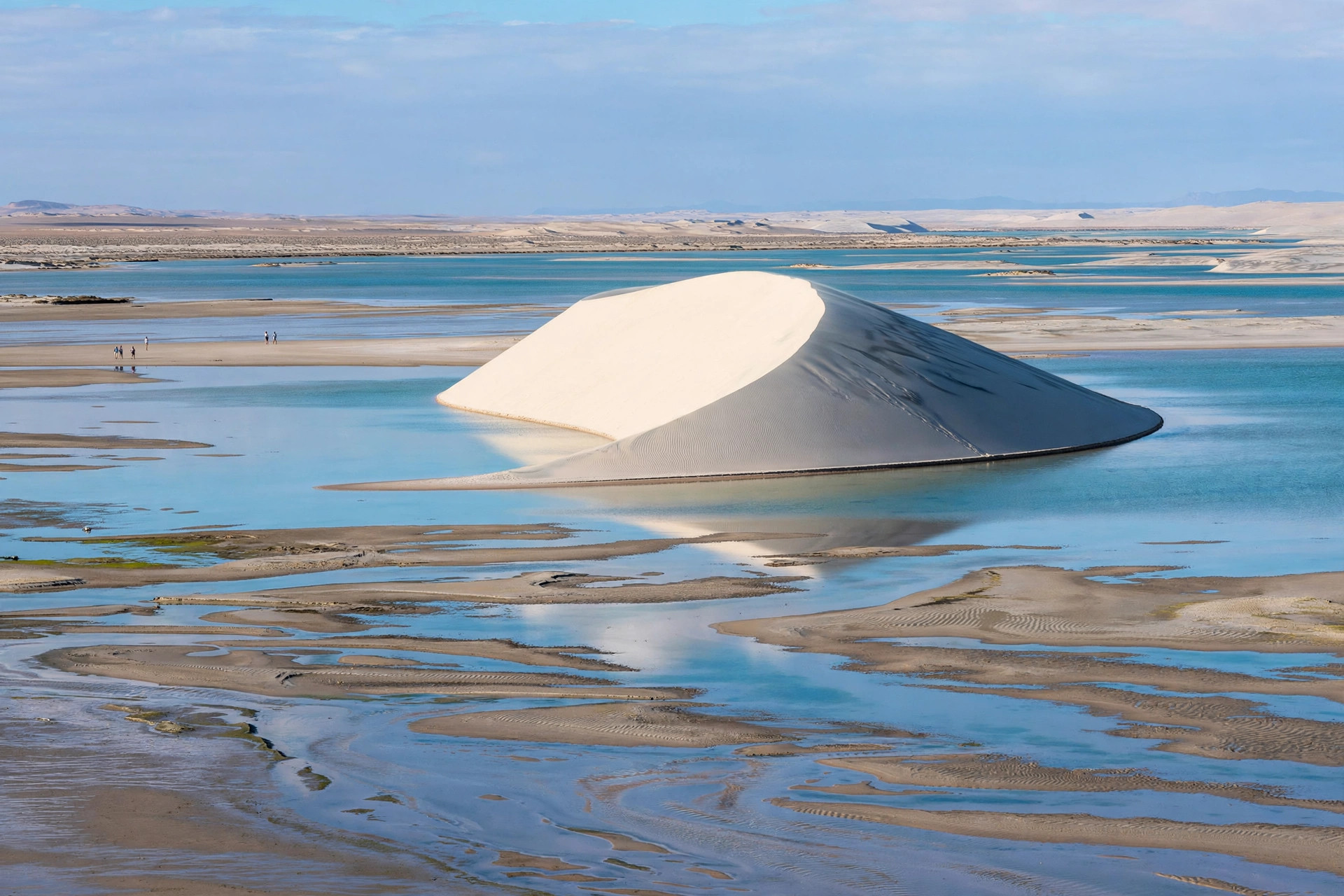
Dakhla's postcard is a pale crescent of sand rising straight out of the water, roughly half an hour to forty minutes south of the city by road. At high tide it stands in the lagoon like an island; at low tide you can walk to it across wet sand. Most visitors come by 4×4 tour or by boat; the best light is late afternoon.
Dragon Island (Île du Dragon)
A boat trip takes you to Dragon Island, a low, rocky islet that looks, from the air, like a dragon lying in the water. The trip usually includes an oyster-farm stop and a swim, and runs about 200–400 MAD per person.
Oyster Farms and Flamingos
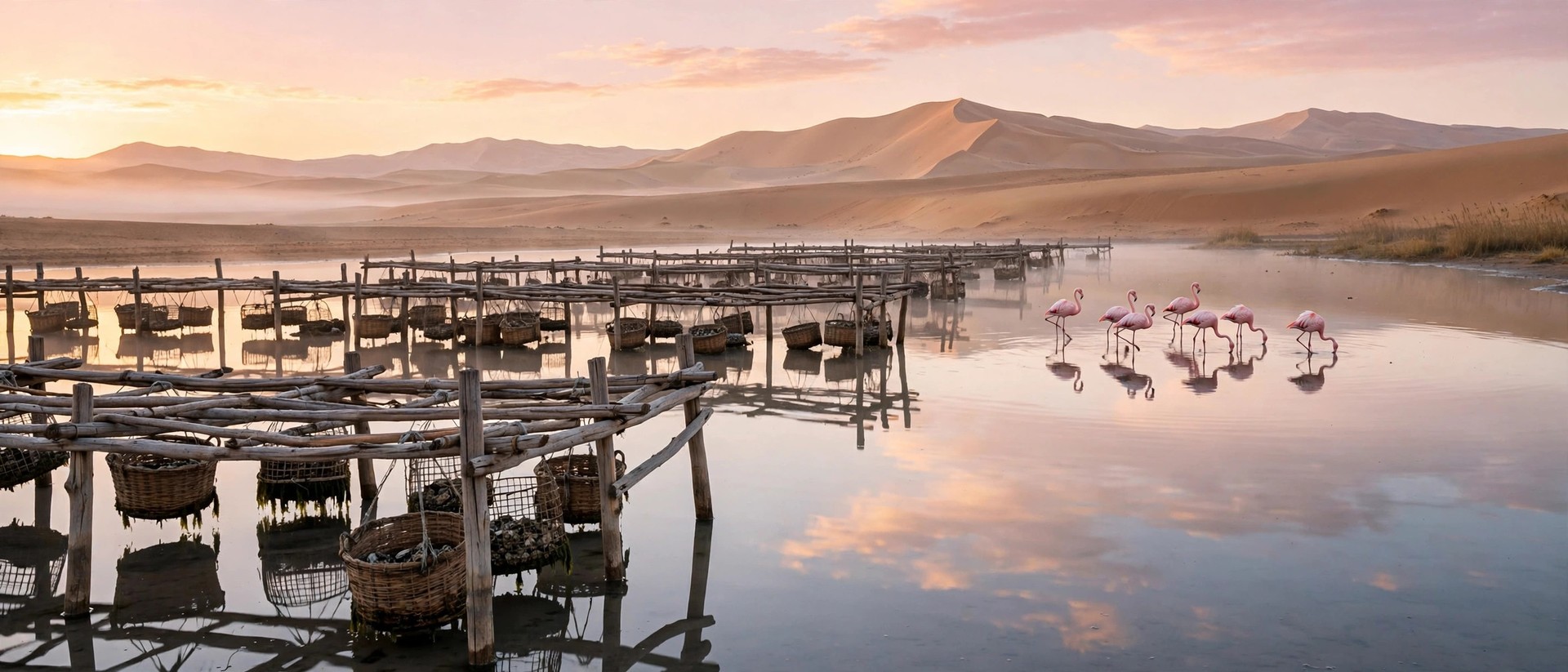
The lagoon's oyster farms are the local pride: oysters farmed in nutrient-rich water, a dozen for 30–60 MAD, served simply with lemon at lagoon-side restaurants and camp kitchens. At low tide the mudflats fill with flamingos, herons and waders; go at dawn, when the birds are thickest.
The Imlili Oasis
A half-day drive into the desert brings you to Imlili, an oasis of freshwater pools in the middle of the sand, where small fish live in water that should not exist in the Sahara. Local guides run it as a desert excursion, usually with a dune stop and a picnic lunch.
The Town, the Port and the Lighthouse
Save an afternoon for the city itself. The fishing port is the working heart of Dakhla: boats unloading sardines and octopus, men mending nets, gulls everywhere. Walk the corniche at sunset, visit the market for dates, spices and Sahrawi silver, and find the 1916 lighthouse by the shore.
Where to Stay in Dakhla
Where you sleep decides what your days look like. Stay in a lagoon camp and you wake up on the water, with lessons, meals and transfers included; stay in town and you sleep cheaper and travel to the lagoon each day. The choice is simple: kiters stay at the lagoon, everyone else stays in town — and this dakhla travel guide makes it plainly.
| Option | Where | Price per night | Best for |
|---|---|---|---|
| Lagoon kite camp, half-board | Lagoon, 25–45 km south | 900–1,600 MAD ($90–$160) | Kitesurfers, windsurfers |
| Lagoon bungalow, bed only | Lagoon | 500–900 MAD ($50–$90) | Budget kiters, couples |
| Mid-range hotel in town | City centre, near the corniche | 400–700 MAD ($40–$70) | Non-kiters, families |
| Budget hotel or guesthouse | City centre | 200–400 MAD ($20–$40) | Backpackers, short stays |
| Apartment rental | City | 300–600 MAD ($30–$60) | Longer stays, groups |
Lagoon camps book out from May to September, so reserve weeks ahead. Whichever you choose, this dakhla travel guide says to book the transfer with the room. All prices are planning ranges checked in November 2026.
Where to Eat in Dakhla
Dakhla eats from the sea, and generously. The fishing port supplies the restaurants daily, and the lagoon supplies the oysters. A grilled fish dinner in town runs 80–150 MAD, a seafood tagine about the same, and a dozen lagoon oysters 30–60 MAD. The restaurants are simple: plastic chairs, cold drinks, fish that was swimming that morning. This dakhla travel guide's pick for a first dinner is grilled sardines with a dozen oysters.
Sahrawi food is the other half of the table: camel meat, dates from the southern oases, and strong, sweet tea poured from a height. Breakfast is bread, olive oil, soft cheese and eggs, for 30–50 MAD in town.
How Much Does Dakhla Cost?
Dakhla is not expensive by Moroccan standards, but the distance makes it a trip to budget properly: the flight is the biggest single cost. Here is what this dakhla travel guide expects a traveller to spend.
| Item | Cost in MAD | Cost in USD |
|---|---|---|
| Flight Casablanca–Dakhla, one way | 800–1,800 | $80–$180 |
| Lagoon camp, half-board, per night | 900–1,600 | $90–$160 |
| Town hotel, per night | 200–700 | $20–$70 |
| Group kitesurf lesson, half-day | 600–900 | $60–$90 |
| Kite equipment rental, per day | 700–1,100 | $70–$110 |
| 4×4 half-day trip (White Dune, Imlili) | 300–600 | $30–$60 |
| Boat trip to Dragon Island | 200–400 | $20–$40 |
| Seafood dinner in town | 80–150 | $8–$15 |
| Dozen lagoon oysters | 30–60 | $3–$6 |
| Petit taxi in town | 10–20 | $1–$2 |
A kitesurfer at a lagoon camp should plan on 1,200–2,000 MAD ($120–$200) a day, lessons and equipment included. A non-kiting traveller staying in town can manage on 400–700 MAD ($40–$70) a day.
A 3-Day Dakhla Itinerary
Three days is the right length for a first visit: one day for the lagoon, one for the desert and the sea, one for the town. This dakhla travel guide's plan keeps the driving short and the wind in your favour.
Day 1 — The lagoon. Transfer to your camp, take a half-day kitesurf or windsurf lesson, and spend the afternoon watching the kites from the terrace. Eat oysters at sunset and sleep at the lagoon.
Day 2 — Dune and island. Morning 4×4 trip to the White Dune, then a boat trip to Dragon Island. Back to camp or town for a seafood dinner on the corniche.
Day 3 — Desert and town. Morning trip to the Imlili oasis, back to the city by early afternoon. Walk the port and the market, find the lighthouse, and finish with grilled fish and Sahrawi tea at sunset.
Dakhla Travel Guide: Practical Tips
A few things this dakhla travel guide wishes every visitor knew before landing. Book your lagoon transfer before you fly — the camps are 10 to 45 kilometres from the city, and an unbooked arrival is the most common way a Dakhla trip goes wrong. Carry cash in small notes — the camps and desert guides do not take cards, and ATMs live in the city. Bring sun protection — the wind hides the sun and the lagoon reflects it; sunscreen, a hat and a long-sleeve top are not optional.
Check the wind forecast before booking lessons, and be ready to swap days. Learn a few words — a greeting in Hassaniya Arabic opens doors in the south. Respect the desert — do not wander off the paved road; the sand hides soft patches, and phone signal is thin outside the city. And book the Casablanca flight early — it fills up.
Frequently Asked Questions
Is Dakhla safe for tourists?
Dakhla is generally visited for watersports and nature tourism, and visitors find an ordinary Moroccan provincial city. Check your government's current travel advice before departure, because Dakhla lies in Western Sahara, a territory with disputed international status.
Do I need to know how to kitesurf before visiting Dakhla?
No. Dakhla is one of the best places in the world to learn: shallow, flat water, steady wind, experienced schools. A beginner can expect to stand on the board within a few days of lessons. Non-kiters have plenty to do too — the dune, the island, the oysters and the desert.
What is the best month to visit Dakhla?
April to October for wind sports, with the strongest wind from May to September. For a quieter trip, come in October or November. The scenery is good all year.
How do I get from the airport to the lagoon camps?
Book the camp shuttle before you fly — every lagoon camp runs transfers from Dakhla Airport, usually included in the stay. A taxi costs 150–300 MAD each way and is not always at the airport.
Can I visit Dakhla without kitesurfing?
Yes, and many travellers do. The White Dune, Dragon Island, the oyster farms, the flamingos, the Imlili oasis, the surf at Oum Lamboiur and the fishing port fill several days without a kite in sight.
How many days do I need in Dakhla?
Three days covers the lagoon, the White Dune, Dragon Island and the town. Kitesurfers usually stay a week. Add a day for the Imlili oasis and a slow day in the city.
Conclusion
Dakhla is the far end of Morocco — in the best way: a lagoon of flat turquoise water, a wind that never stops, a white dune rising out of the sea, oysters for the price of a coffee, and a desert that starts where the city ends. This dakhla travel guide's advice is simple: fly in, book your transfer, learn to ride the wind or watch those who do, and give the place three unhurried days. The road south is long, but this dakhla travel guide says Dakhla is the reason it exists.
Planning a longer southern trip? See our Tiznit travel guide, Sidi Ifni travel guide, Living in Guelmim, The Cost of Climbing Toubkal, Morocco SIM cards, and Tipping in Morocco. Browse the full Morocco Travel section, or start with About LahbabiGuide.
Source: Dakhla, Western Sahara — Wikipedia. Prices are planning ranges checked in November 2026; confirm on arrival.