
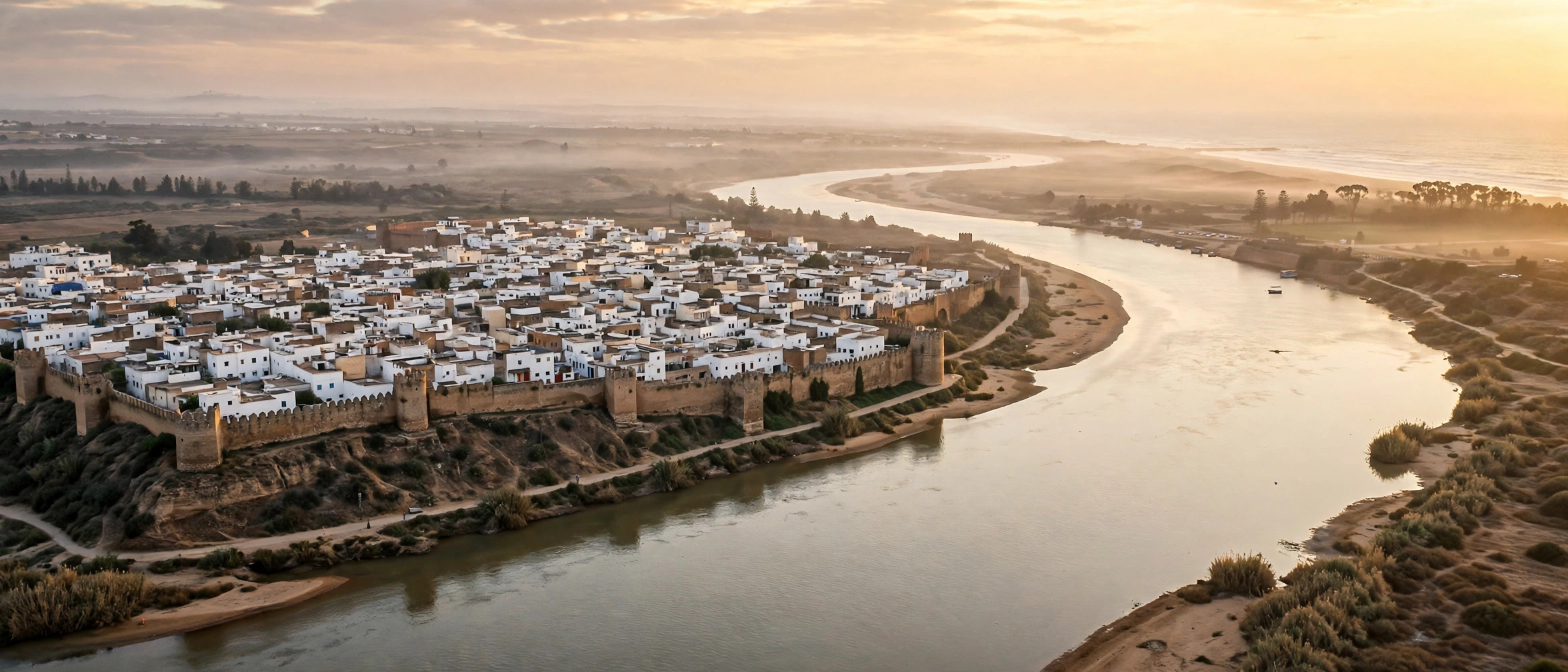
Living in Azemmour is the Morocco most expats never hear about: no medina buzz, no coworking scene, no international school — just a small white town on the Oum Er-Rbia river, about 75 kilometres southwest of Casablanca, where fishermen still work the estuary at dawn and the old town walls wear murals.
Portugal seized Azemmour in 1513 and left in 1541; its name comes from the Amazigh word azemmur, the wild olive. This guide to living in Azemmour covers costs, housing, healthcare, internet and schools. Prices are in Moroccan dirhams (MAD), checked in November 2026, at roughly 10 MAD to $1 — planning ranges, so confirm on arrival.
In this guide
- Azemmour at a Glance
- Why Living in Azemmour Appeals to Expats
- The Real Cost of Living in Azemmour
- Where to Live in Azemmour
- Renting a Home in Azemmour
- Daily Life: Food, Markets and the Weekly Souk
- Healthcare in Azemmour
- Internet, Phones and Working Remotely
- Getting Around Without a Car
- Schools and Family Life
- The Downsides of Living in Azemmour
- Your First Month Living in Azemmour
- Frequently Asked Questions
- Conclusion
Azemmour at a Glance
| Fact | Detail |
|---|---|
| Location | Left bank of the Oum Er-Rbia, about 75 km southwest of Casablanca, about 15 km north of El Jadida |
| Population | About 40,000 (2014 census; roughly 42,000 by the 2024 census) |
| Character | Whitewashed river town, Portuguese walls, painted medina, fishing estuary |
| Nearest airport | Casablanca Mohammed V (CMN), about 90 km north-east |
| Nearest big towns | El Jadida about 15 km south, Casablanca about 75 km north-east |
| Climate | Mild Atlantic, humid summers, cool damp winters |
| Monthly budget, single person | About 7,000–11,000 MAD ($700–$1,100) |
| Monthly budget, couple | About 10,000–15,000 MAD ($1,000–$1,500) |
Why Living in Azemmour Appeals to Expats
The first reason people choose living in Azemmour is the price: one of the cheapest historic towns on the Moroccan coast, where a one-bedroom flat can cost less than a week in a Casablanca hotel and a grilled fish lunch less than a coffee in a European capital.
The second reason is the setting. Azemmour sits on a low bluff above the Oum Er-Rbia, Morocco's second-longest river, meeting the Atlantic about 3 kilometres below the medina. The Portuguese chapter — seizure in 1513, withdrawal in 1541 — left walls, gates and the ruined powder store of Dar el-Baroud, and the town's story is told in our Azemmour travel guide and in the history of Azemmour.
The third reason is the train. Unlike most small Moroccan towns, Azemmour has a station on the Casablanca–El Jadida line, so the big city is about an hour away, no car needed. But living in Azemmour is a deliberate trade — quiet over convenience — and the rest of this guide makes it with your eyes open.
The Real Cost of Living in Azemmour
Azemmour is cheap by Moroccan standards, already low by European ones. The table below is a realistic monthly budget for living in Azemmour as a single person or a couple in a modest flat, cooking mostly at home and eating out a few times a week.
| Expense | Single person (MAD/month) | Couple (MAD/month) |
|---|---|---|
| Rent, one-bedroom flat | 1,500–3,000 ($150–$300) | 2,500–4,000 ($250–$400) |
| Utilities, water and electricity | 300–600 ($30–$60) | 400–800 ($40–$80) |
| Food and market shopping | 2,200–3,500 ($220–$350) | 3,500–5,000 ($350–$500) |
| Eating out and cafes | 500–1,000 ($50–$100) | 800–1,500 ($80–$150) |
| Local transport | 300–500 ($30–$50) | 400–700 ($40–$70) |
| Internet and phone | 200–350 ($20–$35) | 250–400 ($25–$40) |
| Health insurance and care | 400–1,000 ($40–$100) | 600–1,200 ($60–$120) |
| Leisure and extras | 600–1,200 ($60–$120) | 800–1,500 ($80–$150) |
| Household and miscellaneous | 500–900 ($50–$90) | 700–1,200 ($70–$120) |
| Total | 7,000–11,000 ($700–$1,100) | 10,000–15,000 ($1,000–$1,500) |
Two costs surprise newcomers to living in Azemmour. The first is summer: humidity and mosquitoes by the river make fans, screens and repellent essential. The second is the El Jadida run: you will go there more than you expect, for a supermarket, a pharmacy or a repair, so budget the fare. Our cost of living in Morocco guide gives the wider picture with 2026 prices.
Where to Live in Azemmour
Azemmour is small enough to walk end to end in under an hour, so its neighbourhoods are a handful of pockets — old-town charm against modern comfort.
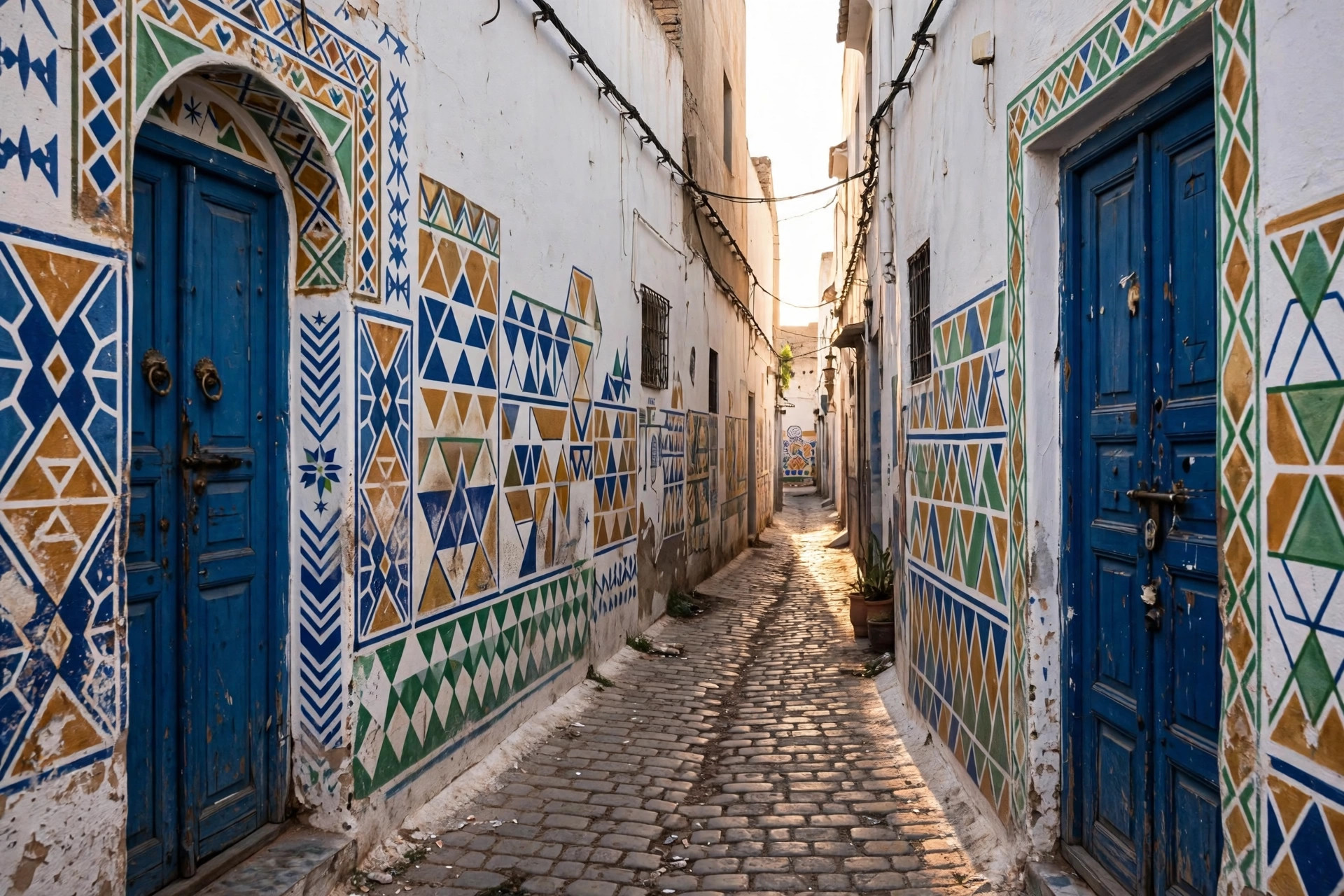
The old town (kasbah, medina and mellah) is where most expats start: whitewashed lanes inside the walls, painted doors, murals and the ramparts above the river. The kasbah is the fortified quarter on the bluff, the medina below it is still about 90 percent residential, and the mellah in the north was the Jewish quarter. Flats here are old, full of character and sometimes damp in winter.
The newer town across the main road is the practical choice: wider streets, newer buildings, banks, ATMs and the bus and taxi stands. Less pretty and more comfortable, with better odds of fibre internet and reliable hot water.
The riverside and beach side toward El Haouzia is the quietest option: scattered houses near the estuary and the long Atlantic beach a short walk away. It suits people who want the sea and the river on their doorstep and do not mind a walk to the shops.
Visit in the season you will actually live there: a flat that charms in October can feel very different on a damp January night.
Renting a Home in Azemmour
Renting while living in Azemmour works differently from renting in a big Moroccan city. No listing site matters here: the best flats move by word of mouth, through the town's small guesthouses, the cafes near the river gate and the local semsar, the neighbourhood broker. The rule is simple: find a flat by being in town, drinking tea and asking — not by searching online from abroad.
Expect a simple contract in French or Arabic, a deposit of one to two months' rent (the legal maximum is two months under Law 67-12), and a flat that is usually unfurnished: no kitchen appliances, sometimes no cooker at all. Furnished flats cost roughly 500–1,000 MAD a month more. Always check what "furnished" includes, and whether hot water is reliable and the flat has heating.
Two traps catch newcomers: never pay a full year upfront for a flat seen only in photos — rent month to month until you know the building and the winter damp — and remember a flat rented cheap in January can be wanted back for the summer season. Get the term in writing. Our renting an apartment in Morocco guide explains the contract, the deposit rules and the semsar's fee in detail.
Daily Life: Food, Markets and the Weekly Souk
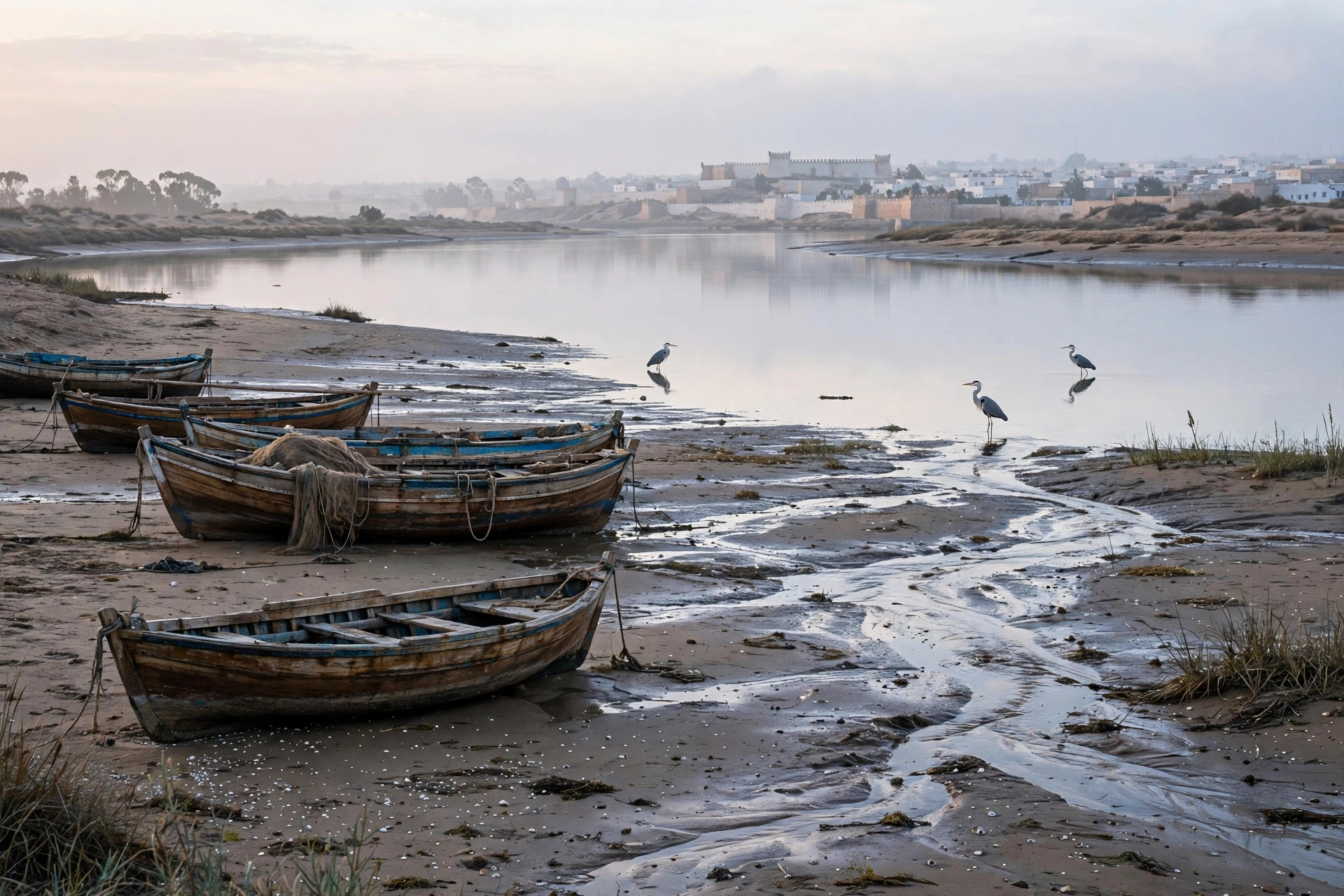
Daily life is the best part of living in Azemmour, and the part that separates people who stay from people who leave after three months. The day starts early at the river, where the boats work the estuary and the catch comes in. Buy fish the same day and grill it: shad, sardines and sea bass are the local stars, and a grilled fish lunch with bread, salad and mint tea is about 60–100 MAD ($6–$10).
The weekly rhythm runs through the souk, the town's social event as much as its market. Traders from the surrounding Doukkala plain bring vegetables, spices, olives, dates and household goods, and the whole town turns out to shop, meet and eat. Go early, bargain politely, bring cash: the souk runs on dirhams, not cards. Ask locally for the current day and place — the souk's arrangements have been changing, and a November 2026 council decision was still argued over by residents.
The town's restaurants serve the Moroccan standards: tajine for about 50–80 MAD ($5–$8), couscous on Fridays, harira in the evenings. Mint tea costs about 6–10 MAD ($0.60–$1); alcohol is not served in town. What Azemmour lacks is variety: no supermarket with foreign foods, no delivery app. Expats living in Azemmour who cook Moroccan food at home settle in far faster.
Healthcare in Azemmour
Healthcare is the honest weak point of living in Azemmour; any guide that hides it is doing you a disservice. The town has local clinics and a small hospital for everyday care — minor injuries, infections, prescriptions and check-ups — but anything serious means El Jadida, about 20 minutes away, or Casablanca, about 1.5 hours by train or road, where the private clinics and big public hospitals are.
Keep a well-stocked medicine cabinet, know your blood group, keep your prescriptions in French, and have a plan — and a taxi number — for a night-time trip to El Jadida. Private health insurance covering treatment in Casablanca is not a luxury here; it is the price of living in Azemmour, and it belongs in your budget from day one. Our healthcare in Morocco for expats guide explains the public AMO system, private clinics and what insurance actually covers.
Internet, Phones and Working Remotely
Remote work is possible while living in Azemmour, but it is not plug-and-play. Fibre is available in parts of the newer town and building by building elsewhere, so many flats still run on ADSL or 4G, and speeds vary by street and provider. The practical answer is redundancy: a fixed line if your building has one, plus a 4G router from a second provider, and a cafe with decent wifi found before your first important call. Buy the SIM at an official shop with your passport, not a street seller.
Video calls work most days, and the town's quiet suits focused work. But for all-day video or large uploads, test the connection in the exact flat, at your working hours, before you sign. Power cuts happen too, usually briefly, in bad weather — a charged laptop and a phone with data will save you.
Getting Around Without a Car
The train is what sets living in Azemmour apart from other small Moroccan towns. Azemmour has its own station on the ONCF Casablanca–El Jadida line, a short walk from the old town. Trains to Casablanca take about 1–1.5 hours and cost roughly 40–60 MAD ($4–$6) second class; El Jadida is about 15–25 minutes, roughly 10–20 MAD ($1–$2). Times and fares vary by service: check the ONCF timetable on the day. All are approximate, checked in November 2026.
Inside the town itself, living in Azemmour means walking: the old town, the station, the market and the river are all within half an hour on foot, and petit taxis cover the newer town for about 10–15 MAD ($1–$1.50). Grand taxis run to El Jadida all day and leave when full. For the beach at El Haouzia, a few kilometres south, a taxi or a long walk are the options; there is no local bus worth planning around.
Schools and Family Life
Families considering living in Azemmour need the bluntest paragraph in this guide: there is no international school in Azemmour, and no French or English-medium school either. Children attend Moroccan public schools, in Arabic with French, alongside local children — wonderful immersion for a young child, and a hard transition for a teenager arriving with no Arabic or French. The nearest international schooling is in Casablanca, about 1.5 hours by train.
That reality decides it for most families: the ones who make it work usually have young kids, homeschool, or use distance learning. The town gives families safety, freedom for children to roam and a beach for a playground — but not a place to move with a teenager in exam years.
The Downsides of Living in Azemmour
Every honest account of living in Azemmour names the downsides plainly — they are the reasons people leave. The quiet is the first: a small, conservative, family-oriented town, where social life is tea with neighbours, not nightlife. If you need concerts, cinemas and a varied restaurant scene, you will be on the train to Casablanca every weekend.
The second downside of living in Azemmour is the thinness of services: no big supermarket, no specialist shops, no hospital for serious care — a forgotten document, a broken laptop, a specialist appointment all cost a trip to El Jadida or Casablanca. The third is the summer: hot, humid days by the river, mosquitoes in the warm months, and a beach that fills with Casablanca families at weekends.
The fourth is the winter damp: old-town flats can be cold and clammy from December to February, many with no heating. None of these is a reason not to move — they are reasons to visit first, in January, for two weeks, rent before you buy, and keep a return ticket for the first year.
Your First Month Living in Azemmour
To try living in Azemmour, do it in this order. Week one: arrive as a guest. Stay in a guesthouse in the old town, walk every street, test the internet, eat at the river gate, ride the train to El Jadida.
Week two: sort the paperwork. Get a local SIM, register with a doctor, and start your residency file: most nationalities enter visa-free for 90 days, and the carte de séjour is applied for at the préfecture before that ends, with the récépissé as legal cover while it is processed. Our moving to Morocco: visas and residency guide walks through the documents.
Week three: find the flat. Use the guesthouse owners, the cafe regulars and a local semsar, and visit your favourite flat twice — once in the afternoon and once on a damp morning. Check heating and water pressure, and sign month to month at first.
Week four: build the routine. Find your fish seller, your bread oven, your cafe and your river walk. Learn twenty words of Moroccan Arabic and use them daily — in a small town, that effort is noticed and repaid many times over. By the end of the month you will know whether living in Azemmour is your life or your holiday.
Frequently Asked Questions
Is Azemmour a good place for expats to live?
Yes, for the right expat. Living in Azemmour suits retirees, remote workers and slow travellers who want low costs, a river town and a train to Casablanca, and who accept a small town and limited services. It does not suit people needing fast internet, international schools or specialist healthcare.
How much does it cost to live in Azemmour?
A single person can live comfortably on about 7,000–11,000 MAD ($700–$1,100) a month, and a couple on about 10,000–15,000 MAD ($1,000–$1,500), including rent; a one-bedroom flat costs about 1,500–3,000 MAD ($150–$300) a month.
Can I work remotely from Azemmour?
Yes, with redundancy: a fixed line where available plus a 4G backup from a second provider, tested in the exact flat at your working hours. Video calls work most days, but speeds vary by street — test first.
Is Azemmour safe for solo expats and women?
Yes. Azemmour is a small, quiet town with a low crime rate, and solo residents generally feel comfortable walking the old town and the river path by day. Take the usual precautions at night and dress modestly in the town centre, as anywhere in Morocco.
What is healthcare like in Azemmour?
Basic care is available locally, but anything serious means El Jadida, about 20 minutes away, or Casablanca, about 1.5 hours away — so carry private health insurance, a stocked medicine cabinet and a night-time plan.
How do I get to Azemmour from Casablanca?
By train: the ONCF line from Casablanca takes about 1–1.5 hours and costs roughly 40–60 MAD ($4–$6) second class. By car, the A5 motorway takes about an hour; buses take 1.5–2 hours.
Conclusion
Living in Azemmour is a choice, not a compromise — a choice of the river over the airport, of a slow, cheap, painted life over a convenient one. It asks you to accept the quiet, the damp winters and the train ride to a hospital, and it pays you back with the cheapest coastal living in Morocco and a community that knows your name within a month.
If that trade sounds like freedom, come and try it: rent for a month in January and let the town decide. Living in Azemmour will not suit everyone — but for the people it suits, it suits them completely. For the visitor's side of the town, read our Azemmour travel guide, compare the living in Sidi Ifni guide, and browse the full Living in Morocco section for the rest of the series.