
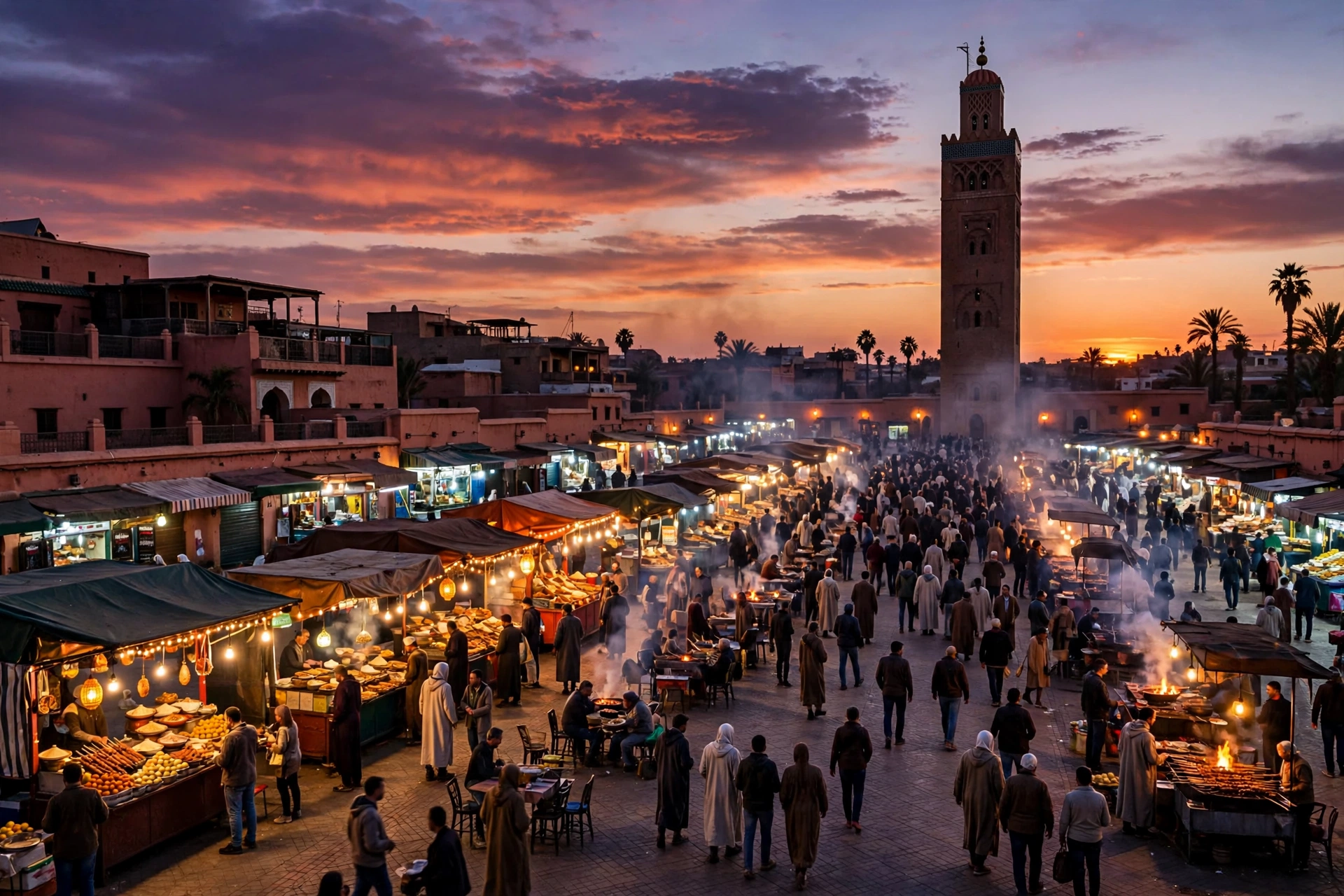
Living in Marrakech is Morocco at its most theatrical: a red-walled city where the call to prayer drifts over rooftop terraces, the Atlas Mountains stand snow-capped on the horizon, and the most famous square in Africa fills with storytellers every evening. If you want Morocco with the volume turned up, living in Marrakech is the boldest landing in the country, and the one most foreigners picture first.
Marrakech is not Morocco's calmest city. What living in Marrakech offers instead is intensity: a thousand-year-old medina beside a modern French-built district, and a desert, a mountain range and an ocean all within a few hours' drive. It sits in our Living in Morocco section, alongside our wider Living in Morocco: The Complete Guide for Expats.
In this guide
- Why Expats Choose Living in Marrakech
- Marrakech at a Glance
- Best Neighbourhoods for Living in Marrakech
- Rents and Housing: What You Pay in 2026
- Monthly Cost of Living in Marrakech
- Weather: Heat, Winter Sun and the Atlas
- Working Remotely While Living in Marrakech
- Daily Life: Food, Markets and Getting Around
- Healthcare and Schools
- The Downsides: Who Should Not Move Here
- Practical Steps to Move to Marrakech
- Frequently Asked Questions
- Conclusion: Is Living in Marrakech Right for You?
Why Expats Choose Living in Marrakech
Marrakech has been drawing outsiders for nearly a thousand years. Founded around 1070, it was the capital of the Almoravid and Almohad empires and the gateway for caravans crossing the Sahara, later the city Yves Saint Laurent and a generation of artists made into a byword for escape. Living in Marrakech today means joining a place that is thoroughly used to foreigners: you will hear French, English and Spanish in the cafes, and find a foreign community larger than anywhere else in Morocco.
The foreign community is a mix: French retirees who came for the sun and the prices, British and American remote workers, artists and designers, hoteliers and riad owners, and digital nomads who discovered that the same time zone as Western Europe pairs well with a rooftop view of the Koutoubia. Restored riads created an entire expat economy of guesthouses and restaurants, and living in Marrakech is the only Moroccan life where your neighbours might run a boutique hotel.
The trade is simple and honest: Marrakech gives you sunshine, beauty and a social life most cities cannot match, and asks you to accept heat, dust and a city built for visitors as much as for residents. For many expats, living in Marrakech is exactly the point — a city that never lets you forget where you are.
Marrakech at a Glance
Living in Marrakech rewards a little homework: the city is really two cities in one — the old medina inside the walls and the modern districts outside them — and choosing between them shapes everything from your rent to your daily walk.
| Fact | Detail |
|---|---|
| Population | About 1.1 million in the urban area |
| Region | Marrakech-Safi, at the foot of the High Atlas |
| Altitude | 466 metres above sea level |
| Time zone | GMT+1 (Western European Time) |
| Languages | Darija (Moroccan Arabic), French widely spoken, English common in tourism |
| Nearest airport | Marrakech Menara (RAK), 6 km from the medina |
| Nearest beach | Essaouira, about 2.5 hours by road |
| Nearest ski slopes | Oukaimeden, about 75 minutes by road |
| Best months to arrive | March to May, or September to November |
| Currency | Moroccan dirham (MAD), about 10 MAD to 1 USD |
Best Neighbourhoods for Living in Marrakech
The first decision in living in Marrakech is the neighbourhood: the medina or the new city. The medina offers riads with courtyards and orange trees, but also narrow lanes, no cars and the nightly noise of Jemaa el-Fna. Gueliz and Hivernage offer apartments, wide avenues and cafes, but less of the magic that brought you here.
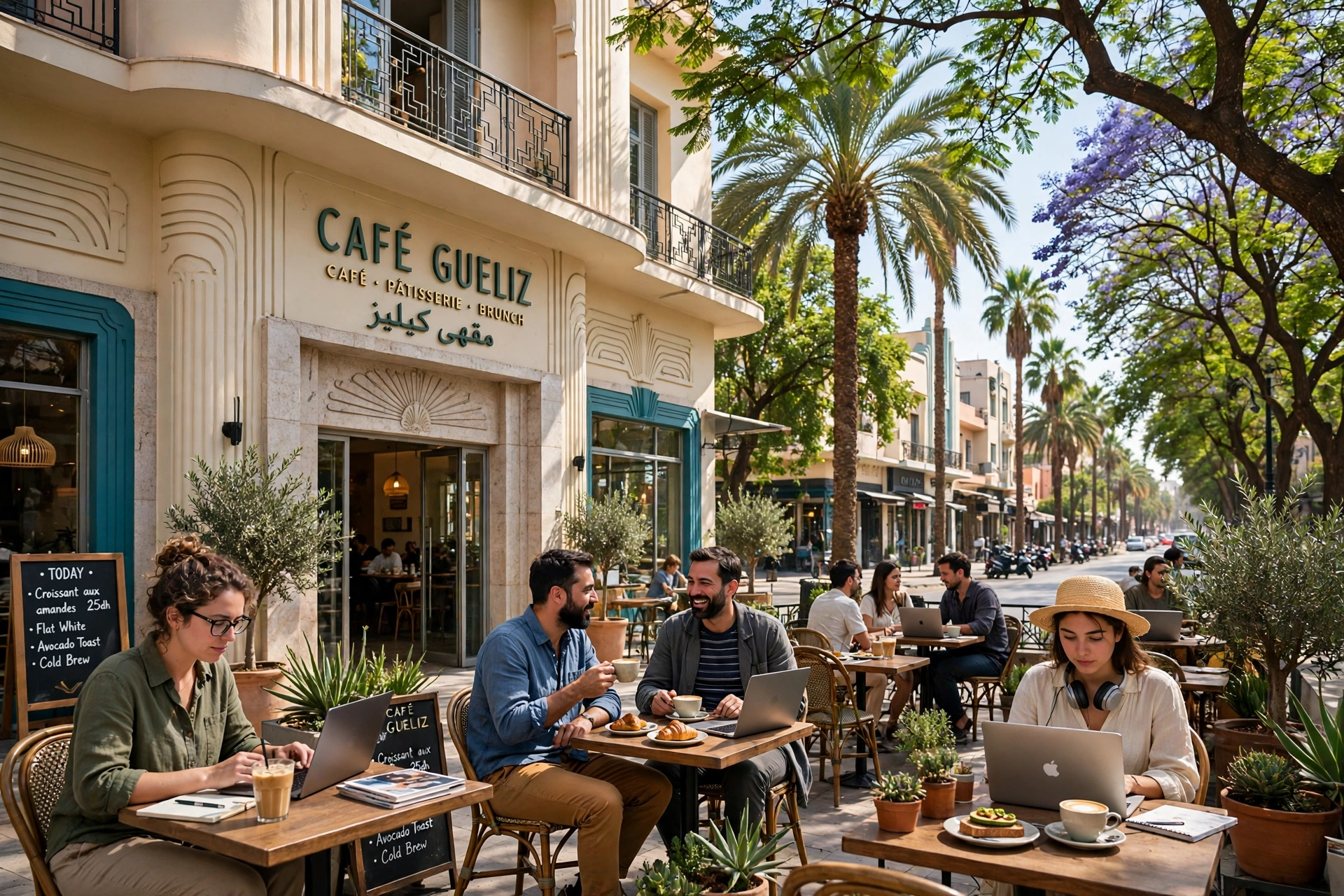
Gueliz is the default choice for newcomers. Built by the French in the 1910s, it has the city's best cafes and gyms, and its apartments are bright and modern. Rents are higher than in the medina, but the convenience makes it the easiest place to land. Our Best Neighbourhoods to Live in Marrakech guide compares all the main districts in detail.
Hivernage, just south of Gueliz, is the polished cousin: five-star hotels and rooftop bars. It suits expats who want hotel-level comfort and will pay for it. The medina is for romantics with patience — a restored riad is the most beautiful home in Morocco, but it comes with damp walls in winter and delivery by donkey cart. Palmeraie offers villas with pools for families who drive everywhere.
Rents and Housing: What You Pay in 2026
Rents in Marrakech rose steadily through 2025, but the city is still far cheaper than any Western European capital, and living in Marrakech remains one of the best value propositions in the Mediterranean world. The figures below are typical asking rents in November 2026, gathered from local listings and agents.
| Home | Typical monthly rent |
|---|---|
| Studio in Gueliz | 4,500–6,500 MAD ($450–$650) |
| One-bedroom apartment in Gueliz | 6,000–9,000 MAD ($600–$900) |
| Two-bedroom apartment in Gueliz or Hivernage | 9,000–14,000 MAD ($900–$1,400) |
| Small riad in the medina | 8,000–15,000 MAD ($800–$1,500) |
| Large restored riad in the medina | 15,000–30,000 MAD ($1,500–$3,000) |
| Villa with pool in Palmeraie | 20,000–40,000 MAD ($2,000–$4,000) |
| House in a residential suburb (Targa, Amerchich) | 10,000–18,000 MAD ($1,000–$1,800) |
Expect two months' rent as a deposit plus one month in advance, and 500–1,000 MAD a month for building charges (syndic). Agents usually charge one month's rent, though many landlords rent directly. Read our Renting an Apartment in Morocco guide before you sign — the inventory (état des lieux) is where disputes are won or lost. Medina riads often hide damp and roof problems: visit after rain, and never rent one sight unseen.
Monthly Cost of Living in Marrakech
The monthly budget for living in Marrakech depends mostly on your rent and your restaurant habit. A single person who cooks at home and eats out a few times a week can live comfortably on 10,000–14,000 MAD a month. A couple in a two-bedroom in Gueliz should plan on 18,000–25,000 MAD. The table below is a realistic single-person budget for November 2026.
| Expense | Monthly cost |
|---|---|
| Rent (one-bedroom, Gueliz) | 6,000–9,000 MAD ($600–$900) |
| Utilities (electricity, water, internet) | 800–1,500 MAD ($80–$150) |
| Groceries and markets | 2,500–3,500 MAD ($250–$350) |
| Eating out (twice a week) | 1,200–2,000 MAD ($120–$200) |
| Transport (petit taxis, buses) | 400–800 MAD ($40–$80) |
| Gym or sports | 400–700 MAD ($40–$70) |
| Phone (mobile data) | 100–200 MAD ($10–$20) |
| Entertainment and social life | 1,000–2,000 MAD ($100–$200) |
| Total | 12,400–20,700 MAD ($1,240–$2,070) |
Food is the pleasant surprise: a full lunch in a medina restaurant still costs 40–70 MAD. The full national picture is in our Cost of Living in Morocco guide. What costs real money is the expat lifestyle itself — imported wine, school fees, flights home and air conditioning in July.
Weather: Heat, Winter Sun and the Atlas
The climate is the reason most people come, and the reason some people leave. Living in Marrakech means more than 300 days of sunshine a year, winters that feel like spring in northern Europe, and summers that test even the locals. July and August regularly pass 40°C (104°F), and a good air conditioner is not a luxury — it is the difference between a productive summer and a miserable one.
Winter is the city's secret season: from November to February, days are usually 18–22°C with blue skies, and snow on the Atlas is visible from the rooftops. Mornings can be cold — houses are built for heat, not insulation — so pack a warm layer and heat one room, not the whole house. Rain is rare but heavy, and the medina's lanes can flood briefly.
The shoulder seasons are the sweet spot: March to May brings orange blossom and perfect hiking weather, while September and October offer warm days without the summer's edge. Most expats who can choose their arrival date pick one of these windows.
Working Remotely While Living in Marrakech
Remote work is one of the main reasons the expat community keeps growing. Living in Marrakech puts you in the same time zone as London and one hour behind Paris, with fibre internet in most modern buildings and cafes that welcome laptops. Download speeds of 100–200 Mbps are normal in Gueliz and Hivernage, and a 20 GB mobile plan costs around 100 MAD a month. Our Morocco Internet for Expats guide explains the providers and the paperwork.
Coworking has arrived properly in the last few years: several dedicated spaces in Gueliz and the medina, with day passes from around 100 MAD and monthly memberships from 1,500 MAD. The Morocco Coworking Spaces guide lists the current options. Many remote workers simply work from their riad terrace in the morning and a cafe in the afternoon.
Morocco has no dedicated digital nomad visa yet, so most remote workers live here on tourist entries or a carte de séjour, and tax depends on your home country and length of stay. Read our Digital Nomad Guide to Morocco and the Morocco Tax Guide for Expats before you plan a long stay.
Daily Life: Food, Markets and Getting Around
Daily life is where living in Marrakech earns its reputation. The morning starts at the market: tomatoes, olives, flatbread from the communal oven, mint by the armful. The medina's souks are a working city, not a museum, and learning your way around them is the fastest route to feeling at home. Eating well costs little: a tajine is 50–80 MAD, a mint tea 10 MAD, and a kilo of oranges in season barely 8 MAD.
Getting around while living in Marrakech is a mix of walking, petit taxis and the occasional bus. The medina is walkable and car-free, and a petit taxi across town rarely costs more than 15–20 MAD if the meter is on — insist on it, politely, every time. Many long-term expats buy a car for Atlas weekends and the coast, and our Marrakech Travel Guide covers the day trips that make the city such a good base: the Atlas valleys, the Agafay desert and Essaouira.
Social life is easy to find and hard to escape: quiz nights, hiking groups, art openings and language exchanges, with a constant stream of visitors passing through. The flip side is that Marrakech can feel transient — friends leave and the city reinvents itself every few years. The expats who stay longest build a Moroccan circle too, not just a foreign one. A few words of Darija transform the experience, and our Learning Moroccan Arabic guide is the place to start.
Healthcare and Schools
Healthcare in Marrakech is good by Moroccan standards and improving fast. The city has several private clinics with modern equipment and English- or French-speaking doctors, though many expats still fly to Casablanca or Europe for complex surgery. A private GP consultation costs 200–400 MAD, and good international health insurance is essential. Our Healthcare in Morocco for Expats guide compares the options and the insurers most expats use.
Schools are one of Marrakech's quiet strengths: several international and bilingual schools, with fees typically 60,000–150,000 MAD a year. Places at the best schools are limited, so apply early — ideally before you move. Our Schools in Morocco for Expat Families guide covers admissions, fees and waiting lists.
For families, the suburbs make more sense: Targa and the new developments towards the Atlas have villas with gardens, quiet streets, school buses, while the medina's stairs and noise wear thin with small children. Single expats and couples usually choose Gueliz or a riad — and living in Marrakech is at its most romantic when the city is your front garden.
The Downsides: Who Should Not Move Here
Living in Marrakech is not for everyone, and the city exposes the mismatch quickly. The summer heat is the obvious one — two months above 40°C, with dust and a dry wind. If you wilt in heat, Marrakech will punish you. The second is the tourist economy itself: the medina is a workplace for thousands whose income depends on visitors, which means constant attention and very little privacy in the busiest streets.
Bureaucracy is the third test: residence permits, bank accounts and property purchases all move at Moroccan speed, in French or Arabic. Patience is not optional. The fourth is the noise: the medina never truly sleeps, and a riad beside a popular street can be loud at 2 a.m. Light sleepers should choose Gueliz, or a riad deep in a quiet derb.
None of this is a reason to stay away — it is a reason to arrive with your eyes open. The expats who thrive at living in Marrakech are the ones who came for the real city, not the postcard, and who treat the friction as part of the price. If you need silence, cool summers and predictable administration, look at Rabat or Essaouira instead; our Best Places to Live in Morocco guide compares them honestly.
Practical Steps to Move to Marrakech
A sensible move takes about three months from decision to arrival, and living in Marrakech is easiest when the paperwork is done before the plane ticket. Start with a scouting trip of at least a week — stay in both the medina and Gueliz, visit in the season you will actually live in, and meet an agent and a lawyer before you commit to anything. The official Visit Morocco site lists current events and seasonal highlights. Most expats rent for the first year and only consider buying once they know the city; our Buying Property in Morocco guide explains the process and the pitfalls.
Visas come next. Most nationalities enter visa-free for 90 days, and the residence permit (carte de séjour) turns a long stay into a legal one. The full process is in our Moving to Morocco: Visas and Residency guide, and renewals are in the Carte de Séjour Renewal Guide. Budget several visits to the police prefecture and bring more copies of everything than you think you need.
Then open a bank account — our Opening a Bank Account in Morocco guide walks through it — arrange health insurance before you arrive, and sort your tax position with an adviser who understands both Morocco and your home country. Retirees should read our Retiring in Morocco guide. Arrive with a month of buffer money, a SIM card, and no fixed expectations about how fast anything will happen: Marrakech rewards the patient.
Frequently Asked Questions
How much does living in Marrakech cost per month?
Living in Marrakech costs a single person roughly 12,400–20,700 MAD ($1,240–$2,070) a month in 2026, including a one-bedroom in Gueliz, groceries, transport and eating out twice a week. A couple should budget 18,000–25,000 MAD. Rents are the biggest variable: a medina riad can cost double a modern apartment, while cooking at home keeps food costs very low.
Is Marrakech safe for expats?
Marrakech is one of the safest large cities in North Africa for foreigners, with low violent crime and a heavy police presence in the tourist areas. The real risks are petty: pickpocketing in Jemaa el-Fna, taxi overcharging and the occasional scam. Normal precautions — the meter on, bags closed, no valuables on display — cover almost everything.
Can foreigners buy property in Marrakech?
Yes. Foreigners can buy property in Morocco freely, including riads and apartments in Marrakech, though agricultural land is restricted. A notary (adoul) handles the sale, and buyers should budget about 6–7% on top of the price for fees. Always use an independent lawyer and verify the title (titre foncier) before paying anything.
Do I need to speak French or Arabic to live in Marrakech?
You can survive in English in the tourist areas, but daily life is much easier with French, and warmer with a little Darija. Landlords, officials and market traders mostly work in French or Arabic, so learning French to a conversational level is the most useful investment a new arrival can make.
What is the best neighbourhood for expats in Marrakech?
Gueliz is the best all-round choice for newcomers to living in Marrakech: modern apartments, cafes, gyms and easy parking. Hivernage suits those who want comfort and can pay for it, the medina suits romantics who accept noise and stairs, and Palmeraie suits families who want a villa with a pool. Our neighbourhood guide compares them.
How hot does Marrakech get in summer?
Summer is the hardest season of living in Marrakech: July and August regularly reach 40–45°C (104–113°F), with dry heat and occasional dust winds. Most expats plan their day around it — mornings and evenings outdoors, afternoons in air conditioning — and many escape to Essaouira or the Atlas for the hottest weeks. Winter, by contrast, is mild and sunny, with daytime temperatures of 18–22°C.
Conclusion: Is Living in Marrakech Right for You?
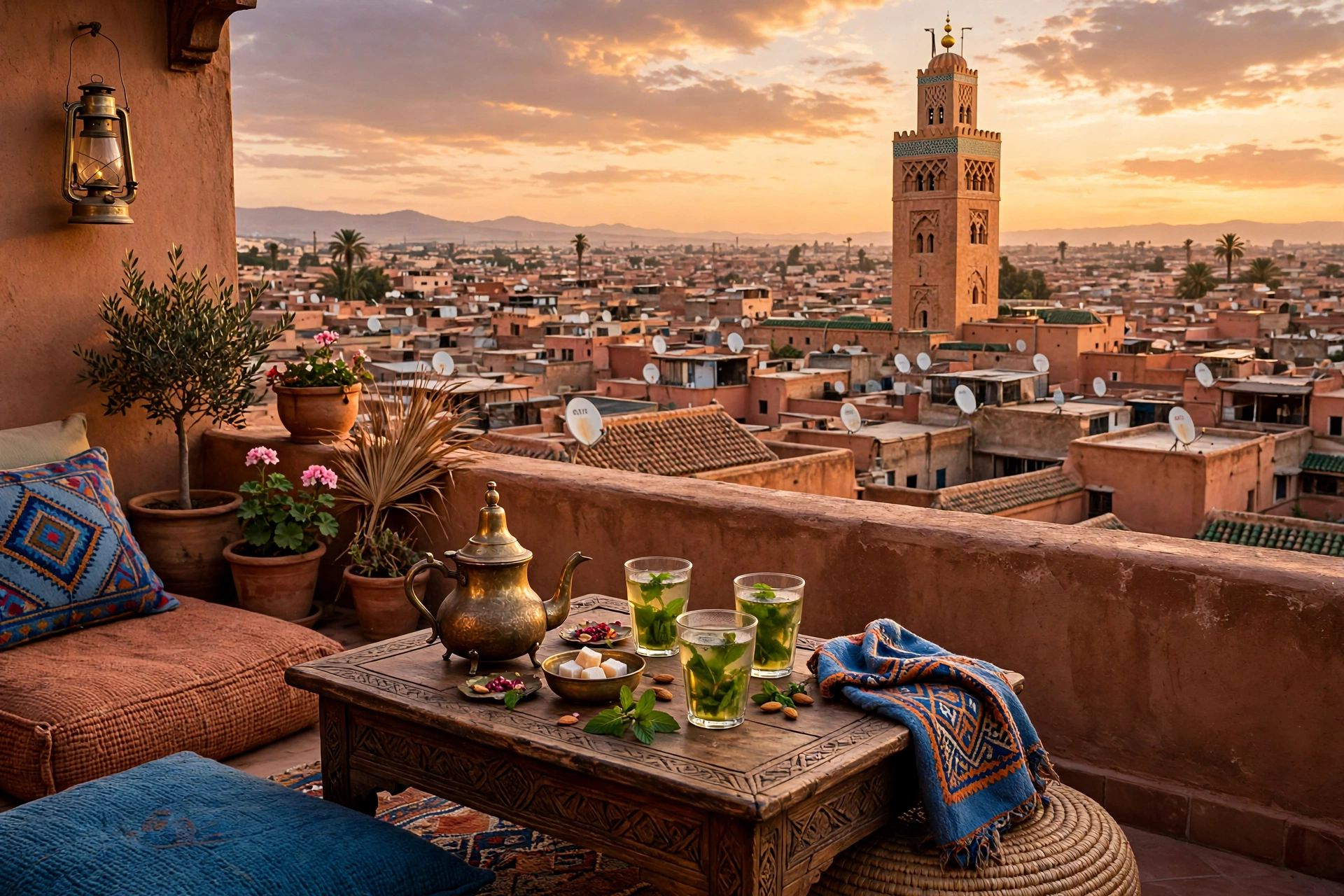
Living in Marrakech is a choice for people who want their daily life to feel like somewhere — not just a cheaper version of home, but a different one. It is a city of rooftop sunsets, market mornings and Atlas weekends. Living in Marrakech is also hot, noisy and bureaucratic, and it will test your patience in ways a quieter city would not.
If you want sunshine, beauty, low costs and a welcoming community, living in Marrakech will reward you generously. Come for a scouting trip first, rent before you buy, learn some French, and give the city a full year — including one summer — before you decide. Marrakech does not reveal itself in a week, but for the people it suits, there is nowhere else quite like it.
Last checked: November 2026. Prices and rules change — verify rents, visa requirements and school fees before you commit.
1 thought on “Living in Marrakech: Expat Life in the Red City”