
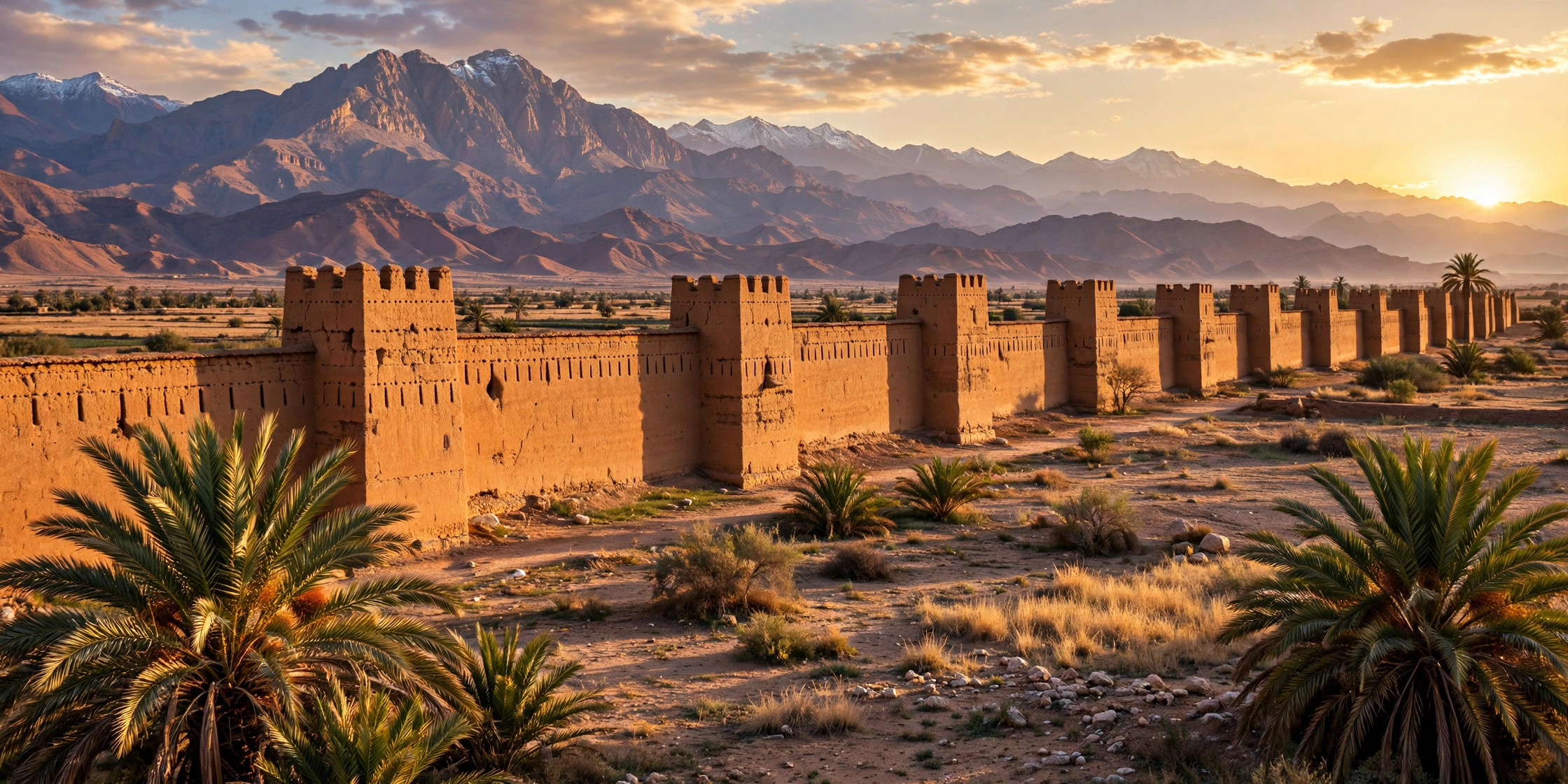
Living in Taroudant is the Morocco most expats drive past on the way to Agadir: a walled city of ochre ramparts and palm groves in the Souss valley, about 80 kilometres east of the coast, where the High Atlas fills the northern horizon and the call to prayer echoes off walls built five centuries ago.
The French call Taroudant the "Grandmother of Marrakech" — older, smaller and quieter than its famous granddaughter, and far cheaper. This guide to living in Taroudant covers costs, housing, healthcare, internet and schools. Prices are in Moroccan dirhams (MAD), checked in November 2026, at roughly 10 MAD to $1 — planning ranges, so confirm on arrival.
In this guide
- Taroudant at a Glance
- Why Living in Taroudant Appeals to Expats
- The Real Cost of Living in Taroudant
- Where to Live in Taroudant
- Renting a Home in Taroudant
- Daily Life: Food, Markets and the Two Souks
- Healthcare in Taroudant
- Internet, Phones and Working Remotely
- Getting Around Without a Car
- Schools and Family Life
- The Downsides of Living in Taroudant
- Your First Month Living in Taroudant
- Frequently Asked Questions
- Conclusion
Taroudant at a Glance
| Fact | Detail |
|---|---|
| Location | Souss valley, about 80 km east of Agadir, between the High Atlas and the Anti-Atlas |
| Population | About 80,000 (2014 census) |
| Character | Walled ochre city, two daily souks, palm groves, saffron and silver country |
| Nearest airport | Agadir Al Massira (AGA), about 80 km west, roughly 1.5 hours by road |
| Nearest big towns | Agadir about 80 km west, Marrakech about 230 km north-east |
| Climate | Hot dry summers over 40°C, mild sunny winters, cold nights |
| Monthly budget, single person | About 6,500–10,500 MAD ($650–$1,050) |
| Monthly budget, couple | About 9,500–14,500 MAD ($950–$1,450) |
Why Living in Taroudant Appeals to Expats
The first reason people choose living in Taroudant is the price: one of the cheapest historic cities in Morocco, where a one-bedroom flat can cost less than a weekend in an Agadir resort and a market lunch less than a coffee in a European capital.
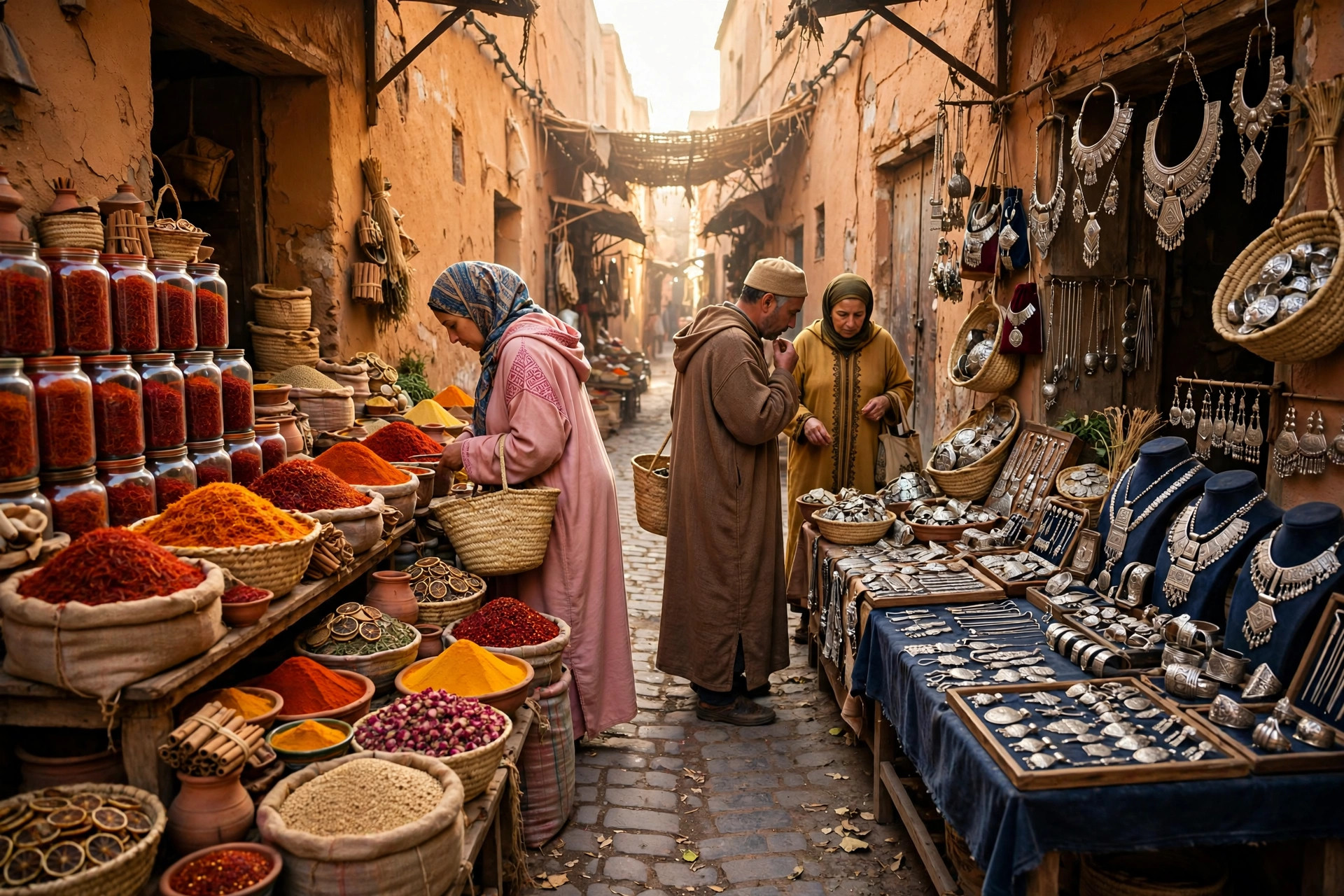
The second reason is the setting. Taroudant sits inside some seven kilometres of ochre ramparts built in the 16th century under the Saadian sultan Mohammed ash-Sheikh, and the town's story is told in our history of Taroudant. Inside the walls are two working souks, not tourist bazaars: the Arab souk for spices, leather and household goods, and the Amazigh souk for saffron, silver and argan oil.
The third reason is the pace. Living in Taroudant means a town small enough to cross on foot, where shopkeepers learn your name in a week and the evening walk on the ramparts is the social event. But living in Taroudant is a deliberate trade — calm and cheap over convenience — and the rest of this guide makes it with your eyes open.
The Real Cost of Living in Taroudant
Taroudant is cheap by Moroccan standards, already low by European ones. The table below is a realistic monthly budget for living in Taroudant as a single person or a couple in a modest flat, cooking mostly at home and eating out a few times a week.
| Expense | Single person (MAD/month) | Couple (MAD/month) |
|---|---|---|
| Rent, one-bedroom flat | 1,500–3,000 ($150–$300) | 2,500–4,500 ($250–$450) |
| Utilities, water and electricity | 300–600 ($30–$60) | 400–800 ($40–$80) |
| Food and market shopping | 2,000–3,200 ($200–$320) | 3,200–4,800 ($320–$480) |
| Eating out and cafes | 400–900 ($40–$90) | 700–1,400 ($70–$140) |
| Local transport | 200–400 ($20–$40) | 300–600 ($30–$60) |
| Internet and phone | 200–350 ($20–$35) | 250–400 ($25–$40) |
| Health insurance and care | 400–1,000 ($40–$100) | 600–1,200 ($60–$120) |
| Leisure and extras | 500–1,000 ($50–$100) | 700–1,300 ($70–$130) |
| Household and miscellaneous | 400–800 ($40–$80) | 600–1,100 ($60–$110) |
| Total | 6,500–10,500 ($650–$1,050) | 9,500–14,500 ($950–$1,450) |
Two costs surprise newcomers to living in Taroudant. The first is summer: with temperatures over 40°C, fans, air conditioning and the extra electricity they burn are not optional. The second is the Agadir run: you will go there more than you expect, for a supermarket, a pharmacy or a repair, so budget the bus or taxi fare. Our cost of living in Morocco guide gives the wider picture with 2026 prices.
Where to Live in Taroudant
Taroudant is small enough to cross on foot in under an hour, so its neighbourhoods are a handful of pockets — old-town charm against modern comfort.
The medina, inside the ramparts, is where most expats start: ochre lanes, old houses around courtyards, the two souks on your doorstep and the rampart walk at sunset. Flats here are old, full of character and sometimes cold in winter, and some older houses were damaged in the September 2023 earthquake — check any old house for cracks and repairs before you sign.
The new town, outside the walls, is the practical choice: wider streets, newer buildings, banks, ATMs and the bus station. Less pretty and more comfortable, with better odds of fibre internet and reliable hot water.
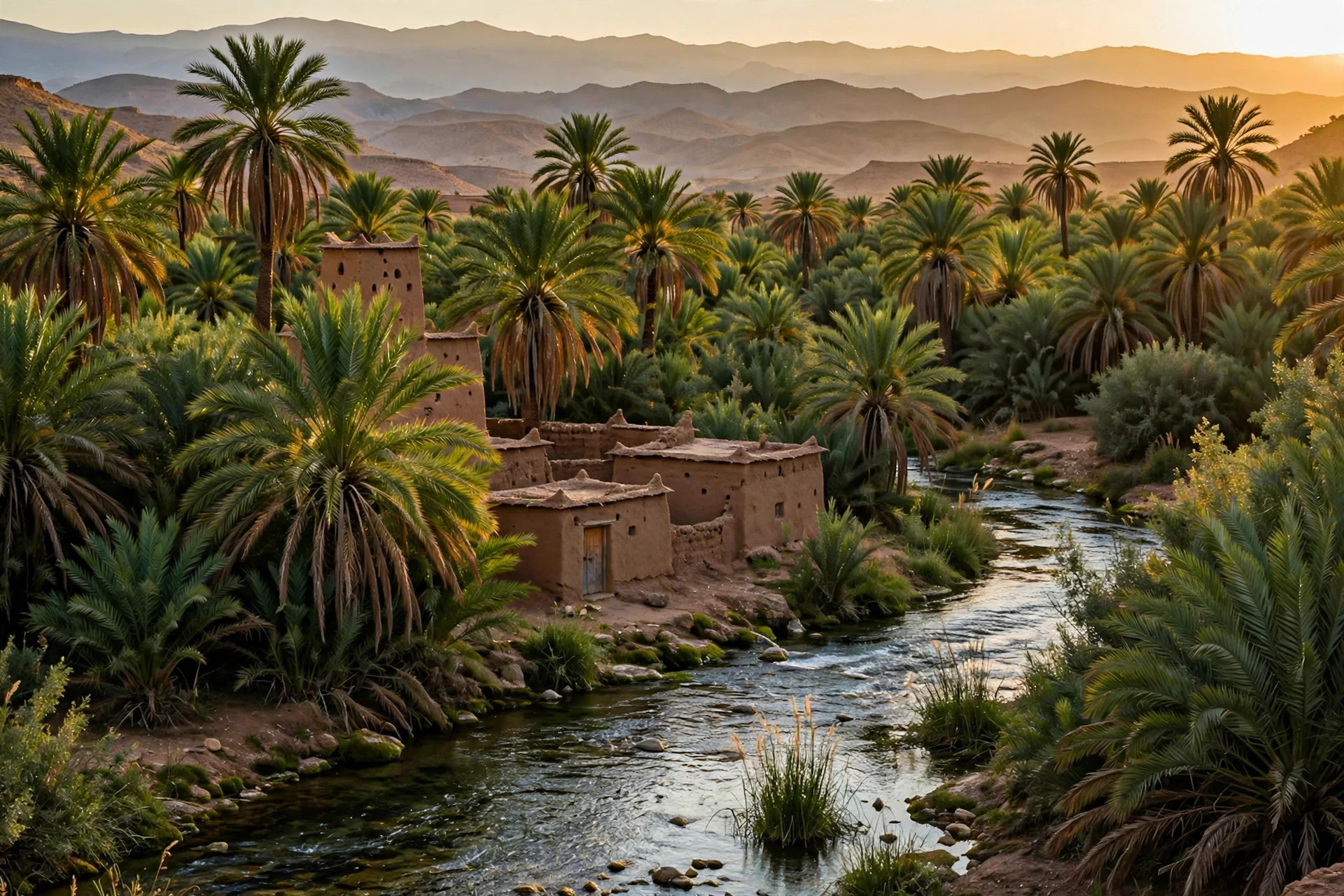
The palm grove and the road to Tiout are the quietest option: scattered houses and small farms among the palms, with the Atlas foothills on the horizon. It suits people who want space and greenery and do not mind a taxi or a walk to the shops.
Visit in the season you will actually live there: a house that charms in October can feel very different on a 45-degree July afternoon.
Renting a Home in Taroudant
Renting while living in Taroudant works differently from renting in a big Moroccan city. No listing site matters here: the best flats move by word of mouth, through the town's small guesthouses, the cafes near Bab el-Kasbah and the local semsar, the neighbourhood broker. The rule is simple: find a flat by being in town, drinking tea and asking — not by searching online from abroad.
Expect a simple contract in French or Arabic, a deposit of one to two months' rent (the legal maximum is two months under Law 67-12), and a flat that is usually unfurnished: no kitchen appliances, sometimes no cooker at all. Furnished flats cost roughly 500–1,000 MAD a month more. Always check what "furnished" includes, and whether hot water is reliable and the flat has heating for winter nights.
Two traps catch newcomers: never pay a full year upfront for a flat seen only in photos — rent month to month until you know the building and the summer heat — and remember a flat rented cheap in January can be wanted back for the high season. Get the term in writing. Our renting an apartment in Morocco guide explains the contract, the deposit rules and the semsar's fee in detail.
Daily Life: Food, Markets and the Two Souks
Daily life is the best part of living in Taroudant, and the part that separates people who stay from people who leave after three months. The day starts early in the souks, where traders from the Souss plain and the Atlas foothills bring vegetables, dates, olives and spices. Buy saffron from Taliouine, about 100 kilometres east — the town's famous export, and the reason to learn the difference between real threads and dyed fakes. Read how the spice is graded in our guide to saffron.
The two souks are the town's social event as much as its market. The Arab souk sells leather, copper, pottery and household goods; the Amazigh souk sells silver jewellery, argan oil and carpets. Go early, bargain politely, bring cash: the souks run on dirhams, not cards. Ask locally for the weekly market day — the arrangements change, and the big weekly souk draws the whole region.
The town's restaurants serve the Moroccan standards: tajine for about 40–70 MAD ($4–$7), couscous on Fridays, harira in the evenings. Mint tea costs about 6–10 MAD ($0.60–$1); alcohol is not served in town. What Taroudant lacks is variety: no supermarket with foreign foods, no delivery app. Expats living in Taroudant who cook Moroccan food at home settle in far faster.
Healthcare in Taroudant
Healthcare is the honest weak point of living in Taroudant; any guide that hides it is doing you a disservice. The town has local clinics and a provincial hospital for everyday care — minor injuries, infections, prescriptions and check-ups — but anything serious means Agadir, about 1.5 hours away, where the private clinics and big public hospitals are.
Keep a well-stocked medicine cabinet, know your blood group, keep your prescriptions in French, and have a plan — and a taxi number — for a night-time trip to Agadir. Private health insurance covering treatment in Agadir is not a luxury here; it is the price of living in Taroudant, and it belongs in your budget from day one. Our healthcare in Morocco for expats guide explains the public AMO system, private clinics and what insurance actually covers.
Internet, Phones and Working Remotely
Remote work is possible while living in Taroudant, but it is not plug-and-play. Fibre is available in parts of the new town and building by building elsewhere, so many flats still run on ADSL or 4G, and speeds vary by street and provider. The practical answer is redundancy: a fixed line if your building has one, plus a 4G router from a second provider, and a cafe with decent wifi found before your first important call. Buy the SIM at an official shop with your passport, not a street seller.
Video calls work most days, and the town's quiet suits focused work. But for all-day video or large uploads, test the connection in the exact flat, at your working hours, before you sign. Power cuts happen too, usually briefly, in bad weather — a charged laptop and a phone with data will save you.
Getting Around Without a Car
Taroudant has no train station, so living in Taroudant without a car means buses and taxis. CTM and local buses run to Agadir in about 1.5 hours for roughly 50–80 MAD ($5–$8), and to Marrakech in about 4–5 hours; times and fares vary by service, so check on the day. All are approximate, checked in November 2026.
Inside the town itself, living in Taroudant means walking: the medina, the souks and the ramparts are all within half an hour on foot, and petit taxis cover the new town for about 7–10 MAD ($0.70–$1). Grand taxis run to Agadir and the surrounding villages all day and leave when full. For the Tiout oasis, about 30 kilometres away, a grand taxi or a hired car for the day are the options; there is no local bus worth planning around.
Schools and Family Life
Families considering living in Taroudant need the bluntest paragraph in this guide: there is no international school in Taroudant, and no French or English-medium school either. Children attend Moroccan public schools, in Arabic with French, alongside local children — wonderful immersion for a young child, and a hard transition for a teenager arriving with no Arabic or French. The nearest international schooling is in Agadir, about 1.5 hours by road.
That reality decides it for most families: the ones who make it work usually have young kids, homeschool, or use distance learning. The town gives families safety, freedom for children to roam and the palm groves for a playground — but not a place to move with a teenager in exam years.
The Downsides of Living in Taroudant
Every honest account of living in Taroudant names the downsides plainly — they are the reasons people leave. The summer heat is the first: weeks over 40°C, sometimes past 45°C, when the town empties in the afternoon and life moves to the early morning and the late evening. If you cannot stand heat, you will be counting the days to October.
The second downside of living in Taroudant is the thinness of services: no big supermarket, no specialist shops, no hospital for serious care — a forgotten document, a broken laptop, a specialist appointment all cost a trip to Agadir. The third is the isolation: no train, no airport, and a bus ride to anywhere bigger. The fourth is the winter: sunny days but cold nights, and old medina houses with no heating can feel colder inside than out.
None of these is a reason not to move — they are reasons to visit first, in July, for two weeks, rent before you buy, and keep a return ticket for the first year.
Your First Month Living in Taroudant
To try living in Taroudant, do it in this order. Week one: arrive as a guest. Stay in a guesthouse inside the walls, walk every street, walk the ramparts at sunset, test the internet, eat in the souks, ride the bus to Agadir.
Week two: sort the paperwork. Get a local SIM, register with a doctor, and start your residency file: most nationalities enter visa-free for 90 days, and the carte de séjour is applied for at the préfecture before that ends, with the récépissé as legal cover while it is processed. Our moving to Morocco: visas and residency guide walks through the documents.
Week three: find the flat. Use the guesthouse owners, the cafe regulars and a local semsar, and visit your favourite flat twice — once in the afternoon and once on a cold morning. Check heating and water pressure, look for earthquake cracks in old walls, and sign month to month at first.
Week four: build the routine. Find your spice seller, your bread oven, your cafe and your rampart walk. Learn twenty words of Moroccan Arabic and use them daily — in a small town, that effort is noticed and repaid many times over. By the end of the month you will know whether living in Taroudant is your life or your holiday.
Frequently Asked Questions
Is Taroudant a good place for expats to live?
Yes, for the right expat. Living in Taroudant suits retirees, remote workers and slow travellers who want low costs, a walled city and the Atlas on the horizon, and who accept a small town, summer heat and limited services. It does not suit people needing fast internet, international schools or specialist healthcare.
How much does it cost to live in Taroudant?
A single person can live comfortably on about 6,500–10,500 MAD ($650–$1,050) a month, and a couple on about 9,500–14,500 MAD ($950–$1,450), including rent; a one-bedroom flat costs about 1,500–3,000 MAD ($150–$300) a month.
Can I work remotely from Taroudant?
Yes, with redundancy: a fixed line where available plus a 4G backup from a second provider, tested in the exact flat at your working hours. Video calls work most days, but speeds vary by street — test first.
Is Taroudant safe for solo expats and women?
Yes. Taroudant is a small, quiet town with a low crime rate, and solo residents generally feel comfortable walking the medina and the ramparts by day. Take the usual precautions at night and dress modestly in the town centre, as anywhere in Morocco.
What is healthcare like in Taroudant?
Basic care is available locally, but anything serious means Agadir, about 1.5 hours away — so carry private health insurance, a stocked medicine cabinet and a night-time plan.
How do I get to Taroudant from Agadir?
By bus: CTM and local buses take about 1.5 hours and cost roughly 50–80 MAD ($5–$8). By grand taxi, about the same time when full. By car, the road west takes about 1.5 hours; there is no train.
Conclusion
Living in Taroudant is a choice, not a compromise — a choice of the ramparts over the airport, of a slow, cheap, ochre life over a convenient one. It asks you to accept the summer heat, the cold winter nights and the bus ride to a hospital, and it pays you back with the cheapest historic living in southern Morocco and a community that knows your name within a month.
If that trade sounds like freedom, come and try it: rent for a month in July and let the town decide. Living in Taroudant will not suit everyone — but for the people it suits, it suits them completely. Compare the living in Agadir guide for the coastal alternative, read our living in Sidi Ifni guide, and browse the full Living in Morocco section for the rest of the series.