
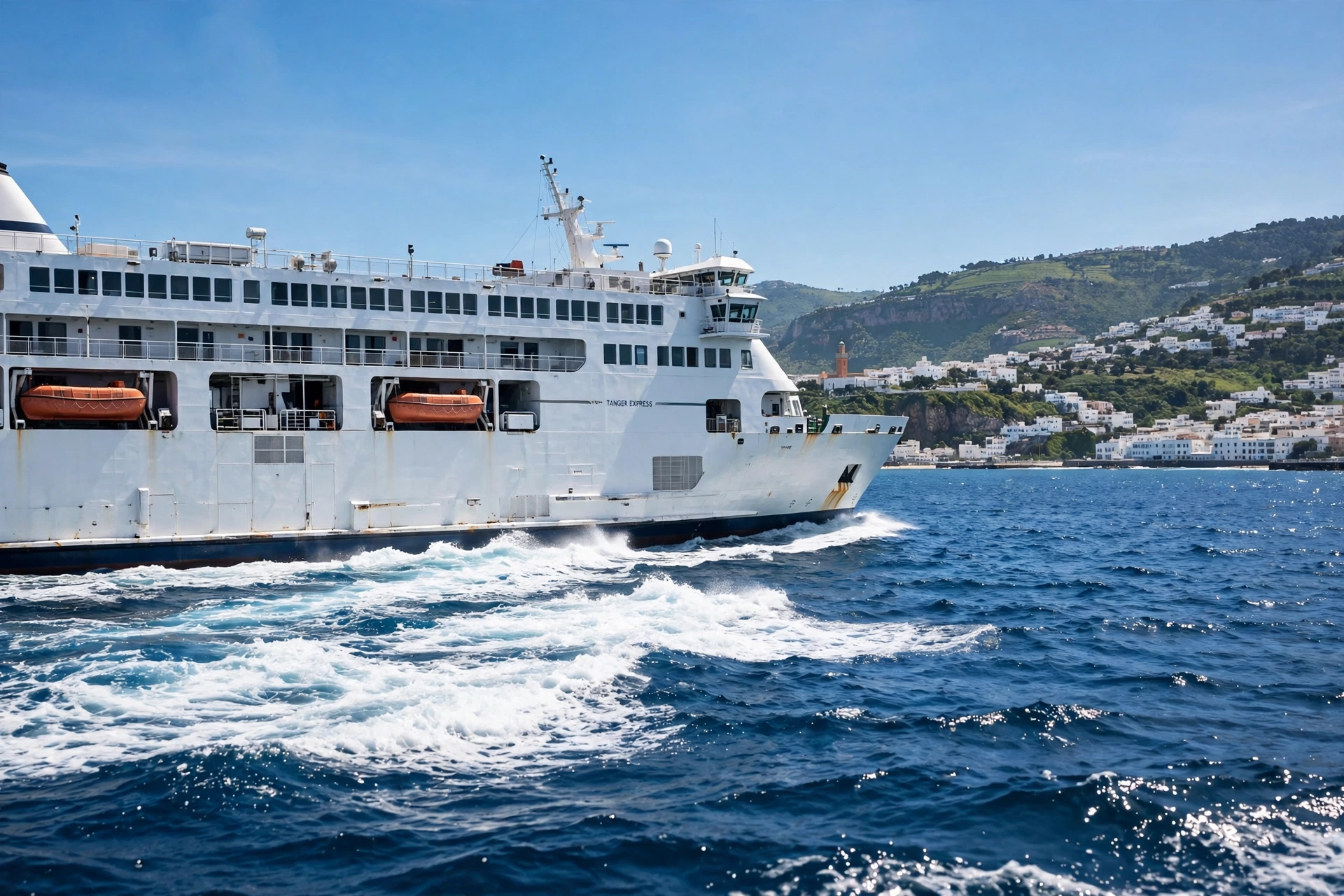
Morocco ferry prices are the first thing to check when you plan to arrive by sea, because the crossing you choose decides your whole first day. A foot passenger can leave Tarifa after breakfast and be drinking mint tea in the Tangier medina before lunch, while a driver who books the wrong port can lose half a day on a 40-kilometre detour. This guide gives you the real morocco ferry prices for 2026: the routes, the fares, and the traps a local would warn you about.
Every price below is a range, not a promise: fares move with the season and the operator, and in August they can double overnight. The structure never changes — two Spanish ports, two Moroccan ports, one short strait — and once you see it, morocco ferry prices are easy to read and easy to keep low.
In this guide
- Morocco Ferry Prices: The Routes at a Glance
- Tarifa to Tangier Ville: The Fastest Crossing
- Algeciras to Tangier Med: The Car Route
- Morocco Ferry Prices by Season: When Fares Double
- What a Car Costs on the Ferry
- Booking Your Ferry: Online, at the Port, or Through an Agent
- Tangier Med vs Tangier Ville: Don’t Book the Wrong Port
- Passport Control and Customs
- Arriving in Tangier: Getting from the Port to the City
- Money-Saving Tips from a Local
- Frequently Asked Questions
- Conclusion: Arrive by Sea the Smart Way
Morocco Ferry Prices: The Routes at a Glance
The Strait of Gibraltar is only about 14 kilometres wide at its narrowest point, between Tarifa and the Moroccan coast. That short distance is why morocco ferry prices stay low compared with flying. The Strait of Gibraltar has carried traders and armies for three thousand years; today's ferries are its newest chapter.
Two Spanish ports serve the crossing. Tarifa runs fast catamarans to Tangier Ville, the old port in the heart of Tangier. Algeciras runs large conventional ferries to Tangier Med, the huge modern port 40 kilometres east of the city. Mixing these two up is the most common mistake first-timers make.
| Route | Crossing time | Takes cars? | Foot passenger, low season | Foot passenger, high season |
|---|---|---|---|---|
| Tarifa → Tangier Ville | 35–60 min | No | €35–55 (350–550 MAD / $35–55) | €50–80 (500–800 MAD / $50–80) |
| Algeciras → Tangier Med | 1.5–2 hours | Yes | €25–45 (250–450 MAD / $25–45) | €40–70 (400–700 MAD / $40–70) |
| Algeciras → Tangier Ville | 2–2.5 hours | Seasonal | €30–50 (300–500 MAD / $30–50) | €45–75 (450–750 MAD / $45–75) |
| Almería → Nador | 6–8 hours | Yes | €45–70 (450–700 MAD / $45–70) | €70–120 (700–1,200 MAD / $70–120) |
| Motril → Al Hoceima | 5–7 hours | Yes | €40–65 (400–650 MAD / $40–65) | €60–100 (600–1,000 MAD / $60–100) |
| Sète → Tangier Med | 36–40 hours | Yes | €90–160 (900–1,600 MAD / $90–160) | €140–250 (1,400–2,500 MAD / $140–250) |
Prices are one-way, per person, checked November 2026. Operators price in euros, so the dirham figures use the usual 1 euro ≈ 10 dirhams rule of thumb. Children under four usually travel free, children aged four to eleven pay roughly half, and students and over-60s sometimes get a small Tarifa discount — always ask.
Tarifa to Tangier Ville: The Fastest Crossing
If you are travelling without a car, this is the crossing to book. Fast catamarans run by FRS (now part of DFDS) and Baleària leave Tarifa roughly every hour in daylight, and the sailing takes 35 minutes on a calm day and up to an hour when the wind picks up. You walk off in Tangier Ville already in the city, ten minutes from the medina walls.
The price reflects the speed, and morocco ferry prices on this route are the highest per kilometre of any crossing in this guide. A standard foot-passenger ticket costs around 350–550 MAD ($35–55) one way outside summer, and 500–800 MAD ($50–80) in July and August. Return tickets are rarely much cheaper than two singles, and the 150–250 MAD ($15–25) business-class upgrade is easy to skip on a 35-minute crossing.
Tarifa's ferries are weather-sensitive — the insider warning that matters. The strait funnels the wind, and when the Levanter blows hard the fast catamarans are the first sailings cancelled. If a flight or train depends on the crossing, book the earliest sailing and keep Algeciras as a backup.
Algeciras to Tangier Med: The Car Route
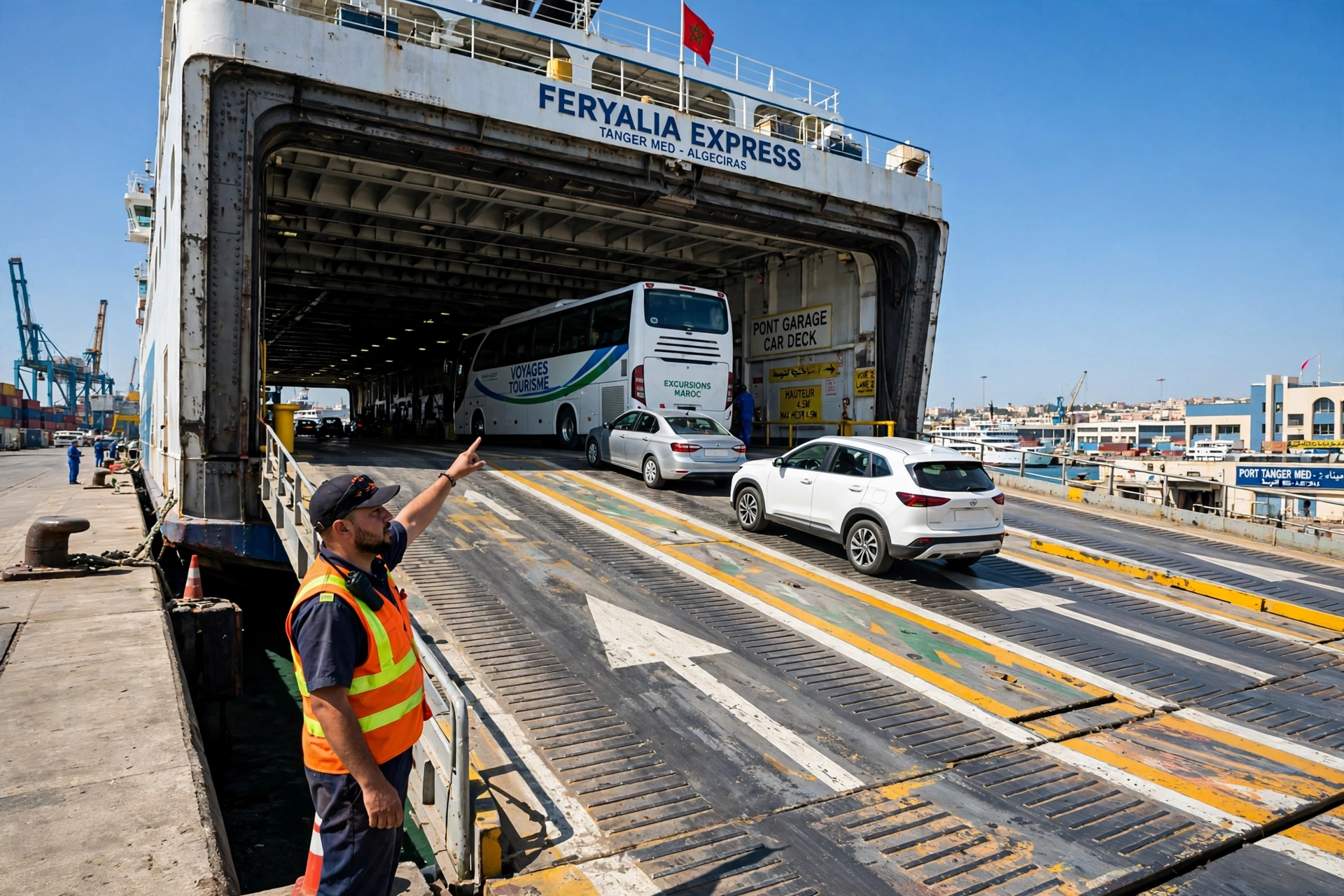
Algeciras is the workhorse of the strait. Large ferries run by Baleària, GNV, Africa Morocco Link and FRS cross to Tangier Med in 90 minutes to two hours, day and night, carrying foot passengers, cars, coaches, campervans and lorries. If you are driving your own car to Morocco, this is your route — the Tarifa catamarans take no vehicles at all.
Foot passengers pay less here than on the Tarifa route, roughly 250–450 MAD ($25–45) one way in low season, and morocco ferry prices for drivers are set by the vehicle as well as the people in it — see the table below. The trade-off is the arrival: Tangier Med sits 40 kilometres east of the city, so a foot passenger needs a bus or a taxi on the Moroccan side. Drivers should arrive at least 90 minutes before departure.
On board, expect a cafeteria, a small duty-free shop, outdoor decks and airline-style seats rather than cabins. The sea is calmest in the morning, and the crossing gives you your first view of the Rif mountains behind Tangier. Keep your passport in your hand luggage, not in the car — you will need it again at the Moroccan arrival hall.
Morocco Ferry Prices by Season: When Fares Double
Season is the biggest single factor in morocco ferry prices, bigger than the operator or the route. From October to May, outside school holidays, the strait is quiet: fares sit at the bottom of the ranges in this guide, sailings run half-full, and you can usually buy a ticket at the port on the day. December and January are the cheapest months, with occasional Algeciras fares below 200 MAD ($20).
June changes everything. As the summer holidays begin, morocco ferry prices climb week by week, and in late July and August they peak: the Tarifa foot-passenger fare can reach 800 MAD ($80), and a car with two passengers on the Algeciras route can cost 2,500–3,500 MAD ($250–350) one way. The cause is Operation Marhaba, the annual summer return of Moroccans living in Europe.
The practical rule is simple: travel in the shoulder months — May, early June, late September, October — and you get summer weather at winter prices, the easiest way to keep morocco ferry prices low. In August, book at least two weeks ahead and accept that the cheapest sailings will already be gone. Easter and Christmas sit in between: busier than normal, but nothing like August.
What a Car Costs on the Ferry
Taking a car across the strait is where morocco ferry prices get complicated, because you pay for the vehicle, the driver and each passenger separately. The table below shows the usual one-way ranges on Algeciras–Tangier Med in low season; add roughly 40–60% in July and August, and expect the exact figure to depend on the vehicle's length and height.
| What you pay for | Low season, one way | High season, one way |
|---|---|---|
| Standard car up to 5 m (driver included) | 900–1,400 MAD ($90–140) | 1,500–2,200 MAD ($150–220) |
| Each extra adult passenger | 250–450 MAD ($25–45) | 400–700 MAD ($40–70) |
| Each extra child (4–11 years) | 120–250 MAD ($12–25) | 200–350 MAD ($20–35) |
| Campervan / motorhome up to 7 m | 1,400–2,200 MAD ($140–220) | 2,200–3,500 MAD ($220–350) |
| Motorcycle | 500–800 MAD ($50–80) | 800–1,200 MAD ($80–120) |
| Bicycle (as luggage, foot passenger) | 100–200 MAD ($10–20) | 150–250 MAD ($15–25) |
| Pet in the vehicle | 100–200 MAD ($10–20) | 100–200 MAD ($10–20) |
Two costs catch first-time drivers by surprise. The first is insurance: your European policy almost certainly does not cover Morocco, so you need a green card that explicitly includes Morocco or frontier insurance bought at the port, usually 300–600 MAD ($30–60) for a short stay. The second is the temporary import form for the vehicle, filled in at Moroccan customs on arrival — keep the stamped copy safe, because you must show it again when you leave. If you would rather hire locally, our car rental prices guide shows what that costs.
Booking Your Ferry: Online, at the Port, or Through an Agent
Book online, directly with the operator, early. The operators — Baleària, GNV, Africa Morocco Link and FRS/DFDS — all sell tickets on their own websites, and booking direct means you can change the sailing if your plans shift, which aggregators often charge extra for. Aggregators like Direct Ferries and Ferryhopper are useful for comparing fares across operators on one screen, but check the final price on the operator's own site first: the aggregator total sometimes hides a booking fee of 50–100 MAD ($5–10).
A few booking details matter more than the price. Check the departure port twice — Tarifa and Algeciras are different towns, and a ticket for the wrong one is not transferable. Check whether your ticket is open or fixed: the cheapest fares are fixed to one sailing, and missing it means buying a new ticket. Save your ticket offline on your phone — port Wi-Fi is unreliable.
Tangier Med vs Tangier Ville: Don't Book the Wrong Port
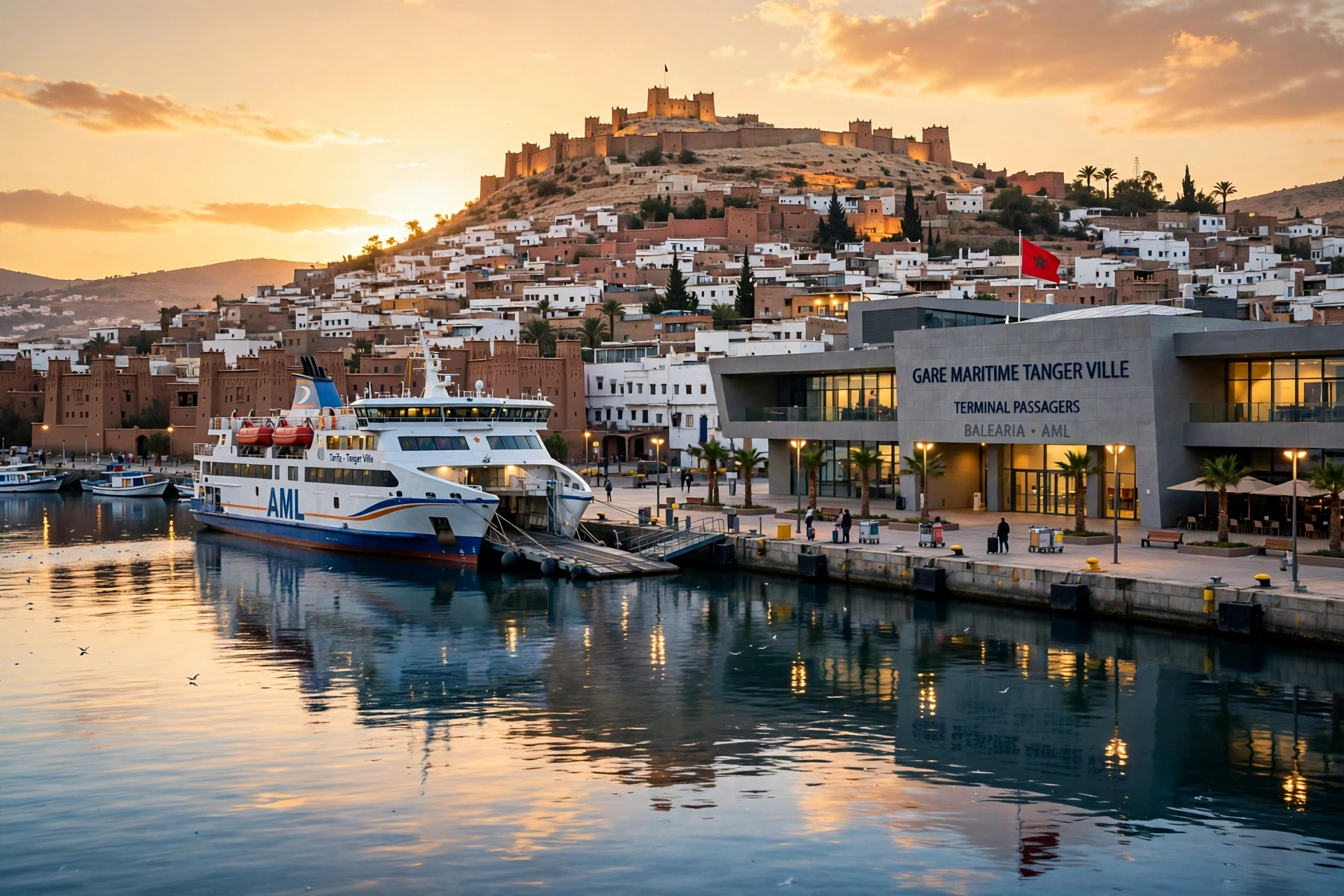
This is the mistake that ruins first days. Tangier has two ports with similar names and very different locations. Tangier Ville is the old port in the city centre, a ten-minute walk from the medina, and it takes only fast foot-passenger ferries from Tarifa. Tangier Med is a giant container and passenger port 40 kilometres east of the city, on the road toward Ceuta, and it takes the big car ferries from Algeciras.
Arriving at the wrong one costs time and money. A taxi from Tangier Med to the city centre costs 150–250 MAD ($15–25) and takes 40–50 minutes; a bus costs 20–30 MAD ($2–3) but stops at villages along the way. A driver who turns up at Tangier Ville with a car will be sent away — there is no car loading there at all. The rule is short: no car means Tarifa and Tangier Ville; car means Algeciras and Tangier Med.
Read your ticket before you travel: the port name and the morocco ferry prices are both printed on it, and the confirmation email usually includes a map link. If you booked through an aggregator, double-check the port on the operator's own site — aggregators have shown "Tangier" without saying which one. Our Tangier travel guide explains both ports and what to do once you arrive.
Passport Control and Customs
Passport control for Morocco happens at the Spanish port, before you board — not on arrival. An officer stamps your passport and, for drivers, the vehicle import form, while you are still on European soil. Keep your passport accessible, not buried in a suitcase in the boot. Most nationalities — including the EU, the UK, the US, Canada and Australia — enter Morocco visa-free for up to 90 days; check the rule for your passport before you travel, because the ferry company will not let you board without the right to enter.
Customs is usually quick for foot passengers: a bag scan and a stamp. Drivers face a longer process, with a vehicle inspection that can take 30 minutes to two hours in August. Declare nothing you cannot explain — drones and professional camera gear draw questions — and remember that the dirham is a closed currency, so the morocco ferry prices you see in euros are paid in euros, while dirhams can only be bought once you arrive. Our dirham guide covers the cash rules in full.
Arriving in Tangier: Getting from the Port to the City
From Tangier Ville, the city is yours on foot. The terminal opens onto the port boulevard, the medina gate is ten minutes away, and the petit taxis waiting outside charge 20–30 MAD ($2–3) for a ride into town — insist on the meter or agree the price before you get in, as our taxi prices guide explains. For the high-speed Al Boraq train to Rabat or Casablanca, the station is a 15-minute taxi ride away; our ONCF train guide has the times and fares.
From Tangier Med, plan the transfer in advance. The port runs shuttle buses to the city, and grand taxis wait at the terminal, but in August the queue for both can be long. Pre-booked transfers cost 200–300 MAD ($20–30) for a private car to central Tangier and are worth it after a long drive through Spain — and the transfer is the part of the morocco ferry prices equation that first-timers forget to budget for. Drivers should follow the motorway signs to the city centre.
Whatever port you arrive at, change some money on the Moroccan side. There are ATMs and a bureau de change at both terminals, and you will want dirhams in hand for the taxi, a bottle of water and your first mint tea. The port ATMs sometimes run out of cash on busy August days, so keep a few euros in your pocket — most taxi drivers at the port accept them at a fair rate. For what to see first, check Visit Morocco, the official tourism portal.
Money-Saving Tips from a Local
The cheapest morocco ferry prices go to travellers who treat the crossing like a flight: book early, travel midweek and avoid the peak. Tuesday and Wednesday sailings are usually the cheapest of the week, and the first sailing of the day is often cheaper than the midday one. Shifting a crossing by 48 hours can save 200–300 MAD ($20–30) per person in summer.
Travel light and travel as a foot passenger when you can. A car adds 900–2,200 MAD ($90–220) to the crossing, plus fuel, tolls and insurance — and for a trip based in Tangier, Fes or Marrakech, trains and grand taxis cover the country well. Compare the total before you decide: the ferry saving of going by car evaporates if you then pay for parking and fuel for a week. Our trip cost guide puts the whole journey in budget terms, and our cost of living guide shows daily costs once you are here. Join the operator's mailing list too — promotions can save a family of four with a car 500 MAD ($50) or more.
Frequently Asked Questions
How much is the ferry from Spain to Morocco?
For a foot passenger, morocco ferry prices start at about 250 MAD ($25) on Algeciras–Tangier Med and 350 MAD ($35) on the fast Tarifa–Tangier Ville route in low season. In July and August, expect 400–800 MAD ($40–80). A standard car with its driver costs roughly 900–1,400 MAD ($90–140) in low season and 1,500–2,200 MAD ($150–220) in high season, plus a fare per extra passenger.
Which ferry is cheapest to Morocco?
The Algeciras–Tangier Med route is usually the cheapest for foot passengers, at 250–450 MAD ($25–45) in low season, because the big conventional ferries carry more people than the fast Tarifa catamarans. The trade-off is the arrival port: Tangier Med is 40 kilometres from the city, so add a 150–250 MAD ($15–25) taxi fare to the real cost.
Can I take a car on the Tarifa to Tangier ferry?
No. The Tarifa–Tangier Ville service uses fast catamarans that carry foot passengers only — there is no vehicle deck. Drivers must use Algeciras–Tangier Med, or the longer Almería–Nador and Motril routes. Arrive at Tarifa with a car and you will need to drive 20 minutes to Algeciras instead.
Do I need a passport to take the ferry to Morocco?
Yes. A valid passport is required, and passport control happens at the Spanish port before boarding. Most visitors from the EU, the UK, the US, Canada and Australia enter Morocco visa-free for up to 90 days, but your passport should be valid for at least six months beyond arrival. National identity cards are not accepted for entry into Morocco.
How early should I arrive at the ferry port?
Foot passengers should arrive 60 minutes before departure; drivers 90 minutes, and two hours in July and August, when morocco ferry prices peak and the ports are at their busiest. Check-in closes 30 minutes before sailing for foot passengers and 45–60 minutes for vehicles, and a missed sailing on a fixed cheap ticket means buying a new one. In summer, the roads around both Spanish ports jam, so leave extra time for the drive.
Can I buy a ferry ticket at the port on the day?
Yes, from October to May, when sailings rarely sell out — but you will pay the walk-up fare, the most expensive one. From June to September, and especially in August, sailings sell out days ahead, so booking online in advance is essential. If you must buy at the port in summer, arrive early in the morning.
Conclusion: Arrive by Sea the Smart Way
The ferry is the most romantic way to enter Morocco, and with the right choices it is also one of the cheapest. Remember the three decisions that matter: Tarifa for speed and the city-centre arrival, Algeciras for cars and the lowest fares, and the shoulder season for the best morocco ferry prices of all. Book the right port, arrive early, and keep your passport in your pocket, not your suitcase.
Crossing the Strait of Gibraltar by ferry is a journey in itself — fourteen kilometres of blue water between two continents, with Africa rising out of the sea ahead of you. Get the morocco ferry prices right, and that first view of Tangier costs less than a dinner back home.
Last checked: November 2026. Prices are indicative ranges based on operator fares published in autumn 2026 and are checked again each season; always confirm the final fare on the operator's own website before booking.
1 thought on “Morocco Ferry Prices: Spain to Tangier in 2026”