
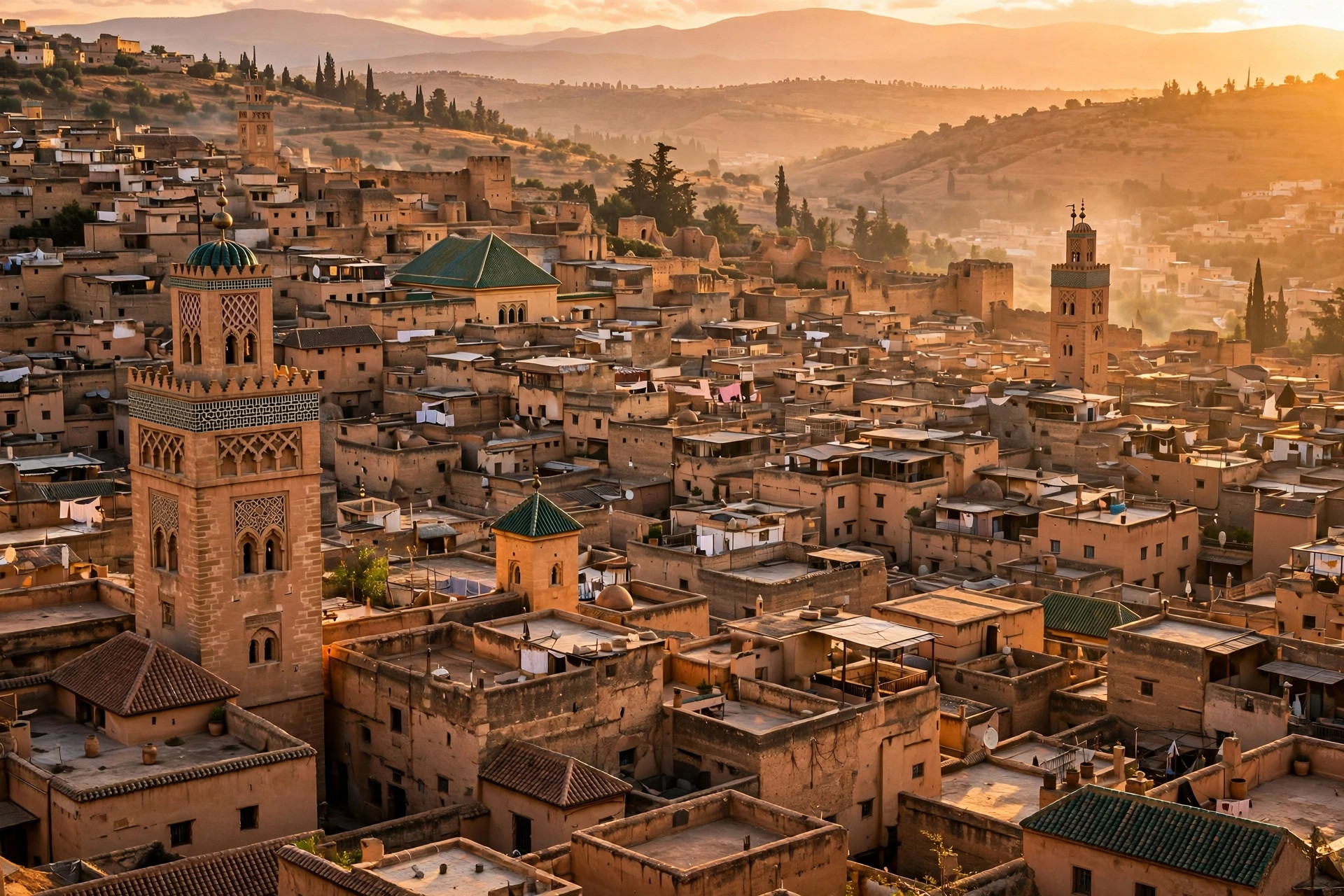
Ask most travellers to name Morocco’s great dynasties and you will hear the Almoravids, the Almohads, the Marinids and the Saadians. Almost nobody mentions the rulers who held the throne between the Marinids and the Saadians. The wattasid dynasty morocco is the missing chapter in that story, and it deserves better than a footnote. For roughly eighty years, from the 1470s to 1554, the Banu Wattas ruled from Fes while their kingdom slowly unravelled around them.
This was not a golden age, and that is exactly why it matters. The wattasid dynasty morocco inherited a kingdom already losing its coastline to Portugal, its trade routes to new Atlantic sea lanes, and its authority to rebellious tribes and sharifian preachers in the south. They held the capital, kept the scholars and the madrasas working, and survived far longer than anyone expected. Then they fell, quickly and finally, to the Saadians.
In this guide, we trace how the wattasid dynasty morocco rose, what it built, why it lost the coast, and how its story ended at the Battle of Tadla in 1554. We also show you where to see their Fes today, what it costs, and how the dynasty fits into the wider story told by our Kings of Morocco series.
In this guide
- From Marinid Viziers to Sultans of Fes
- The Wattasid Dynasty Morocco: Rulers and Reigns
- A Kingdom Losing Its Coast
- Fes Under the Wattasids: Learning, Trade and Daily Life
- The Saadian Rise and the Fall of the Wattasids
- Visiting Wattasid Fes Today
- Frequently Asked Questions
- Conclusion: Why the Wattasids Still Matter
From Marinid Viziers to Sultans of Fes
The Wattasids were not outsiders who seized Morocco. They were insiders, a Zenata Berber clan closely related to the Marinids themselves, who had served for generations as viziers, governors and regents. When Marinid power collapsed in the mid-fifteenth century, the Wattasids were the people already holding the levers of government. The rise of the wattasid dynasty morocco was less a conquest than a takeover from within, and the exact date of that takeover is still unsettled: some historians place the Wattasid seizure of Fes in 1471, others in 1472, and the difference matters because it marks the boundary between regency and outright rule.
The Marinid sultanate had been dying for decades before the wattasid dynasty morocco took power. The last Marinid sultan, Abd al-Haqq II, ruled a shrinking realm from Fes while Portuguese ships took Ceuta in 1415 and pressed along the Atlantic coast. In 1465, a revolt in Fes killed Abd al-Haqq, and Morocco entered a period of confusion with no single ruler in control. The Wattasid vizier Abu Abd Allah al-Sheikh Muhammad ibn Yahya stepped into that vacuum, and by the early 1470s he was ruling Fes as sultan in all but name.
What the first ruler of the wattasid dynasty morocco inherited was a capital, not a kingdom. The Wattasid sultans controlled Fes and its surroundings, parts of the north, and a claim to the rest of Morocco that few outside the capital recognised. The south was already drifting toward the sharifian leaders who would become the Saadians. The Atlantic ports were falling one by one to Portugal. The Wattasid story begins, in other words, with a ruler doing the hardest job in Moroccan politics: holding the centre while the edges broke away.
That is the first thing outsiders routinely get wrong about this dynasty. The wattasid dynasty morocco is often described as a line of weak placeholders between two great empires, as if they barely ruled at all. In truth, they held Fes for about eighty years, kept its institutions running, and maintained a court, an army and a diplomatic presence in a period when Morocco could easily have fragmented completely. A placeholder does not survive eight decades of Portuguese pressure, tribal revolt and sharifian challenge.
The Wattasid Dynasty Morocco: Rulers and Reigns
The founder of the wattasid dynasty morocco, Abu Abd Allah al-Sheikh Muhammad ibn Yahya, ruled from about 1472 until 1504. He was a capable administrator who understood that his authority rested on Fes itself: its scholars, its merchants, its religious prestige and its walls. He kept the Marinid administrative system largely intact and presented himself as the restorer of order after the chaos of 1465.
His successor, Abu Abd Allah al-Burtuqali — known as Muhammad al-Burtuqali, “the Portuguese” — ruled from 1504 to 1526. The nickname is one of the small mysteries of the period: it may refer to his mother’s origins, to his appearance, or to his long dealings with the Portuguese on the coast. Under his reign the position of the wattasid dynasty morocco grew harder, because the Portuguese were no longer content with Ceuta and Tangier. They built fortified trading posts down the Atlantic coast, and the Wattasids could not dislodge them.
The third great figure was Abu al-Abbas Ahmad, who reigned from 1526 and whose story ends in captivity. He was captured by the rising Saadians, and the sources disagree over when: some say 1524, before he even became sultan, which would be impossible if the date is right; others place his capture in the 1530s or later. The exact dates of his captivity are disputed, and no single version should be presented as settled fact.
What is clear is that the sultans of the wattasid dynasty morocco after al-Burtuqali grew weaker with each reign. Ahmad’s son Muhammad al-Qasri ruled briefly, and the dynasty’s last effective ruler, Ali Abu Hassun, held power only by balancing between the Saadians and the Ottomans. He was the final Wattasid sultan, and his end came in 1554 at the Battle of Tadla, where the Saadian sultan Muhammad al-Shaykh defeated and killed him. The wattasid dynasty morocco ended there, on a battlefield in the Middle Atlas foothills, not in the palace at Fes.
The rulers at a glance
The sequence of the wattasid dynasty morocco runs from Abu Abd Allah al-Sheikh (about 1472–1504) through Muhammad al-Burtuqali (1504–1526) and Abu al-Abbas Ahmad (1526 onwards, with a long interruption in captivity) to the final sultan Ali Abu Hassun, killed in 1554.
Between them there were short reigns and regencies that the chronicles record inconsistently. Treat any neat list of Wattasid reign dates with caution: the sources disagree, and modern historians still argue over the details. Fifteenth- and sixteenth-century Morocco produced fewer court chronicles than the Marinid or Saadian periods, and much of what we know comes from later histories, Portuguese records and the Saadian accounts of their enemies. The Wattasids lost the war and, to a large extent, lost the history too.
A Kingdom Losing Its Coast
No account of the wattasid dynasty morocco makes sense without the Portuguese. Ceuta fell in 1415, before the Wattasids took power, but the real damage came during their reign. Tangier, Asilah, Larache and the Atlantic ports of the south were taken or threatened, and in 1505 the Portuguese founded Santa Cruz at Agadir, a fortified post that cut into the trans-Saharan gold trade through the Sous.
The rulers of the wattasid dynasty morocco could not push the Portuguese back into the sea, and the reason was not cowardice. Portugal had ships, cannon and a fortified coastal system; the Wattasids had a land army built for tribal warfare and a treasury that shrank every year as trade moved away from their ports. Each lost port meant lost customs revenue, and each lost revenue meant a smaller army the next year. It was a slow squeeze, and the sultans in Fes watched it happen.
Wattasid envoys dealt with Portugal, Spain and later the Ottomans, trying to play one power against another. Ottoman help never arrived in the quantities Fes needed.
Meanwhile, the real political energy in the Morocco of the wattasid dynasty morocco was moving south. In the Sous, sharifian preachers — descendants of the Prophet Muhammad — were organising resistance to the Portuguese around Agadir and building a movement that combined religious authority with military success. The Wattasids, as a Zenata dynasty with no sharifian claim, could not match that kind of legitimacy. When the Saadians recaptured Agadir in 1541, it was a devastating blow: the Wattasids had failed for decades to do what the sharifs had just done.
Why the coast was lost
Three forces worked against the wattasid dynasty morocco at once. First, Portuguese sea power made the coast indefensible with the tools the Wattasids possessed. Second, the gold trade that had funded the Marinids was shifting to Atlantic routes controlled by Europeans. Third, the religious and political initiative had passed to the sharifian south, which framed the struggle against Portugal as a holy war the Wattasids could not lead. Any one of these would have strained the dynasty; together they were fatal, and the Wattasids lost Morocco port by port, year by year, in a process that took most of their reign.
Fes Under the Wattasids: Learning, Trade and Daily Life
Fes under the wattasid dynasty morocco was still one of the great cities of the Islamic world, and the dynasty’s most lasting achievement was keeping it that way. The University of al-Qarawiyyin continued to teach, the madrasas continued to house students, and the markets of Fes el Bali continued to draw merchants from across North Africa. A visitor walking the streets of the medina today is walking through a city the Wattasids kept alive.
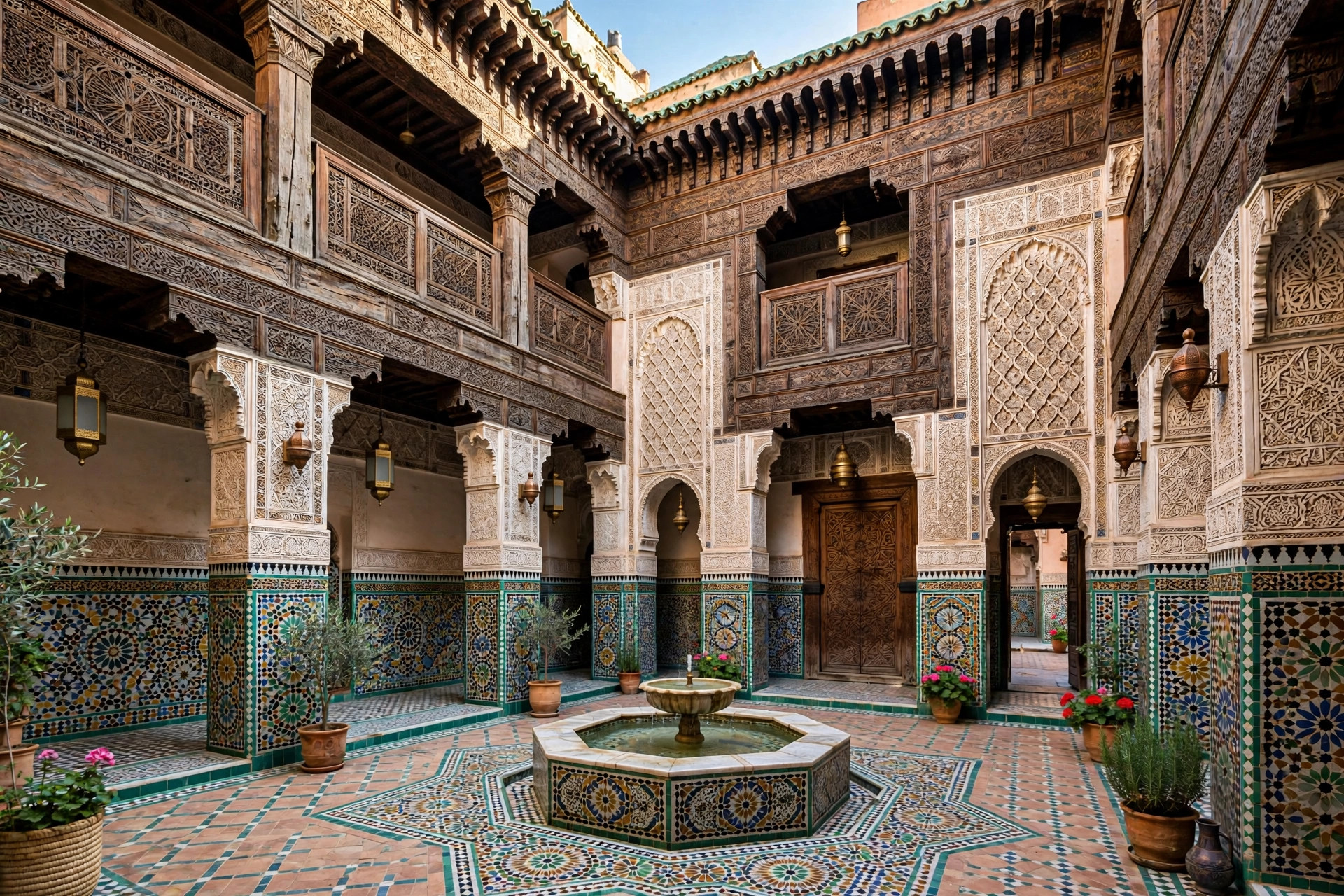
The sultans of the wattasid dynasty morocco maintained the great Marinid madrasas, above all the Madrasa Bou Inania, founded by the Marinid sultan Abu Inan in the fourteenth century and still the finest of its kind in Morocco. Its courtyard of carved cedar, zellige tilework and plaster ornament is the image most visitors carry home from Fes. The Madrasa al-Attarine, smaller and more jewel-like, served students of the Qarawiyyin in the same way. These buildings were not museums; they were working schools, and the Wattasids funded them because educated scholars were the backbone of their administration.
Daily life in Fes during the wattasid dynasty morocco would be recognisable to anyone who knows the medina today. The call to prayer from dozens of minarets, the crowded lanes of the souks, the smell of tanning pits and baking bread, the students hurrying to the Qarawiyyin — all of it was already there. The Wattasids did not remake Fes; they preserved it, and preservation in a century of crisis was an achievement in itself. For more on the city the Wattasids ruled, read our Marinids in Fes guide.
The Saadian Rise and the Fall of the Wattasids
The Saadians came from the Sous, from the oasis towns around Taroudant. Where the Wattasids were a northern dynasty of administrators, the Saadians were a southern movement of sharifian preachers who had proved they could defeat the Portuguese. That proof — the recapture of Agadir in 1541 — gave them a legitimacy the Wattasids could never claim.
The two dynasties fought on and off for three decades. The Saadians took Marrakech in 1524 and pressed north year after year. The Wattasids fought back, and at times they won, but the momentum was against them.
The end of the wattasid dynasty morocco came quickly once it came. In 1554, the Saadian sultan Muhammad al-Shaykh defeated the last Wattasid sultan, Ali Abu Hassun, at the Battle of Tadla. Abu Hassun had briefly retaken Fes with Ottoman help earlier that year — the last, desperate gamble of a dynasty that had run out of options — and then lost everything in a single battle. He was killed, his army scattered, and the wattasid dynasty morocco was finished. Muhammad al-Shaykh entered Fes and founded the Saadian era.
A common mistake is to confuse this ending with the Battle of the Three Kings of 1578, where the Saadian sultan Ahmad al-Mansur defeated the Portuguese at Ksar el-Kebir. That was the Saadians’ triumph, not the Wattasids’: by 1578 the Wattasids had been gone for nearly a quarter of a century. Read our guide to the Battle of the Three Kings and our Saadian dynasty guide for what came next.
Visiting Wattasid Fes Today
The best way to understand the wattasid dynasty morocco is to walk its capital. Fes el Bali, the old medina, is a UNESCO World Heritage site, and its streets, madrasas and mosques are the closest thing to a Wattasid monument that survives. The dynasty built little that carries its name, so the sites below are the Marinid buildings they preserved and used.
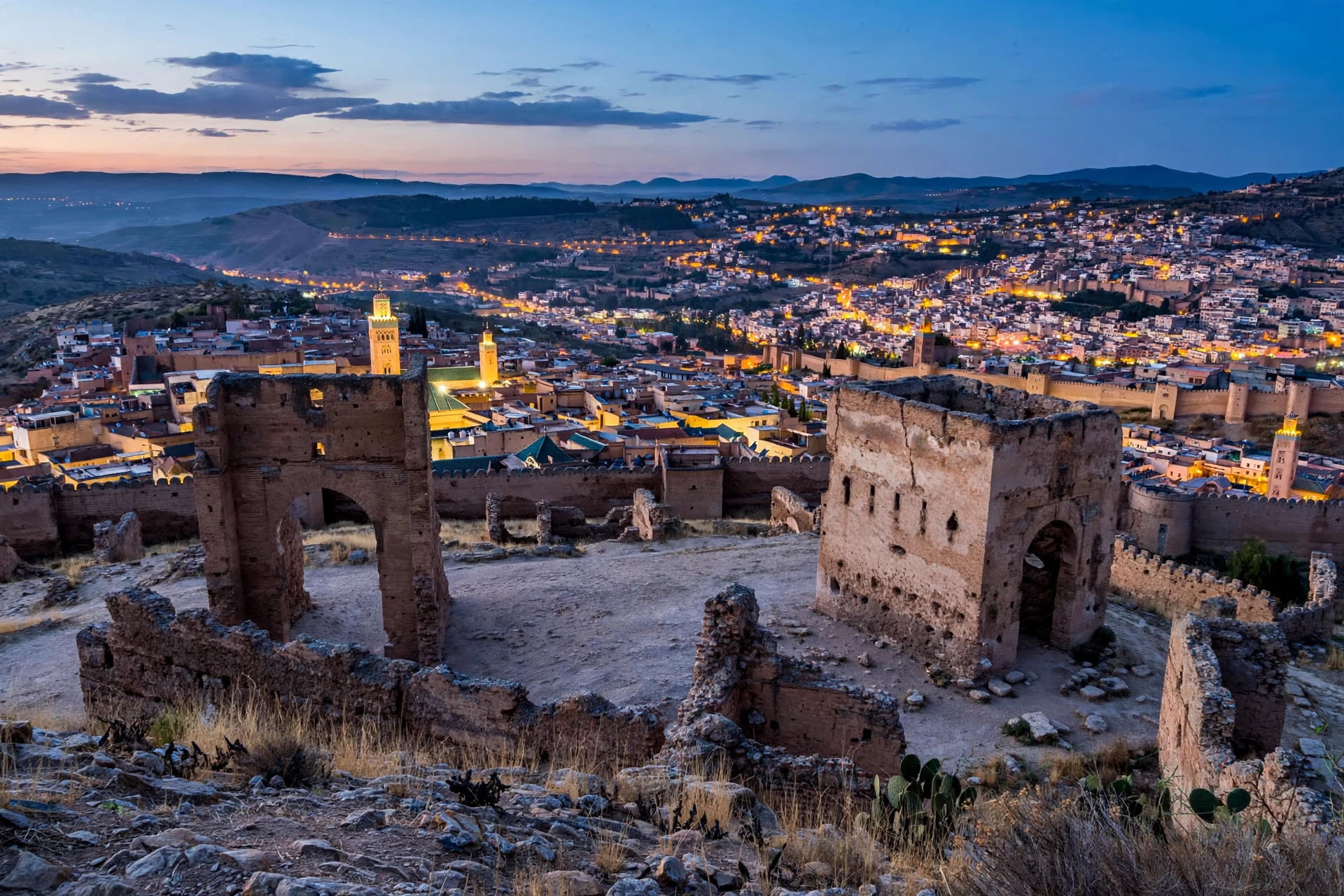
Start at the Madrasa Bou Inania, the masterpiece of Marinid architecture and the finest single building in Fes. Then cross to the Madrasa al-Attarine, smaller and more intimate, beside the Qarawiyyin mosque and university. From there, walk up to the Marinid Tombs on the hill north of the medina for the best view over Fes at dusk. Finish at Bab Bou Jeloud, the great blue gate, and the lanes of the souks beyond it.
Entry fees and travel costs for a Wattasid-themed day in Fes are below. Prices checked November 2026, at roughly 10 MAD to $1; entry fees are often cash-only, so carry small notes.
| Site | What you will see | Entry fee (MAD) | Entry fee (USD) |
|---|---|---|---|
| Madrasa Bou Inania | Carved cedar, zellige courtyard, minaret | 20 MAD | ~$2 |
| Madrasa al-Attarine | Small ornate courtyard, Qarawiyyin quarter | 20 MAD | ~$2 |
| Marinid Tombs | Hilltop ruins, panoramic view of Fes | Free | Free |
| University of al-Qarawiyyin | Mosque and university exterior (non-Muslims view from outside) | Free (exterior) | Free |
| Bab Bou Jeloud and the souks | Blue gate, artisan lanes, tanneries viewpoint | Free | Free |
| Route or cost | Details | Price (MAD) | Price (USD) |
|---|---|---|---|
| Train from Casablanca to Fes | ONCF, about 4 hours, second class | 120–180 MAD | ~$12–18 |
| Train from Rabat to Fes | ONCF, about 3 hours, second class | 90–140 MAD | ~$9–14 |
| Train from Tangier to Fes | ONCF, about 3.5 hours, second class | 100–160 MAD | ~$10–16 |
| Taxi from Fes railway station to Bab Bou Jeloud | Petit taxi, metered | 15–25 MAD | ~$1.50–2.50 |
| Licensed medina guide (half day) | Book through your riad or a registered guide | 200–400 MAD | ~$20–40 |
| Lunch in the medina | Tagine, bread and mint tea in a local restaurant | 60–100 MAD | ~$6–10 |
For wider context, start with our history of Morocco pillar guide, which places the Wattasids in the full sequence from the Idrisids to the Alaouites. The UNESCO page on the medina of Fez explains why the old city is protected, and Wikipedia’s Wattasid dynasty page gives a useful overview of the chronology, including the disputed dates flagged in this guide.
Frequently Asked Questions
When did the Wattasid dynasty rule Morocco?
The wattasid dynasty morocco ruled from Fes from roughly 1472 to 1554, about eighty years. The starting date is unsettled — some sources say 1471 — and the dynasty ended with the death of Ali Abu Hassun at the Battle of Tadla in 1554.
Who were the Wattasids?
They were the Banu Wattas, a Zenata Berber clan related to the Marinids, who had served as viziers and regents before taking the throne themselves. They were not foreign conquerors; they were the Marinid court’s own administrators.
Where did the Wattasid dynasty rule from?
From Fes, the historic capital of northern Morocco. Their direct control was strongest in the north; the south was increasingly under sharifian leaders who became the Saadians, and the Atlantic coast was being taken by Portugal.
Why did the Wattasid dynasty fall?
A combination of Portuguese pressure on the coast, lost trade revenue, and the rise of the sharifian Saadians, who recaptured Agadir in 1541 and defeated the last Wattasid sultan at the Battle of Tadla in 1554.
What is the difference between the Wattasids and the Saadians?
The Wattasids were a Zenata dynasty of administrators based in Fes; the Saadians were a sharifian dynasty from the Sous who claimed descent from the Prophet Muhammad and built their legitimacy on fighting the Portuguese. The Saadians replaced the Wattasids in 1554.
Can you visit Wattasid sites in Fes today?
Yes. The Madrasa Bou Inania and Madrasa al-Attarine, both maintained and used in the Wattasid period, are open to visitors for about 20 MAD each, and the Marinid Tombs hill is free and offers the best view over the city.
Conclusion: Why the Wattasids Still Matter
The wattasid dynasty morocco is easy to skip, and that is a mistake. Eighty years is a long time to hold a capital while your coastline falls, your revenues shrink and a rival movement gathers in the south. The Wattasids held Fes, kept its scholars teaching and its craftsmen working, and handed the Saadians a functioning state rather than a ruin. They were not a footnote; they were the bridge between the Marinid age and the Saadian age, and Morocco’s story makes little sense without them.
Visit Fes, stand in the courtyard of the Bou Inania, and look out from the Marinid Tombs at dusk. The city the Wattasids kept alive is still there, still crowded, still calling its people to prayer from the same minarets.