
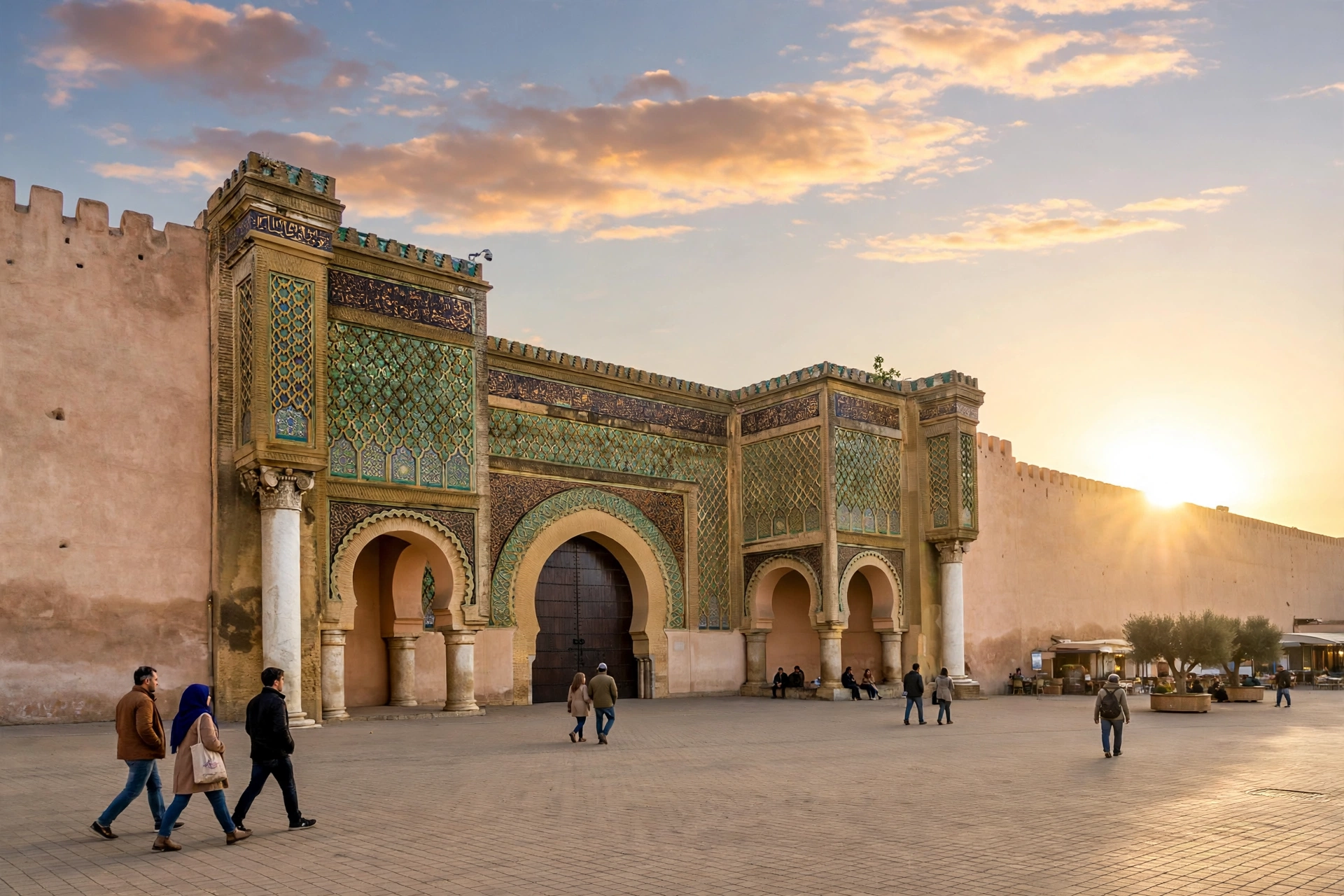
Living in Meknes is Morocco at its most unhurried: an imperial city of around 650,000 people where the walls Sultan Moulay Ismail raised in the 17th century still shape daily life. It is the quietest of Morocco's four imperial cities, and that is exactly the point. Living in Meknes means trading the crowds of Marrakech and the prices of Casablanca for wide boulevards, a medina on UNESCO's World Heritage list, and rents that are among the lowest of any major Moroccan city.
Living in Meknes suits a particular kind of expat: remote workers, retirees, teachers and slow travellers who want real Moroccan life rather than an expat bubble. It has no beach, no international airport and no large foreign community. What it has instead is history on every corner, Fes forty minutes away by train, and a cost of living that lets a modest foreign income stretch a long way. It sits in our Living in Morocco section, alongside our wider Living in Morocco: The Complete Guide for Expats.
In this guide
- Why Expats Choose Living in Meknes
- Meknes at a Glance
- Best Neighbourhoods for Living in Meknes
- Rents and Housing: What You Pay in 2026
- Monthly Cost of Living in Meknes
- Weather: Hot Summers, Cold Winters
- Getting Around: Trains, Buses and Petit Taxis
- Working in Meknes: Jobs and Remote Work
- Daily Life: Markets, Food and Cafes
- Healthcare in Meknes
- Schools for Expat Families
- The Downsides of Living in Meknes
- Moving to Meknes: Your First Steps
- Frequently Asked Questions
Why Expats Choose Living in Meknes
The first reason expats choose living in Meknes is the price. A comfortable one-bedroom flat in the city centre costs roughly half what the same flat costs in Rabat and a third of a comparable place in Casablanca. Groceries from the souk, a 7-dirham petit taxi across town and a 15-dirham lunch keep daily spending low without any feeling of sacrifice. For retirees on a fixed pension and remote workers earning in euros or dollars, that gap changes what life looks like.
The second reason expats choose living in Meknes is the setting. Meknes was the capital of Sultan Moulay Ismail from 1672 to 1727, and his building programme left the city with the largest ramparts in Morocco, the monumental Bab Mansour gate and the vast Heri es-Souani granaries. The medina, a UNESCO site since 1996, still works as a market town rather than a museum. Living in Meknes puts that history in your commute, not just your weekends.
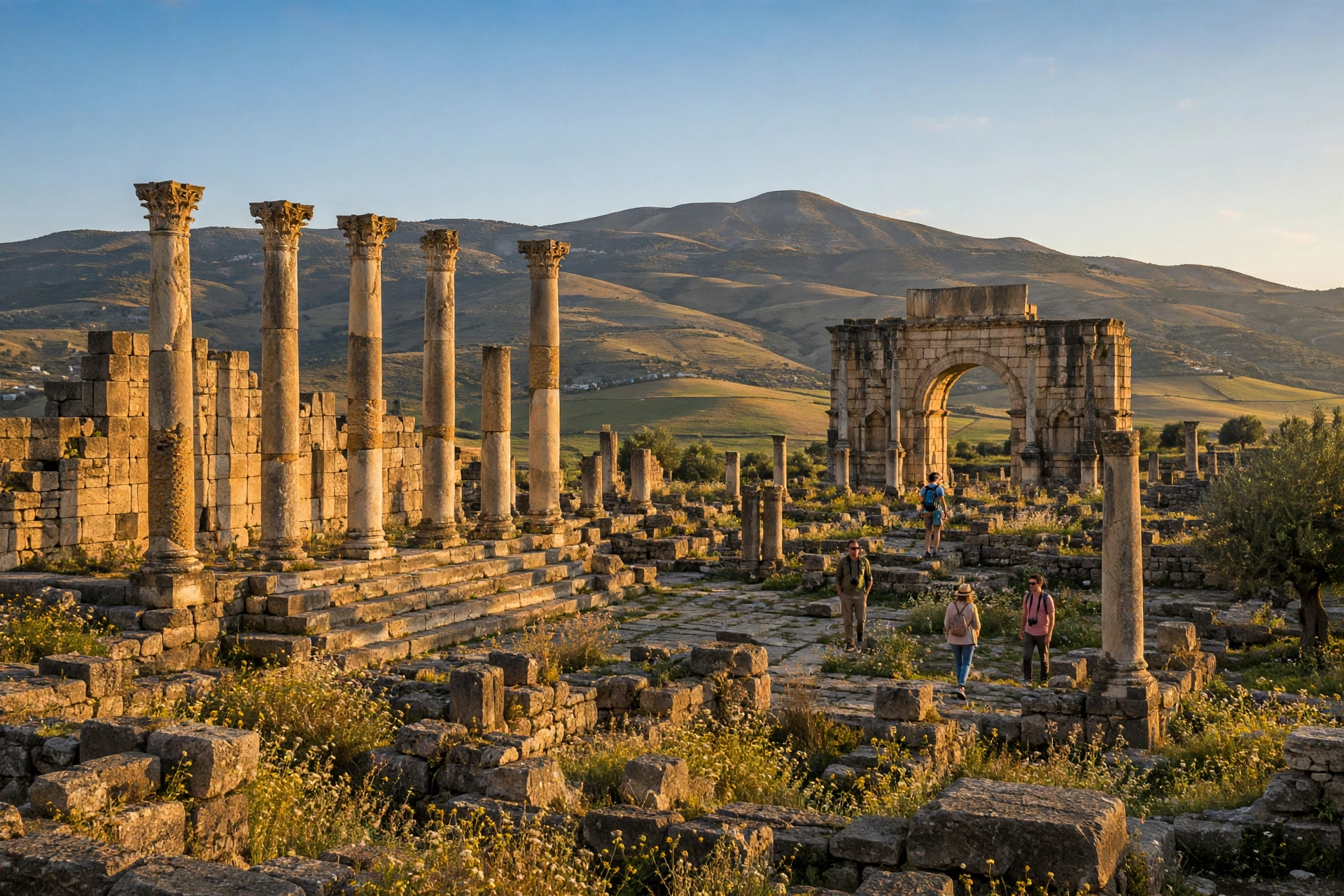
The third reason for living in Meknes is position. Meknes sits on the main railway line between Rabat and Fes, so the capital is just over two hours away and Fes is forty minutes. Volubilis is a half-hour drive, Moulay Idriss Zerhoun is closer still, and the Middle Atlas ski town of Ifrane is about an hour away. Few Moroccan cities offer so much day-trip range for so little money.
Meknes at a Glance
| Fact | Detail |
|---|---|
| Population | Around 650,000 |
| Region | Fes-Meknes, northern Morocco |
| Altitude | About 550 metres above sea level |
| Distance to Fes | 60 km, 40 minutes by train |
| Distance to Rabat | 150 km, about 2 hours 15 minutes by train |
| Nearest airport | Fes-Saiss, about 60 km away |
| UNESCO status | Medina listed since 1996 |
| Best for | Remote workers, retirees, teachers, slow travellers |
| Watch out for | Cold winters, small expat community, limited nightlife |
Best Neighbourhoods for Living in Meknes
Hamria is the first choice for most newcomers considering living in Meknes, and the best neighbourhood if you want a straightforward landing. Built as the French Ville Nouvelle, it has wide avenues, apartment blocks with lifts, banks, pharmacies and the city's best cafes. Avenues Hassan II and Mohammed V are its main streets, and most of the city's estate agents sit within a few blocks of each other. Rents here are the highest in the city, but still low by Moroccan standards.
The medina suits expats who want the old city itself — living in Meknes at its most traditional. Riad-style houses around Place El Hedim and the streets behind Bab Mansour offer courtyards, rooftop terraces and a five-minute walk to the souks. They are cheaper than Hamria flats of the same size, but they come with narrow lanes, no parking and the occasional plumbing surprise. Buyers of old houses should budget for renovation and check the roof before signing anything.
Toulal and Wislane, south and east of the centre, are modern residential districts where middle-class Moroccan families live. The flats are newer and larger, the streets are quieter, and a car becomes genuinely useful. These areas suit families who want space and parking and do not mind a ten-minute taxi ride to the centre.
Agdal, near the university, is the student quarter: lively, cheap and noisy at night, with shared flats everywhere.
Rents and Housing: What You Pay in 2026
Rents are the strongest argument for living in Meknes. A studio in the centre goes for 1,200 to 2,000 MAD a month (about $120 to $200), and a one-bedroom flat in Hamria typically costs 2,000 to 3,300 MAD (about $200 to $330). Outside the centre the same one-bedroom drops to 1,700 to 2,500 MAD (about $170 to $250). Furnished flats cost roughly 20 to 40 percent more than unfurnished ones, and landlords often ask for two or three months' rent in advance.
| Home type | Monthly rent (MAD) | Monthly rent (USD) |
|---|---|---|
| Studio, city centre | 1,200–2,000 | $120–$200 |
| One-bedroom, city centre | 2,000–3,300 | $200–$330 |
| One-bedroom, outside centre | 1,700–2,500 | $170–$250 |
| Two-bedroom, city centre | 3,000–4,500 | $300–$450 |
| Three-bedroom, city centre | 5,000–7,500 | $500–$750 |
| Three-bedroom, outside centre | 2,500–4,000 | $250–$400 |
| Villa or large house | 4,000–8,000 | $400–$800 |
| Medina riad house | 3,000–6,000 | $300–$600 |
Finding a flat works best on the ground. Estate agents in Hamria list most of the decent stock, and the Facebook groups for rentals in Meknes are active, but the best flats still change hands by word of mouth. Plan a week in a hotel, view at least five places, and check water pressure, hot water and winter heating before you commit. Read our Renting an Apartment in Morocco guide before you sign, and always get a written contract for your residence file.
Monthly Cost of Living in Meknes
A single person living in Meknes can live well on 6,000 to 7,500 MAD a month (about $600 to $750), rent included. That covers a one-bedroom flat, market groceries, utilities, transport and a social life of cafes and the occasional restaurant. A couple sharing a two-bedroom flat should budget 9,000 to 11,000 MAD (about $900 to $1,100), and a family of three around 13,000 to 15,000 MAD (about $1,300 to $1,500). These are comfortable figures, not survival budgets: they include eating out and weekend trips.
| Expense | Single person (MAD) | Couple (MAD) |
|---|---|---|
| Rent, one/two-bedroom flat | 2,500 | 3,500 |
| Utilities, electricity and water | 400 | 550 |
| Groceries and markets | 1,500 | 2,500 |
| Internet and mobile | 300 | 400 |
| Local transport | 300 | 450 |
| Eating out and cafes | 600 | 900 |
| Health insurance | 500 | 900 |
| Leisure and weekend trips | 500 | 800 |
| Clothing and household | 300 | 500 |
| Total | 6,900 | 10,500 |
Groceries are where living in Meknes really saves you money. The central market and the medina souks sell vegetables, fruit, bread and meat at prices well below the supermarkets, and a weekly shop for one person rarely passes 350 MAD (about $35). A coffee in a neighbourhood cafe costs 7 to 10 MAD (about $0.70 to $1), a filling lunch of tagine and bread runs 25 to 40 MAD (about $2.50 to $4), and a restaurant dinner for two with drinks is usually 150 to 250 MAD (about $15 to $25). Compare the totals with our Cost of Living in Morocco guide for the national picture.
Weather: Hot Summers, Cold Winters
Meknes sits inland at about 550 metres, so its climate is more extreme than the coastal cities. Summers are hot and dry, with July and August afternoons regularly reaching 35 to 40 degrees, and the stone of the medina holds the heat into the evening. Winters are genuinely cold: daytime temperatures of 10 to 15 degrees, nights that can drop near freezing, and rain from November to March. Snow is rare in the city itself but falls most winters in Ifrane, an hour away.
This matters for living in Meknes more than for sightseeing. Many older flats have no central heating, so a portable heater and a good duvet are essential from December to February, and a top-floor flat can be an oven in July. When you view a place, ask about heating, insulation and sun exposure, and check whether the building has thick walls. The best months for living in Meknes are March to June and September to November, when the light is golden and the terraces are full.
Getting Around: Trains, Buses and Petit Taxis
Meknes has two train stations, and knowing which one to use saves time. The main station, Gare de Meknes, sits on the eastern edge of the city near the bus station, while Meknes-Amir Abdelkader is closer to the centre and Hamria. Trains on the Fes–Casablanca line stop at both, roughly hourly, and the ONCF site lists times and fares.
| Route from Meknes | Time | Second-class fare |
|---|---|---|
| Fes | 40 minutes | 20 MAD (about $2) |
| Rabat | 2 hours 15 minutes | 69–85 MAD (about $7–$8.50) |
| Casablanca | 3 hours 15 minutes | 86–128 MAD (about $8.60–$12.80) |
| Tangier | 3.5–4.5 hours | 85 MAD (about $8.50) |
| Marrakech | 6.5 hours | 174 MAD (about $17.40) |
| Oujda | 6 hours | 130 MAD (about $13) |
For daily living in Meknes, petit taxis are the default: a ride across town costs 7 to 10 MAD (about $0.70 to $1) on the meter, though drivers sometimes quote a flat price to foreigners. Buses cost 4 MAD (about $0.40) and cover the main avenues, while grand taxis run fixed routes to Fes, Ifrane and Moulay Idriss. Walking covers Hamria and the medina comfortably, but the two districts are a twenty-minute walk apart. See our Morocco Train Ticket Prices guide for fares across the country.
Working in Meknes: Jobs and Remote Work
Local jobs for foreigners are limited, so most expats living in Meknes either work online or teach. English teaching is the most common local job: private language schools and the university pay modestly but steadily, and private tutoring pays 100 to 200 MAD an hour (about $10 to $20). Tourism work is seasonal, and the wine estates hire for harvest and hospitality roles. A work permit requires a local employer to sponsor you, so check the rules in our Moving to Morocco: Visas and Residency guide before you count on a local salary.
Remote work is the realistic path, and living in Meknes makes it easy on the budget. Fibre internet is available in Hamria and most newer districts, with home packages from 200 to 400 MAD a month (about $20 to $40) and 4G as a reliable backup. There is no large coworking scene, but several cafes in Hamria have fast wifi and do not mind a laptop for the price of a coffee. The time zone suits European clients — the same as London in winter, one hour ahead in summer — and Fes is close enough for occasional meetings. Read our Morocco Internet for Expats guide and our Digital Nomad Guide to Morocco before you plan your setup.
Daily Life: Markets, Food and Cafes
Daily life in Meknes revolves around its markets. The medina souks sell everything from spices and olives to brass lamps and babouche slippers, and the central market is where residents do their serious weekly shopping. Marjane and Carrefour sit on the edge of town for imports, but most expats find the souk cheaper and more social. Bargaining is expected in the souks and not in the supermarkets, and a smile in Darija goes further than a hard line.
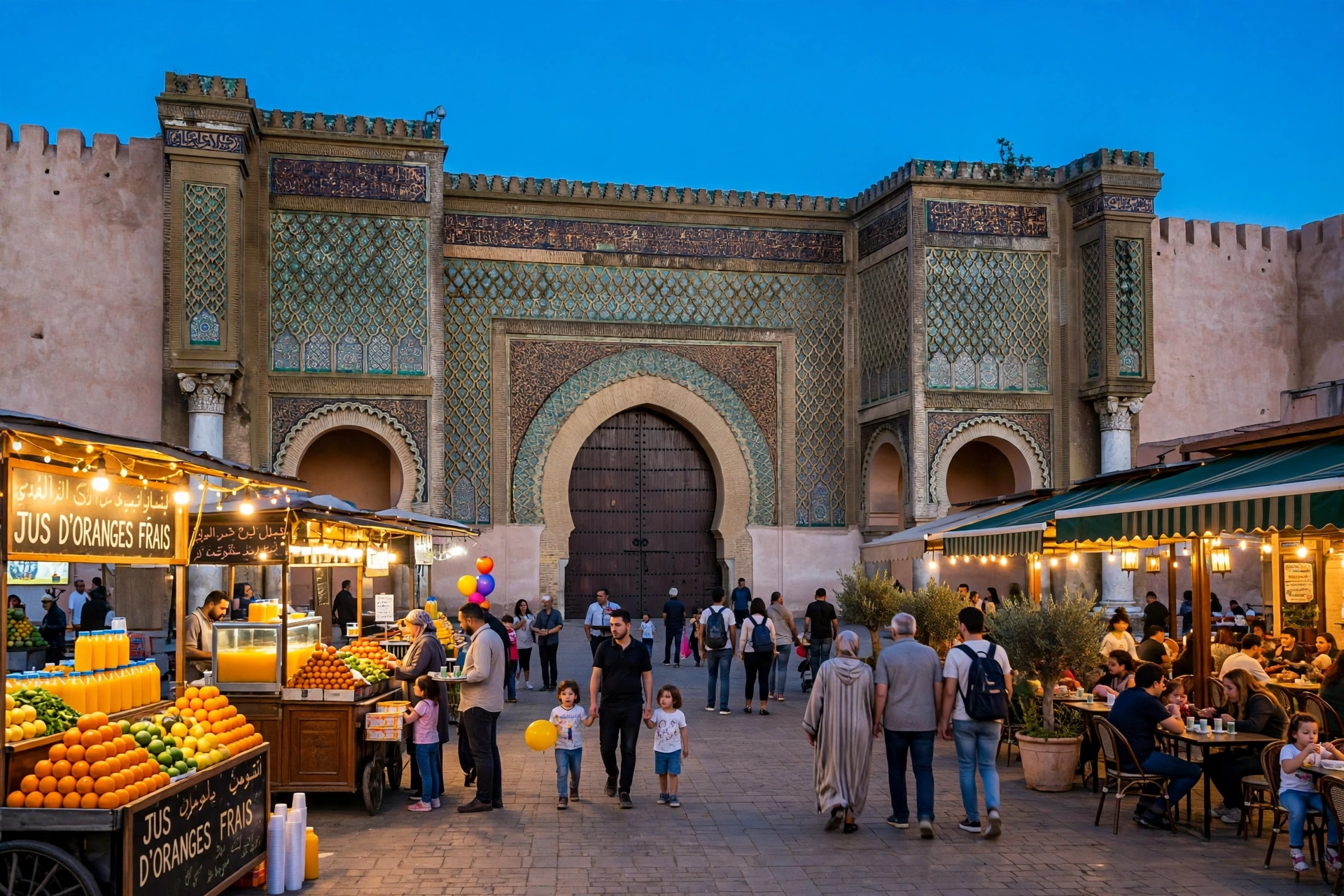
Food is a highlight of living in Meknes. Meknes is the centre of Morocco's wine country, and the region's vineyards around Guerrouane produce most of the country's wine. Restaurants serve the full Moroccan range — pastilla, mechoui, rfissa — with a set lunch for 30 to 50 MAD (about $3 to $5). Place El Hedim fills up at dusk with families, storytellers and juice stalls, and the cafes along Avenue Hassan II are the city's outdoor living rooms. Our Meknes Travel Guide covers the sights and restaurants in detail.
Healthcare in Meknes
Healthcare in Meknes is adequate for routine needs and limited for serious ones. The public hospital, Hopital Mohammed V, handles emergencies and basic care, and private clinics in Hamria cover consultations, dentistry and minor procedures. A GP visit costs 150 to 300 MAD (about $15 to $30), and pharmacies are plentiful. Most long-term expats living in Meknes keep private health insurance and plan on Rabat or Fes, both under two hours away, for specialist care and major surgery. Read our Healthcare in Morocco for Expats guide for insurance options and the public system.
Schools for Expat Families
Families should research schooling early, because Meknes has fewer international options than Rabat or Casablanca. A handful of French-language private schools serve the middle class, and public schools teach in Arabic and French, which suits children who already speak French. There is no large international school in the city itself, so families wanting an English-language curriculum usually look to Rabat, two hours away, or choose homeschooling. The upside is cost: private fees run well below the big cities, and the city is safe and walkable for older children. See our Schools in Morocco for Expat Families guide for the full picture.
The Downsides of Living in Meknes
Honesty matters, and living in Meknes is not for everyone. The expat community is small, so newcomers who need a ready-made social circle may feel isolated at first. Nightlife is limited to cafes and a few bars, and the city goes quiet early. Summers are fiercely hot and winters genuinely cold, and many buildings are poorly insulated for either extreme. French or Darija is close to essential: English is rarely spoken outside hotels and language schools.
The other limits are practical. There is no airport, so flights mean a trip to Fes-Saiss, with fewer international connections than Casablanca or Marrakech. Specialist healthcare means a trip to Rabat or Fes, and the same goes for some imported goods and international schools. None of this is a deal-breaker for most residents, but it is the trade for the low rents and the calm. If you want constant stimulation, Living in Marrakech or Living in Casablanca may fit better.
Moving to Meknes: Your First Steps
First, sort your visa. Most nationalities enter visa-free for up to 90 days, and longer stays need a residence permit, the carte de sejour, applied for at the local police station with a rental contract, proof of income and health insurance. Second, open a bank account: you will need your passport and proof of address, and a local account makes rent and bills far simpler. Third, book a short-term stay in Hamria for your first week and view flats in person before signing anything.
Fourth, arrange health insurance before you arrive, and bring any regular medication with a prescription, since brand names differ. Fifth, start learning Darija: a few dozen phrases transform daily life in the souks and with neighbours. Sixth, register with your embassy and join the small online groups for foreigners in Meknes. Our Opening a Bank Account in Morocco guide and our Learning Moroccan Arabic guide cover the practical steps.
Living in Meknes rewards patience. Give it a month, learn the rhythms of Place El Hedim at dusk, find your butcher and your cafe, and it starts to feel like home. Living in Meknes is a quieter bet than the famous cities, but for expats who value history, space and a gentle cost of living, it is one of the best-value choices in Morocco.
Frequently Asked Questions
Is Meknes good for expats?
Yes, for the right expat. Living in Meknes suits remote workers, retirees and teachers who want low costs, imperial history and a calm pace. It is less suited to people who need a big expat scene, nightlife or an international school.
How much does it cost to live in Meknes?
A single person lives comfortably on 6,000 to 7,500 MAD a month (about $600 to $750), rent included. A couple should budget 9,000 to 11,000 MAD (about $900 to $1,100), and a family of three around 13,000 to 15,000 MAD (about $1,300 to $1,500).
What is the best neighbourhood in Meknes for expats?
Hamria is the best first choice, with modern flats, cafes and banks on wide avenues. The medina suits people who want a riad house and old-city life, while Toulal and Wislane suit families who want newer, larger flats and parking.
Can I work remotely from Meknes?
Yes. For living in Meknes, fibre internet is available in Hamria and newer districts from 200 to 400 MAD a month, 4G is a reliable backup, and the time zone suits European clients. There is no big coworking scene, but Hamria cafes welcome laptops.
How do I get from Meknes to Fes?
The train takes 40 minutes and costs 20 MAD (about $2) in second class, with departures roughly every hour from both Meknes stations. Buses take about an hour and cost 13 to 15 MAD, and grand taxis take about 45 minutes.
Is Meknes safe for foreigners?
Yes. Meknes is one of the calmer Moroccan cities, with low street crime and a welcoming local population. Normal precautions apply: watch your bag in the souks, agree taxi fares before you ride, and respect local customs during Ramadan.
Last checked: November 2026