
The cost of a surf trip in Morocco is one of the best bargains in world surfing: warm Atlantic water, consistent waves from autumn to spring, and prices far below Europe’s surf towns. A week in Taghazout can cost less than a long weekend in Portugal, and the waves are often better.
This guide breaks down the cost of a surf trip in Morocco piece by piece, with prices in dirhams (MAD), checked in November 2026 at about 10 MAD to $1.
In this guide
- How Much Does a Surf Trip to Morocco Cost at a Glance
- When to Go: The Best Season for Surf — and Its Price
- Taghazout, Imsouane and Essaouira: Choosing Your Beach Town
- Surf Lessons: Group, Private and Multi-Day Prices
- Board and Wetsuit Rental Costs
- Bringing Your Own Board: Airline Fees and Packing
- Where to Stay: Surf Hostels, Camps and Hotels
- Getting There and Around: Flights, Transfers and Car Hire
- Food and Daily Spending on a Surf Trip
- A 7-Day Surf Trip Budget: Three Price Levels
- Hidden Costs to Watch For
- Saving Money on a Morocco Surf Trip
- Frequently Asked Questions
- Conclusion
How Much Does a Surf Trip to Morocco Cost at a Glance
A budget 7-day surf trip, excluding flights, usually runs 4,000–5,500 MAD ($400–$550); a mid-range week with a private room, a lesson package and a hire car runs 8,000–10,000 MAD ($800–$1,000); and a premium week runs 13,000–16,000 MAD ($1,300–$1,600). The cost of a surf trip in Morocco is set mostly by three choices: where you sleep, how many lessons you take, and whether you hire a car.
The cheapest cost of a surf trip in Morocco comes from staying in a surf hostel in Taghazout, renting a foam board by the week and eating where the fishermen eat. The tables below let you build your own total.
| Item | Budget (per day) | Mid-range (per day) | Notes |
|---|---|---|---|
| Stay | 100–200 MAD ($10–$20) | 300–600 MAD ($30–$60) | Dorm bed vs private room in a surf hostel |
| Surf lesson (2 hours) | 250–350 MAD ($25–$35) | 500–700 MAD ($50–$70) | Group vs private lesson |
| Board rental | 100–150 MAD ($10–$15) | 150–250 MAD ($15–$25) | Foam board vs hardboard |
| Food | 100–200 MAD ($10–$20) | 250–400 MAD ($25–$40) | Local cafes vs restaurants |
| Local transport | 30–60 MAD ($3–$6) | 250–400 MAD ($25–$40) | Bus and taxis vs hire car |
When to Go: The Best Season for Surf — and Its Price
The Atlantic swell season runs from October to March, when long-period swells roll in from the North Atlantic and Taghazout’s point breaks work at their best. This is also the most expensive season: surf camps and hostels raise their prices by roughly 20–30 percent. The cost of a surf trip in Morocco in December or January is higher than in May, but the waves are usually worth it.
Summer brings smaller, gentler waves — perfect for beginners and longboarders, and much cheaper: a surf hostel bed that costs 200 MAD ($20) a night in January can drop to 120 MAD ($12) in July. The water stays warm enough for a 3/2 mm wetsuit all year: about 17–19°C in winter and 20–22°C in summer, with a 4/3 mm more comfortable from December to February.
October and November are the sweet spot: the first big swells arrive, the water is still warm, and prices have not yet peaked.
Taghazout, Imsouane and Essaouira: Choosing Your Beach Town
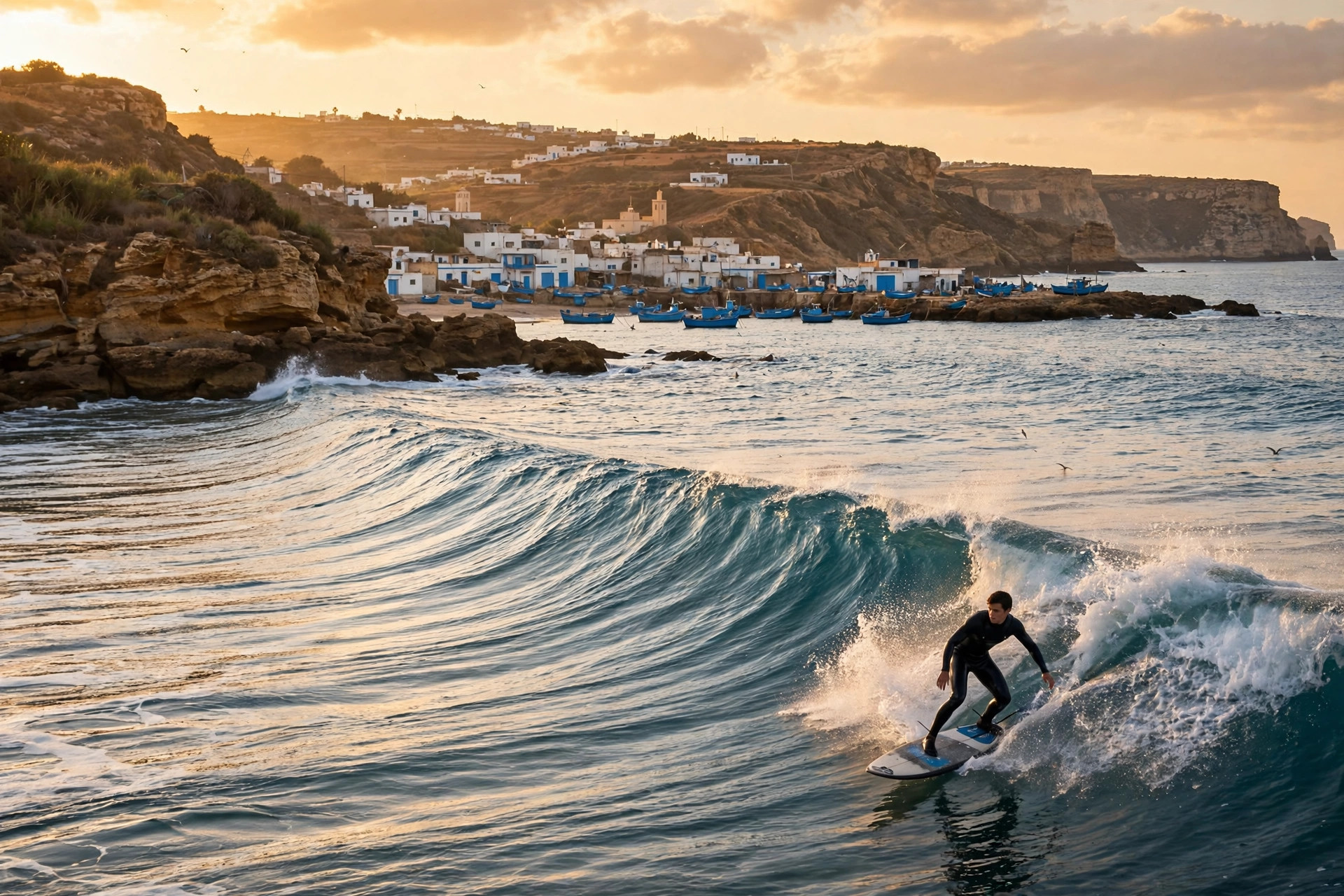
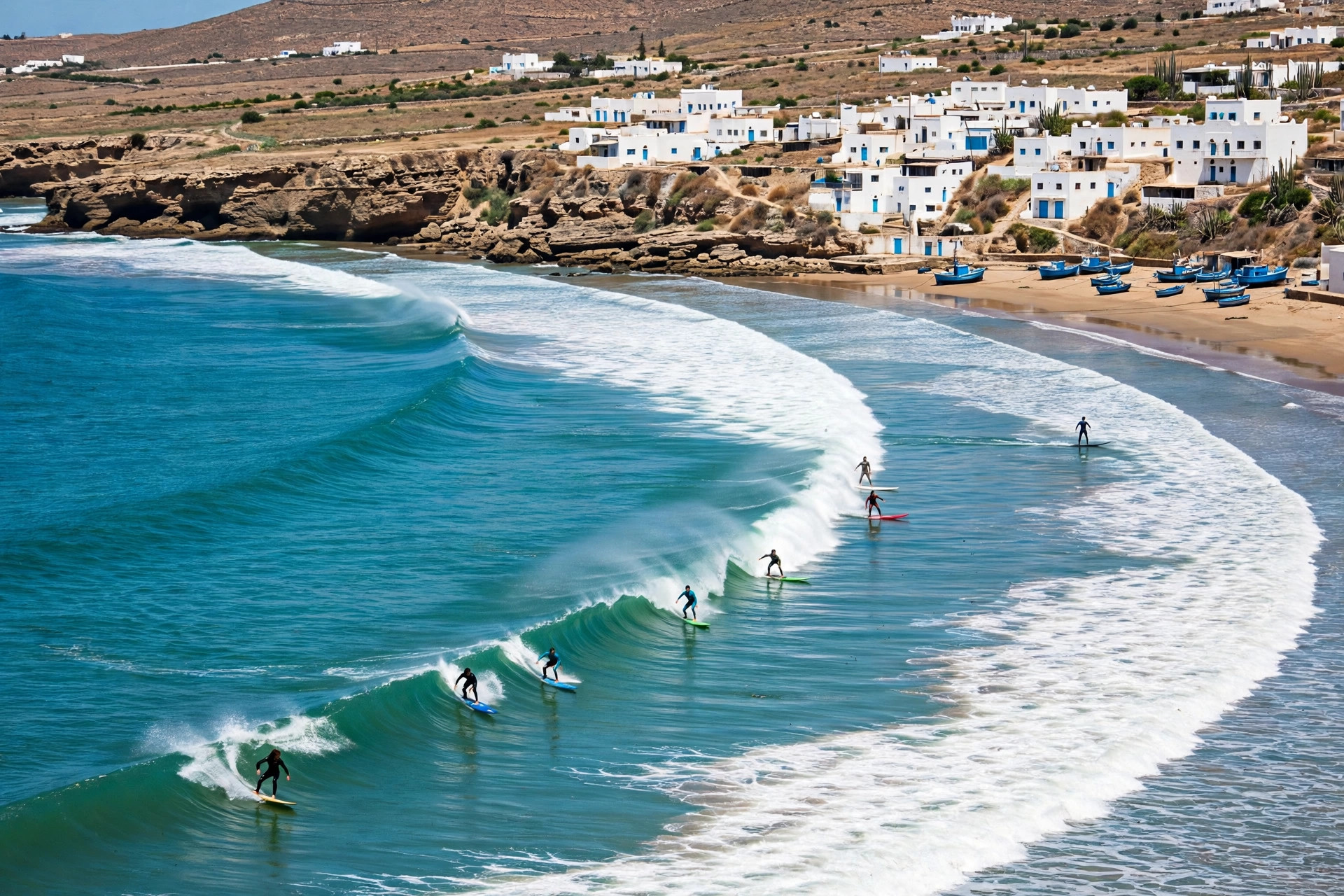
Taghazout is Morocco’s surf capital, a small fishing village about 20 km north of Agadir with a dozen breaks within walking distance: Anchor Point for experienced surfers, Killer Point, Hash Point, Panorama and Banana Beach for everyone else. It has the most surf schools, hostels and camps, so competition keeps the cost of a surf trip in Morocco lowest here.
Imsouane, about 100 km north of Agadir, is famous for one of the longest rides in the world: a right-hand point break that can run for hundreds of metres on a good day. It suits longboarders and intermediates, and it is quieter and cheaper than Taghazout. Note that in early 2024 the authorities cleared many beachfront structures here, so the village looks different from older photos — check current conditions before you book.
Essaouira, further north, is the windy city: its beach suits kitesurfing and windsurfing better than classic surfing, though nearby Sidi Kaouki offers cleaner waves. Essaouira suits a mixed trip — surfing in the morning, the medina in the afternoon — and the cost of a surf trip in Morocco rises slightly here. Our Essaouira travel guide covers the town in full.
| Town | Best for | Lesson price (2h group) | Stay (private room) | Vibe |
|---|---|---|---|---|
| Taghazout | All levels, most choice | 250–350 MAD ($25–$35) | 300–600 MAD ($30–$60) | Lively surf village |
| Imsouane | Longboarders, long rides | 200–300 MAD ($20–$30) | 200–450 MAD ($20–$45) | Quiet fishing village |
| Essaouira | Kitesurf, mixed trips | 300–400 MAD ($30–$40) | 350–700 MAD ($35–$70) | Windy historic medina |
| Agadir | Comfort, non-surfing days | 250–350 MAD ($25–$35) | 400–900 MAD ($40–$90) | Resort city, big beach |
Surf Lessons: Group, Private and Multi-Day Prices
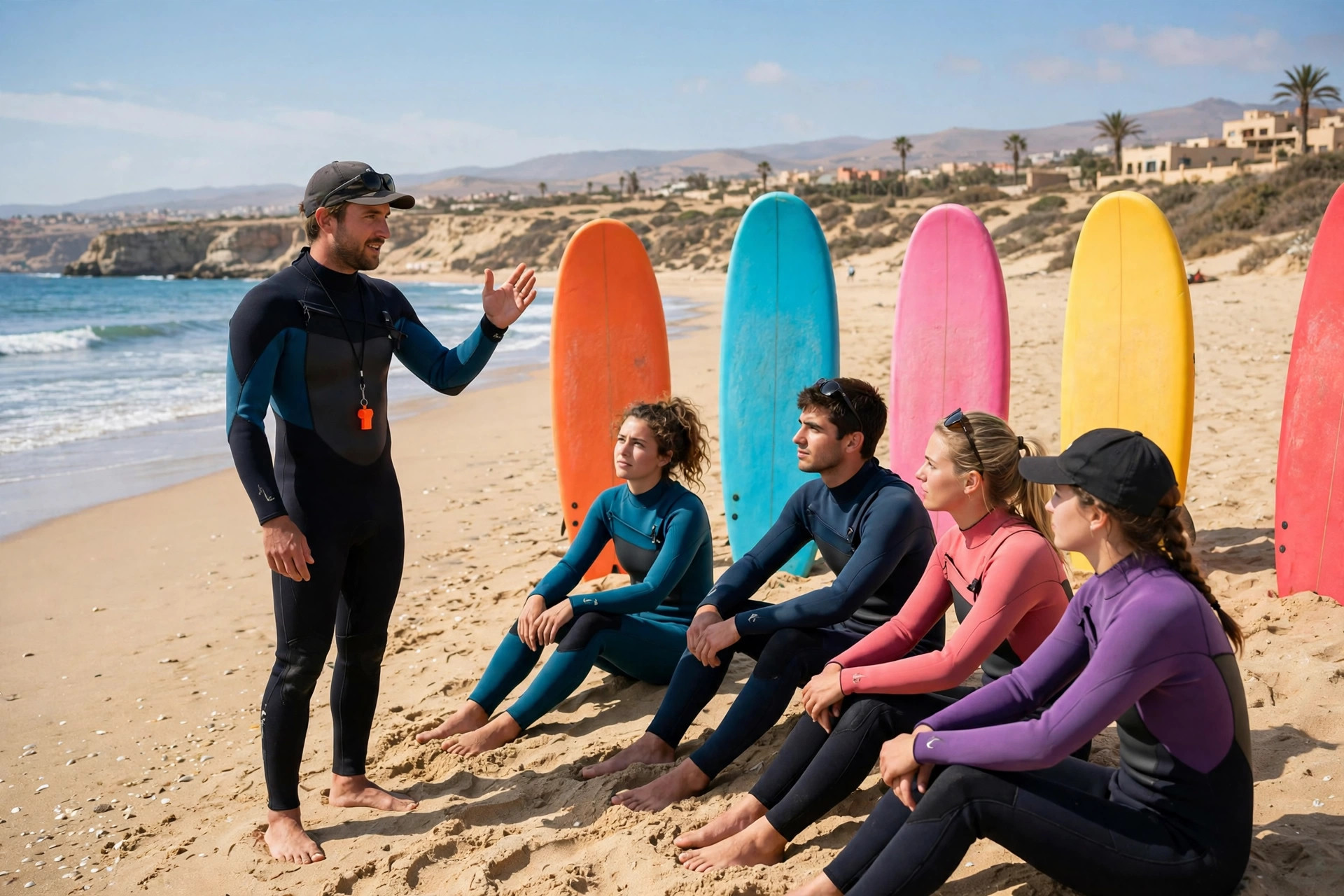
A two-hour group session in Taghazout usually costs 250–350 MAD ($25–$35) and includes the board, wetsuit and an instructor who stays in the water with you. Groups are usually four to eight people, and the price often drops if you book three or more sessions at once.
A private lesson costs 500–700 MAD ($50–$70) for two hours and is worth it if you have surfed before and want to fix specific mistakes — though the cost of a surf trip in Morocco climbs fast if you take one every day. Multi-day packages are the best value for a week: a five-lesson pack typically costs 1,000–1,500 MAD ($100–$150), and a full surf camp week with daily lessons is covered in the stays section below.
The cost of a surf trip in Morocco drops sharply once you can stand up and catch green waves on your own, so budget for three to five lessons in your first week, then rent a board and practise.
Board and Wetsuit Rental Costs
A foam board — the safe, stable board beginners need — rents for about 100–150 MAD ($10–$15) a day, and a hardboard for an intermediate surfer costs 150–250 MAD ($15–$25) a day. Weekly rental brings the daily price down: expect 600–1,000 MAD ($60–$100) a week for a foam board, and 900–1,500 MAD ($90–$150) for a hardboard.
Wetsuit rental adds 50–100 MAD ($5–$10) a day, and many schools include it free with a lesson or a board rental — always ask. Buying a wetsuit in Morocco costs 800–2,500 MAD ($80–$250). The cost of a surf trip in Morocco is lower if you bring your own wetsuit from home, since it packs small and saves a daily rental fee.
Check the board before you pay: run your hand along the rails for cracks, check the fins are tight, and photograph any existing dings — a damaged board can mean a repair charge at return. Most shops ask for a passport or a cash deposit of 500–1,000 MAD ($50–$100) as security, returned when the board comes back undamaged.
Bringing Your Own Board: Airline Fees and Packing
Flying with your own board makes sense if you surf well and stay a week or more, but the airline fee can wipe out the saving: low-cost airlines flying to Agadir typically charge €50–€100 ($55–$110) each way for a board bag, while full-service airlines often include sports equipment or charge a flat €50–€75. Check the airline’s sports baggage page before booking: the fee is often cheaper online than at the airport.
A board bag, wax and a repair kit add about 10–15 kg, and a good padded bag costs 1,000–2,500 MAD ($100–$250) if you need to buy one. Pack the board with the fins off and bubble wrap on the nose and tail. For a trip under five days, renting in Taghazout is almost always cheaper than flying with a board, so the cost of a surf trip in Morocco stays lower; for two weeks or more, bringing your own wins.
Where to Stay: Surf Hostels, Camps and Hotels
Stay is the biggest single cost on most surf trips. A dorm bed in a surf hostel in Taghazout costs 100–200 MAD ($10–$20) a night, a private room 300–600 MAD ($30–$60), and a room in a small hotel or riad 600–1,500 MAD ($60–$150). Surf camps bundle the stay with lessons, board rental and often breakfast or dinner, and they are the simplest option for a first trip.
A seven-night surf camp package in Taghazout typically costs 4,500–7,000 MAD ($450–$700) at the budget end, 7,000–12,000 MAD ($700–$1,200) mid-range, and 12,000 MAD ($1,200) or more for a premium camp with private rooms and daily private coaching — and the cost of a surf trip in Morocco is often lowest in a camp that includes meals and transfers. Read the package carefully: some camps charge extra for transfers and meals, a difference of 1,000–2,000 MAD ($100–$200) a week.
Book early for October to March, when the best places fill up.
Getting There and Around: Flights, Transfers and Car Hire
Most surf trips start at Agadir airport (AGA), about 25 km south of Taghazout, and flights set the floor for the cost of a surf trip in Morocco. Low-cost return flights from Europe to Agadir often cost €50–€150 ($55–$165) if booked early, and €150–€300 ($165–$330) closer to departure or on full-service airlines. Marrakech airport is the alternative for Essaouira, a three-hour bus ride away.
From Agadir airport, a taxi to Taghazout costs 250–350 MAD ($25–$35) and takes about 40 minutes; a shared grand taxi or bus costs roughly 30–60 MAD ($3–$6) but takes longer. Our airport transfer prices guide compares taxis, shuttles and private drivers in detail. The cost of a surf trip in Morocco rises quickly if you take private taxis everywhere, so learn the bus: Agadir to Taghazout costs about 15–25 MAD ($1.50–$2.50).
A hire car costs 250–400 MAD ($25–$40) a day for a small car in Agadir, and it pays for itself if you want to chase waves between Taghazout, Imsouane and Tamri. Our driving costs guide covers petrol, tolls and car hire prices, and fuel costs about 13–14 MAD ($1.30–$1.40) a litre.
Food and Daily Spending on a Surf Trip
Food is a small share of the cost of a surf trip in Morocco, but it adds up over a week. A budget surfer can eat well on 100–200 MAD ($10–$20) a day: breakfast of bread, eggs and mint tea for 30–50 MAD, a tajine or grilled fish lunch for 40–80 MAD, and a similar dinner. Taghazout’s cafes serve big vegetarian and fish dishes for 60–120 MAD ($6–$12).
Mid-range eating runs 250–400 MAD ($25–$40) a day: a proper restaurant dinner with a drink, a smoothie bowl breakfast and a few coffees. Alcohol is available in licensed restaurants and hotels but costs more than in Europe — a beer is typically 40–60 MAD ($4–$6). Small daily extras add up: bottled water 5–10 MAD, a SIM card with data about 100–200 MAD for the month (see our SIM card guide), and a tip of 5–10 MAD for good service (see our tipping guide).
A 7-Day Surf Trip Budget: Three Price Levels
The table below builds a full seven-day budget, excluding flights, for three styles of trip: budget assumes a hostel dorm, a weekly board rental and two group lessons; mid-range a private room, a five-lesson pack and three days with a hire car; comfort a hotel, five private lessons and a car for the week. The cost of a surf trip in Morocco is flexible: swap one item and the total moves with it.
| Item (7 days) | Budget | Mid-range | Comfort |
|---|---|---|---|
| Stay (7 nights) | 1,050 MAD ($105) | 3,150 MAD ($315) | 6,300 MAD ($630) |
| Lessons and board | 1,350 MAD ($135) | 2,050 MAD ($205) | 3,750 MAD ($375) |
| Food | 1,050 MAD ($105) | 2,100 MAD ($210) | 3,150 MAD ($315) |
| Transport | 400 MAD ($40) | 1,200 MAD ($120) | 2,100 MAD ($210) |
| Extras (SIM, water, tips) | 300 MAD ($30) | 500 MAD ($50) | 800 MAD ($80) |
| Total (excl. flights) | 4,150 MAD ($415) | 9,000 MAD ($900) | 16,100 MAD ($1,610) |
Add flights, and the cost of a surf trip in Morocco becomes roughly $470–$610 for a budget week from Europe, $955–$1,065 mid-range, and $1,665–$1,775 in comfort.
Hidden Costs to Watch For
The cost of a surf trip in Morocco has a few traps that catch first-timers. Airport taxis are the classic one: the official price from Agadir airport to Taghazout is 250–350 MAD, but a driver may quote 500 MAD or more to a tired surfer with a board bag — agree the price before you load the bags. Board repair is the second: a ding costs 100–300 MAD ($10–$30) to fix in a local shop, so photograph the board at pickup.
Travel insurance is the hidden part of the cost of a surf trip in Morocco you should not skip: a policy that covers surfing typically adds $30–$60 to a week. Check that surfing is covered — many standard policies exclude it — and carry cash for small costs: our ATM fees guide explains what withdrawals cost.
Wax is cheap in Morocco, about 20–40 MAD ($2–$4) a block, but reef-safe sunscreen is expensive and hard to find outside Agadir — bring it from home. In winter, budget for a thicker wetsuit rental if you only own a summer one.
Saving Money on a Morocco Surf Trip
The biggest saving on the cost of a surf trip in Morocco is timing: surf in October, November or March for near-peak waves at shoulder-season prices, with cheaper rooms and quieter lineups. The second is length: a weekly board rental costs about the same as four daily rentals, and a five-lesson pack about the same as three single lessons.
Stay in a surf hostel or camp rather than a hotel, eat where locals eat, and share a hire car with other surfers instead of taking taxis. If you can stand up already, skip the lessons and rent a board by the week. And book flights early: the difference between a €50 Ryanair fare and a €200 last-minute fare is more than a whole week of board rental.
Frequently Asked Questions
How much does a surf trip to Morocco cost for a week?
A budget week costs about 4,000–5,500 MAD ($400–$550) excluding flights. A mid-range week costs 8,000–10,000 MAD ($800–$1,000), and a comfortable week costs 13,000–16,000 MAD ($1,300–$1,600). Add €50–€300 for return flights from Europe.
Where is the cheapest place to surf in Morocco?
Taghazout is usually the cheapest overall for the cost of a surf trip in Morocco, because it has the most surf schools and hostels competing on price: group lessons from 250 MAD ($25) and dorm beds from 100 MAD ($10). Imsouane is slightly cheaper for rooms but has fewer schools, and Essaouira costs a little more for lessons and stays.
Is Morocco good for beginner surfers?
Yes — gentle beach breaks at Banana Beach and Tamraght, warm water, cheap group lessons and patient local instructors. Summer is the easiest season to learn, with smaller waves and fewer crowds, while autumn gives beginners their first taste of real swell.
Do I need a wetsuit to surf in Morocco?
Yes, all year. The water is 17–19°C in winter and 20–22°C in summer, so a 3/2 mm wetsuit is standard and a 4/3 mm is more comfortable from December to February. Rental costs 50–100 MAD ($5–$10) a day and is often free with a lesson.
When is the best time to surf in Morocco?
October to March brings the best waves, with long-period Atlantic swells hitting Taghazout and Imsouane. October and November are the sweet spot: good swells, warm water and lower prices than mid-winter. Summer is best for beginners.
Can I bring my own surfboard to Morocco?
Yes. Low-cost airlines usually charge €50–€100 ($55–$110) each way for a board bag, so for trips under five days renting in Taghazout is cheaper. For a week or more, bringing your own board usually wins.
Conclusion
The cost of a surf trip in Morocco is low enough that the waves, not the budget, should decide your trip. A week of surfing, eating well and sleeping in a surf hostel costs about 4,000–5,500 MAD ($400–$550) before flights, and even a comfortable week with private lessons and a hire car stays under 16,000 MAD ($1,600).
So pick your season — October to March for the best waves, summer to learn — pick Taghazout for choice, Imsouane for long rides or Essaouira for a mixed trip, and book the lessons and the room early. The cost of a surf trip in Morocco rewards the surfer who plans ahead: compare two or three schools and rent the board by the week. Browse the Costs & Practical Life section for more Morocco budgets.